
















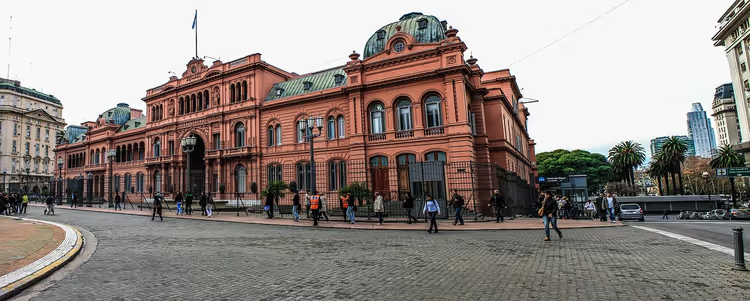
Argentina without a travel agency: flights, transport and neighborhoods of Buenos Aires
A long flight, a layover, and the other side of the world. Argentina is far away, so people rarely put it on their itinerary. We put together a guide for those traveling on their own. It has everything you need to plan: flights, transportation, accommodation in Buenos Aires, and the main sights.
By area, Argentina is second in South America only to Brazil. From north to south, the country stretches nearly 4,000 km (as of 09/2026, Wikipedia). That means different climate zones and long distances within a single trip. Plan your route in advance. Otherwise, you will spend half your vacation on the road.
Ad: this article contains affiliate links, we earn a commission if you book through them, at no extra cost to you.
How to get to Argentina
💡 In short:
- Fly with a layover in Madrid, Rome, Lisbon, Istanbul, or Doha.
- EU citizens do not need a visa: up to 90 days with an entry stamp (as of 09/2026, Argentina visa guide).
Most routes from Europe involve a layover. Convenient connections are available in Madrid, Rome, Lisbon, Istanbul, and Doha. A layover makes the trip longer. Book a ticket with extra time to spare. You will handle an overnight flight better if you sleep on the plane.
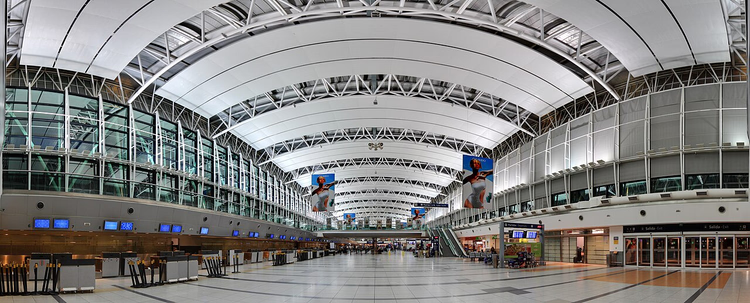 © Martin St-Amant ( S23678 ) · CC BY-SAPhoto: Martin St-Amant ( S23678 ), CC BY-SA (https://creativecommons.org/licenses/by-sa/3.0), Wikimedia Commons
Flights from Europe land at Ezeiza Airport (EZE). It is about 30 km from the city center on the map. On weekends, traffic is lighter than on weekdays. Plan to arrive on a Saturday or Sunday morning. That way you will get to your hotel without traffic jams.
EU citizens do not need a visa. The entry stamp gives you the right to stay in the country for 90 days (as of 09/2026, Argentina Visa Guide). You can extend your stay, but only once. Keep your return ticket and the address of your first hotel handy. They are sometimes asked for at passport control.
Getting around the country: plane, bus, metro
Domestic flights in Argentina are well developed. Flights are operated by Aerolíneas Argentinas and the low-cost carriers Flybondi and JetSMART. Tickets should be bought in advance. Prices rise closer to the departure date. Do not confuse the two capital airports: the international Ezeiza (EZE) and the domestic Aeroparque Jorge Newbery (AEP).
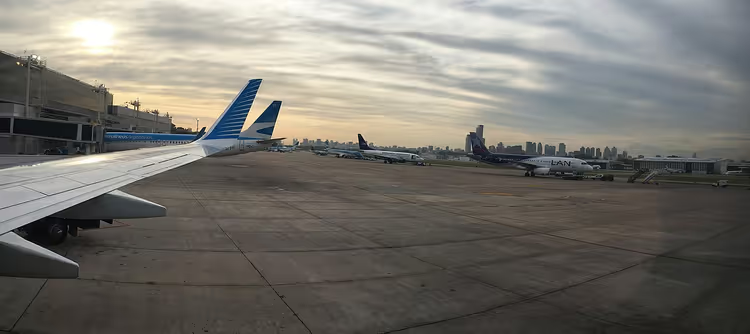 © Fredlyfish4 · CC BY-SAPhoto: Fredlyfish4, CC BY-SA (https://creativecommons.org/licenses/by-sa/4.0), Wikimedia Commons
In Córdoba, the international airport is called Pajas Blancas (COR). There are also direct flights from the capital to El Calafate, Iguazú, and Salta. One domestic flight saves you a day of travel. For long distances, flying is almost always more time-efficient than taking a bus.
Railways are inferior to buses. Passenger trains run on only a few routes, and some services are canceled. Locals more often choose buses for long trips. There is one exception: the tourist Tren a las Nubes in Salta. More on that below.
Intercity buses here are comfortable. There are cama and semi-cama classes, and many buses serve meals. From Buenos Aires, buses depart from the Retiro terminal. An overnight trip saves you a hotel night. But you will be more tired in the morning. The bus has a toilet and power outlets, and you can choose your seat when buying a ticket.
The main city transport is the colectivo bus. It runs around the clock, and fares are paid with a SUBE card. The metro in Buenos Aires is fast and inexpensive: about 1,400 ARS per ride (as of 09/2026, Subte fares). Taxis in the capital are recognizable by their yellow roofs. Uber and Cabify are also available. Metro station halls resemble small museums: mosaics and old signs tell the story of the country. A ride between stations takes just a few minutes. In Patagonia and the lake district, rent a car: without one, you are tied to schedules.
To rent a car, you need an international driving permit and a credit card for the deposit. Gas stations outside cities are rare, so fill up in advance. Roads in Patagonia are empty and good. But distances between towns are long.
When to go to Argentina
The seasons here are the opposite of Europe's. When you have snow, Argentina is in the middle of summer. The north of the country is subtropical, the center is humid, and the south is temperate. The best time to visit Patagonia is from late January to March. Then you will get warm days and long daylight hours.
 © Martin St-Amant ( S23678 ) · CC BY-SAPhoto: Martin St-Amant ( S23678 ), CC BY-SA (https://creativecommons.org/licenses/by-sa/3.0), Wikimedia Commons
For the north and northwest of the country, the period from late April to September works well. Central Argentina is comfortable from late October to June. Keep altitude in mind: in the mountains it is noticeably cooler than in the valley. Bring warm clothes even in summer. Weather in the mountains can change within an hour. In the south, winters are windy and cold. The ski season in Patagonia runs from June to August.
Where to stay in Buenos Aires
There are plenty of booking services in the country. When choosing accommodation, look at the neighborhood first, then the price. The capital has areas where tourists are better off not staying. Near Retiro station there is a large informal settlement. It is not safe there in the evening. Accommodation prices depend more on the neighborhood and season than on the hotel class.
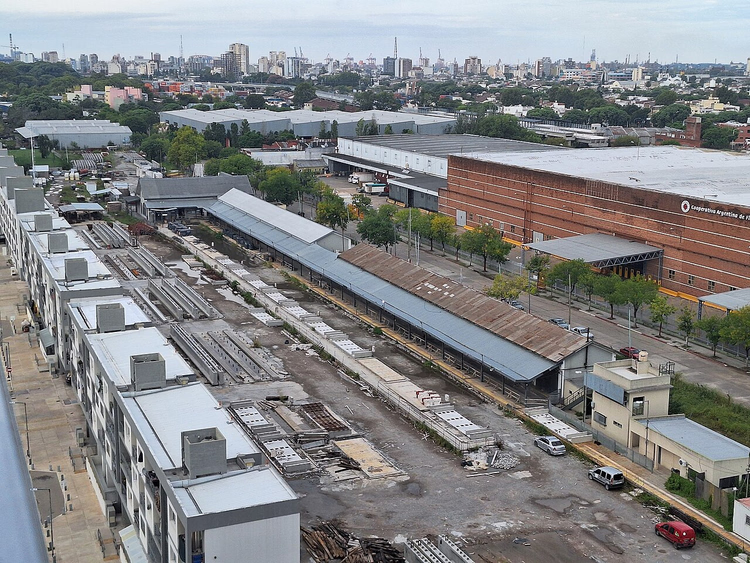 © Pelusoider · CC BY-SAPhoto: Pelusoider, CC BY-SA (https://creativecommons.org/licenses/by-sa/4.0), Wikimedia Commons
Book your hotel in advance. Searching for hotels in Buenos Aires on Trip.com will help. Below is a quick overview of four neighborhoods where tourists most often stay.
Safe neighborhoods in Buenos Aires
Several areas in and near the center are considered calm places to stay. Here are four options travelers recommend most often.
Puerto Madero
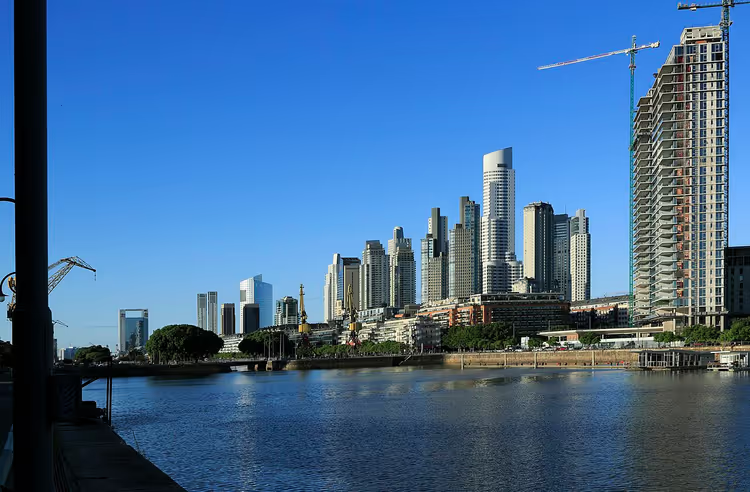
Puerto Madero sits on the shore of the La Plata estuary, not far from the center. A hundred years ago this was a port zone. The brick warehouses were restored and turned into offices, restaurants, and apartments. Two port cranes were left as a reminder of the past. Today it is the most expensive neighborhood in the capital. It is quiet and safe here, but eating out is cheaper in the neighboring blocks. From here you can easily walk to the center.
 © Falk2 · CC BY-SAPhoto: Falk2, CC BY-SA (https://creativecommons.org/licenses/by-sa/3.0), Wikimedia Commons
San Telmo
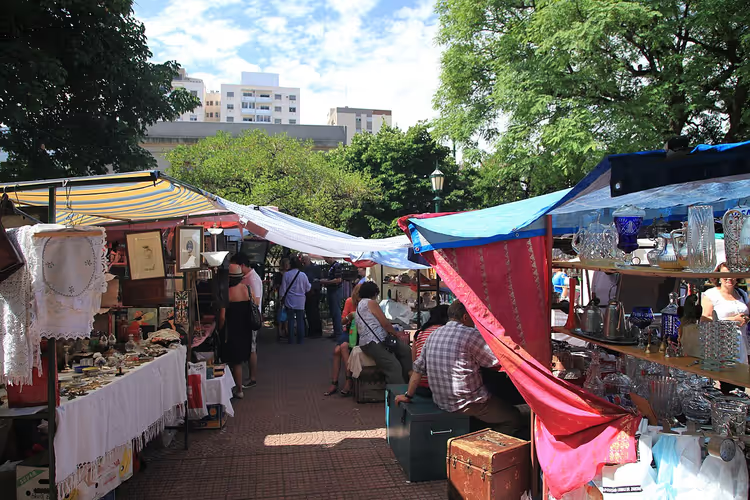
San Telmo is the oldest neighborhood in the city. It has the best-preserved colonial architecture. The streets are paved with cobblestones, and tango is danced right on the sidewalks. In the evening, antique shops and small restaurants open up. The neighborhood is geared toward tourists. Prices are higher here, but the atmosphere is more intense. If you want quiet, choose accommodation deeper inside the blocks. On Sundays a large flea market operates here.
 © Liam Quinn from Canada · CC BY-SAPhoto: Liam Quinn from Canada, CC BY-SA (https://creativecommons.org/licenses/by-sa/2.0), Wikimedia Commons
Plaza de Mayo, Microcentro
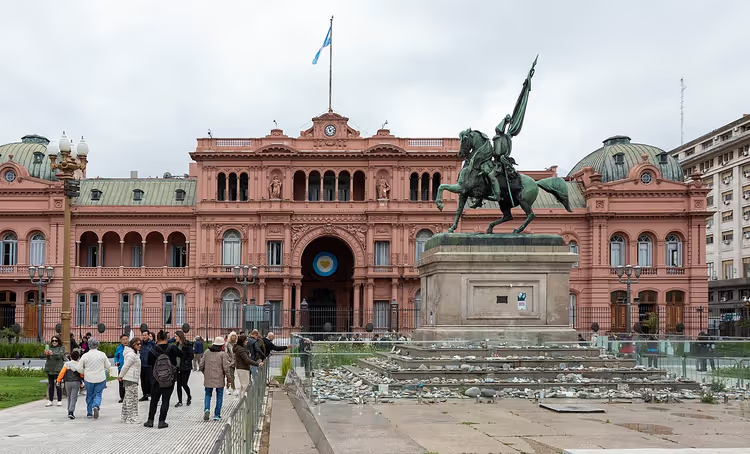
Microcentro is the business center of the capital. The city's main attractions, wide avenues, and shady boulevards are all here. On weekends life comes to a standstill: some cafes are closed. The Hop-on Hop-off sightseeing bus starts from here. The ticket is valid for 24 hours, and every seat has an audio guide. The sightseeing ride will help you get your bearings on your first day.
 © David Brossard · CC BY-SAPhoto: David Brossard, CC BY-SA (https://creativecommons.org/licenses/by-sa/2.0), Wikimedia Commons
Palermo
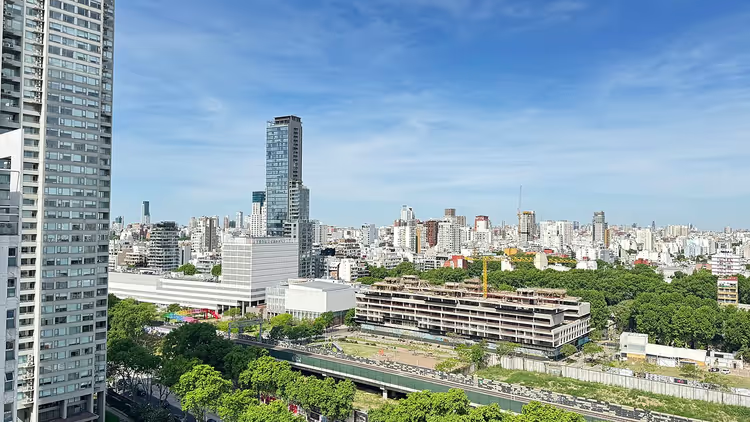
Palermo is a large green neighborhood away from the center. It consists of several sub-neighborhoods. Foreigners most often choose Palermo Viejo. Low-rise buildings, shops, and restaurants draw people both day and night. Nightlife lovers will find entertainment for every taste. Families with children will also find it convenient here: parks are nearby. The botanical garden and the zoo are next door and easy to reach on foot.
The peso exchange rate and paying by card
The peso became Argentina's national currency in the early nineties. For a long time, a second, "blue" rate existed alongside the official one. The gap between them reached enormous levels at times. The situation changed in April 2025. Since then, the rules for tourists have become much simpler.
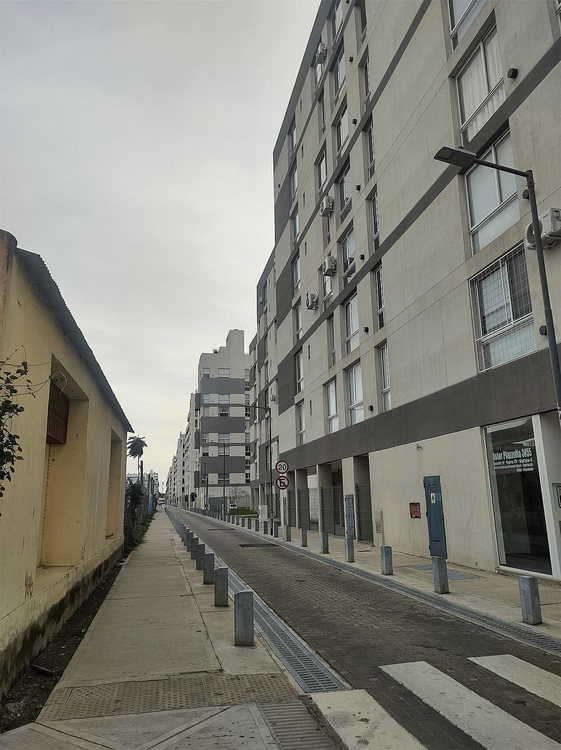 © Roberto Fiadone · CC BY-SAPhoto: Roberto Fiadone, CC BY-SA (https://creativecommons.org/licenses/by-sa/4.0), Wikimedia Commons
In April 2025, the authorities lifted currency restrictions for individuals. The peso was allowed to float in a free band, and the parallel rate almost converged with the official one. In March 2026, the official rate held at around 1,355 pesos per dollar, while the "blue" rate was around 1,440 (as of 09/2026, market overview).
For tourists, the picture has become simpler. Visa and Mastercard work almost everywhere at a rate close to the market rate. The surcharge on spending abroad was also removed, so paying by card is convenient. Keep some cash pesos on you. They come in handy at markets and in small cafes. Large bills are accepted more readily than small ones here.
The exchange rate in the country changes often. Check the current figures before your trip. Exchange cash at a bank or an official exchange office. The "blue" market has not gone anywhere, but the difference from the official rate is now small. The risk is not worth it.
What to see in Argentina
You can't cover the whole country in one trip. Plan nature routes as separate journeys, with time and budget in mind. Our list includes waterfalls in the north and glaciers in the south. Start with those. Add the Valley of the Moon in San Juan Province if you have time. In the capital, check out other Buenos Aires attractions.
Iguazu Falls
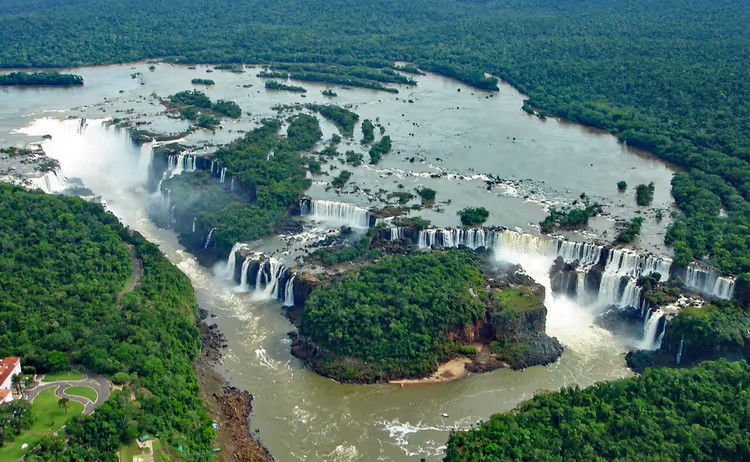
Iguazu is the country's main natural attraction. The falls sit on the border with Brazil, and you can see them from both sides. You can get there by plane from Buenos Aires. The bus is cheaper, but the trip takes more than a day. From the Brazilian side you see the full panorama of the cascades. From the Argentine side you get right up close to the water. Many people visit both sides over two days.
 © Mariordo (Mario Roberto Durán Ortiz) · CC BY-SAPhoto: Mariordo (Mario Roberto Durán Ortiz), CC BY-SA (https://creativecommons.org/licenses/by-sa/4.0), Wikimedia Commons
The national park is open from morning to evening, with closing time depending on the season. A ticket for foreigners costs around 60,000 ARS (as of 13.09.2026, verified on the national parks website). Buy it online in advance. That way you don't stand in line at the entrance. The main waterfall is visible even from the air. A column of mist rises above the treetops. The town of Iguazu itself is nothing like the capital: quiet, with red earth underfoot.
An ecological train runs through the park to the main waterfall, the Devil's Throat. Trails are marked, and park staff are on duty along the paths. There are viewing platforms on both the upper and lower trails. The upper trail gives you a panorama of all the cascades. The lower one shows the wall of water from below. Bring a rain jacket: the spray reaches the platforms.
A guide makes it easier to get to the viewing platforms without the rush. Check out tickets and tours on GetYourGuide.
El Calafate and El Chalten
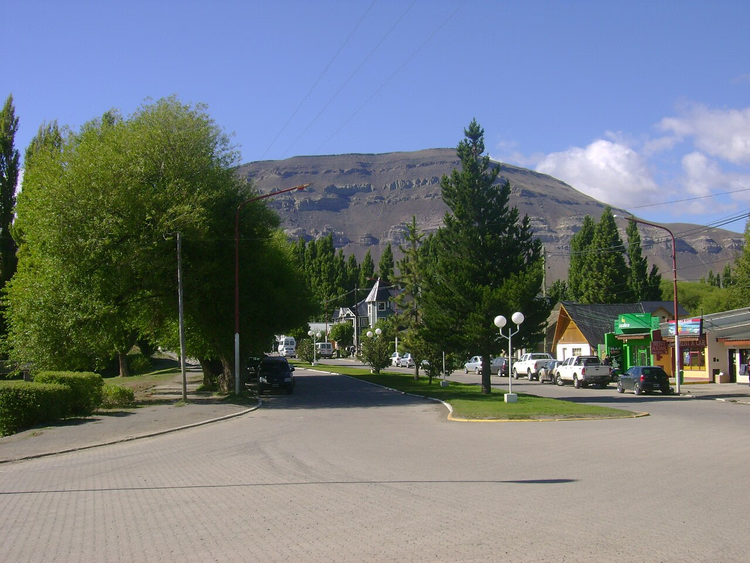
El Calafate is the gateway to southern Patagonia. The flight from Buenos Aires takes a few hours. The town sits on the shore of Lake Argentino. The main goal for travelers is Los Glaciares National Park and the Perito Moreno Glacier. At the entrance to the region, your luggage is checked: you're entering an ecological zone. Perito Moreno barely retreats, which is rare for glaciers. From the viewing platforms you can hear chunks of ice breaking off the wall.
 © https://www.flickr.com/people/flopisubmarina/ · CC BYPhoto: https://www.flickr.com/people/flopisubmarina/, CC BY (https://creativecommons.org/licenses/by/2.0), Wikimedia Commons
Park entry for foreigners costs around 45,000 ARS (as of 09/2026, national parks). Tickets for the northern zone, toward El Chalten, are sold online only. Bring your passport. Without it, you won't be let in.
Buses to the glacier leave in the morning and afternoon, with return trips arriving in the evening. The schedule changes by season, so check it locally. Set aside a full day for the glacier.
Transfers to El Chalten also run several times a day. The bus drops you at the park administration office. There they give a briefing and show you the possible routes. Trekking here requires stamina. The climbs are long, and the weather is changeable. Don't hike back along the trail in the dark.
Salta, Cordoba and Mar del Plata
These cities show a different Argentina, without glaciers and waterfalls.
 © Marcos Combet · CC BY-SAPhoto: Marcos Combet, CC BY-SA (https://creativecommons.org/licenses/by-sa/4.0), Wikimedia Commons
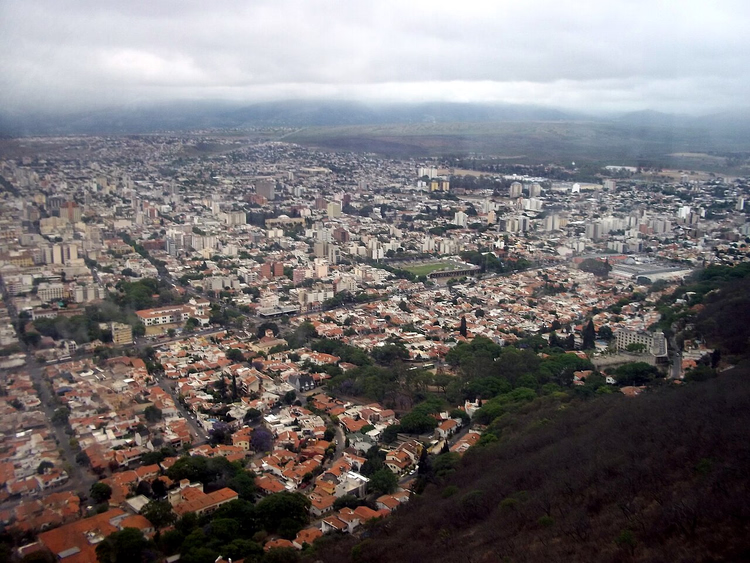
Salta is a colorful city in the northwest of the country. It was founded in the late 16th century as a stop for trade caravans. Pilgrims come to see the statue of the Virgin Mary in the local cathedral. Tourists buy a ticket for the Tren a las Nubes. The train heads into the highlands along an old railway, and the trip takes a full day. Salta is connected by air to the capital and Cordoba, and by bus to many cities across the country.
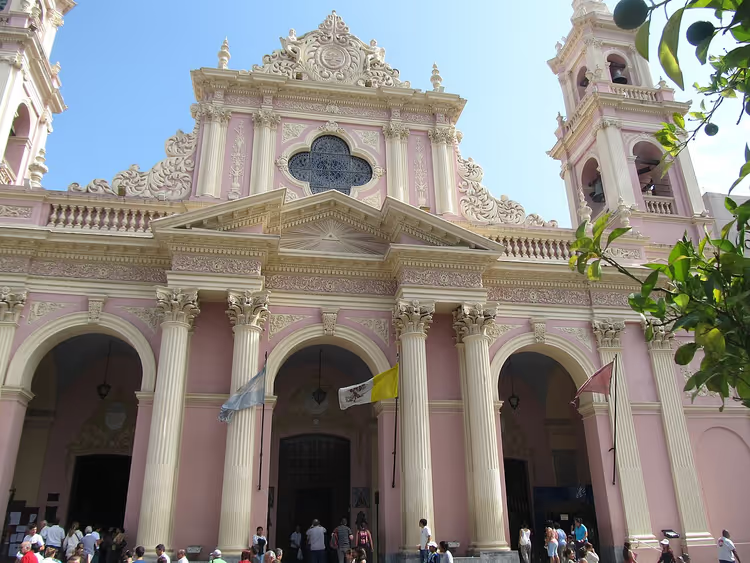 © Rmolfino · CC BY-SAPhoto: Rmolfino, CC BY-SA (https://creativecommons.org/licenses/by-sa/3.0), Wikimedia Commons
Cordoba is the country's second-largest city after the capital. Architecture lovers will like it more than Buenos Aires. The colonial look is better preserved here. It's a convenient stop on the way north or coming from the north.
Mar del Plata is the country's main beach resort. It's a few hours' drive from the capital. The coastline is long and varied. There's a spot for both solitude seekers and party lovers. Argentine nobility used to come here. That's why the resort is still considered expensive. Music festivals take place here in summer.
⁉️🤔 Frequently asked questions
How long is the flight to Argentina from Europe?
There are no direct flights from Germany and Austria, so you'll have to fly with a connection. The trip usually takes fifteen to twenty hours including the layover. Allow extra time for the connection. A night flight is most convenient: you sleep on the plane and arrive in the morning.
Do I need a visa for Argentina?
EU citizens don't need a visa. The entry stamp gives you 90 days in the country. You can extend it once at the immigration office. Bring a return ticket and a booking for your first hotel. They're sometimes asked for at passport control.
When is the best time to visit Argentina?
The seasons here are the opposite of Europe's. For Patagonia, the best time is from late January to March. For the north and northwest, the period from late April to September works well. The central part of the country is comfortable from late October to June.
Is Buenos Aires safe?
Generally yes, if you choose the right neighborhood. Puerto Madero, San Telmo, Palermo and Microcentro are good for staying. Don't stay near Retiro station or in informal settlements. Don't carry large amounts of cash in the evening. Keep your phone in your bag, not in your hand.
How much does a trip to Argentina cost?
The budget depends on the route and season. The flight is the biggest expense. Tickets from Europe cost several hundred euros and up. Domestic flights to Iguazu or Patagonia add to the cost. National park entry fees range from 45,000 to 60,000 ARS (as of 09/2026, national parks). Choose a hotel in the capital based on the neighborhood.
Find hotels in Buenos Aires
Compare prices across booking sites and filter for rooms with free cancellation.
Compare prices on Trip.comThe widget loads once you give your consent.
In short: what to book
Argentina is easy to split into two trips: the north with the waterfalls and the south with the glaciers. If you have a week, go with Buenos Aires and Iguazu. With two weeks, you can add Patagonia and El Calafate. Look for a hotel in the capital in one of the four neighborhoods above. Buy domestic tickets in advance. Search for flights to Buenos Aires on Kiwi.com and keep your plan flexible.

A small editorial team writing guides for independent travel. We travel ourselves, but we haven’t been everywhere, so we check prices, opening hours and how to get there against official sources.