
















Where to go in Buenos Aires: five places for your first visit
Buenos Aires is intimidating in its scale. The capital of Argentina stretches for dozens of kilometers, and in guidebooks it looks like a collection of scattered points. In reality, it's simpler: a few places give you a complete first impression of the city.
We've gathered the capital's main spots and checked prices and opening hours for September 2026. A tour of the Teatro Colón costs 34,000 Argentine pesos (as of 09/2026, Teatro Colón website). La Boca and Palermo Park are free to visit. Below, we'll cover the timing and the honest catches of each place.
Ad: this article contains affiliate links, we earn a commission if you book through them, at no extra cost to you.
Old town and colonial heritage
💡 In short:
- La Boca and Caminito are free, come in the morning and stick to busy streets.
- Teatro Colón: 50-minute tour, daily from 10:00 to 16:45.
- Palermo Park is open freely, while entry to Recoleta Cemetery is paid, check the price on site.
- Prices and opening hours: 09/2026, verified on the official website.
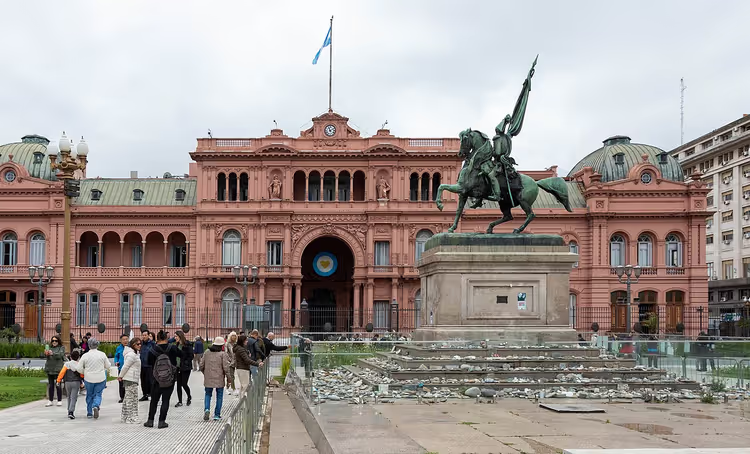
The old part of the city was built according to the Spanish plan: straight streets run from the coast to the central square. Colonial facades stand next to glass business centers here, so in one day you'll see two different Buenos Aires.
The historic core resembles several European capitals at once. Modest Spanish quarters stand next to wealthy ones, and local customs intertwine with Spanish culture. The streets here look like Paris one moment, then London or Madrid the next. This mix is understandable: the city grew on immigration from Europe, and it's still visible today.
Start your walk from the port and head toward the center. This way you'll go from colonial buildings to districts built in the 20th century. The long straight streets have been preserved here since those times.
 © David Brossard · CC BY-SAPhoto: David Brossard, CC BY-SA (https://creativecommons.org/licenses/by-sa/2.0), Wikimedia Commons
Don't just look at the facades. Pay attention to the boulevards and parks: there's more greenery in the central districts than you'd expect. Monuments and old villas stand here too, so the walk isn't limited to a single avenue.
La Boca and Caminito Street
La Boca starts right behind the port. Step onto the cobblestone street and you'll be surrounded by color, music, and tango. Every facade, door, and window here is painted in its own color.
The district's main spot is called Caminito. The street works as an open-air gallery: day and evening, artists display canvases and paint new ones. You can buy a painting you like on the spot and negotiate the price there.
You'll hardly find two identical houses here. The palette rarely repeats, so photos turn out vivid from any angle. Sometimes La Boca is called an artificial set for tourists. The residents themselves argue with this: the district remains alive, workshops operate here, and music sounds from open windows.
Tango here has become part of everyday life, not a separate show. Musicians play right on the street, couples dance on the cobblestones among the spectators. You can watch for free, right from the street.
The colorful houses appeared by accident. The port used to bustle where the district now stands, and hundreds of shacks lined the streets. La Boca got its modern look in the 19th century, when immigrants from Europe arrived, mostly from Italy.
There wasn't enough paint for all the walls. Neighbors shared cans among themselves, so the roof, doors, and windows of one house got different shades. Today it's become a tradition: facades are refreshed every year.
It's hard to walk past the souvenir shops. The assortment includes magnets, leather, textiles, and local paintings. Artists sell finished landscapes and paint portraits on commission. If you're buying several items, bargain more boldly: you'll almost always get a discount here.
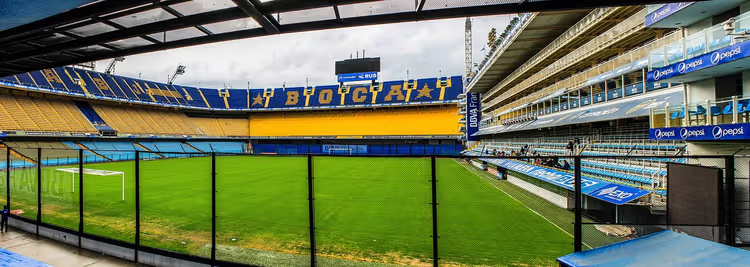
A stone's throw away stands the stadium of the Boca Juniors club (La Bombonera). The club has been playing since the early 20th century, and its first squad consisted almost entirely of Italian immigrants. It plays home matches right here. If you want to catch a game, check the schedule in advance.
Who it's for: those who want bright photos and street atmosphere. Not for: if you're looking for a quiet walk without crowds. The catch: La Boca is considered one of the most troubled districts of the city. Don't wander far from Caminito and don't walk along quiet streets after sunset. During the day and in busy places, you're safe.
Obelisk and Plaza de la República
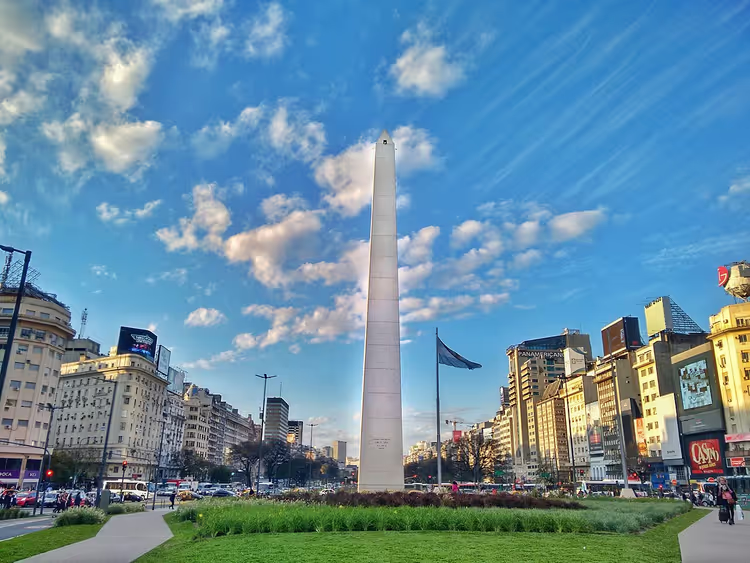
The Obelisk stands in the city center and is considered the symbol of Buenos Aires. It was erected on Plaza de la República for the anniversary of the capital's founding, and the entire construction took just a few weeks.
 © Sebastianalmaraz · CC BY-SAPhoto: Sebastianalmaraz, CC BY-SA (https://creativecommons.org/licenses/by-sa/4.0), Wikimedia Commons
According to one version, this is where the flag of independent Argentina was first raised. Later the monument came under threat of demolition: disputes about it went on for years. Today the square hosts city celebrations, concerts, and mass gatherings.
The visit takes a few minutes. The site itself is free, and it's a convenient starting point for a walk through the center. Come in the evening, when the lighting is turned on.
Palermo and parque tres de febrero
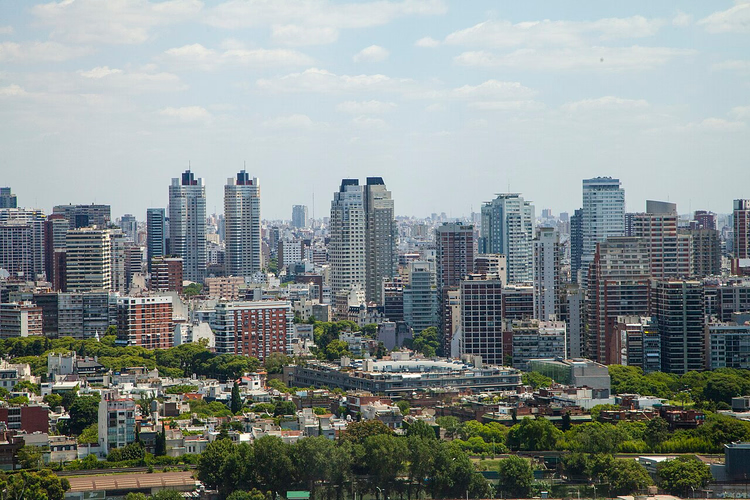
Palermo occupies the green part of the city. The park's official name is Tres de Febrero, but locals call it the Palermo Woods. By area, it's one of the largest parks in Buenos Aires.
 © Ricardo Patiño · CC BY-SAPhoto: Ricardo Patiño, CC BY-SA (https://creativecommons.org/licenses/by-sa/2.0), Wikimedia Commons
The park was laid out in the second half of the 19th century, modeled on European ones. The project was designed by landscape architect Carlos Thays, with the Bois de Boulogne in Paris and London's Hyde Park as his references. Hence the free layout without strict alleys.
The main entertainment here is connected with water. On the artificial lakes, you can rent a boat and see the park from a different side. Secluded spots hide in the shade of trees, so couples and families spend the whole day here.
A separate alley is dedicated to the poets' park. Bronze busts of writers stand there, including Jorge Luis Borges and William Shakespeare. Nearby, city residents have picnics and outdoor celebrations on weekends.
The park contains individual gardens and nature museums. The rose garden greets you with thousands of bushes, the planetarium shows programs for children and adults. Another spot is called the Japanese Garden (Jardín Japonés), entrance from Av. Casares. It's maintained year-round and is one of the largest Japanese gardens outside Japan (as of 09/2026, garden page).
Who it's for: those tired of concrete who want a half-day break. Not for: if you have only one day for the whole city. The catch: on weekends the central alleys and lakes are packed, come in the morning.
Teatro Colón
Teatro Colón is considered the main opera stage in Latin America. The name translates as "Columbus" and reminds us in whose honor the building was erected. Locals are as proud of it as they are of football.
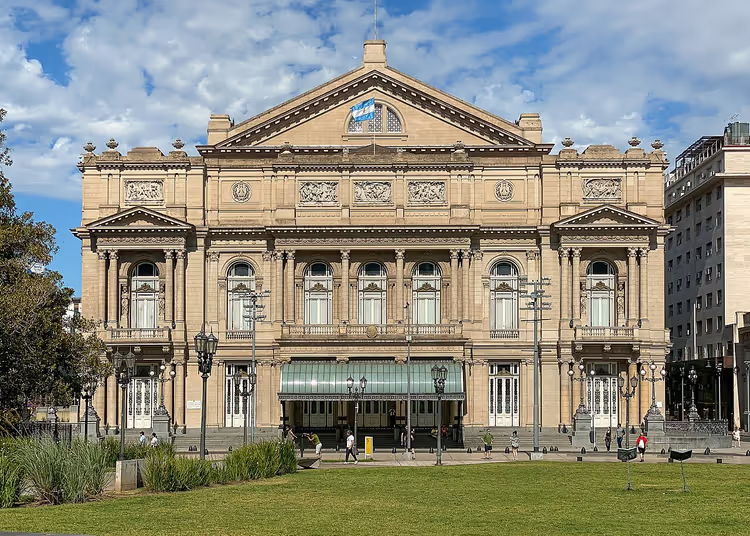
Inside, you'll see the Renaissance style in every detail. The hall is famous for its acoustics, which draw music lovers from around the world. Fyodor Chaliapin, Enrico Caruso, and Luciano Pavarotti performed on this stage.
Even if you're indifferent to opera, it's worth a visit. The building underwent a major restoration in the early 21st century and reopened its doors to the public. The hall seats several thousand spectators, and the season runs almost year-round: dozens of productions follow one another. Russian classics regularly appear in the repertoire.
The first Colón opened in 1857, designed by architect Carlos Pellegrini. The season in that building began with Giuseppe Verdi's "La Traviata." The current building was designed by architects Tamburini, Meano, and Dormal. The theater opened in 1908 with the opera "Aida."
The guided tour takes 50 minutes and starts every 15 minutes, from 10:00 to 16:45, seven days a week. Closed only on May 1 and on holidays in late December. Groups take up to 40 people, English sessions run at 11:00, 12:00, 13:00, and 15:00 (as of 09/2026, visit schedule).
Tickets cost 34,000 Argentine pesos, residents with a DNI pay less, children under 7 enter free (as of 09/2026, rates and box office). Buy at the box office at Tucumán 1171 or online. The route passes through the foyer, the bust gallery, the Golden Hall, and the main hall.
The catch: discounts apply only to residents with a document, so foreign tourists pay the full rate. Who it's for: those who want to see the hall from the inside without buying a performance ticket.
For performance tickets and city tours, check GetYourGuide.
Recoleta Cemetery
The overview ends where you usually don't expect a sight. Recoleta Cemetery works as an open-air museum: the vaults and tombstones here look like architectural monuments.
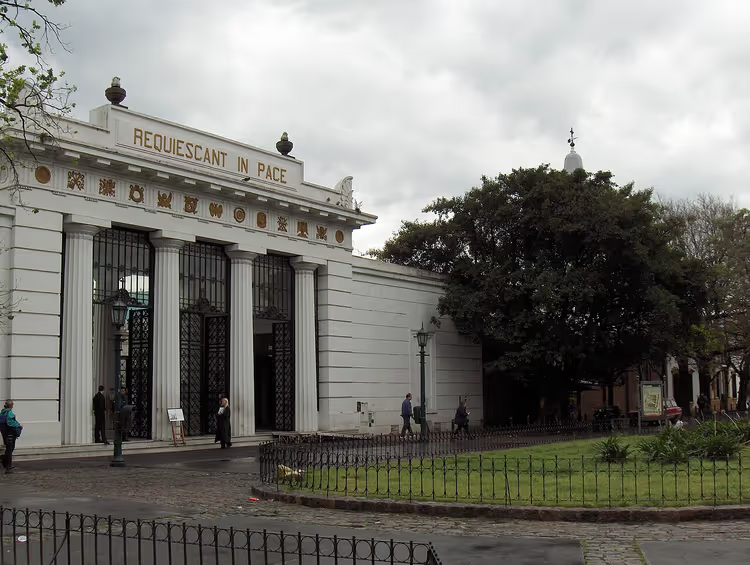 © Sking · CC BY-SAPhoto: Sking, CC BY-SA (http://creativecommons.org/licenses/by-sa/3.0/), Wikimedia Commons
Presidents of Argentina, politicians, scientists, and cultural figures are buried here. Rich vaults with columns and monuments try to capture the imagination. Walk slowly and read the plaques: famous names lie behind unremarkable fences.
The catch: many graves are abandoned and gradually deteriorating, with no one to care for them. Entry is paid, at a higher rate for foreign tourists, check the exact price and opening hours at the entrance.
Tours and tickets in Buenos Aires
Guided tours, skip-the-line tickets and activities — most offers can be cancelled free of charge.
See offers on GetYourGuideThe widget loads once you give your consent.
⁉️🤔 Frequently asked questions
How much does a tour of Teatro Colón cost?
The general rate for all visitors is 34,000 Argentine pesos, residents with a DNI pay half, and children under 7 enter free (as of 09/2026, theater visit page). Tickets are sold at the box office at Tucumán 1171 and online. The tour lasts 50 minutes, English sessions start four times a day.
Is it safe to walk in La Boca?
The tourist part of the district with Caminito Street is safe during the day: it's busy, with cafes and shops operating. Don't go deep into the blocks and don't walk along quiet alleys after sunset. Stick to busy places and watch your bag in the crowd.
What can you see in Buenos Aires for free?
The Obelisk on Plaza de la República, a walk through La Boca and Caminito, Palermo Park with its lakes, and the old center are free. Entry is paid at Recoleta Cemetery, the Japanese Garden, and the Teatro Colón tour. Plan your budget in advance for individual gardens and museums inside the park.
How much time should you allow for Recoleta Cemetery?
Plan about an hour, or better yet, more. The area is compact, but the vaults and tombstones are meant to be viewed slowly. Read the plaques by the fences: famous names lie behind unremarkable graves. Some burials are abandoned, so watch your step.
When is the best time to go to Palermo Park?
Come in the morning on a weekday: on weekends the central alleys and lakes are packed. Rent a boat on the artificial lake and walk through the rose garden, it's quieter there. The Japanese Garden operates on its own schedule, entry is separate and paid.
In short: what's worth booking
If you have two days, base yourself in the center: from there you can walk to the Obelisk and the theater. Leave La Boca for the morning, see Recoleta in the afternoon. If you're going for opera, buy your Colón ticket in advance: good seats go first.
If you're traveling with children, your route starts in Palermo Park, continues with boats on the lake and the planetarium. For overnight stays, choose a district near the center to spend less time on the road: hotels in Buenos Aires on Trip.com.

A small editorial team writing guides for independent travel. We travel ourselves, but we haven’t been everywhere, so we check prices, opening hours and how to get there against official sources.