
















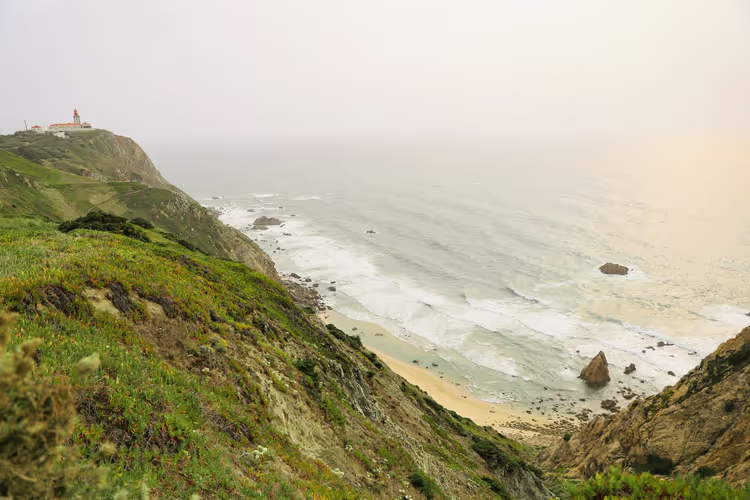
Cape Roca: the lighthouse at the edge of Europe and the route from Lisbon
Cape Roca in Portugal (Cabo da Roca) closes off continental Europe from the west. Beyond it lies only the Atlantic, and past that, America. People come here for the granite cliffs, the lighthouse, and the sunset over the ocean.
Getting to the cape is easy. A train runs from Lisbon to Sintra, and a bus goes from Sintra to Cabo da Roca. Entry is free, there are no ticket offices, and the viewing platform is open around the clock. The cape is part of the Sintra-Cascais Natural Park, and a lighthouse has been shining here since 1772 (according to the encyclopedic reference).
Ad: this article contains affiliate links, we earn a commission if you book through them, at no extra cost to you.
The westernmost point of Europe
💡 In short:
- Cape Roca is considered the westernmost point of continental Europe.
- Entry to the cape is free.
- The easiest way to get there is from Sintra by bus 1253, formerly numbered 403.
- The best light for photos comes about an hour before sunset.
- Transport and palace tickets: as of 09/2026, verified on the official CP website and the Sintra parks ticket page.
The cape lies at 38°46′ north latitude and 9°30′ west longitude, in the municipality of Sintra (according to the encyclopedic profile of the cape). It is the westernmost point of Portugal and of all continental Europe.
The viewing platform rises about 140 meters above the ocean (according to elevation data). Underfoot is a sheer granite cliff, and below, the waves constantly grind the rocks into white foam.
There is not much to see here besides the landscape, and that is the whole point. You stand on the edge of the continent, and ahead of you there is nothing but water all the way to the horizon.
History of the lighthouse
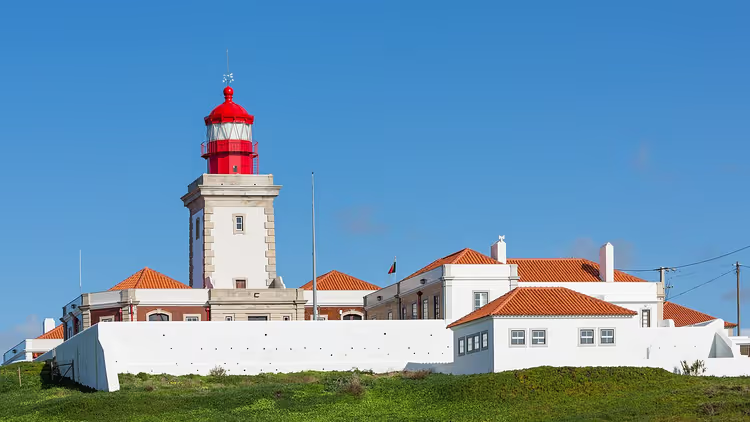 © CEphoto, Uwe Aranas · CC BY-SAPhoto: CEphoto, Uwe Aranas, CC BY-SA (https://creativecommons.org/licenses/by-sa/3.0), Wikimedia Commons
The cape is made of granite cliffs of the Serra de Sintra mountains, which push straight into the ocean. Dark magma is frozen into the cracks of the stone, which is why the granite looks striped and pinkish.
The Romans called this place Promontorium Magnum, and sailors of the Age of Discovery knew it as Roca de Lisboa, meaning the Rock of Lisbon. Later the Portuguese name Cabo da Roca, the Cape of the Rock, took hold.
In 1772 a lighthouse was built here, one of the oldest in the country (according to lighthouse data). Its white tower serves as a landmark for ships traveling along the coast. The lighthouse itself is closed to visitors, but the area around it is open to everyone.
The area around the cape is part of the Sintra-Cascais Natural Park. Several sites in the park, including the palaces of Sintra, are listed as UNESCO World Heritage Sites.
Description of the cliffs and the platform
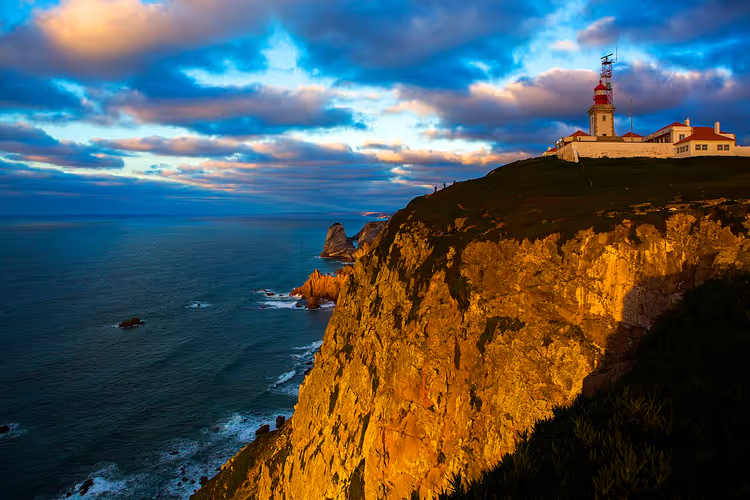 © Olga1969 · CC BYPhoto: Olga1969, CC BY (https://creativecommons.org/licenses/by/4.0), Wikimedia Commons
The top of the cape is covered with low hills. The western shore is rugged: small sandy beaches alternate with rock debris. Descending to the water over crumbling stone requires caution.
It is almost always windy here. Sometimes the gusts are so strong that walking becomes difficult, and that is normal for the westernmost point of the continent.
The rocks of the cape are covered with a succulent with thick leaves and yellow flowers. This is carpobrotus, a plant native to South Africa. Local farmers consider it a weed because it quickly takes over fields.
What to see at the cape
The main reason to come here is the endless view of the ocean. Waves crash against the granite with a roar.
Near the lighthouse stands a stone stele with a cross. Carved into it are the coordinates of the cape and a line by the poet Camões: "Here the land ends and the sea begins."
Nearby there is a tourist information point and a small restaurant. At the info point you can buy a certificate of visiting the westernmost point of Europe and send a postcard. The restaurant serves national seafood dishes.
- The catch: the wind and sun here are stronger than in Lisbon.
- Not for: anyone who wants to swim and lie on the beach, the ocean at the cape is cold and rough.
- How to get there: by bus from Sintra or Cascais, more on that below.
Tours to Cabo da Roca
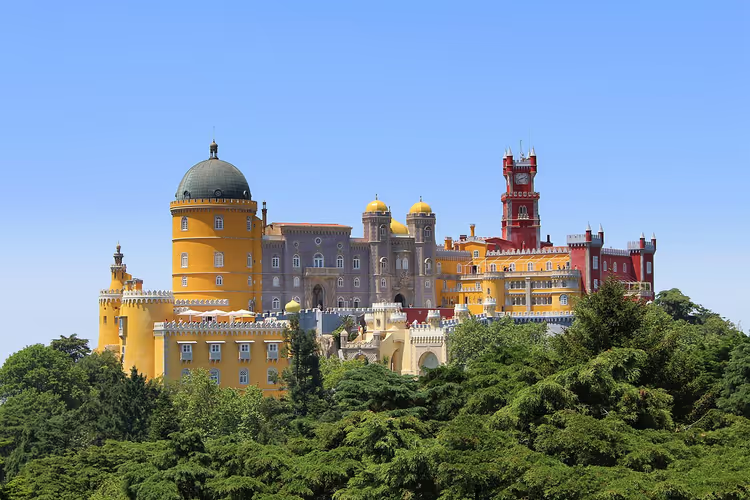 © Singa Hitam · CC BYPhoto: Singa Hitam, CC BY (https://creativecommons.org/licenses/by/2.0), Wikimedia Commons
Organized tours run from Lisbon to the cape. They're usually combined with the palaces of Sintra and Cascais, so you can see three places in one day.
A half-day tour ends with sunset over the ocean. A full day adds Pena Palace, Cabo da Roca, and the fishing town of Cascais. Guides tell the history and show you viewpoints you can't reach on your own.
Some routes run along the Atlantic coast. Along the way you'll see the sea cave Boca do Inferno and the dunes of Praia do Guincho beach.
Tours from Lisbon on GetYourGuide.
Tours and tickets in Lisbon
Guided tours, skip-the-line tickets and activities — most offers can be cancelled free of charge.
See offers on GetYourGuideThe widget loads once you give your consent.
How to get there from Lisbon
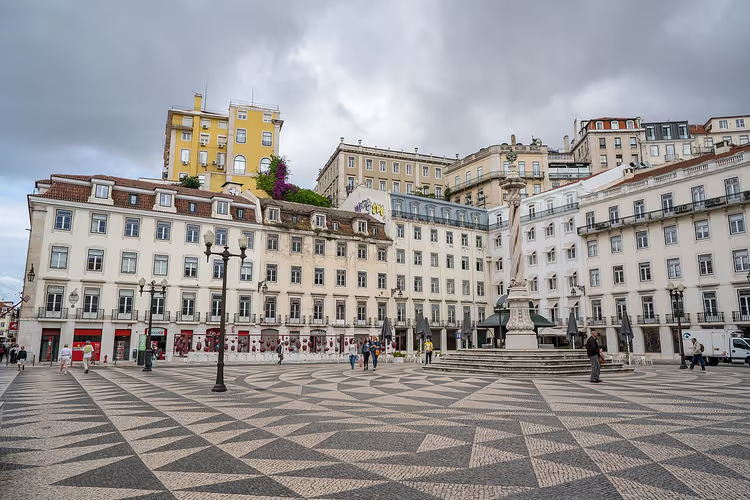 © Nan Palmero from San Antonio, TX, USA · CC BYPhoto: Nan Palmero from San Antonio, TX, USA, CC BY (https://creativecommons.org/licenses/by/2.0), Wikimedia Commons
Two convenient routes lead to the cape, via Sintra and via Cascais. Both start in Lisbon, but from different stations. Pick the one that fits your plan for the day.
Check train times on the CP train schedule and bus times in the Sintra guide (as of 09/2026).
Via Sintra
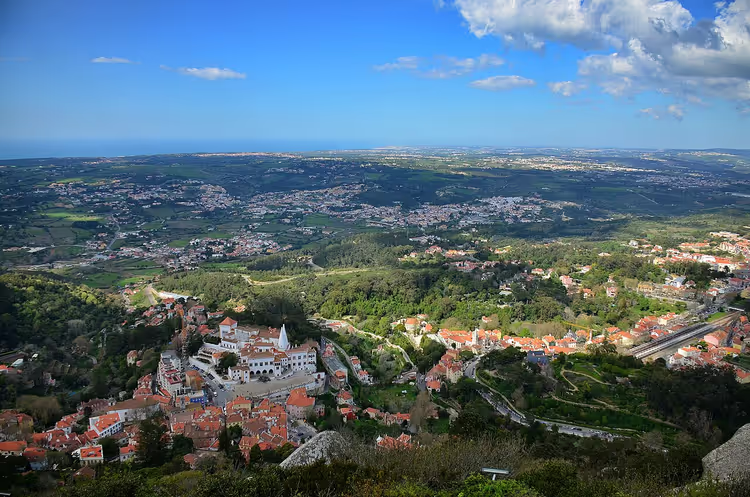 © Old Pionear · CC BY-SAPhoto: Old Pionear, CC BY-SA (https://creativecommons.org/licenses/by-sa/4.0), Wikimedia Commons
From Lisbon, the train leaves from Rossio station in the city center. The trip to Sintra takes under an hour; buy your ticket at the counter or a machine (schedule and prices: railway website).
From Sintra station, bus 1253 takes you straight to Cabo da Roca. This route used to be numbered 403, now it has a new number (per route 1253 data). The ride takes about 40 minutes, buy your ticket from the driver.
Sintra was the residence of the Portuguese kings; today it's a resort town with palaces and parks. The train arrives at the station, and Pena Palace sits on a hill above the town. It's a striking castle with multicolored towers, and it takes a couple of hours to see. Tickets are sold online for time slots; in summer, entry is timed (per the Sintra parks ticket page).
Besides Pena, the town has the Moorish Castle, Quinta da Regaleira, and Monserrate Palace with its park. Local buses run from the station to the palaces, and in the evening you can continue on to the cape.
Via Cascais
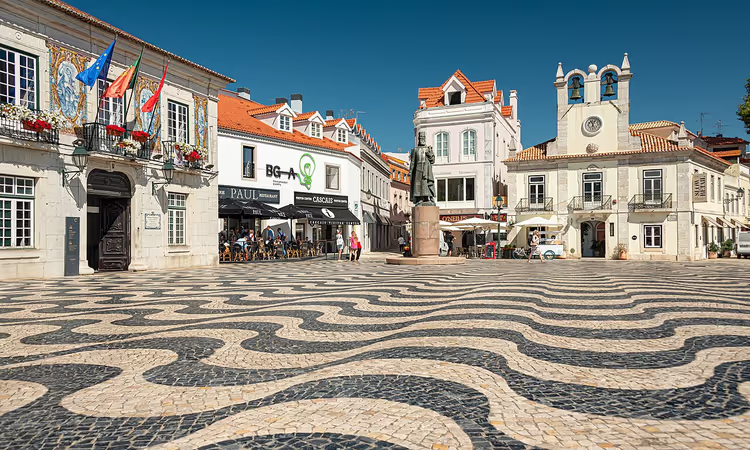 © Jorge Franganillo · CC BYPhoto: Jorge Franganillo, CC BY (https://creativecommons.org/licenses/by/2.0), Wikimedia Commons
The second route is shorter. The train from Lisbon to Cascais leaves from Cais do Sodré station, and the journey takes under an hour (per carrier CP data).
Cascais began as a fishing village and became a royal resort in the 19th century. Today it's a town with beaches, hotels, and restaurants, and a popular stop on the way to the cape.
Worth seeing here are the Boca do Inferno sea cave and Praia do Guincho beach, a favorite with surfers. The center has preserved royal palaces and an old church that survived the Lisbon earthquake.
From Cascais bus station, across from the railway station, bus 1624 takes about half an hour to Cabo da Roca (per the page for buses 1253 and 1624). Again, buy your ticket from the driver.
Best time to go
The cape is constantly windy. During the day the wind is moderate, but after sunset it turns cold and piercing. Bring a sweater and a jacket, even if it's hot in Lisbon.
In summer, central Portugal swelters, but the cape is always cooler because of the ocean. You feel the difference immediately: you step off the bus and realize you dressed too lightly.
The ocean water at the cape is cold year-round. Further south, on the Algarve beaches, swimming is more comfortable, but here the ocean barely warms up.
The best time to visit starts an hour before sunset. The sun sinks into the ocean, the cliffs turn fiery red, and that's the signature shot of the whole trip. Arrive early to get a spot by the parapet.
Where to stay
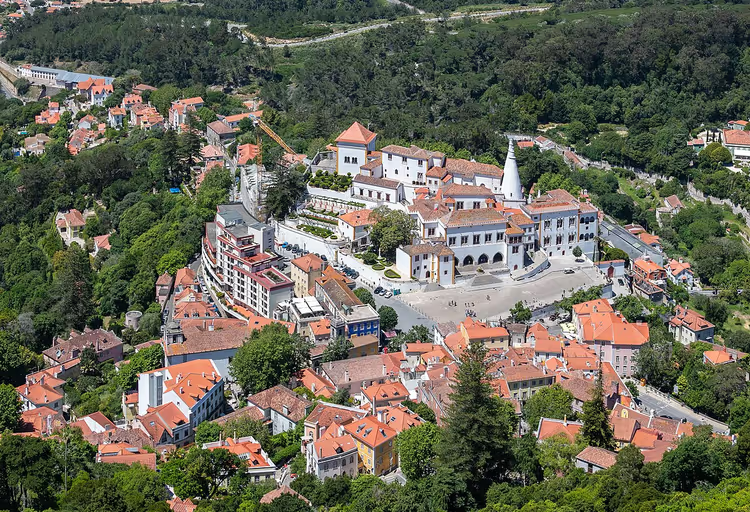 © Diego Delso · CC BY-SAPhoto: Diego Delso, CC BY-SA (https://creativecommons.org/licenses/by-sa/4.0), Wikimedia Commons
If you want to spend a couple of days at the edge of Europe, base yourself in Sintra or Cascais. There are plenty of hotels and guesthouses here, for any budget.
Sintra is the more convenient choice: a direct bus runs from here to the cape, and the palaces and parks are nearby.
In the town center you can stay at the modern Sintra Bonanza VH's complex or at the quiet Sarrazola Garden guesthouse with a garden.
For a longer stay, apartments at Navegantes with a pool and the Nice Way hostel in a 1960s building are good options.
Near Praia Grande beach are the Oceano hotel with ocean views and Arribas Sintra right on the shore.
On a cliff right by the ocean is the Casal Santa Virginia guesthouse, and near Praia Grande and Praia de Maçãs beaches is Casa Bolacha.
Check prices and availability for your travel dates. In summer, rooms fill up fast, so book early.
⁉️🤔 Frequently asked questions
When is the best time to visit Cabo da Roca?
The best time starts an hour before sunset: the cliffs light up and the ocean changes color. It's also beautiful during the day, but the light is flat. In winter it gets dark early, so arrive by lunchtime. A jacket comes in handy in any season.
How much does it cost to enter Cabo da Roca?
Entry is free. You only pay for transport, food, and souvenirs. Tours from Lisbon are paid separately.
How do you get to the cape without a car?
First take the train from Lisbon to Sintra or Cascais, then a bus. From Sintra, route 1253 (formerly 403) will get you there; from Cascais, route 1624 (formerly 403). Buy your ticket from the driver, and check the schedule on the carrier's website before your trip.
Can you swim at Cabo da Roca?
The ocean at the cape is cold and has strong currents, so comfortable swimming is rare here. The local beaches are better for walking and surfing than for long swims. If you want warm water, plan for the beaches of southern Portugal.
What is there to see near Cabo da Roca?
Nearby there's a lighthouse, an info point with the certificate, and a seafood restaurant. A bit farther away are Cascais with the Boca do Inferno cave and Sintra with the Pena Palace and the Moorish Castle. Many people combine the cape with these places in one day.
Cabo da Roca on the map
Cabo da Roca is located about 40 kilometers west of Lisbon, in the municipality of Sintra (according to the geographic description). For your GPS, use the coordinates 38.7808, -9.5006.
Cabo da Roca in Portugal
Places on the map
- Cabo da Roca The westernmost point of continental Europe, lighthouse since 1772
In short: what's worth booking
Cabo da Roca doesn't sell tickets, but there are plenty of paid experiences around it. Choose based on your type of trip.
- If you have one day from Lisbon: book a sunset tour on GetYourGuide.
- If you're staying overnight: check out Sintra hotels on Trip.com.
- If you're traveling independently: start with Sintra and its palaces, then take the bus to the cape.
Arrive for sunset, bring a jacket, and check the time of the last return bus in advance.

A small editorial team writing guides for independent travel. We travel ourselves, but we haven’t been everywhere, so we check prices, opening hours and how to get there against official sources.