
















Museums of Yerevan: 19 places worth visiting in 2026
In Yerevan there are dozens of museums, and almost every one has its own schedule. A ticket rarely costs more than lunch.
We've put together nineteen museums in Yerevan. This includes Urartu archaeology, the Matenadaran manuscripts, Parajanov's collages, and microsculptures in the eye of a needle. For each place you'll see why to go there, how much a ticket costs, and how much time to allow.
Ad: this article contains affiliate links, we earn a commission if you book through them, at no extra cost to you.
Museums in Yerevan: what's important to know
💡 In short:
- Monday is a day off at the main state museums, plan your visit for Tuesday through Saturday.
- Small house museums take less than an hour, no advance time slot needed.
- The Cafesjian Center for the Arts on the Cascade is free to visit.
- Prices and opening hours: 09/2026, verified on the official website
Nineteen museums can't be squeezed into one day. Many museums are located in the center near Republic Square and the Cascade. The rest require a short metro or taxi ride.
Tickets, opening hours, and transport
We checked four venues that most city visitors go to. The prices and schedule below are verified against the museums' official websites.
Museum | Admission | Opening hours |
|---|---|---|
Matenadaran | 2,000 AMD for an adult ticket (as of 09/2026, Matenadaran hours and tickets) | Tue-Sat, 10:00-17:50 |
History Museum of Armenia | 2,500 AMD (as of 09/2026, History Museum hours and tickets) | Tue-Sat 11:00-18:00, Sun 11:00-17:00 |
Sergei Parajanov Museum | ticket at the entrance, check the price at the ticket office | daily, 10:00-17:30 (as of 09/2026, Parajanov Museum schedule) |
Cafesjian Center for the Arts | free (as of 09/2026, gallery admission and hours) | galleries Fri-Sun 10:00-20:00, escalator gallery daily 8:00-20:00 |
Tickets for house museums are sold at the entrance. No advance booking is needed. The schedule changes on public holidays, so check the museum's website before your visit.
Tours and tickets in Yerevan
Guided tours, skip-the-line tickets and activities — most offers can be cancelled free of charge.
See offers on TiqetsThe widget loads once you give your consent.
Below is the list of museums. In each entry you'll find a photo, a description of the collection, and practical details. This makes it easier to decide what to put on your itinerary and what to skip.
1. History Museum of Armenia
 © EvgenyGenkin · CC BY-SAPhoto: EvgenyGenkin, CC BY-SA (https://creativecommons.org/licenses/by-sa/4.0), Wikimedia Commons
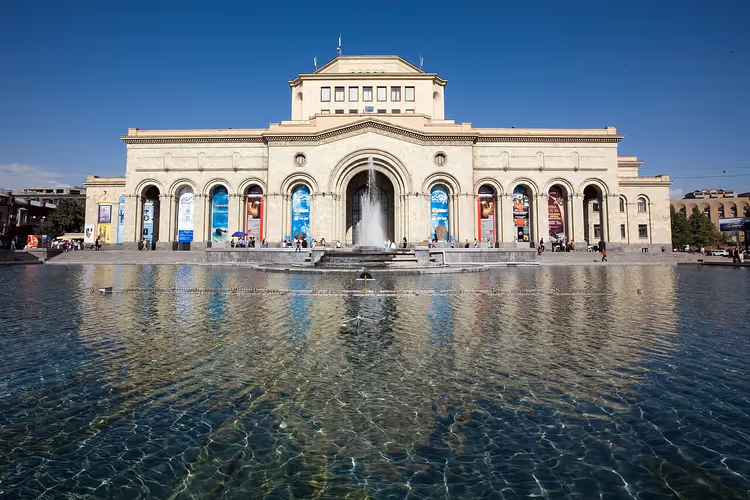
The History Museum of Armenia stands on Republic Square, in a building with tall arches and massive columns. This is the republic's first museum, opened in 1919 (as of 09/2026, official website). The collection has grown to 400,000 items and is considered the country's most complete archaeological collection.
You'll walk through a chronology from stone tools and Urartu cuneiform to carpets, coins, and engraved weapons. Separate display cases are devoted to gold and jewelry from excavations. The halls follow one after another, so it's easy to explore even without a guide.
- Cost: 2,500 AMD for adults, half price for discounted categories (as of 09/2026, official website)
- Who it's for: those who want to understand Armenia's history in a single visit.
- The catch: the museum is closed on Mondays.
2. Museum of Modern Art
 © 23artashes · CC BY-SAPhoto: 23artashes, CC BY-SA (https://creativecommons.org/licenses/by-sa/4.0), Wikimedia Commons
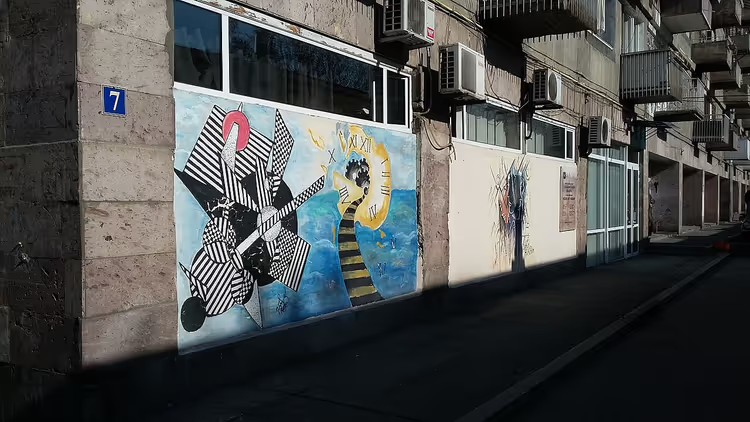
The Museum of Modern Art opened in the early seventies. It was one of the first venues in the Soviet Union to show works by twentieth-century artists. It occupies the ground floor of a residential building, so the rooms are compact and the paintings hang close together.
Here you will see Armenian surrealism, installations, graphic art, and sculpture. Some of the works are built on absurdity and make you smile. Others bring you back to a conversation about everyday life and family values.
- Who it's for: those who are tired of the classics and want contemporary art.
- The catch: the exhibition is small; forty minutes will be enough.
3. Sergei Parajanov Museum
 © Tiia Monto · CC BY-SAPhoto: Tiia Monto, CC BY-SA (https://creativecommons.org/licenses/by-sa/3.0), Wikimedia Commons
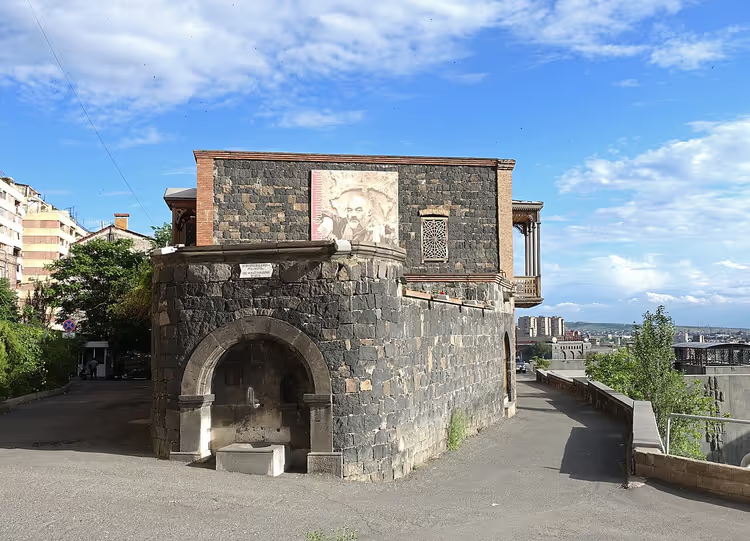
The Sergei Parajanov House-Museum stands above the Hrazdan River gorge. The terrace looks out onto Mount Ararat. The director never lived in Yerevan, but this is where his collages, sketches, and assemblages are kept.
The collection occupies two floors of a stone house. You move from room to room: next to sketches for "Shadows of Forgotten Ancestors" hang dozens of variations of the Mona Lisa with different faces. Parajanov knew how to build a work of art out of simple things, and you can see it in every display case.
- Hours: daily, 10:00-17:30 (as of 09/2026, official website)
- Who it's for: those who know the director's films, and all lovers of collage.
4. Erebuni Museum
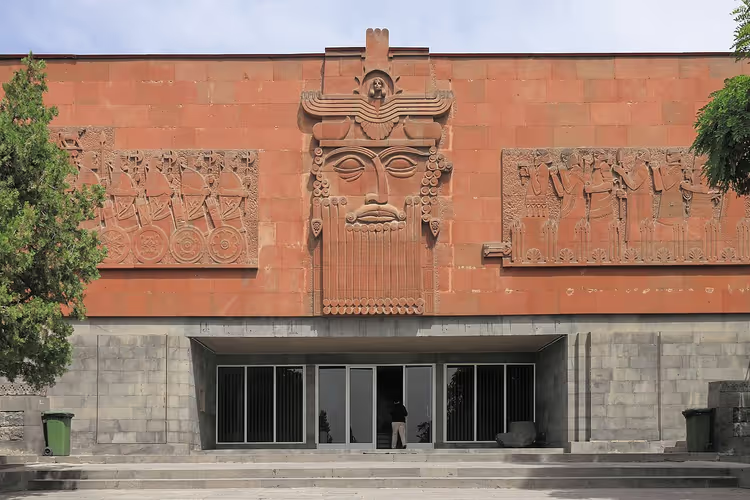 © Marcin Konsek · CC BY-SAPhoto: Marcin Konsek, CC BY-SA (https://creativecommons.org/licenses/by-sa/4.0), Wikimedia Commons
The Erebuni Museum stands at the foot of Arin Berd hill. A Urartian fortress once rose on the hill, and the history of Yerevan begins at this spot. The museum reads like a prologue to the city, and its facade matches: red tuff and bas-reliefs.
The exhibition unfolds across two floors. You will see cuneiform tablets, frescoes, weapons, jewelry, ceramics, and gold objects from the excavations. Much of it was found right on the hill, so the objects are connected to the landscape outside the window.
- Who it's for: those who want to see Urartu and understand where Yerevan came from.
- Before your visit: check the schedule and tours on Visit Armenia.
5. Yerevan History Museum
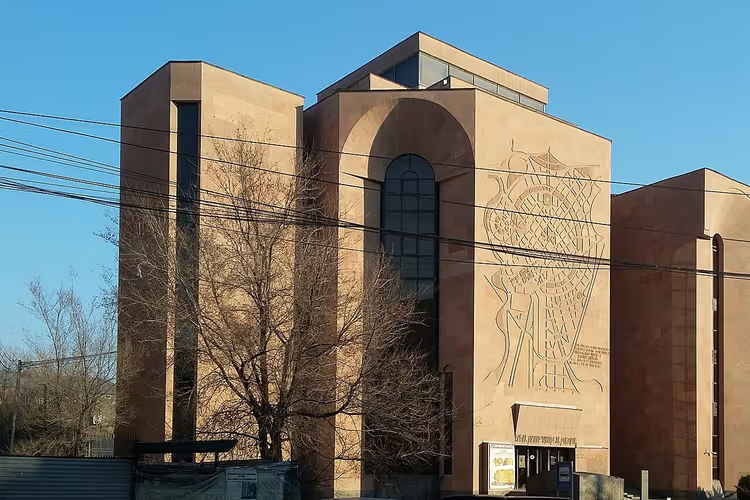 © 23artashes · CC BY-SAPhoto: 23artashes, CC BY-SA (https://creativecommons.org/licenses/by-sa/4.0), Wikimedia Commons
The Yerevan History Museum occupies the left wing of the city hall building. It is one of the oldest museums in the city. The exhibition shows Yerevan from its founding to the present day through archaeology, ethnography, and numismatics.
The collection numbers tens of thousands of items. You will see ceramic beer vessels that are more than two and a half thousand years old, musical instruments, old photographs, and models of the city. One of the rooms recreates the interiors of homes from different social classes.
Separate displays are devoted to paintings by Armenian artists, stamp collections, printing presses, and the first film cameras. There is also a costume room with festive outfits featuring the finest lacework. The exhibition moves through the eras, so you can easily spend an hour or two here.
- Who it's for: those who are spending several days in Yerevan and want to understand the city.
6. Yervand Kochar House-Museum
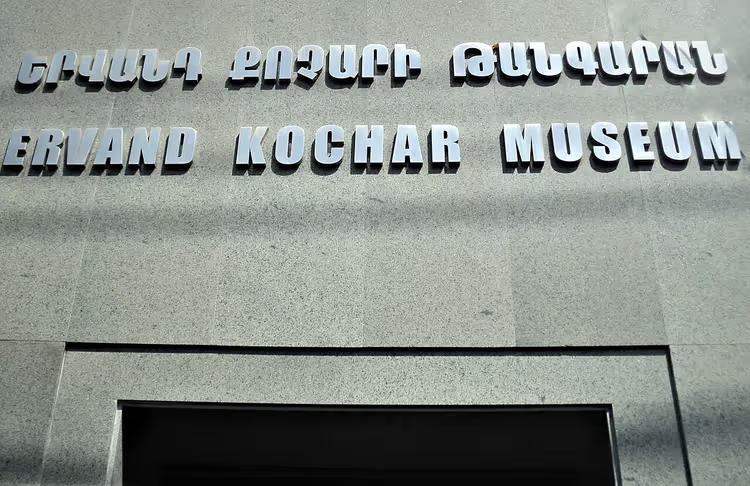 © Armineaghayan · CC BY-SAPhoto: Armineaghayan, CC BY-SA (https://creativecommons.org/licenses/by-sa/4.0), Wikimedia Commons
Yervand Kochar was one of the key Armenian avant-garde artists of the early twentieth century. He worked with cold wax paints and achieved volume where others saw only a flat surface. The house-museum preserves his paintings, sculpture, and graphic art along with his personal belongings.
You will see "The Horrors of War," "Melancholy," and "Ecstasy," alongside sketches and working drafts. The paintings demand attention. Behind the bright patches of color hide cubist lines and surrealist figures.
The exhibition brings together works from different years, so the retrospective reads as a whole.
- Who it's for: those interested in the avant-garde and sculpture.
7. Armenian Genocide Museum
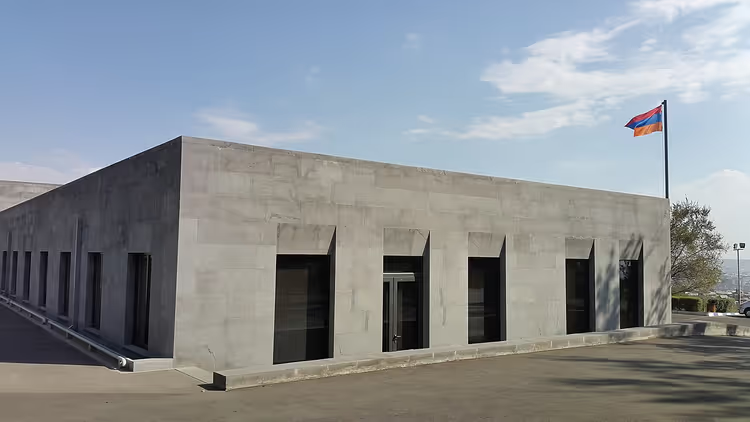 © XenonX88 · CC BY-SAPhoto: XenonX88, CC BY-SA (https://creativecommons.org/licenses/by-sa/4.0), Wikimedia Commons
The Armenian Genocide Museum sits on the hill of Tsitsernakaberd, next to the memorial to the victims of 1915 (as of 09/2026, official website). By design, the halls descend into the ground, and you find yourself inside the hill.
The exhibition is built from archival documents, photographs, and letters. The materials show how the massacre was planned and carried out, how Armenians resisted, and how the world reacted. This is a heavy museum. You will need a pause after it.
- Who it's for: those who want to understand the tragedy and its place in Armenian history.
- Not for: families with small children, the subject is not for kids.
8. Hovhannes Tumanyan house museum
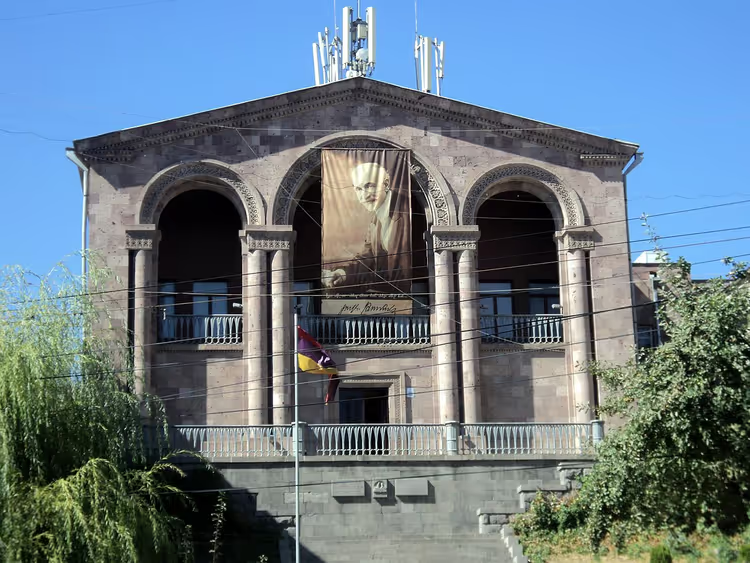 © Armineaghayan · CC BY-SAPhoto: Armineaghayan, CC BY-SA (https://creativecommons.org/licenses/by-sa/3.0), Wikimedia Commons
The Hovhannes Tumanyan House Museum operates in the city center, in a two-story building with a three-arch arcade. Tumanyan wrote narrative poems, ballads, fairy tales, and lyric poetry. In Armenia, almost everyone reads him in school.
Inside you will find manuscripts, a library, personal belongings, and photographic documents. The recreated interiors of the living room, study, and dining room are especially interesting. You can see how the poet lived and worked.
The poet's library stands apart, and the spines reveal the range of his reading. Forty minutes is enough to see the house museum, yet the rooms do not feel empty.
- Who it's for: those who want to see not display cases, but a lived-in home.
9. Matenadaran: the largest manuscript repository
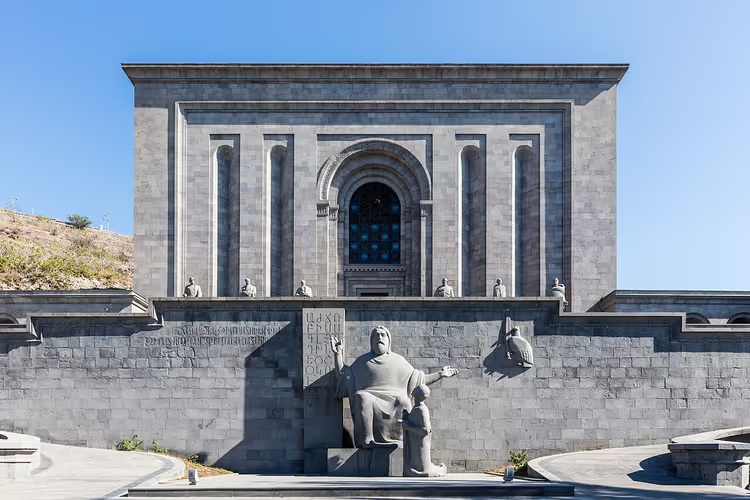 © Diego Delso · CC BY-SAPhoto: Diego Delso, CC BY-SA (https://creativecommons.org/licenses/by-sa/4.0), Wikimedia Commons
Matenadaran translates as a book depository. It is the world's largest collection of Armenian manuscripts. The building stands in the upper part of Mashtots Avenue, its facade resembles an ancient temple, and sculptures of scholars and poets stand at the entrance.
The halls display manuscripts, early printed books, parchments, and maps. Part of the exhibition is dedicated to restoration: you can see how pages are cleaned and re-bound. An adult ticket costs 2,000 AMD (as of 09/2026, ticket page).
The exhibition is arranged chronologically. It also features works by ancient scholars and archival records. A visit takes about an hour, so Matenadaran is a good fit for the second half of the day.
- Who it's for: those interested in writing systems and the history of books.
10. Martiros Saryan house museum
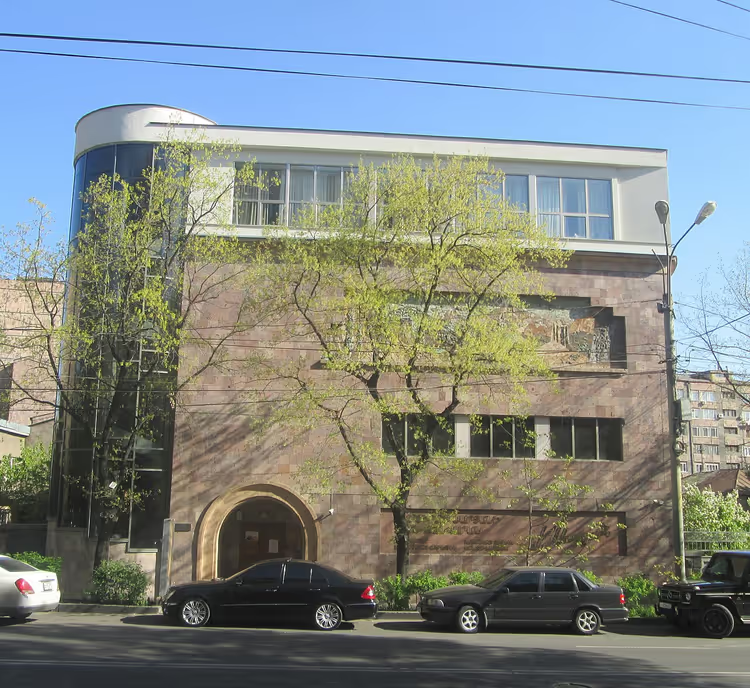 © Sophie Sarian · CC BY-SAPhoto: Sophie Sarian, CC BY-SA (https://creativecommons.org/licenses/by-sa/4.0), Wikimedia Commons
Martiros Saryan is called a master of sunny art. His colors look fresh even on old canvases. The house museum has preserved the studio and living rooms in their original state, so you step directly into the artist's working environment.
The collection includes about three hundred works: panels, studies, portraits, views of Yerevan courtyards and mountain villages. The master's palettes, brushes, stretchers, and paints are displayed nearby.
Separate halls are devoted to graphics and still lifes, showing how the artist worked on composition.
- Who it's for: those who want to see an artist's paintings and daily life in one place.
11. ARARAT Museum
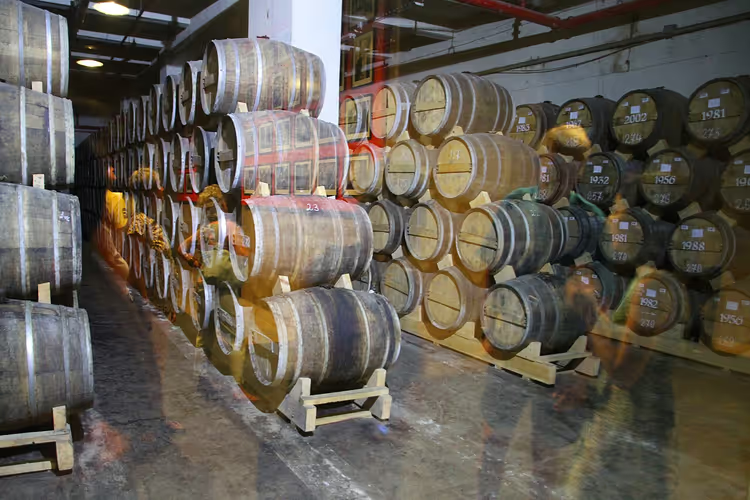 © Gerd Eichmann · CC BY-SAPhoto: Gerd Eichmann, CC BY-SA (https://creativecommons.org/licenses/by-sa/4.0), Wikimedia Commons
The ARARAT Museum operates at the Yerevan Brandy Company and tells the story of Armenian brandy. The exhibition is small but dense. You will see awards, certificates, gift bottles from different years, and displays with photographs of famous guests of the enterprise.
A separate hall is occupied by oak barrels with names. They were filled in honor of visits by politicians and cultural figures. The visit includes a tasting, so the tour should be planned in advance (as of 09/2026, official website).
- Tour: tasting tour on GetYourGuide
- Who it's for: those who want not only to see but also to taste.
- The catch: the exhibition itself takes up just one hall.
12. Aram Khachaturian house museum
 © 23artashes · CC BY-SAPhoto: 23artashes, CC BY-SA (https://creativecommons.org/licenses/by-sa/4.0), Wikimedia Commons
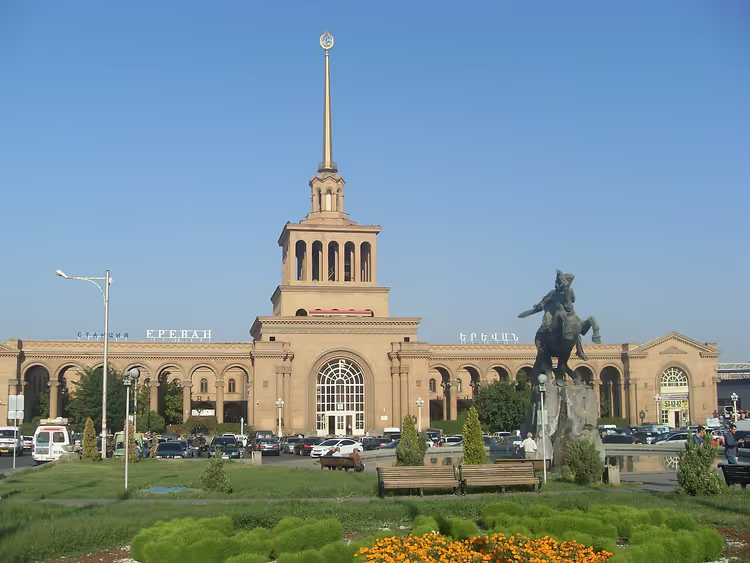
The Aram Khachaturian House Museum opened in the early eighties. It preserves the memory of the composer whose music became part of the world's classical repertoire. The facade is decorated with marble arches that resemble tuning forks.
The collection occupies spacious halls and includes thousands of items. You will see manuscripts, sheet music, records, posters, family photographs, and personal belongings. The exhibition features a grand piano, a conductor's tailcoat, and a collection of musical instruments. The interiors of the study and living room have been recreated from old photographs.
- Who it's for: those who know the "Sabre Dance" and want to get to know its composer better.
13. Charles Aznavour house museum
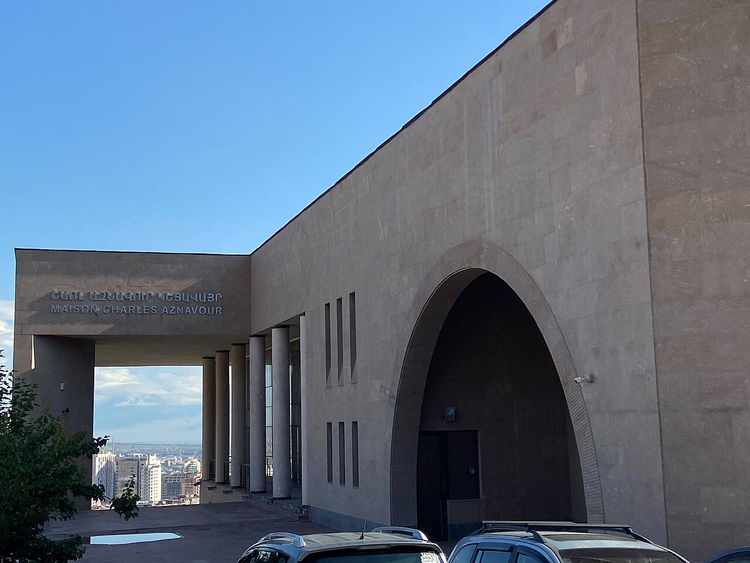
The Charles Aznavour House Museum occupies the upper tier of the Cascade and unfolds across five floors. The singer himself was involved in the interior design, so the space feels personal rather than institutional.
 © Textfabrikant · CC BY-SAPhoto: Textfabrikant, CC BY-SA (https://creativecommons.org/licenses/by-sa/4.0), Wikimedia Commons
The bright halls display the maestro's awards, orders, books, recordings, and photographs. The complex has two concert halls, one of which is open-air. The museum covers more than a thousand square meters, and a visit takes about an hour.
- Who it's for: those who grew up on Aznavour's songs and want to see his personal belongings.
14. Yeghishe Charents museum of literature and arts
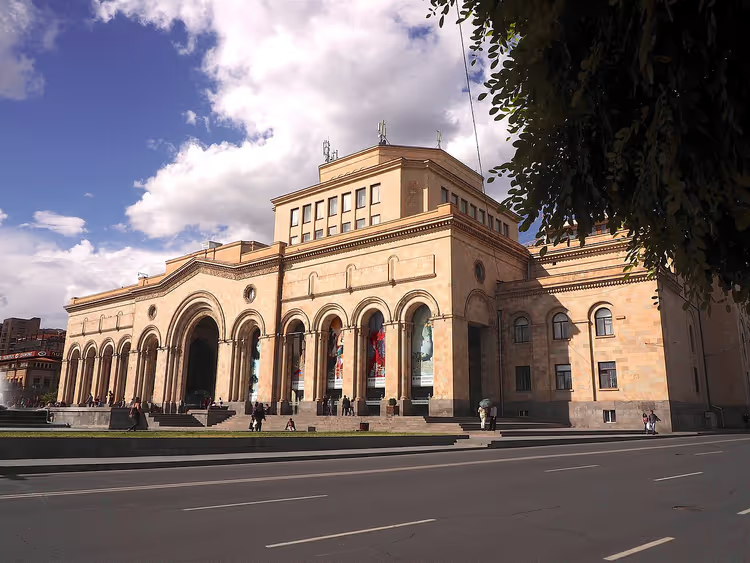
The Yeghishe Charents Museum of Literature and Arts collects everything related to Armenian culture: literature, music, theater, and cinema. The exhibition spans three centuries and occupies five halls.
 © Clay Gilliland from Chandler, U.S.A. · CC BY-SAPhoto: Clay Gilliland from Chandler, U.S.A., CC BY-SA (https://creativecommons.org/licenses/by-sa/2.0), Wikimedia Commons
You will see stage props, costumes, posters, placards, musical instruments, and caricatures. The museum also holds personal archives of writers and poets. The oldest exhibit is a handwritten songbook from the 18th century that belonged to the poet Sayat-Nova.
- Who it's for: those interested in Armenian literature and theater.
15. Geological Museum of Armenia
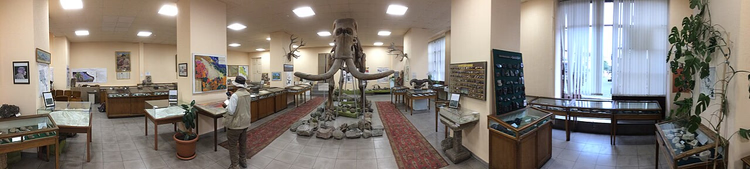
The Geological Museum of Armenia operates in the building of the Institute of Geology. It showcases the depths of the Armenian Highlands: this is a permanent exhibition of natural resources, not an entertainment center.
 © Ivtorov · CC BY-SAPhoto: Ivtorov, CC BY-SA (https://creativecommons.org/licenses/by-sa/4.0), Wikimedia Commons
In the display cases you will see tuff, granite, marble, basalt, amber, perlite, travertine, and gemstones. A prehistoric elephant skeleton has a special place of its own. Fossilized shells and corals are a reminder that a sea once covered Armenia.
- Who it's for: those visiting with children who want to see stones and fossils.
16. Cafesjian Center for the Arts
 © Marcin Konsek · CC BY-SAPhoto: Marcin Konsek, CC BY-SA (https://creativecommons.org/licenses/by-sa/4.0), Wikimedia Commons
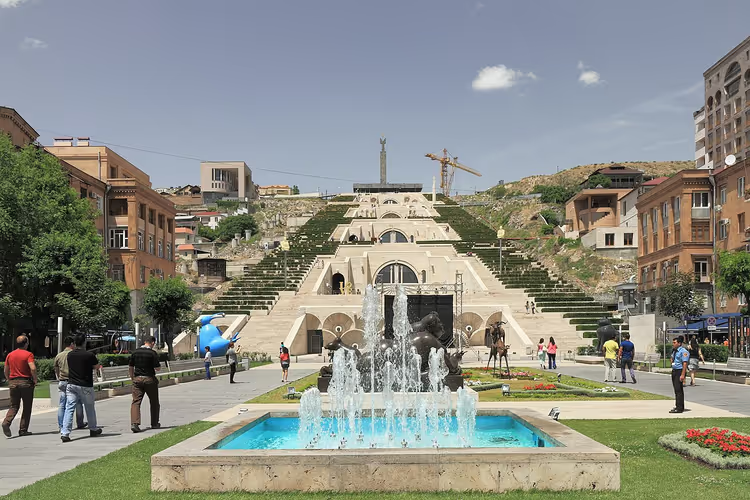
The Cafesjian Center for the Arts occupies the Cascade and brings together galleries, a sculpture garden, fountains, and observation decks. Admission to all galleries is free (as of 09/2026, official website). It is the most accessible arts venue in the city.
The collection numbers thousands of works. As you walk up the steps, you will encounter a lion made of car tires, a cat with large paws, a blue penguin, and a chair shaped like a hand. The galleries are open on Fridays, Saturdays, and Sundays. The sculpture garden is always open.
- Who it's for: those who want to combine a walk with contemporary art.
- The catch: the gallery exhibitions are open only three days a week.
17. Alexander Spendiaryan house museum
 © Armineaghayan · CC BY-SAPhoto: Armineaghayan, CC BY-SA (https://creativecommons.org/licenses/by-sa/3.0), Wikimedia Commons
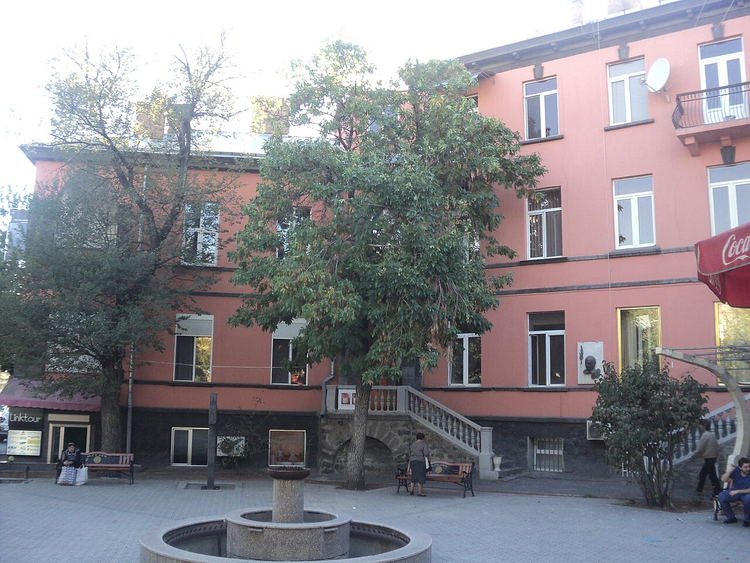
The Alexander Spendiaryan House Museum is tucked away on a quiet street in the city center. Spendiaryan stood at the origins of Armenian symphonic music and wrote the opera "Almast". The exhibition occupies just three rooms, yet it contains more than a thousand items.
The rooms display the composer's sheet music, manuscripts, photographs, and personal belongings. A piano and violins hold a special place. With an interactive game, you can step up to the podium and try being a virtual conductor.
- Who it's for: those who want to see a composer's everyday life with almost no museum distance.
18. Ter-Kazaryan museum of micro art
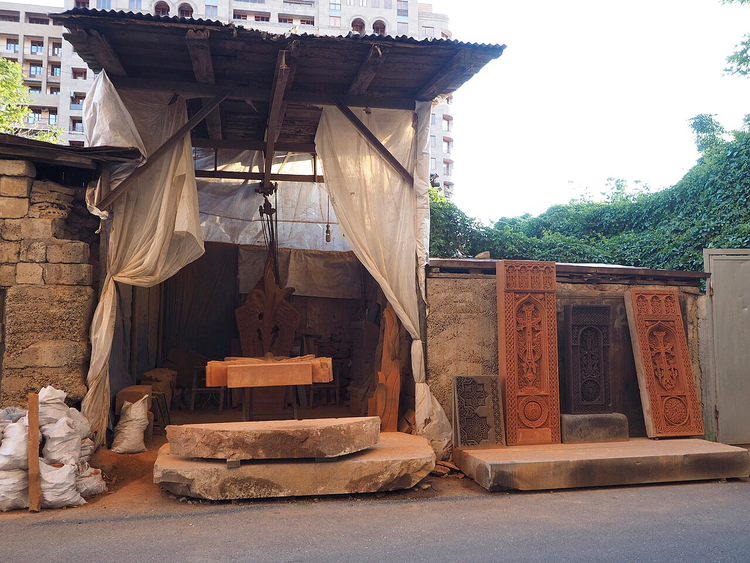
The Ter-Kazaryan Museum of Micro Art showcases the work of miniaturist Eduard Ter-Kazaryan. His sculptures fit inside the eye of a needle, so they can only be viewed through magnifying devices.
 © Clay Gilliland from Chandler, U.S.A. · CC BY-SAPhoto: Clay Gilliland from Chandler, U.S.A., CC BY-SA (https://creativecommons.org/licenses/by-sa/2.0), Wikimedia Commons
You will see a camel caravan made of precious stones, a tiny violin, bouquets of roses, the Statue of Liberty, and portraits of famous people. The most unusual exhibit is a miniature television where wrestlers move. A film about the master's technique is shown in the hall.
- Who it's for: those who want to surprise their children and themselves with an unusual museum.
- The catch: you need a magnifying device; from a distance you cannot make anything out.
19. Komitas Museum-Institute
 © Pandukht · CC BY-SAPhoto: Pandukht, CC BY-SA (https://creativecommons.org/licenses/by-sa/4.0), Wikimedia Commons
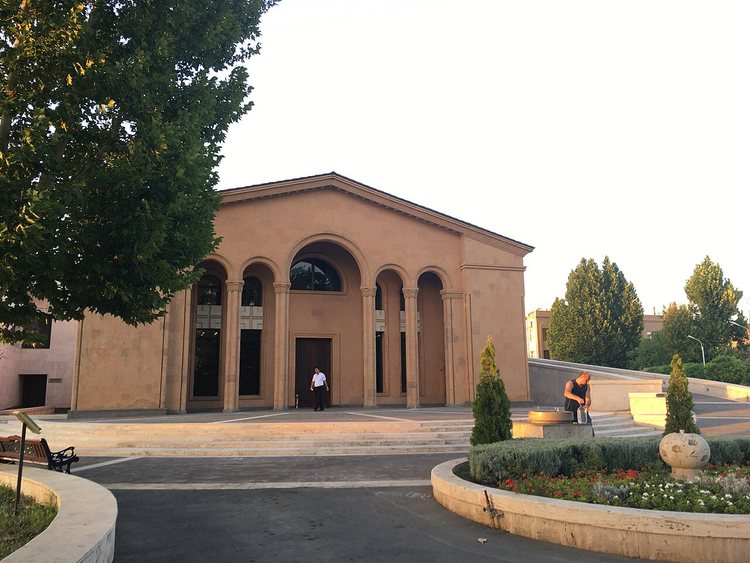
The Komitas Museum-Institute is dedicated to the composer and collector of folk songs. Komitas traveled through villages and recorded melodies that would otherwise have been lost. It is one of the first cultural institutions of independent Armenia.
The exhibition occupies eight halls, some of them equipped with interactive screens. Here you will see the musicologist's manuscripts, personal belongings, documents, and recordings. The museum also houses a library, a concert venue, and a recording studio.
- Who it's for: those interested in music and folklore.
Yerevan museums on the map
Plan a route that fits your day on the map: the center, the Cascade, and the outskirts are visible at a glance.
⁉️🤔 Frequently asked questions
How much do tickets to Yerevan museums cost?
The History Museum of Armenia is the most expensive: an adult ticket costs 2,500 AMD (as of 09/2026, museum's official website). At Matenadaran, a ticket costs 2,000 AMD (as of 09/2026, tickets page). The Cafesjian Center for the Arts at the Cascade is free to enter.
Which day should I choose for museums?
Monday is not the best day: the History Museum of Armenia and Matenadaran are closed that day (as of 09/2026, official website). Plan your visits from Tuesday through Saturday, and you'll have the main venues open.
How much time should I set aside for museums?
The two main museums take half a day: about an hour for Matenadaran and another hour or two for the History Museum of Armenia. Small house museums take from half an hour to an hour. If that's not enough, add Parajanov, Saryan, and a walk up the Cascade.
Can I just show up without a reservation?
Yes, reservations are rarely required. Tickets to house museums are sold at the entrance, and there are almost never lines. There is one exception: the ARARAT Museum at the brandy factory. Visits there include a tasting and run in scheduled sessions (as of 09/2026, tour description), so it's better to buy a ticket in advance.
Which Yerevan museums are free?
You can enter the galleries of the Cafesjian Center for the Arts at the Cascade for free (as of 09/2026, visiting rules). The sculpture garden is open around the clock and also has no admission fee. Other venues charge anywhere from a few hundred to a few thousand drams; check the museum's website for the exact amount.
In short: what's worth booking
Yerevan museums rarely require reservations. At most of them, you simply walk in and buy a ticket on the spot. The only things worth planning ahead are the ARARAT Museum with its tasting and large city tours.
- If you have one day: the History Museum of Armenia in the morning and Matenadaran after lunch.
- If you have three days: add Parajanov, Saryan, and a walk up the Cascade.
- If you're with kids: the Ter-Kazaryans' micro-art, the Geological Museum, and the Cascade sculptures.
City tours and tickets are easy to find on GetYourGuide or browse on Tiqets.

A small editorial team writing guides for independent travel. We travel ourselves, but we haven’t been everywhere, so we check prices, opening hours and how to get there against official sources.