
















20 Resorts in Italy with sandy beaches: where it is shallow and where it is deep
A sandy shore in Italy is chosen for the sake of children.
Sand is more comfortable for children than pebbles, which is why sandy resorts in Italy are always in demand. But they vary greatly in depth, prices, and season length. We've gathered 20 spots from the Adriatic to Sicily and Calabria where the shore is truly sandy. For each resort, we've noted who it suits and what to consider before the trip.
Ad: this article contains affiliate links, we earn a commission if you book through them, at no extra cost to you.
How to choose a sandy beach resort in Italy
The Italian shore is divided into a free zone and a beach club. On the free strip, you lay down your towel for free. At the club, you get a lounger and umbrella for a fee, but there's a shower, bar, and lifeguard nearby. Water quality is checked by the Bandiera Blu program: in 2026, 525 beaches in the country received the flag (as of 09/2026, FEE).
The season depends on latitude. On the Adriatic, people swim from late May through September; in Sicily and Calabria, the sea stays warm longer. In July and August, the south is hot, so many choose June or the first half of September.
💡 In short:
- With little kids: Rimini, Lido di Jesolo, Mondello, Senigallia, and Gallipoli, where the bottom is shallow.
- For city life and architecture: Palermo, Sanremo, Cefalù, and Otranto.
- For thermal springs: the island of Ischia.
- For quiet and sea views: Scilla, Maratea, and Tropea.
- Beach conditions and water quality: 09/2026, according to the Bandiera Blu program and the Riviera di Rimini portal.
Resort | Region | Shore | Who it's for |
|---|---|---|---|
Rimini | Emilia-Romagna | fine sand | families and young people |
Lido di Jesolo | Veneto | sand, gentle entry | families in a waterfront hotel |
Sanremo | Liguria | sand and flowers | nightlife lovers |
Palermo | Sicily | sand outside the city | those who want sea and city |
Cefalù | Sicily | sand and rocks | families and snorkelers |
Trapani | Sicily | urban sand | lovers of old ports |
Apulia | Apulia | sand and pebbles | those traveling for history |
Mondello | Sicily | sand, shallow | families and weak swimmers |
Sorrento | Campania | private sand | those willing to pay |
Capri | Campania | sand at hotels | those seeking service |
Amalfi | Campania | sand at hotels | lovers of mountain views |
Positano | Campania | sand, deep | couples without children |
Sardinia | Sardinia | white sand | those who want wild nature |
Ischia | Campania | sand and thermal baths | those combining vacation with treatment |
Senigallia | Marche | golden sand | families and music lovers |
Otranto | Apulia | sand and turquoise | families and calm guests |
Gallipoli | Apulia | sand, shallow | families with toddlers |
Scilla | Calabria | sand and pebbles | those who want quiet |
Tropea | Calabria | sand, deep | those who love waves |
Maratea | Basilicata | sand and pebbles | those who want peace |
1. Rimini
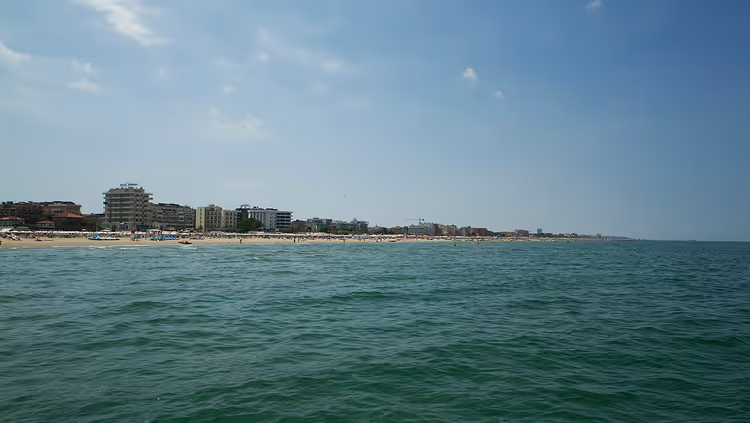
Rimini sits on the Adriatic and is considered one of Italy's most affordable beach resorts. The sandy strip stretches 15 km here from Torre Pedrera to Miramare, and access to the free sections is free and open until 1 a.m. (as of 09/2026, Riviera di Rimini portal). Part of the shore is occupied by beach clubs, part remains free.
 © trolvag · CC BY-SAPhoto: trolvag, CC BY-SA (https://creativecommons.org/licenses/by-sa/3.0), Wikimedia Commons
The bottom near the shore drops slowly, so it's calm here with children. Instructors at the clubs teach kids to swim. For adults, there are diving centers and boat rentals. Young people come here for the clubs and bars on the promenade.
There are few historical monuments in the city itself. But the train connects Rimini with Bologna and Venice, and prices here are moderate.
- Who it's for: families with children and those who want a beach without big expenses.
- Not for: those coming for palaces and museums.
- How to get there: Rimini airport is close to the city; trains run from Bologna.
- The catch: few historical sights in the center.
- Where to stay: hotels in Rimini on Trip.com
2. Lido di Jesolo
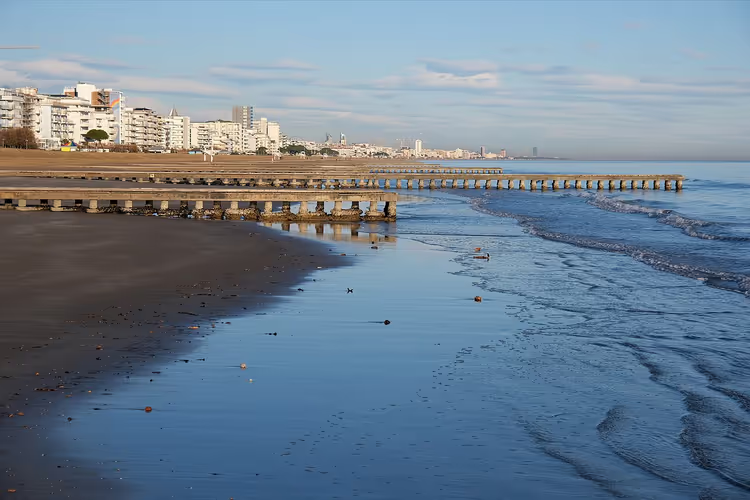
Lido di Jesolo holds 15 km of fine sand and has carried the Blue Flag for clean water for many years (as of 09/2026, Jesolo tourist office). The resort was built for families: the bottom drops gradually, and the swimming season runs from May through September.
 © kallerna · CC BY-SAPhoto: kallerna, CC BY-SA (https://creativecommons.org/licenses/by-sa/4.0), Wikimedia Commons
Hotels are arranged in three lines. The first line by the water is the most expensive. The second line is cheaper, with shops, bars, and restaurants nearby. The third line has budget hotels and public transport stops.
Most beaches belong to hotels. If you stay at one of them, you get a lounger and umbrella at no extra charge. In summer, the heat here is milder than in the south.
The large Aqualandia water park is nearby. The town has museums, parks, and yacht rentals. The closest excursions are Venice and Padua.
- Who it's for: families with children and those who book a hotel by the water.
- How to get there: from Venice and Treviso by car or bus.
- The catch: first-line hotels are more expensive; for a budget option, look farther from the sea.
- Where to stay: hotels in Lido di Jesolo on Trip.com
3. Sanremo
Sanremo on the Ligurian coast has been welcoming guests since the 19th century. The town is full of flowers: rose beds, palm trees, and a garden with tropical plants.
 © roberto franceschini · CC BY-SAPhoto: roberto franceschini, CC BY-SA (https://creativecommons.org/licenses/by-sa/2.0), Wikimedia Commons
There are sandy beaches here, and most of them belong to hotels. The sea entry is gentle. Those who like depth will have to walk far from the shore.
4- and 5-star hotels are spread throughout the town, with picturesque streets, shops, and cafes nearby. In the evening, clubs and discos open, and you can stay out until dawn.
In winter, the town lives around the Italian song festival, Festival di Sanremo. In summer, it hosts its own festivals and concerts.
- Who it's for: those who want sand, flowers, and nightlife.
- Not for: those who come to dive from the shore.
- The catch: most beaches belong to hotels.
- Where to stay: hotels in Sanremo on Trip.com
4. Palermo
Palermo grew up around a large port and remains a lively city in Sicily. Its appearance blends European and Arab features. The Ballarò, Vucciria, and Capo markets resemble Eastern bazaars. Here you can try street food and buy souvenirs.
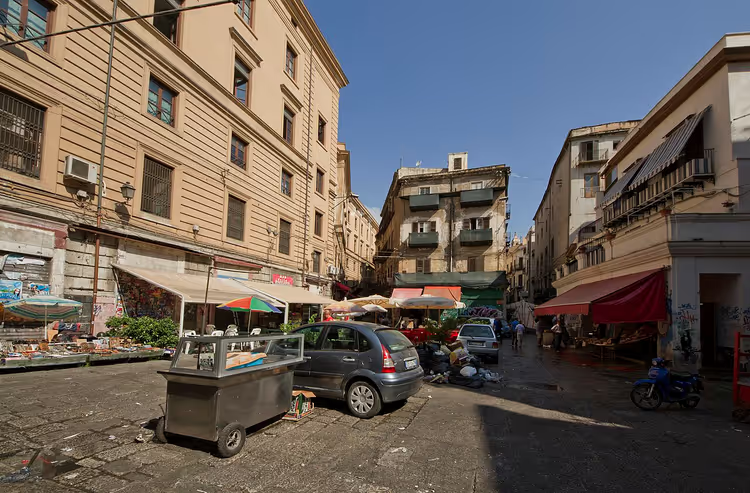 © trolvag · CC BY-SAPhoto: trolvag, CC BY-SA (https://creativecommons.org/licenses/by-sa/3.0), Wikimedia Commons
Sandy beaches lie outside the city, next to hotels. You can get there by bus, taxi, or rental car. The infrastructure is well developed: cafes, entertainment, and rentals are available.
In the city, the Cathedral is worth seeing. Many visitors go to the Capuchin Catacombs, where embalmed bodies of townspeople lie in underground corridors.
Concerts and festivals run all year round. The cuisine is built around fish, cheese, fruit, and coffee. If you want a beach close at hand, choose a hotel outside the city.
- Who it's for: those who want the sea and a big city in one trip.
- How to get there: Palermo airport, then bus or car to the beaches.
- The catch: in summer the city is noisy and crowded; for peace and quiet, head to the suburbs.
- Where to stay: hotels in Palermo on Trip.com
5. Cefalù
Cefalù lies in northern Sicily at the foot of a cliff. The nearest airport is in Palermo; from there you can get here by train or car. The climate is mild, and swimming is possible as early as May.
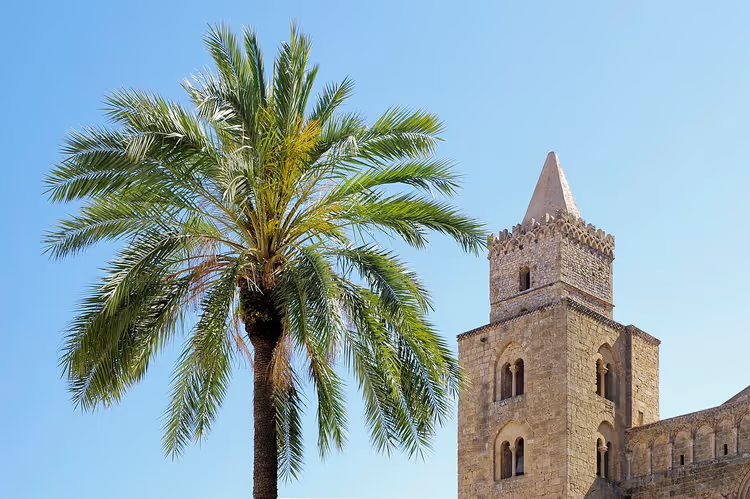 © Berthold Werner · CC BY-SAPhoto: Berthold Werner, CC BY-SA (https://creativecommons.org/licenses/by-sa/4.0), Wikimedia Commons
The best month for a vacation is September. The weather is still warm, there are fewer tourists, and prices drop. The beaches are sandy. On paid sections, you can find a lounger even in high season.
On free beaches in July and August, you have to search for a sunbed. The shore alternates between gentle stretches and steep cliffs. The sea is clean, so diving is popular here.
The infrastructure is dense: hotels, cafes, and clubs are all in place. People have lived in this area since before our era. In the town, it's worth seeing the cathedral, the civic museum, and Palazzo Osterio Magno. For a panoramic view, climb the cliff.
- Who it's for: families and those who want a quiet seaside town.
- Not for: those looking for loud clubs.
- How to get there: train or car from Palermo.
- The catch: on free beaches in July and August, it's hard to find a spot.
- Where to stay: hotels in Cefalù on Trip.com
6. Trapani
Trapani lies on the west coast of Sicily and is famous for its salt mills. They have long become a symbol of the city. The city's sandy beach is considered one of the best on the island.
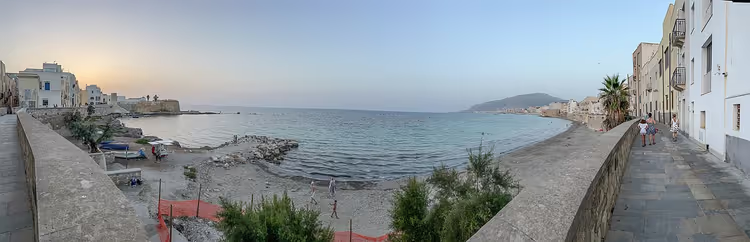 © Krzysztof Popławski · CC BY-SAPhoto: Krzysztof Popławski, CC BY-SA (https://creativecommons.org/licenses/by-sa/4.0), Wikimedia Commons
The beach stretches along the promenade, and the sand is golden. In the city, it's worth seeing the old fortress, the Salt Museum, and the basilica. In summer, colorful local festivals take place.
Fishermen return with tuna catches. Olive trees grow around Trapani, and the local wine is valued far beyond the island. You come here for the sea and the old port, not for clubs.
- Who it's for: those who want sand and an old port city.
- How to get there: Trapani airport and trains from Palermo.
- Where to stay: hotels in Trapani on Trip.com
7. Puglia
Puglia occupies the eastern part of southern Italy. The regional capital, Bari, is linked to the name of Saint Nicholas. Resorts stretch along two coasts, and thousands of tourists come here every year.
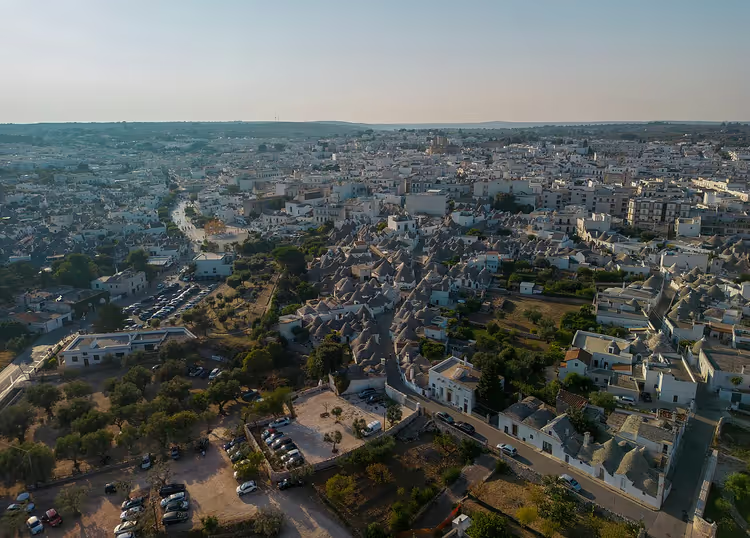 © ParisTaras · CC BY-SAPhoto: ParisTaras, CC BY-SA (https://creativecommons.org/licenses/by-sa/4.0), Wikimedia Commons
Most beaches are pebbly, but sandy stretches do exist. That's exactly what families with children come here for. The region has many old churches.
Houses from past centuries and monuments leave a strong impression. It's convenient to travel between towns by car. Look for sandy shores in the bays near Gargano and in Salento.
- Who it's for: those who want beach and history close together.
- How to get there: Bari and Brindisi airports, then car or train.
- The catch: there are fewer sandy stretches than pebbly ones.
- Where to stay: hotels in Puglia on Trip.com
8. Mondello
Mondello lies right next to Palermo, so getting here is easy. You can stay in the big city and take a bus to the beach. The sand here is wide, and there are both paid and free sections.
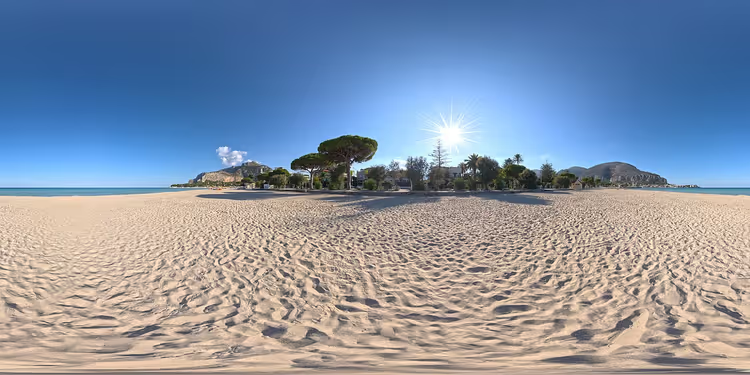
The best time to visit is June and September. In July and August it's too hot, especially with children. There are also a lot of people in those months.
On a paid beach, you're guaranteed a sun lounger. The changing cabins lock with a key, so you can leave your things while you swim. Cafes, bars, and ice cream stands are available.
The depth increases gradually. To dive, you'll have to go far from the shore. The shallow water is convenient for families and inexperienced swimmers. The water warms up early, so you can come from late May. Italians themselves love this place.
- Who it's for: families with children and those who swim poorly.
- Not for: those looking for quiet and cool weather in August.
- The catch: in July and August it's hot and crowded.
- Where to stay: hotels in Mondello on Trip.com
9. Sorrento
Sorrento sits on cliffs above the Tyrrhenian Sea, not far from Naples. The resort is popular, so it's better to book a hotel in advance. The beaches here suit every taste.
Sandy shores are mostly private. You'll have to choose a hotel with a beach or pay for entry. In return, you get loungers, cafes, and showers nearby. Pebble beaches are free, but they get crowded in summer.
Another option is to drive out of town and settle in a quiet cove. Renting a car is convenient for this.
From Sorrento, it's easy to reach Naples, Pompeii, and Vesuvius. The city has gardens, cafes, and a cathedral. Boat companies offer trips along the coast. Prices are moderate for this coastline.
- Who it's for: those who want the sea and trips to Pompeii.
- Not for: those looking for a large sandy beach.
- The catch: sandy beaches are private, and you pay separately for entry and a lounger.
- Where to stay: hotels in Sorrento on Trip.com
10. Capri
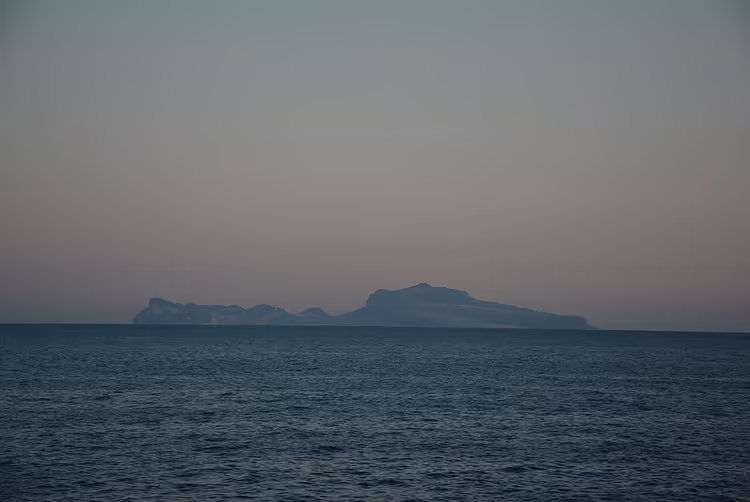
Capri maintains a reputation as an expensive and prestigious island, and the service here is top-notch. Getting there is simple: you fly into Naples or Rome and head to the ferry terminal. The best beaches belong to 4- and 5-star hotels, so choose a hotel with its own shore.
 © Mentnafunangann · CC BY-SAPhoto: Mentnafunangann, CC BY-SA (https://creativecommons.org/licenses/by-sa/4.0), Wikimedia Commons
The island has many boutiques and entertainment centers. Nature is also a strong point here. Celebrities hold weddings and celebrate anniversaries on Capri.
A cheaper option is to stay in Anacapri. The town sits on a rocky plateau, hotels are simpler, and prices are lower. To see the island's nature, it's best to head out to sea by boat.
The Blue Grotto (Grotta Azzurra) can only be visited by rowboat, entry is paid on site, and booking on the website is free. It's also worth seeing Villa San Michele, where a garden is combined with a museum.
- Who it's for: those looking for service and views.
- Not for: those watching their budget.
- The catch: the resort is expensive, and the beaches are mostly at hotels.
- Where to stay: hotels in Capri on Trip.com
11. Amalfi
Amalfi is considered the main town of the Amalfi Coast. The coast stretches south of Naples and rises into mountains and cliffs. There are several sandy beaches here, and most belong to hotels.
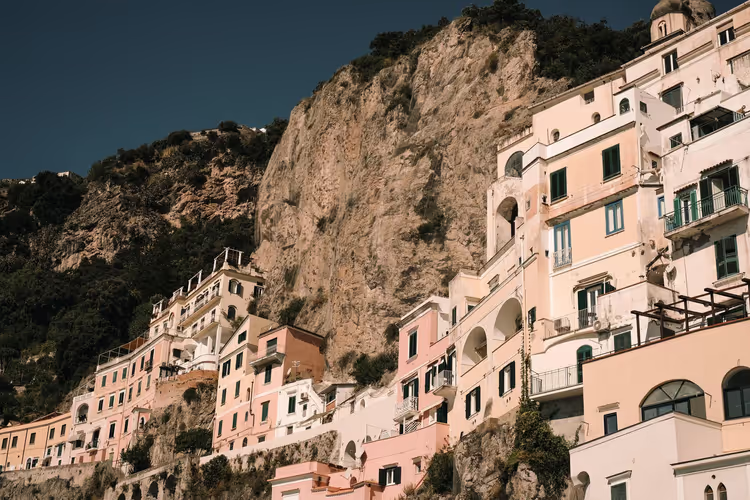
Having your own car helps you drive along the coast and pick a spot for swimming. Amalfi has well-developed infrastructure: cafes, restaurants, boutiques, and nightclubs. Almost the entire population works in tourism, so service is excellent.
Prices are high. Four- and five-star hotels, restaurants, and shops are aimed at a generous budget. But the impressions will last a long time.
Amalfi was once the center of a maritime republic. It's worth seeing the monastery and the arsenal. A yacht trip will show you the coast from the water. You can get there from Naples by bus or ferry.
- Who it's for: those who want mountain views and rich history.
- Not for: those looking for an affordable beach vacation.
- The catch: prices are high, and sandy beaches are mostly at hotels.
- Where to stay: hotels in Amalfi on Trip.com
12. Positano
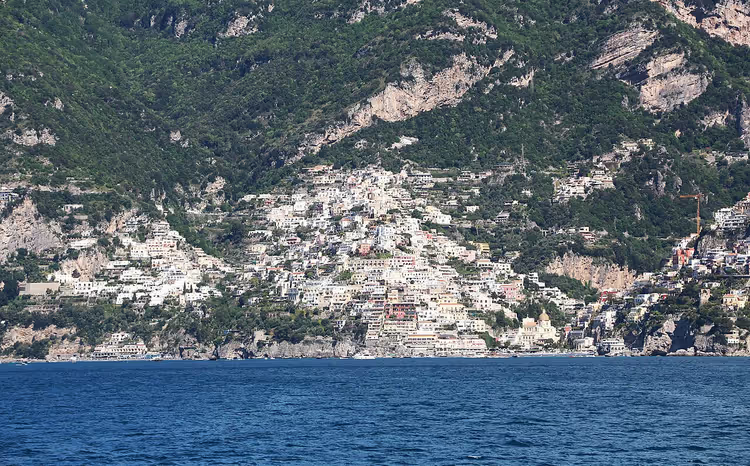
Positano is loved by artists and creative people. The resort is very beautiful, and photos here take themselves. But with kids, you should think twice.
 © Bernard Gagnon · CC BYPhoto: Bernard Gagnon, CC BY (https://creativecommons.org/licenses/by/4.0), Wikimedia Commons
There is almost no shallow water, and the depth increases quickly. Sandy beaches are few and mostly belong to hotels. If you're looking for a relaxed vacation, Positano is a good fit.
A good plan for the day: take a boat and head to a distant cove with drinks and snacks. There will be no one around but you.
You can also walk along mountain trails. Such walks require stamina. Positano is reached by taxi or car from Naples; public transport involves transfers.
- Who it's for: couples and those who want a quiet vacation.
- Not for: families with small children.
- The catch: there is no shallow water, and the depth increases quickly.
- Where to stay: hotels in Positano on Trip.com
13. Sardinia
Sardinia welcomes you with white sand, turquoise sea, and nature that seems untouched. People fly here for luxury hotels and parties, but there are also modest guesthouses in fishing villages.
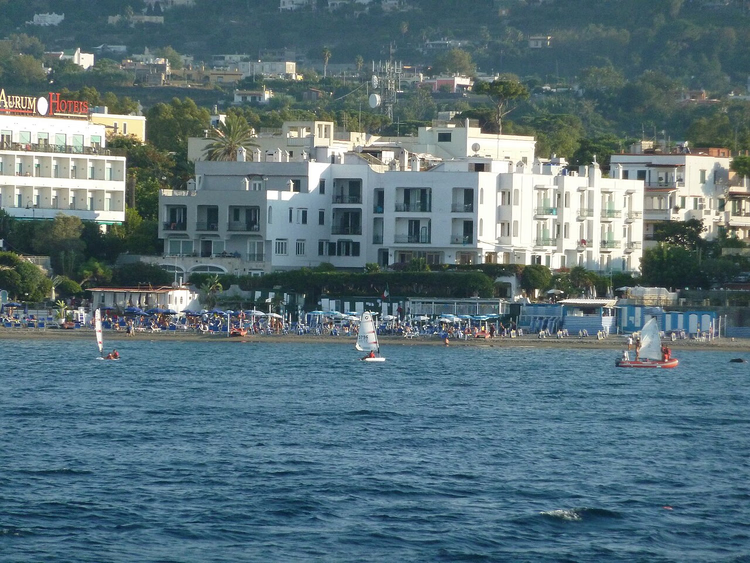 © Abxbay · CC BY-SAPhoto: Abxbay, CC BY-SA (https://creativecommons.org/licenses/by-sa/4.0), Wikimedia Commons
The island's most exclusive resort is called Costa Smeralda, or the Emerald Coast. Even if you stay in a village, you'll find a secluded cove with a sandy shore.
A rental car will help you explore the island, visit the museums of Cagliari, and walk the trails. In high season, places are booked well in advance; Italians themselves reserve rooms starting in spring.
- Who it's for: those who want wild nature and white sand.
- Not for: those traveling without a car and without a booking for August.
- The catch: in high season, rooms sell out as early as spring.
- Where to stay: hotels in Sardinia on Trip.com
14. Ischia
Ischia suits those who want not only to relax but also to improve their health. The island has thermal springs that help with various ailments. A trip here is compared to a stay at a spa resort.
It's better to choose a hotel in advance, although new hotels are built every year. Prices are high, but there are fewer people than on Capri. The island's gardens are especially beautiful during the blooming season.
The climate is mild, without sharp temperature swings. The beach season starts early and ends late. A ferry runs from Naples to the island.
There are few sights: volcanoes of past centuries erased part of the history. The island is calm now. It's worth visiting the Aragonese Castle, and the beaches here are sandy with many spa complexes nearby.
- Who it's for: those who combine vacation with treatment.
- How to get there: ferry from Naples, then the island's port.
- The catch: few sights, high prices.
- Where to stay: hotels in Ischia on Trip.com
15. Senigallia
Senigallia sits on the Adriatic in the Marche region. Golden sand stretches for almost 15 km, and the Blue Flag has been held since 1997 (as of 09/2026, Senigallia tourist office). Even at the height of the season, you'll find an open stretch of shore here.
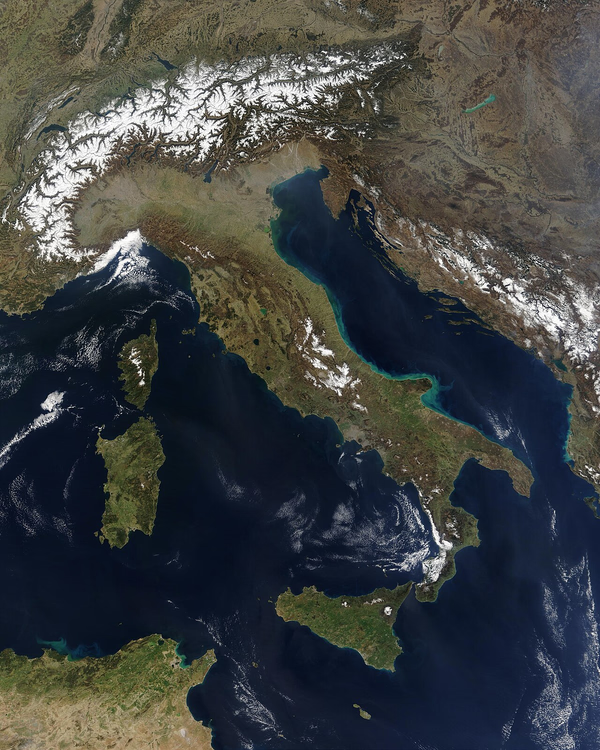
The bottom slopes down gradually. Small children swim in the shallows, while adults need to move away from the shore to reach deeper water. In summer the town lives and breathes music: rock and roll is big here, and festivals are held regularly.
The most famous festival falls in August. The season ends early, and by the second half of September some hotels and cafes are already closed. Prices are high, and cheap places get booked up quickly.
A good option is to stay in a neighboring town, rent a car, and drive to the beach. Venice and Florence are not far from here.
- Who it's for: families and music festival lovers.
- How to get there: train along the Adriatic coast and Ancona airport.
- The catch: the season ends early, and by the second half of September some hotels are closed.
- Where to stay: hotels in Senigallia on Trip.com
16. Otranto
Otranto lies on the very heel of the Italian boot. Getting there is tricky, the nearest airport is in Brindisi. But you get white houses, sandy beaches, and turquoise sea.
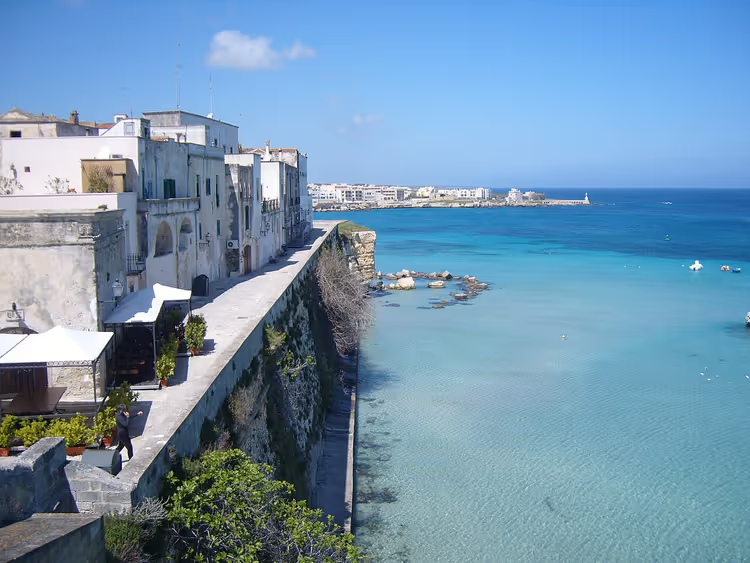 © Freddyballo · CC BY-SAPhoto: Freddyballo, CC BY-SA (http://creativecommons.org/licenses/by-sa/3.0/), Wikimedia Commons
Prices are moderate: there's enough for a good hotel and a rental car. The town beach is always packed with Italian families. So it's better to drive a few kilometers away.
Away from town, you swim in peace and quiet. The hotels are decent, the food is good, but there aren't many sights. The castle and the cathedral are worth a visit.
For more to see, head to Lecce, which is called the Florence of the south. The resort suits families with small children and older travelers.
- Who it's for: families with little ones and low-key travelers.
- How to get there: Brindisi airport, then a car.
- The catch: you need a car from Brindisi airport, and there are few sights.
- Where to stay: hotels in Otranto on Trip.com
17. Gallipoli
Gallipoli spreads along the Ionian coast near Otranto. The beaches here get top marks. Locals don't live off tourism alone, fishing is also part of life, so the atmosphere feels almost like home.
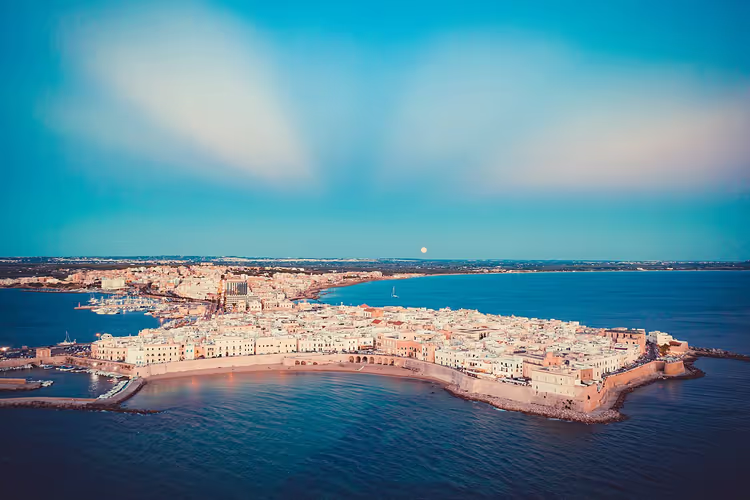 © Paolo Damiano Dolce · CC BY-SAPhoto: Paolo Damiano Dolce, CC BY-SA (https://creativecommons.org/licenses/by-sa/4.0), Wikimedia Commons
Mostly Italians from the south of the peninsula vacation here. The surrounding nature is scenic, and the cuisine is built around seafood. People usually come here for a few days.
There aren't many sights. A bridge takes you to the historic part of town on a small island. Guests love sitting in little cafes, watching the sea, and trying local wines.
The vacation is very laid-back, so it suits parents with small children. The sea is warm and shallow, the beaches are clean. If there are too many people around at the height of the season, take a car: there are empty and beautiful spots nearby.
- Who it's for: families with little ones and those looking for quiet.
- Not for: fans of loud parties.
- How to get there: car from Otranto and Lecce.
- The catch: there aren't many sights.
- Where to stay: hotels in Gallipoli on Trip.com
18. Scilla
Scilla lies in Calabria and is divided into three parts: the historic center, the tourist waterfront with hotels, and the fishing district. People come here for a quiet vacation, old streets, and sunset over the sea.
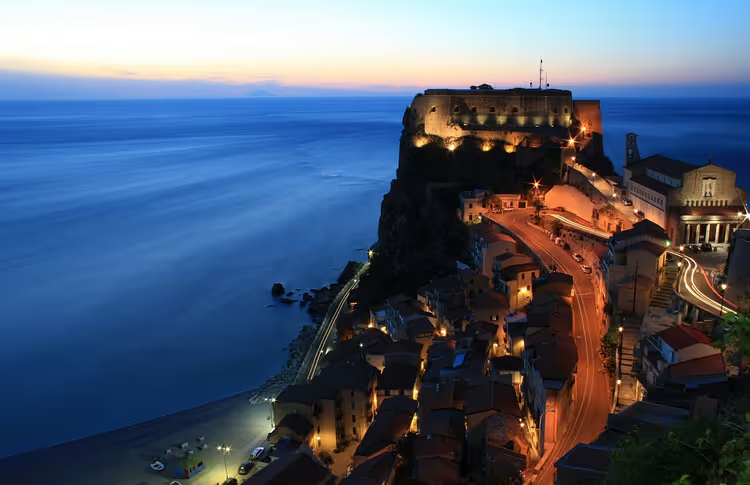 © Cirimbillo · CC BYPhoto: Cirimbillo, CC BY (https://creativecommons.org/licenses/by/3.0), Wikimedia Commons
At restaurants, order swordfish dishes. Young and active travelers may find it boring: there's little entertainment, but the water is clean and the underwater world is rich.
The beach has both paid and free sections. If you're used to a lounger and umbrella, go for the paid section. The water gets deep quickly, but there are no strong currents or frequent storms here.
Be sure to visit Castello Ruffo. If you're staying at a neighboring resort, come to Scilla for at least a day.
- Who it's for: those who want quiet and sea views.
- Not for: those looking for clubs and parties.
- How to get there: train along the Calabrian coast.
- The catch: the water gets deep quickly, small children need supervision.
- Where to stay: hotels in Scilla on Trip.com
19. Tropea
Tropea sits on the toe of the Italian boot. The nearest airport is in Lamezia Terme. It has beautiful sandy beaches, plenty of hotels, and moderate prices.
 © Norbert Nagel · CC BY-SAPhoto: Norbert Nagel, CC BY-SA (https://creativecommons.org/licenses/by-sa/3.0), Wikimedia Commons
You can swim until the end of September, the season here is long. The resort is clean and welcoming. If you want to combine beach time with sightseeing, Tropea won't fit the bill.
The bottom drops off quickly, so it's not convenient with little ones. Parents take a car and look for a shallow cove along the coast. Medium-sized waves are common around the resort.
For teenagers and adults, the waves are just part of the fun. Families with children should keep these details in mind ahead of time.
- Who it's for: people who love waves and a long swimming season.
- Not for: families with small children and people coming for museums.
- How to get there: Lamezia Terme airport, then a train or bus to the resort.
- The catch: the bottom drops off quickly, and there are often waves.
- Where to stay: hotels in Tropea on Trip.com
20. Maratea
Maratea suits people who are tired of city bustle. The place is little known among tour operators, and international airports are far away. You'll have to fly to Rome or Naples, then take a train.
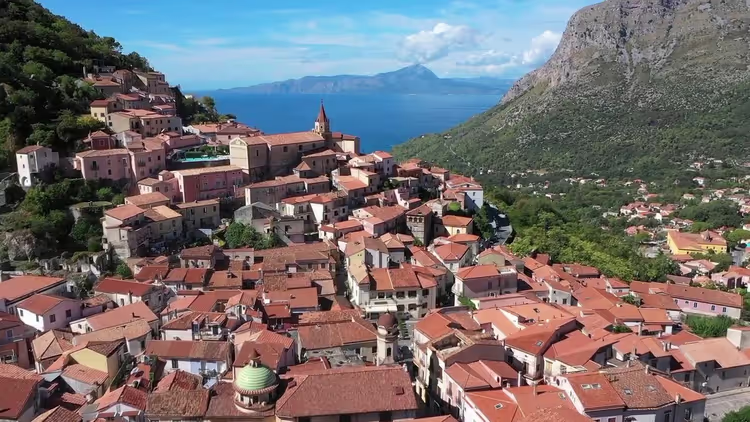 © Luke18389 · CC BY-SAPhoto: Luke18389, CC BY-SA (https://creativecommons.org/licenses/by-sa/4.0), Wikimedia Commons
The town sits on a mountainside, so you'll have to walk up and down. If that doesn't work for you, pick another resort. The beaches here are mostly pebbly, but there are sandy stretches, and many belong to hotels.
Take a boat and go along the coast. That way you'll find small sandy beaches that are only reachable by sea.
A vacation in Maratea isn't the cheapest. On the plus side, there are many churches, and a large statue of Christ stands on a cliff. Good food and beautiful views await you.
- Who it's for: people who want peace and boat trips.
- Not for: people who aren't willing to walk on slopes.
- How to get there: fly to Rome or Naples, then take a train.
- The catch: the town sits on a slope, and airports are far away.
- Where to stay: hotels in Maratea on Trip.com
Italian resorts with sandy beaches on the map
All 20 resorts are marked on the map. Open it and assess the distances between beaches, cities, and airports: that makes planning a route easier.
Italian resorts with sandy beaches
Places on the map
- 1Rimini Sand for 15 km from Torre Pedrera to Miramare, accessible resort
- 2Lido di Jesolo 15 km of fine sand, Blue Flag
- 3Sanremo Ligurian coast, flowers and evening life
- 4Palermo Sandy beaches outside the city, Arab and European features
- 5Cefalù North of Sicily by a cliff, alternating beach and bluffs
- 6Trapani Salt mills, golden town beach
- 7Apulia Sandy stretches near Gargano and in Salento
- 8Mondello Wide sand near Palermo, shallow water
- 9Sorrento Cliffs above the Tyrrhenian Sea, mostly private beaches
- 10Capri Expensive island, best beaches at hotels
- 11Amalfi Amalfi Coast, sandy beaches at hotels
- 12Positano Almost no shallows, depth increases quickly
- 13Sardinia White sand, Costa Smeralda - the island's elite resort
- 14Ischia Thermal springs, sandy beaches and spas
- 15Senigallia Golden sand for almost 15 km, Blue Flag since 1997
- 16Otranto Heel of the Italian boot, white houses and turquoise sea
- 17Gallipoli Ionian coast, warm and shallow sea
- 18Scilla Calabria, Ruffo Castle, sunset over the sea
- 19Tropea Toe of the Italian boot, long swimming season
- 20Maratea Small town on a mountain slope, statue of Christ on a cliff
⁉️🤔 Frequently asked questions
When is the best time to go to Italy's sandy beaches?
The swimming season in the south runs from May to September. The water is warmest in July and August, but that's when the beaches are most crowded. Choose June or the first half of September: the sea is still warm, and prices are lower. In Sicily and Calabria the season is longer.
How much does a beach lounger cost in Italy?
The price depends on the resort and the beachfront line. In Lido di Jesolo, hotel guests with beach access get a lounger and umbrella at no extra charge. In Rimini, part of the shore remains free, so you can cut costs there.
Where in Italy is the sea shallow for children?
Rimini, Lido di Jesolo, Mondello, Senigallia, and Gallipoli: the bottom slopes gradually there. The water near the shore is shallow, so children can swim safely. In Positano and Tropea the bottom drops off quickly, so those resorts are less suitable for families.
Can you combine the beach with sightseeing?
Yes, if you choose a resort near a city. From Palermo and Mondello you can visit cathedrals and markets. From Sorrento it's easy to reach Pompeii and Vesuvius, and from Senigallia to Venice and Florence. In Tropea and Scilla there are few attractions.
Where should you stay at Italian resorts?
Book hotels near the sandy shore in advance. In high season in Sardinia and Senigallia, cheap rooms sell out as early as spring. On the Amalfi Coast and Capri, many beaches belong to hotels, so a hotel with beach access saves you money on loungers.
In short: what's worth booking
Italy offers a sandy shore for every taste: from affordable Adriatic towns to exclusive islands. Choose a resort based on your route and the sea depth you need.
- If you're traveling with small children: Rimini, Gallipoli, and Mondello.
- If you want city and sea: Palermo, Sorrento, and Senigallia.
- If you need a quiet vacation: Scilla, Maratea, and Gallipoli.
- If you're ready to spend: Capri, Amalfi, and Costa Smeralda.
Book your hotel in advance: hotels at Italian resorts on Trip.com.

A small editorial team writing guides for independent travel. We travel ourselves, but we haven’t been everywhere, so we check prices, opening hours and how to get there against official sources.