
















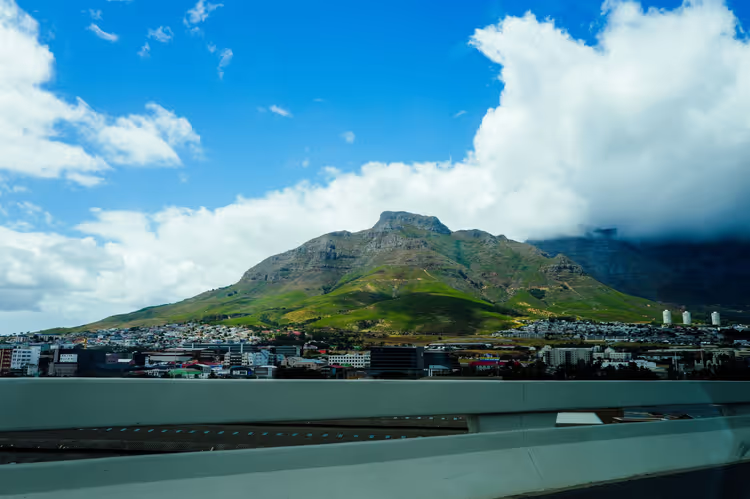
Cape Town on your own: Table Mountain, penguins and the wine region
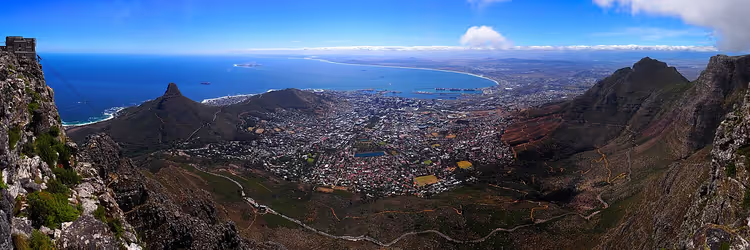
Cape Town sits between the Atlantic and the sheer wall of Table Mountain. Almost every Western Cape route starts here. You can put the city together yourself if you decide the main things in advance: when to go, where to stay, and how to get up the mountain.
The cable car up Table Mountain only runs in clear weather, so it is better to keep your travel dates flexible.
Coming up: seasons and weather, prices and opening hours, beaches with penguins, the wine region, transport, and safety.
Ad: this article contains affiliate links, we earn a commission if you book through them, at no extra cost to you.
When to go and what the weather is like
💡 In short:
- Warm dry season: November to March. Rainy winter: June to August.
- The Atlantic is cold even in summer; swimming is warmer in False Bay.
- September and October work well for wine, whales, and quiet roads.
Cape Town has two climate patterns. From November to March it is dry and hot, while from June to August it rains and a strong ocean wind blows. In summer you get beach weather; in winter it is more about wine tastings and museums.
The Atlantic coast stays cold even at the height of summer. Swimming is more pleasant in False Bay on the other side of the peninsula, which is where locals go.
Choose the season based on your plans. December and January work for swimming and sunbathing. For wine, whales, and quiet roads, come in September or October.
 © Romain Pontida · CC BY-SAPhoto: Romain Pontida, CC BY-SA (https://creativecommons.org/licenses/by-sa/4.0), Wikimedia Commons
Table Mountain and the cable car
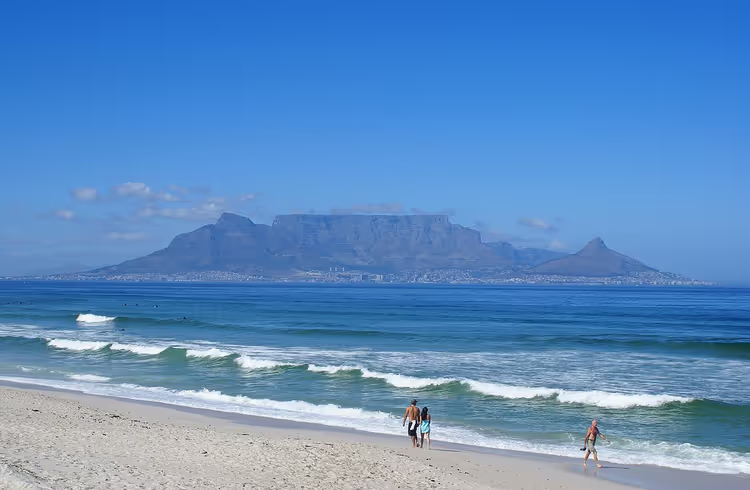
Table Mountain is visible from anywhere in the city. Its flat summit has become the symbol of Cape Town and made the list of new natural wonders.
 © Danie van der Merwe from Cape Town, South Africa · CC BYPhoto: Danie van der Merwe from Cape Town, South Africa, CC BY (https://creativecommons.org/licenses/by/2.0), Wikimedia Commons
There are two ways up. The Table Mountain Aerial Cableway, with its rotating cabin, suits almost everyone. The Platteklip Gorge hiking trail suits those who are ready for a climb of several hours.
The cable car runs weather permitting. In strong wind it closes, and you are left at the foot of the mountain. So check the status in the morning and keep a backup day.
Fares are revised every year on July 1 (as of 09/2026, operator's official website). It is easier to buy a ticket online: at the ticket office you risk standing in a long line.
You can book a Table Mountain tour on GetYourGuide in advance.
Cape Town beaches and penguins
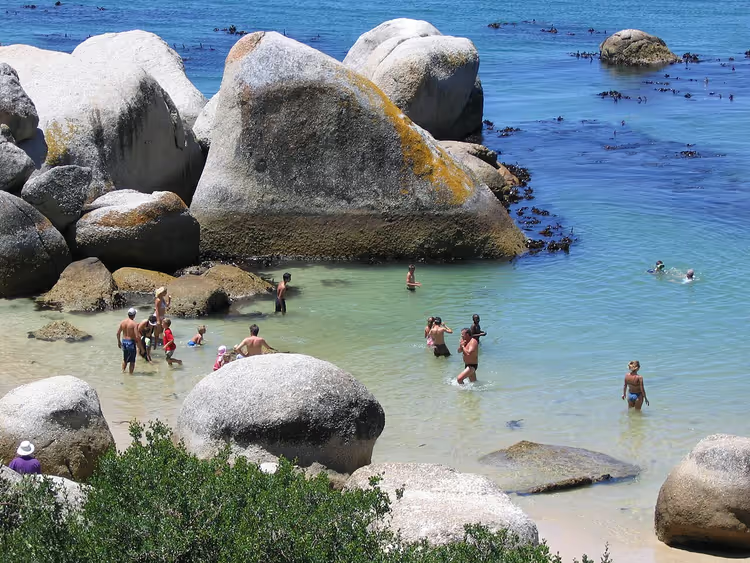
The city's beaches are divided into the cold Atlantic ones and the warmer ones in False Bay.
 © Self · CC BY-SAPhoto: Self, CC BY-SA (https://creativecommons.org/licenses/by-sa/2.5), Wikimedia Commons
In the south of the peninsula, the main spot is Boulders Beach near Simon's Town. A colony of African penguins lives here, and entry is part of Table Mountain National Park. The rate depends on residency, payment is by card only, and cash is not accepted at the entrance (as of 09/2026, official SANParks website).
Get there when the gates open. After midday, the paths to the penguins fill with bus groups, and it gets crowded.
Among the city beaches, Muizenberg, Camps Bay, and Clifton are popular.
Cape point and the cape of good hope
The Chapman's Peak Drive leads south from the city, with cliffs above the ocean.
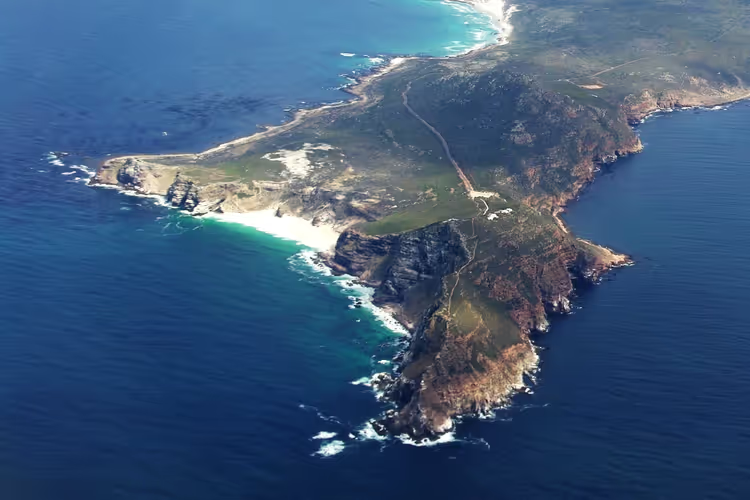 © Bgabel · CC BY-SAPhoto: Bgabel, CC BY-SA (https://creativecommons.org/licenses/by-sa/3.0), Wikimedia Commons
You'll drive through the national park and reach Cape Point and the Cape of Good Hope. Entry is paid, the rate depends on residency, payment by card (as of 09/2026, park fees on SANParks).
Legend has it that two oceans meet here. In reality, the line where they meet lies further east, at Cape Agulhas.
Bring a windbreaker. It's almost always windy at the cape, even if the center of Cape Town is calm and warm. Leave your car at the lower parking lot and walk up.
Robben Island: history and tickets
Robben Island, a former maximum-security prison a few kilometers offshore. Nelson Mandela was held here.
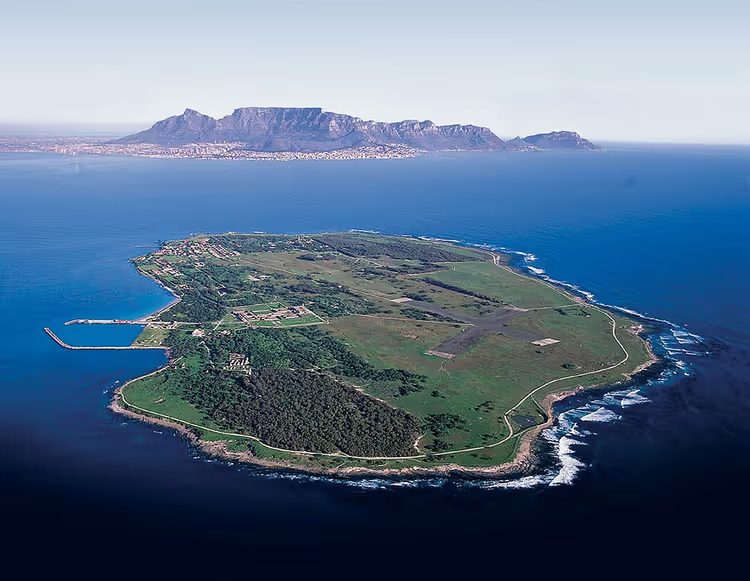 © South African Tourism from South Africa · CC BYPhoto: South African Tourism from South Africa, CC BY (https://creativecommons.org/licenses/by/2.0), Wikimedia Commons
The ferry departs from Nelson Mandela Gateway at the V&A Waterfront. The tour takes 3.5 hours including the crossing (as of 09/2026, Robben Island Museum website).
Tours start at 09:00, 11:00, 13:00 and 15:00, the museum is open daily from 08:00 to 17:00 (as of 09/2026, same source).
A ticket for a foreign adult costs R600, about €30 (as of 09/2026, official museum website). South African citizens pay less, children are cheaper.
The island is a UNESCO World Heritage site. Some of the guides here are former prisoners, and you'll hear the story firsthand.
Wine region and safari
Constantia lies within the city limits, about 15-20 km from the center. Stellenbosch is 45-50 km away (on the map), Franschhoek about 75 km.
Stellenbosch, Franschhoek and Constantia are home to the region's main wineries. Many estates welcome visitors without a reservation, but for a weekend tasting you're better off booking ahead.
The real savanna lies far from Cape Town. But private reserves within a couple of hours' drive (on the map) offer lions, elephants and giraffes.
Head out early in the morning, while it's cool and the animals are active.
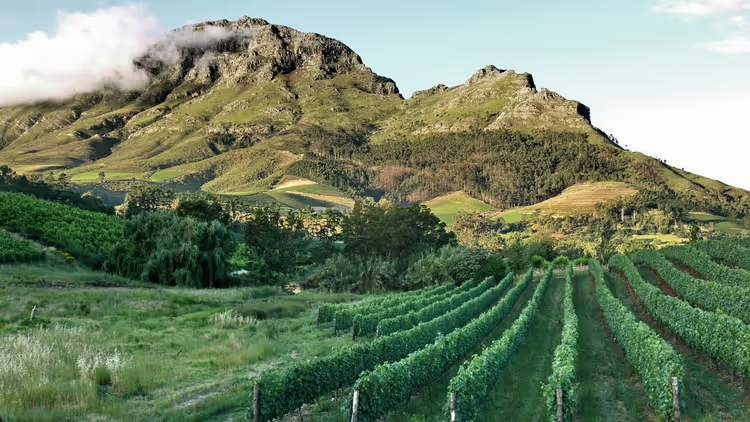 © Deon Maritz · CC BYPhoto: Deon Maritz, CC BY (https://creativecommons.org/licenses/by/2.0), Wikimedia Commons
What to see in the center
The center is compact, you can walk to half the sights.
The V&A Waterfront is packed with shops, restaurants and the ferry terminal for Robben Island.
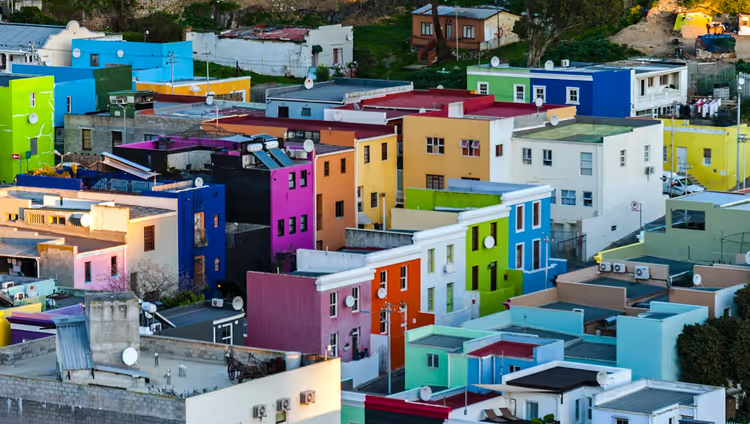 © Daniel Case · CC BY-SAPhoto: Daniel Case, CC BY-SA (https://creativecommons.org/licenses/by-sa/3.0), Wikimedia Commons
Nearby are Bo-Kaap with its colorful houses and the Company's Garden with museums along its edge. Among the museums, the District Six Museum and Zeitz MOCAA with its collection of contemporary African art stand out.
In the southern suburbs, at the foot of Table Mountain, lies Kirstenbosch. The garden is open from 08:00 to 19:00 from September to March and until 18:00 in winter (as of 09/2026, SANBI).
Tours and tickets in Cape Town
Guided tours, skip-the-line tickets and activities — most offers can be cancelled free of charge.
See offers on GetYourGuideThe widget loads once you give your consent.
Transport: how to get around
The road from the airport to the center is about 20 km (on the map). Taxis and Uber are noticeably cheaper than in Europe.
During the day, MyCiTi buses run around the city, but in the evening you're better off calling a car.
A car is useful for trips to Cape Point and the wine region; you can compare car rental prices in advance.
Traffic in South Africa drives on the left, so it takes some getting used to at interchanges. Parking downtown is paid, and Chapman's Peak Drive has a toll point.
Money, safety, shopping
In South Africa, people pay with the South African rand (ZAR).
Cards are accepted almost everywhere, but keep some cash on hand for markets and small cafes. In restaurants, it is customary to leave a tip of about 10-15% of the bill.
Bargaining is appropriate at markets and souvenir shops.
Safety is like in any big city. During the day, you can walk around downtown and the Waterfront without worry. In the evening, do not flash valuables, avoid empty streets, and get around by Uber.
⁉️🤔 Frequently asked questions
When is the best time to visit Cape Town?
The dry and warm season runs from November to March. Beaches and the cable car operate during this time. In winter, from June to August, it often rains and the wind blows. September and October are good for wine, whales, and fewer tourists.
How much does the Table Mountain cable car cost?
Check the exact price on the official website. Adult and child prices differ, and the cableway closes in strong wind. Buying online gets you to the top faster, without waiting in line at the ticket office.
How many days should you plan for the city?
A few days go to the city center and Table Mountain, plus another day for the peninsula with the penguins and Cape Point. The wine region takes a full day, and a safari in a private reserve involves an overnight stay or a long day trip.
Where can you see penguins?
A colony of African penguins lives at Boulders Beach near Simon's Town. Entry is part of Table Mountain National Park, the rate depends on residency, and payment is by card only. Arrive when the gates open, before the tour bus groups show up.
Is it safe to walk around Cape Town?
During the day, you can walk around downtown and the Waterfront without worry. In the evening, avoid empty streets, do not flash valuables, and get around by Uber. As in any big city, keep an eye on your bag in crowds.
In short: what to book
Cape Town fits easily into a short itinerary. Arrange your days around your interests.
- If you want views: go up Table Mountain in the morning while it is clear.
- If you want the sea and penguins: set aside a day for Cape Point and Boulders Beach.
- If you want history: take the ferry to Robben Island, tickets sell out in advance.
- If you want wine: set aside a day for Stellenbosch and Franschhoek.
Book the Robben Island ferry, the cable car ticket, and accommodation in high season in advance. A hotel in the city center or on the Waterfront will save you travel time.

A small editorial team writing guides for independent travel. We travel ourselves, but we haven’t been everywhere, so we check prices, opening hours and how to get there against official sources.