
















China without a visa: 14-day route from Shanghai to Yangshuo
A first trip to China is intimidating because of the distances. The country is the size of a continent, there are tickets, hieroglyphs, and you only have two weeks. The good news is that the classic beginner route has long been established and fits into 14 days. First Shanghai, then Xi'an with the Terracotta Army, Beijing with the Forbidden City, Zhangjiajie with the cliffs from Avatar, and a finale on the Li River between Guilin and Yangshuo. High-speed trains run between the cities, and the logistics turn out to be simpler than you think. It's worth going now: EU citizens do not need a visa for China for up to 30 days, and the rule has been extended until 31.12.2026 (as of 09/2026, Auswärtiges Amt).
Ad: this article contains affiliate links, we earn a commission if you book through them, at no extra cost to you.
Two-week route: cities and order
💡 In short:
- In 14 days you cover five regions: Shanghai, Xi'an, Beijing, Zhangjiajie, and Guilin with Yangshuo.
- All cities are connected by high-speed trains.
- Tickets and opening hours: 09/2026, verified on the official Forbidden City website.
The order of cities is simple: from Shanghai you go west to Xi'an, then to Beijing, and from there to the southwest. Evening flights and night trains replace a night in a hotel and do not eat up daylight hours. Below is a rough trip rhythm that is easy to shift to fit your dates.
Day | City | Main thing | Tickets in advance | Transfer |
|---|---|---|---|---|
1-3 | Shanghai | The Bund, Yu Garden, old town | not needed | arrival |
4-5 | Xi'an | Terracotta Army, city wall | yes, for the army | high-speed train |
6-8 | Beijing | Forbidden City, Mutianyu wall, Temple of Heaven | yes, with passport | high-speed train |
9-10 | Zhangjiajie | Bailong elevator, glass bridge | yes, for the park | plane or train |
11-13 | Guilin and Yangshuo | Li River cruise, Longji terraces | yes, for the cruise | high-speed train |
14 | Shanghai or Hong Kong | final evening, Mong Kok market | no | train |
Keep the peak periods in mind: the Mid-Autumn Festival, the first week of October, and the Chinese May Day week (May 1-5) overcrowd both trains and hotels. Forbidden City tickets are grabbed online in advance, and available slots run out several days before the date. Hotels in Shanghai and Beijing near the metro are also worth booking before departure, otherwise the choice narrows to the outskirts, and the trip to the center will take an hour each way.
Days 1-3: Shanghai and its districts
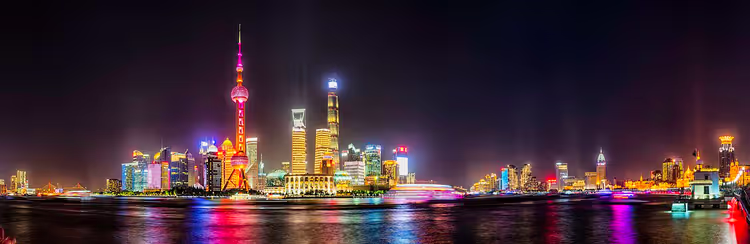
Shanghai works best as the first city. The metro takes you from the airport to the center without transfers, hotel staff speak English, and after the flight you just walk around and adjust to the time zone. Start with the Bund: the embankment along the Huangpu River looks directly at the Pudong skyscrapers, including the Shanghai Tower with one of the highest observation decks in the world.
Behind you is the old town with Yu Garden, tea houses, and bridges over the pond. Then comes Nanjing Road with its shops and evening lights, the M50 gallery district for those who love contemporary art, and the Shanghai Museum with free admission. For food, try xiaolongbao at Jia Jia Tang Bao: it's a cheap and precise way to understand the local cuisine.
 © David Zhang from Canada · CC BY-SAPhoto: David Zhang from Canada, CC BY-SA (https://creativecommons.org/licenses/by-sa/2.0), Wikimedia Commons
What to see in Shanghai:
- The Bund: the embankment and the best view of Pudong in the evening.
- Old town and Yu Garden: tea houses, bridges, and classic roofs.
- Nanjing Road and M50: shopping, galleries, evening light.
The most convenient place to stay is near metro lines 2 or 10: from there you can reach the Bund, the train station, and the airport without extra transfers. The Yangtze Boutique Shanghai is near People's Square in art deco style, W Shanghai The Bund wins with its river view and panoramic pool, and Campanile Shanghai Huaihai is a solid mid-range option near Huaihai Road. Check rooms at W Shanghai The Bund on Trip.com: you can also see there whether dates are available for your days.
A day trip from Shanghai: Zhujiajiao, Hangzhou, or Suzhou
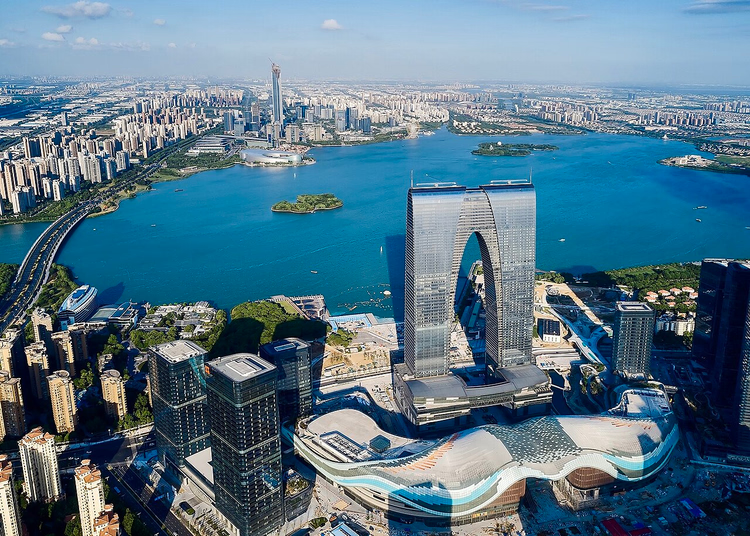
If you have a free day left, dedicate it to the surroundings. Zhujiajiao has canals, stone bridges, and narrow lanes, and people go there for a relaxed half-day. The second option, Hangzhou with West Lake, is closer to nature: the high-speed train from Shanghai takes about an hour. The third, Suzhou, is known for its classical gardens, and you can also get there by train in a morning.
 © 铁头娃蛤蛤 · CC BY-SAPhoto: 铁头娃蛤蛤, CC BY-SA (https://creativecommons.org/licenses/by-sa/4.0), Wikimedia Commons
Days 4-5: Xi'an and the Terracotta Army
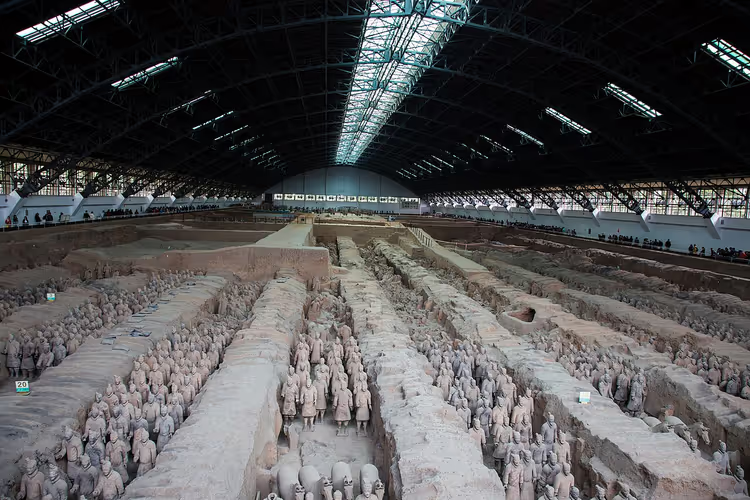
On the fourth day you take a high-speed train to Xi'an. This city was the starting point of the Silk Road and remains one of the oldest in the country. The main reason to come lies in the suburbs: the Terracotta Army of the first emperor Qin Shi Huang. Thousands of life-size soldiers, each with their own face, have stood here for more than two thousand years.
 © Jmhullot · CC BYPhoto: Jmhullot, CC BY (https://creativecommons.org/licenses/by/3.0), Wikimedia Commons
The trip takes time, so leave early: bus 306 runs from the train station to the army, about an hour on the road. Allow three or four hours for the visit; in summer, morning time is a lifesaver. Back in the city, bike around the city wall: the full loop is almost fourteen kilometers, and the wall looks best at sunset. In the evening, stop by the Muslim Quarter for street food; the Bell and Drum Towers mark the center of the old town.
What to know in Xi'an:
- Terracotta Army: three to four hours and an early start.
- City wall: a bike and a full loop around the perimeter.
- Muslim Quarter: food, spices, and a market in the evening.
It's convenient to take a hotel inside the wall or right next to it. Eastern House Boutique Hotel is between the Bell Tower and the Muslim Quarter, Xi'an Dajing Castle Hotel Bell Tower sits right by the south gate and the wall, and Hantang Inn Hostel suits those on a budget. Check prices at Xi'an Dajing Castle Hotel Bell Tower on Trip.com in advance: hotels near the wall get booked first.
Days 6-8: Beijing, the Forbidden City, and the Great Wall
From Xi'an, a high-speed train takes you to Beijing. The capital is a must for a first visit, with history at every turn. In the center lies the Forbidden City (Gugong), a vast palace complex where emperors lived for centuries. Tiananmen Square stretches out in front of it. To the south, the city is graced by the Temple of Heaven with its round hall and large park, and to the west, the Summer Palace with a lake where you can go boating.
 © CEphoto, Uwe Aranas · CC BY-SAPhoto: CEphoto, Uwe Aranas, CC BY-SA (https://creativecommons.org/licenses/by-sa/3.0), Wikimedia Commons
What to see in Beijing:
- The Forbidden City and Tiananmen: tickets require a passport and advance booking.
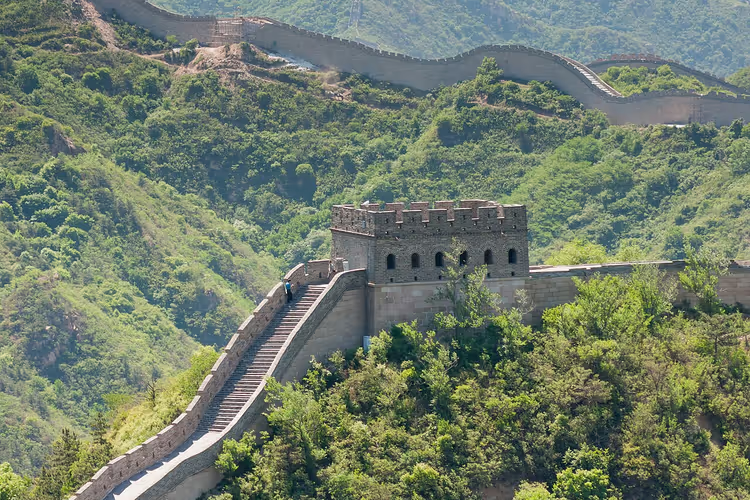
- The Wall at the Mutianyu section: fewer tourists than at Badaling.
- The Temple of Heaven and the Summer Palace: parks, pavilions, and boats.
Book your Forbidden City tickets online: the museum limits visitor numbers and asks foreign guests to provide their passport number when booking (as of 09/2026, Palace Museum). The official page states a daily limit of 40,000 tickets, and in summer these sell out quickly.
For the Great Wall of China, go to Mutianyu: it is less crowded than Badaling and the views are better. A cable car takes you up, and you can ride down on a toboggan. In the evening, stroll through the hutongs around Houhai Lake, and order Peking duck at Da Dong or, for less, at Bianyifang.
Tours and tickets
Guided tours, skip-the-line tickets and activities — most offers can be cancelled free of charge.
See offers on GetYourGuideThe widget loads once you give your consent.
Stay in Dongcheng or Xicheng, close to subway lines 1 and 2. Hilton Beijing Wangfujing is right by the square and the Forbidden City, Park Plaza Hotel Beijing Wangfujing offers comfort and good transport connections, and Happy Dragon Saga Hotel charms with its Chinese decor. Prices at Hilton Beijing Wangfujing on Trip.com are easy to compare with nearby options in the area.
Days 9-10: Zhangjiajie and the Avatar peaks
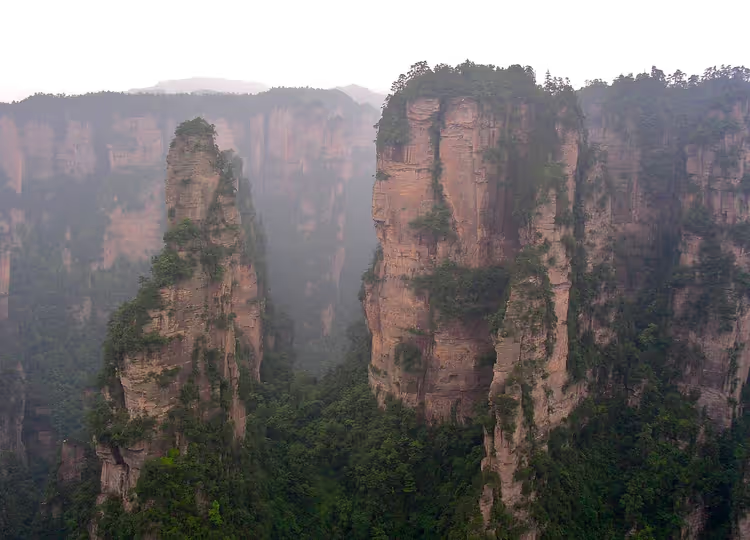
After that comes the most spectacular part of the trip. In Zhangjiajie National Forest Park in Hunan Province, thousands of karst pillars rise out of the ground, and they inspired the artists behind the floating mountains in the movie Avatar. The easiest way to get there is by plane or train; the journey from Beijing takes half a day.
 © Yoo Chung · CC BY-SAPhoto: Yoo Chung, CC BY-SA (https://creativecommons.org/licenses/by-sa/2.5), Wikimedia Commons
Inside the park, you can cover the main sights in a day or two. The Bailong Elevator is considered the world's tallest outdoor elevator and takes you up to the viewing platforms, the glass walkway runs along the cliff edge, and the Tianzi and Yuanjiajie platforms offer sweeping panoramas. If you have steady nerves, add the glass bridge in the nearby Zhangjiajie Grand Canyon. Cable cars and shuttle buses save energy, but the trails along the streams are also worth your time.
The park ticket is valid for several days and includes buses within the area, while the elevator and cable cars are paid separately. The logical place to stay is Wulingyuan, at the park entrance: Guihua Road 106th Hostel welcomes guests after long hikes and sits close to the bus stops. Rooms at Guihua Road 106th Wulingyuan on Trip.com come in handy if your dates fall during Chinese public holidays.
Days 11-13: Guilin and the Li River cruise
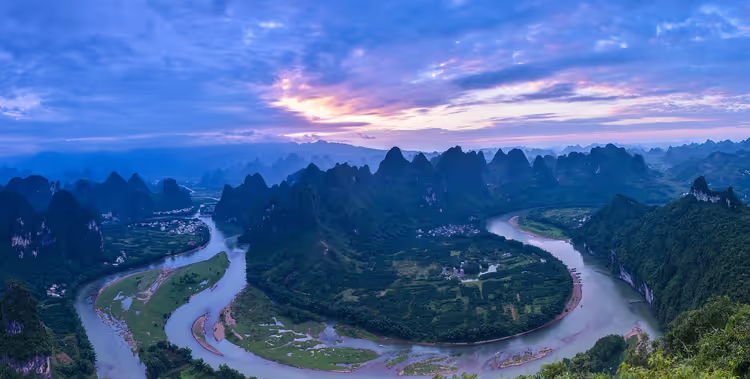
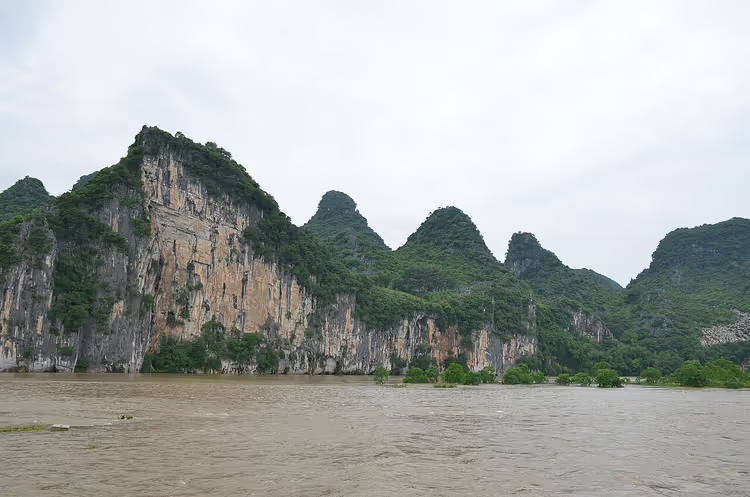
Guilin and Yangshuo close out the route with the softest scenery of the trip. The region is made up of whimsical karst mountains, emerald rivers, and rice paddies. The main highlight is the Li River cruise from Guilin to Yangshuo: you sail past landscapes familiar from paintings and see the whole valley in half a day. It is also worth making a detour to the Longji rice terraces near Longsheng.
 © shankar s. from Dubai, united arab emirates · CC BYPhoto: shankar s. from Dubai, united arab emirates, CC BY (https://creativecommons.org/licenses/by/2.0), Wikimedia Commons
In Guilin, stay close to the riverfront and the old town: that way you can walk to the river. Shangri-La Hotel Guilin overlooks the Li River, while Wing Hotel Guilin sits on the riverfront near the old quarters. Prices at Shangri-La Hotel Guilin on Trip.com show the difference between a river view and a courtyard view.
Yangshuo: rice paddies and the Yulong River
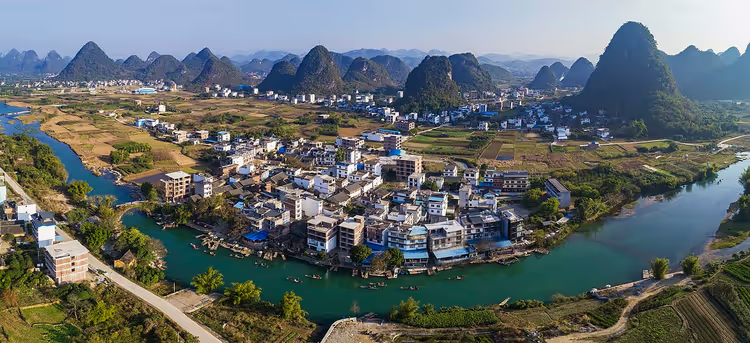
In Yangshuo the pace slows down, and it is the best way to rest at the end of the route. Rent bikes and ride along the Yulong River: the trail runs between fields and cliffs, and you can stop at any village. The alternatives are just as good, such as a bamboo raft on the river or a climb up Ruyi Peak with suspension bridges and a glass viewing walkway. If you want quiet, stay outside town with a mountain view.
 © Chensiyuan · CC BY-SAPhoto: Chensiyuan, CC BY-SA (https://creativecommons.org/licenses/by-sa/4.0), Wikimedia Commons
Dreamland Inn sits right on the Yulong River outside town and suits those who came for nature. For a five-star option with a water view, go with Guilin Jora Hotel Yangshuo or TUI Blue Yangshuo Xiangheli. Rooms at Dreamland Inn Yangshuo on Trip.com should be checked in advance: riverside hotels are few, and in high season they sell out first.
Last day: Shanghai or Hong Kong
You can spend the final days in different ways. In Shanghai, you can finish your shopping, say goodbye to the Bund, and fly home at a relaxed pace. In Hong Kong, the itinerary is busier: the tram to Victoria Peak, the Star Ferry between the islands, and street food at the Mong Kok market.
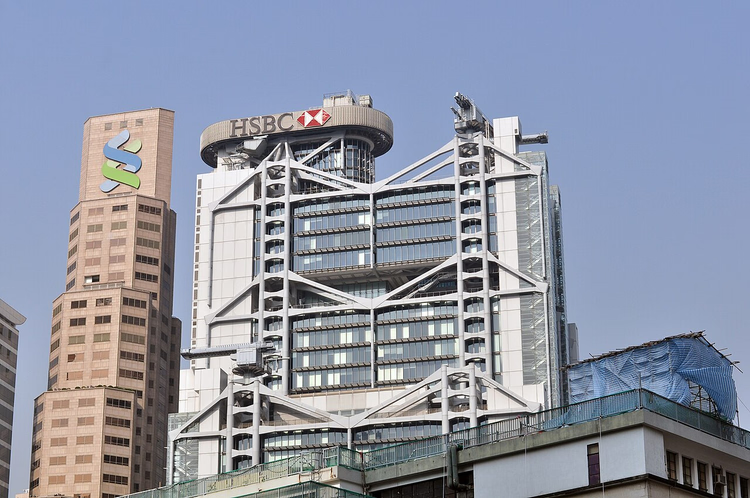 © Андрей Бобровский · CC BYPhoto: Андрей Бобровский, CC BY (https://creativecommons.org/licenses/by/3.0), Wikimedia Commons
Direct trains run from Guilin further south, and it is convenient to keep the schedule in one place: train schedules on Trip.com help you check connections to Hong Kong. Book your return flight home in advance; prices rise quickly in high season.
If you have more time: Chengdu and Fenghuang
With extra days, the route expands. People go to Chengdu for pandas and Sichuan cuisine, and to Fenghuang to see the old town with wooden houses by the water. For overnight stays, Mcsrh Hotel on Chunxi Road in Chengdu and Yifangyan Tingyuan Qingshe Hostel in Fenghuang are good options. Hotels in Chengdu on Trip.com are easy to filter by the city center, near the metro.
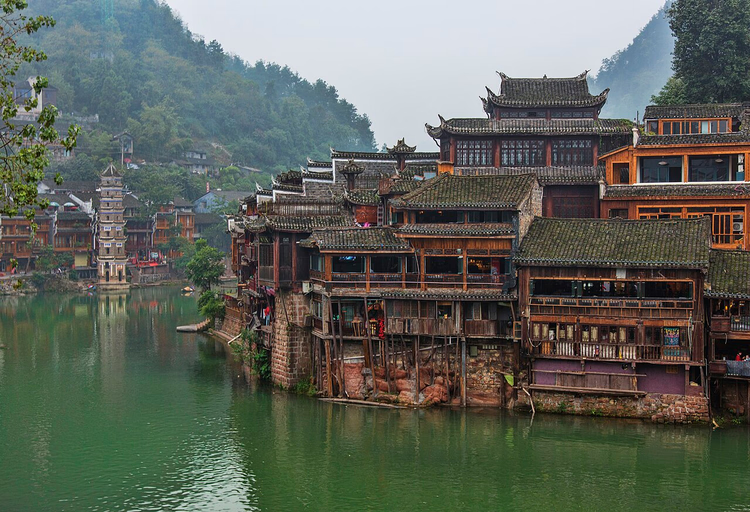 © chensiyuan · CC BY-SAPhoto: chensiyuan, CC BY-SA (https://creativecommons.org/licenses/by-sa/4.0), Wikimedia Commons
⁉️🤔 Frequently asked questions
Do EU citizens need a visa for China?
Up to 30 days no visa is required, the rule is valid until 31.12.2026, and at entry you state the purpose of the trip and the address of your first night's stay. Check the conditions on the current page of the German Federal Foreign Office before your flight: the period has been extended several times, so it is better to verify the date again. Your passport must be valid with a buffer, and registration of your place of residence in China is mandatory for foreigners.
How much money do you need for two weeks in China?
The main expenses are flights, hotels, high-speed trains, and entrance tickets. Hotels in Shanghai and Beijing are more expensive than in Xi'an, Zhangjiajie, and Yangshuo, so balance your budget according to the route. Domestic flights and trains are more convenient to buy in advance, and you will pay for food and the metro with a card linked to a local payment service.
Is two weeks enough for this route?
Yes, if you stick to five stops: Shanghai, Xi'an, Beijing, Zhangjiajie, and Guilin with Yangshuo. Each city gets two to three days, and transfers fit into an evening or overnight. If you add Chengdu or Hong Kong, you will have to either extend the trip or cut Beijing short. For a first visit, it is better not to be greedy.
How do you book tickets to the Forbidden City and the Terracotta Army?
In advance and with your passport: the Forbidden City sells tickets online and limits the daily number of visitors, while the Terracotta Army operates in timed sessions with named tickets. Check the museum's official website or app; third-party resellers charge a markup and offer no guarantees. If the date does not work, shift your visit: open slots usually appear a few days ahead.
When is the best time to go to China on this route?
The best months are considered to be April, May, September, and October: dry, warm, and comfortable for long walks. In summer, Beijing and Shanghai are hot and humid, and Zhangjiajie often gets rain. In winter the route also works, but it is cold in the mountains and some trails are closed. Avoid the first days of October: the holidays overcrowd trains and hotels.
In short: what is worth booking
The route is convenient to book in parts: first trains between cities, then hotels by date, and entrance tickets for specific sessions. The selection matrix looks simple.
- Short on time: a hotel near the metro in Shanghai and Beijing, transfers in the evening.
- You want nature: more days in Zhangjiajie and Yangshuo, fewer in Shanghai.
- Traveling with children: Chengdu with pandas instead of long hikes in the mountains.
- First time in Asia: do not extend the route, five stops are enough.
Book your return flight in advance and compare options with a layover: find flights on Kiwi.com.

A small editorial team writing guides for independent travel. We travel ourselves, but we haven’t been everywhere, so we check prices, opening hours and how to get there against official sources.