

















Nine days in China on your own: Xi'an, Guilin, Shanghai and Suzhou
China is easier and cheaper to see on your own, without a tour operator. Nine days is enough for Xi'an with the Terracotta Army, Guilin with its karst mountains, and Shanghai with the gardens of Suzhou.
The route starts in Xi'an, where you'll spend two days. Then a flight to Guilin, a cruise down the Li River, rice terraces, and a transfer to Shanghai. From Shanghai you'll take day trips to Suzhou and Zhouzhuang, and leave the last day for exploring the city. The Terracotta Army and the classical gardens of Suzhou are on the UNESCO World Heritage list.
Ad: this article contains affiliate links. We earn a commission if you book through them, at no extra cost to you.
Nine-day route: overview
💡 In short:
- Xi'an takes two days: the Terracotta Army, the city wall, and the Giant wild goose pagoda.
- Flights from Xi'an to Guilin take about two hours.
- Book high-speed train tickets in advance: tickets are issued to a named passenger, and you'll need your passport at the ticket office.
- Prices and opening hours: 09/2026, as of the Shanghai tourist office.
Below is a day-by-day summary: what to see, when to buy tickets, and where to stay.
Day | Main sights | Book tickets in advance | Overnight |
|---|---|---|---|
1 | Giant wild goose pagoda, city wall, Muslim Quarter | no | Xi'an |
2 | Terracotta Army, Huaqing Hot Springs | yes | Xi'an |
3 | Flight to Guilin, Elephant Trunk Hill | yes | Guilin |
4 | Li River cruise, Moon Hill | yes | Guilin |
5 | Huangluo ethnic village, Longsheng terraces | yes | Guilin |
6 | Flight to Shanghai, Yu Garden, the Bund | yes | Shanghai |
7 | Suzhou: gardens and Panmen Gate | yes | Shanghai |
8 | Zhouzhuang, water town | no | Shanghai |
9 | French Concession, shopping | no | Shanghai |
Train tickets and garden entry tickets are cheaper to buy in advance.
How to get to Xi'an
There are few direct flights from Europe to Xi'an, so book tickets with a connection in Beijing or Shanghai. Domestic flights within China are operated by Air China and other carriers. Buy domestic flight tickets in advance: prices rise closer to departure, and evening flights sell out first.
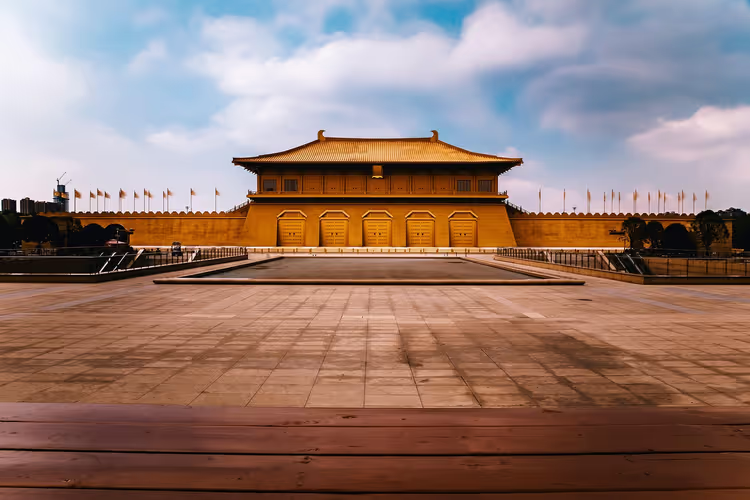
If you don't like flying, there's a high-speed train between Beijing and Xi'an. The journey takes about five hours. This transfer is more convenient than a short flight with security screening and the trip to the airport. Tickets are issued to a named passenger: you'll need your passport both at the ticket office and when boarding. Lines at the station start forming the evening before, so buy tickets online.
The most budget-friendly option: a bus from the Liuliqiao bus station. It takes longer than the train, but costs less.
At Xi'an airport, keep your baggage claim receipt. It's checked at the terminal exit to make sure you don't take someone else's suitcase. The most convenient way to get to your hotel is by taxi or by the bus that goes to the Bell Tower. Print out a card with your hotel's address in Chinese in advance.
Where to stay in Xi'an
Xi'an has a wide range of accommodation: from a hostel bunk to five-star hotels. The most convenient area is near the Bell Tower: from there you can walk to the city wall, the metro, and the Muslim Quarter.
To save money, book Xi'an Jiuping Hostel: a bunk in a shared room costs less than a private room.
Near the east gate is Suba Hotel Xi'an Dongmen 2, where double rooms are sold at a moderate price.
For comfort, consider Xi'an Forest City Hotel and Golden Flower Hotel Xi'an by Shangri-La: the first is a four-star property, the second a five-star.
Compare prices on Trip.com before paying: discounts depend on the date and how far in advance you book.
Day 1: Giant wild goose pagoda and the city wall
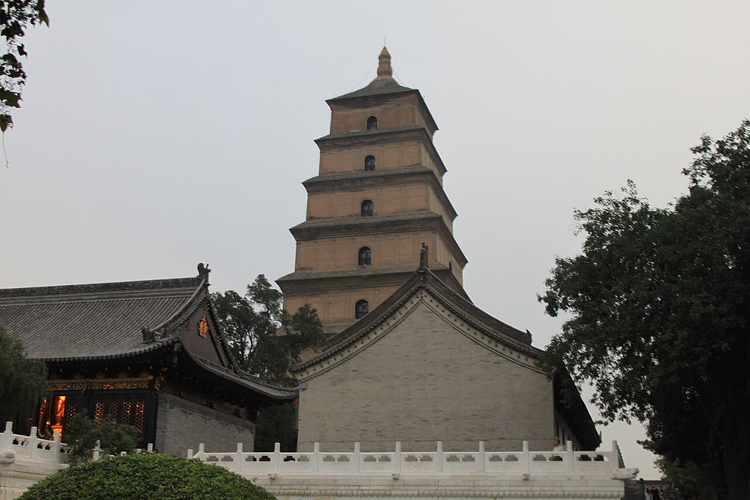
Xi'an is more than three thousand years old, and the Silk Road started here. You have two days in the city. Start with the main sights, and in the evening come back for the illuminated wall and the fountains.
Giant wild goose pagoda
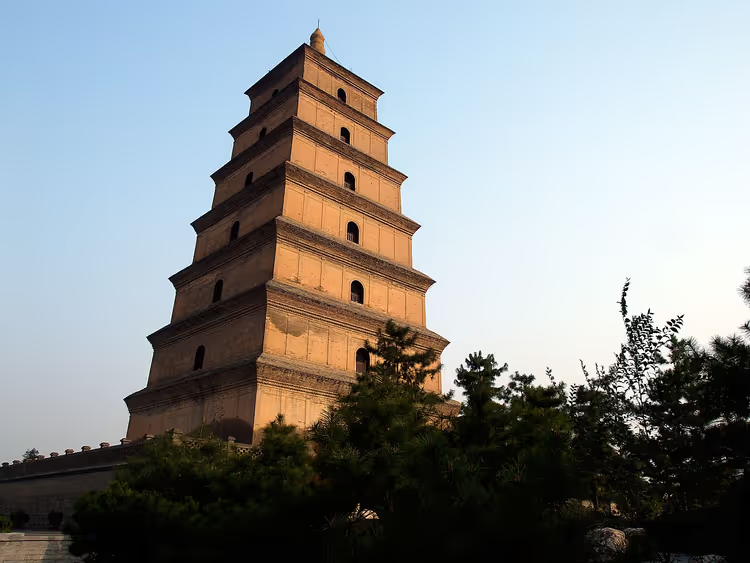 © Alex Kwok · CC BY-SAPhoto: Alex Kwok, CC BY-SA (http://creativecommons.org/licenses/by-sa/3.0/), Wikimedia Commons
The Giant Wild Goose Pagoda stands in the Ci'en Temple and is visible from different parts of the city. It has seven tiers and rises over sixty meters high. From the top tier you get a panorama of all of Xi'an. Over time the pagoda has tilted, which is why it's called China's Leaning Tower of Pisa. The climb follows a narrow internal staircase, so you should assess your fitness level. Nearby there's a park with a peony pavilion, and in the evening a fountain show runs. You can have lunch at the shopping center next door: at the hot pot restaurant, food is cooked right at your table.
- How to get there: by taxi from your hotel.
- Cost: entry to the temple grounds is paid, tickets are sold at the entrance.
City wall fortress
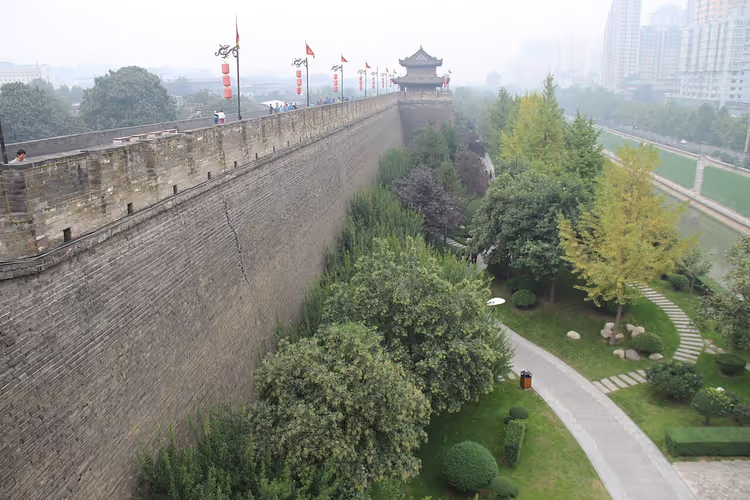
The wall encircles the old town in a ring 13.74 km long (as of 09/2026, China for Travelers). The most convenient place to start is the South Gate, where drummers perform every morning. Entry costs 54 yuan, and a bicycle rental runs about 45 yuan for three hours (as of 09/2026, China for Travelers). You won't walk the entire ring, so take a bike or stick to the southern section. After your walk, head down to the Muslim Quarter: there they sell stone, silk, and wood.
- How to get there: taxi to the South Gate, then on foot along the wall.
- The catch: bicycle rental is paid and time-limited.
Bell tower and drum tower, Muslim quarter
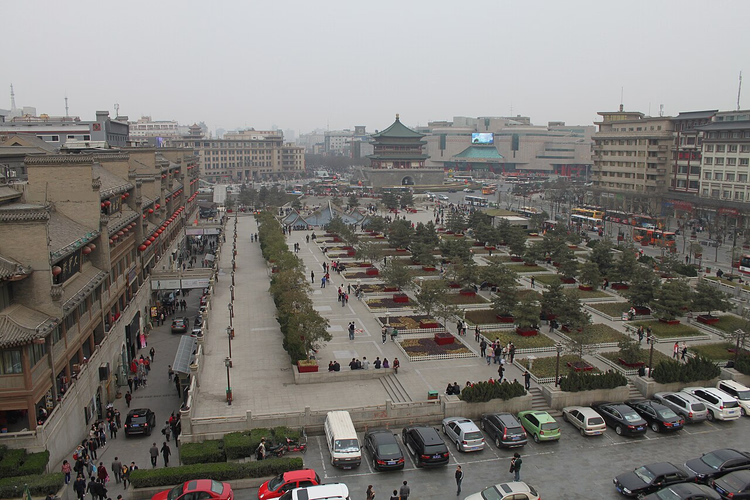
From the South Gate it's a stone's throw to the Bell Tower and Drum Tower. Beyond them begins the Muslim Quarter with the Great Mosque, one of the largest in China. The Silk Road brought two religions here: Islam and Buddhism. The quarter is colorful, and without it a Xi'an itinerary is incomplete. On the shopping streets you can buy souvenirs made of stone, wood, and silk, and also try local food.
- How to get there: on foot from the South Gate, use the bell tower as your landmark.
- Cost: entry to the towers is paid, tickets are sold at the entrance.
Day 2: Terracotta Army and Huaqing hot springs
Terracotta Army
 © Jmhullot · CC BYPhoto: Jmhullot, CC BY (https://creativecommons.org/licenses/by/3.0), Wikimedia Commons
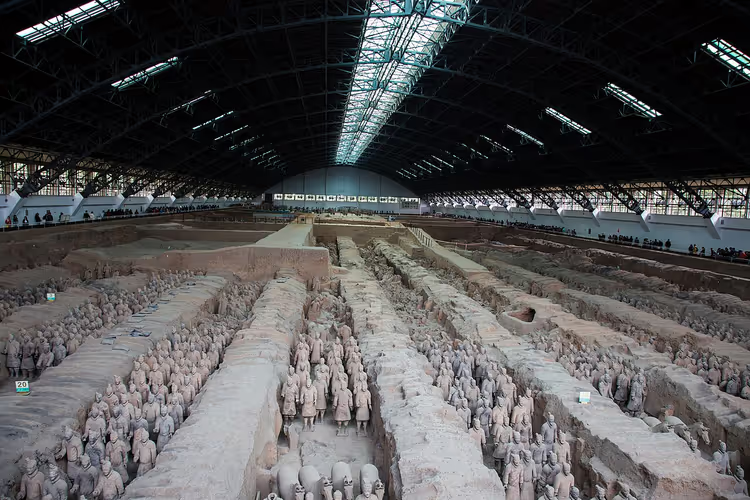
The Terracotta Army lies an hour's drive from Xi'an. Buses leave from the railway station frequently; look for the words Terracotta Army on the side. A ticket costs 120 yuan, and ticket offices are open from 8:30 to 18:30 from mid-March to mid-November (as of 09/2026, China Discovery). Buy your ticket online and arrive at opening time, before there's a line at the entrance.
The museum grounds have three pavilions, and the army stands in the first one. Each warrior is taller than a person and weighs over a hundred kilograms. The sculptures' faces are turned east, toward the defeated states. A guide at the entrance speaks English and charges separately for a tour. Keep cash on hand: card terminals aren't available everywhere.
- How to get there: bus from the railway station, the trip takes about an hour.
- The catch: to reach the entrance you walk through a long row of souvenir shops and snack stalls.
Huaqing hot springs and Mount Li
 © 源義信 · CC BY-SAPhoto: 源義信, CC BY-SA (https://creativecommons.org/licenses/by-sa/4.0), Wikimedia Commons
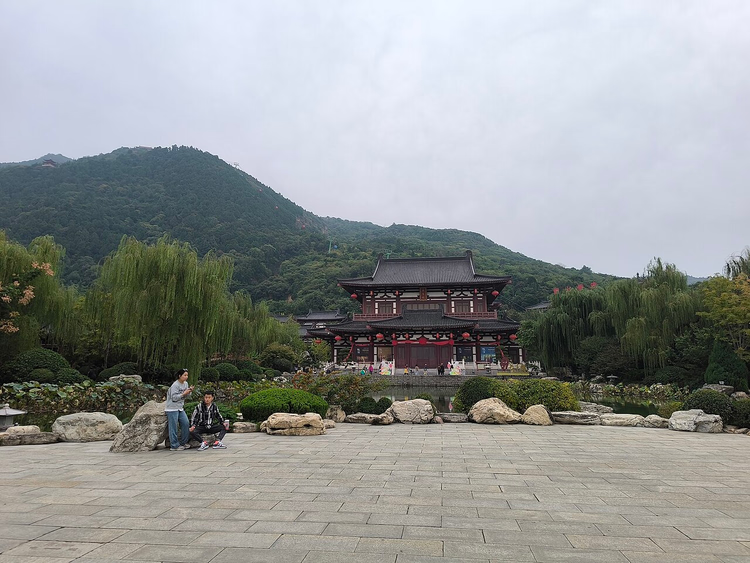
After the museum, head to Lintong: that's where the Huaqing hot springs are. Tell the driver "Hot springs" or show a note with the characters. The garden and park ensemble here ranks among the best in China, and entry is paid.
Huaqing is tied to the love story of Emperor Xuanzong and the beauty Yang Guifei. The ruler built a park and baths for his beloved. By the Lotus Pond stands the Tree of Love, to which thousands of ribbons are tied. The springs are active, and many people wash their faces with the healing water.
Climb to the observation deck on Mount Li: from there you can see the whole park and the surrounding area. Return to Xi'an before dark. Have dinner at the dumpling restaurant between the Bell Tower and Drum Tower: it's easy to spot by the huge dumpling at the entrance. Tomorrow you have a flight to Guilin, so don't stay out late.
- How to get there: bus to Lintong, then on foot.
- Cost: entry to the hot springs park is paid, check the exact price on site.
Day 3: flight to Guilin and Elephant Trunk Hill
Getting from Xi'an to Guilin
 © Fanghong · CC BY-SAPhoto: Fanghong, CC BY-SA (https://creativecommons.org/licenses/by-sa/4.0), Wikimedia Commons
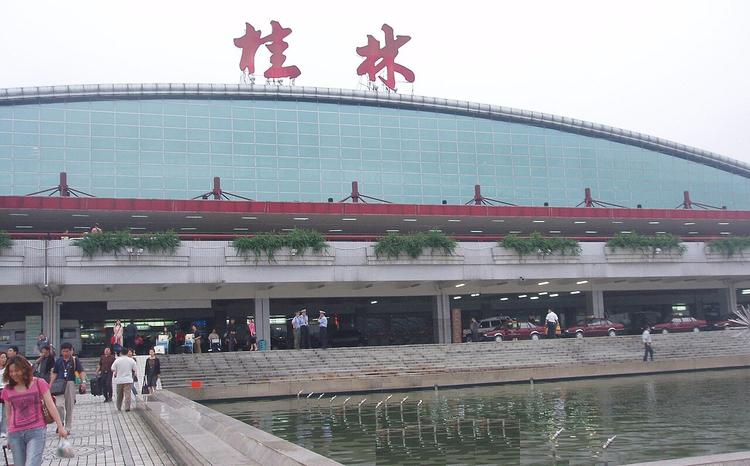
The flight from Xi'an to Guilin takes about two hours. Book a taxi to the airport through the hotel front desk, that way you avoid haggling with the driver. Guilin is famous for its karst mountains and the Li River: scenes from The Painted Veil and Star Wars were filmed here. An express bus runs from Guilin airport to the city. If your hotel is past the final stop, switch to a taxi.
Where to stay in Guilin
In Guilin, people stay either in the center near the lakes or closer to the train station. The center is more convenient: restaurants, a square with a waterfall, and the pier are nearby. Guilin hotels on Trip.com: compare options in the center and near the station. When booking, check whether breakfast is included and how far the walk is to the bus stop.
- Who it's for: those planning early tours to the rice terraces.
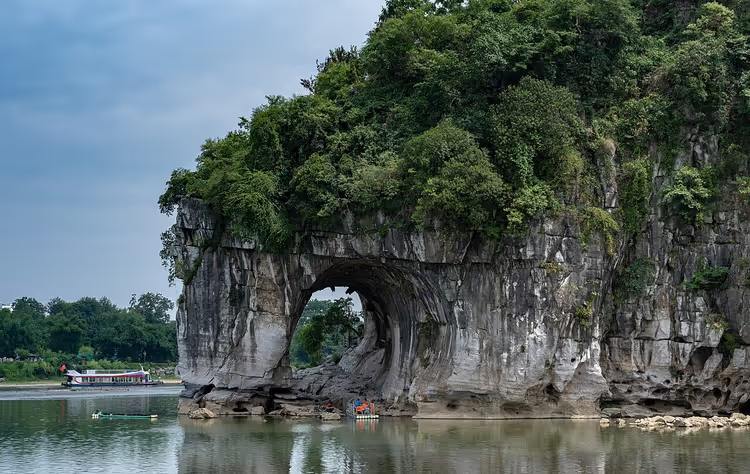
Elephant Trunk Hill (Xiangbishan)
 © xiquinhosilva · CC BYPhoto: xiquinhosilva, CC BY (https://creativecommons.org/licenses/by/2.0), Wikimedia Commons
Elephant Trunk Hill stands in the southern part of central Guilin. The hill's outline resembles an elephant dipping its trunk into the river, hence the name. This is where the Li River meets the Peach Blossom River. You can walk to the base from the center or take a ferry from the pier on Nanhuanlu Street.
According to legend, a herd of elephants came down from the heavens and stayed by the water. The Jade Emperor ordered them to return, but one elephant was missing. The enraged ruler struck the animal with his sword, and the elephant turned to stone. A brick pagoda stands on top of the hill, its shape resembling the hilt of that very sword.
- How to get there: on foot from the center or by ferry from Nanhuanlu Street.
- Cost: park entry is paid, tickets are sold at the entrance.
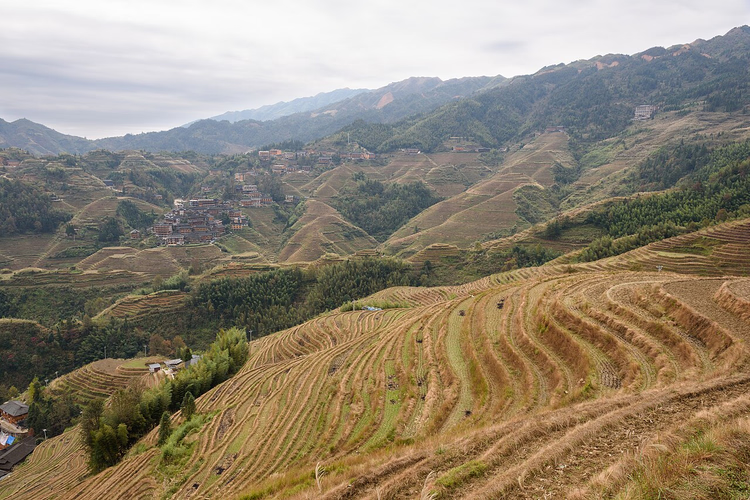
Longsheng rice terraces: booking a tour
 © King of Hearts · CC BY-SAPhoto: King of Hearts, CC BY-SA (https://creativecommons.org/licenses/by-sa/4.0), Wikimedia Commons
The Hezhong tourism agency operates near the park. It's easier to buy a tour to the Longsheng rice terraces here: on your own you'd have to make transfers, and the trip would take over three hours. The tour package usually includes transfer and entry. Rice terrace tours: compare programs and duration.
- How to get there: by tour from the agency near the park or independently via Heping.
- Who it's for: those who want to see the terraces in one day without transfers.
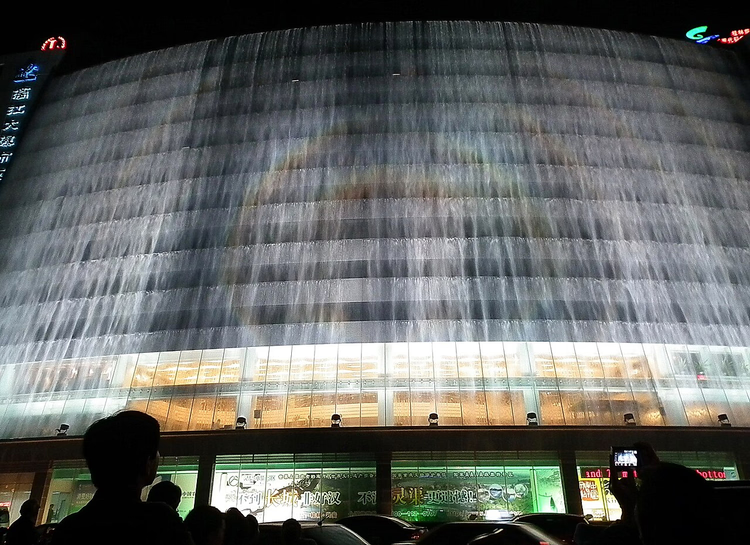
Waterfall at the Lijiang Waterfall Hotel
 © lienyuan lee · CC BYPhoto: lienyuan lee, CC BY (https://creativecommons.org/licenses/by/3.0), Wikimedia Commons
In the evening, head back to the complex of ponds and unusual bridges in the center. Tourists and locals gather near the Lijiang Waterfall Hotel: for ten minutes, the wall turns into a waterfall, then becomes the facade of a five-star hotel again. The show is visible from the street, but it's better to grab a spot by the railing early. If you're staying in Guilin longer, take a trip to Reed Flute Cave and Seven Star Park: the cave has an underground lake.
- Cost: the square and ponds are open to everyone, you only pay for dinner.
Day 4: Li River rafting and Moon Hill
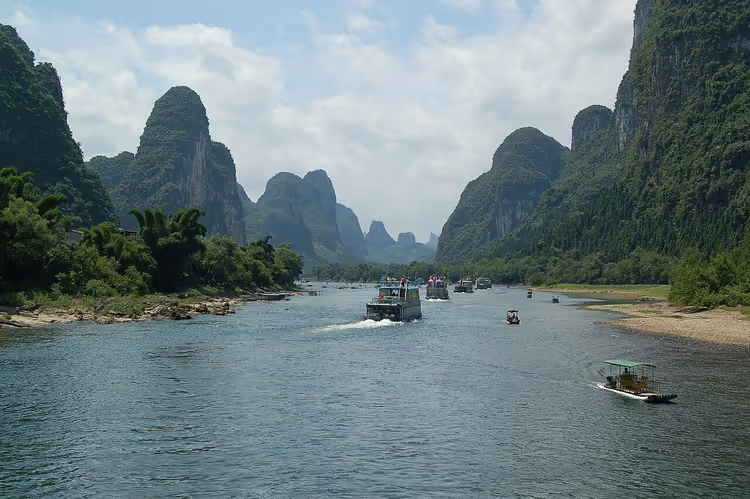
Li River rafting from Yangshuo
 © Halaston · CC BY-SAPhoto: Halaston, CC BY-SA (https://creativecommons.org/licenses/by-sa/4.0), Wikimedia Commons
Start day four with the trip to Yangshuo: the best views of the karst hills open up from there. A Li River cruise costs several hundred yuan per person and is run by a single company, so you won't find it cheaper. By water, the trip takes about four hours. By bus, you'll get there in an hour and spend noticeably less, which is why most people choose this option.
The most scenic stretch lies between the villages of Yangdi and Xingping. Look at a twenty-yuan banknote: it depicts the Li River, karst hills, and green banks. The bus to Yangshuo leaves from the Guilin bus station, and the ticket costs very little. In Yangshuo, at the same station, you'll transfer to a bus to Yangdi or Xingping.
In Yangdi, the bus takes you to the pier where rafts are rented for trips. A full rafting trip costs about three hundred yuan. Beware of cheap offers: for less money, guides cut the trip from an hour and a half to half an hour and drop you off far from the endpoint. Then you'll have to get to Xingping on your own.
Buy tickets to Yangshuo at the Guilin bus station, and in Yangshuo immediately get a ticket to Yangdi or Xingping. At the pier, agree on the rafting endpoint: pay only for the full route. Get your return ticket to Guilin for the same day. The cafes along the route are simple, but the food is hearty.
The price usually includes transfer from the Xingping pier to the bus station. The guide may stop the group for lunch at a local cafe: the food is tasty and inexpensive, though don't expect much in the way of service. You'll return to Yangshuo by regular bus with a cheap ticket.
- Cost: the cruise is several hundred yuan, the bus is cheaper.
- The catch: cheap rafts give you a shortened trip and drop you off away from the endpoint.
Moon Hill
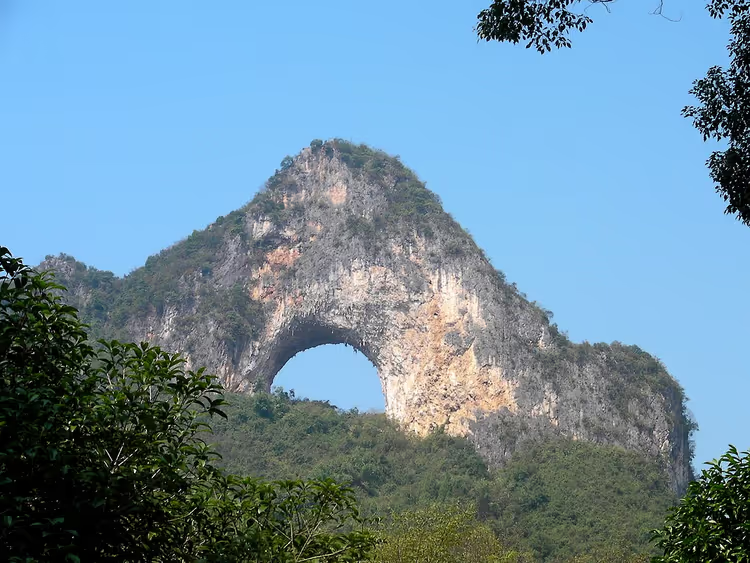 © Maria Ly · CC BYPhoto: Maria Ly, CC BY (https://creativecommons.org/licenses/by/2.0), Wikimedia Commons
Before returning to Guilin, climb Moon Hill. The rock has a natural arch shaped like a crescent moon, and that's why people come here. The bus from Yangshuo takes about fifteen minutes. The ticket is inexpensive, and there's no lift on the hill: you'll climb the steps yourself. The summit offers a panorama of karst mountains. Local grandmothers will guide you to the top and wait for you to buy water or a drink from them. After the descent, take the bus to Guilin.
- How to get there: bus from Yangshuo, about fifteen minutes.
- The catch: the climb is only on foot up steps, there's no elevator or lift.
Day 5: Huangluo ethnic village and Longsheng terraces
Heading to Huangluo to see the long-haired Yao
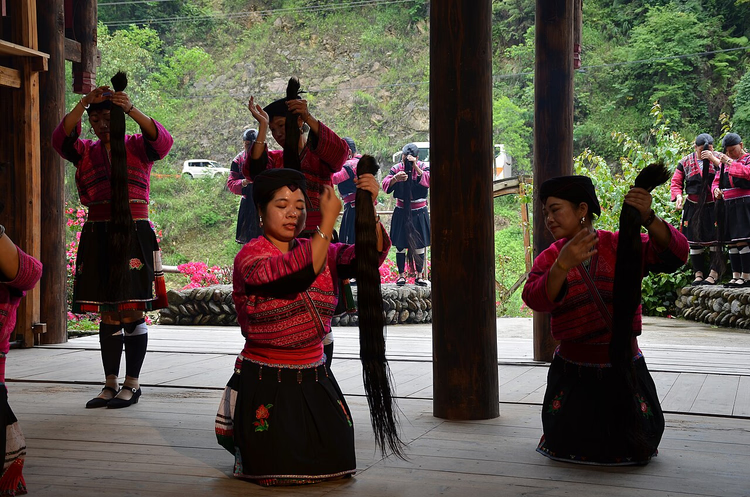 © shankar s. · CC BYPhoto: shankar s., CC BY (https://creativecommons.org/licenses/by/2.0), Wikimedia Commons
Dedicate day five to the Longsheng rice terraces. You bought the tour in advance at the agency, so the bus will pick you up at your hotel in the morning. First stop: the Huangluo ethnic village, home to Yao women. Women here don't cut their hair: for locals, a long braid means a long life and prosperity. Gray hair is rare in the village, even among the elderly.
The Guinness World Records recorded a braid over two meters long in Huangluo. In the past, only a woman's husband could see her hair down; today, for a separate fee, women will let down their braids and pose for the camera. The first rice fields begin near Huangluo.
After Huangluo, the bus climbs higher to the terraces. Leave time in the village for souvenirs: locals sell handmade items, and prices are negotiable on the spot. It's best to bring water and a light jacket: it's cooler in the mountains than in the city.
- How to get there: by tour from Guilin, the bus picks you up at the hotel in the morning.
- The catch: photos with locals and souvenirs are paid, confirm the price in advance.
Longsheng terraces near Ping'an village
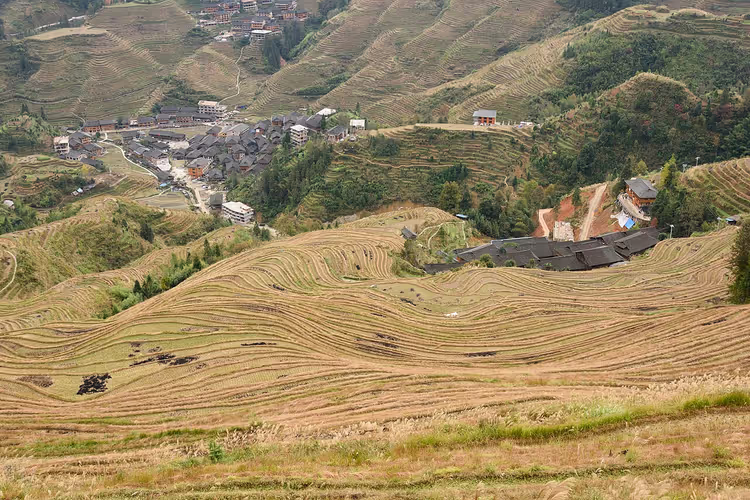 © King of Hearts · CC BY-SAPhoto: King of Hearts, CC BY-SA (https://creativecommons.org/licenses/by-sa/4.0), Wikimedia Commons
Next, the bus climbs up to the village of Ping'an. It's about a hundred kilometers from Guilin, and the last stretch runs along a mountain switchback road with a trained driver.
Independent travelers find this route more challenging. First you take a regular bus to Heping, then you get to the village entrance by car. The terrace ticket is bought at the entrance; on a tour it's already included in the price. At the entrance you'll be offered two routes, and each one starts with a climb up steps. The switchback road takes time, so don't plan other sights for that day.
The first route leads to the Ping'an village terraces, the second, longer one, to the Dazhai terraces. Experienced travelers advise not to skimp on time for the longer route: the views over the Jinkeng terraces open up wider. If you have an extra day, see both directions.
Locals call the Ping'an terraces the Dragon's Backbone. The fields have been cultivated for more than eight centuries; the first terraces appeared back in the Yuan dynasty. There are viewing platforms here: Nine Dragons, Five Tigers, and Seven Stars with the Moon. You'll climb up to them on foot via steps. Besides rice, tea is grown here: fresh leaves are dried and packed right in front of you. By evening, the bus will bring you back to your hotel.
- Cost: on a tour, admission is included; independently, the ticket is bought at the entrance.
- The catch: only stairs lead to the viewing platforms, there's no transport there.
Day 6: moving to Shanghai and Yu Garden
From Pudong Airport to central Shanghai
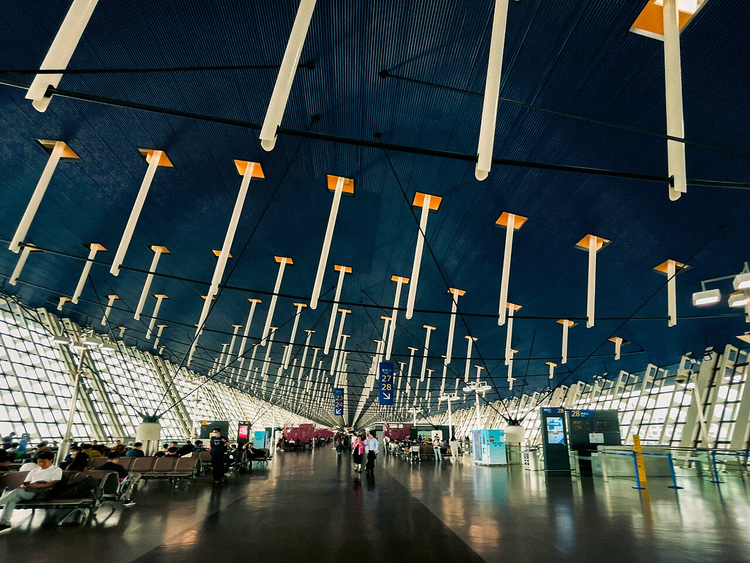 © Wyanhache · CC BY-SAPhoto: Wyanhache, CC BY-SA (https://creativecommons.org/licenses/by-sa/4.0), Wikimedia Commons
Buy your Shanghai tickets in advance; flights are operated by Shanghai Airlines. There are three ways to get from Pudong Airport to the center: taxi, bus, and maglev train. The maglev reaches 430 km/h (as of 09/2026, Shanghai Tourism) and gets you to Longyang Road metro station in seven minutes. A ticket costs 50 yuan, and if you show your airline ticket, you pay less (as of 09/2026, official Shanghai tourism website). From Longyang Road, transfer to metro line 2 and you'll be in the center in ten minutes.
Only take taxis with the meter on. If the driver refuses to turn it on, the fixed price should not exceed eighty yuan.
- Cost: maglev 50 yuan, cheaper with an airline ticket (as of 09/2026, Shanghai Tourism).
- Who it's for: those flying through Pudong who want to get to the center quickly.
Where to stay in Shanghai
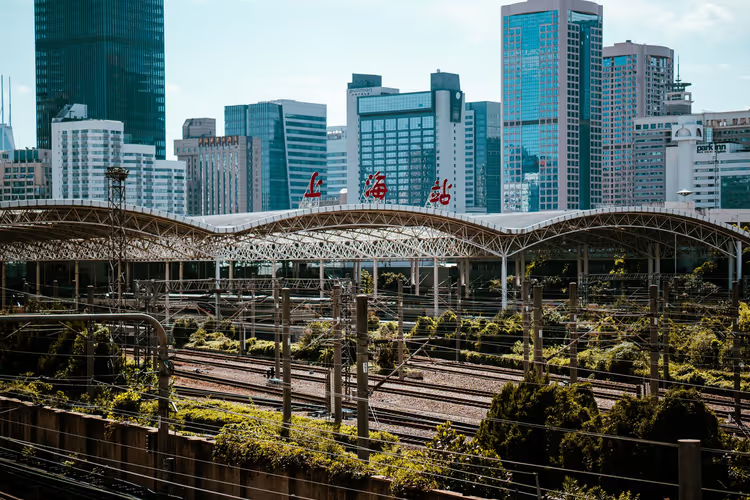
In Shanghai, the Zhabei area is a convenient place to stay. Shanghai Railway Station metro stop and the central railway station are nearby. Shanghai hotels on Trip.com: compare options near the station and near the waterfront. When booking, check whether breakfast is included and how long the walk to the metro is. From the station, you can leave for Suzhou without transfers, and you can buy tickets in the advance sales hall.
- Who it's for: those planning trips to Suzhou and Zhouzhuang.
Yu Garden in the Old City
 © Chainwit. · CC BYPhoto: Chainwit., CC BY (https://creativecommons.org/licenses/by/4.0), Wikimedia Commons
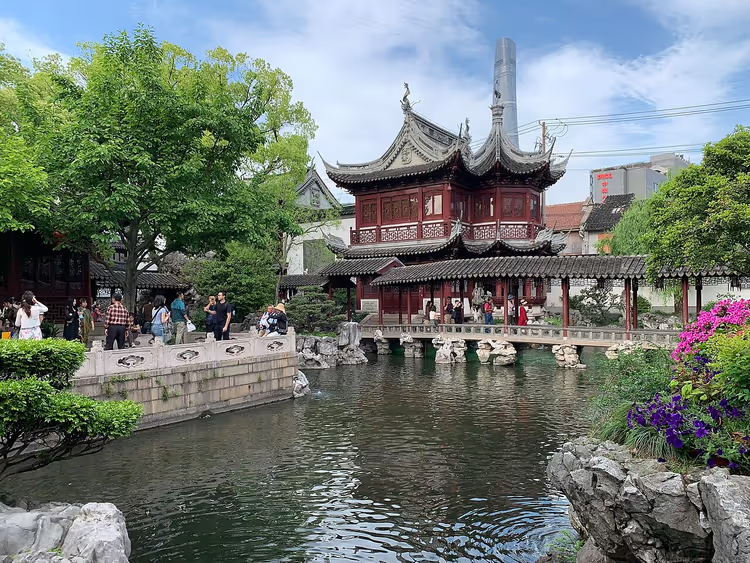
After checking in, head to the Old City. You need purple line 10 to Yuyuan Garden station. The main attraction here is Yu Garden; admission costs from 30 to 40 yuan depending on the season (as of 09/2026, TravelChinaGuide). The garden was founded more than four centuries ago by the official Pan Yunduan for his parents, who wanted to spend their old age in peace and happiness.
Construction took more than twenty years and all of the family's savings. In the center of the garden, you can stroll by the lotus pond, among pavilions and terraces. Every visitor crosses the "Bridge of Nine Turnings": according to legend, the bridge keeps evil spirits from passing. A tea house stands right on the bridge. Be sure to stop by the City God Temple and set aside a full day for the garden. Cafes and souvenir shops operate near the garden, so you can take a break without searching for one.
- Cost: garden admission 30-40 yuan, price depends on the season (as of 09/2026, TravelChinaGuide).
- The catch: tickets are more expensive in high season, arrive at opening time.
- Shanghai tickets and tours
The Bund and the Oriental Pearl Tower
 © King of Hearts · CC BY-SAPhoto: King of Hearts, CC BY-SA (https://creativecommons.org/licenses/by-sa/4.0), Wikimedia Commons
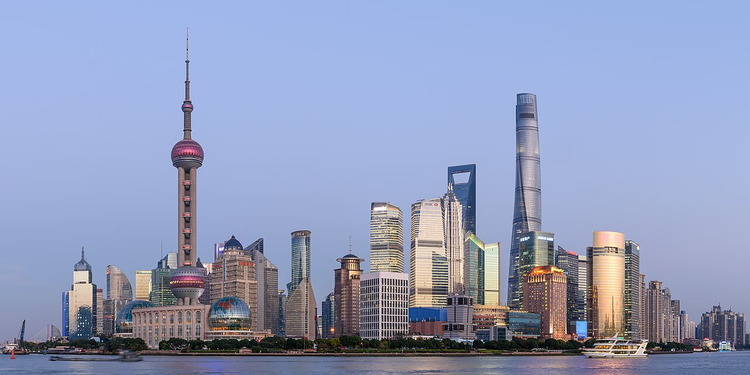
If you still have energy left, make your way to the Bund. From East Nanjing Road metro station, head toward the Huangpu River: that's where you get the best view of the skyscrapers. Photos here turn out great without filters. You'll return the same way.
The Oriental Pearl Tower is one metro stop from the Bund, near Lujiazui station on Line 2. There's an aquarium nearby. On your way back, stop by the railway station's advance ticket office: your hotel is nearby, and you can buy train tickets to Suzhou ahead of time.
- Cost: the Bund is free, the aquarium has an admission fee.
- Who it's for: anyone who loves city panoramas and wants photos from the river.
Day 7: Suzhou in one day
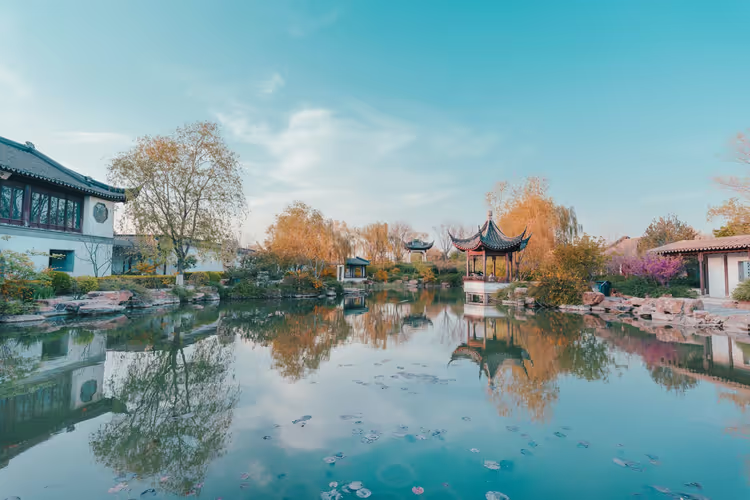
Suzhou is worth visiting for its gardens: in the sixteenth and seventeenth centuries there were about two hundred and eighty of them. Around seventy remain today, and one day is enough for the four main ones. The city itself is more than two and a half thousand years old, and its classical gardens are a UNESCO World Heritage site. Suzhou is also a center of the silk trade.
The gardens are a reasonable distance from each other, and in one day you can cover Panmen Gate, the Master of the Nets Garden, and the Lion Grove Garden. Start in the morning: by midday, tour groups pile up at the ticket offices. You buy a separate ticket for each garden. End your day at the Humble Administrator's Garden: from there you can walk to the train station.
A G-series train will get you to Suzhou: the trip takes about half an hour, and a ticket costs around forty yuan. Trains in China on Trip.com: compare schedules and prices in advance. Tickets are issued to a named passenger, so you'll show your passport at the ticket office.
Panmen Gate
From the train station to Panmen Gate, take bus number five; the ride takes about fifty minutes. The ticket costs a symbolic amount. The gate was once part of the city wall; today it has been restored. The work cost more than two million dollars: trees and flowers were planted, the carp pond was cleaned, and lighting was installed. Nearby you'll find the Ruiguang Pagoda, which once housed a pearl stupa.
Master of the Nets Garden (Fisherman's Garden)
Next, head to the Master of the Nets Garden, also called the Fisherman's Garden. Construction began about eight centuries ago, and admission costs thirty yuan. The pavilions preserve interiors from past centuries, and at the center a pond shimmers, framed by plants and rocks. For beautiful photos, go to the bonsai garden and the arched bridge with the lyrical name "Leading to Serenity." In summer, the garden is also open late into the evening.
Lion Grove Garden
 © Jakub Hałun · CC BY-SAPhoto: Jakub Hałun, CC BY-SA (https://creativecommons.org/licenses/by-sa/4.0), Wikimedia Commons
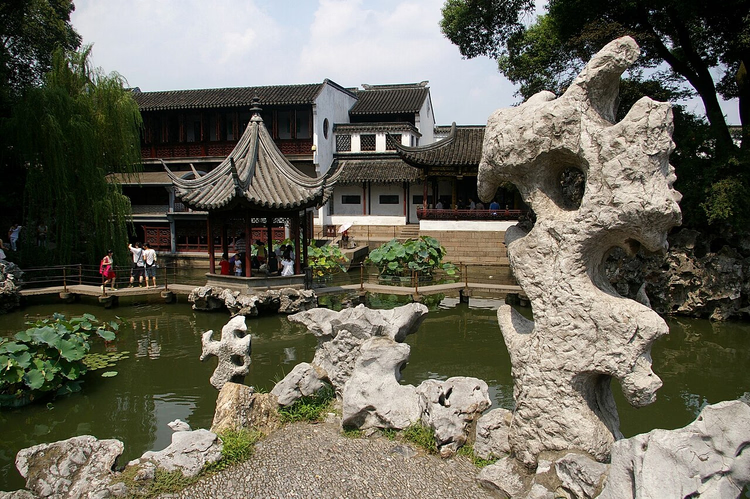
Next stop: Lion Grove Garden. Its main feature is a jumble of oddly shaped taihu stones. To produce such a stone, holes were drilled into the rock and it was left to weather in a lake for decades. Today these stones form a labyrinth, and you'll easily lose track of time here. Admission costs thirty yuan.
Humble Administrator's Garden
 © Zhangzhugang · CC BY-SAPhoto: Zhangzhugang, CC BY-SA (https://creativecommons.org/licenses/by-sa/4.0), Wikimedia Commons
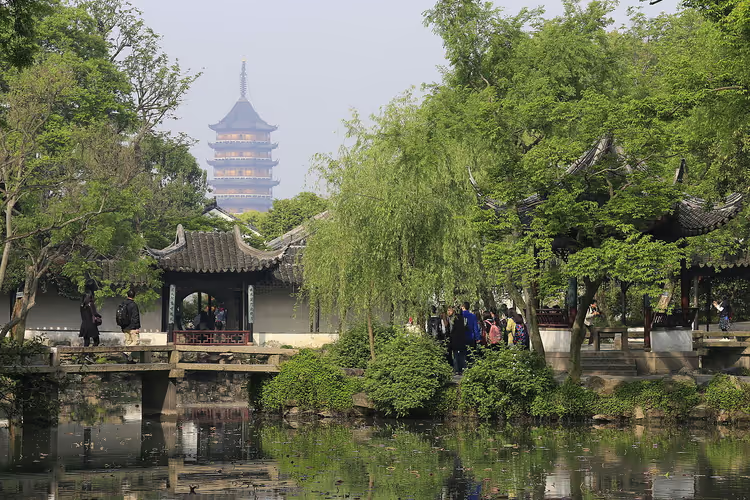
End your day at the Humble Administrator's Garden, which covers five hectares. Ideally you'd set aside a full day for it, but even in a couple of hours you'll see the highlights. The garden was founded more than six hundred years ago by an official dismissed for corruption: he worked on his project for about twenty years. Admission costs 70 yuan; in summer it hosts a lotus festival, and in spring an azalea festival (as of 09/2026, PlanChinaTrip). You can walk to the train station; on the way, stop by the "85" bakery for pastries and coffee.
- Cost: Master of the Nets Garden and Lion Grove Garden 30 yuan each, Humble Administrator's Garden 70 yuan (as of 09/2026, PlanChinaTrip).
- The catch: you can't cover all the gardens in one day, so arrive in the morning.
Day 8: Zhouzhuang, the Venice of China
A town on the water
 © Kristoffer Trolle · CC BYPhoto: Kristoffer Trolle, CC BY (https://creativecommons.org/licenses/by/2.0), Wikimedia Commons
Dedicate the eighth day to Zhouzhuang. A bus runs there from Suzhou; the ticket costs seventeen yuan, and the ride takes about an hour. From the final stop to the Old Town, you can walk or take a taxi. Admission to the town costs about one hundred yuan. After noisy Shanghai, Zhouzhuang surprises you with its quiet, especially if you come on a weekday.
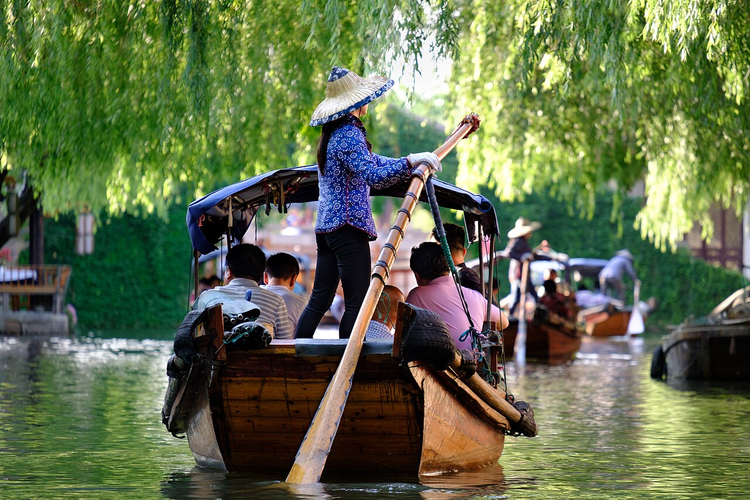
Unlike Venice, the canals here are narrow, and the boats are piloted by local women. Don't miss a ride on the water: for one hundred yuan you get about half an hour of boating. Sometimes they'll let you take the helm and sing a folk song, and they ask for an extra fee for the singing.
As you wander the lanes, take a look at the Key Bridge. Locals earn money from private canal rides, restaurants, and souvenirs.
The Old Town is small and easy to cover on foot in a few hours. Houses stand right at the water's edge, and boats serve as the residents' transport. Stone bridges connect the banks, so the route builds itself: from dock to dock, past shops and tea houses. If you're staying overnight, catch the sunset: there are fewer tourists in the evening, and the town looks different.
You can grab a bite at any number of places, but the choice is always yours. The water used for cooking here comes from the canal where people do their laundry. Locals insist that after boiling, it has a special taste. If you don't plan to stay for sunset, hurry: the last bus to Suzhou leaves in the afternoon.
Compare travel insurance options
- Cost: admission about one hundred yuan, a boat ride the same.
- The catch: water used for food comes from the canal where people do their laundry.
Day 9: French Concession and shopping
French Concession
 © Jean-Pierre Dalbéra from Paris, France · CC BYPhoto: Jean-Pierre Dalbéra from Paris, France, CC BY (https://creativecommons.org/licenses/by/2.0), Wikimedia Commons
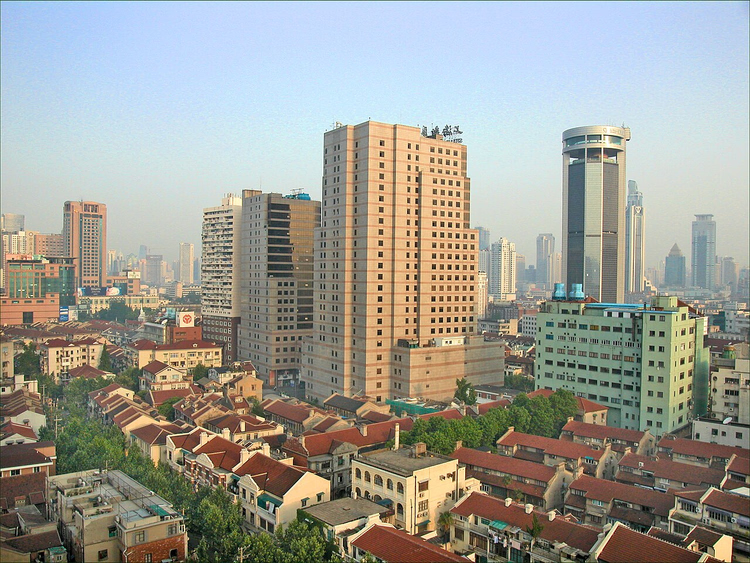
Leave the last day for Shanghai. Take red line 1 to Shanxi Road station to reach the French Concession. This is the least metropolis-like district: quiet streets, cozy cafes, pastry shops, cobblestones, and balconies. Despite the name, not only the French lived here, but also Russian emigrants.
Places of interest and shopping
 © Bruno Corpet ( Quoique ) · CC BY-SAPhoto: Bruno Corpet ( Quoique ), CC BY-SA (https://creativecommons.org/licenses/by-sa/3.0), Wikimedia Commons
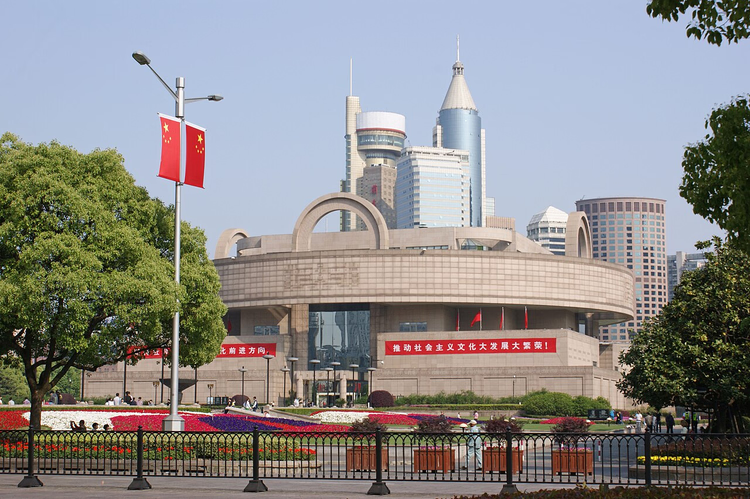
Spend the rest of your time on what you put off, or go shopping. On the list to visit are the Shanghai Circus and zoo, the Jade Buddha Temple, the Pushkin monument, and the Museum of the Chinese Communist Party. For fashionable brand items, head to Grand Mall: seven floors of shops and a supermarket with fruits and vegetables. The mall is right next to Lujiazui station.
- Getting there: metro, line 1 to Shanxi Road station.
⁉️🤔 Frequently asked questions
How much money do you need for nine days in China?
Main expenses: hotels, domestic flights, and entry fees to museums and gardens. A hostel in Xi'an is cheaper than a five-star hotel, a bus is cheaper than the maglev, and a train is cheaper than a plane. Set aside a reserve for tickets that need to be bought in advance and for airport transfers. Check exact prices on the official websites of the attractions before your trip.
Do I need a visa for a trip to China?
Entry rules change often, so before buying tickets, check the current requirements on the Auswärtiges Amt website and at the Chinese consulate. Allow extra time for paperwork. Hotels and museums ask for your passport, so keep it with you and carry a copy.
How do I buy tickets for high-speed trains?
Tickets are issued to a named passenger, so you need your passport both when buying and when boarding. Buy online or at the advance booking office at the station one day before departure. The day before, seats may be sold out, especially on G trains from Shanghai. If the ticket machine doesn't accept your card, go to the ticket office.
When is the best time to take this route?
Peak season falls on the summer months and national holidays: prices are higher and observation decks are crowded. In the off-season, the weather is milder, lines are shorter, and hotels are cheaper. It's best to visit the Longsheng terraces when the rice fields are flooded or already ripe.
Is nine days enough for Xi'an, Guilin, and Shanghai?
Yes, if you don't stretch out each city and buy tickets in advance. You'll spend two days in Xi'an, three in Guilin and Yangshuo, and four in Shanghai with day trips to Suzhou and Zhouzhuang. This pace leaves time for observation decks and walks without rushing. If you have an extra day, add Beijing at the start of the route.
Find hotels in Shanghai
Compare prices across booking sites and filter for rooms with free cancellation.
Compare prices on Trip.comThe widget loads once you give your consent.
In short: what to book
The route is built around three cities and two day trips. Buy train tickets and garden entry tickets in advance, and choose hotels near the metro and the train station.
- If you have two days in Xi'an: book a hotel near the Bell Tower and a Terracotta Army ticket for the morning.
- If you're going for the scenery: book the Li River rafting and a tour to the Longsheng terraces.
- If you want a relaxed finale: leave the last day for Shanghai and Zhouzhuang.
Hotels in Xi'an and Shanghai on Trip.com, Guilin tours, and trains to Suzhou can be found at the links.

A small editorial team writing guides for independent travel. We travel ourselves, but we haven’t been everywhere, so we check prices, opening hours and how to get there against official sources.