
















Cruise to Antarctica: how to choose a route, ship and season
Antarctica is nothing like a typical beach vacation. In the 2024/25 season, around 118,000 people visited it (IAATO), and nearly everyone got there by ship.
The challenge isn't the distance. Three starting points lead to the coast, and shore landings are governed by international rules. Pick the wrong ship or season, and instead of penguins you'll get several days of rough seas in the Drake Passage.
Below, we'll break down where cruises depart from, how ship types differ, when to go, and how much such a trip costs.
Ad: this article contains affiliate links, we earn a commission if you book through them, at no extra cost to you.
The history of Antarctic tourism
💡 In short:
- An Antarctic cruise departs from Ushuaia (Argentina), Punta Arenas (Chile), or Christchurch (New Zealand).
- Landings are only allowed from ships with up to 500 passengers, and no more than 100 people may go ashore at once (according to IAATO).
- The season runs from November through March, with the peak in December and January.
- Season, landing rules, and statistics: as of 09/2026, verified on the official IAATO website.
Not long ago, a trip to the South Pole seemed like the domain of polar researchers and a handful of extreme adventurers. Today it's an organized flow with schedules, cabin classes, and mandatory insurance. The wild nature, however, remains unchanged.
Maritime connections with the continent began in the 1920s. Falkland Islands mail ships carried post and equipment for whalers to the continent. The first commercial tourist voyages appeared in the 1960s, but passenger numbers were tiny back then. A decade later, airlines from Australia and New Zealand began supporting the destination.
The real influx came in the 1990s, when several operators put together the first regular cruise itineraries. After 2000, interest grew even more, and now the count is in the hundreds of thousands of visitors per season. You'll end up in a landing queue if you choose a large ship.
The continent is protected from uncontrolled presence. The International Association of Antarctica Tour Operators (IAATO) oversees safety and environmental responsibility. Under the Antarctic Treaty, every operator must obtain a permit to visit the continent.
The main thing to understand before buying: an Antarctic cruise remains an extreme form of travel. Only after weighing your stamina and budget should you start picking a tour and getting into the finer points of itineraries.
How to choose an itinerary
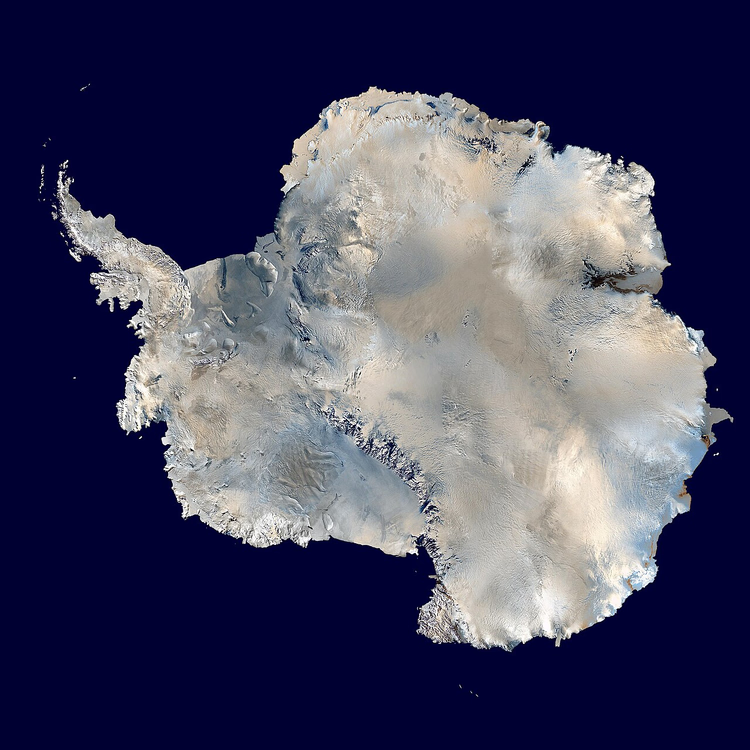
You can only reach Antarctica by sea or by air. The coast receives planes, cruise ships, private yachts, and icebreakers. Flights to the continent operate from Chile and New Zealand, but most travelers choose the sea route from South America: you see more and pay less.
Departure from Argentina: the port of Ushuaia
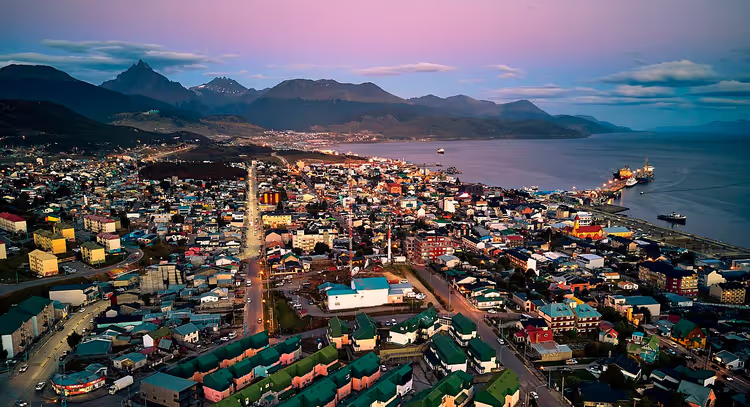
From Argentina, the only way to reach the coast of Antarctica is by sea. The main port for this route sits at the very south of the country, in the city of Ushuaia. For tourists, this is the shortest and most economical option, and vessels of every class dock here, from luxury liners to budget options.
The choice of vessel matters more than the departure date. Comfort on a sea voyage is directly proportional to price, and the number of passengers determines how often you can go ashore. From Ushuaia to Antarctica takes about two days. Every sailor knows the main catch of this route: the Drake Passage. Captains call a force four storm a genuine calm for these waters.
Operators require insurance from every passenger: the policy must cover helicopter evacuation from the ship. Before buying a tour, compare insurance terms.
 © Deensel · CC BYPhoto: Deensel, CC BY (https://creativecommons.org/licenses/by/2.0), Wikimedia Commons
Ship owners take safety on this route seriously. On board, they run a full drill with complete gear and seat passengers in the lifeboats. Weather reports are updated constantly, and a briefing before every landing is mandatory.
Below, we look at eleven routes from Ushuaia that appear in operator catalogs. They differ in length, vessel, and set of stops.
Three-week voyage on the Silver Explorer: the Falklands and South Georgia
 © Godot13 · CC BY-SAPhoto: Godot13, CC BY-SA (https://creativecommons.org/licenses/by-sa/4.0), Wikimedia Commons
The longest option starts from Ushuaia, a city whose name translates as "bay at the edge of the earth." The luxury vessel leaves the quiet Beagle Channel and immediately enters the Drake Passage, which sailors call the "window" of the westerly winds. The liner then enters Antarctic Sound, where the first view of the continent opens up among the icebergs.
Off the coast of the Antarctic Peninsula, tourists meet researchers from scientific stations. From Zodiac boats, you watch penguins, seals, and cormorant nesting colonies. The cruise continues to the South Shetland Islands, home to the whale graveyard on Aitcho Island and the smoking volcano of Deception Island with its warm thermal lakes.
On the way back, the liner calls at the Falkland Islands. In Port Stanley, you see colonies of Magellanic penguins, elephant seal haul-outs, and rare birds, and you can sign the visitors' book at Government House. The final stop on the route is Puerto Deseado, from where the ship heads to Buenos Aires.
Landings at every stop are arranged according to the weather. For long walks among the penguins, choose a small-capacity vessel, which offers more shore excursions.
Nineteen days around the Drake loop on the Silver Explorer
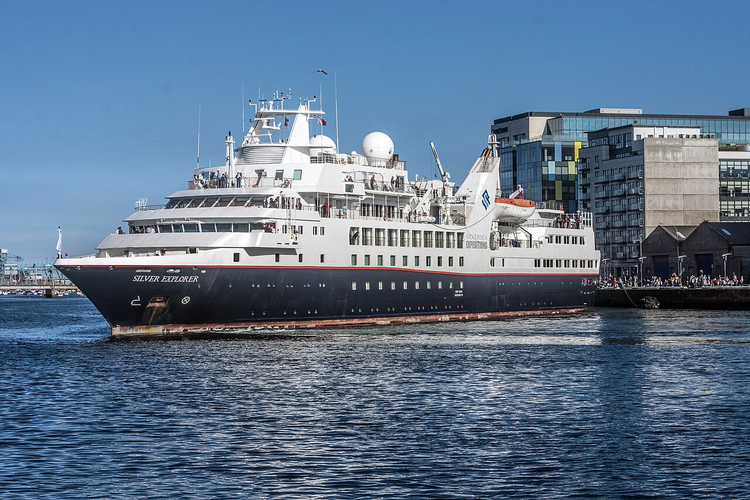 © William Murphy (infomatique) · CC BY-SAPhoto: William Murphy (infomatique), CC BY-SA (https://creativecommons.org/licenses/by-sa/2.0), Wikimedia Commons
The second option is similar in length but focuses on the Falklands and South Georgia. From the port on Tierra del Fuego, the ship crosses the stormy Drake Passage past rocky shores where penguins and rare birds live, then lands in the Falkland Islands archipelago. The pastures here are occupied by huge flocks of sheep, while the coast is home to the largest colonies of Magellanic penguins and elephant seals.
In Port Stanley, you will be surprised by brightly painted houses built from the hulls of decommissioned ships. After the excursion, you can relax in a local pub. Next comes the South Georgia archipelago, a former center of the whaling industry, with snow-covered mountains, glaciers, and fjords.
Here you watch king penguins and fur seals. The landscapes of Elephant Island and the icebergs will add to your photo album. Off the Antarctic Peninsula, boats take tourists to islands where whales spout.
In the South Shetland Islands, the lunar landscape of Deception Island awaits, with steam rising over thermal lakes. Only the boldest dare to swim in them.
Seventeen days from Buenos Aires on the Silver Cloud Expedition
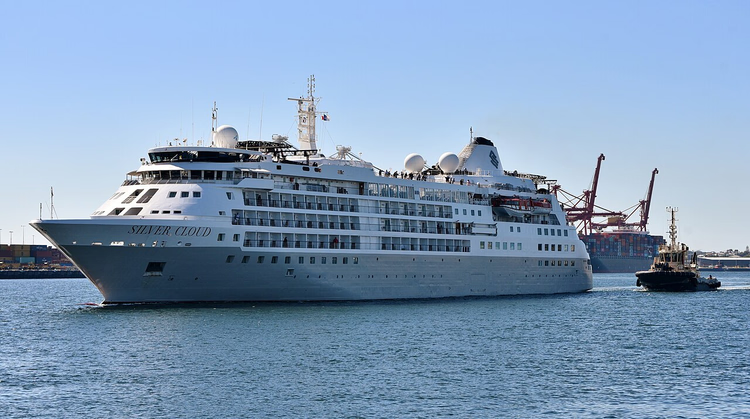 © Bahnfrend · CC BY-SAPhoto: Bahnfrend, CC BY-SA (https://creativecommons.org/licenses/by-sa/4.0), Wikimedia Commons
The expedition ship Silver Cloud Expedition heads to Antarctica from Buenos Aires. The first stop is the port of Puerto Madryn with an excursion to the largest Magellanic penguin colony. New Island in the Falklands surprises with a mix of penguins and marine animals found nowhere else.
The air is filled with the cries of thin-billed prions, dolphin gulls, and albatrosses. In Port Stanley, you explore the town and relax in a pub. The ship then passes Elephant Island, whose outline resembles an elephant's head, and enters Antarctic Sound, where icebergs glitter among the ice.
On the Antarctic Peninsula, the most inhabited part of the continent, there are many scientific stations. Nearby lie haul-outs of crabeater seals, leopard seals, and noisy bird colonies.
On the coastal islands, tourists see colonies of three penguin species. The route ends through volcanic Deception Island and the Drake Passage, returning to Ushuaia.
Classic voyage from Ushuaia on the Silver Explorer
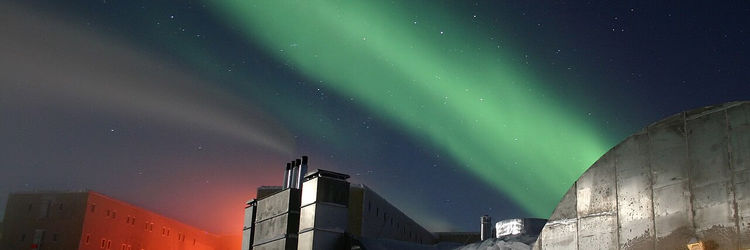
The fourth route repeats the classic loop from Ushuaia but focuses on Antarctic Sound. This strip of water leads straight to the Antarctic Peninsula, and you will be struck not only by the size of the icebergs but also by their shapes.
Approaching Elephant Island, the ship weaves between ice floes. On the Antarctic Peninsula, tourists are greeted by a tundra-like landscape and rare penguin species, including gentoo and Adelie. A separate discovery of the trip: leopard seals, which hunt only here, and crabeater seals.
The South Shetland Islands close out the cruise with the whale graveyard and the warm volcanic lakes of Deception Island. From there, the liner turns north and heads back into the Drake Passage, returning to Ushuaia.
Sixteen days with Silversea: West Point and Saunders Island
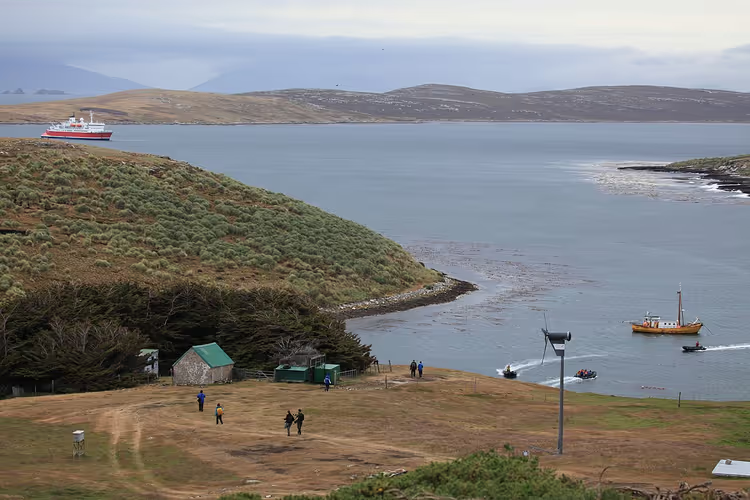 © Liam Quinn · CC BY-SAPhoto: Liam Quinn, CC BY-SA (https://creativecommons.org/licenses/by-sa/2.0), Wikimedia Commons
This sixteen-day expedition runs from the southern gate of the world through the Drake Passage to the South Shetland Islands. The first stops are in the Falklands. West Point captivates with its wild nature, while Saunders Island holds large colonies of rockhopper, king, and Magellanic penguins along with a family of elephant seals.
Port Stanley will be remembered for its colorful houses built from shipwreck debris, the governor's residence, and the cozy atmosphere of its pubs. On the way to the Antarctic Peninsula, the ship passes through narrow corridors between icebergs and rocky fjords.
On the peninsula, you get to know natural oases, scientific stations, and bird colonies. Farther south, the South Shetland Islands reveal the futuristic landscape of Deception Island, wrapped in steam from volcanic lakes. From there, the ship returns through the Drake Passage.
Sixteen days: Bleaker Island and Sea Lion
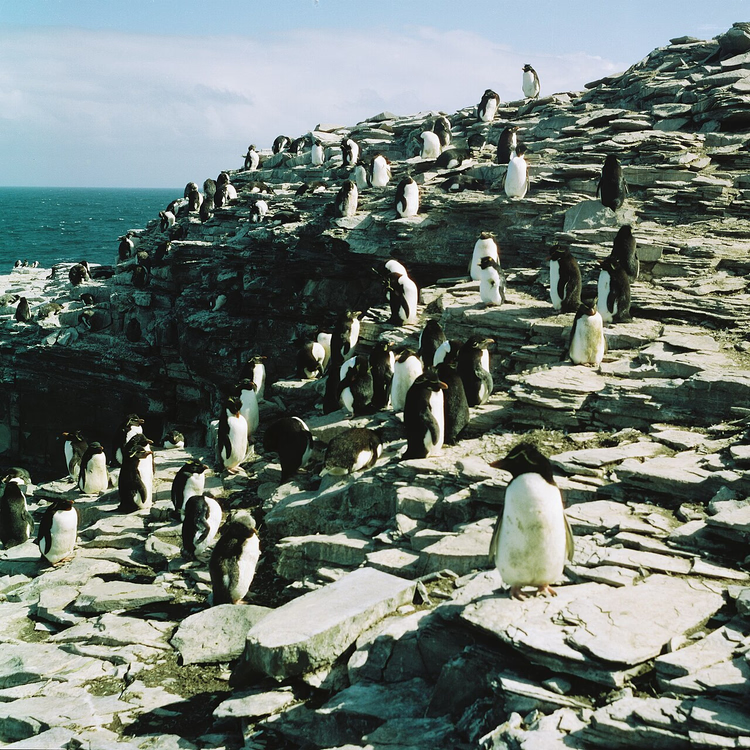 © chris lovelock · CC BYPhoto: chris lovelock, CC BY (https://creativecommons.org/licenses/by/2.0), Wikimedia Commons
This sixteen-day itinerary starts and ends in Ushuaia, the southernmost city in the world. The ship crosses the Drake Passage to the Falklands, where only a few thousand people live. In return, the islands are home to hundreds of thousands of penguins of five species, sheep, and huge colonies of cormorants.
On Sea Lion Island, sandy and pebble beaches are occupied by hundreds of elephant seals. The ship then heads to the Antarctic Peninsula past straits and ice tunnels. Icebergs shimmer blue in the sun, while penguins, fur seals, and seals gather on rocky islands.
Landing on the peninsula brings encounters with research station staff and boat trips to penguin colonies. Near the South Shetland Islands, tourists visit a whale graveyard island, and the highlight is swimming in the lakes of Deception Island, heated by a still-active volcano. On the return journey through the Drake Passage, whales are a common sight.
Thirteen days: the Drake loop and Deception Island
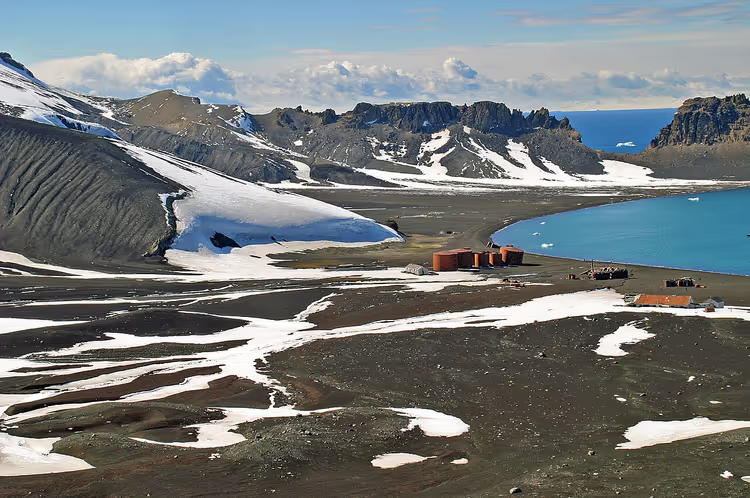 © W. Bulach · CC BY-SAPhoto: W. Bulach, CC BY-SA (https://creativecommons.org/licenses/by-sa/4.0), Wikimedia Commons
This short thirteen-day voyage departs from Ushuaia and returns there. The journey is paid for in adrenaline: the ship crosses the Drake Passage through fog and rough seas. The reward is rainbows over the ocean, the crack of calving ice, and petrels and albatrosses in flight.
In Antarctic Sound, you stand on deck among shimmering icebergs and pass through a narrow corridor between glaciers. The ship spends several days at the Antarctic Peninsula: here you meet polar station scientists and watch leopard seals with their spotted coats.
Numerous islands are scattered around the peninsula. By boat, tourists reach Gentoo and chinstrap penguins, as well as colonies of blue-eyed cormorants. The final chord comes at the islands of the Shetland archipelago. Deception Island took on a horseshoe shape after a volcanic eruption, and according to an old legend, visiting it brings good luck.
Sixteen days on Silver Cloud: Neko Harbour and the Lemaire Channel
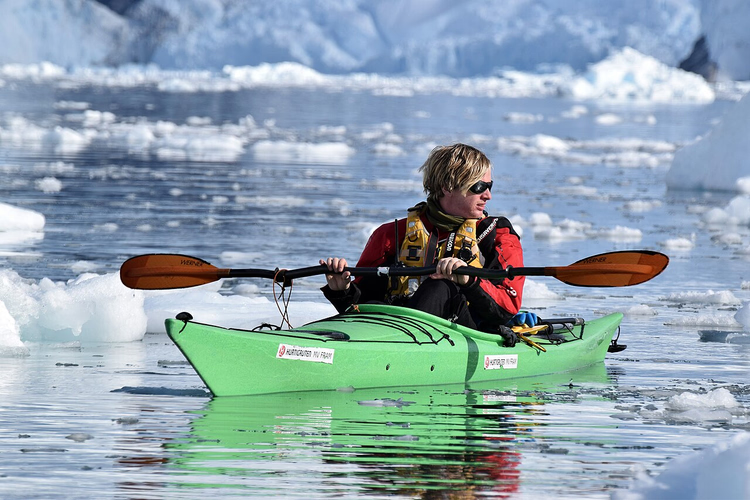 © Lowcarb23 · CC BY-SAPhoto: Lowcarb23, CC BY-SA (https://creativecommons.org/licenses/by-sa/4.0), Wikimedia Commons
From the southern tip of Argentina, the ship sets course for the Antarctic Peninsula. The first goal, the sheltered Neko Harbour, greets you with icebergs glowing blue. Then you pass through the narrow ice tunnel of the Lemaire Channel.
South Georgia captivates with mighty glaciers and scenic fjords. Here tourists observe large king penguins. Fur seals and elephant seals doze on rocky beaches.
The archipelago's only settlement, Grytviken, once served as a whaling base. A few dozen people live here, and empty soldiers' barracks remain from the Falklands War. Through Antarctic Sound, the ship heads to the peninsula among drifting ice. Humpbacks, minke whales, and orcas appear in the waters, and the South Shetland Islands close out the route with Deception Island and its hot lakes.
Eleven days on Silver Cloud Expedition
The shortest voyage in this selection lasts eleven days. It gives you a chance to feel the atmosphere of the snow-covered continent without a long program. From the Beagle Channel at Ushuaia, the ship heads into the restless Drake Passage, swept by westerly winds. Rocky cliffs with snowy peaks and shimmering icebergs drift past before your eyes.
From the deck, it's easy to watch crowds of penguins, fur seals, sea lions, and albatrosses. The first landing on the Antarctic Peninsula brings encounters with polar researchers and views from mountain peaks. Leopard seals lie around.
Tourists are reminded to keep their distance from birds, but curious penguins come to people on their own. Further along the route are humpback whales and orcas, and Deception Island remains in photos as otherworldly landscapes with steaming lakes.
Sixteen days on Silver Cloud: South Georgia and Shackleton's grave
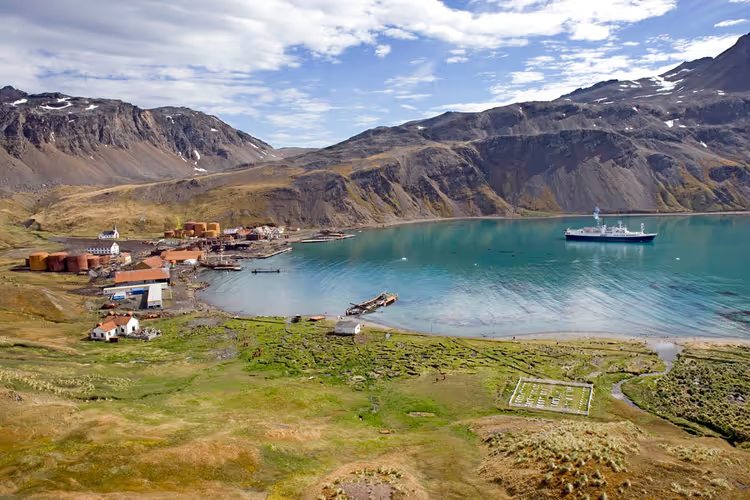 © Lexaxis7 · CC BY-SAPhoto: Lexaxis7, CC BY-SA (https://creativecommons.org/licenses/by-sa/3.0), Wikimedia Commons
Another sixteen-day voyage goes through the Drake Passage to the South Georgia archipelago. In the settlement of Grytviken, tourists see the remains of the whaling base and the grave of polar explorer Ernest Shackleton. Glaciers and wave-polished fjords rise all around.
The ship then approaches Elephant Island, whose outline resembles an elephant's head. Scientists work at polar stations here, and penguins wander about with no fear of people.
Landing on the Antarctic Peninsula will be remembered for colonies of crabeater seals and leopard seals. By boat, tourists reach islands with crested, macaroni, and gentoo penguins, as well as nesting sites of cormorants and petrels. On the way to the South Shetland Islands, blocks of ice crash into the ocean with an ominous crack, while elephant seals sing nearby. Volcanic Deception Island again welcomes you with thermal lakes.
Expedition from Argentina on L'Austral
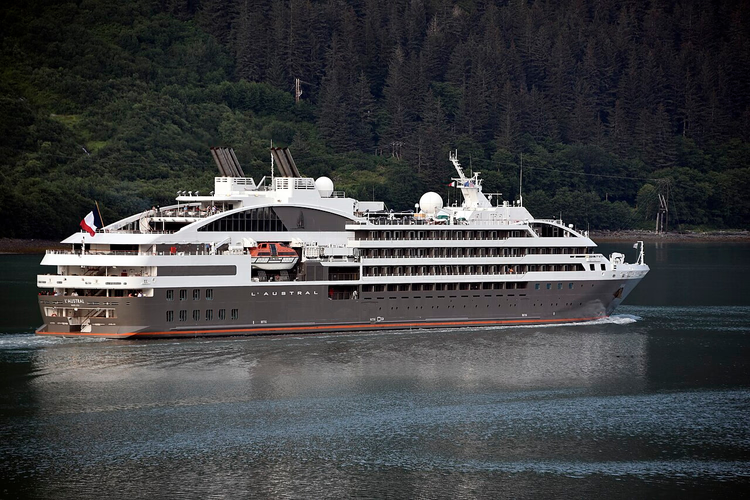 © Gillfoto · CC BY-SAPhoto: Gillfoto, CC BY-SA (https://creativecommons.org/licenses/by-sa/4.0), Wikimedia Commons
The last route in this selection is operated by the L'Austral cruise ship. From Ushuaia, spread across the southern tip of Tierra del Fuego, tourists first walk through a nature reserve, then set sail for the eternal ice. The first landing is at the Falklands' capital, Port Stanley, where there are almost no stone buildings, and colonies of rockhopper and Magellanic penguins live along the coast.
The ship then passes sheer cliffs to South Georgia with its only settlement, Grytviken. Against the backdrop of fjords, snowy peaks, and smoking volcanoes, you get the best shots of the trip. An excursion to the former whaling station shows habitats of albatrosses and king penguins.
In the South Shetland Islands, attention is drawn to the volcanic landscape of Deception Island with its wind-sheltered harbor and warm lakes. A boat voyage to the penguins of the Antarctic Peninsula and a passage through the Lemaire Channel with overhanging ice walls complete the program. The return journey goes through the Drake Passage to Ushuaia.
Ushuaia routes in one table
If you already know how many days you're ready to spend on board, comparing options is easier with a table. The expedition from Buenos Aires starts in Buenos Aires and arrives in Ushuaia. The three-week voyage, by contrast, ends in Buenos Aires. The remaining routes start and end in Ushuaia.
Length and ship | Main stops | Who it's for |
|---|---|---|
21 days, Silver Explorer, to Buenos Aires | Antarctic Sound, Aitcho and Deception Islands, Port Stanley | full immersion in the sub-Antarctic |
19 days, Silver Explorer, Drake loop | Falklands, South Georgia, Elephant Island, Deception Island | king penguins and fur seals |
17 days, Silver Cloud Expedition from Buenos Aires | Puerto Madryn, New Island, Antarctic Sound | starting from the mainland, not from a port |
19 days, Silver Explorer, classic | Elephant Island, Antarctic Sound, South Shetland Islands | rare Gentoo and Adelie penguins |
16 days, Silversea | West Point, Saunders Island, Port Stanley | four penguin species in one trip |
16 days, Bleaker Island | Sea Lion, Falklands, Deception Island | swimming in thermal lakes |
13 days, Silver Explorer | Drake Passage, Antarctic Sound, Deception Island | a loop without a long program |
16 days, Silver Cloud, Neko Harbour | Neko Harbour, Lemaire Channel, Grytviken | glaciers, fjords, and orcas |
11 days, Silver Cloud Expedition | Drake Passage, peninsula, South Shetland Islands | a short vacation and first introduction |
16 days, Silver Cloud, Shackleton | Grytviken, Shackleton's grave, Elephant Island | polar expedition history |
16 days, L'Austral | Port Stanley, South Georgia, Lemaire Channel | photography |
The table shows the main difference. Short voyages are limited to the Antarctic Peninsula and the South Shetland Islands, while long ones add South Georgia and the Falklands. The more stops, the higher the price, but also the wider the range of wildlife. On a short route you encounter one or two penguin species, on a long one the count reaches four or more.
The common points are easy to remember. They are the Falkland Islands with colonies of Magellanic penguins, South Georgia with its whaling history, Elephant Island shaped like an elephant's head, and volcanic Deception Island with warm lakes. Add Antarctic Sound with its futuristic icebergs, and you get the set of stops that repeats across most catalogs.
Weather can change the itinerary on the fly. If wind keeps the ship from reaching a planned island, the captain picks a backup landing site. So don't tie your cruise to a strict list: book a sailing with time to spare and don't get upset if one island is swapped for another.
Also pay attention to ship size. Expedition vessels carrying just over a hundred passengers get everyone ashore in a single landing, while ships with three hundred people split guests into groups and wait their turn. For routes with long crossings through the Drake Passage, choose a larger ship, because it handles rough seas more comfortably.
Among the wildlife you'll see Magellanic penguins, rockhopper penguins, king penguins and gentoo penguins, fur seals, sea lions, elephant seals and leopard seals. In the waters of the Drake Passage you can spot humpback whales, minke whales and orcas. On the Falklands there are hundreds of times more sheep than people, and South Georgia is home to millions of nesting seabirds.
Before every landing, footwear is disinfected to avoid introducing foreign organisms. You go ashore in small groups, and each group is assigned a guide. After returning to the ship, gear is checked once again.
Departing from Chile: Punta Arenas
From the Patagonian capital of Punta Arenas, both ships and commercial flights head to Antarctica. Airlines keep dedicated aircraft for these routes. This option saves time: the flight to King George Island takes about two hours (as of 2026, Antarctica21).
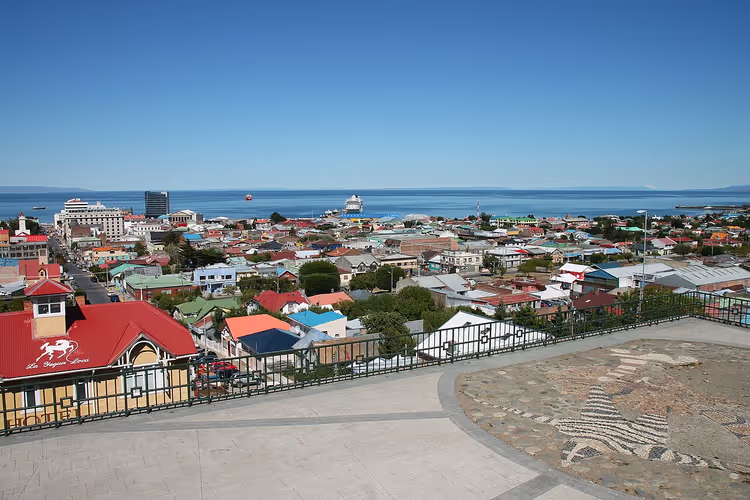 © Draceane · CC BY-SAPhoto: Draceane, CC BY-SA (https://creativecommons.org/licenses/by-sa/4.0), Wikimedia Commons
The sea route from Punta Arenas lets you avoid the Drake Passage, which scares many tourists. Routes transit through King George Island, where you arrive after a flight from the northern coast of the Strait of Magellan. You'll see the stormy passage from the plane's window if the weather cooperates.
After flying to King George Island, you board a ship that continues to Antarctica. This route saves significant time at sea, and you get more hours on shore.
Departing from New Zealand: Christchurch and Lyttelton
Two major transport hubs, Lyttelton and Christchurch, offer connections to Antarctica by sea and by air. New Zealand carriers operate both scenic nonstop flights and flights landing on the Wilkins ice runway. Australian aircraft also land in Antarctica, but they serve only scientific expeditions.
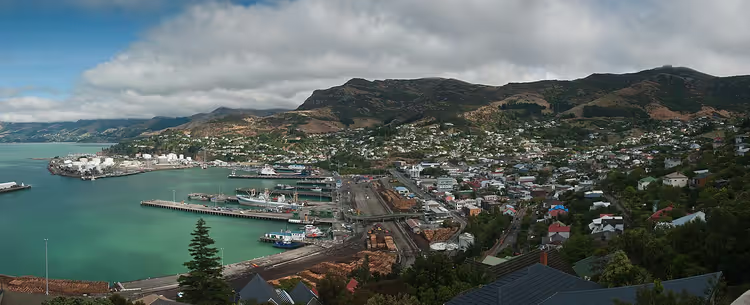 © Mick Stephenson · CC BY-SAPhoto: Mick Stephenson, CC BY-SA (https://creativecommons.org/licenses/by-sa/3.0), Wikimedia Commons
Expedition ships: what's on board
Expedition ships sailing to the South Pole have both advantages and drawbacks. They are typically vessels no longer needed for science, refitted to carry passengers.
The advantages of icebreakers like Plancius or the Akademik Sergey Vavilov include maneuverability. It allows them to navigate through ice into hard-to-reach places, and passengers get more shore landings. Capacity stays around a hundred or so passengers, not counting the crew.
Cabins come with or without private facilities. On board there's a restaurant, a lecture hall, and a lounge. You stay connected via internet or satellite phone. Bring extra batteries for camera gear: cold drains them quickly. A UV filter is also useful.
Depending on the class, ships may have a gym, a sauna with a pool, and a massage room.
Icebreakers like Kapitan Khlebnikov or the nuclear-powered 50 Let Pobedy are built differently. In addition to lifeboats, they carry helicopters for passenger landings. These ships get the green light in any weather and reach the most inaccessible parts of the coast.
Sailing vessels also travel to the southern continent. There are about two dozen of them, and their main purpose is supporting expeditions. They take limited numbers of tourists, usually five to twenty people. Don't expect comfort: typically it's bunks in a shared cabin. In return, you get freedom to move along the coast, limited only by the weather.
The most common Antarctic travel option is cruise ships. Here comfort comes with restrictions. A cruise ship carries from two hundred to a thousand passengers, but landings are allowed only from ships with up to five hundred people (per IAATO rules). Even ships with two or three hundred tourists anchor only in designated spots and for limited time.
The restrictions protect the ecosystem and are set out in the Antarctic Treaty. Conditions on cruise ships are comfortable: lounges with observation decks, pools, gyms, beauty salons, and restaurants. Seasickness is easier to handle than on a small ship, and cabins have all the amenities.
Simple logic helps compare ship types. Choose an expedition ship if frequent landings matter, and a cruise ship if comfort in rough seas is the priority. Sailing yachts suit those ready for Spartan conditions in exchange for route freedom. Icebreakers with helicopters are for the most inaccessible parts of the coast, where ordinary ships don't go.
Check in advance what's included in the fare on your chosen ship. On some voyages a polar jacket and boots are provided free; on others you need to bring your own. Also check cabin locations with windows: on long crossings, an ocean view makes days at sea much better.
When to go to Antarctica
Remember that Antarctica is in the opposite hemisphere: when it's winter at home, it's summer there. It's the coldest continent with low humidity, and precipitation falls mostly as snow. The tourist season opens in November and runs through March.
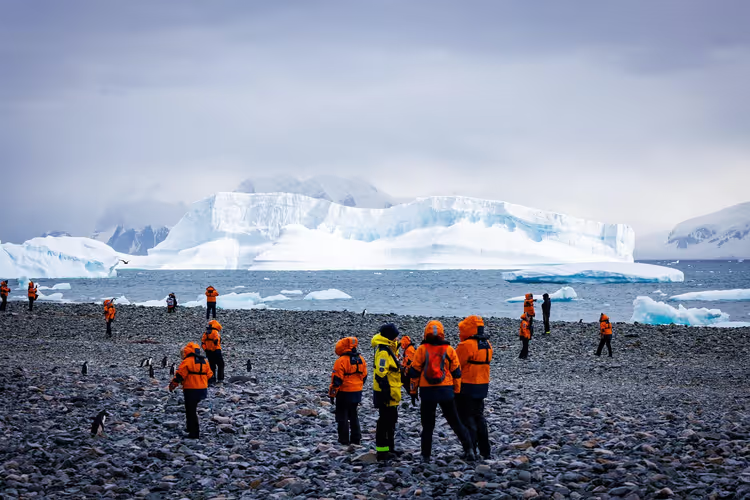
October and November
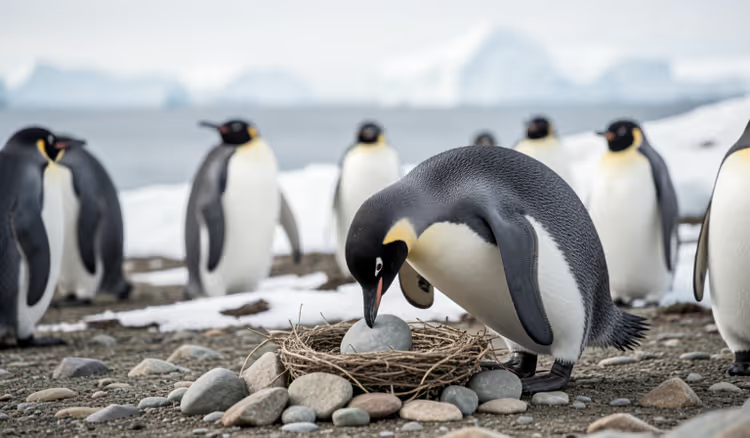
Antarctic spring. Ice still blocks ships from small bays, navigation conditions are unstable, and the weather brings surprises. But you catch the spring awakening: winds scatter the low clouds, and bright sun lights up the harsh coastline. The continent's hosts, penguins, are choosing mates. First the male offers his chosen one a stone, then builds a nest from those same stones, not above stealing a couple from a neighbor.
 AIIllustrative image: AI-generated
December and January
The height of spring. The sun is strong, and icebergs shine dazzlingly in its rays. Penguins search for food for their newly hatched chicks. New Year's cruise passengers catch the peak season: tour operators put together family trips with children's programs, gifts, and holiday menus.
February and March
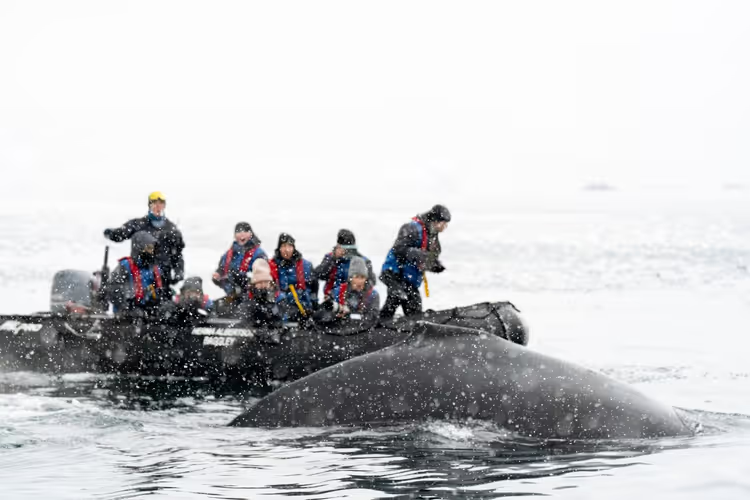
The end of the Antarctic season. Sunny days become rarer, the sky grows heavy, but coastal life doesn't quiet down. Seals pose for cameras, grown chicks show their personalities, and the dark ocean waters host a real whale safari. By day's end the sun drops below the horizon, and nighttime frosts begin.
Shore landings in Antarctica
People come here for vivid experiences, not just nature lovers but also thrill-seekers and wildlife photographers. Beyond all the challenges of the sea voyage, the main event awaits: going ashore.
 AIIllustrative image: AI-generated
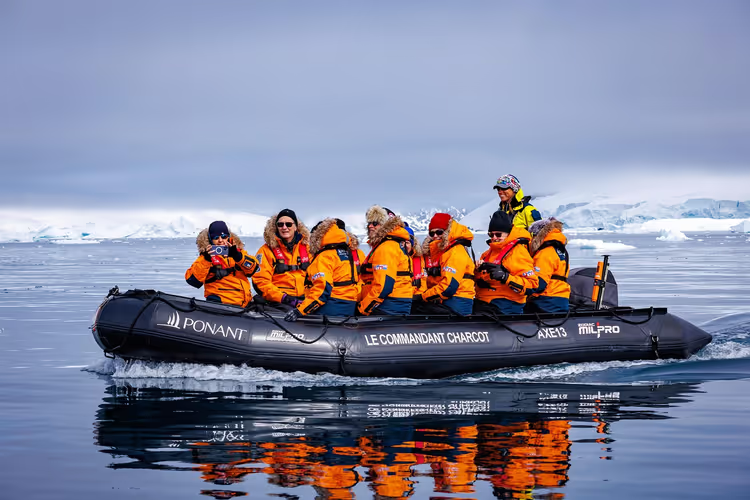
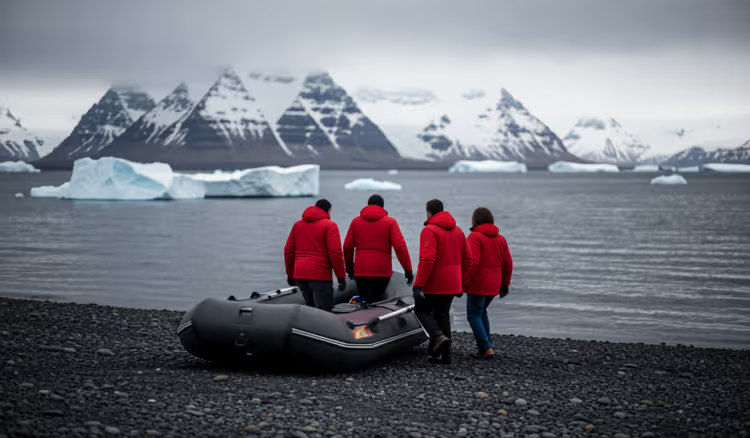
The number of shore excursions depends on the ship and weather. The fewer passengers on board, the more often you land, so choose an expedition ship for long walks among penguins. After anchoring, the ship lowers Zodiac inflatable motorboats into the water. They go where a larger boat can't. In small groups, they take tourists to seal colonies, bird cliffs, and simply cruise among icebergs.
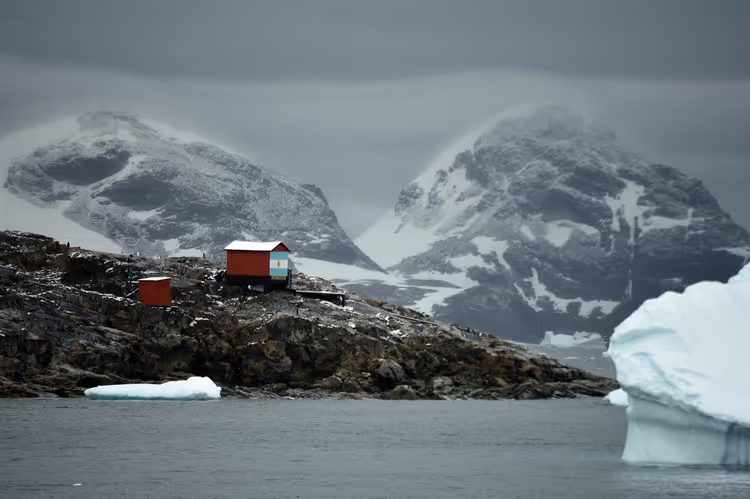
Some excursions include visiting a research station and seeing how polar scientists live while working there for months. On request, trips are organized to a half-ruined whaling station, where your imagination fills in the working conditions of whale hunters.
Antarctic tourism programs often include challenges for thrill-seekers: ski treks and snowmobiles on icy slopes, kayaking, overnight camping in tents and sleeping bags, snowshoe routes, and even diving under ice shelves.
Given the risk of such activities, every cruise participant fills out and has a doctor certify an IAATO medical form in advance. This is done before booking documents are finalized. You must have the form with you to hand to the ship's doctor.
What to pack
For a cold continent, you'll surely pack warm clothes. But don't rush: think through your wardrobe. For a trip into snow, wind, and storms you'll need thermal underwear, waterproof insulated jacket and pants, a warm hat, and gloves. Outerwear should have a water-repellent coating.
Layering keeps you warm. The more thin layers you wear, the easier it is to regulate temperature when the wind changes.
When choosing a tour, ask about gear: many companies include special clothing in the price. For landings, the crew provides insulated rubber boots for everyone. You may well return from the cruise with a gift: a warm polar jacket.
If your route includes Port Lockroy, bring your passport. They stamp it with a distinctive penguin mark confirming your visit to Antarctica.
How much a trip to Antarctica costs
Before you see ice shelves and Antarctic wildlife, everyone runs the numbers. Simple estimates won't cut it here: an Antarctic cruise is almost always put together individually.
Operator websites give you a sense of package pricing and show what's included. Almost all agencies do not include flights and insurance, and groups often meet at the ship's departure point. The smaller the group, the more expensive the tour.
The exact price depends on route length, ship, cabin class, and season. A short voyage costs less than a long expedition to South Georgia, and a balcony cabin costs noticeably more than an interior one. Entry-level rates for short voyages run into the thousands of euros per person. Long routes with high-class cabins reach tens of thousands of euros (as of 2026, Poseidon Expeditions).
Separately budget for the flight to Ushuaia or Punta Arenas, a night at a port hotel, and insurance. Ready-made tour options are easy to browse on GetYourGuide.
Flights to South America affect the final total. Tickets to Buenos Aires or Santiago are cheaper outside peak season, so start booking early. A night in Ushuaia before boarding is also part of the budget: ships leave in the morning, and getting to the port on departure day is risky.
A separate expense category is gear. Thermal underwear, waterproof jackets, and trekking boots aren't cheap, and operators provide some equipment on board. Compare what's included in your package and don't buy extras ahead of time.
What you'll see in Antarctica
More and more travelers are setting foot on the cold shore and coming back with reviews that win over the hesitant. Antarctic tourism options expand every year. Even if you have to save up for the trip, it's worth it.
Antarctica first attracts people interested in the planet's ecosystems. The uniqueness of the local nature is hard to put into words, you have to see it. The trip also draws adventure seekers, photographers for whom the icy coast becomes a film set, and divers dreaming of seeing the world from under the ice.
You observe wildlife from close range. From Zodiac boats, travelers approach seal haul-outs and penguin colonies, and whales sometimes surface right next to the vessel. The main rule is not to disturb the animals and to keep your distance.
The landscape changes every day. A rocky shore gives way to an ice desert, and beyond it fjords open up with sheer walls. The polar day in summer provides long light for shooting: the sun hangs low and doesn't disappear below the horizon for long. The best shots come on morning landings, when the ice shimmers in the sun.
Tips before you go
Antarctica belongs to all the planet's inhabitants, not to any one country. When you set foot on this land, you represent your country. Strictly follow the rules of the Antarctic Treaty: don't disturb wildlife, don't litter, don't damage structures, don't leave autographs on rocks, don't take anything home as souvenirs. Your legacy after the trip consists of a baggage full of impressions and good photos.
Dress for the weather and don't shed warm layers too early: the wind on deck is colder than it seems. Keep your gear warm so batteries don't drain. And respect your shipmates: lectures and dinner fill the time just as well as landings.
⁉️🤔 Frequently asked questions
When is the best time to go to Antarctica for the first time?
Plan your first trip for December or January. That's when the polar day holds, penguins are incubating and feeding chicks, and ice conditions are the most predictable. Weather still changes fast, so leave a few buffer days before and after the cruise.
How many people go ashore at once?
No more than 100 people go ashore at a time, and landings are only allowed from ships with up to 500 passengers (per IAATO requirements). That's why small expedition ships offer more shore landings. If landing frequency matters more to you than comfort, choose a vessel with a capacity of up to two hundred passengers.
What's included in the cruise price and what do you pay separately?
The package usually includes cabin accommodation, meals, lectures, and shore landings. Flights to the departure port, insurance, and transfers are generally not covered by agencies. Check with the operator whether a polar jacket and rubber boots are included, as well as a night at the port hotel before boarding.
Do you need special insurance for Antarctica?
Yes. Operators require a policy with medical evacuation coverage, including evacuation from the ship. Standard travel insurance doesn't cover these risks, so compare policies in advance. The IAATO medical form must be filled out and signed by a doctor before finalizing tour documents.
How do you handle the Drake Passage?
The Drake Passage is known for rough seas. On a large cruise liner it's easier to handle than on a small expedition ship. Bring seasickness medication and choose a cabin closer to the center of the ship.
Video: Antarctic cruise aboard Le Boreal
In short: what to book
An Antarctic cruise comes down to three factors: departure point, ship, and season. A short voyage from Ushuaia works for a first introduction, a long expedition to South Georgia offers more stops, and a flight from Punta Arenas saves days and skips the Drake Passage.
If you're short on time, take a short voyage from Ushuaia. If you want penguins and whales without long stretches of rough seas, look at a route with a flight from Punta Arenas. If you dream of South Georgia and Shackleton's grave, choose a long expedition.

A small editorial team writing guides for independent travel. We travel ourselves, but we haven’t been everywhere, so we check prices, opening hours and how to get there against official sources.