
















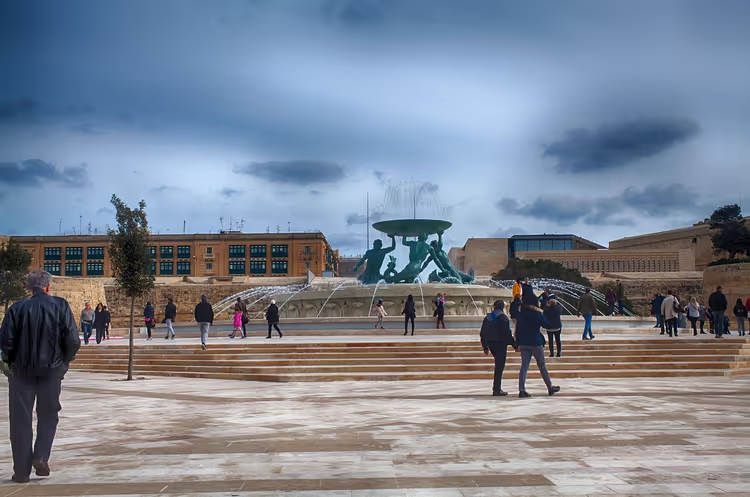
Malta in a week: 11 places, transport and prices 2026
English, left-hand traffic, and knights' forts on every hill. Malta packs several thousand years of history into an island the size of a small town.
In a week you can cover the fortresses of Valletta, quiet Mdina, and swimming on the west coast. The challenge here is not distances but logistics: buses are slow, and tickets to popular sites sell out in advance.
Below we have gathered transport, local food, and 11 places for a first visit. For each site you will find the price, opening hours, and a link to the official source, checked in September 2026.
Ad: this article contains affiliate links: we earn a commission if you book through them, at no extra cost to you.
Malta: quick facts
💡 In short:
- The state of Malta occupies not one island but seven, and only three of them are inhabited: Malta itself, Gozo, and Comino.
- The official languages here are Maltese and English, so school-level English will be enough.
- A single bus ride costs €2 in winter and €2.50 in summer (as of 09/2026, official Malta Public Transport website).
For first-time visitors, we recommend starting with the main island and setting aside one day for Gozo at the end of the week.
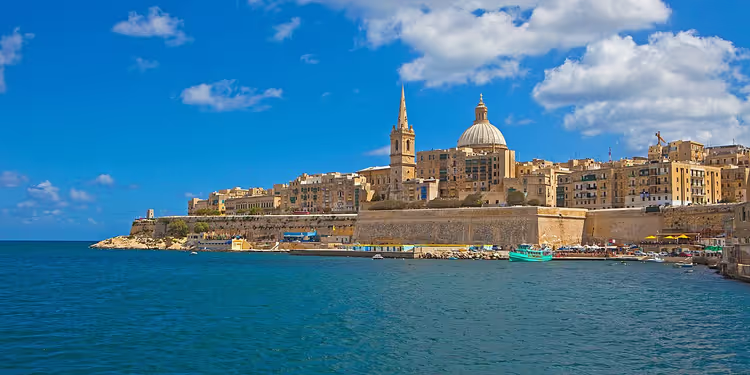 © Bengt Nyman · CC BYPhoto: Bengt Nyman, CC BY (https://creativecommons.org/licenses/by/3.0), Wikimedia Commons
The name itself translates from Ancient Greek as "sweet honey." Its favorable position in the center of the Mediterranean attracted just about everyone: Phoenicians, Romans, Arabs, knights, and the British. Hence the odd mix of architecture, cuisine, and habits.
The strongest influence on Malta came from the Catholic Order of St. John. The knights defended the island from the 16th to the 18th century and left behind most of the fortresses and churches you will see.
From 1800 to 1964 the island was ruled by Great Britain. The legacy is still visible: English as an official language, red telephone boxes, and left-hand traffic.
Today it is a multinational state between Europe and Africa. There are many migrants on the streets, and they fit naturally into island life.
How to get to Malta
The fastest way is to fly. Malta International Airport (Luqa) receives low-cost carriers from all over Europe, including Ryanair and Wizz Air. Convenient and affordable options are often available from Warsaw, Katowice, and Vilnius.
We do not list the ticket price: it jumps depending on the date and season. Compare it across several dates and choose a Tuesday or Wednesday departure, when demand is lower. Flights on Kiwi.com are easy to compare using the price calendar.
From the airport to your hotel you can take the Airport Direct bus or a taxi. If you do not want to figure out transport on arrival, book a transfer from Malta airport in advance: the driver will meet you in the arrivals hall and take you to the hotel door.
For those who do not fly, the remaining option is a ferry from Sicily. Services between Valletta and Pozzallo in Sicily depart almost every day, and the journey takes about 1 h 45 min (as of 09/2026, Direct Ferries). A round-trip passenger ticket costs in the low three-digit range; check the exact price by date.
Public transport: the Tallinja card
You will get around the towns and beaches of Malta by bus. The network is well developed, but the schedule is unreliable: a 10-minute delay is normal here, and services thin out in the evening.
Buy the Tallinja card right at the airport, at the Valletta bus station, or through the app. You can also pay the driver directly: in cash or with a contactless card.
Ticket or card | Price | Who it suits |
|---|---|---|
Single daytime ride | €2 in winter, €2.50 in summer | one short trip |
12-trip card | €19 | a group or several days with transfers |
Explore Adult, 7 days | €25 | a week or more, unlimited rides |
Explore Flex, 4 days | from €21 | a short trip with add-ons |
Explore Flex, 7 days | €27 | a week plus a cruise or Gozo |
Night route | €3 | late returns |
As of: 09/2026, Malta Public Transport fares.
A single ticket is valid for two hours, and transfers within that time are free. The winter fare was valid from October 19 to June 13, and prices are higher in summer (as of: 09/2026, official Malta Public Transport website). Children under 4 ride free, and a 7-day Explore Child card costs €7 (as of: 09/2026, carrier's website).
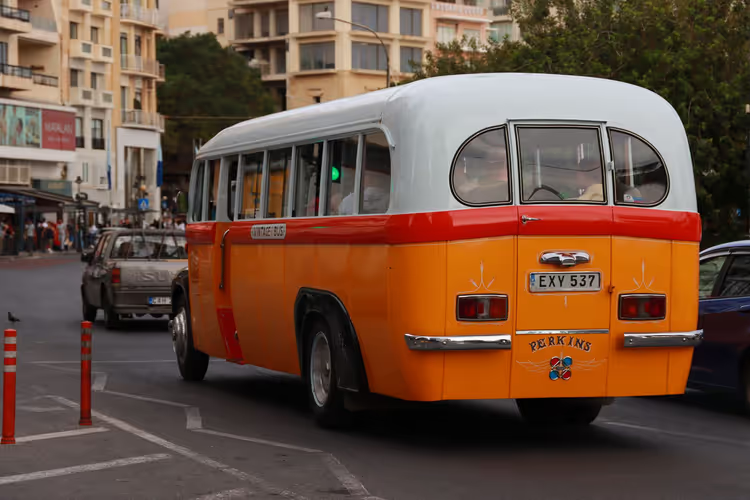
In the tallinja app, you can plan routes with transfers and see where your bus is right now. That way you spend less time standing at a stop for nothing. A good European SIM card with data comes in handy here.
If you want freedom, get a rental car in Malta. A car helps in the west of the island, where buses run rarely, but keep in mind left-hand traffic and paid parking in Valletta.
What to try from the food
Maltese cuisine blends Italian, Arab, Greek, and British traditions. The sea is nearby, so fish is plentiful on menus, but traditional Maltese restaurants take some searching.
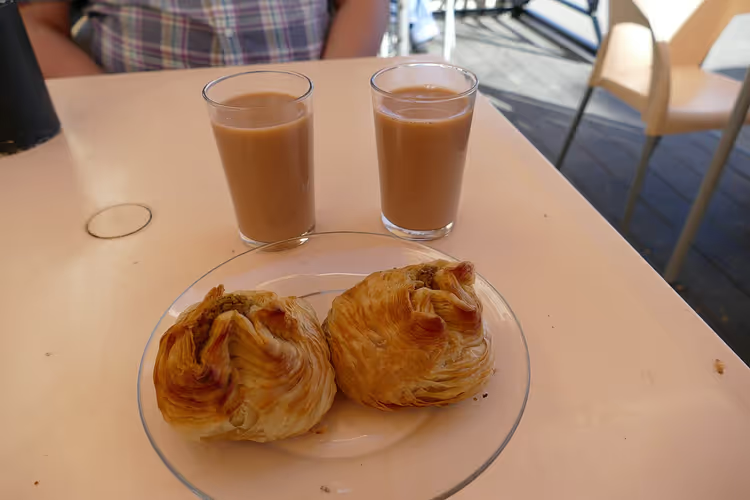 © Kritzolina · CC BY-SAPhoto: Kritzolina, CC BY-SA (https://creativecommons.org/licenses/by-sa/4.0), Wikimedia Commons
At any place, look for the classics on the menu. Lampuki fish pie, rabbit stew (stuffat tal-fenek), kapunata, the local take on ratatouille, and "widow's soup" with a piece of gbejniet, sheep's or goat's cheese.
For snacks, go for "hobz biz-zejt": bread soaked in olive oil, rubbed with tomatoes, and filled with tuna, onion, and capers. Next to it, get pastizzi, a flaky pastry with ricotta or mashed peas. In grocery stores, look for bigilla, a bean pate with garlic.
You'll find a cheap and fresh bite at the stalls near the bus station. A portion of pastizzi costs less than a coffee in the center, and the quality is higher than at tourist cafes on the waterfront.
Where to stay in Malta
Choosing a neighborhood depends on what matters most to you. In Valletta, you live among fortresses and museums, but you pay more for it and parking is a struggle.
Sliema and St. Julian's sit on the waterfront: restaurants, bars, and a promenade are steps from your hotel. Bugibba and Qawra are cheaper, but the main sights are a longer ride away. Gozo suits those who want quiet and the sea.
Nightly prices change by season, so check Malta hotels on Trip.com for your dates. Book a couple of months before your trip: in summer, available rooms are scarce.
What to see in Malta
Malta has a quirk: sights are everywhere here. The old-world atmosphere follows you wherever you go. You don't walk from monument to monument, you breathe the history around you.
The second quirk is that the towns are almost inseparable. They run into one another, and you only notice the boundaries from bus announcements.
Below are 11 places worth seeing on a first visit. For each, I've noted how to get there and how much entry costs.
1. Upper barrakka gardens, Valletta
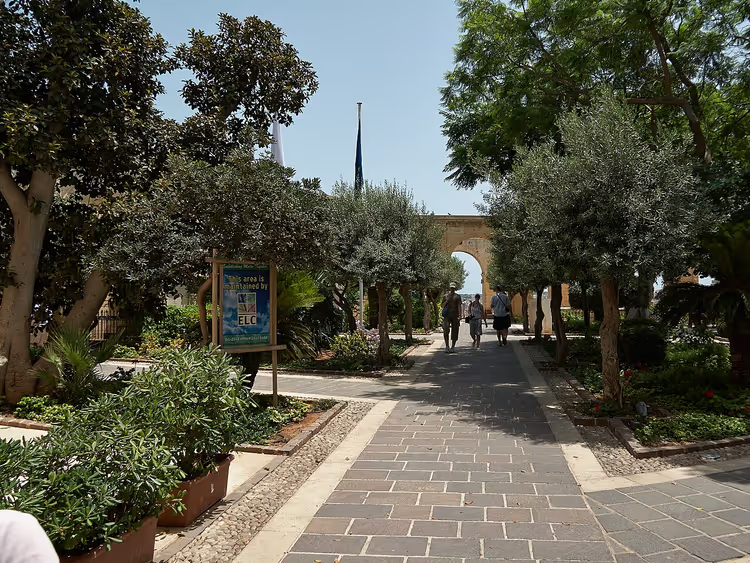
The Barrakka Gardens lie in the very heart of Valletta. They're valued not for their flower beds, but for the panorama of the Grand Harbour and the "Three Cities" on the other shore.
 © C T Johansson · CC BY-SAPhoto: C T Johansson, CC BY-SA (https://creativecommons.org/licenses/by-sa/4.0), Wikimedia Commons
Until 1798, when the French arrived on the island, only knights were allowed into the gardens. In the shade of the trees, they rested after service and kept an eye on the surroundings.
The gardens were laid out at the highest point of the Saints Peter and Paul Bastion. What remains of the bastion is not just the wall, but also a gun battery: salutes still boom over the harbor.
- How to get there: 5 minutes on foot from Valletta bus station (see map).
- Cost: free entry.
- The catch: the garden is small, and at midday it gets crowded with bus tour groups. Come at opening time.
2. Fort St Elmo, Valletta
Fort St Elmo shielded the island during the Great Siege of 1565. For about a month, 800 defenders held out against a Turkish army numbering in the thousands.
 © Frank Vincentz · CC BY-SAPhoto: Frank Vincentz, CC BY-SA (https://creativecommons.org/licenses/by-sa/3.0), Wikimedia Commons
The fort eventually fell, and only nine of its defenders survived. But the siege bought time for the knights in other fortifications, and Malta held.
Today it is a star fort with powerful bastions and the National War Museum inside. Tickets are sold by Heritage Malta, and last entry to any site closes 30 minutes before closing time (as of 09/2026, Heritage Malta).
- Getting there: 15 minutes on foot from Valletta station along the waterfront (see map).
- Cost: Heritage Malta entry ticket, check the price on the official website.
- The catch: some museum halls are occasionally closed, so check the schedule before your visit.
3. Basilica of our lady of mount carmel, Valletta
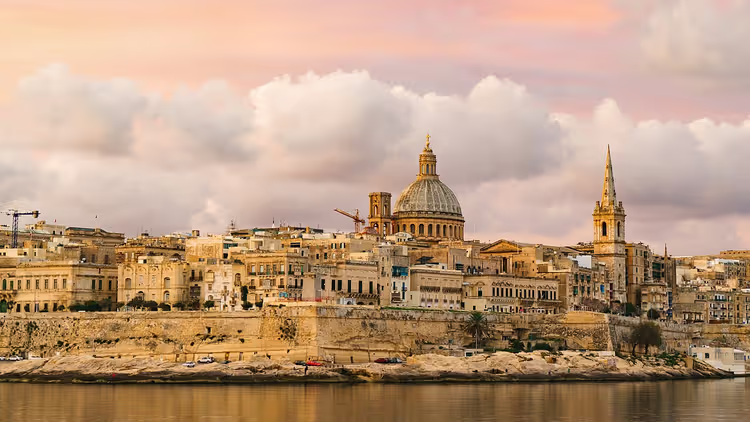
Valletta is listed in its entirety as a UNESCO World Heritage Site, and the Carmelite basilica holds a prominent place in it. Its tall dome is visible from almost anywhere in the city.
The church itself is young: it was built between 1958 and 1981. But it stands on the site of an ancient church from the late 16th century, destroyed during World War II.
 © Olga Prystai · CC BY-SAPhoto: Olga Prystai, CC BY-SA (https://creativecommons.org/licenses/by-sa/4.0), Wikimedia Commons
The basilica's main relic, a wooden statue of Our Lady of Mount Carmel, was made in Naples in 1781. Visitors are also drawn to the massive red marble columns. Entry is free.
- Getting there: central Valletta, on foot along the main streets (see map).
- The catch: during services, tourists are asked to wait at the entrance.
4. St John's Co-Cathedral, Valletta
You have to pay to enter St John's Co-Cathedral. A ticket costs 15 € (as of 09/2026, opening hours and tickets), and the cathedral is worth it.
It is open Monday through Saturday, from 09:00 to 16:45, with last entry at 16:00. On Sundays the doors are closed, so plan your visit in advance (as of 09/2026, the cathedral museum on VisitMalta).
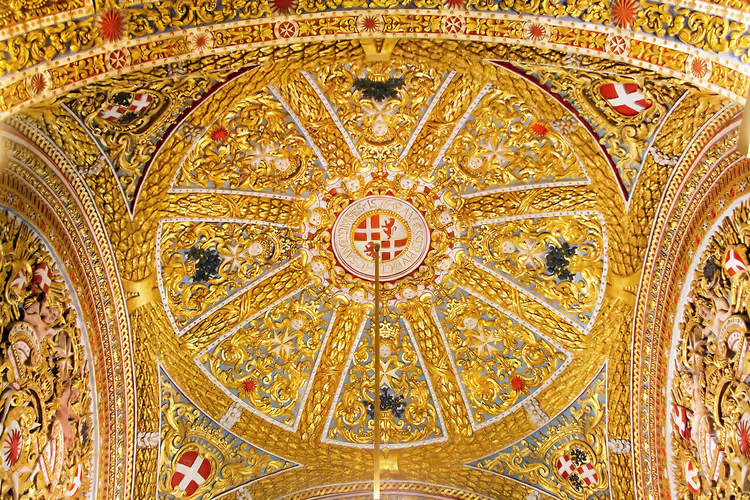
The 16th-century building belongs to the Order of St John and is considered a masterpiece of high Baroque. Military engineer Girolamo Cassar conceived it as a fortress on the outside and a triumph on the inside, and that is how it turned out.
 © Tony Hisgett from Birmingham, UK · CC BYPhoto: Tony Hisgett from Birmingham, UK, CC BY (https://creativecommons.org/licenses/by/2.0), Wikimedia Commons
The cathedral's shape is unusual: a rectangle with 13 symmetrical chapels. They hide the main relics, including two paintings by Caravaggio, "The Beheading of Saint John the Baptist" and "Saint Jerome Writing".
Get tickets to St John's Co-Cathedral in advance: in season, the entry line stretches out into the street.
- The catch: the halls fill up quickly with tour groups, so arrive at opening time.
5. The three cities: Birgu, Bormla, and Senglea
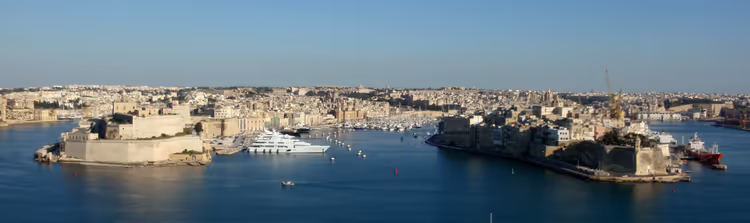
On the opposite shore of the Grand Harbour, you step into the cradle of Maltese civilization. The name "Three Cities" refers to Vittoriosa (Birgu), Cospicua (Bormla), and Senglea.
Of the trio, Birgu is the one most often mentioned. Its finest hour came in the 16th century: for several decades the city was the capital of the Order of St John. In the siege of 1565, Birgu never surrendered to the Turks, but the war exhausted it, and the knights began building Valletta.
 © Lionel Baur · CC BY-SAPhoto: Lionel Baur, CC BY-SA (https://creativecommons.org/licenses/by-sa/3.0), Wikimedia Commons
In Birgu, it is worth climbing up to the massive Fort St Angelo: from there you get another panorama of the harbor. In the local marina, yachts worth millions bob gently. Entry to the fort is paid, it is a Heritage Malta site, check the price on the Heritage Malta website.
Next up is the Inquisitor's Palace. The chills from the name fade quickly: inside, the house of the Catholic enforcers looks more like a Roman palace. The bloody atmosphere returns with the displayed instruments of the Inquisition. This is the only Inquisitor's palace in the world open to visitors.
The 17th-century Church of St Lawrence helps balance the impressions. Unlike many other churches on the island, entry here is for a symbolic donation.
6. Fort Manoel, Gzira
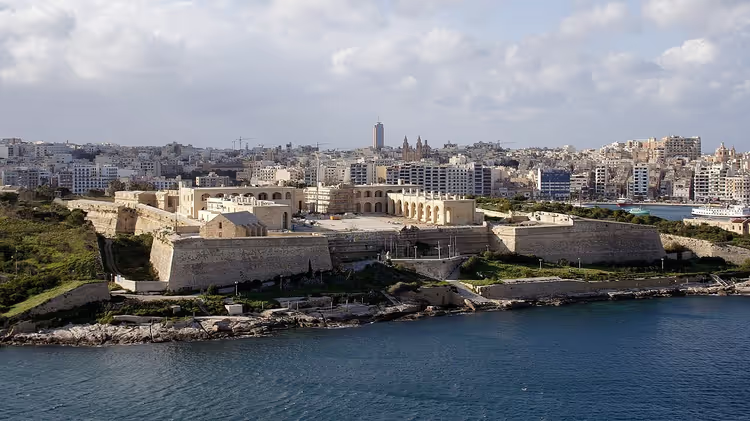
Fort Manoel on Manoel Island will stir mixed feelings for fans of Game of Thrones. This is where the Great Sept of Baelor was filmed, on whose steps Eddard Stark was executed.
If the Sept reminded you of a military structure, you were right: Fort Manoel is exactly that. It was built in the 18th century to defend Valletta from the north.
 © Helmut Seger · CC BY-SAPhoto: Helmut Seger, CC BY-SA (https://creativecommons.org/licenses/by-sa/4.0), Wikimedia Commons
You can't tour the fort from the inside yet: it's closed for restoration. But from the Valletta waterfront you'll see the bastions in full, and it's the best free view of the bay.
- How to get there: ferry from Valletta to Sliema or walk across the bridge from Gzira (see map).
- The catch: the inner courtyard is closed, so plan on an exterior visit only.
7. Rotunda of Mosta
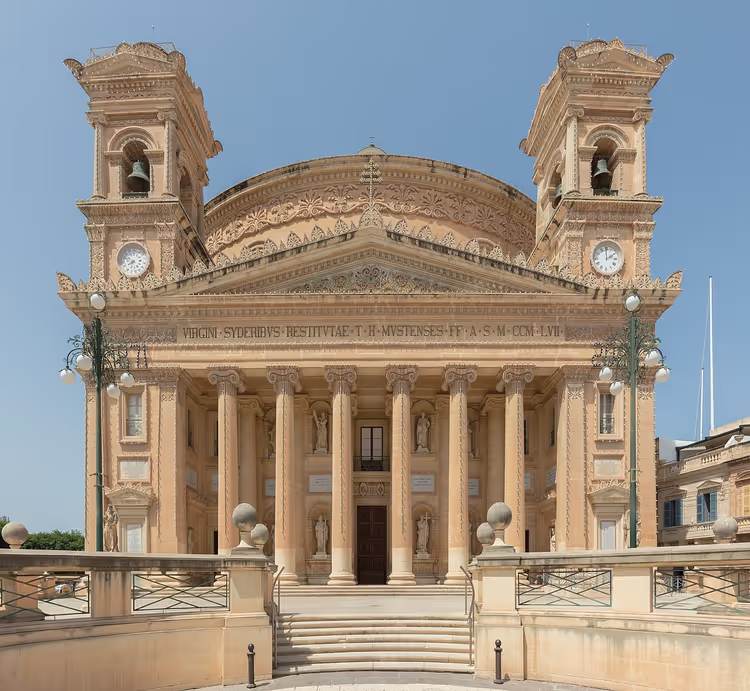
Mosta sits in the very center of the island and is known for its compact historic center. But people come here for the Rotunda, Malta's largest church.
The Rotunda was built between 1833 and 1860. Its enormous dome resembles the Roman Pantheon, and the dome itself is among the largest stone domes in Europe.
During World War II the church miraculously survived. On April 9, 1942, a bomb pierced the dome right in the middle of Mass but did not explode. Not a single parishioner was harmed, and the event is still called the Miracle of Mosta.
 © Diego Delso · CC BY-SAPhoto: Diego Delso, CC BY-SA (https://creativecommons.org/licenses/by-sa/4.0), Wikimedia Commons
- How to get there: bus from Valletta to the Mosta stop, about 20 minutes (see map).
- The catch: on Sunday mornings you can't get inside because of services.
8. Old City of Mdina
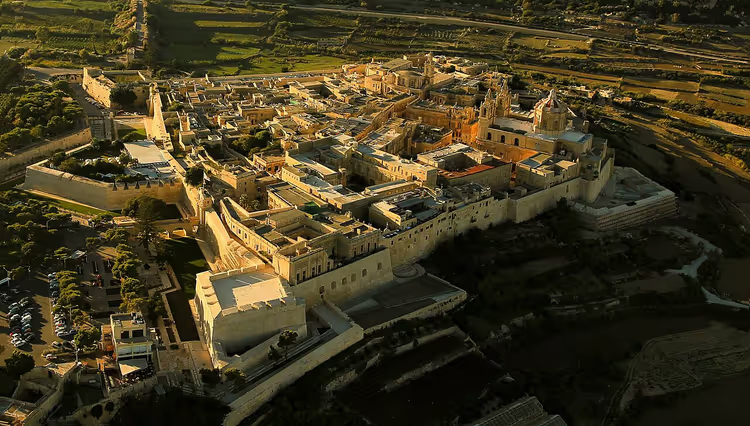
Mdina was Malta's first capital. It was founded by the Phoenicians around 700 BC, and the earliest human traces at the site are another thousand years older.
Since the Middle Ages the settlement has been considered a city of nobility. Hence the quiet streets, the garden greenery, and the gleam of aristocratic palaces. Locals call Mdina the "Silent City," and you'll see why for yourself.
 © R Muscat · CC BY-SAPhoto: R Muscat, CC BY-SA (https://creativecommons.org/licenses/by-sa/2.0), Wikimedia Commons
Come here when you're tired of packed sightseeing days. You'll recharge and head back out to explore the island with fresh energy. Game of Thrones fans will recognize Mdina's main gate: it's the same gate as King's Landing.
- How to get there: bus from Valletta to the Rabat stop, then a 10-minute walk (see map).
- The catch: in the evening the city empties out, and most cafes close early.
9. Megalithic temples and the Hal Saflieni Hypogeum, Paola
Two of Malta's three UNESCO sites date back to deep antiquity. The Hal Saflieni Hypogeum, an underground temple-tomb, began operating around 4000 BC and remained in use until 1500 BC.
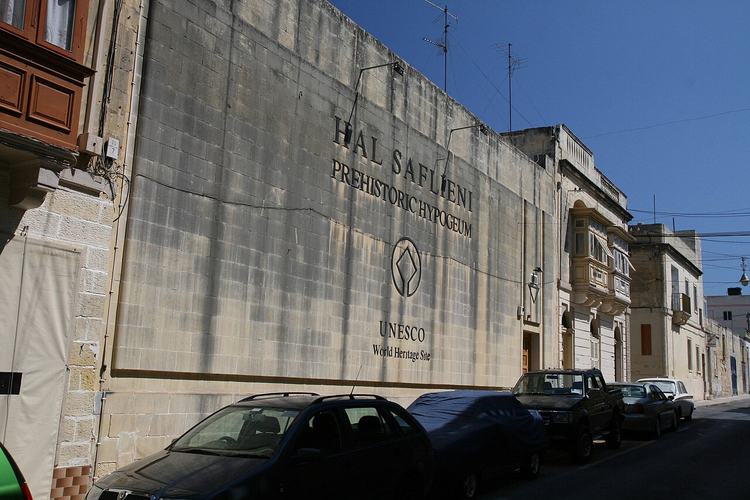
Strictly speaking, Hal Saflieni is not a temple but a vast underground burial chamber. Ancient people carved new passages into the rock to "move in" the dead: up to seven thousand people may have been buried here in total.
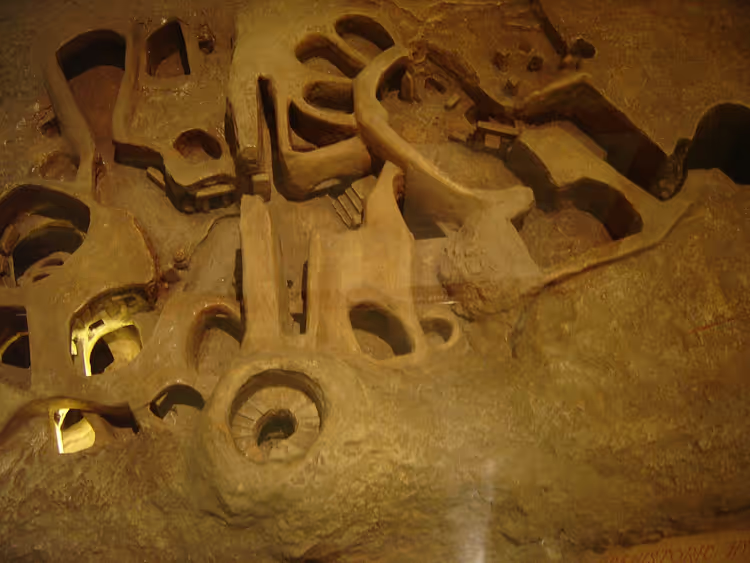 © Heiko Gorski · CC BY-SAPhoto: Heiko Gorski, CC BY-SA (http://creativecommons.org/licenses/by-sa/3.0/), Wikimedia Commons
Getting inside is difficult. Tickets are sold for specific time slots, an adult ticket costs €35, and last-minute tickets run €50 (as of 09/2026, the Hypogeum page on Heritage Malta). They're sold on the day of the visit or the day before. Book several weeks ahead, otherwise you won't get in.
The megalithic temples themselves stand above ground. The Ħaġar Qim complex, around five thousand years old, is considered one of the oldest religious structures on the planet. Scholars believe fertility rituals were performed here.
Tours to the megalithic temples are best taken with a guide: without explanations, the stones will remain just stones.
- How to get there: bus from Valletta to Paola or to the Ħaġar Qim stop (see map).
- The catch: children under 6 are not allowed into the Hypogeum (as of 09/2026, Hypogeum tickets).
10. Blue Grotto, Wied iż-Żurrieq
Malta is proud not only of its history but also of its nature. The island's coast looks like a patchwork of steep cliffs and sandy beaches, where rock climbing and lounging on a sunbed are just a few steps apart.
The Blue Grotto is considered one of the country's best natural attractions. It lies near the megalithic temples, so you can easily combine both sites in one day.
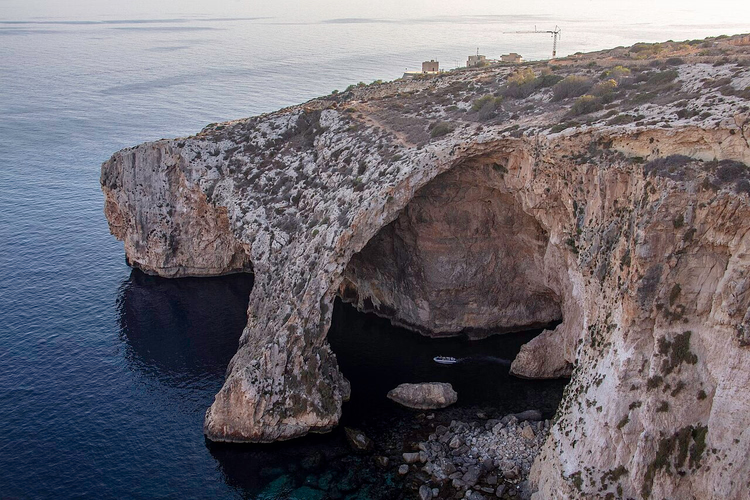 © Diego Delso · CC BY-SAPhoto: Diego Delso, CC BY-SA (https://creativecommons.org/licenses/by-sa/4.0), Wikimedia Commons
To see the grotto from the inside, take a boat tour. The grotto doesn't reveal itself entirely: part of its charm is only visible from the water. The tour costs in the low double digits, check the price with the boatmen on site (as of 09/2026).
If you're on a budget, stick to viewing it from the lookout point. You'll still get a view of the turquoise water and the rock arch.
Boat tours to the Blue Grotto are booked in the morning during the season: by midday the wind picks up and trips get canceled.
- How to get there: bus from Valletta to the Wied iż-Żurrieq stop (see map).
- The catch: in windy weather the boats don't run, and you'll only find out once you're there.
11. Golden Bay beach, Għajn Tuffieħa
Golden Bay on the west of the island is a good way to say goodbye to Malta. It takes longer to reach than other beaches, but you get a sandy shore and the best sunset on the island.
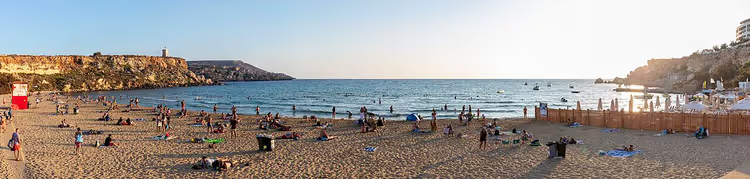 © Diego Delso · CC BY-SAPhoto: Diego Delso, CC BY-SA (https://creativecommons.org/licenses/by-sa/4.0), Wikimedia Commons
The bay lies between cliffs about 20 km from Valletta (see map). Fine sand, a gentle slope into the water, and a cafe on the beach make it convenient for swimming with kids.
- How to get there: bus from Valletta or Bugibba with a transfer, about an hour (see map).
- The catch: parking is hard to find, and in July and August the beach is packed. Arrive by 9 am.
Tours and tickets in Malta
Guided tours, skip-the-line tickets and activities — most offers can be cancelled free of charge.
See offers on GetYourGuideThe widget loads once you give your consent.
⁉️🤔 Frequently asked questions
Do I need a visa to travel to Malta?
Malta is part of the Schengen Area. If you're coming from an EU or Schengen country, you don't need a visa: a passport or ID card is enough. Everyone else should check the requirements in advance on the Malta tourism office website or with the consulate. Airlines check documents at boarding, so don't leave this until the last day.
How many days do I need for Malta?
For a first visit, plan 5-7 days. Three days will go to Valletta and the Three Cities, a day to Mdina and Mosta, another day to the megaliths and the Blue Grotto, and save the last one for Gozo or the beaches. If you have less time, choose Valletta and Mdina: they'll give you the most impressions for the least travel.
Can you get around Malta without a car?
Yes, the bus network covers the entire island, and a ferry runs between Valletta and Sliema. A 7-day card costs 25 € (as of 09/2026, schedule and fares). A car is only needed for the western beaches, where buses run infrequently.
How much does a ticket to St. John's Co-Cathedral cost?
Admission costs 15 € for an adult (as of 09/2026, cathedral tickets and schedule). Get your ticket in advance and come in the morning while the halls are empty.
How do I get into the Ħal Saflieni Hypogeum?
Tickets are sold for a specific time slot, an adult ticket costs 35 € (as of 09/2026, official Hypogeum page). Last-minute tickets cost 50 € and are sold on the day of the visit or the day before (as of 09/2026, Hypogeum page on Heritage Malta).
When is the best time to visit Malta?
The best months to visit are April-May and September-October. At that time the sea is already warm, and the heat doesn't get in the way of exploring the fortresses. Not everyone can handle July and August: it's tough in the sun, and the beaches are packed.
In short: what to book
Malta rewards those who plan ahead. You'll pick your transport and hotel quickly, but tickets to the cathedral and the Hypogeum are worth booking before your trip.
- If you have a week and want to see everything at once: book tickets to St John's Co-Cathedral for the morning and leave the day for Gozo.
- If you're coming for the sea and beaches: look for hotels in Malta in Sliema or Bugibba, and head west by bus.
- If you want guided experiences: island tours will help you with logistics and transfers.
Whatever you choose, check opening hours and prices on official websites before your visit: schedules in Malta change by season.

A small editorial team writing guides for independent travel. We travel ourselves, but we haven’t been everywhere, so we check prices, opening hours and how to get there against official sources.