
















Diving in Egypt: 11 sites from the Blue Hole to SS Thistlegorm
Diving in Egypt draws divers from all over the world. The Red Sea offers dozens of dive sites, and it is almost impossible to cover the best ones in a single trip.
You want to see sharks, dugongs, and shipwrecks, but you don't know where to go or what certification level you need. This guide breaks down eleven sites by region, depth, and current strength.
Below you'll find depths, seasons, and honest catches for each site. We compiled the facts from open sources and dive center reports.
Ad: this article contains affiliate links. We earn a commission if you book through them, at no extra cost to you.
How to choose a dive site in Egypt
💡 In short:
- Beginners do well at Ras Mohammed, Abu Dabbab, and the shallow parts of Dahab.
- Experienced divers will enjoy Jackson Reef and the Brothers Islands; technical divers, the Blue Hole.
- Depths, seasons, and access to dive sites: 09/2026, according to PADI.
Our picks by region:
Region | Dive site | Level | What to see |
|---|---|---|---|
Dahab | Blue Hole | intermediate and up | the arch, reef wall, schools of fish |
Dahab | Dahab Canyon | beginner and up | a corridor in the reef and night diving |
Marsa Alam | Abu Dabbab | beginner | dugongs and sea turtles |
Marsa Alam | Elphinstone Reef | experienced | hammerhead sharks and manta rays |
Sharm El Sheikh | Ras Mohammed | beginner and up | coral gardens and anemones |
Sharm El Sheikh | SS Thistlegorm | intermediate | trucks and guns on the bottom |
Hurghada | Abu Nuhas Reef | intermediate | four shipwrecks |
1. Abu Dabbab
 © Jan Beránek · CC BY-SAPhoto: Jan Beránek, CC BY-SA (https://creativecommons.org/licenses/by-sa/4.0), Wikimedia Commons
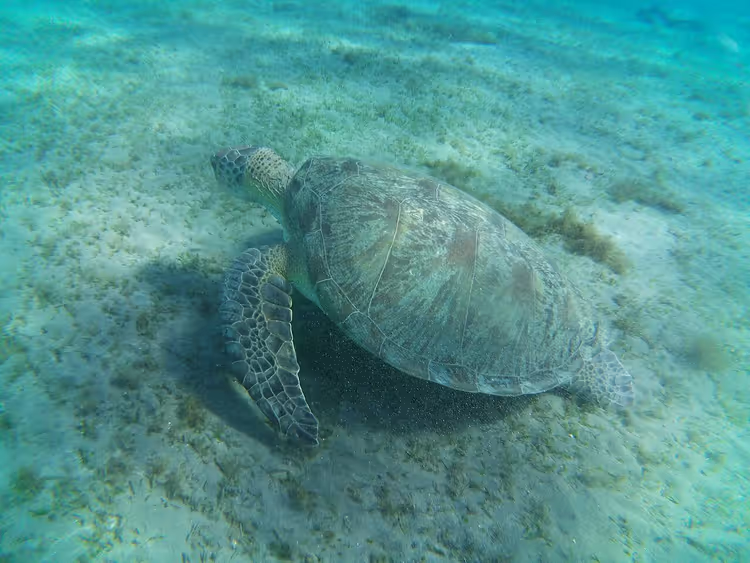
Abu Dabbab is a quiet bay near Marsa Alam in the southern Red Sea. Dense seagrass meadows grow on the sandy bottom, and this is exactly where dugongs, or sea cows, come to feed. Along with them, you'll encounter green sea turtles.
The depth here is shallow, so the site works for both divers and snorkelers. The coral gardens along the edges of the lagoon are considered some of the best in Egypt. Go in the morning: by midday there are more boats and people over the shallows.
- How to get there: from Marsa Alam by car or boat, the trip takes under an hour.
- Who it's for: families, beginners, and underwater photographers.
- The catch: there are no big sharks or vertical walls here; the bottom is sandy and flat.
2. Blue Hole
 © Petar Milošević · CC BY-SAPhoto: Petar Milošević, CC BY-SA (https://creativecommons.org/licenses/by-sa/4.0), Wikimedia Commons
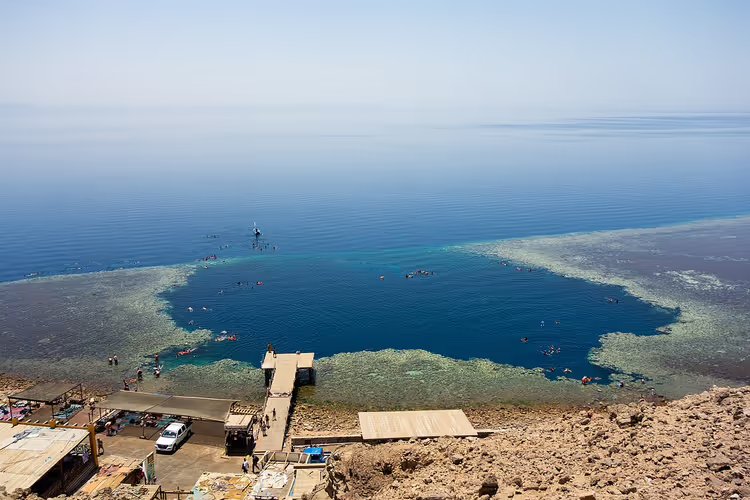
The Blue Hole is an underwater sinkhole near Dahab, about 130 meters deep. After descending to 55-60 meters, technical divers exit through a cleft into the open sea, passing the coral Arch.
The site is well known in the technical diving community, and it demands experience. Beginners also have something to see here: a safe shallow route runs along the rim of the sinkhole.
Local instructors start the descent at Bells, 200 meters to the north. From there the group follows the reef wall and enters the sinkhole through the Arch Saddle at a depth of 7 meters. This way you avoid descending to 20-30 meters.
There is parking on shore, along with small restaurants and souvenir shops. The local Bedouin run all the coastal infrastructure.
- Who it's for: experienced divers, and beginners on the shallow route.
- The catch: the current and the depth of the sinkhole make the descent dangerous without a guide.
3. Dahab Canyon
Dahab Canyon lies in the Gulf of Aqaba near Dahab. It is a giant fissure in the coral reef that runs as a narrow corridor from north to south and drops from a depth of ten meters downward.
The fissure has three entrances. Fish Bowl opens at 12 meters, the second entrance lies at 20 meters, and the third at 52 meters is accessible only to technical divers. Along the plateau you'll swim through schools of colorful fish.
If you're lucky, at the cave entrance you'll see a crocodilefish watching the small fish. At night the canyon turns into a light show of thousands of dive lights.
- Who it's for: beginners at the shallow entrances and technical divers in the depths.
- The catch: the narrow chambers are open only to technical divers.
4. Elphinstone Reef
 © Polygonia c-album · CC BY-SAPhoto: Polygonia c-album, CC BY-SA (https://creativecommons.org/licenses/by-sa/4.0), Wikimedia Commons
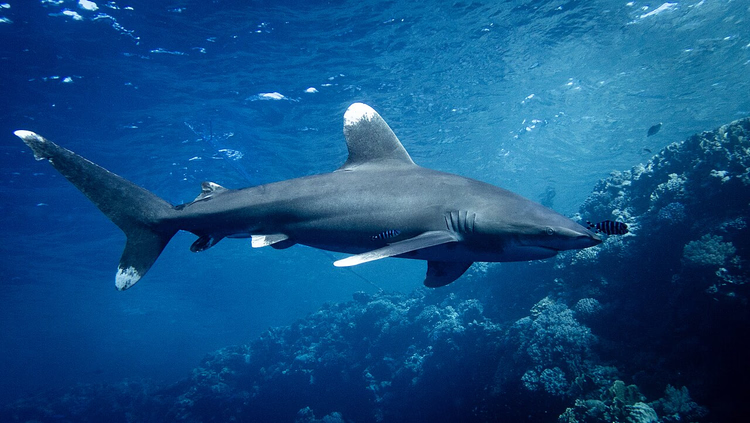
Elphinstone Reef is one of the few places in Egypt where you can encounter hammerhead sharks in their natural habitat. In autumn, oceanic whitetip sharks stay here, and giant manta rays come with them.
The reef consists of two plateaus. The northern one, about 100 meters wide, descends in steps from 5 to 20 meters, then drops off to 40. On this drop-off you'll find giant trevally and reef sharks.
The southern plateau starts at 25 meters and slopes gently down to 40. Oceanic whitetips favor this spot and calmly pose for the camera. At 60 meters lies the through-tunnel called Elphinstone Arch.
- Who it's for: experienced divers; the depth and current require confidence.
- The catch: strong current and open sea; visibility drops in windy weather.
5. Brothers Islands
 © Alexander Vasenin · CC BY-SAPhoto: Alexander Vasenin, CC BY-SA (https://creativecommons.org/licenses/by-sa/3.0), Wikimedia Commons
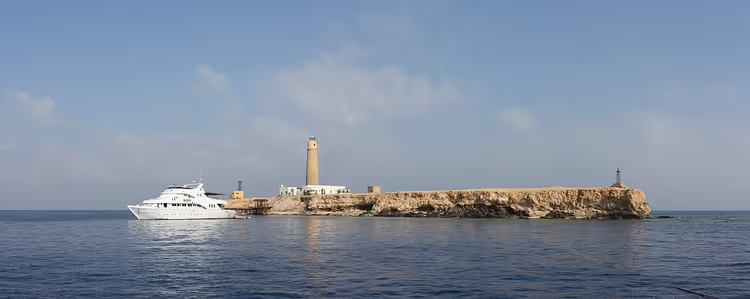
The Brothers Islands are two small islets in the central Red Sea. Big Brother and Little Brother hold coral walls around them and remain one of the country's top dive destinations.
Here you'll encounter oceanic whitetips, hammerheads, grey reef sharks, and thresher sharks. Add barracudas, trevally, manta rays, and tuna to the mix. Twelve dive sites have formed around the islands.
Two routes are considered the main ones. Aida Wreck is an Italian vessel that sank in 1957. Numidia Wreck is a British cargo ship that sank in 1901 with railway wheels on board. The wreck lies on a steep slope, almost vertical.
- Who it's for: experienced divers; people come here on a liveaboard.
- The catch: far from shore; you have to live on the boat for several days.
6. Ras Mohammed
 © Unknown author · CC BY-SAPhoto: Unknown author, CC BY-SA (http://creativecommons.org/licenses/by-sa/3.0/), Wikimedia Commons
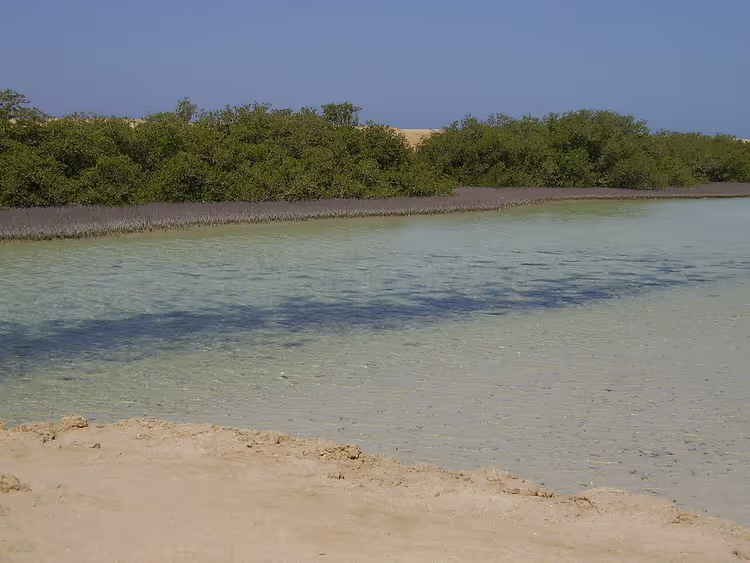
Ras Mohammed is Egypt's first national park in the south of the Sinai Peninsula, between the Gulf of Suez and the Gulf of Aqaba. Tiran Island within its territory remains one of the country's underwater tourism hubs.
Dives here are only done with an instructor, and you go through a detailed briefing before descending. Beginners' first descent takes place at a depth of 8-10 meters.
The park is divided into sectors called dive sites. The most visited routes are Shark Yolanda Reef and Anemone City with its anemone garden at a depth of 14 meters. Shark Observatory, Eel Garden, Jackfish Alley, Ras Za'atir, and Ras Ghazlany attract no less interest.
Entry to the reserve is paid, with a fee charged per diver (according to Egypt For Travel, 09/2026).
Dive tours in Sharm El Sheikh on GetYourGuide
- Who it's for: beginners, families, and experienced divers.
- The catch: popular sites get crowded with boats and people in summer.
7. Marsa Alam
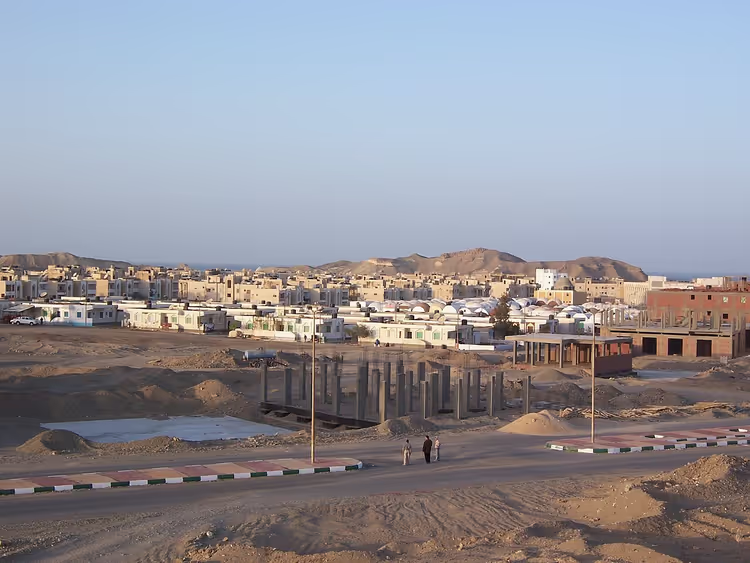
Marsa Alam is a resort town on the western shore of the Red Sea. It's known for its sandy beaches and coral reefs that draw divers from around the world.
The El Naaba Lagoon is separated from the sea by a coral reef. This creates calm conditions for descents inside the lagoon. Nearby lies Wadi El Gemal National Park with islands, reefs, and seagrass beds.
The resort suits families thanks to its calm lagoons.
Hotels in Marsa Alam on Trip.com
- Who it's for: families, beginners, and fans of calm lagoons.
- The catch: large sharks are seen less often than at Elphinstone and the Brothers.
8. The SS Dunraven Wreck
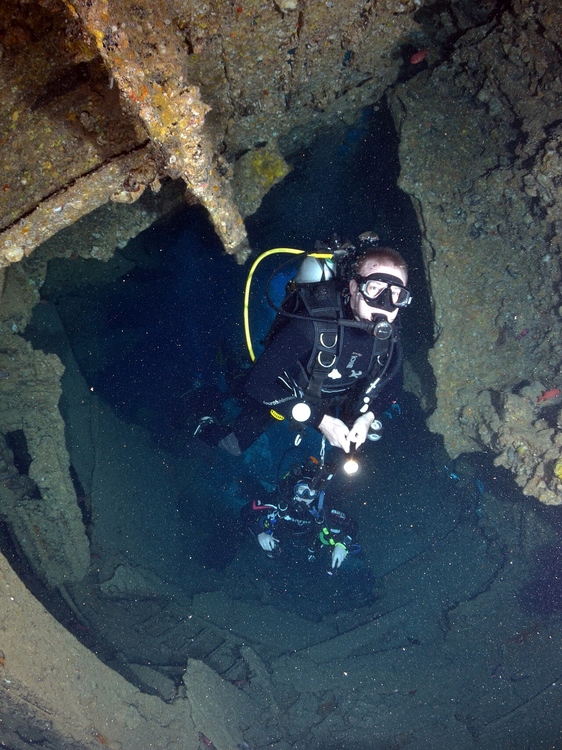 © Matt Kieffer · CC BY-SAPhoto: Matt Kieffer, CC BY-SA (https://creativecommons.org/licenses/by-sa/2.0), Wikimedia Commons
The SS Dunraven was found in 1977 near Sharm El Sheikh. The ship was built in Newcastle and launched in 1873, and in 1876 it collided with a reef and sank due to the captain's fault.
The vessel lies upside down. Broken bow beams open a passage inside, and the hull has become covered in soft corals over the centuries. From the bottom you'll watch shimmering schools of silvery fish.
The trip takes about two hours by boat from the port of Sharm El Sheikh. The bow rests at a comfortable depth of 19 meters, while the stern drops to 30 meters.
- Who it's for: beginners and intermediate divers, the depth is moderate.
- The catch: rusty structures inside require caution.
9. The sunken ship SS Thistlegorm
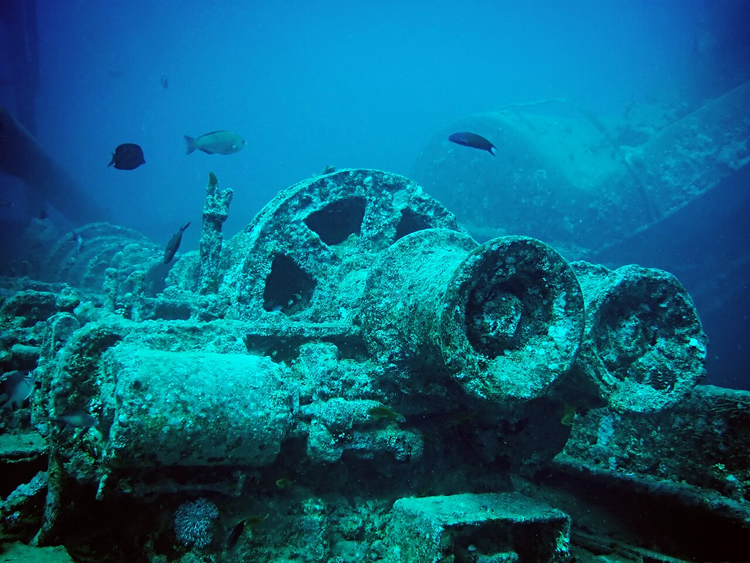 © Woodym555 , edited by Fir0002 · CC BY-SAPhoto: Woodym555 , edited by Fir0002, CC BY-SA (http://creativecommons.org/licenses/by-sa/3.0/), Wikimedia Commons
SS Thistlegorm is a British military transport that was sunk by German aircraft on October 6, 1941 in the Gulf of Suez. The ship rests at a depth of about 35 meters, roughly 40 km from Sharm El Sheikh, and is broken in half. The boat ride takes more than three hours.
Ammunition still lies in the ship's holds. The largest sunken ship in the Red Sea is open to divers and is currently in good condition (according to the PADI dive site catalog, 09/2026).
The stern platform still has a 102 mm gun and a 76 mm anti-aircraft machine gun. Trucks, motorcycles, and other equipment stand on the decks. It's best to dive early in the morning, before the tourist boats arrive.
- Who it's for: intermediate divers, usually accessed from a liveaboard or day boat.
- The catch: lots of boats and divers, so it's best to book your trip in advance.
10. Jackson Reef
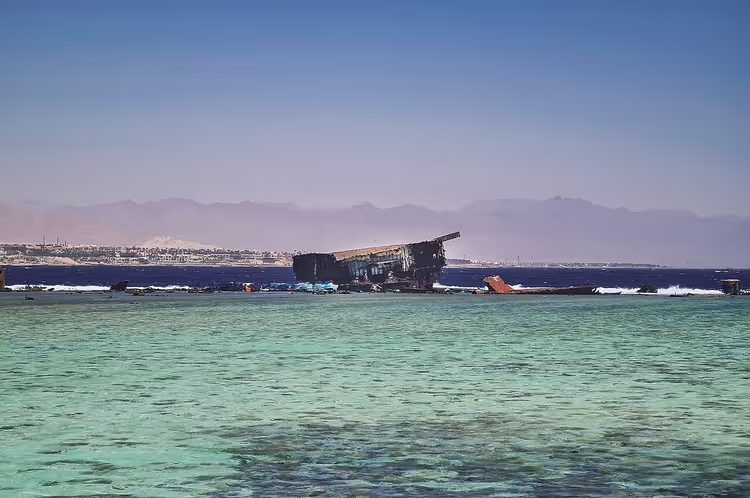 © Asmaa ElTouny · CC BY-SAPhoto: Asmaa ElTouny, CC BY-SA (https://creativecommons.org/licenses/by-sa/4.0), Wikimedia Commons
Jackson Reef lies in the northern part of the Strait of Tiran and became famous after the Cypriot ship Lara wrecked there in 1981. The wreckage rests at a shallow depth, so it's visible even with just a mask and snorkel.
The slopes are covered in bright red corals. The reef is home to trevally, reef sharks, hammerhead sharks, barracudas, and huge manta rays, as well as sea turtles. The northern part of the reef is not open to everyone.
Because of the strong current, only experienced divers with verified qualifications dive there. There's no accommodation on site, so you either go by boat from Sharm El Sheikh or stay on a yacht.
- Who it's for: experienced divers.
- The catch: strong current in the northern part, beginners are not allowed there.
11. Shaab Abu Nuhas Reef
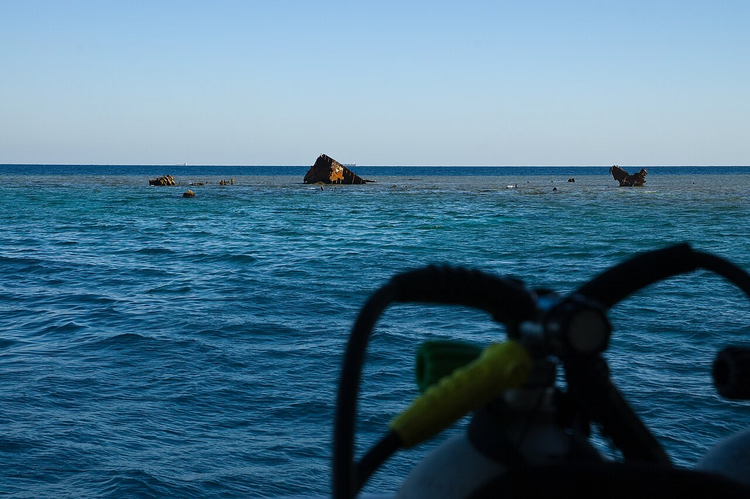 © sky#walker · CC BY-SAPhoto: sky#walker, CC BY-SA (https://creativecommons.org/licenses/by-sa/2.0), Wikimedia Commons
Shaab Abu Nuhas Reef lies in the eastern part of the Strait of Gubal. Four sunken ships rest on its bottom: Chrisoula K, Giannis D, Carnatic, and Kimon M.
The ships belong to different eras, so each dive tells its own story. The sandy bottom lies at depths from 18 to 35 meters. Here you'll encounter barracudas, manta rays, groupers, butterflyfish, sweetlips, and goatfish.
Whitetip reef sharks also visit this reef. The route is convenient for multiple dives in a single outing.
Hotels in Hurghada on Trip.com
- Who it's for: intermediate divers and wreck diving enthusiasts.
- The catch: popular wrecks attract many boats from Hurghada.
⁉️🤔 Frequently asked questions
Do I need a certification for diving in Egypt?
Yes, for independent dives you need an Open Water certification or higher. Without a certification, you can only dive with an instructor after a short introductory course. Almost all dive centers in Dahab, Sharm El Sheikh, and Hurghada operate this way, so a first dive is accessible to everyone.
When is the best time to go for sharks and manta rays?
Large sharks and manta rays are more commonly seen in the warm season. At Elphinstone and the Brothers Islands, that's spring and fall, when the water stays warm and visibility is high. Oceanic whitetip sharks are mostly here in the fall. In summer the water gets warmer, so diving is comfortable without a thick wetsuit.
Can children dive?
Yes, in Ras Mohammed and Marsa Alam, children aged 8 to 10 dive with an instructor to a depth of up to two meters in special equipment. Adult beginners get an introductory dive to 8-10 meters after a briefing. Check with the specific dive center for restrictions.
Is wreck diving dangerous?
Ships like SS Thistlegorm rest at accessible depths and are suitable for intermediate divers. The dangers come from currents, rusty structures, and closed holds. Stick to the guide's route, don't enter narrow compartments without training, and keep an eye on your remaining air.
How many dives should a beginner plan?
For a first introduction, one introductory day with two dives is enough. After that, it makes sense to add a couple more days to get used to the equipment and depth. Experienced divers usually set aside a week for boat trips to distant reefs and wrecks.
In short: what to book
Diving in Egypt covers every need: from calm lagoons with turtles to deep descents to sunken ships. For beginners, we recommend Ras Mohammed and Marsa Alam, while experienced divers should look at liveaboards to the Brothers Islands and SS Thistlegorm.
- If you're a beginner: go for Ras Mohammed and Abu Dabbab.
- If you want wrecks: go for SS Thistlegorm and Shaab Abu Nuhas Reef.
- If you're an experienced diver: go for Jackson Reef and the Brothers Islands.
Finding a hotel in Sharm El Sheikh on Trip.com is convenient as a base for boat trips to SS Thistlegorm and Ras Mohammed.

A small editorial team writing guides for independent travel. We travel ourselves, but we haven’t been everywhere, so we check prices, opening hours and how to get there against official sources.