
















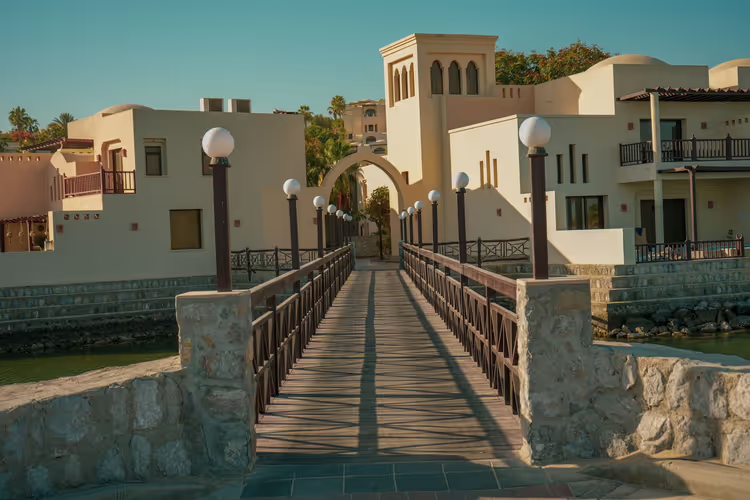
Ras Al Khaimah: what to see, where to stay and how to get there
Ras Al Khaimah lies at the very north of the UAE. The border with Oman runs through the mountains very close by.
This is the only emirate where the Hajar Mountains come right up to the Persian Gulf. That is why sandy beaches, mangrove groves, and rocky wadis sit side by side here.
Locals call Ras Al Khaimah the country's northern riviera: it beats its neighbors in greenery and water clarity. Let's break down what to see, what to do, where to stay, and how to get from the airport.
Ad: this article contains affiliate links, we earn a commission if you book through them, at no extra cost to you.
Where Ras Al Khaimah is located
💡 In short:
- Ras Al Khaimah occupies the very north of the UAE, about an hour's drive from Dubai.
- The Hajar Mountains come right up to the sea, so there is both beach and hiking here.
- In summer the emirate is cooler than Dubai, and there is noticeably more greenery.
- Prices and opening hours: 09/2026, checked on the official tourism office website.
The emirate stretches along the gulf to the border with Oman, which runs along the Hajar ridge. The terrain changes quickly: in half an hour you can go from a flat beach to a mountain canyon.
The summer heat here is milder than in Dubai or Abu Dhabi. According to the Ras Al Khaimah tourism office (as of 09/2026), the mountains are several degrees cooler, so July on Jebel Jais is easier to handle than on the Dubai coast.
What to see: forts and the old town
Let's start with the old part of the emirate. Here you will find traces of the pearl trade, an abandoned village, and the country's only mountain fort.
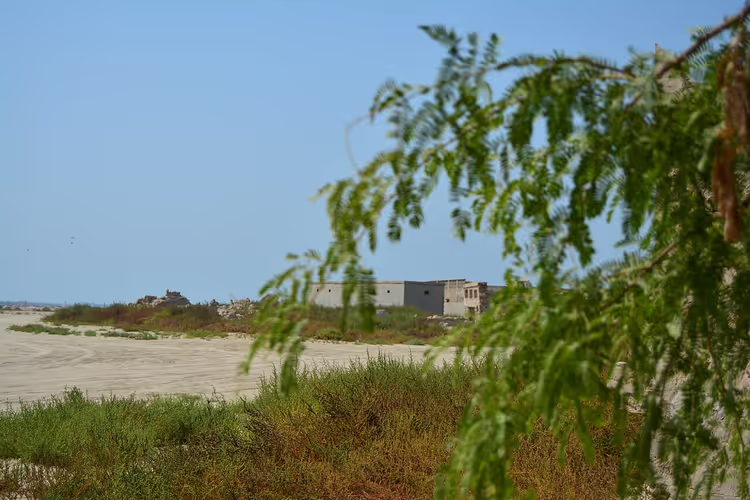 © Sanjana Biju · CC BY-SAPhoto: Sanjana Biju, CC BY-SA (https://creativecommons.org/licenses/by-sa/4.0), Wikimedia Commons
Julfar
Julfar was a major port city and the center of pearl diving on this coast. A legend about the Queen of Sheba is tied to it: she supposedly stopped here on her way to King Solomon. The ruins of the local ruler's palace are still called by her name today.
 © Bin Al Stroker · CC BYPhoto: Bin Al Stroker, CC BY (https://creativecommons.org/licenses/by/3.0), Wikimedia Commons
Jazirat Al Hamra
The Red Island of Jazirat Al Hamra grew up as a fishing and pearl-diving village. The houses are built of coral stone and clay, and the neighborhoods emptied out when the pearl trade declined. It is now a protected area open to tourists.
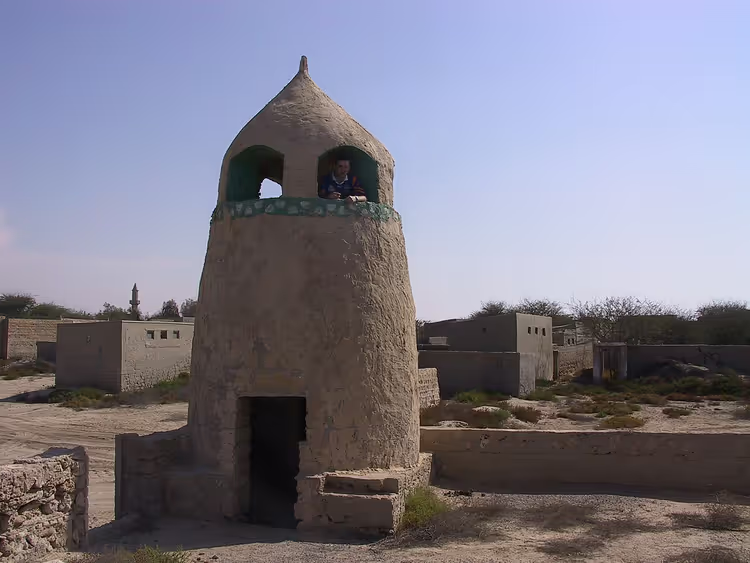 © Alexandermcnabb · CC BY-SAPhoto: Alexandermcnabb, CC BY-SA (https://creativecommons.org/licenses/by-sa/4.0), Wikimedia Commons
Dhayah Fort
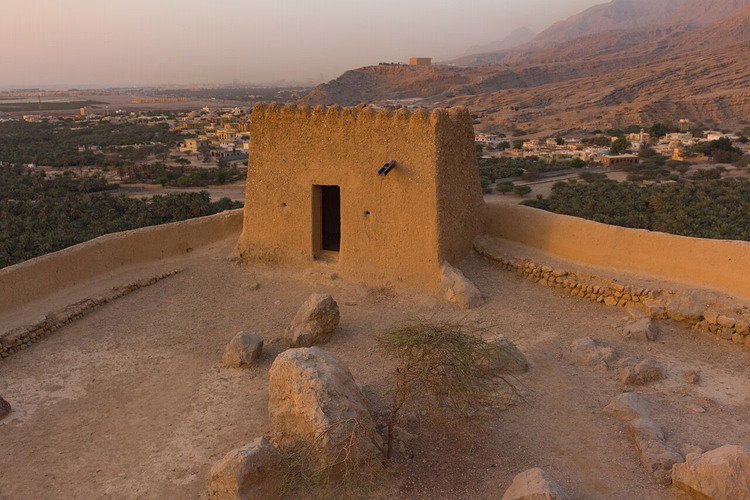 © Ansari M Joshi · CC BY-SAPhoto: Ansari M Joshi, CC BY-SA (https://creativecommons.org/licenses/by-sa/4.0), Wikimedia Commons
The Dhayah Fort stands on a hill above a palm valley. It is the only surviving hill fort in the UAE, and in 1819 it was nearly destroyed by British troops. The fort was restored only in 1990 (according to the Visit Ras Al Khaimah page, 09/2026). Today Dhayah Fort is on UNESCO's tentative list for World Heritage status.
Nature: reserve and springs
Al Wadi Nature Reserve
The Al Wadi Nature Reserve covers 500 hectares of desert landscapes and green valleys (according to the tourism office, 09/2026). Gazelles, Arabian oryx, and desert falcons live here in natural conditions. Early in the morning you will catch them in open areas before the heat sets in.
Khatt Springs
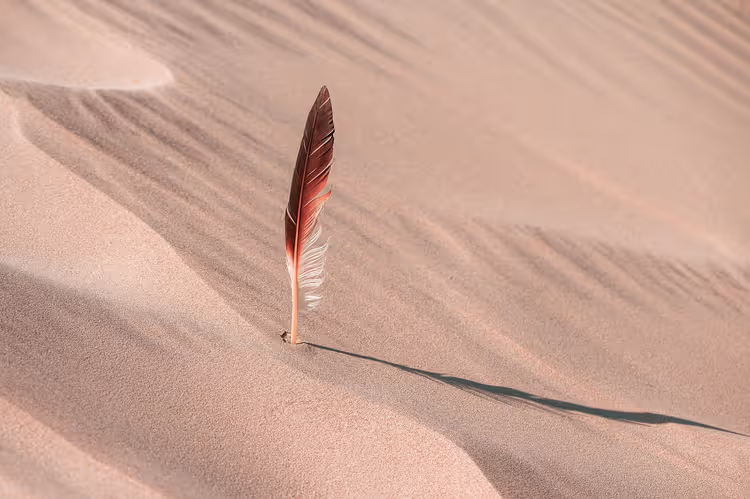
South of the city lies the village of Khatt with three thermal springs (Khatt Village, Visit Ras Al Khaimah, 09/2026). The water emerges from underground already warm and rich in minerals. The springs lie in a valley at the foot of Jebel Jais, with 19th-century mud-brick forts nearby.
Jebel Jais: zipline and views
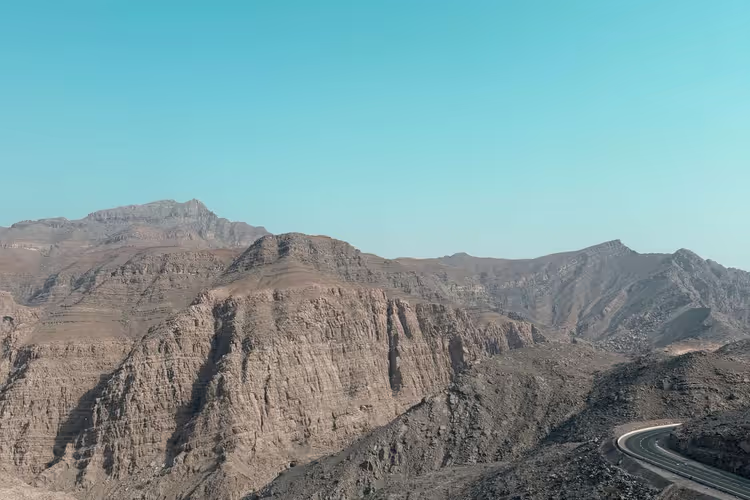
Jebel Jais is considered the highest point in the UAE: the summit rises to nearly 1,900 meters (Visit Jebel Jais, 09/2026). The road to the top winds up from the coast in switchbacks, and you can reach the plateau in about an hour.
This is also home to Jais Flight, the longest zipline in the world at 2.83 km (according to Visit Ras Al Khaimah, 09/2026).
For hiking in the mountains, there are marked trails. It is best to set out at dawn: it is hot during the day, but in the morning the ridge offers views of the bay and the surrounding valleys.
Things to do in Ras Al Khaimah
The emirate offers both relaxed and extreme options. At the Al Wadi Equestrian Centre, you will be shown how to stay in the saddle, and experienced riders can book beach or desert rides.
For hiking, trails in the Hajar Mountains are a good fit. Equipment rental is available at the base, and you can also hire an instructor there.
Thrill-seekers have plenty to choose from too. At RAK Track you can go karting, at the Jazira aviation club you can learn to fly a light aircraft, and along the coast you can fish or go diving.
Golfers will appreciate the Al Hamra Golf Club and Tower Links, both with mountain views.
Tours and tickets in Ras Al Khaimah
Guided tours, skip-the-line tickets and activities — most offers can be cancelled free of charge.
See offers on GetYourGuideThe widget loads once you give your consent.
Beaches and where to stay
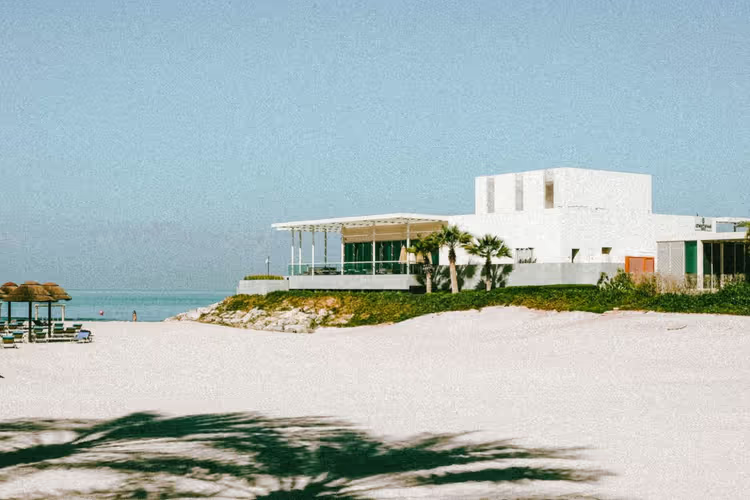
The Ras Al Khaimah coastline stretches for dozens of kilometers, and the water here is cleaner than around Dubai. Large resorts with private beaches line the shore, and there are public sections nearby too.
If you're looking for a place to stay, compare hotels in Ras Al Khaimah on Trip.com. Demand on the coast is higher in winter, so it's worth booking in advance.
How to get there
Ras Al Khaimah International Airport (RKT) receives flights from Europe and the Middle East. From Dubai, the emirate is about an hour away via the expressway, an option people choose when flying through a major hub.
Public transport between the cities is poorly developed, so most travelers rent a car or book a transfer. It's more convenient to arrange an airport transfer in advance, so someone meets you at the exit.
Tours and tickets in Ras Al Khaimah
Guided tours, skip-the-line tickets and activities — most offers can be cancelled free of charge.
See offers on KiwitaxiThe widget loads once you give your consent.
⁉️🤔 Frequently asked questions
When is the best time to visit Ras Al Khaimah?
Beach season runs from November to April: warm but not hot during the day, and the water stays comfortable. Spring and fall are well suited for hiking and nature trips.
Do I need to book a slot for Jais Flight?
Yes, the descent runs on a schedule, so you book a slot in advance. Flights are sometimes canceled in windy weather. Plan your descent for the morning: it's hot at the top during the day, and the line is shorter on weekdays.
Can you swim in Ras Al Khaimah in winter?
Yes, the water stays warm in winter, and swimming is comfortable even in January. Beaches at resorts are cleaned and maintained, while public areas have more modest infrastructure. Strong winds are rare, so the sea is almost always calm.
What to see in Ras Al Khaimah in one day?
In the morning, head up Jebel Jais for the views and the zipline. Then check out Dhayah Fort and Julfar, and after that stop by the abandoned Red Island. If you still have energy, end the day at the Khatt hot springs.
How many days should you plan for the trip?
Two or three days is enough to see the main sights: forts, mountains, and beaches. If you're going for hiking and the zipline, set aside four days. A relaxed seaside vacation with excursions can easily stretch to a week.
In short: what to book
Ras Al Khaimah works for both a beach getaway and an active trip. If you're short on time, pick a hotel on the coast and spend one day at Jebel Jais. If you want to see both forts and mountains, plan for three or four days.
For families with kids, resorts with a private beach are more convenient; for hikers and zipline fans, a base closer to the mountains is better. Book your airport transfer in advance.
Compare hotel prices in Ras Al Khaimah before your trip.

A small editorial team writing guides for independent travel. We travel ourselves, but we haven’t been everywhere, so we check prices, opening hours and how to get there against official sources.