
















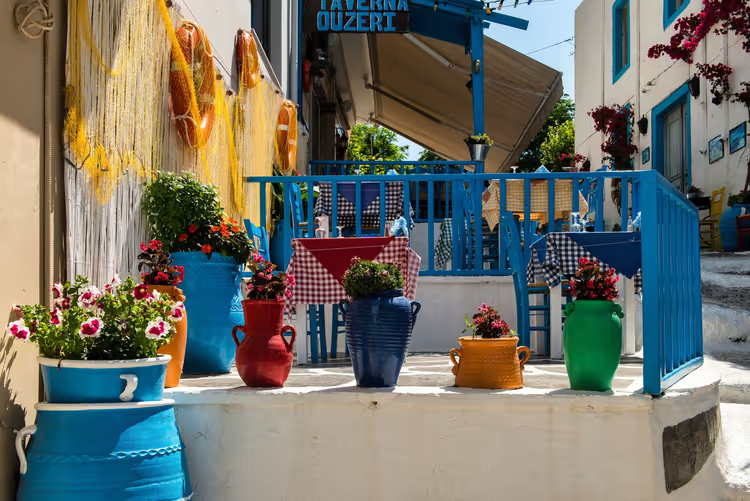
How to read a Greek menu and what to order in a taverna
The Greek menu is easy to get lost in. Dish names are not translated, and an unfamiliar word can turn out to be a sauce, a pie, or meat on a spit.
It is easier to break things down by category. Greek cuisine is built on a few basic ingredients: olive oil, vegetables, feta cheese, fish, and meat cooked over coals. The country's national tourism office puts it plainly: simplicity, clean ingredients, and regional variety (as of 09/2026, Visit Greece).
Below we have gathered appetizers, salads, main dishes, drinks, and desserts of Greek cuisine. For each item, we note where to find it, the price range, and what to look for.
Ad: this article contains affiliate links, we earn a commission if you book through them, at no extra cost to you.
Our picks: what to order first
💡 In short:
- Start with meze appetizers: tzatziki and dolmadakia set the baseline flavor.
- For meat, go with souvlaki or moussaka, and for fish, grilled octopus.
- Order a frappe during the day, ouzo before dinner, and loukoumades for dessert.
- Dish composition and regional cuisines: 09/2026, according to the Greek National Tourism Organization.
The table helps you get your bearings if you are reading a Greek menu for the first time.
Dish | What it is made from | Price range |
|---|---|---|
Tzatziki | yogurt, cucumber, garlic | the lowest item on the menu |
Horiatiki | village salad with feta | low |
Moussaka | eggplant casserole | medium |
Souvlaki | meat on a skewer | low |
Gyros | meat in pita with tzatziki | low |
Frappe | cold coffee | low |
Loukoumades | honey donuts | low |
 © PattayaPatrol · CC BY-SAPhoto: PattayaPatrol, CC BY-SA (https://creativecommons.org/licenses/by-sa/4.0), Wikimedia Commons
Appetizers and meze
A meal in Greece starts with meze. This is the name for a spread of small appetizers placed in the center of the table and eaten one after another. To keep things simple, order appetizers one at a time and share them with everyone.
Tzatziki is served as both a sauce and an appetizer at the same time: thick yogurt is mixed with fresh cucumber, garlic, and olive oil. The flavor is aromatic and tangy. The same sauce is added to gyros and grilled meat.
Dolmadakia comes next on the appetizer list. Grape leaves are wrapped around rice and ground meat, making small stuffed rolls. On Crete, the filling is made from onion and herbs and served cold. In the north of the country, the same dish is eaten as a main course.
Hummus is well known far beyond Greece. It is made from chickpeas with oil and spices, and the appetizer turns out hearty and healthy. Order it with pita: that makes dipping easier.
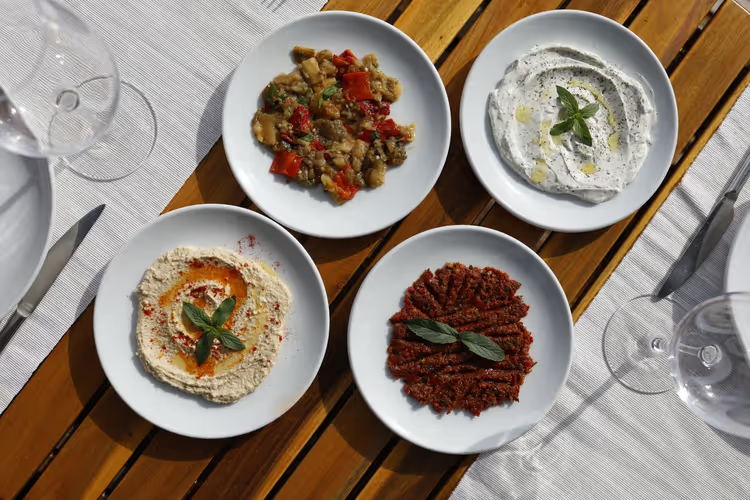
Fava is made from split peas with fried red onion. Order it with pita or fresh vegetables, because that is how the flavor opens up best.
By the sea, you should try fish and seafood appetizers. Kalamarakia is made from squid baked to a crispy crust. Htapodi scharas is grilled octopus tentacles with a lemon-garlic dressing. Alongside these, restaurants serve stuffed squid, shrimp in various sauces, and steamed mussels.
The catch with meze is that portions are easy to overestimate. Order two or three items per person, otherwise the main course will not fit. Appetizer composition verified on 09/13/2026 on the official tourism office website.
Salads and cold appetizers
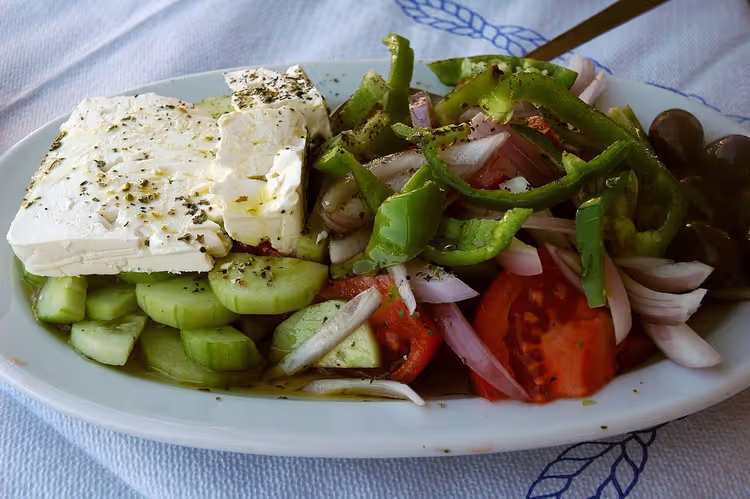
Greek salad is known far beyond the country, but at home it is called horiatiki, meaning village salad. It includes tomatoes, cucumbers, bell peppers, onion, olives, and feta, all dressed with olive oil. In its homeland, the salad is tried in almost every taverna.
 © User:Jpatokal · CC BY-SAPhoto: User:Jpatokal, CC BY-SA (https://creativecommons.org/licenses/by-sa/4.0), Wikimedia Commons
Melitzanosalata is made from roasted eggplant. Sometimes yogurt, tomatoes, and scallions are added, while spices, garlic, lemon, and oil make the flavor rich. The texture is similar to a thick puree.
Dakos is considered the signature appetizer of Crete and sits somewhere between a salad and bread. Barley rusks are sprinkled with water, then topped with tomatoes, oregano, salt, grated feta, and olive oil. It comes together quickly and is served in almost any small restaurant. The flavor opens up especially well with house wine.
Horta is made from young dandelion leaves with lemon and oil. The dish is light and rich in vitamins, and it is often ordered as a side for meat.
Main dishes
Greek cuisine values simplicity. Dishes are made from just a few ingredients and are usually baked or grilled over coals.
Moussaka resembles a meat casserole with thin slices of eggplant and potato. There are many recipes, so the taste varies noticeably from one taverna to another.
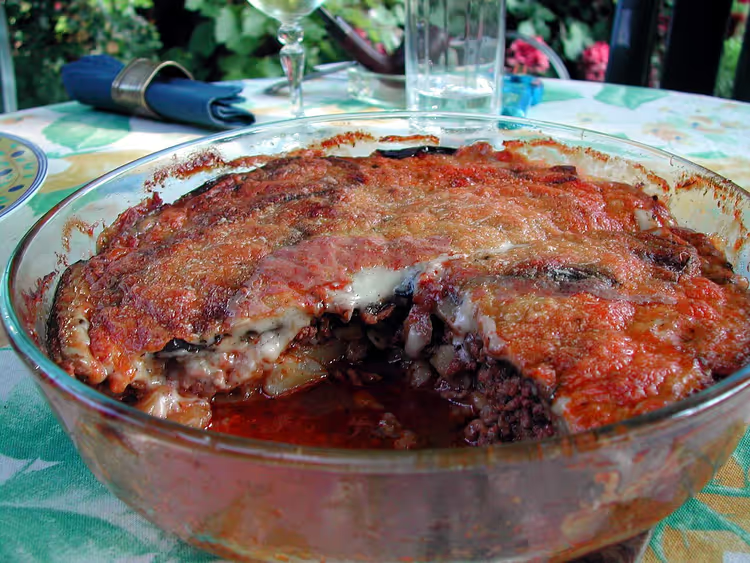 © Fotograf: Dieter Mueller ( dino1948 ) Kamera: de:Nikon 885 · CC BY-SAPhoto: Fotograf: Dieter Mueller ( dino1948 ) Kamera: de:Nikon 885, CC BY-SA (http://creativecommons.org/licenses/by-sa/3.0/), Wikimedia Commons
Kleftiko is made from meat baked in lemon juice and garlic with potatoes, oregano, and white wine. Gemista means stuffed vegetables: bell peppers, zucchini, and tomatoes are filled with rice and ground meat. The dish is served hot or cold.
Pastitsio is baked from pasta with ground meat. Its distinctive flavor comes from a béchamel sauce with nutmeg.
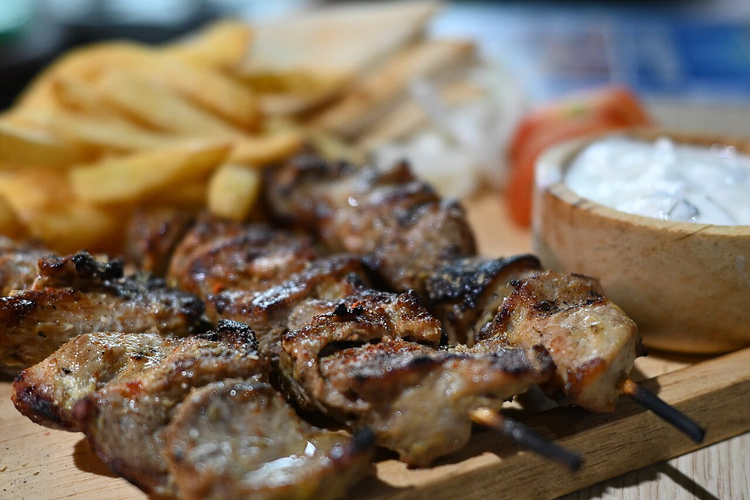
Meat lovers should order souvlaki. These are compact skewers on wooden sticks, grilled over coals, most often made from pork or chicken.
Gyros rounds out the list of main dishes. Meat from the rotisserie is wrapped in pita, with french fries and fried onion added. The defining element here is tzatziki sauce; without it, the flavor just is not the same.
The catch with this section is how filling it is: moussaka and pastitsio are quite heavy, and after them there is no room left for dessert.
Drinks: coffee, ouzo, and raki
Tea is rarely drunk in Greece; it is considered medicinal. Instead, people here love frappe, a cold coffee with a thick foam. It is ordered in the morning and during the hot midday hours.
Strong spirits stand as their own group. Ouzo is called Greek vodka, and its main flavor comes from anise. It is drunk as an aperitif, often diluted with water.

Tsipouro is made from fermented grape pomace and is also infused with anise. Raki, or tsikoudia, is also made from grape pomace. All three are served in small portions alongside meze.
The catch with strong spirits is simple: the portions are small, but the alcohol content is high, so do not rush to order another round.
Desserts and sweets
You cannot understand the local cuisine without sweets. Start with the simplest dessert: feta cheese with honey. The combination is familiar to many, but in Greece the taste is noticeably different.
Loukoumades are similar to donuts. They are balls of dough with spices, powdered sugar, and honey, fried and served hot.
At Christmas, Greeks bake shortbread cookies with almonds and roll them in powdered sugar, sometimes adding brandy. Baklava is also popular: a pastry made from phyllo dough with nuts and honey.
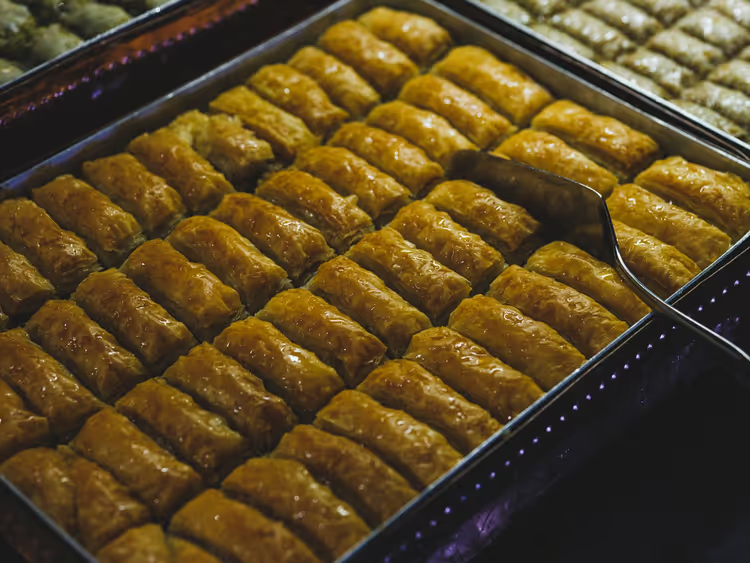
The catch with desserts is the sugar: loukoumades and baklava are very sweet, and one portion will be enough for two.
Where to try it: tavernas and dinner time
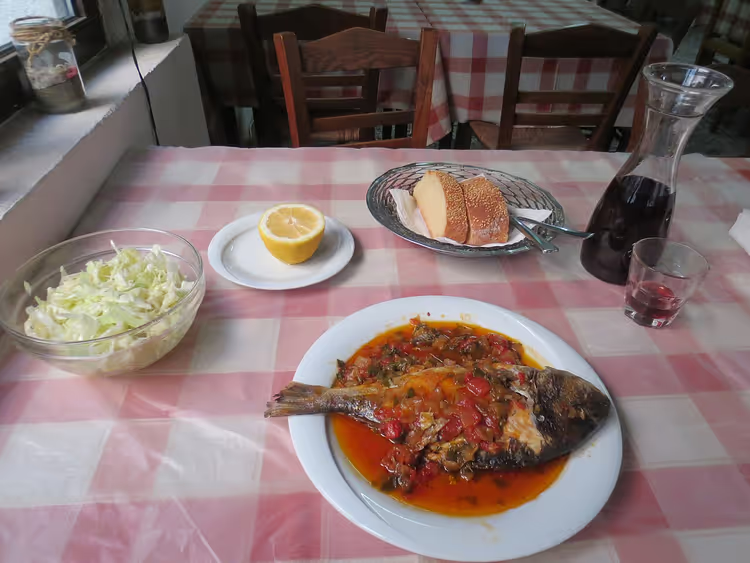
Look for local cuisine in tavernas. These are small family-run restaurants where the owners themselves often sit at the tables. Remember two words: estiatorio is a home-style eatery, and psarotaverna is a fish restaurant.
 © adamansel52 · CC BYPhoto: adamansel52, CC BY (https://creativecommons.org/licenses/by/2.0), Wikimedia Commons
Feta has had protected designation of origin status since 2002: the cheese is produced only in mainland Greece and on Lesbos (as of European Commission). So salads with feta are worth trying right here.
Planning an evening is easier with a guide. Food tours of Athens on GetYourGuide take you through the market and tavernas that tourists rarely reach.
⁉️🤔 Frequently asked questions
How much does lunch cost at a Greek taverna?
There is no single answer, it depends on the city and the season. The general range is this: meze appetizers and gyros are cheaper, while fish dishes and moussaka cost more. Check the menu prices before you order, so the bill does not come as an unpleasant surprise. In summer on the islands it is more expensive than on the mainland in winter.
What should a vegetarian order?
Greek menus have plenty of plant-based dishes. Go for fava, melitzanosalata, horta, and gemista without the ground meat. Tzatziki, hummus, and horiatiki with feta are served almost everywhere. Cheese and yogurt are made from milk, so strict vegans should check the ingredients with the waiter.
When do Greeks eat dinner?
Dinner in Greece starts late. Tavernas open around midday, but the main flow of guests arrives in the late evening. If you want to eat at a relaxed pace, come in the early hours, when the dining rooms are almost empty. That way you can order both meze and a hot main course without rushing.
How does ouzo differ from tsipouro and raki?
Ouzo is drunk as an anise-flavored aperitif, diluted with water or ice, and the drink turns cloudy. Tsipouro is distilled from grape pomace and infused with anise. Raki, also called tsikoudia, is made from the same grape pomace. All three are served in small portions alongside appetizers.
Can you find Greek cuisine outside a taverna?
Yes. Spanakopita, a layered pie with spinach and feta, is eaten for breakfast at street food spots. They also sell gyros there, while frappe and loukoumades can be found in coffee shops and pastry shops. At markets, pick up olive oil, honey, oregano, and feta. That way you can try the same flavors for less than at a restaurant with a sea view.
In short: what to book
If you are short on time, start with meze appetizers and gyros, they give you a basic introduction to the cuisine. If you love fish, look for a psarotaverna near the port: the octopus and calamari are fresher there. For a relaxed dinner, go to a family taverna away from the waterfront, and for dessert head to a pastry shop.
Planning your trip? Compare food tours in Greece on GetYourGuide and choose an itinerary for your city.

A small editorial team writing guides for independent travel. We travel ourselves, but we haven’t been everywhere, so we check prices, opening hours and how to get there against official sources.