
















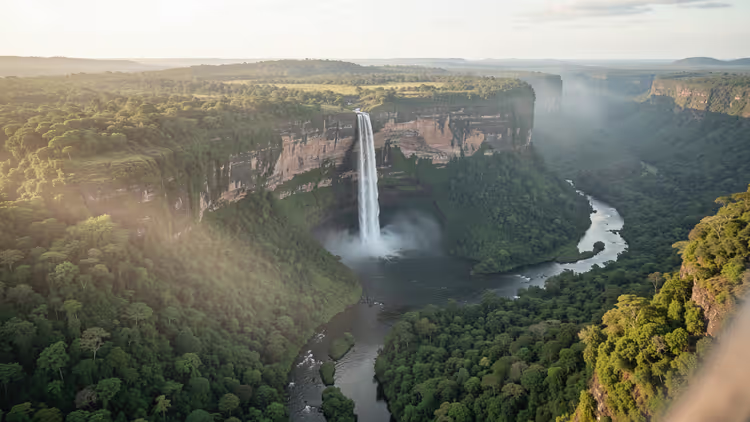
 AIIllustrative image: AI-generated
Venezuela: how to see Angel Falls, Canaima and Margarita Island
Venezuela begins where beach postcards end. Caribbean resorts sit side by side with tabletop mountains, tropical deltas, and the world's highest waterfalls.
Angel Falls in Canaima National Park drops from a height of 979 meters (as of 09/2026, Britannica). The park itself covers about 3 million hectares and has been a UNESCO World Heritage Site since 1994 (as of 09/2026, UNESCO). Getting around the country is harder than in neighboring Colombia: distances are long, transport is weak, and safety depends on the region.
Below you'll find facts about the country, safety tips, the main natural attractions, and a practical section on Margarita Island.
Ad: this article contains affiliate links, we earn a commission if you book through them, at no extra cost to you.
Facts about the country
💡 In short:
- Canaima and Angel Falls are open to tourists year-round, but plan your trip for the dry season.
- Book domestic flights and Canaima tours in advance, sometimes several weeks before your date.
- Safety and entry rules: as of 09/2026, according to Auswärtiges Amt.
Venezuela lies in the north of South America and is washed by the Caribbean Sea and the Atlantic Ocean. The country borders Colombia, Brazil, and Guyana, and off its coast lie Aruba, Bonaire, Trinidad and Tobago. The official language is Spanish, but in tourist areas you'll often hear English.
The climate is tropical and humid, especially on the coast and in the lowlands. In the Andes, temperatures drop to single digits, so in Mérida you'll want a warm jacket. The rainy season runs from May to November, and hurricane season stretches from June to November.
For nearly three centuries Venezuela was a Spanish colony, and this is visible in the architecture of Caracas and Valencia. Locals are known for their unhurried pace and lively celebrations: carnivals, fairs, and bullfighting draw crowds. During holidays, budget hotels fill up completely, so book your room in advance.
The country's currency is the Venezuelan bolívar. The US dollar is widely used in transactions, but the exchange rate changes quickly. ATMs are common, but not all accept foreign cards, so bring plenty of cash.
Public transport is unsafe, and most travelers prefer taxis. Cars don't have meters, so you agree on the price before getting in. Renting a car only makes sense for short routes outside major cities.
The country is divided into several regions: the capital Caracas, the Andes with Mérida, the Caribbean coast, the Orinoco Delta, and the Guiana Highlands. Travel between them takes hours, so you won't be able to cover the whole country in one trip.
Safety
Venezuela is poorly suited for solo travel without preparation. The country experiences political unrest, and some areas are not recommended for tourists. The risk of losing cash, documents, or jewelry here is very real.
Current warnings are published by the German Foreign Office (as of 09/2026). Check it before your trip and follow the news once you're there.
Hire a local guide who knows the country and its quirks, or use reputable tour companies. That way you'll see more and reduce your risks. Plan your route in advance and don't drive between cities at night.
- The catch: foreign media rarely publish fresh news about the country, so the overall picture is often outdated.
National cuisine
The foundation of the local cuisine is rice, sweet potato, and legumes. Fertile soil and a hot climate produce fruits and vegetables you'll be hearing about for the first time.
The influence of Spanish and Italian cuisines is noticeable, but indigenous traditions have also survived. The country's signature dish is the arepa, a fried corn cake with filling. You'll find it in any eatery.
For a snack, try empanadas, fried pastries with meat, cheese, or fish.
Sweets are loved here, so be sure to try arequipe made from condensed milk and the tres leches cake.
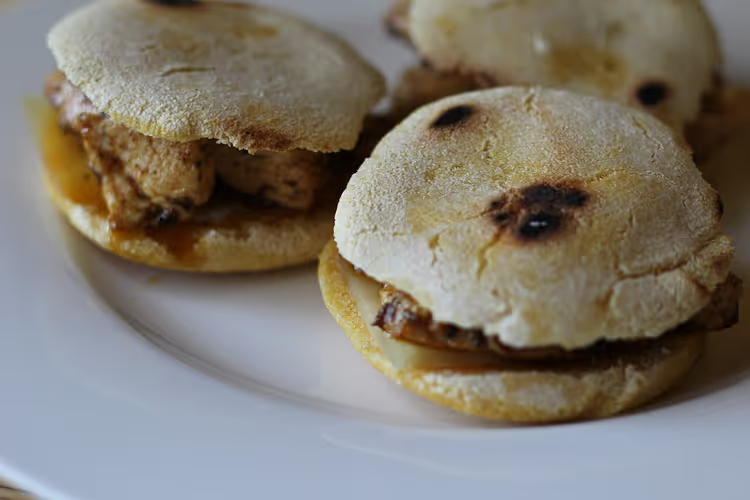 © Luca Nebuloni · CC BYPhoto: Luca Nebuloni, CC BY (https://creativecommons.org/licenses/by/2.0), Wikimedia Commons
Grilled meat, local cheeses, and sweets quickly become part of the itinerary. Try everything at small family-run places: prices are lower and portions are bigger.
Attractions
Caracas, the capital and starting point for most routes. The city has plenty of modern architecture, museums, parks, and restaurants. Set aside several days for sightseeing.
Museums and monuments to Simón Bolívar can be found throughout the country. The Catholic churches of Caracas recall the colonial past, and the oldest of them stands in Valencia, the capital of Carabobo state.
Mérida serves as the center for adventure sports. From here you can set off on hiking trips, rafting, mountain biking, or paragliding, and it's the best base for outdoor activities in the country.
- Where to stay: in Caracas, it's convenient to stay near the business district, but the suburbs are quieter.
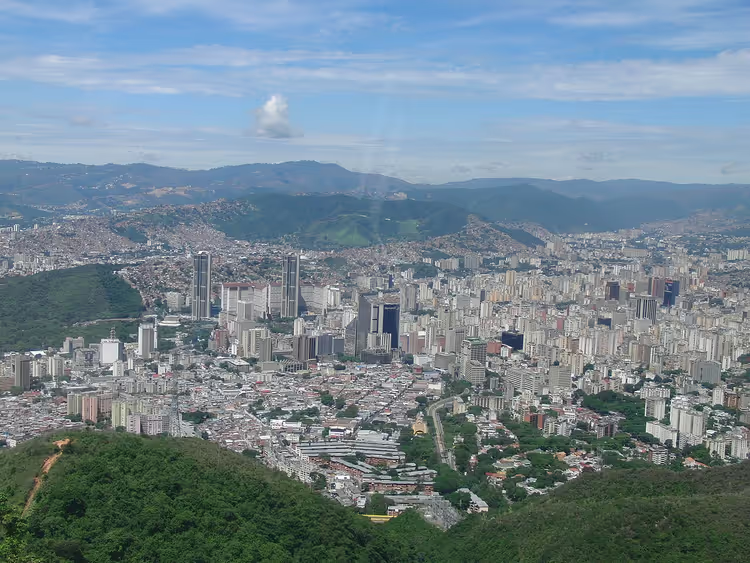 © Olga Berrios · CC BYPhoto: Olga Berrios, CC BY (https://creativecommons.org/licenses/by/2.0), Wikimedia Commons
If you want to compare nightly rates in the capital, check out Caracas hotels on Trip.com.
Nature
Venezuela is a country of national parks and reserves open to tourists. Standouts include El Guácharo and Morrocoy with coral reefs, as well as Canaima with its sheer tabletop mountains.
In the park on the border with Guyana and Brazil stands Mount Roraima, sacred to the Pemón people.
Angel Falls plunges down in Canaima National Park. It drops from Auyán-tepui mountain. You can see it from above on a helicopter tour.
- How to get there: first fly to Ciudad Bolívar or Puerto Ordaz, then take a small plane to Canaima camp and a boat to the falls.
- The catch: the journey to the falls takes a full day, and there is no overland access.
Want to simplify the logistics? Check out Angel Falls tours on GetYourGuide.
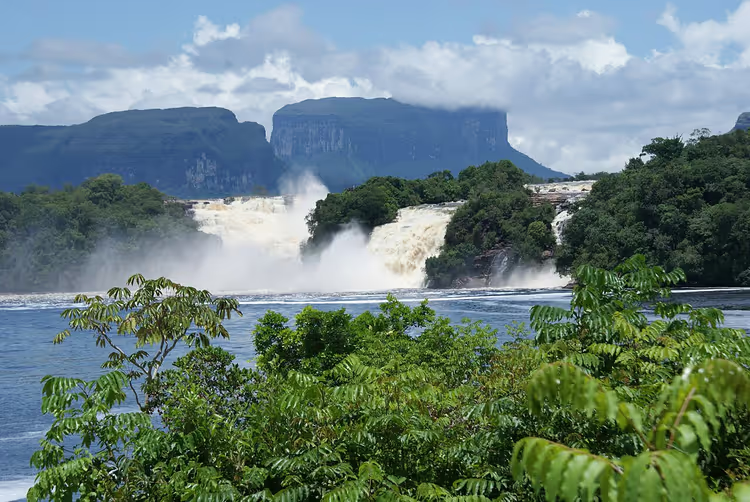 © Tyraelux · CC BY-SAPhoto: Tyraelux, CC BY-SA (https://creativecommons.org/licenses/by-sa/3.0), Wikimedia Commons
The tepui table mountains rise above the jungle in sheer walls. Their age is measured in millions of years, and rare plant species grow on the plateaus. Be prepared for humid air and changeable weather.
Another of the country's peaks, Pico Bolívar, rises to almost five thousand meters. Near Mérida, a cable car leads to Pico Espejo, at an altitude of about 4,765 meters (as of 09/2026, Wikipedia). The climb requires a guide and several days.
Margarita Island
Divers have taken a liking to Venezuela's beaches and bays. One of the main windsurfing and kitesurfing centers is Margarita Island off the northern coast of the mainland.
The island has long been an important trading center of the Caribbean, and you can feel it in the local culture. After relaxing on the beach, you can head into the mountains, descend into caves with stalactites, or walk through tropical jungle.
The sea off the coast is rough, especially at Playa El Agua. In the island's bays there is a chance to see dolphins, whales, and green sea turtles.
Porlamar is the island's main tourist town with developed infrastructure. It has restaurants, shopping centers, water parks, and clubs, as well as hotels with an "all-inclusive" system.
The southern coast is home to the three-star Surf Paradise with its own restaurant and bar. The terrace overlooks Playa El Yaque. A steady wind blows here, which is why kitesurfers choose this beach.
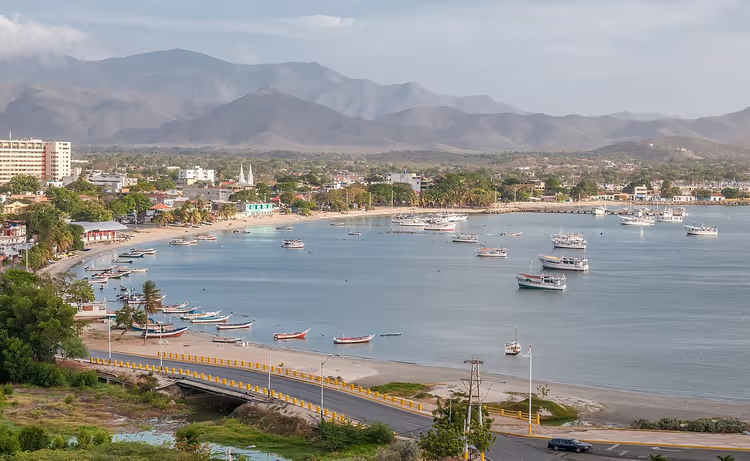
In the greener part of the island stands the five-star Hesperia Isla Margarita, surrounded by a park. Playa Puerto Viejo is a few minutes' walk away. Check Trip.com for prices on specific dates: prices at Hesperia Isla Margarita (as of 09/2026).
Package tours to the island used to cost several thousand dollars for two weeks. Prices in the country now change quickly, so rely on current offers and don't base decisions on outdated prices.
- The catch: in high season, hotels on the southern coast get booked in advance, and the sea off the coast can be rough.
In the evenings, cafes and music venues open along the Porlamar waterfront, making it a convenient base for day trips around the island.
⁉️🤔 Frequently asked questions
When is the best time to go to Venezuela?
The dry season from December to April is considered the most comfortable: less rain, the roads to Canaima are open, and the beaches of Margarita are calmer. From May to November it rains, and from June to November hurricanes are possible. Before your trip, check the German Foreign Office travel advice (as of 09/2026).
Do I need a visa for the trip?
Check entry requirements on the German Foreign Office page on Venezuela before buying tickets (as of 09/2026). Passport and visa requirements depend on your citizenship and change over time, so do not rely on old forum posts. Book flights only after checking entry conditions.
How safe is it to travel around the country?
This is not a trip you would call a relaxing vacation. There is a risk of losing cash, documents, or jewelry, so hire a local guide and do not walk through unfamiliar areas in the evening. Political unrest happens, and it is best to keep an eye on the news at all times. Standard precautions reduce your risks.
How do I get to Angel Falls?
First you fly to Ciudad Bolívar or Puerto Ordaz, then take a small plane to the Canaima camp. The falls are reached by boat along the river, and you can also see them from above on a helicopter tour. Book your tour in advance: spots are limited, and the weather often forces changes.
Where should I stay on Margarita Island?
Porlamar suits those who want restaurants and nightlife nearby. The south coast with hotels like Surf Paradise is popular with kitesurfers, while the greener part of the island around Hesperia Isla Margarita is quieter. Check prices on Trip.com for your specific dates to compare options.
In short: what to book
If you have a week and a love of nature, start with Canaima and Angel Falls. If you want beach and wind, choose Margarita. For cities and colonial architecture, set aside a few days for Caracas and Valencia. Active travel is easier to plan from Mérida.
Transport and accommodation in Venezuela are best arranged in advance. Hotels in major cities are easy to compare online: check out options in Caracas on Trip.com (as of 09/2026).

A small editorial team writing guides for independent travel. We travel ourselves, but we haven’t been everywhere, so we check prices, opening hours and how to get there against official sources.