












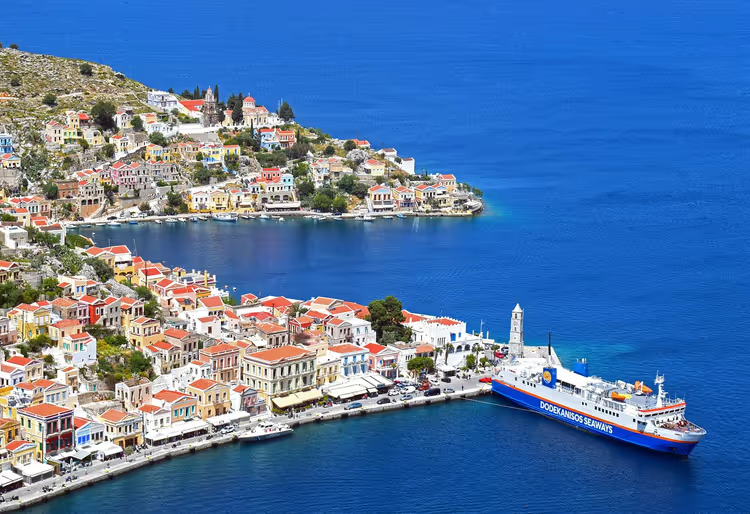
How to buy a ferry ticket in Greece and not overpay
Greece runs on ferries. They carry not only tourists to the islands, but also food, fuel, medicine, and even mail.
The seasonal schedule comes out late. In summer, popular routes sell out in advance, and individual departures get canceled due to wind. Below we break down how to choose a ferry, buy a ticket, and not miss your departure.
The key point right away: a short hop between neighboring islands costs a few euros, an overnight line on a car ferry will cost more, and you pay separately for a vehicle. We checked the rules and prices in September 2026 on the official websites of the carriers (Attica Group, Superfast Ferries).
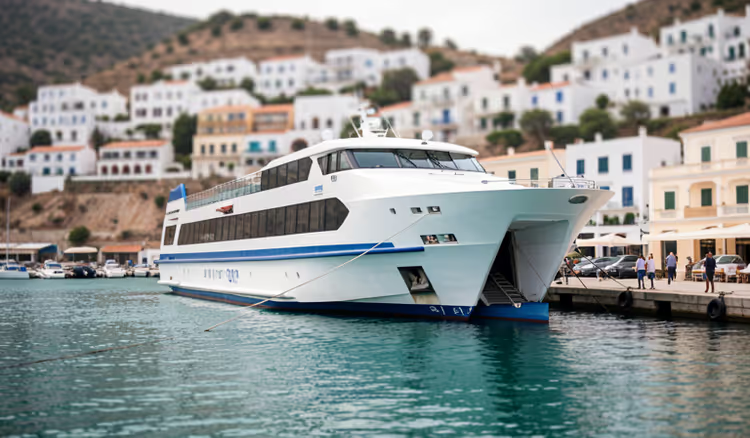 AIIllustrative image: AI-generated
1. Ferries in Greece: what to know in advance
💡 In short:
- Islands without an airport can only be reached by water.
- For overnight crossings, book a cabin, not a seat.
- Schedules and carriage rules: 09/2026, verified on the official Attica Group website
Every fifth resident of Greece lives on an island. Only a few dozen islands have an airport, so for locals the ferry is not entertainment but ordinary transport. In winter, some lines run once a week, and certain routes shut down entirely.
If you are not going to Crete, Rhodes, or Santorini, a plane will not help you. Between the islands there are small slow passenger ferries, large car ferries, and high-speed catamarans. A catamaran offers maximum comfort but costs more. Modern vessels divide passengers into categories: open deck, seat in the lounge, premium lounge.
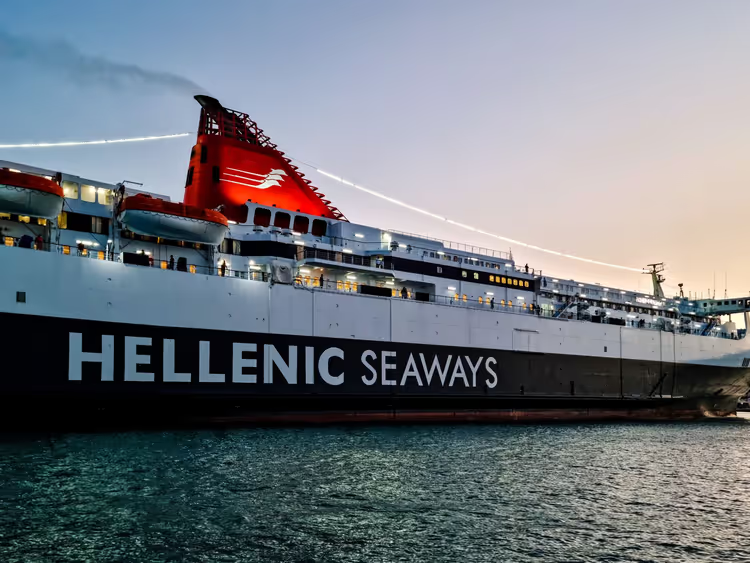
Large ferries have cafes, restaurants, shops, children's play areas, and sun decks with loungers. Deck class is always cheaper than the lounge. For many people, the crossing itself becomes a memorable part of the trip.
Ferries carry more than passengers. On the islands they cover basic needs: fresh food, fuel, building materials, and mail all arrive by sea. That is why inter-island lines do not depend on the tourist season, and in the off-season they operate as supply routes.
Frequently asked questions about ferries in Greece
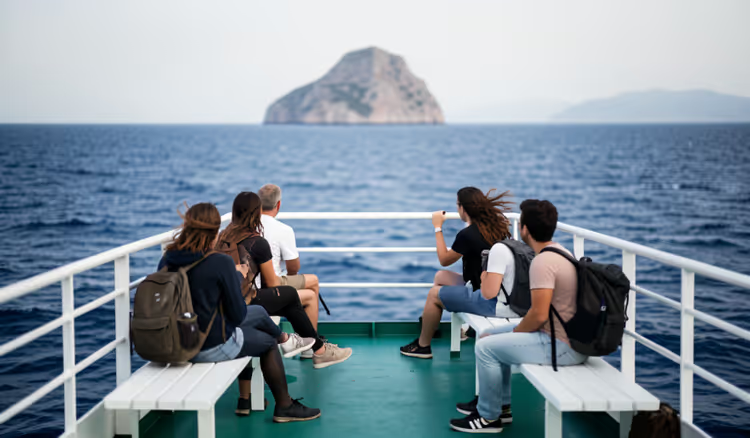 AIIllustrative image: AI-generated
Where can you see all the lines? There is no single official directory. The easiest way is to enter your route into a booking portal search and get a list of departures for the date you need. That way you immediately see which companies operate on that route.
People have been crossing the Aegean by ferry for thousands of years. As far back as the Stone Age, people traveled between the islands by oar and sail. Today the route is the same, but with a sun deck, cafeteria, and air conditioning, only the comfort has changed.
Choose your seating category deliberately. Deck class is the cheapest, but outdoors you are exposed to wind and sun. A seat in the lounge costs more and suits a long crossing better, while premium lounges are booked for overnight lines. On a short hop the price difference is barely noticeable; on an overnight crossing it becomes significant.
For small islands, the ferry often remains the only transport all year round. If a departure is canceled due to wind, the island goes a day without fresh food and mail. That is why the local schedule is a supply timetable, not a tourist formality.
2. How to buy a ferry ticket for the Greek islands
Booking portals are convenient because they show routes, times, and prices in a single search. You enter the departure port, date, and destination port, and the system returns all departures on that route. If you do not know which company serves an island, this is the fastest way to figure it out.
People used to buy tickets at a ticket office or book by phone. Now almost everything is done online, and the ticket arrives by email right after payment.
 AIIllustrative image: AI-generated
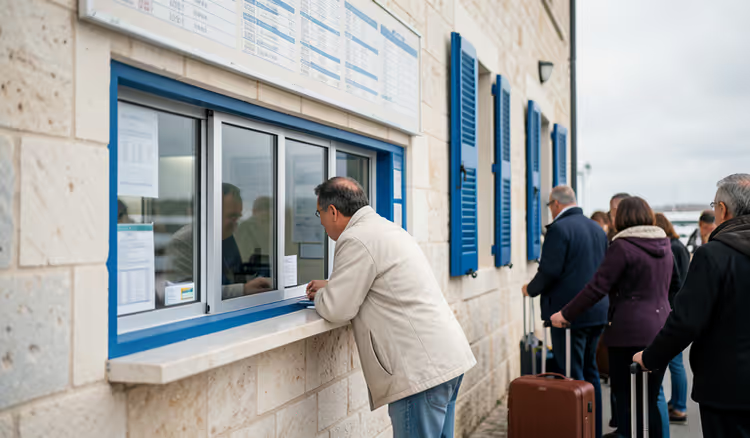
If you are not comfortable with technology, there are ticket offices and agencies at the port. Each major company has its own window, and small lines sell tickets through local agents. On very small ferries, tickets are sometimes bought directly on board.
A ticket office helps in the off-season, when you are traveling on foot and want to change plans as you go. But there can be a line at the window: locals often buy tickets right before departure. In high season and around Orthodox Easter, as well as in mid-August, popular lines sell out quickly. So booking in advance beats waiting until the last moment.
If you are traveling with a car, book well ahead of your trip. Vehicle spaces on ferries are limited to a set number of slots, and in the height of summer they run out first.
Online you can buy a ticket from the company itself or through booking portals. Buying directly from the carrier is sometimes cheaper, but a portal shows all options for a single query at once.
Ferry booking platform
Check the port carefully. In Athens, ferries depart from Piraeus, Rafina, and Lavrio, and these are three different harbors at a distance from each other. A port mistake will cost you a taxi ride across the whole city.
Online or at the port ticket office?
The answer depends on your travel style. If you plan ahead and travel with a car, buy online a few days in advance. If you travel on foot and like to improvise, a port ticket office works too.
In the off-season, a passenger without a car can get on almost any departure. A vehicle space needs to be booked in advance in any season.
Pros and cons of online booking
Buying a ticket in advance is convenient:
- you book from anywhere, without waiting in line
- you do not waste time traveling to a ticket office
- the ticket arrives by email or in the app
- with a QR code you do not need to print anything
- you immediately see prices, times, and availability
- carrier promotions and promo codes are sometimes available
There are also drawbacks worth knowing about:
- no live person to talk to if you have questions
- the portal may charge a small service fee
- you only have a digital ticket, and at sea there is not always internet
- you need basic website skills
3. Ferries from Italy to Greece
If you are traveling in your own car or camper, you can reach Greece by sea from Italy. Ferries depart from several Adriatic ports, and on the Greek side you arrive in Igoumenitsa or Patras. Some summer departures call at Corfu and Kefalonia.
The lines between Italy and Greece are operated by major carriers (Superfast Ferries, Grimaldi Lines, Minoan Lines). Adriatic schedules are revised during the year, so check the latest version on the carrier's website before buying.
Port in Italy | Where the ferry goes | Travel time |
|---|---|---|
Ancona | Igoumenitsa, Patras, Corfu | about 20 hours |
Bari | Igoumenitsa, Patras | about 9 hours |
Brindisi | Igoumenitsa | about 8 hours |
Travel time is shown for 2026 season sailings (as of 09/2026, Superfast Ferries). In practice, allow extra time: in high season the ferry runs late during vehicle loading.
Tickets on these routes are booked in advance, especially for campers. Garage space is sold by the meter, and summer dates sell out first. Without a reservation, you may simply not get your vehicle on board.
4. How much do ferries cost in Greece
Ferry prices in Greece vary widely by region. A short hop between neighboring islands costs a few euros, while an overnight route to Crete will cost noticeably more. The rule is simple: the more popular the route and the faster the vessel, the higher the fare.
Six factors affect the price:
- vessel type (an old steel ferry or a modern catamaran)
- speed (a passenger ferry or a high-speed catamaran)
- carrier (a local company or a large holding group)
- purchase timing (early booking or a spontaneous trip)
- duration (a short crossing or an overnight route)
- route (the well-traveled Cyclades or a quiet island)
On short crossings between neighboring islands, a passenger ticket costs a few euros. These routes are often subsidized by local authorities, which keeps prices low. The farther you travel, the more expensive the ticket.
Conventional passenger ferries and car ferries are the cheapest. Catamarans are the most expensive: an hour on board costs more than an entire crossing on a slow vessel. You pay separately for a car or motorcycle, and not every ferry takes cars on board.
Examples of ferry prices in Greece
Route | Passenger price | Travel time |
|---|---|---|
Athens (Piraeus) to Santorini | 50-90 € | 5.5-10 hours |
Athens (Piraeus) to Crete | 45-90 € | 8-9.5 hours |
Lesbos to Lemnos | about 20 € | 4.5 hours |
Mykonos to Paros | 50-60 € | 45 minutes-1 hour |
Paros to Naxos | 16-33 € | 30-60 minutes |
Skiathos to Skopelos | 20-30 € | 15-60 minutes |
Rhodes to Kos | 25-40 € | 2-3 hours |
The ranges are for a foot passenger for 2026 (as of 09/2026, Attica Group schedules). The upper end is a catamaran in high season, the lower end is a large car ferry in the off-season.
A cheap ticket does not always mean a slow ferry. The number of stops along the way and the popularity of the destination also affect the price. So before buying, it is worth comparing all departures for your date in a single search.
How to buy a ferry ticket cheaper
Ferries do not offer the kind of big discounts airlines do. But there are several practical tricks that will save you money:
- catch early booking promotions instead of buying at the last minute
- use discounts for children, students, and seniors
- pay less for vehicle transport through loyalty programs
- buy your ticket at the official port ticket office rather than from an agent with a markup
- earn points in the Seasmiles program
- choose an alternative route, for example to Crete via a different port
- on an overnight sailing, skip the cabin and take a deck seat
- compare prices across booking portals
The Seasmiles program gives discounts of up to 30% on tickets and up to 35% with partners in Greece (as of 09/2026, Attica Group). It is the largest loyalty program among Greek carriers.
Children under five travel free on ferries. This is confirmed by the official price list of a local operator (Edipsos ferries): for children aged five to ten, a nominal fare applies there.
Early booking promotions pay off in the off-season. In spring and autumn, carriers fill their vessels with discounts, most often for vehicle spaces. Regular deck seats at reduced fares also appear from time to time.
Questions about ferry costs
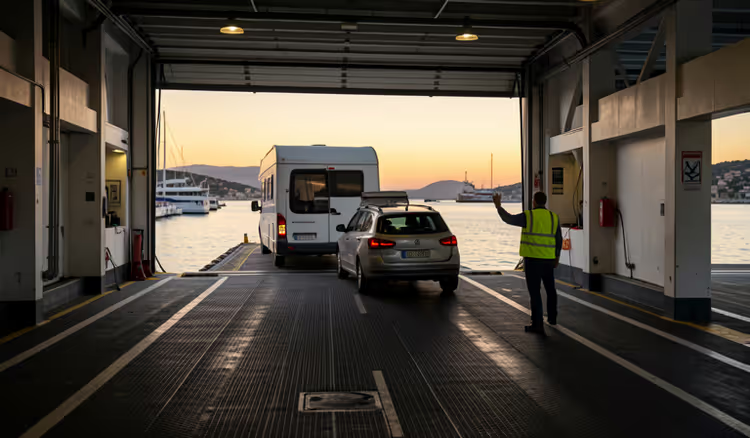
How much does it cost to bring a car? On Greek car ferries, cars are taken without any problem, but the fare is calculated by size and length. For a motorcycle it is the minimum rate, for a passenger car the amount is higher, and a motorhome is charged by the meter. Large vessels park cars in the main garage, while small ones load them into the hold.
Vehicle capacity on a catamaran is limited. Here the booking timing matters, because slots are taken first. Small passenger ferries take only motorcycles or a couple of cars.
 AIIllustrative image: AI-generated
How much does a cabin cost? A cabin on a ferry costs more than a seat and is booked for long overnight crossings. Cabins come with and without a window, and the second category is cheaper. If you are traveling alone, you will still have to pay the full price of a double cabin by yourself. Families with children get a discount on cabins.
Vessel speed is felt in your wallet. A regular passenger ferry moves slowly, around twenty kilometers per hour, while a catamaran accelerates several times faster.
The longest crossings in the country take more than a day. These are the routes from Kavala and from Piraeus to the far islands in the southeast of the Aegean Sea. On such routes a ticket costs tens of euros, but there is no alternative: no plane flies to these islands.
5. Current ferry schedules in Greece
Ferry frequency depends on the tourist season. From April to October, most routes operate regularly, and some are served daily. This is the so-called summer schedule, and it carries the main flow of passengers.
 © George E. Koronaios · CC BY-SAPhoto: George E. Koronaios, CC BY-SA (https://creativecommons.org/licenses/by-sa/4.0), Wikimedia Commons
In the off-season, there are noticeably fewer departures. The winter schedule covers the basic needs of islanders: if a ferry runs several times a day in summer, by winter only one sailing per week remains. Some routes do not operate at all from November to March, which you find out already at the planning stage.
The fresh schedule for the new season is usually published in spring, after license negotiations (official Attica Group website). Until then, some departures for the summer may be missing from search results, and that is normal, not a booking error.
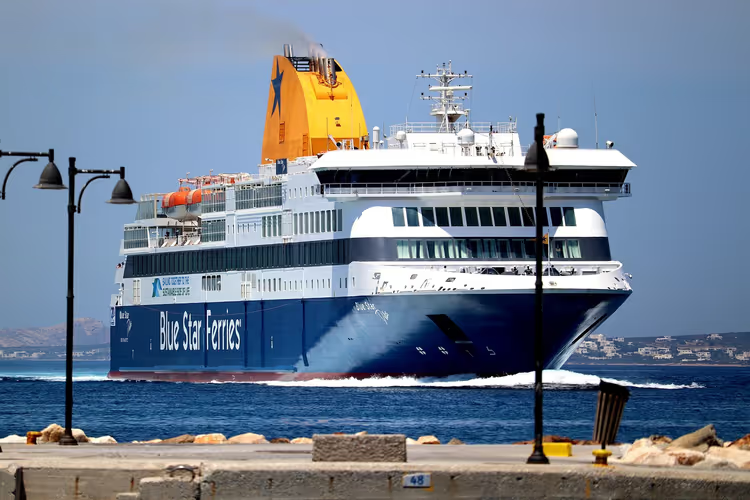
There is no single consolidated source of all schedules. The ferry network is too complex, and each company publishes its data in its own way. The directory of the Greek travel publisher GTP serves as a reference, but you still need to book with the carrier or through a portal.
Ferry ports in Greece
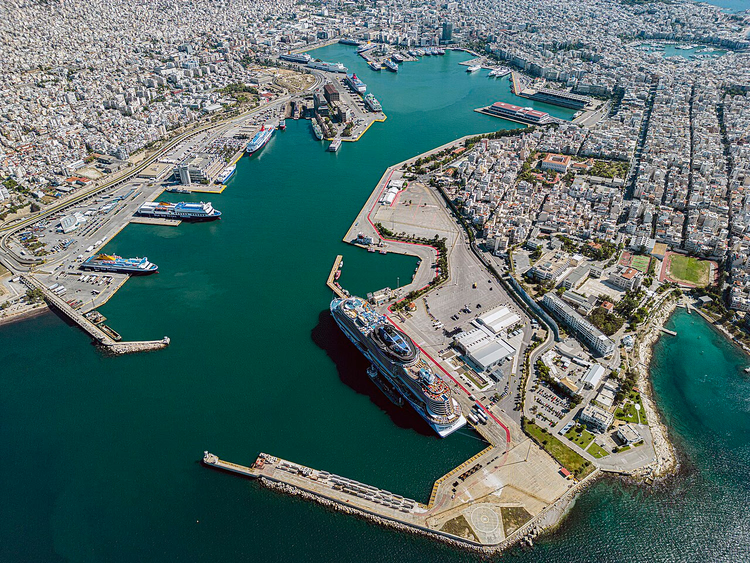
Piraeus is the country's main ferry port. Most departures to the Aegean islands leave from here. The remaining ports are spread across the mainland and serve their own regions: the Ionian Islands, the northern Aegean, the Sporades.
Here are the main ports and their destinations:
- Piraeus: Crete, Cyclades, Dodecanese, northern Aegean islands, Saronic islands
- Rafina: Andros, Tinos, Mykonos
- Lavrio: Kea, Kythnos, western Cyclades (Milos, Kimolos, Folegandros)
- Thessaloniki: Lemnos, Chios
- Kavala: Lemnos, Thassos
- Volos: Skiathos, Skopelos, Alonissos
- Patras: Kefalonia, Ithaca, as well as ferries to Italy
- Kyllini: Zakynthos, Kefalonia
- Igoumenitsa: Corfu, Paxos, ferries to Italy
- Agios Konstantinos: Skiathos, Skopelos
Major transfer hubs within the island world are the port of Heraklion on Crete, as well as the harbors of Syros, Naxos, Rhodes, and Lesbos. Dozens of routes converge here daily, and from here you can transfer to another island group.
 © Apaleutos25 (Giorgos Voudouris) · CC BY-SAPhoto: Apaleutos25 (Giorgos Voudouris), CC BY-SA (https://creativecommons.org/licenses/by-sa/4.0), Wikimedia Commons
A good planning tool is a port map. Enter your departure port in a portal search, and some platforms will show available destinations from that harbor on a map. This way you see not only the island but also the distance, and you can tell whether it is realistic to fit the trip into one day.
Almost all of the country's routes are collected in the directory of the Greek tourism publisher GTP. It is not a booking system but a route database: it is convenient for checking whether a connection between two islands exists at all. Tickets are still bought from the carrier or on a portal.
Keep the geography in mind. Piraeus covers the Aegean Sea, Patras and Kyllini serve the Ionian Islands, Volos and Mantoudi handle the Sporades, and Thessaloniki and Kavala are responsible for the north. If you are traveling from Athens to the Ionian Islands, the short route goes through ports in the west of the Peloponnese, not from Piraeus.
6. Boarding, luggage and rules on ferries in Greece
A sea crossing is simpler than a flight. There is usually no security screening before boarding, but your ticket and ID are checked at the entrance. Everything else is streamlined because the ferry only stays at the dock for a short time and leaves quickly.
At the same time, the rules on board are strict. The crew may check your ticket at any time, even once you are already on the vessel. A passenger without a ticket, or with an expired or invalid ticket, will not be carried.
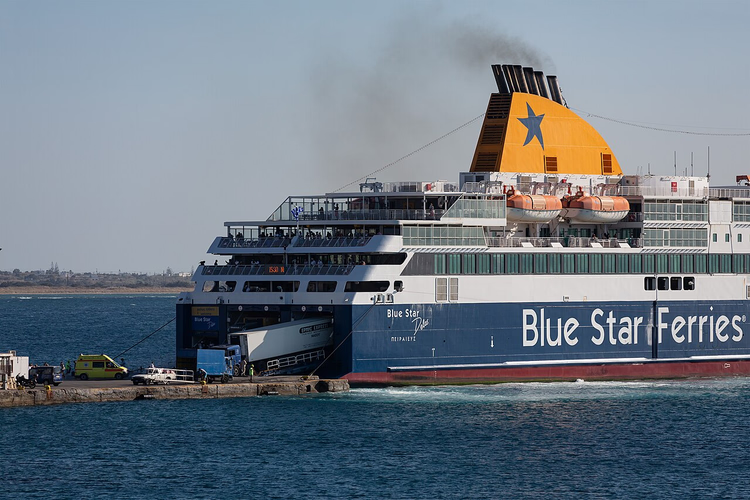 © Manfred Werner (Tsui) · CC BY-SAPhoto: Manfred Werner (Tsui), CC BY-SA (https://creativecommons.org/licenses/by-sa/4.0), Wikimedia Commons
If the ticket was bought at a ticket office or from an agent, you are already checked in for the sailing. No further action is needed; just arrive before departure.
An online ticket works differently. Sometimes you need to complete web check-in, and the instructions are sent by email no later than one day before the trip. Printing the ticket is not required, but a paper copy helps if your phone runs out of charge on the way.
Boarding the ferry
For a passenger without a car, it is enough to arrive at the port about half an hour before departure. With a car, arrive at least an hour early: the garage is crowded at that time, and cars are loaded in turn and on the crew's instructions.
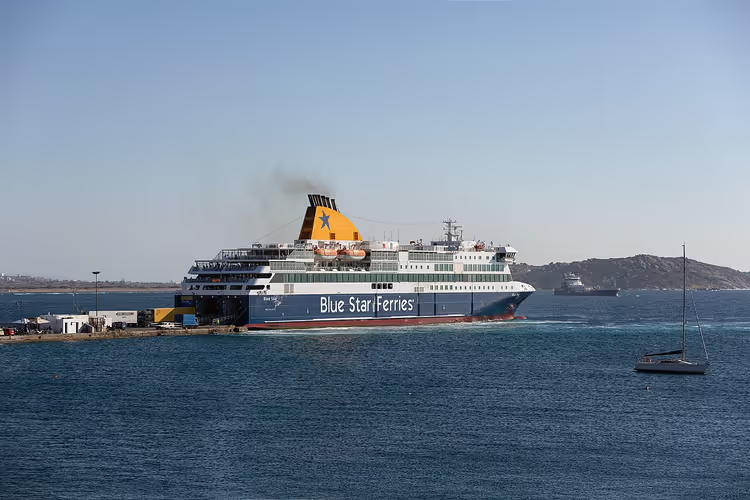 © Manfred Werner (Tsui) · CC BY-SAPhoto: Manfred Werner (Tsui), CC BY-SA (https://creativecommons.org/licenses/by-sa/4.0), Wikimedia Commons
Greek ferries are known for being punctual. The stop in port is short, usually about a quarter of an hour. In the summer heat, some harbors get congested, but the schedule is generally kept. So you cannot be late: the ferry will not wait and will not come back.
Boarding starts after mooring. First passengers disembark and cars drive off, then you are invited on board via the loading ramp. Watch your surroundings: cars and trucks pass you on the ramp.
You leave your luggage in the storage area at the entrance. Your ticket is checked here a second time, and only after that can you go up to the upper deck. There are no assigned seats on most ferries.
In summer we recommend the open deck. There is fresh wind, sun and a view of the sea, and children like it even more than the play area on board. Inside, the lounges are overcooled by air conditioning and packed with people at the height of the holiday season. You can get a snack at the cafe on board; the restaurant kitchens on large vessels are fine.
For long overnight crossings, for example from Italy to Greece or from Piraeus to the islands of the eastern Aegean, book a cabin. That way you arrive rested rather than exhausted. If a cabin is paid for, go to reception first: they will show you to your door.
Before arrival, disembarkation is announced over the public address system in English and Greek. The announcement can be heard throughout the vessel; after it, it is time to go down to the exit.
Delays, storms and strikes
In summer, ferries are delayed because of the flow of tourists and the general bustle in the port. Hundreds of people have to be brought on board, and cars and trucks still need to be arranged in the hold. Plus there is always a passenger who turns up at the last moment before departure.
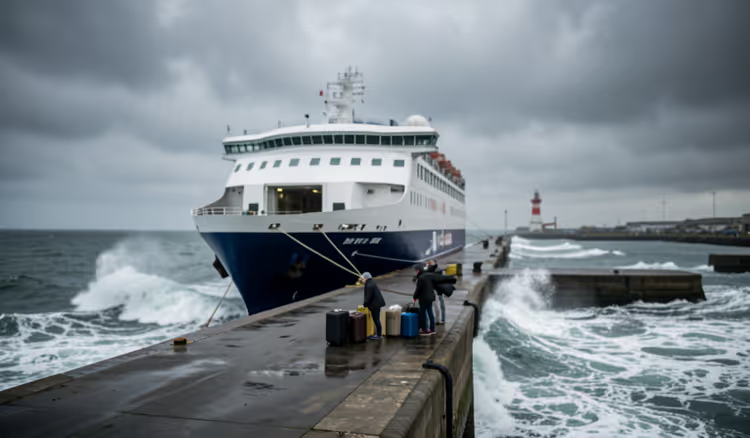 AIIllustrative image: AI-generated
In the off-season everything is calmer. There are enough available vessels, stops rarely exceed a quarter of an hour, and there is no rush at the dock.
A sailing may be canceled due to bad weather or a strike. In that case you will be stuck on the island for a day, and this is where the hotel owner or tour operator can help. In practice, the ticket remains valid, and you can rebook the trip at a ticket office.
The main planning rule: do not put the ferry and the return flight on the same day. Leave a buffer of one or two days between them. A delay of a couple of hours will cost you more than an extra night on the island.
In summer, between June and September, the meltemi blows, a dry and strong north wind. In the heat it brings coolness, but it also raises the waves. At storm-force levels on the Beaufort scale, ferries are stopped for safety, and service usually resumes the next day. Carriers warn about disruptions by email or message, and before departure you can ask at the port authority.
The early booking rule also applies to ports. A passenger without a car can buy a ticket on the day of departure, but a garage spot on a popular date will already be taken. Check the schedule in advance and do not leave the decision until the last evening.
Ferry schedules online
Current sailings are easy to check in the app or on the carrier's website. There are services that show a vessel's movement in real time, including Marine Traffic and VesselFinder.
Luggage on ferries in Greece
How much can you take with you? Usually each passenger, including children, is allowed a suitcase or a large bag plus hand luggage. Baggage transport is already included in the fare and is not paid separately.
Large items are left in the luggage area. There are compartments by port, so you will find your bag when you disembark. The storage areas are supervised by the crew and remain locked until arrival.
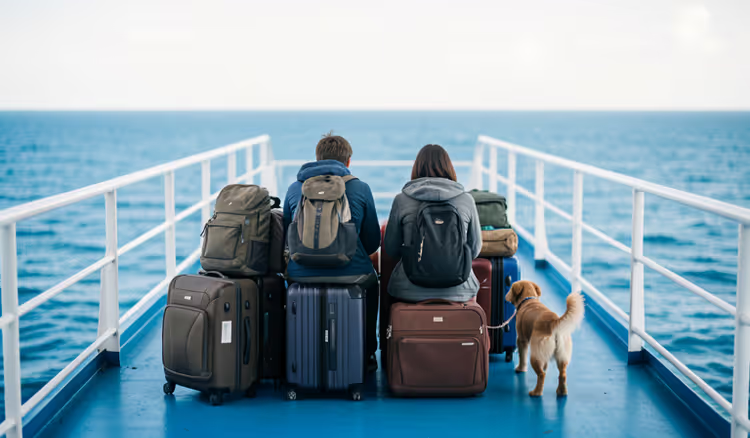 AIIllustrative image: AI-generated
Small bags and backpacks can be taken with you onto the deck. They do not get in the way if you are traveling light.
Animals on board
Pets on Greek ferries are carried free of charge or for a small supplement. Which arrangement applies depends on the company, so check the conditions when buying your ticket.
A dog or cat must be declared at booking, and documents are checked at the entrance. There are kennels and cabins for animals on the vessels, but they are not available everywhere and are taken quickly. If those spots are occupied, you can usually stay with your pet only on the open deck.
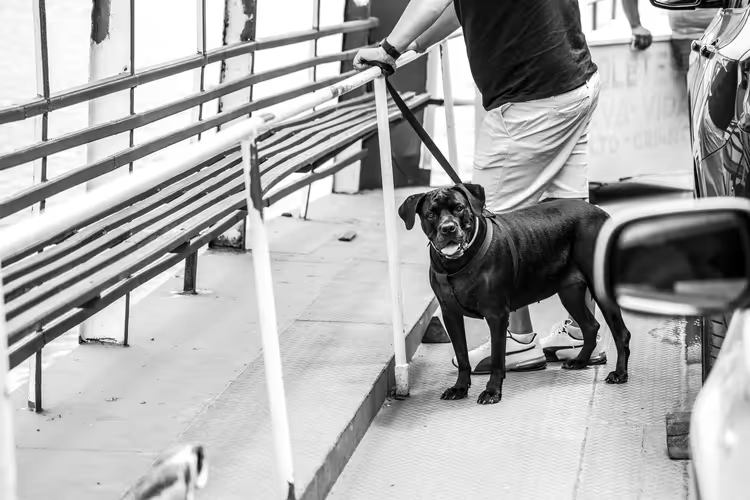
A car on the ferry
Before loading, a sign with the destination port is placed under your car's windshield wiper. The crew in the garage uses it to assign you a spot. After that you move on command: in Greek "ela" means "come forward", "pame" means "let's go", "stop" means "stop".
Maneuvering on a large ferry is tight. If you are not confident, give the keys to a crew member and they will park the car themselves. Before arrival, drivers are called to the garage, and you drive off without a long wait.
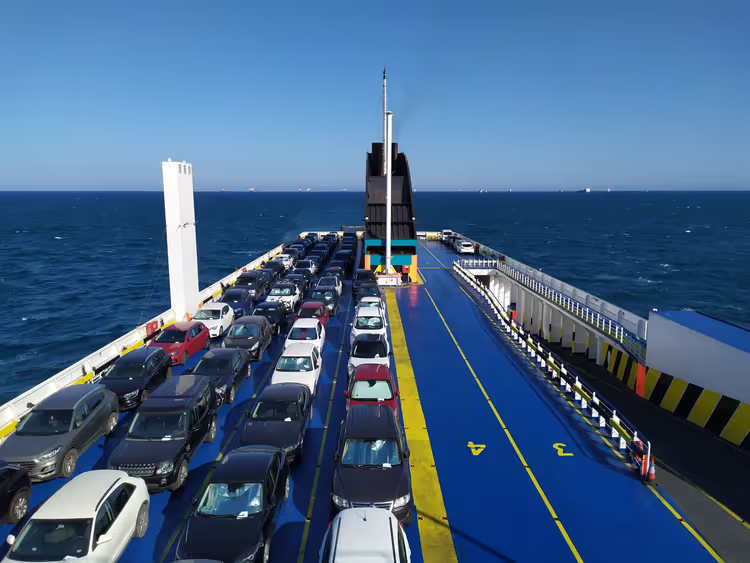
A motorcycle is allowed on the ferry for a separate fee. Spaces for it are reserved at the garage entrance, and the crew secures the bike with straps. It is better to bring your own tie-down straps.
An electric car can also be transported. Since incidents have already occurred, companies require the battery charge to be partial: usually no more than forty percent (according to Attica Group). Charge the car in advance with this limit in mind.
7. Greek ferry companies
Several dozen Greek companies operate passenger services. The main routes in the Cyclades, Sporades and other archipelagos have been held for years by Attica Group vessels (the group includes Blue Star Ferries and Hellenic Seaways) and SeaJets (according to Attica Group).
Licenses for routes within archipelagos are reviewed every year and sometimes transferred to other operators. So a route you knew from a previous trip may be served by a different company in summer. Check schedules before the season.
Ferries to the Cyclades
The Cyclades is the busiest destination in Greece. Operators here include:
- Blue Star Ferries: from Piraeus to Syros, Paros, Naxos, Ios, Santorini and Amorgos
- SeaJets: from Piraeus to almost all islands in the archipelago
- Hellenic Seaways: from Piraeus to Syros, Tinos, Mykonos, Paros, Naxos, Ios and Santorini
- Golden Star Ferries: from Piraeus and Rafina to Andros, Tinos, Mykonos, Ios and Paros
- Fast Ferries: from Rafina to Andros, Tinos and Mykonos
- Aegean Sea Lines: from Piraeus to Kythnos, Serifos, Sifnos, Milos and Kimolos
- Zante Ferries: from Piraeus to Serifos, Sifnos, Milos, Kimolos, Folegandros, Sikinos and Santorini
- Magic Sea Ferries, Goutos Lines, Triton Ferries and Saos Ferries: from Lavrio to Kythnos and Kea
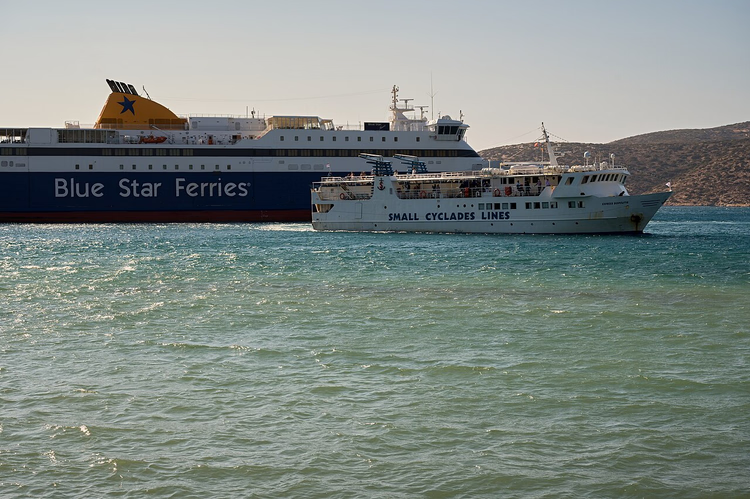 © Zde · CC BY-SAPhoto: Zde, CC BY-SA (https://creativecommons.org/licenses/by-sa/4.0), Wikimedia Commons
Ferries to the Dodecanese
The Dodecanese is the southeastern Aegean. Operators here include:
- Blue Star Ferries: connects Piraeus with Patmos, Leros, Kalymnos, Kos, Nisyros, Tilos and Rhodes
- Dodekanisos Seaways: connects almost all islands in the archipelago with each other
- Anem Kalymnou: connects Kalymnos with Kos, Pserimos and Nisyros
- Saos Ferries: serves part of the archipelago's internal routes
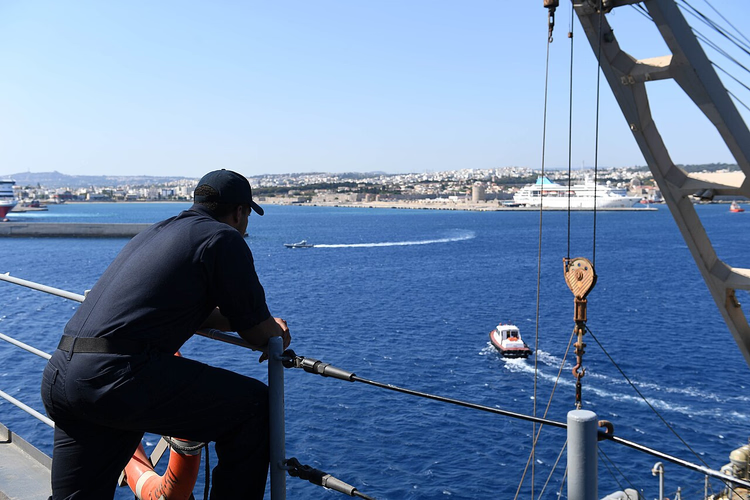
Ferries to the Sporades
The Sporades are closer to the mainland, and everything here runs on smaller vessels:
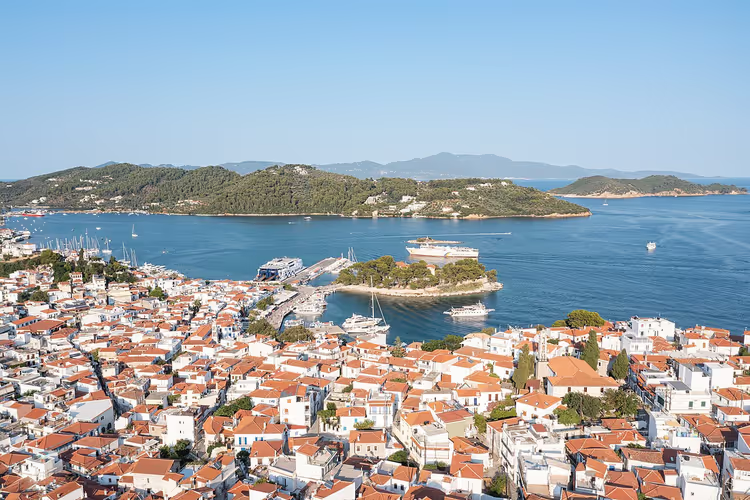
- SeaJets: from Volos and Mantoudi to the Sporades (Skiathos, Skopelos, Alonissos)
- Aegean Flying Dolphins: from Volos and Agios Konstantinos to the islands of the archipelago
- Anes Ferries: from Mantoudi to Skopelos and Skiathos
- Skyros Shipping: from Kymi to Skyros
 © dronepicr · CC BYPhoto: dronepicr, CC BY (https://creativecommons.org/licenses/by/2.0), Wikimedia Commons
Ferries to the Ionian Islands
In the west of the country, the network is built around two ports, Kyllini and Igoumenitsa:
- Levante Ferries: from Kyllini to Zakynthos and Kefalonia
- Ionion Pelagos: from Kyllini to Kefalonia and Ithaca
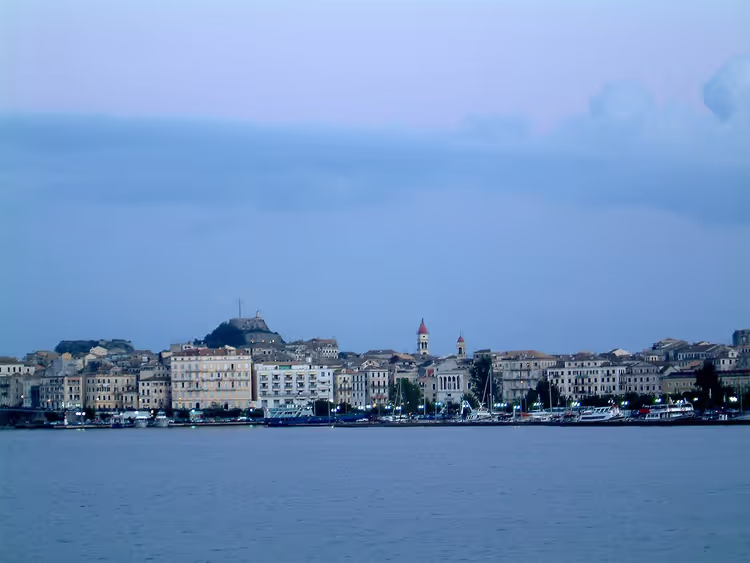
- Kerkyra Seaways: from Igoumenitsa to Corfu and Paxos
- Joy Cruises: between Lefkada and the islands of Meganisi and Ithaca
- Triton Ferries: from Lavrio to Kythira, Antikythira and Neapolis on the Peloponnese
- SeaJets: from Piraeus to Kythira, Antikythira and Gytheio on the Peloponnese
- Aspiotis Lines: from Corfu to the Diapontian Islands, including Othoni
 © Hedwig Storch · CC BY-SAPhoto: Hedwig Storch, CC BY-SA (http://creativecommons.org/licenses/by-sa/3.0/), Wikimedia Commons
Ferries to the Saronic Islands
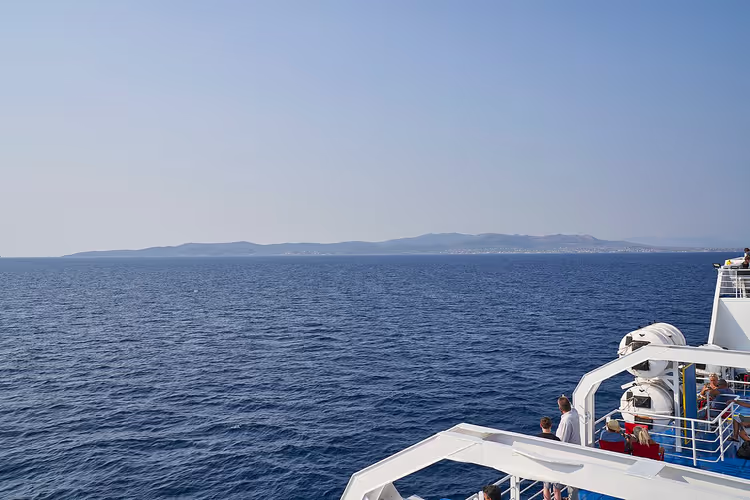
The Saronic Islands are the archipelago closest to Athens, convenient for a day trip:
- Blue Star Ferries: from Piraeus to Aegina, Poros, Hydra, Ermioni, Spetses and Porto Heli
- Alpha Lines: from Piraeus to Hydra, Poros and Spetses
- Hellenic Seaways: from Piraeus to Aegina, Poros, Hydra and Spetses
- Aegina Ferries, San Lorenzo Ferries and Aegean Flying Dolphins: from Piraeus to Aegina
 © George E. Koronaios · CC BY-SAPhoto: George E. Koronaios, CC BY-SA (https://creativecommons.org/licenses/by-sa/4.0), Wikimedia Commons
Ferries to the northern Aegean islands
The northern part of the archipelago is served by routes from Piraeus, Thessaloniki and Kavala:
- Blue Star Ferries: from Piraeus to Chios, Lesbos, Lemnos and Samos
- Hellenic Seaways: from Thessaloniki and Kavala to Chios, Lesbos, Lemnos and Samos
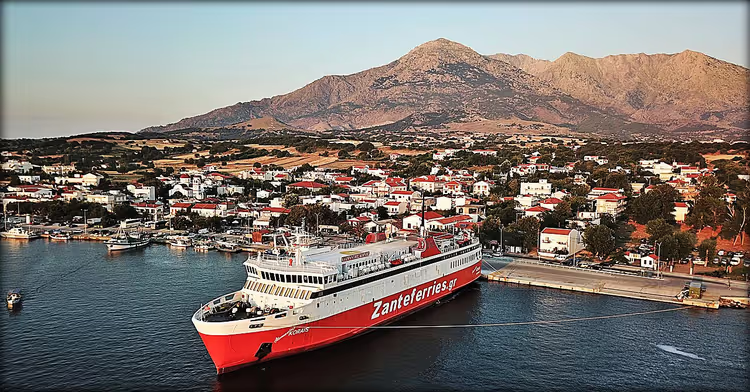
- Zante Ferries: from Alexandroupoli to Samothrace and Lemnos
- Thassos Ferries: from Kavala to Thassos
 © Zanteferries · CC BY-SAPhoto: Zanteferries, CC BY-SA (https://creativecommons.org/licenses/by-sa/4.0), Wikimedia Commons
Ferries to Crete
Crete is connected to the mainland by large car ferries that run overnight:
- Minoan Lines: from Piraeus to Heraklion
- ANEK Lines: from Piraeus to Chania and Heraklion
- Blue Star Ferries: from Piraeus to Heraklion
- Superfast Ferries: from Piraeus to Heraklion
- SeaJets: from Piraeus via the Cyclades to Heraklion
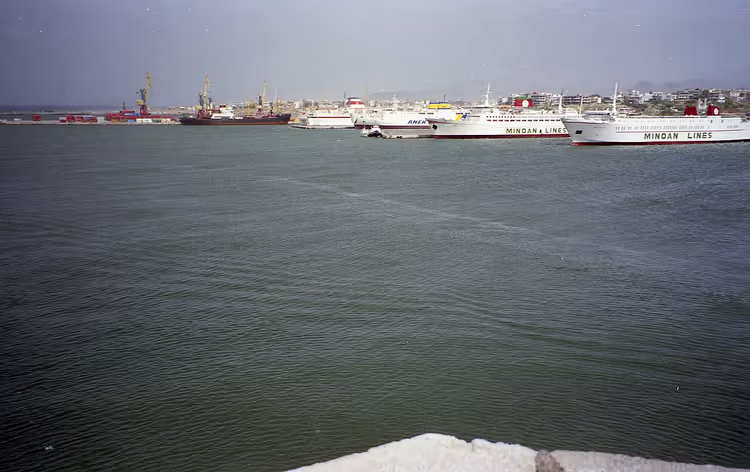 © Robert Linsdell from St. Andrews, Canada · CC BYPhoto: Robert Linsdell from St. Andrews, Canada, CC BY (https://creativecommons.org/licenses/by/2.0), Wikimedia Commons
The list is not exhaustive, and the lineup of operators changes every season. Check current sailings and buy tickets on the companies' own websites, where fares and refund policies are also listed.
8. Ferry types: from car ferry to catamaran
Greece's ferry network is one of the most extensive in the world. Passengers, vehicles and cargo are carried by four main types of vessels, which differ in speed, comfort and price. In the Aegean, wind adds another factor, and it hits small vessels hardest.
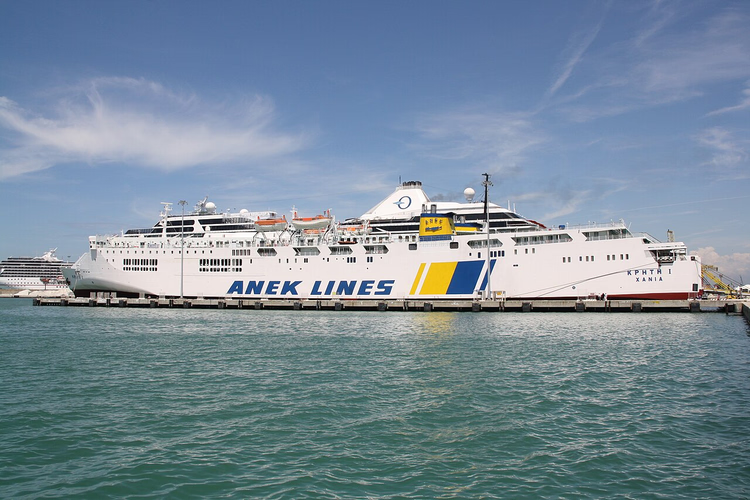 © Piergiuliano Chesi · CC BYPhoto: Piergiuliano Chesi, CC BY (https://creativecommons.org/licenses/by/3.0), Wikimedia Commons
Passenger ferries
- relatively slow crossing
- the cheapest tickets in Greece
- tickets are bought on board or at the port
- compact design and minimal amenities, one seating class
- runs between two islands as a supply vessel or excursion boat
- rocks noticeably in waves
- sailings several times a week
- goes to sea in up to force five on the Beaufort scale
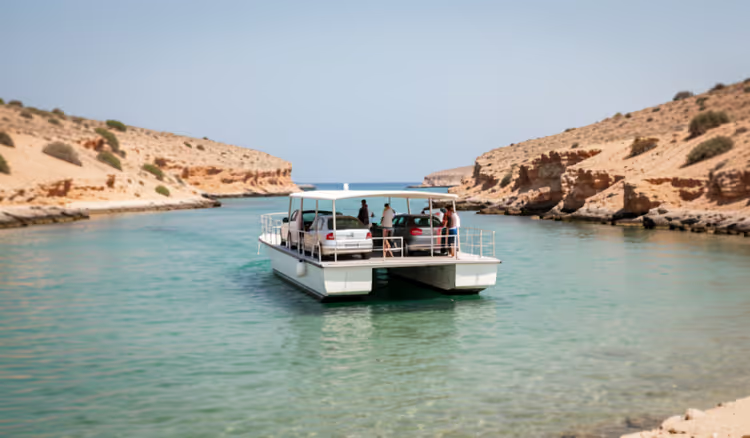
Small Ro-Ro ferries
- low speed
- very cheap tickets
- basic comfort, usually one seating class
- open deck is good for sunbathing
- open design leaves plenty of room for cars
- locals call these boats "slippers" because of their shape
- runs only between two islands, for example Paros and Antiparos
- goes to sea in up to force four or five
 AIIllustrative image: AI-generated
Large car ferries
- average speed
- the crossing is still inexpensive
- tickets are bought online or at the ticket office in the port
- on board there is a cafe, restaurants, and a sun deck
- several seating classes and cabins
- carry cars and cargo of any type
- heavy seas are barely felt
- calls at ports every two to four days
- goes to sea in up to force eight
High-speed catamarans
- high speed
- expensive even on a short crossing
- airplane-like comfort, several seating classes
- the open deck is uncomfortable while underway
- few spaces for cars
- shakes hard in waves, not suitable for people with seasickness
- in summer runs between islands almost daily
- goes to sea in up to force six
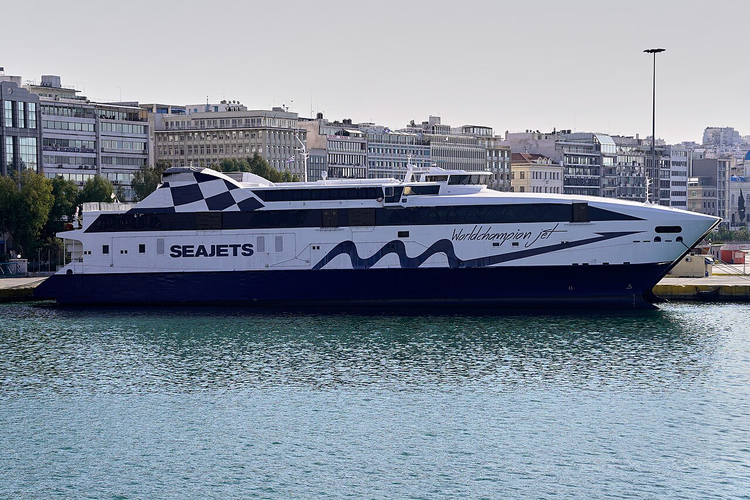 © George E. Koronaios · CC BY-SAPhoto: George E. Koronaios, CC BY-SA (https://creativecommons.org/licenses/by-sa/4.0), Wikimedia Commons
9. Practical observations about ferries in Greece
From our experience traveling by ferry, the main takeaway is this: maritime logistics in Greece works predictably, and disruptions are more often created by the passenger.
Loading cars and people takes time, but the Greeks stick to the schedule. The people who get delayed the most are those who underestimated the trip to the port. Piraeus is huge, and an extra hour at the entrance is easy to lose, so the route to the berth is worth driving in advance or building in a buffer.
A beginner's mistake is leaving late. At the berth, cars line up in several rows, and the ferry departs on schedule. If you are driving yourself, leave the hotel with time to spare and do not count on a quick entry into the harbor.
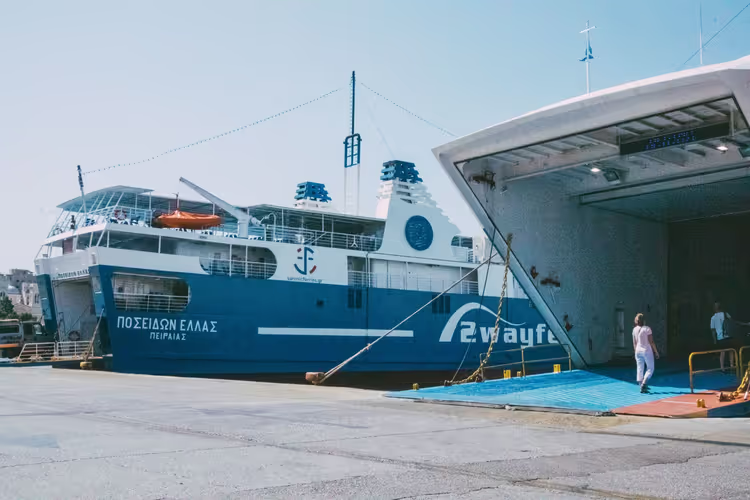
In the off-season, tickets are easily bought on the spot, but a cabin should be booked in advance: there are few of them, and on a family trip this makes a real difference. With a small child, you sleep better in a cabin than in a lounge seat.
Here is a short list of takeaways worth keeping in mind:
- with local ferries you travel cheaper if you go without a car
- a catamaran is the fastest way to get to another island
- a large car ferry gives the calmest crossing
- quiet islands far from tourist routes are reachable only by sea
- in the off-season, traveling is more comfortable than at the height of summer
- check the route to the port in advance, ideally on a map
- when island hopping, leave free days so you do not depend on the schedule
- resolve unclear questions at the ticket office in the port
- schedules are easier to check through portals with a date filter
Small islands are a separate story. Places like Telendos or Kasos are connected to the neighboring island only by small boats, and locals ride them together with tourists and boxes from the store. Here the schedule matters especially, because there may be no evening sailing at all.
Another habit that saves your nerves: ask. At the berth there is always a ticket office and carrier staff. If you still have questions about your car, cabin, or bringing a pet, ask them in advance, not at the moment of loading. At the port they answer quickly and to the point.
On long routes, bring water and light food with you. The cafe on board works, but at the height of the season there is a line, and on small ferries there may be no cafe at all. This is a small thing that noticeably improves the crossing.
10. Island hopping on ferries
Island hopping is the major league of sea travel in Greece. Here you plan not a single crossing, but a chain of several stops, and on each island you look for accommodation to match the ferry dates.
Hopping usually happens within one archipelago: the Cyclades, the Dodecanese, the Sporades, or the Ionian Islands. You spend a few days on each island, then move on to the next. The more islands in your route, the more important a time buffer becomes.
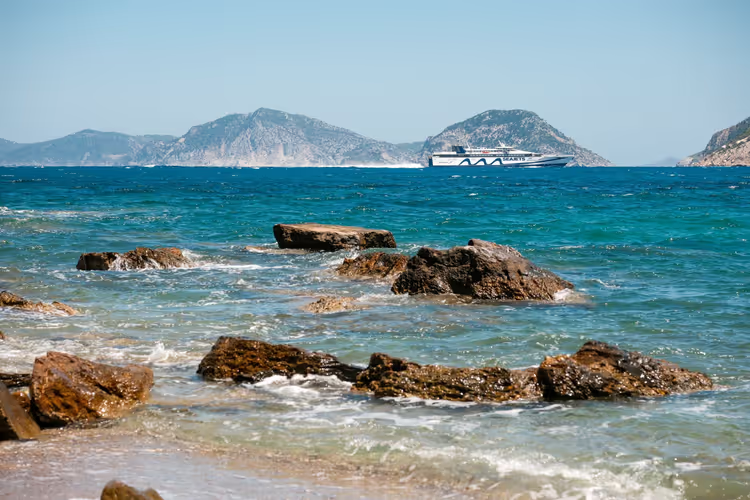
Plan the chain so that there is a rest day between long crossings. Otherwise the trip turns into a race between docks, and all you will remember is gangways and bags.
⁉️🤔 Frequently asked questions
Where do you buy ferry tickets to the Greek islands?
You buy a ticket directly on the company's website or through a booking portal. Major carriers have their own ticket offices in ports; for smaller lines, tickets are sold by local agents. A passenger without a car can often get a ticket even on the day of departure, but a vehicle space needs to be booked in advance.
When is the summer ferry schedule published?
The schedule for the season from April to October usually comes out by the end of March (according to Superfast Ferries). Before that, some summer sailings are not visible in search, and this is a normal situation, not a booking glitch. Plan your trip with this timeline in mind and do not put off buying your ticket.
Can you take a rental car to another island?
As a rule, no. The rental agreement prohibits taking the car on a ferry, and the insurance becomes void if you violate this. Even if it is technically possible to put the car on board, you are responsible for the consequences. Check the terms with the rental company before you book the ferry.
Which ferry should you choose if you get seasick?
Take a large, slow car ferry. The bigger the vessel, the less you feel the waves, and in a cabin on the lower deck the motion is felt least of all. Catamarans go fast, but the ride is noticeably rougher, especially on open stretches of the Aegean Sea.
How much baggage is allowed on a ferry?
Usually one suitcase or large bag plus hand luggage is allowed per passenger, including children. Baggage transport is already included in the fare and is not paid separately. Large items are left in the cargo area; small bags can be taken onto the deck.
How do you take a dog or cat on a ferry?
You declare the pet when booking, and the documents are checked at the entrance. Transport may be free or for a small surcharge; each company has its own terms. Kennels and pet cabins are not available on all vessels, so book them in advance.
In short: what is worth booking
If you are traveling with a car, book the ferry in advance: garage slots run out first, especially on routes from Italy and to Crete. If you are traveling on foot, you can get a ticket on the spot in the off-season and a few days ahead in summer.
For overnight crossings from Italy, from Piraeus to Crete, or to the eastern Aegean, take a cabin. For short hops between neighboring islands, deck space is enough, and a catamaran gives you the fastest crossing.
Before the trip, check the sailing for your date and the transport terms on the carrier's official website (for example, Attica Group). That way you will not end up at the dock with a ticket for a canceled sailing.

A small editorial team writing guides for independent travel. We travel ourselves, but we haven’t been everywhere, so we check prices, opening hours and how to get there against official sources.