
















California by car: a two-week route through parks and coast
The West Coast of the USA can realistically fit into one vacation. Flights to Los Angeles from Europe are usually cheaper than to New York. All the region's main highlights stretch along a single highway. We've put together a self-drive California itinerary: budget, car rental, and two weeks on the road.
There won't be any organized tour groups here. You'll need a car, a route, and a sense of where to save. Here's everything in order: visa, arrival, gas, rental, lodging, and the points on the map in the order you'll drive them.
Ad: this article contains affiliate links. We earn a commission if you book through them, at no extra cost to you.
Why California?
💡 In short:
- Build your route as a loop: start and finish in Los Angeles.
- Without a rental car, you won't see the mountains or the coast.
- Plan for two weeks: in seven days, the trip turns into a race.
- Entry to national parks: from $30 per car (as of 09/2026, National Park Service).
Nine national parks are concentrated in a single state (as of 09/2026, National Park Service). Nowhere else in the country has this kind of lineup: from desert below sea level to glaciers in the mountains. It's the parks, not the cities, that justify the long flight.
Pacific Coast Highway (Highway 1) runs along the ocean through nearly the entire state. The road hugs cliffs above the water, dips into fog, and leads to scenic overlooks. It's the best way to see the coast without rushing.
You won't get bored here. Wine country offers tastings, and Monterey serves up seafood. Add the hills of San Francisco, Silicon Valley, and shopping on Rodeo Drive in Beverly Hills. Los Angeles, by the way, is far from the best part of the route.
All told, a full vacation here takes more than one week. Two weeks is enough for the main stops without rushing. You'll have to choose your priority: cities, beaches, or nature.
How to get there and what to do about the visa
Citizens of Visa Waiver Program countries enter with ESTA authorization. It costs about $40 and is valid for two years (as of 09/2026, U.S. Customs and Border Protection). You fill out the application in advance, at least 72 hours before departure.
If your country is not in the program, you'll need a tourist visa. It's processed at the consulate, and the procedure takes weeks. Start with the paperwork, not the tickets.
Your trip will most likely begin in Los Angeles (LAX). It's the main hub for flights from Europe, so there are more flight options here. San Francisco (SFO) is usually more expensive, with fewer flights.
It's more convenient to make the route a loop and return to the same airport. You can compare flights on Kiwi.com. Starting from the Hollywood Hills or the Golden Gate makes no real difference.
Car: rental and rules of the road
You can't do this state without a car. Public transit connects cities, but not parks or the coast. The US is considered the birthplace of the rental car business, so the choice of companies is huge.
Bring your driver's license and, to be safe, an international driving permit. The ideal renter from the rental companies' perspective: age 30 to 65, at least three years of driving experience, and a credit card. Outside those parameters, they'll add a surcharge.
Booking a car in advance is easier through DiscoverCars. The price depends on the season and the car class. A compact car is the most common choice.
American roads differ from European ones. Plan for no more than 400-500 kilometers per day so you have time for stops. It's better to take turns behind the wheel: it's easier with two people.
California ranks first in the US for fuel prices. In September 2026, a gallon (about 3.8 liters) cost an average of $5.87 (as of 09/2026, AAA). The national average at the time was $4.07. There's almost no way to save, but filling up away from the city is cheaper than on the highway.
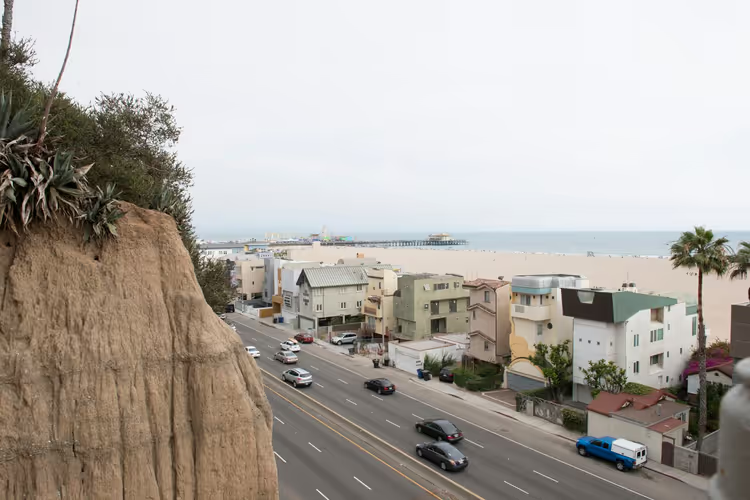
One local feature stands out: the "diamond lane" with a diamond painted on the asphalt. Only cars with three or more people inside can use it. This relieves congestion on highways and protects the environment.
Parking is paid almost everywhere. Don't leave your car "just for five minutes": a fine and towing will cost more than a full day of parking. Study speed limits and toll sections in advance.
Hotels, food, and safety
Chain hotels in the US are moderately priced. Hilton, Marriott, and Accor are widely represented and split into different price segments. A night at a Hilton in Los Angeles costs less than you might think.
But an American Hilton differs from a European one. In Europe it's luxury; in the US it's an ordinary mid-range hotel. Rooms can be worn, and breakfast consists of processed food. Cheap motels are best avoided.
You can find a hotel in Los Angeles on Trip.com. Compare neighborhoods: proximity to the ocean changes the price significantly.
The safety tip applies to large cities. Almost every one has rough neighborhoods where tourists have no business going. In Los Angeles, that means Skid Row, the southern districts, and parts of Downtown.
In Hollywood, keep your phone and wallet close: there are plenty of pickpockets. At night, it's not worth walking along tourist streets. Outside the major metros, the situation is calm, and you can relax.
Saving money starts with the small things. Free registration with Hilton Honors unlocks promotional rates and points for nights. Look for discounts on tickets to parks and attractions.
Some hotels offer guests happy hours. In the evening, guests get a light snack and a drink free or for a small fee.
Two-week California itinerary
The route starts and ends in Los Angeles. It's a loop, so you're not tied to a return flight from another city. The total distance is several thousand kilometers, so set your priorities in advance.

Here you'll have to choose between big cities, beaches, and wilderness. We recommend focusing on nature. Beaches and cities can be found in Europe too, but nothing replaces the parks here.
The recommended route looks like this:
Stage | Days | What to see | Vehicle entry |
|---|---|---|---|
Los Angeles | 1-2 | Hollywood, Santa Monica | no |
Pacific Coast Highway (Route 1) | 2 | Santa Barbara, Solvang, Big Sur, Monterey | no |
San Francisco | 1-2 | Golden Gate, hills, Alcatraz | no |
Yosemite | 1+ | waterfalls, valley, Half Dome | $35 |
Sequoia and Kings Canyon | 1-2 | General Sherman, sequoia groves | $35 |
Death Valley | 1 | Zabriskie Point, Badwater | $30 |
Return via Highway 101 | 1 | coast and Santa Barbara | no |
If you have spare days, add them to the parks or your favorite stages. California is big, and rushing ruins everything here.
Important update: the section of Route 1 near Big Sur is periodically closed due to landslides and fires. Before you set out, check conditions on the Caltrans website. If the road is closed, detour via Highway 101.
Tours and tickets in cities are convenient to book in advance: tours on GetYourGuide. Alcatraz slots sell out weeks ahead.
Find hotels
Compare prices across booking sites and filter for rooms with free cancellation.
Compare prices on Discover CarsThe widget loads once you give your consent.
How much the trip costs
You'll spend the most on car rental and lodging. Gas and park entry make up a smaller part of the budget. So book your car and hotels in advance: in high season, those prices rise first.
National park entry is charged per vehicle, and one permit is valid for seven days (as of 09/2026, National Park Service). In Yosemite and Sequoia it's $35, in Death Valley $30. Starting in 2026, foreign visitors pay an extra $100 per person in Yosemite and Sequoia. The America the Beautiful annual pass for foreign visitors costs $250 and covers entry to all federal parks.
Calculate your expenses before the trip, not on the road. That way you'll avoid surprises at the rental counter and the ticket booth.
⁉️🤔 Frequently asked questions
How much money do you need for two weeks?
The biggest expenses are car rental and hotels. Gas in September 2026 cost about $5.87 per gallon, and park entry is charged per vehicle. Foreign visitors to Yosemite and Sequoia pay an extra $100 per person. The total depends on the hotel class and season.
Do you need a visa to travel to California?
Citizens of Visa Waiver Program countries do not need a visa, an ESTA authorization for $40 is enough (as of 09/2026, CBP). It is valid for two years, and you should apply at least 72 hours before departure. Everyone else needs a tourist visa, which takes weeks to process.
Is a car absolutely necessary?
Yes, without a car you will not reach the parks and the coast. Public transportation connects cities, but not scenic overlooks. Book a car in advance and take turns driving.
When is the best time to visit California?
Choose the shoulder season and avoid planning your trip during the hottest period in the desert. In summer, temperatures in Death Valley rise dangerously high. Spring and fall are more comfortable for driving along the coast and in the mountains. Check the exact forecast before you set off.
Can you drive Highway 1 near Big Sur?
Not always. The section near Big Sur is periodically closed due to landslides and fires. Part of Big Sur is open from the north, from Carmel, but through access is sometimes unavailable. Check the road status before you leave and keep the Highway 101 detour in mind.
In short: what to book
- If this is your first trip and you have two weeks: get a car and plan a loop route from Los Angeles.
- If nature is your priority: add extra days for Yosemite and Sequoia.
- If you want beaches: stay in Santa Barbara and Monterey.
Plan your trip in advance. Rent a car on DiscoverCars.
Compare hotels on Trip.com and book tours on GetYourGuide.

A small editorial team writing guides for independent travel. We travel ourselves, but we haven’t been everywhere, so we check prices, opening hours and how to get there against official sources.