
















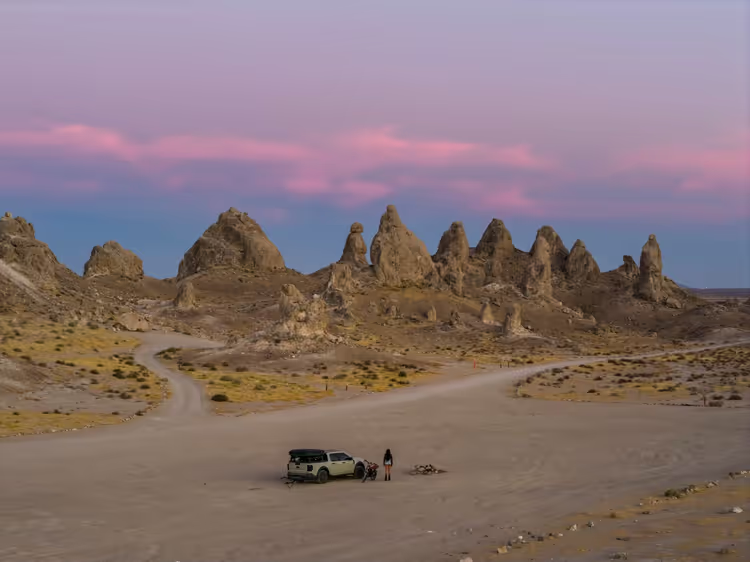
California road trip: nine days from Los Angeles to Yosemite
Nine days, one rental car, and California from the ocean to the mountains.
A trip like this only looks simple at first glance. Between Los Angeles and San Francisco lies the Pacific Coast Highway, and beyond it come the wineries of Napa and Yosemite National Park. Without a plan you lose hours in car parks, in ticket queues and on closed stretches of road.
The good news for 2026: you no longer need a timed slot to enter Yosemite, and the park lets everyone in on a regular entrance pass (as of 02/2026, NPS). We have put together a nine-day route: from Los Angeles airport to the sequoias and back. Below you will find a day-by-day table, distances by the map, tickets and the honest drawbacks of each leg.
Ad: this text contains affiliate links, we earn a commission through them, and the price for you does not change.
US road trip by car: a nine-day overview
The loop starts and ends in Los Angeles. You drive north along the ocean, spend two days walking around San Francisco, turn off to Napa, relax at Lake Tahoe and come back through Yosemite. By the map that is about two thousand kilometres, and almost all of it is on smooth tarmac.
The day-by-day plan fits into one table. That makes it easier to see where you stay longer and where you only spend the night.
Day | Highlights of the day | Tickets in advance | On foot, km (by the map) |
|---|---|---|---|
1 | Arrival at Los Angeles airport, car rental, evening stroll | no | very little |
2 | Drive to Santa Barbara, waterfront, wineries | tasting | around town |
3 | Pacific Coast Highway, Morro Bay, elephant seal rookery | no | very little |
4 | San Francisco: waterfront, Alcatraz Island, Pier 39 | ferry to Alcatraz | 5-7 |
5 | San Francisco: Lands End, museums, Golden Gate Park | no | 8-10 |
6 | Napa Valley, petrified forest, geyser, Lake Tahoe | tastings at the castle | very little |
7 | Drive to Yosemite, the park valley, El Capitan | no | 5-8 |
8-9 | Yosemite, sequoias, return to Los Angeles, Hollywood | Universal Studios | 6-9 |
Keep the essentials in mind, and the rest will fall into place along the way.
💡 In short:
- Rent the car at the airport: the rental desks are open around the clock, and it is convenient to close the loop in the same place.
- Set aside two days for San Francisco. You cover the centre on foot and leave the car in the hotel car park.
- Enter Yosemite early in the morning: by noon the waterfalls are already crowded, even though no reservation is needed in 2026.
- See Napa Valley on a weekday: at weekends queues build up at the Castello di Amorosa castle.
- Prices, opening hours and park entry: 09/2026, checked on the Yosemite park website
How to get to Los Angeles
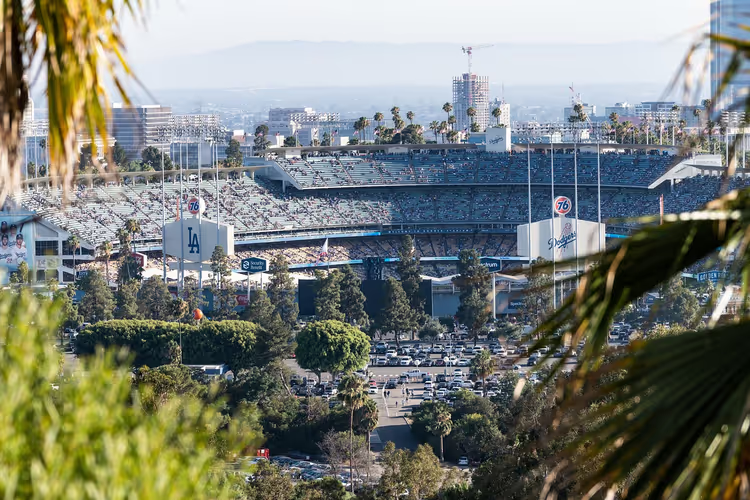
The route starts and ends at Los Angeles International Airport (LAX). It is one of the busiest airports in the country, so leave yourself plenty of time. Passport control and baggage claim at peak hours eat up more than an hour, and you will feel it.
There are plenty of direct flights from Europe, and you spend almost half a day in the air. A connection in Istanbul, London or New York is usually cheaper, but it adds anything from a few hours to a whole day to the journey. Compare fares in advance on Kiwi.com, and book your return flight for the evening: that way you can drop off the car without rushing.
Day 1: arrival and the first evening in Los Angeles
The first day is for two things: picking up the car and recovering from the flight. The rental desks are close to the terminals, and free shuttles run every few minutes. The queue for the keys can be long, so don't plan anything important for this evening.
Pick up the car for all nine days right at the airport. This is the easiest place to compare terms and prices: car rental prices at Discover Cars. A compact model is enough for the city, and a regular sedan will do for Yosemite. You only need four-wheel drive in winter.
Choose a hotel near Hollywood or in Downtown. From there you set out on your first walk on foot, without the car and without hunting for parking. If you still have energy after the flight, have dinner near the hotel and take a walk along the well-lit streets. Don't be afraid to go to bed early: a long drive awaits you tomorrow.
Day 2: the drive to Santa Barbara
 AIIllustrative image: AI-generated
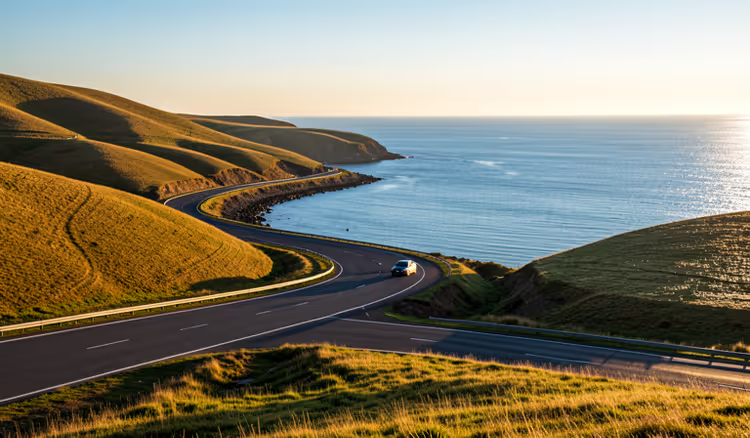
The drive to Santa Barbara takes two to three hours on smooth tarmac. By the map it is about one hundred and fifty kilometres, and almost the whole way runs along the ocean and fields. Neither drivers nor passengers get tired: there are hardly any climbs or sharp bends here.
Scenic views await you on the approach to the city, and the city itself greets you with low white houses in the Spanish style. Leave the car at the marina. The first two hours of parking in the city are free, after that you pay by the hour, so keep an eye on the time.
There is also an option without a car. A train runs from Los Angeles to Santa Barbara, and the journey takes more than three hours. You save on petrol and parking that way, but you lose the main thing on this leg: the freedom to stop wherever you like.
Where to eat and what to see
Santa Barbara sits on the shore, and its main street runs straight down to the pier. Stroll along the waterfront in the warm season: dozens of boats and yachts sit on the water, and street musicians play along the shore. You will feel as if you have landed in one of the most popular resorts on the planet.
There are plenty of places for a bite here. The Bouchon restaurant on Victoria Street serves French cuisine and keeps a homely style in its interior. A little further on, on Mc Caw Avenue, is Cafe Stella: it also has a French menu, but there is a long list of American snacks too. On the way to them, drop into the imported goods shop at the start of State Street.
Santa Barbara is also known for its wine. Nearby lie the towns of Los Olivos and Santa Ynez, where wines are made from the Merlot grape. It was with these that California joined the world's leading wine regions. A tour of three or four wineries takes a few hours, and it is convenient to get tickets in advance: wine tours in Santa Barbara. The tasting and lunch are usually not included in the tour, so check this before you go.
If you visit tasting rooms during the tour, take a snack with you. Wine on an empty stomach goes to your head, and you still have to get to the hotel. The advice is simple: bread, cheese and a little fruit solve this problem.
Beaches, parks and flowers
If you have time, spend a couple of hours on the city beach. Warm water and golden sand sit side by side here with kayak and surfboard rentals. Half a day is enough for a swim and a ride.
But the city is not just about beaches. The Botanic Garden is a handy spot for a picnic, and keen walkers head off onto the trails of Rattlesnake Canyon. Franceschi Park shows off the achievements of Californian plant breeders, and whole families come here.
Orchid lovers will find something to do as well. The flower garden in Carpinteria brings together different species of this flower, and the scent there hangs thick in the air. Stay for half an hour if that is your kind of thing.
Museums and entertainment
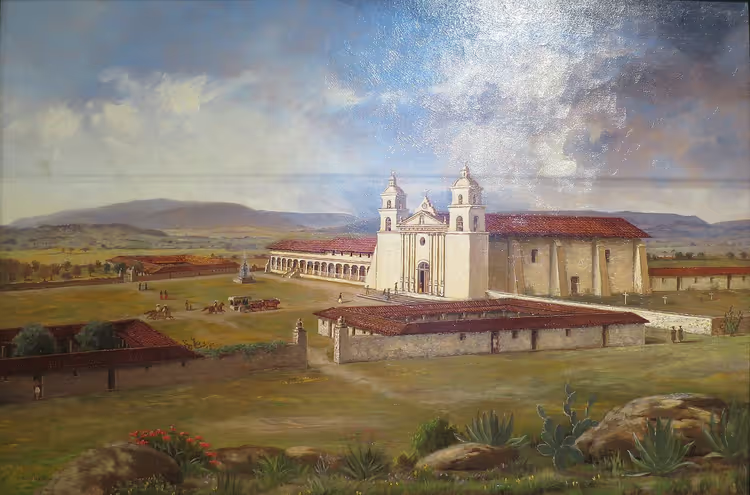
The range of local sights is impressive. The mission church was built by Spanish colonists, and today it is a small museum. The county courthouse is interesting too: it takes up a whole block and is built in the Moorish style. Walk past it at least for the sake of the facade.
Don't skip the city history museum: admission is free, and the exhibition tells how a settlement grew into a resort. The natural history museum holds millions of specimens of California's birds, insects and mammals. You can get into the collection halls from ten to seventeen o'clock, except at weekends and on public holidays.
Another option for the evening is the Gladwin planetarium. It shows journeys through air and water, and in a few minutes you virtually fly millions of kilometres. The distant stars look as if you could reach out and touch them. For children it is the best finale to the day.
By evening, head back to the hotel and rest. Tomorrow the most beautiful highway in the country awaits you.
Day 3: Pacific Coast Highway
In films, America looks like a land of skyscrapers and yellow taxis. But there is another side: to see it, you only need to drive the Pacific Coast Highway once. It is not for nothing that this road is called the most beautiful in the country.
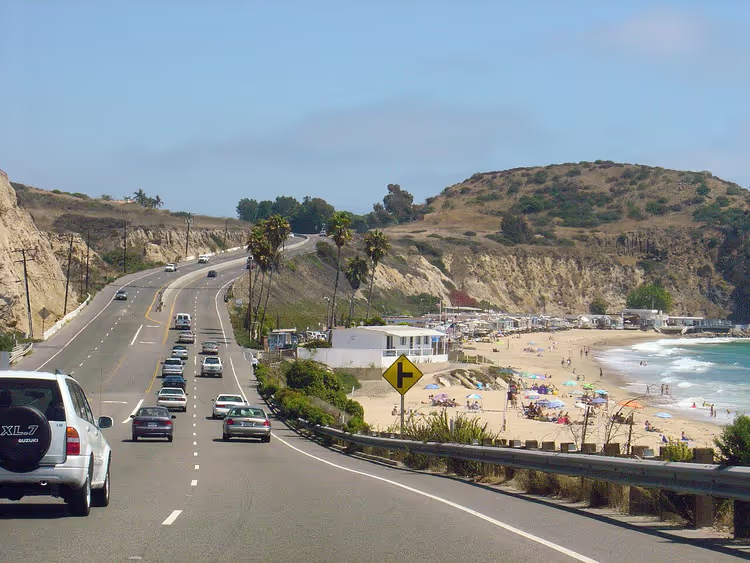
Surprisingly, four hundred kilometres take a whole day here. A new view opens up around every bend, and you stop again and again. In a convertible the experience is even stronger. No special driving skills are needed: the traffic is calm and unhurried.
If you set off early in the morning, expect fog on some stretches. It can be so thick that it feels as if you are driving through clouds. By the middle of the day it usually clears.
Make your first stop in Morro Bay. It is a small town right on the coast that lives off tourists. Refuel at a seaside cafe: they cook with fresh seafood here, and fish is always on sale.
The town's main sight can be seen from afar: the extinct vent of a volcano right in the bay. Since nineteen sixty-six this rock has been considered part of California's historical heritage, and before that its stone was used for construction. Climb up to the viewing platform and photograph the whole bay.
You can rest before the drive on Morro Bay beach. Besides simply lying on the sand, you have a board and the waves, as well as watercraft rental. If you don't like crowds, head off to the wild coast in the neighbouring bay.
Finding your way on the highway is easy: there are information signs along the road. A Vista Point sign means a viewing area where you can get out and stretch your legs. These places have picnic tables, so you can have lunch without a cafe.
It is not worth counting the stops in advance. The road is narrow, there are many bends, and the map will not show you where the best view opens up anyway. Keep two rules in mind: don't brake where there is no lay-by, and don't miss a Vista Point sign. Over the day you will collect about ten such spots, and each one gives you a new shot.
Lunch is easiest at rest areas with tables. Almost every viewing area has them, and there are hardly any cafes between the towns. Buy food in advance in Morro Bay or San Simeon, and the day will pass without unnecessary stops.
Fill up before you set off on the long stretch. Petrol stations are rare between the towns, and the price on the coast is higher than in the valley. A full tank and a canister of water solve the main problems of this road.
The viewing areas are almost always on the outside of the bend. It is safer to pull off to them from the right-hand lane, and it is better not to make a U-turn across a double solid line. You will get a fine for that offence straight away.
Next comes San Simeon with its elephant seal rookery. You can watch these animals, so clumsy on land, for hours. If you want to see the pups, come in winter or early spring.
Where to stay on the highway
If you decide to linger, take a look at Ragged Point Inn. The hotel's history begins in the fifties: at first there was a petrol station and a two-room motel here. Over time it grew, and now it has almost forty rooms of various standards. The windows look out over the ocean.
On the grounds there are souvenir shops, a cafe and ice cream stalls. The elephant seal beach lies nearby, and you can go back there without the car. Hotels further along the route are best compared by location: that way you won't stray from the main road.
This is also where you recover your strength. You will need it: San Francisco, wine country and the mountains lie ahead. The Pacific Coast Highway remains the most packed leg of the route.
Day 4: San Francisco, the waterfront and Alcatraz
On the fourth day the road brings you to San Francisco. The city is as popular as New York and Las Vegas, and two days are barely enough for it. Active travellers can manage here in one day, but we leave two.
Parking and first steps
The main route around San Francisco is on foot, which means you need to sort out the car in advance. On weekdays it is harder to find a space in the centre than at weekends. On Saturdays and Sundays, though, street parking at the meters is often free.
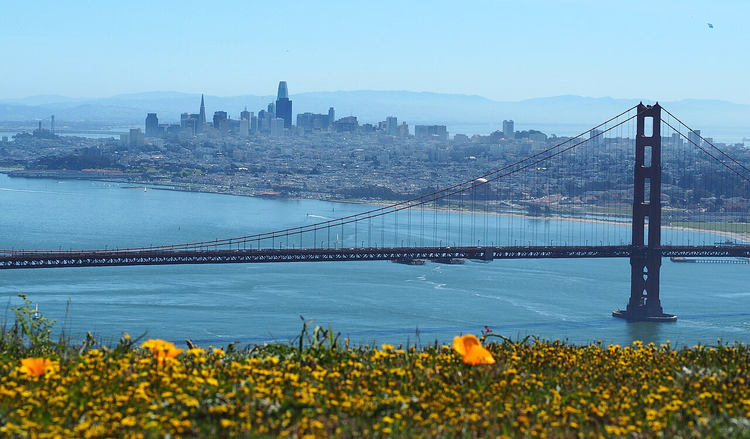 © Lightandtruth · CC BY-SAPhoto: Lightandtruth, CC BY-SA (https://creativecommons.org/licenses/by-sa/4.0), Wikimedia Commons
If you arrive on a weekday, put the car in an underground car park. Prices are higher there, but you don't worry about the car and don't have to move it every couple of hours. Morning hours are cheaper, and by evening the spaces go faster.
Once the car is sorted, head for the waterfront first. That is exactly where we are going.
The waterfront and the pier are a major sight in their own right. There are dozens of shops, seafood restaurants and a large aquarium here. Hundreds of yachts and boats bob by the shore, and the air smells of salt and fried fish. A walk along the water is enough to get a feel for the city's character.
Alcatraz Island
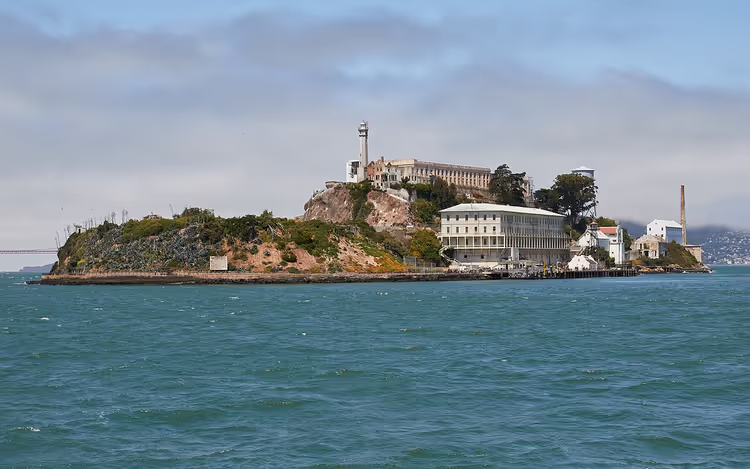
It would be strange to visit San Francisco and not go out to the most famous prison in the country. At first the island defended the bay: a fortress stood on it. When the fortifications were no longer needed, a prison for the most dangerous criminals was opened here.
 © Frank Schulenburg · CC BY-SAPhoto: Frank Schulenburg, CC BY-SA (https://creativecommons.org/licenses/by-sa/4.0), Wikimedia Commons
You can only reach the island from Pier 33, by ferry. Entry to the island itself is free, and you pay for the ferry and the audio guide (as of 09/2026, NPS). An adult ticket costs about fifty dollars, and the night tour is more expensive. Buy tickets at least a couple of weeks ahead: there are always more people wanting to go than places.
Take food and water with you. There is hardly anywhere to eat on the island, and the tour takes at least two hours. If you want to soak up the atmosphere, get Alcatraz tickets for the morning: by lunchtime a queue forms on the pier.
Aquarium and Pier 39
Do you love sea creatures? Then you should definitely drop into the aquarium on Pier 39. It suits both adults and children, and admission is cheaper than at the big oceanariums. Some shows cost extra, so check this on the spot.
Opening hours depend on the season. In summer the doors stay open longer and in winter they close earlier, so check the aquarium website before your visit. An hour and a half is enough if you go at an easy pace.
After the aquarium, take a walk along Pier 39. There are lots of souvenir shops and restaurants here, but it is not worth coming first thing in the morning: most shops open no earlier than ten. By noon, though, the place is buzzing.
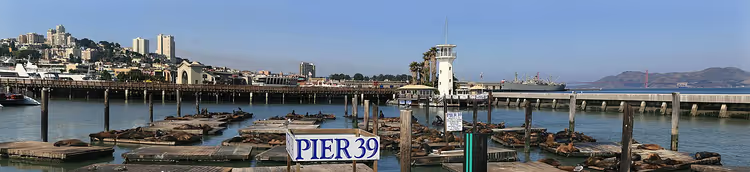
Try the local clam chowder, a thick shellfish soup. The taste depends on the place, and you will remember a bad bowl for a long time. The main show on the pier is the sea lions: they bask on the platforms and pose for the cameras. Next to them is a small museum dedicated to these animals.
The Pampanito submarine and the maritime park
Leave two quiet stops for the end of your first day in San Francisco. The Pampanito submarine took part in the battles of the forties, and now it is a museum at Pier 45. The visit is inexpensive, children's tickets are cheaper, and the doors open in the morning.
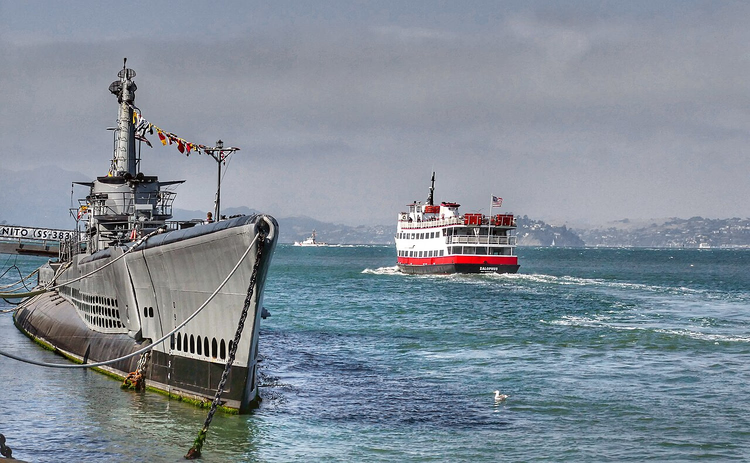
In the western part of Fisherman's Wharf is the maritime historical park. The maritime history museum displays rare exhibits from different eras, but most visitors simply look out over the water and have picnics. And that is how your first day of getting to know the city ends.
Decide where to stay in San Francisco by location. A hotel by the waterfront costs more, but you save on taxis and parking. An option in the centre is cheaper, but you take the tram to the piers.
Day 5: San Francisco, neighbourhoods, museums and parks
On your second day in the city you catch up on the places you missed. The programme is on foot again, so we leave the car in the car park. You get around the city by tram and bus, which is faster and cheaper than a taxi.
Richmond and Lands End
First of all, take a look at the Richmond district. It is ordinary in itself, but it gives a good picture of everyday American life. Among the identical houses you come across original buildings that say a lot about their owners. These blocks were historically settled by people from Eastern Europe and China.
From here it is a stone's throw to the Lands End trail in the northwest of the city. It offers views of the Pacific Ocean, the Golden Gate Bridge and the bay. Many people come to California for shots like these. An hour of unhurried walking is enough.
In the shade of the dense cypresses it is pleasant to take a break from the noise of the city. The fresh sea air does its work, and the sandwiches from your backpack turn into a proper picnic. Come here in the morning or towards evening: at midday the viewpoints are crowded.
Legion of Honor museum and Sutro Baths
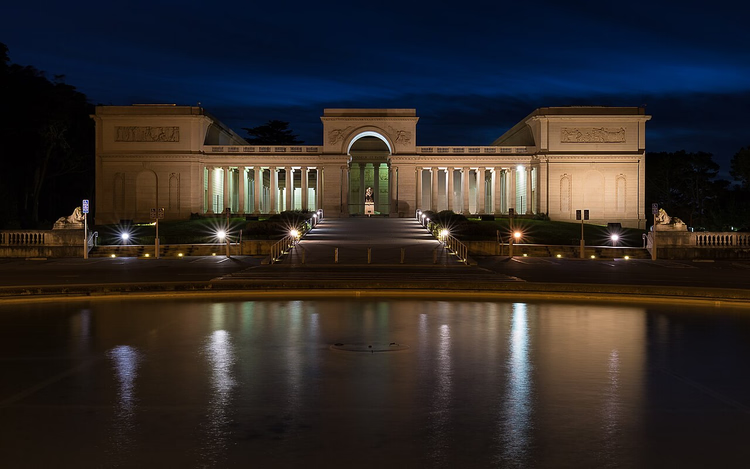
The Legion of Honor museum is very close by. It houses a large collection of European art. The building was originally dedicated to the victims of the First World War, and later the collection was expanded with rare objects and artefacts. A visit takes a couple of hours, and only painting lovers stay longer.
 © Frank Schulenburg · CC BY-SAPhoto: Frank Schulenburg, CC BY-SA (https://creativecommons.org/licenses/by-sa/4.0), Wikimedia Commons
Admission is twenty dollars for adults, and children and teenagers get in free. On the first Tuesday of every month the museum is open to everyone free of charge. The doors are open from half past nine to a quarter past five, but special days are best checked in advance (as of 09/2026, The Better Vacation). It is convenient to compare tickets to the city's museums in one go: tickets to San Francisco museums.
South of the trail lie the ruins of the huge Sutro Baths pool. It once delighted the townspeople for years, and it was built by the millionaire Adolph Sutro with his own money. The pool operated as a public bathhouse, but the owner also wanted to make it a place for art. Today all that is left of the complex is the stone basins at the water's edge.
Since the nineteenth century this place had been a resort for the rich. Heads of state and millionaires came here, and you can easily picture those times as you stand above the ocean. Below, Ocean Beach roars, and it is worth going down there at sunset.
Golden Gate Park
Next, your course leads to Golden Gate Park through the Sea Cliff district. The lavish mansions make it clear that this is another popular place for wealthy Americans to live. The famous photographer Ansel Adams, whose pictures of Yosemite became celebrated, lived here too.
 © Dennis G. Jarvis · CC BY-SAPhoto: Dennis G. Jarvis, CC BY-SA (https://creativecommons.org/licenses/by-sa/2.0), Wikimedia Commons
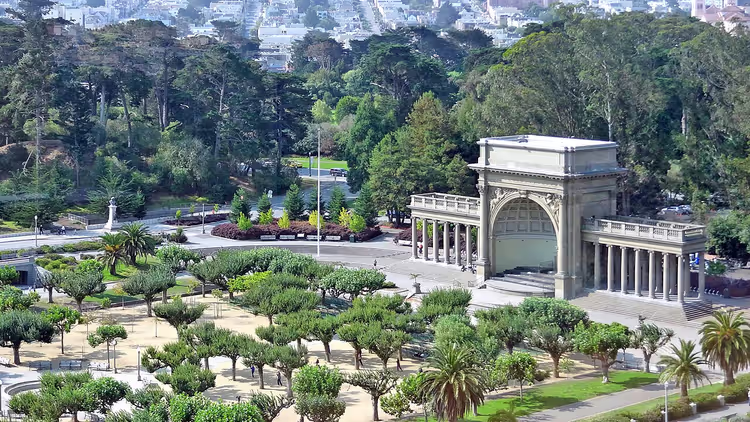
The park itself will take more than an hour of walking. It is one of the most visited parks in the country, so it is never empty. The vast grounds bring together museums, lakes, stadiums and several gardens.
Entry to the park is free, and you only pay for individual attractions. There are ten small lakes in the park, and the most popular of them is Stow Lake. The waterside is a good spot for a picnic and for feeding the ducks, and boats are available for hire here.
Drop into two of the gardens as well. Entry to the rose garden is free, while you pay separately for the botanical and Japanese gardens, with cheaper rates for children. In the Japanese garden you can catch a tea ceremony and buy unusual souvenirs. Stay here for an hour if you enjoy the quiet.
By evening, head back to the hotel and pack your things. Tomorrow you leave the city for wine country.
Day 6: Napa Valley and Lake Tahoe
The sixth day takes you away from the ocean and deep into California. First you drive through the vineyards of Napa, then past geysers and petrified trees, and you finish by the water at Lake Tahoe. The drive is long, so set off early.
Napa Valley
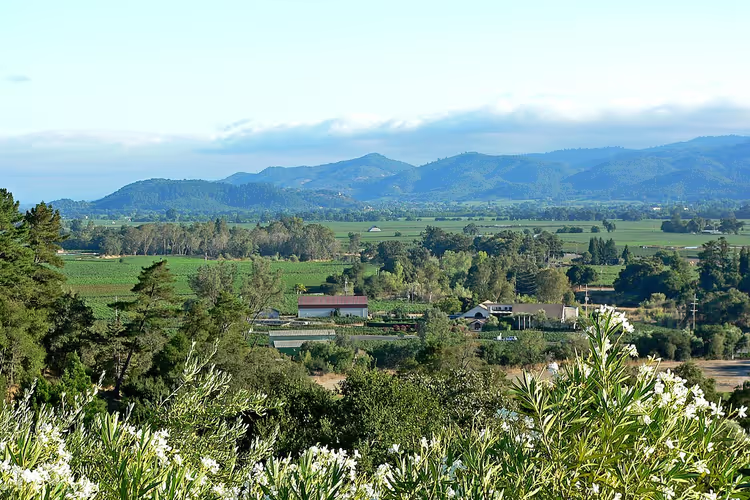
Napa Valley spreads out across the open spaces of California. It is one of the best-known wine regions in the country: more than ten thousand hectares of vineyards and several dozen estates. In the past you could only judge the results of their work in restaurants, but today you can see the grape harvest and processing for yourself.
The valley is often called a little Italy. Every patch of land here is steeped in the spirit of winemaking, and the valley takes in several towns and districts at once. Each place hands down its own taste in wine and its own recipes from generation to generation.
 © Stan Shebs · CC BY-SAPhoto: Stan Shebs, CC BY-SA (https://creativecommons.org/licenses/by-sa/3.0), Wikimedia Commons
The valley owes its conditions for grapes to the volcanic ash that fell here millions of years ago. But nature gave this place more than fertile soil. Nearby lie a petrified forest and a geyser that are worth turning off the main road for.
If you want a hassle-free tasting, tours and tastings in Napa Valley are easy to book in advance. On weekdays there are fewer tourists, and you don't stand at the counter for long. At weekends the queue can stretch to an hour.
Petrified forest
You drive to the petrified forest along Highway 121 and then turn onto Sonoma Highway. The road runs alongside rows of vines, and every plant here has a quirky shape. You won't be bored at the wheel.
The "Petrified Forest" is the remains of enormous trees. A volcanic explosion buried them under lava and ash, and then they lay in water for thousands of years. The wood became saturated with silica and turned to stone. Excavations were carried out here as far back as the seventies of the nineteenth century, and people have been coming from all over the country ever since.
 © James St. John · CC BYPhoto: James St. John, CC BY (https://creativecommons.org/licenses/by/2.0), Wikimedia Commons
Many of the trunks are so well preserved that they seem to have been carved from solid rock. A walk around the grounds is inexpensive, and a guided tour costs more. An hour is enough to walk the trail and take photos.
The geyser in Calistoga
Next, your route leads to the geyser in Calistoga. This natural phenomenon stands in the middle of a field, and you can wait an hour or more for an eruption. That is why the Americans built a viewing area and set up facilities around it. You pay for the comfort at the entrance.
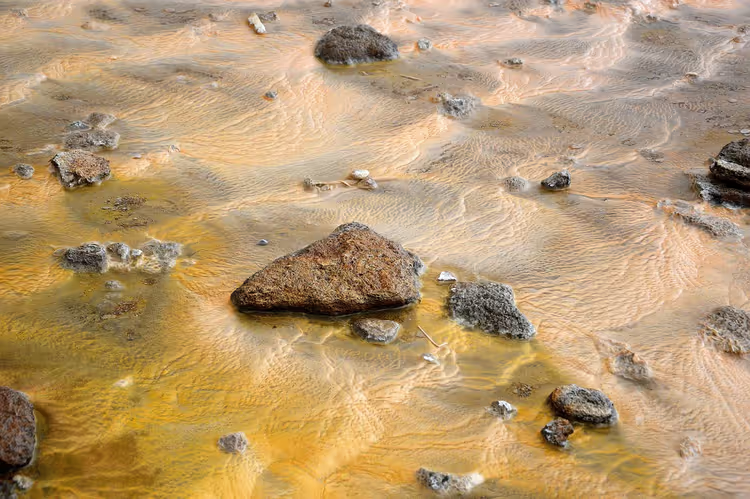
The whole area around the geyser is dotted with tables. Tourists eat sandwiches and rest here between eruptions. For those who have already eaten, there is a pen with goats, sheep and llamas, as well as souvenir shops.
The geyser erupts on a schedule, roughly once every half hour. Only a small earthquake can disrupt the pattern, but that doesn't happen often. The jet of water rises to a height of up to eight metres and then falls into a lake with reddish water. The colour comes from its high iron content.
Castello di Amorosa castle
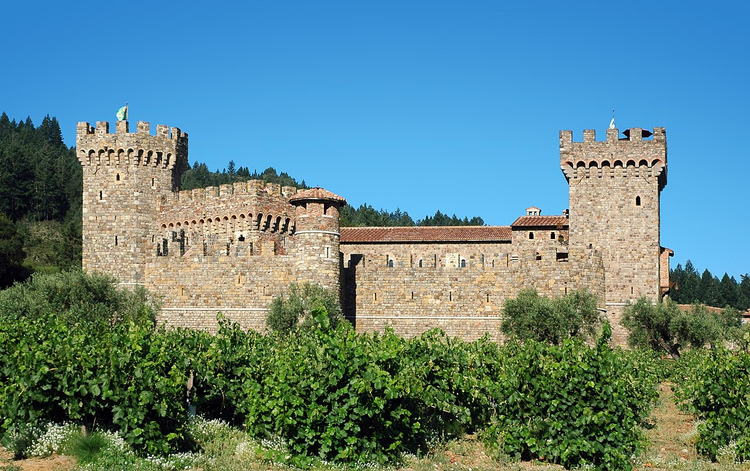
Another stop in the valley is the Castello di Amorosa castle, built in the medieval style. You won't get to look around it in peace: there are always a lot of visitors here. That is why Napa Valley is best planned for a weekday.
 © DimiTalen · CC BY-SAPhoto: DimiTalen, CC BY-SA (https://creativecommons.org/licenses/by-sa/3.0), Wikimedia Commons
Access to all the rooms of the castle is by paid tour. As a reward for the wait, you get a tasting of wines aged for many years. On a standard ticket you try five varieties of your choice, and for an extra fee they open the premium Reserve collection. If you are travelling with children, they will be poured grape juice.
You can also buy a bottle of the wine you liked here. The owners claim that some of the varieties are not sold anywhere else. That is hard to verify, but you will take home an unusual souvenir.
Lake Tahoe
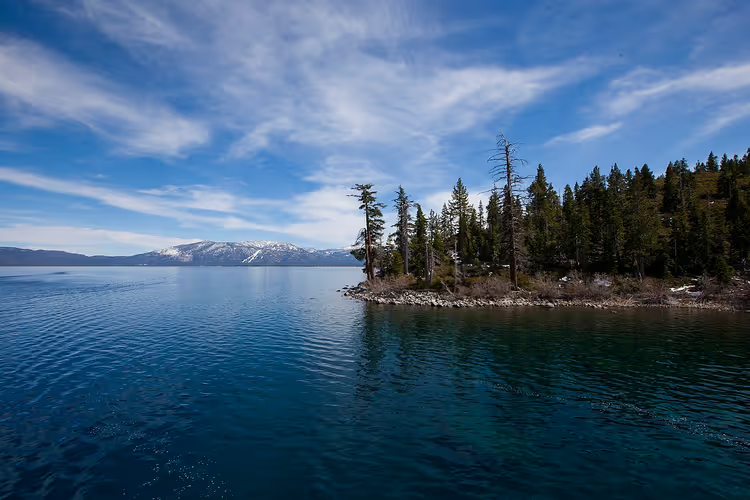
Once you have rested from your adventures, set course for Lake Tahoe. This body of water lies on the border of Nevada and California. The place is loved by travellers who want to combine a break in nature with the chance to try their luck in Nevada's gambling halls.
 © Lara Farhadi · CC BYPhoto: Lara Farhadi, CC BY (https://creativecommons.org/licenses/by/2.0), Wikimedia Commons
The water is no more than a five-minute walk from the hotels, and the rooms have views of the lake. For entertainment there are tennis courts and several beaches. The bottom is sandy and the entry is gentle, so swimming is comfortable with children too.
The water in the lake is very clear and has a blue tint. But even in summer it doesn't warm up above twenty degrees, and you will feel that straight away. The catch with this place is the price of accommodation: a budget room on the shore is expensive, and renting a house will cost several times more. Book in advance, otherwise only the expensive options will be left.
Day 7: Lake Tahoe and Yosemite
After resting by the water, you drive on to Yosemite National Park. The journey takes several hours on motorways, and by the map it is about three hundred kilometres. The roads are good, so before you know it you will be in the "home of wildlife".
The drive and entry
If you plan to visit other national parks as well, buy an annual pass. It lets you through without queuing at the ticket booth and saves time at the entrance. A single entry to Yosemite costs thirty-five dollars per car, and the America the Beautiful annual pass for residents of the USA comes to eighty dollars (as of 09/2026, Yosemite park). For foreign visitors the pass costs more, and in Yosemite they are charged an additional fee. Check the exact amount for non-residents on the park website before your trip. For US residents the pass pays for itself after just two visits.
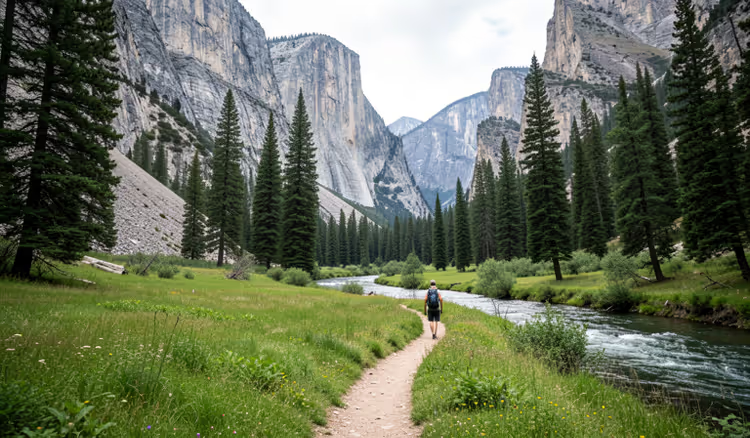
Another important point: buy a booklet with a map in advance. It marks the hiking trails, that is, the footpaths and walking routes. For each trail it gives the difficulty, length and walking time. With a map like that you don't waste time at the information board.
Yosemite is considered one of the first nature reserves in the USA. Almost the entire park has been kept wild, without roads or buildings. The wildlife here is rich: deer, black bears, bobcats and squirrels are found right by the trails.
Plan your trip for the end or the beginning of summer, or better still for autumn. In midsummer the heat is steady and it is dry, and not everyone can handle that climate. Winter here is mild, but that is when most of the precipitation falls.
Yosemite Valley
The park's doors are open around the clock, and you can come here in any season. In winter some routes are closed because of the weather, and that is worth bearing in mind. Otherwise, nature won't stop you enjoying the views.
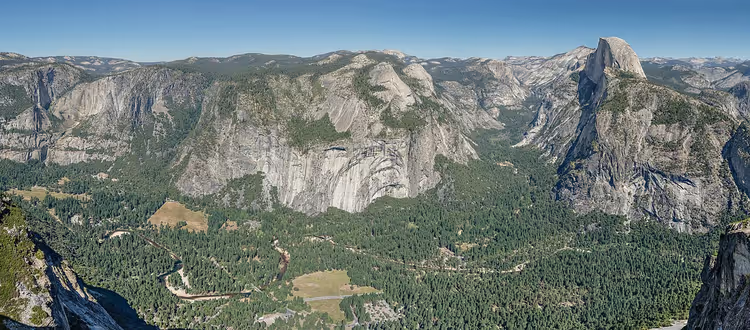
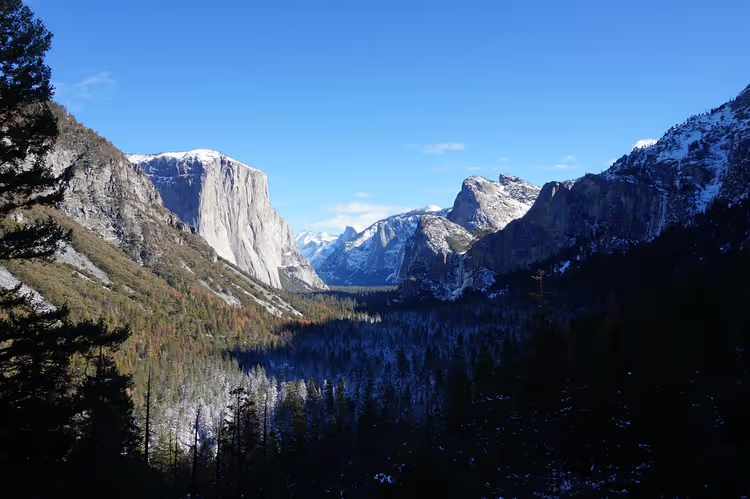
At the entrance, draw up a route and mark the places you want to see. If this is your first time here, start with the park valley. It takes up just one percent of the territory, but this is where most visitors go. A special spot here is El Capitan: climbers are always visible on its sheer wall. The rock can be seen from almost anywhere in the valley.
 © Tuxyso · CC BY-SAPhoto: Tuxyso, CC BY-SA (https://creativecommons.org/licenses/by-sa/3.0), Wikimedia Commons
If you are looking for something special, take note of Tuolumne Meadows, the Clark Range, Kuna Crest and Dana Lagoon. Among the most interesting routes, locals name the Sierra Crest and the Pacific Crest. Choose a trail by your fitness, not by its length.
Sequoias and other spots
 © Dietmar Rabich · CC BY-SAPhoto: Dietmar Rabich, CC BY-SA (https://creativecommons.org/licenses/by-sa/4.0), Wikimedia Commons
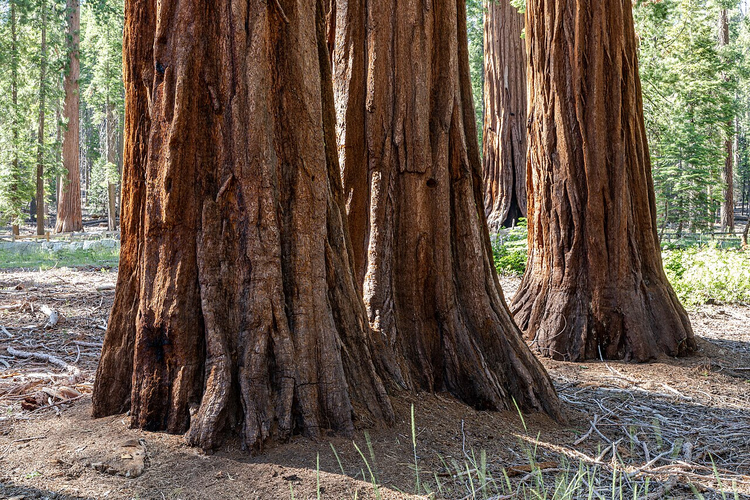
Don't pass by the groves of giant sequoias. These trees grow in groups of twenty or more, and next to them you feel very small. The giant sequoia is considered one of the tallest and longest-lived plants on the planet. Photos turn out best against the backdrop of giants like these.
Besides tours, there is plenty to do in the park. You can go horse riding, fish, have a picnic in a scenic spot or try rafting. In winter people ski and snowboard here. For families it is a convenient option, because everything is close together.
How to get around the park
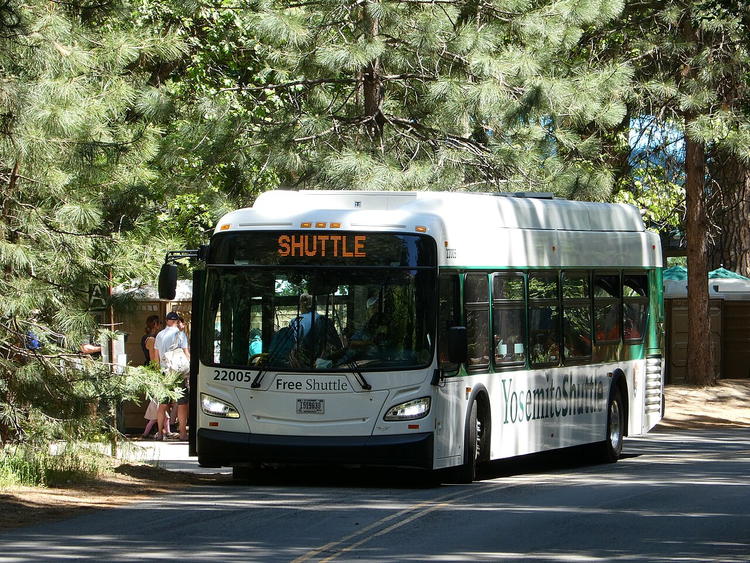
Scheduled buses run between the sights of the valley. Check the timetable at the park entrance. Where the bus doesn't go, footpaths or your own car will help.
 © Pi.1415926535 · CC BY-SAPhoto: Pi.1415926535, CC BY-SA (https://creativecommons.org/licenses/by-sa/4.0), Wikimedia Commons
Important details
Yosemite is mostly wilderness, and visitors often come across bears. Keep well away from them and don't leave food in the car. The park is also home to some of the most persistent insects: mosquitoes. Protect yourself with spray or ointment, otherwise itching will spoil your evening on the trail.
 AIIllustrative image: AI-generated
If you decide to stay overnight, choose only designated sites. Signs show where you can pitch a tent and where you can't. If you want comfort, rent a hotel room or a small cabin near the park, and it is convenient to compare them in advance: cabins and hotels near Yosemite. Bring food with you, as there are few cafes in the park and the walks are long. Hide your food carefully, otherwise the local thieves will empty your backpack.
Days 8-9: Yosemite and Los Angeles
From the park you return to Los Angeles. If Washington is the administrative capital of the USA, then Los Angeles is confidently called the film capital of the country. On a first visit many people are stunned by what they see: the glitter, the luxury and the huge distances.
The second-largest city in the USA owes its birth to Spanish settlers. They named it after the Virgin Mary, Queen of the Angels, and of the long phrase only a short pair of words remains. Everyone who barely knows that name knows another word: Hollywood.
The film industry occupies the northwestern part of the city. The name is spelled out in huge metal letters on the slope of the Hollywood Hills, and it can be seen from afar by day and by night. Famous studios work here, and Hollywood actors live nearby.
Hollywood and the Walk of Fame
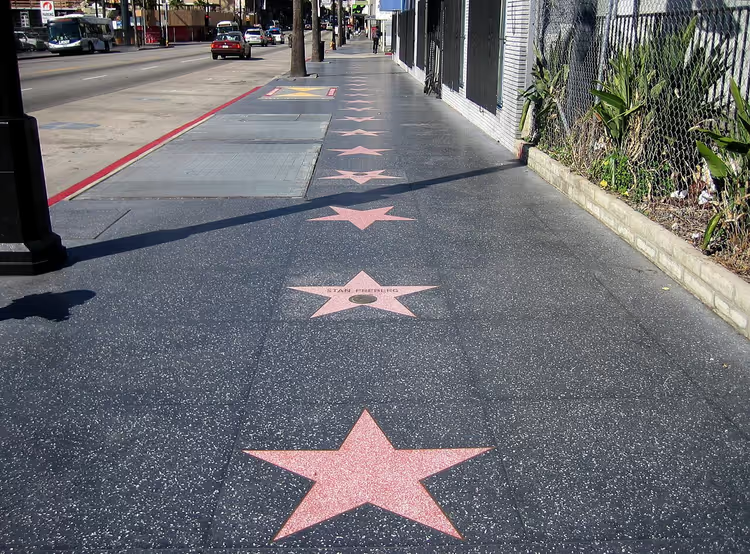
Start exploring the district with the Walk of Fame on Hollywood Boulevard. Stars bearing the names of actors, musicians and scientists are set into the pavement on both sides. You will enjoy looking for familiar names under your feet, and it takes more time than you would think. The handprints and autographs of celebrities lie at the entrances to the theatres.
Grauman's Chinese Theatre
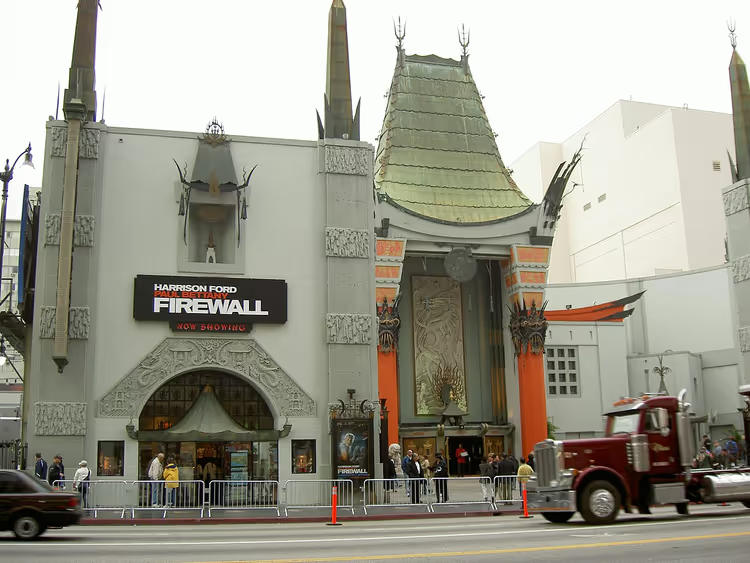
In the middle of the Walk of Fame you are greeted by Grauman's Chinese Theatre. The exotic pagoda-shaped building is guarded by a dragon and two guard dogs. It is a working cinema where new films have their premieres. The footprints of film stars are preserved forever in the paving in front of the entrance.
 © Mr Bullitt · CC BYPhoto: Mr Bullitt, CC BY (https://creativecommons.org/licenses/by/2.5), Wikimedia Commons
Tickets for a screening are inexpensive, but it is worth going inside more for the auditorium itself. If you are short on time, stick to the forecourt and the prints. Tours of the theatre are run separately, so check the price on the spot.
Dolby Theatre and Griffith Observatory
Next door is the Dolby Theatre, formerly the Kodak Theatre. The Oscars are presented here every year, and for film people it is a sacred place. You can see the lobby without a ticket, and tours of the halls run on a schedule.
 © Prayitno / Thank you for (12 millions +) view from Los Angeles, USA · CC BYPhoto: Prayitno / Thank you for (12 millions +) view from Los Angeles, USA, CC BY (https://creativecommons.org/licenses/by/2.0), Wikimedia Commons
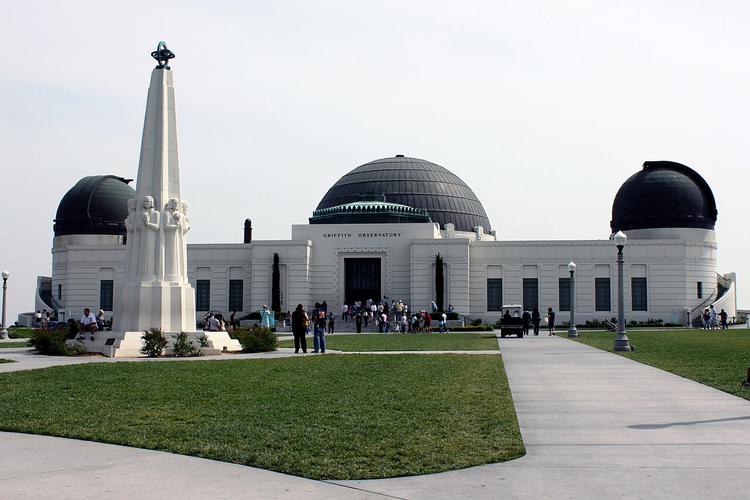
Next, drive closer to Mount Hollywood. On its southern slope stands Griffith Observatory, built with Colonel Griffith's money at the beginning of the last century. It is called a public observatory rather than a scientific one: anyone who wishes can see the starry sky through a large telescope. Admission is free, and the observatory is closed on Mondays.
The telescope is not the only pleasure. The terrace beside it opens onto a panorama of the city and the Hollywood sign in all its glory. Arrive an hour before sunset: then you will see both the daytime view and the lights of Los Angeles at night.
Universal Studios Hollywood
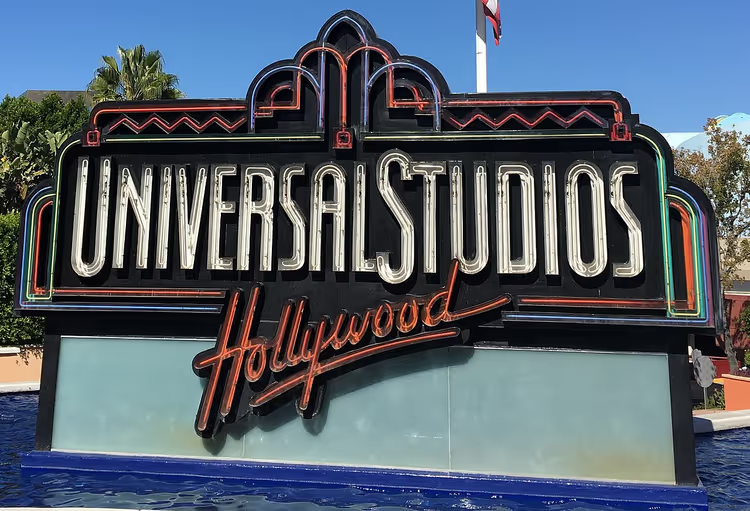
It would be strange to be in Hollywood and not visit a working film studio. Universal Studios Hollywood is called the city's "entertainment capital". To avoid queuing for tickets, buy them in advance: tickets to Universal Studios.
 © 林振宇 · CC BY-SAPhoto: 林振宇, CC BY-SA (https://creativecommons.org/licenses/by-sa/4.0), Wikimedia Commons
Here you will find the rides Harry Potter and the Forbidden Journey, Fast & Furious and The Mummy, as well as staged shows based on film plots. A dated one-day ticket costs from one hundred dollars when bought online, and more at the ticket office (as of 09/2026, Universal Studios Hollywood). The price depends on the season and the day of the week, so choose your date in advance.
Beverly Hills and the stadium
The upmarket district of Beverly Hills is not to be missed. Expensive shops, celebrity mansions and spas are concentrated here. Rodeo Drive is known around the world as a street of luxury shopping, and people like to compare it to the Champs-Élysées in Paris.
And how could you not visit the Memorial Coliseum stadium? It was built in the twenties of the last century and holds almost one hundred thousand fans. Two Summer Olympics were held here, and now a college American football team plays in it. Viewing the stadium is free, and match prices depend on the seat.
The facade lives up to the name: a huge central entrance, bronze athletes and tall arches recall the Roman Colosseum. After the Olympics it was given the status of a national historic landmark. Walk around the perimeter to take in the scale.
Downtown and the ethnic neighbourhoods
Los Angeles is not just entertainment and shopping. Downtown is full of office skyscrapers, and on weekdays business life is in full swing here. At weekends the blocks empty out, and film crews take advantage of that. If you are lucky, you will see a street scene being filmed.
 © peter boy12qq12 · CC BYPhoto: peter boy12qq12, CC BY (https://creativecommons.org/licenses/by/3.0), Wikimedia Commons
Next to Downtown lie the neighbourhoods where Chinese, Korean, Japanese and Thai communities live. Each is marked by its own symbol: a Golden Pagoda, a Buddhist temple or an oriental gate. It is worth walking down the street with the red lanterns and trying spicy Thai or Korean food. Chinatown dazzles with its bright colours.
Concert hall and Angels Flight
A real treat for architecture lovers is the Walt Disney Concert Hall. The building in an abstract futuristic style was built with money from the heirs of the famous animator. Inside, the walls and seats are finished in expensive wood, and the organ is made up of thousands of pipes. From the outside the hall looks like an object from space, gleaming in the sun.
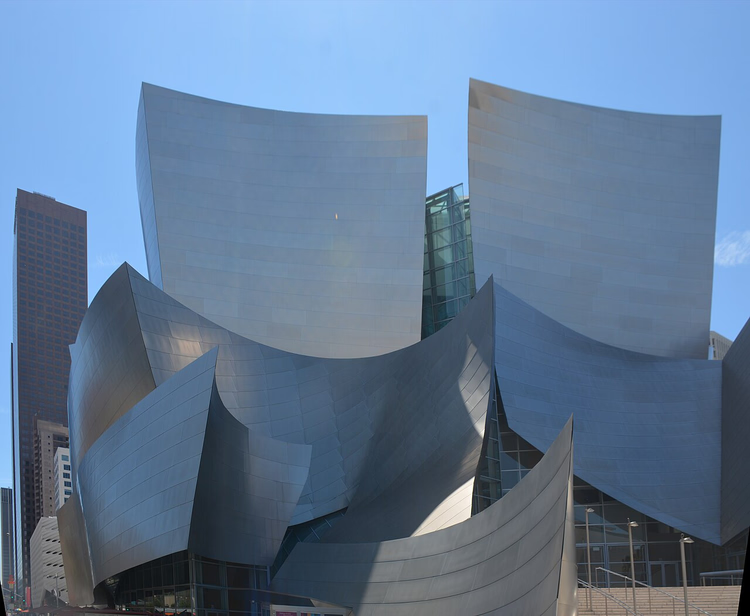
You can view the building from the outside on any day, while concerts and tours run on a schedule. The lobby is open on Tuesday and on the other days of the week, except Monday. Half an hour is enough to walk around the hall and take photos.
And to finish, take a ride on the city's most famous funicular. Angels Flight has been running since the early twentieth century and is considered the shortest railway in the world. The fare is one and a half dollars one way, and the cars run every day from early morning until late evening (as of 09/2026, official website).
From the wooden retro cars you can see California's tallest skyscraper, the US Bank Tower, with a helipad on the roof. The ride up takes less than a minute, but you will remember the view and the atmosphere. This is a convenient place to end your walk around Downtown.
Practical tips for Los Angeles
Los Angeles sprawls over dozens of kilometres, and without a car you lose hours. Plan no more than two or three stops a day and check travel times in the morning: at rush hour the freeways are jammed solid. Between Hollywood and Downtown the drive takes half an hour at quiet times and almost an hour in traffic.
Parking in the city is paid almost everywhere. There are meters along the boulevards, and shopping centres have underground car parks with hourly rates. Read the signs by the space: some streets are closed to parking on cleaning days, and the fine arrives quickly.
Look for food near the tourist spots. There is a lot of fast food on Hollywood Boulevard, but the quality varies: look at the number of customers. In Downtown and the ethnic neighbourhoods it is cheaper and tastier than by the Walk of Fame.
Water and sun are no joking matter in this city. Even on an overcast day, take a bottle of water and sunscreen. The beaches and viewpoints offer almost no shade.
What to fit into two days
Spend the morning of the eighth day among the sequoias in Yosemite, then set off for Los Angeles. In the evening, walk the Walk of Fame and go up to Griffith Observatory. From the hill you will see the lights of the city after the long drive.
Give the ninth day to Downtown and entertainment. In the morning, ride Angels Flight and walk around the skyscrapers and the Walt Disney Concert Hall. After lunch, head to Universal Studios, or to Beverly Hills if the park doesn't interest you. By evening, return to the hotel and pack your things.
If you are travelling with children, simplify the ninth day. Universal Studios takes a whole day, so it is better to cut Downtown short. Half a day is enough for adults if you get a ticket only for the main rides.
The last evening
Keep the last evening free. Return the car in advance if your flight is early: the rental desks are open around the clock, but the queue for returns can be long. Look for dinner near the airport so you don't sit in traffic before your flight.
Check that all your tickets and bookings are saved on your phone. The internet works at the airport, but you burn through your battery quickly. A power bank will come in handier here than in the park.
If you are short on time, cut Downtown short. Hollywood and the observatory make a bigger impression, and you will see the skyscrapers from the car on the way to the airport anyway.
A US road trip on the map
The whole route from Los Angeles to Yosemite is gathered on one map. Open it before you set off and save the points to your phone: the signal drops out in the parks.
A road trip route across the USA
Places on the map
- 1Los Angeles Start and finish of the loop, the car is picked up right at LAX airport
- 2Santa Barbara Two to three hours from Los Angeles, white Spanish-style houses and wineries nearby
- 3Morro Bay First stop on the Pacific Coast Highway, an extinct volcanic crater right in the bay
- 4Elephant seal rookery San Simeon, the animals can be watched for hours, pups in winter and early spring
- 5Ragged Point Inn A former gas station with a motel, grown into a forty-room hotel with ocean views
- 6San Francisco Two days on the route, downtown is walkable, the car stays in the hotel car park
- 7Fisherman's Wharf A waterfront with shops, seafood restaurants and hundreds of yachts along the shore
- 8Alcatraz Island Ferry only from Pier 33, an adult ticket about 50 dollars, tours from two hours
- 9Aquarium of the Bay An aquarium at Pier 39, an hour and a half is enough, individual shows cost extra
- 10Pier 39 Souvenir shops and restaurants, the main attraction is the sea lions on the platforms
- 11USS Pampanito A 1940s-era boat, now a museum at Pier 45, cheaper tickets for children
- 12San Francisco Maritime National Historical Park In the western part of Fisherman's Wharf, a maritime history museum and picnics by the water
- 13Richmond District An ordinary residential district historically settled by immigrants from Eastern Europe and China
- 14Lands End A trail in the northwest of the city with views of the ocean and the Golden Gate Bridge, about an hour's walk
- 15Legion of Honor A collection of European art, admission 20 dollars, children and teens free
- 16Sutro Baths Ruins of Adolph Sutro's huge pool, stone basins right by the water
- 17Golden Gate Park Museums, ten lakes and gardens, admission free, the botanical and Japanese gardens charge separately
- 18Napa Valley More than ten thousand hectares of vineyards and several dozen wineries
- 19Petrified Forest Tree trunks buried by lava and turned to stone, an hour is enough for a walk-through
- 20Old Faithful Geyser Erupts roughly once every half hour to a height of up to eight metres, admission paid
- 21Castello di Amorosa Castle A medieval-style castle, access via a paid tour with a tasting of five wines
- 22Lake Tahoe On the border of Nevada and California, sandy bottom and a gentle entry, the water no warmer than 20 degrees
- 23Yosemite Valley One percent of the park's area, where most tourists go, entry 35 dollars per car
- 24El Capitan A sheer wall over two kilometres high, visible from anywhere in the valley
- 25Hollywood Walk of Fame Stars with the names of actors and musicians on the pavement of Hollywood Boulevard
- 26Grauman's Chinese Theatre A pagoda-shaped building, a working premiere cinema, celebrity footprints in the forecourt
- 27Dolby Theatre The former Kodak Theatre, where the Oscars are awarded every year, the lobby is open without a ticket
- 28Griffith Observatory A public observatory with a large telescope, admission free, closed on Mondays
- 29Universal Studios Hollywood Rides and shows based on movies, a one-day ticket from a hundred dollars online
- 30Beverly Hills Expensive shops and celebrity mansions, Rodeo Drive
- 31Los Angeles Memorial Coliseum A 1920s stadium seating almost a hundred thousand, host to two Summer Olympics, free to view
- 32Downtown Los Angeles Office skyscrapers, with Chinese, Korean and Japanese quarters nearby
- 33Walt Disney Concert Hall A building in an abstract futuristic style, an organ with thousands of pipes, a tour takes half an hour
- 34Angels Flight The shortest railway in the world, the fare is a dollar fifty, the ride takes less than a minute
You need the car for all nine days, so arrange the rental in advance and compare terms from different companies. The form below finds options for your travel dates.
Find hotels
Compare prices across booking sites and filter for rooms with free cancellation.
Compare prices on Discover CarsThe widget loads once you give your consent.
⁉️🤔 Frequently asked questions
Are nine days enough for this route?
Yes, in nine days you can do the loop at a relaxed pace. Two days go to San Francisco, and one day each to Santa Barbara, the Pacific Coast Highway, Napa Valley with Lake Tahoe, and Yosemite. The eighth day goes to the sequoias and the drive to Los Angeles, and you spend the ninth in the city. If you want less rushing around, add a day each in Yosemite and San Francisco.
Do you need an advance reservation to enter Yosemite in 2026?
No, timed entry slots have been scrapped, and you don't need a reservation (as of 02/2026, park news). You simply pay the entrance fee for the car or show an annual pass. That said, the car parks at popular trails fill up by noon, so arrive in the morning.
Can you do this route without a car?
You can't do the whole route without a car. A train runs between Los Angeles and Santa Barbara, but further along the Pacific Coast Highway and towards Yosemite there is almost no public transport. In San Francisco you don't need a car: you cover the centre on foot and leave the car in the hotel car park.
How much does entry to the national parks cost?
Entry to Yosemite costs thirty-five dollars per car for a week, and the America the Beautiful annual pass for US residents comes to eighty dollars (as of 09/2026, official park page). For foreign visitors the pass costs more, and in Yosemite they are charged an additional entry fee. Check the exact amount for non-residents on the park website before your trip. The pass is valid in most national parks, so for US residents it pays for itself after just two visits.
Do you need to book Alcatraz tickets in advance?
Yes, and preferably a couple of weeks ahead. Only ferries from Pier 33 go to the island, and places run out quickly. Entry to the island itself is free, and you pay for the ferry and the audio guide (as of 09/2026, park service). The tour takes at least two hours, so bring food with you.
When is the best time to drive the Pacific Coast Highway?
In spring and autumn. In summer fog hangs over the coast, especially in the morning, and you simply won't see some of the views. In winter there can be landslides and closed sections, so check the road status before you set off. Morning is always better than the afternoon: fewer cars and soft light for photos.
Briefly: what is worth booking
The route is built around three things: the car, overnight stays and entry tickets. Pick up the car at Los Angeles airport for all nine days, book hotels in advance in San Francisco and near Yosemite, and buy tickets for Alcatraz and Universal Studios online. That way you don't lose time in queues.
The matrix is simple. If you are short on days: cut Santa Barbara and keep two full days for San Francisco. If you are travelling with children: build in Universal Studios and the aquarium at Pier 39. If you love nature: add a night in Yosemite and get the annual parks pass.
You can book the essentials from one page: compare car rental prices, find hotels along the whole route and buy tour tickets online.

A small editorial team writing guides for independent travel. We travel ourselves, but we haven’t been everywhere, so we check prices, opening hours and how to get there against official sources.