
















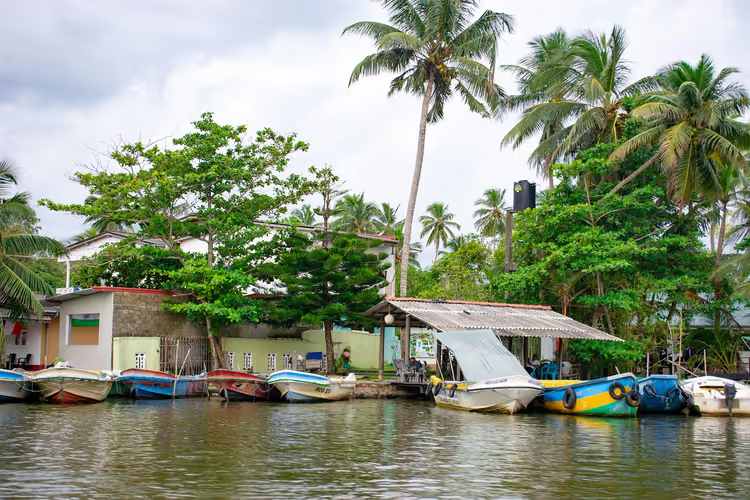
Sri Lanka digital nomad visa: $2000 monthly income and a year by the ocean
The digital nomad visa has opened up Sri Lanka to remote workers. In February 2026, the island officially launched a one-year status for those who work for foreign clients. Dozens of countries have already introduced similar visas, but the island offers a rare combination of ocean and low costs.
Previously, remote workers lived on the island on tourist visas and regularly traveled abroad. The formal status solves this problem. One condition remains strict: income must come from abroad. The visa fee is $500, and the validity period is one year (as of 09/2026, News 1st report).
We have compiled the requirements, real costs, and cities where it is most convenient to work with a laptop. Below you will find amounts, timelines, and practical details verified against official sources.
Ad: this article contains affiliate links, we earn a commission if you book through them, at no extra cost to you.
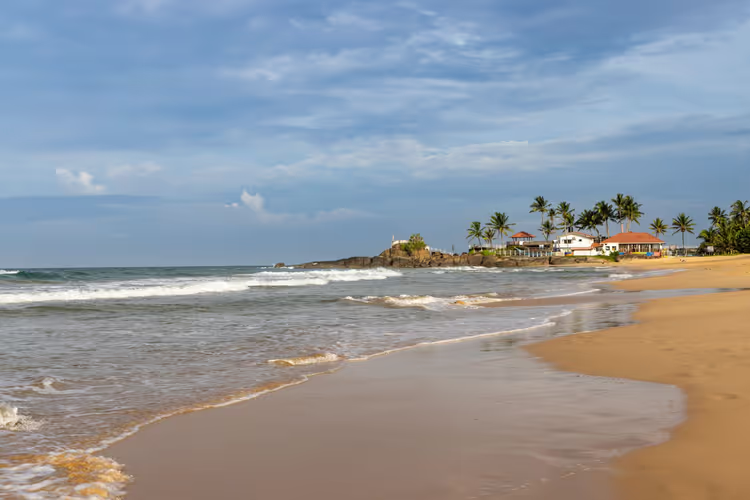
Requirements for obtaining the visa
💡 In short:
- The applicant must be 18 years or older (as of 09/2026, immigration service website).
- The minimum income is $2,000 per month (as of 09/2026, News 1st report).
- The fee is $500, and the visa is valid for one year (as of 09/2026, official website).
The main applicant confirms remote employment, freelancing, or their own business with clients outside Sri Lanka. The document package includes a passport valid for at least six months, proof of income, and a rental agreement for housing on the island.
Health insurance is mandatory for the entire period of stay. Working for local companies on this visa is prohibited; the status is designed only for foreign income. Spouses and children can apply together with the main applicant.
The application is submitted online through the Department of Immigration and Emigration portal. First you gather the documents, then pay the fee and wait for the agency's decision. Before applying, check your passport's validity: it should cover the entire travel period with a buffer.
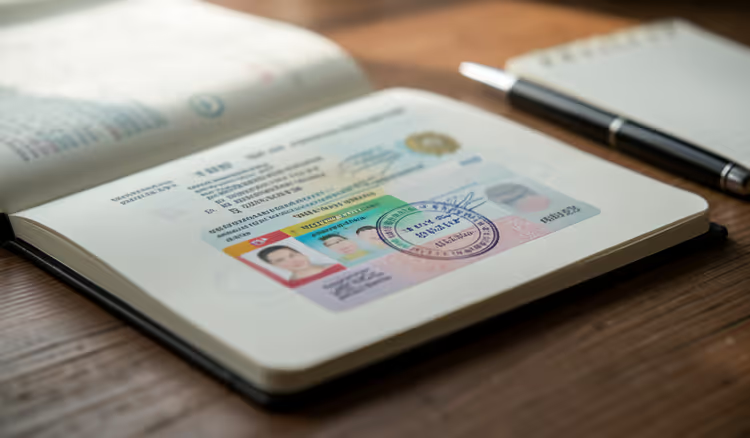 AIIllustrative image: AI-generated
Climate and seasons on the island
You can swim and sunbathe in both December and June; the water stays warm all year round. The weather here is determined by two monsoons.
The southwest monsoon brings rain from May to September, and the northeast monsoon operates from December to February. That is why the southern and western coasts are better suited for the winter months, and the eastern coast for summer.
Check the forecast before booking. Even in the dry season, short downpours occur, although they rarely interfere with laptop work.
How much does it cost to live in Sri Lanka
Sri Lanka remains one of the cheapest countries in Asia. A portion of rice with vegetable curry at a local eatery costs a couple of dollars and is often enough for two. Renting a one-bedroom apartment in a residential area of Colombo runs in the low three-digit dollar range per month.
Some beaches are free to access. Sigiriya, the Temple of the Tooth, Polonnaruwa, and Anuradhapura charge foreigners admission, as do the national parks. Bus fares and street food are cheaper than in Germany.
For long-term stays, it is more cost-effective to rent housing for a month or more. Short-term rentals through services are noticeably more expensive, and on the ground the price can often be negotiated.
Long-term housing is found through local groups and listings. It is cheaper to cook at home: markets and supermarkets offer fresh vegetables, rice, and fish at low prices. Tourist-oriented establishments charge several times more for the same dishes, so eat where the locals eat.
Where to live and work: Colombo, Kandy, and Galle
For relocation, nomads most often choose Colombo, Kandy, and Galle. Each city has its own rhythm, climate, and cost of living.
Colombo. The capital and the island's main business center. It has the most coworking spaces and cafes where you can sit with a laptop. Internet in the city is stable. The Kumbuk coffee shop offers guests Wi-Fi with a purchase.
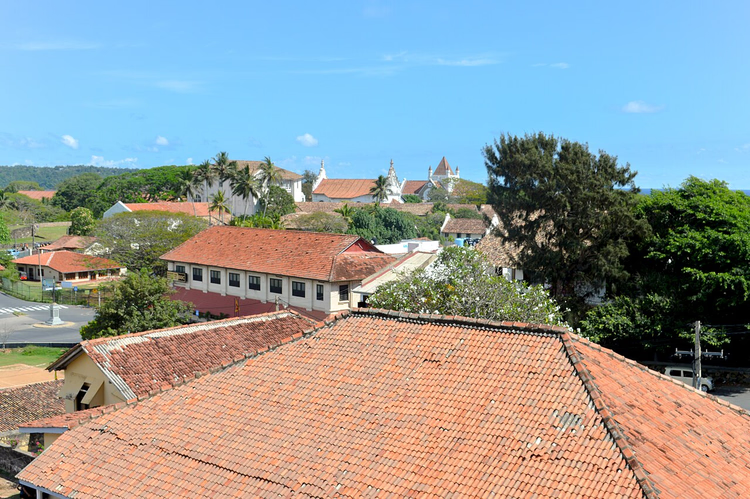 © Francisco Anzola from United States · CC BYPhoto: Francisco Anzola from United States, CC BY (https://creativecommons.org/licenses/by/2.0), Wikimedia Commons
Kandy. A mountain city and the spiritual center of Buddhism. The climate here is cooler than on the coast, so breathing is easier. The old town has preserved many historical landmarks. The Natural Coffee Shop in the center is considered a convenient place to work.
Galle. A coastal city with colonial architecture. Narrow cobblestone streets, a lighthouse, and galleries create a sense of Europe in the tropics. The old Galle Fort is a UNESCO World Heritage site. If you want to work to the sound of the ocean and dine by the water, choose Galle.
Colombo is convenient for business meetings and flights, but housing is more expensive there. Kandy sits by a lake in the center of the island; it takes several hours to reach the beaches. Galle offers a compromise: the ocean, a colonial center, and a train to the capital along the coast. Which city to choose depends on what matters most to you in winter.
Internet and eSIM for remote work
Stable internet on the island is no worse than in Europe. In major cities, coverage is good, and mobile plans are cheaper than European ones. For a nomad, connection speed matters more than the view from the window.
Before departure, it is convenient to set up an eSIM for Sri Lanka. The plan activates immediately upon arrival, and you do not waste your first day looking for a local SIM card. If you need a large amount of data, check the coverage of your chosen operator in advance.
Insurance for digital nomads
Health insurance is part of the mandatory document package. The policy must cover the entire period of stay on the island and include hospitalization.
Costs and coverage vary significantly between companies. Compare insurance options in advance so you are not looking for a policy on the day you submit your documents.
⁉️🤔 Frequently asked questions
How much do I need to earn for the digital nomad visa?
The main applicant confirms remote work and a minimum income of $2,000 per month. If more than two dependents travel with you, an additional $500 per month is required for each. Income is demonstrated through bank statements and contracts with foreign clients (as of 09/2026, News 1st publication).
How long is the visa issued for and how much does it cost?
The visa is valid for one year, the fee is $500 and is paid upon application. The status can be extended, so the island is suitable for long-term living. Check the exact processing times on the agency's website.
Can I work for a local company on this visa?
No. The status is designed only for income from abroad. A local contract requires a different type of permit.
Where is it better to live with a laptop: Colombo, Kandy, or Galle?
Colombo offers the most coworking spaces and business meetings. Kandy is chosen by those who want to live in a mountain city by a lake. Galle is chosen for its colonial charm and working by the ocean. All three cities offer stable internet.
Do I need insurance and what documents should I prepare?
Yes, a policy is required for the entire period of stay. The remaining documents are listed in the requirements section. The full list of forms is available on the immigration service website.
In short: what to book
Sri Lanka offers nomads a rare combination: a legal one-year status, a warm ocean, and low costs. The main condition remains the same: stable foreign income.
If you are just exploring the island, start with a tour of Sri Lanka on Trip.com. It will show you the climate, prices, and cities before you decide to move.

A small editorial team writing guides for independent travel. We travel ourselves, but we haven’t been everywhere, so we check prices, opening hours and how to get there against official sources.