




Water temperature in the Mediterranean Sea: when swimming is comfortable
Water in the Mediterranean Sea warms unevenly. In August, the thermometer off Mallorca reaches 29 °C, while in January off the Costa Brava it drops to 13 °C (as of 09/2026, Meerestemperatur.de). The same route can give you both a warm sea and icy water.
The month you travel matters more here than the hotel class. Below you will find average water temperatures by season, an explanation of why the sea is warming year after year, and practical details: water quality, the Blue Flag, and what beach flags mean. With this guide, you will choose dates for comfortable water instead of guessing.
Ad: this article contains affiliate links, we earn a commission if you book through them, at no extra cost to you.
Water temperature in the Mediterranean Sea by season
💡 In short:
- Swimming is comfortable from June through October, with peak warmth in August.
- In winter, water off the Costa Brava drops to 13 °C, while off the southern coasts of Spain people swim longer.
- In the eastern part of the sea, the water is warmer; off Malaga it is cooler due to the Atlantic inflow.
- Current water temperatures: 09/2026, checked on Meerestemperatur.de
Monthly averages for the entire sea are collected in one table. The spread is wide: water off the coast of Egypt and off the coast of Catalonia differs by several degrees (Meerestemperatur.de).
Month | Water, minimum | Water, maximum |
|---|---|---|
January | 8 °C | 19 °C |
February | 8 °C | 18 °C |
March | 8 °C | 18 °C |
April | 10 °C | 19 °C |
May | 16 °C | 22 °C |
June | 20 °C | 25 °C |
July | 20 °C | 28 °C |
August | 21 °C | 29 °C |
September | 21 °C | 28 °C |
October | 18 °C | 27 °C |
November | 14 °C | 24 °C |
December | 11 °C | 21 °C |
Table source: average monthly Mediterranean Sea temperatures, data as of 09/2026.
In the eastern part of the sea, the water is usually warmer. In Spain, it is warmer off the Balearic Islands and in Alicante. Off Malaga, the water is cooler due to the inflow of Atlantic water. In the north, off Barcelona and the Costa Brava, the water is colder: the proximity of cold currents and a shorter summer play a role.
Spring
In March the sea still stays at winter levels. Warming begins in April and becomes noticeable by late May, when the water approaches comfortable values (Meerestemperatur.de).
For you this means one thing: plan swimming for the second half of May. At the beginning of the month, a windy week easily brings the water back to winter marks, and you are back to swimming only in the pool.
Summer
The warmest period lasts from July through September. The sun warms the upper layer of water, and swimming becomes comfortable even for those who are reluctant to get into the sea.
In August, the water reaches 28-29 °C along the southern shores (Meerestemperatur.de). Keep another nuance in mind: in the heat, popular beaches get crowded by midday, so come by 9:00 and claim your spot without rushing.
Fall
In September, the water temperature is almost as warm as in August. Cooling begins in October and happens gradually, so your velvet season lasts longer than on the Atlantic.
In early fall, the water still stays above 20 °C, and by late November it drops to winter values (Meerestemperatur.de). The sea remains calm, and the beaches empty out.
Winter
In winter, the water is at its coldest. Along Spain's northern coast it drops below 14 °C, and only prepared people swim.
You do not have to give up the sea in winter. In the south, in the Malaga area and on the Costa del Sol, the water is milder than off the Costa Brava (Meerestemperatur.de). Check the local forecast before heading to the beach and bring a warmer towel.
 © Unknown author · CC BY-SAPhoto: Unknown author, CC BY-SA (http://creativecommons.org/licenses/by-sa/3.0/), Wikimedia Commons
Current water temperature: where to check
Live values change every day, so an average table does not replace a forecast. As of September 2026, the Mediterranean Sea water is in the range of 19 to 30 °C (Meerestemperatur.de).
Check the water temperature before heading out, and don't rely on air temperature alone: at 28 °C on shore, the sea can still be cooler. As of 12.09.2026, we verified water data on Meerestemperatur.de. If you want to stay steps away from the water, check out seaside hotels on Trip.com.
What to do on the water along Spain's coasts
Warm water alone won't fill your vacation. Kayaking, paddleboarding, snorkeling, and boat trips are more enjoyable where the water is clear and the coastline is carved into coves.
The best months for water activities match the warm season. From June through September you have the most options, while in May and October the groups are smaller and prices are lower.
Book ahead: in high season, popular outings fill up fast. Water excursions along Spain's coast on GetYourGuide include kayaking, paddleboarding, snorkeling, and evening boat trips.
How climate change is affecting the Mediterranean Sea
The sea is warming faster than previously thought. From 1982 to 2024, surface temperatures rose by an average of 0.032 °C per year, or roughly 1.4 °C over four decades (according to Copernicus).
Beyond the average increase, there are individual spikes. In August, the water in some areas warms to 29.2 °C (Meerestemperatur.de).
Warm water increases evaporation. The air picks up moisture, and heavy downpours and thunderstorms occur more often along the coast.
For nature, this is not neutral. Species adapted to cooler water and lower salinity are losing ground, displaced by warmth-loving neighbors.
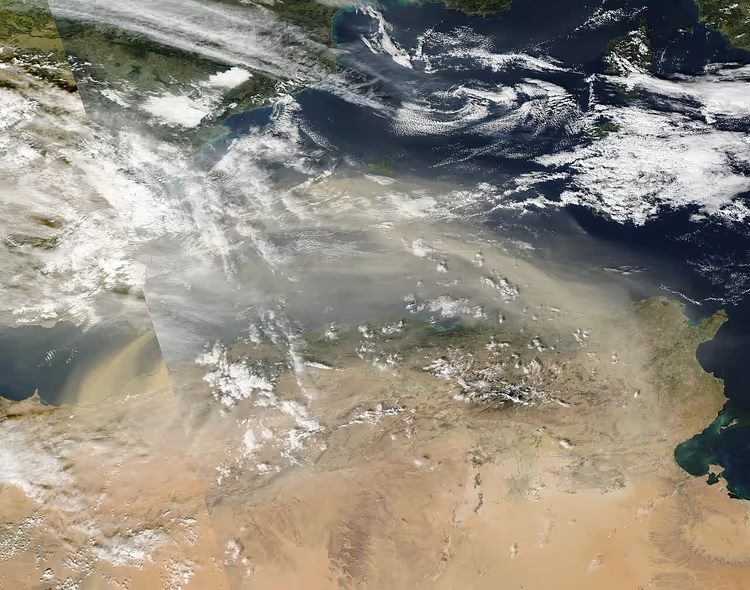
You'll notice it in the water too: jellyfish have become more numerous, and in summer they come close to shore. In some coves, their presence shifts swimming to the morning, when the wind carries them away from the beach.
Water quality and the Blue Flag
Clean beach water is not a coincidence but the result of regular testing. The Blue Flag is awarded to beaches and marinas that meet strict requirements for water quality, environmental management, safety, and facilities. The flag is awarded by the international organization Foundation for Environmental Education, which is why you see it in different countries.
For you, it's a simple reference point. If a Blue Flag is posted at the entrance, the beach has facilities, is cleaned, and is monitored. In 2026, Spain issued 794 such flags: 677 to beaches, 111 to marinas, and 6 to tourist boats (Euronews).
The best quality is usually found at beaches far from major cities: in small coastal towns, natural parks, and remote coves. Urban beaches fare worse in peak season and near ports and industrial zones.
Before your trip, check the current water quality with local authorities or environmental organizations. That way you won't waste a day on a closed section. If you want to visit several coves in one trip, a car comes in handy: compare car rental prices in Spain.
Beach safety: flags and lifeguards
On many Mediterranean beaches, lifeguards are on duty in summer. They watch over swimmers, and during their shift they have a boat, a first aid kit, and a phone to call for help. Plan to swim where lifeguards are on duty.
The reference point on the shore is the flags. Lifeguards raise them, and the color shows the sea conditions (checked on 12.09.2026 on the DLRG website):
- Green flag: swimming is allowed, no particular hazards.
- Yellow flag: swimming is possible, but with caution: strong waves or currents.
- Red flag: swimming is prohibited, conditions are life-threatening.
- Black flag: entering the water is strictly prohibited, the threat is immediate.
A green flag does not guarantee complete safety. Check whether there is a yellow-red flag on the beach: it is only placed where lifeguards are on duty.
Strong currents and waves do occur in the Mediterranean too, especially in bays with a rocky bottom. Stay closer to the shore and do not swim past the buoys, even if the water seems calm and warm.
⁉️🤔 Frequently asked questions
When is the Mediterranean Sea warmest?
The peak comes in August: along the southern shores the water rises to 28-29 °C, and average values across the whole sea are highest from July through September (Meerestemperatur.de). Comfortable swimming water lasts roughly from June to October, so the shoulder season here stretches long and is not limited to the summer months.
Can you swim in winter?
Yes, but it is not comfortable everywhere. Along the Costa Brava and Barcelona the water drops below 14 °C in winter (Meerestemperatur.de), and only the hardy go in. In the south, around Malaga and the Costa del Sol, the sea is milder, so a short swim on a sunny day is realistic. Check the local forecast and pick days without wind.
Where is the water warmer: Spain or Greece?
In the eastern part of the sea the water is usually warmer on average over the season than off the northern coast of Spain. But within Spain itself the spread is wide: the Balearic Islands, Alicante and Malaga are warmer than Barcelona and the Costa Brava. Choose a region by your travel dates, not by country.
What does a Blue Flag on a beach mean?
It is an international environmental label. It is awarded every year to beaches and marinas that meet requirements for water quality, ecology, safety and facilities. The label is granted by the Foundation for Environmental Education. For you, it is a quick way to pick a clean, well-equipped beach from a ready-made list.
How do you know a beach is safe?
Look at the flags and whether lifeguards are on duty. A green flag allows swimming, a yellow flag calls for caution, and red and black flags prohibit entering the water. If the boundaries of the safe zone are unclear, ask a lifeguard: that is faster than figuring it out yourself in the water.
In short: what to book
Warm water in the Mediterranean lasts a long time, but the best months go fast. For the warmest water, take August and the southern coasts of Spain. If calm beaches matter more to you, choose June or September: the water stays in a comfortable range and there are fewer people.
- If you are traveling to swim with children: late June or September, the water is warm and the sun is gentler.
- If you only need sea and beach: August around the Balearic Islands, in Alicante or Malaga.
- If you want to tour coves and small towns: take a car and look for accommodation along the coast.

A small editorial team writing guides for independent travel. We travel ourselves, but we haven’t been everywhere, so we check prices, opening hours and how to get there against official sources.