
















Hurricane season in the USA: when to go and how to plan a trip without risk
A hurricane can change your route in a single day, but not your entire trip. The storm season in the US scares people more than it actually should. Real activity stays along the Atlantic coast and the Gulf of Mexico (according to the National Hurricane Center, 09/2026).
Let's break it down by the facts: when the season runs, which states are in the path, what to check before you fly, and how to travel with peace of mind even at the peak. Florida, Louisiana, and the East Coast require one habit: a quick forecast check before you head out. Below you'll find the dates, a risk map, and a clear action plan.
Ad: this article contains affiliate links, we earn a commission if you book through them, at no extra cost to you.
Hurricane season in the US: the essentials in a minute
💡 In short:
- The official season runs from June 1 to November 30, with the peak from mid-August to mid-October (according to NHC).
- The main risk is on the coast: the Gulf of Mexico, Florida, and the East Coast. Hurricane rainfall also floods areas far from the shore, like Helene in 2024.
- A quick forecast check before you head out eliminates almost all of the risk.
- A flexible route matters more than canceling the trip.
- Season dates and activity: 09/2026, based on official NHC statistics.
What a hurricane is and when it becomes dangerous
A hurricane forms over very warm water. Moist air rises, creating a rotating system with strong winds and heavy rainfall. The danger comes at the moment it reaches land, the so-called landfall. That's when the storm releases its energy onto the coast: wind, storm surge, flooding.
For a traveler, the takeaway is simple. Out at sea, a storm barely affects your plans. Everything depends on where and when it touches the coast. Most systems stay over the ocean and never reach land. So from here on, we're talking about regions and timing, not physics.
When hurricane season is in the US
The official season runs from June 1 to November 30 (according to NHC data, 09/2026). But most storms develop from August to October, when the Atlantic and the Gulf of Mexico are at their warmest. The statistical peak falls around September 10.
For 2026, NOAA predicts a below-normal season (according to NOAA, 09/2026). That's not a guarantee of calm, but the overall picture works in your favor.
What this means by month:
Period | Hurricane risk |
|---|---|
June-July | occasional tropical storms, generally calm |
August-October | highest probability |
November | drops noticeably, but not ruled out |
December-May | almost no hurricanes |
Florida, Louisiana, and the East Coast feel the most activity from mid-August to mid-October. In other months, the risk drops quickly. Planning your vacation in advance? Pick a window outside the high phase, and the issue almost resolves itself.
Which US regions are in the path
The risk map is simple. Remember the coast, and everything falls into place.
Gulf of Mexico: the main zone, including Texas, Louisiana, Mississippi, Alabama, and northern Florida (the Panhandle).
All of Florida: the peninsula lies in a "hurricane corridor" and is exposed from two sides.
East Coast: possible tracks head toward Georgia, South Carolina, and North Carolina.
North Atlantic: hit less often, but storms do reach Virginia and New York.
The West Coast rarely sees hurricanes. The Pacific Ocean off California is too cold for tropical cyclones. Remnants of storms do reach there, like Hilary in 2023. Consider Hawaii separately: it lies in the Pacific hurricane zone. Most national parks, the Southwest, and the Rocky Mountains are outside the main risk zone. A road trip through Arizona, Utah, or Nevada is barely affected by storm season.
What to check before traveling to the US
Hurricanes don't appear out of nowhere. They're announced several days in advance, analyzed in detail, and monitored around the clock. That means a quick forecast check is all you need before you head out.
A one-minute ritual before your flight and before every leg of the trip:
Open the NHC storm map.
Match your travel dates and region against the forecast.
Check whether a storm is expected on your stretch of coast in the coming days.
That's all you need. Weather apps and local news duplicate this data once you're on the ground. Rely on the official source, not on alarming social media headlines. One calm look at the map saves you a lot of stress.
What to do if a hurricane is approaching
The traveler's main advantage: you're in a hotel where they know exactly what to do. Book accommodation with free cancellation, and you're free both financially and in terms of your route. Also check your insurance: does the policy cover weather-related rebookings and flight cancellations.
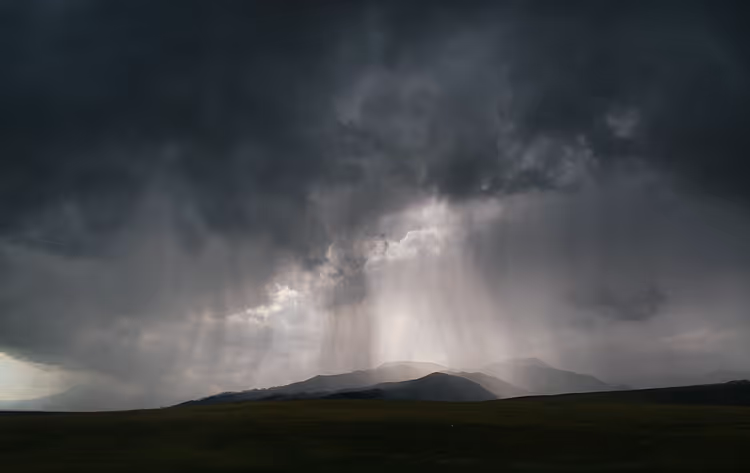
 © Markkos1992 · CC BY-SAPhoto: Markkos1992, CC BY-SA (https://creativecommons.org/licenses/by-sa/4.0), Wikimedia Commons
When a storm approaches, the system in the US works like this:
round-the-clock live TV coverage;
hotels inform guests daily: announcements, flyers, electronic boards;
evacuation routes are marked everywhere;
authorities communicate early and very clearly.
The main risk isn't at the hotel, it's on the road as the storm approaches. Got instructions from the hotel or local services? Just follow them. On a road trip, that usually means changing a section of your route rather than staying put. That keeps you safe without extra decisions.
The best time to travel to the US
If you want warmth without storm risk, plan for the first half of the year.
Best time: February-May, no hurricanes and warm weather in the south of the country.
Quite doable: June and July.
Riskier: August-October.
Calm again: from December. In November, the risk is already low, but not zero.
Florida in February and March is ideal for beaches, the Florida Keys, the Everglades, and road trips. The weather is mild, and the coast is emptier than in summer. For California and the Southwest, the season doesn't matter at all: you can go year-round.
Should you travel during hurricane season
Many blogs promise fewer tourists and lower prices. In reality, that's not true. Hurricane season overlaps with the main US tourist season:
summer school holidays;
vacations on the East Coast;
trips to Florida and the Florida Keys;
cruises along the coast;
peak visitation at national parks.
And yet you can travel during the season without worry. There's just one condition: keep your route flexible and don't tie everything to a rigid plan with no buffer. One free day in your schedule solves almost any weather surprise. There's no reason to panic, but you shouldn't ignore the forecast either.
⁉️🤔 Frequently asked questions
How likely is a hurricane during my trip?
It depends on the month. From August to October, the probability is highest, but even then a storm only affects a limited stretch of coast. Most tourists in the US don't notice anything at all.
Can I travel as usual during hurricane season?
Yes. Most regions lie outside the main hurricane zones. Even in Florida, trips go smoothly if you check the weather once before heading out and keep your route flexible.
How do I know if a hurricane is heading toward my route?
Hotels, news, and apps communicate very clearly. Rely on the National Hurricane Center map, which is updated around the clock.
What should I do if a hurricane is approaching?
Follow official instructions. Hotels and local services are very experienced and provide updates constantly. Don't try to push through an area if you're asked to stay.
Will my trip be canceled if a hurricane is expected?
Airlines and cruises often change plans in advance. On a road trip, it's usually about changing the route, not canceling the whole trip. That's why a flexible schedule solves almost all problems ahead of time.
Are there insurance policies that help with hurricanes?
Many policies cover natural disasters, but only if the storm hadn't been announced at the time of purchase. If you're traveling during the season, look for a clause covering trip cancellation and interruption due to weather. It's worth comparing terms in advance.
In short: what to book
Hurricane season is no reason to cancel a trip to the US. Pick a month outside the peak and check the forecast before every leg of the trip.
If you're traveling from February to May: go for Florida, the Keys, and the Everglades without worrying about storms. If you're traveling in August-October: book accommodation with free cancellation and keep your route flexible. If you want financial peace of mind: compare insurance terms with weather risk coverage in advance.

A small editorial team writing guides for independent travel. We travel ourselves, but we haven’t been everywhere, so we check prices, opening hours and how to get there against official sources.