
















Itiquira waterfall: how to get there from Brasilia and how much the entrance costs
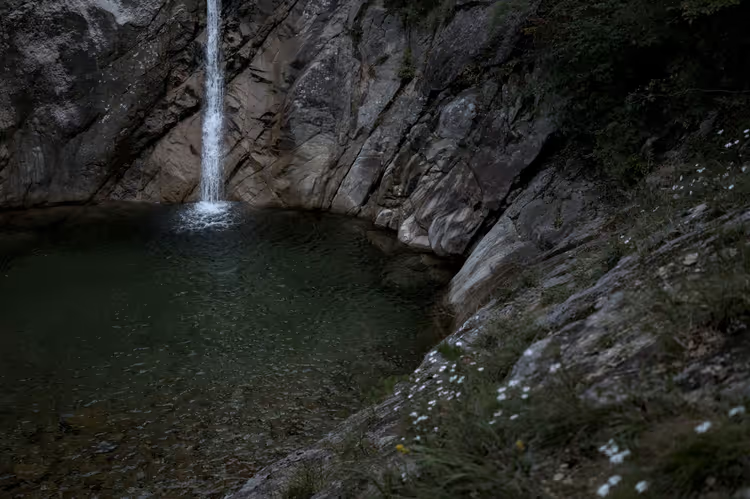
The Itiquira Waterfall plunges down from a height of 168 meters (as of 09/2026, Gazeta do Culturismo). It is one of the tallest waterfalls in Brazil, and it is about 114 km from Brasilia along a paved road (as of 09/2026, Rome2Rio route service).
The waterfall lies in the Itiquira Municipal Park near the town of Formosa in the state of Goias. You come here for a day, look at the wall of falling water, walk the trails, and listen to the roar that you can hear long before you reach the viewing platform.
Ad: this article contains affiliate links, we earn a commission if you book through them, at no extra cost to you.
Itiquira Waterfall: what you need to know
💡 In short:
- Itiquira Waterfall is located in the Itiquira Municipal Park near the town of Formosa in the state of Goias.
- The park is open daily from 09:00 to 17:00, the ticket office closes at 16:00, admission is paid.
- Prices and opening hours: as of 09/2026, according to Gazeta do Culturismo.
The main stream falls into the gorge as one wide ribbon, and the water rushes over the rocks at high speed. The long ribbon of the main stream is visible from afar, and the roar of the fall can be heard far around, so the waterfall is noticed even on the approach to the park.
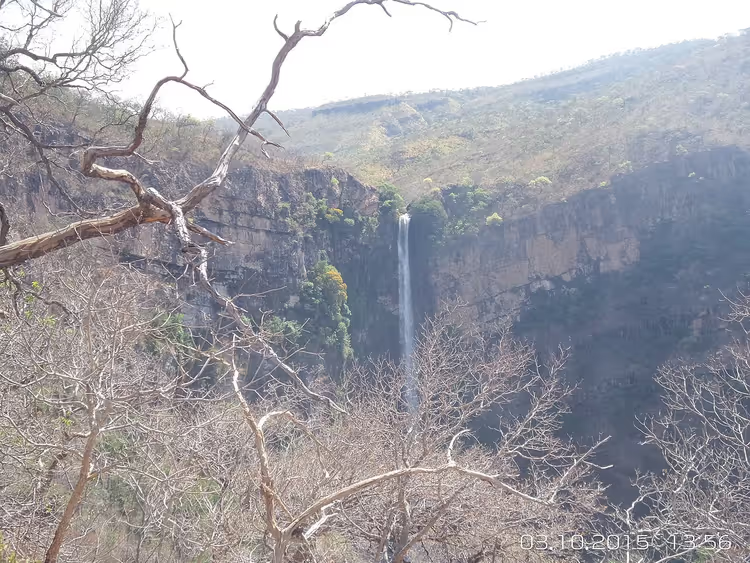 © Josue Marinho · CC BYPhoto: Josue Marinho, CC BY (https://creativecommons.org/licenses/by/3.0), Wikimedia Commons
During the rainy season, which lasts from December to February, the flow becomes especially powerful. Fine spray reaches even people standing away from the base, and you can get soaked through.
You can also climb to the top along a steep trail, but this is an activity for physically fit people. The climb takes time and effort, and it is hard to breathe in the humid air. The descent is also not easy, because the rocks underfoot are often slippery.
The viewing platforms at the base are equipped, and they offer the best view of the wall of water. Clear streams fall onto a reddish cliff, and on sunny days a rainbow appears at the base.
Natural attractions
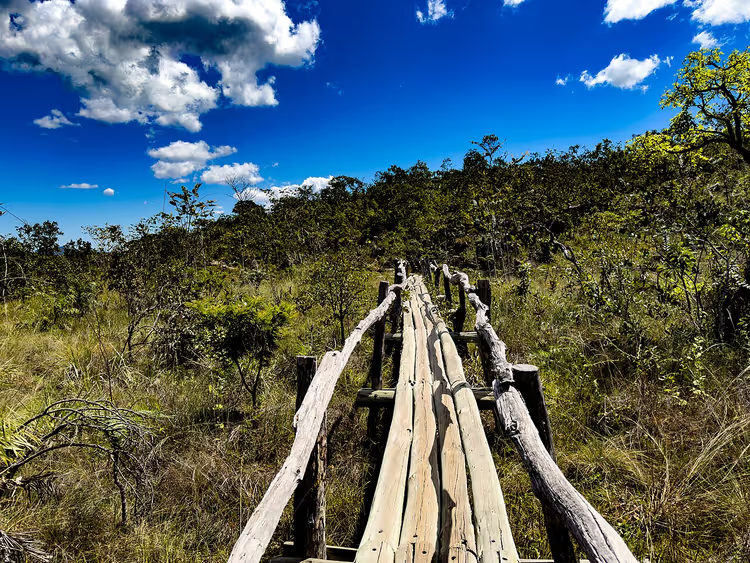
The abundance of moisture nourishes the surrounding flora. Tall trees here alternate with low shrubs and tropical vines, and the tops of neighboring hills are covered with thickets of small-leaved trees.
If you look at the hills from above, a silvery ribbon of water winds through the green carpet and flows into the bowl of the cliff. This view opens from the top of the trail, so the climb is worth the effort.
 © RebeloZero · CC BY-SAPhoto: RebeloZero, CC BY-SA (https://creativecommons.org/licenses/by-sa/4.0), Wikimedia Commons
Several dozen mineral springs with healing properties bubble up in the waterfall area. Nearby lies Lagoa Feia, which attracts fishing enthusiasts: there is plenty of fish in it, so people often sit on the shore with a rod.
Where the stream meets the ground, the water scatters into millions of tiny droplets and rolls down the rapids, forming small cascades. Green branches hang from the pinkish-purple rocks, and almost all park guests love this landscape.
Downstream the river calms down, and only the distant rumble reminds you of Itiquira's power. Picturesque banks of yellow sandstone frame the unhurried flow of the same yellowish hue.
Flora and fauna of the park
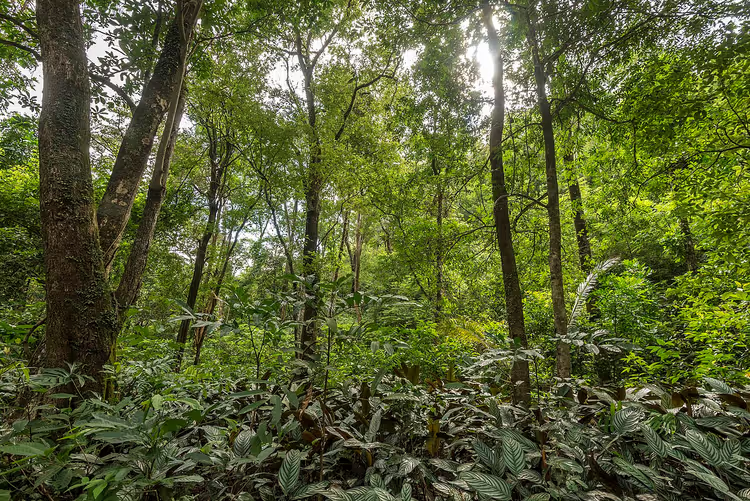
The park occupies a small area and serves as an island of living nature in the vicinity of Formosa. Almost all plant species typical of the state of Goias with its savanna climate are represented here.
Among the palms, the elephant palm, attalea, and pashiuba stand out, with some specimens rising higher than a multi-story building. Nearby grow rare cotton trees, cedrela, rubber-producing seringa, and cacao trees. Vines climb the tree trunks, wild orchids bloom in the grass, and large ficuses hide in the shade.
Unusual insects hover over the bright ornamental shrubs, and lizards dart between the trunks below. There are especially many birds here: parrots and herons do not hide in the canopy and let people come close.
The animals are also used to visitors. Capybaras calmly run across the paths. The park strictly enforces cleanliness, so drinking alcohol, littering, and playing loud music in cars are prohibited here.
Infrastructure and cafes nearby
Well-maintained paths run through the park, where visitors stroll. A tourist complex with a campsite and several restaurants serving Brazilian cuisine operates nearby.
Everything here is conducive to a relaxing break: you can sit in the shade, listen to the varied birdsong, and take a break from city noise. It is easy to spend a whole day in the park, so many people bring food and water with them.
Tickets and opening hours
The park is open every day, but the ticket office operates on a schedule. After the ticket office closes, entry to the grounds stops, and the park itself remains open only for visitors to exit.
What | Details |
|---|---|
Opening hours | daily from 09:00 to 17:00, entry closes at 16:00 (as of 09/2026, Gazeta do Culturismo) |
Admission | about 20 reais, discount for children, seniors, and local residents (as of 09/2026, Gazeta do Culturismo) |
Climb to the top | about two hours one way, athletic shoes required (as of 09/2026, Tripadvisor) |
Payment is at the entrance, and the ticket office closes at 16:00, so arrive early. The discount is verified on site, so bring your ID and cash.
Tours and tickets
Guided tours, skip-the-line tickets and activities — most offers can be cancelled free of charge.
See offers on GetYourGuideThe widget loads once you give your consent.
How to get to the waterfall
A paved road about 114 km long leads from Brasilia to the park (as of 09/2026, Rome2Rio). By car you will get there in about two hours, and there is parking at the entrance. Public transport does not go directly to the waterfall, so most guests arrive by rental car or as part of a tour.
Well-maintained paths lead to the viewing platforms at the base, so anyone can see the main panorama.
The map below shows the location of Itiquira Waterfall.
⁉️🤔 Frequently asked questions
How much does it cost to enter Itiquira Park?
Admission is paid. A full ticket costs about 20 reais, and there is a discount for seniors, children, and local residents (as of 09/2026, Gazeta do Culturismo). Payment is at the entrance, entry closes at 16:00.
What time of year is the waterfall fullest?
The most powerful flow occurs during the rainy season, that is, from December to February. At this time, spray reaches the viewing platforms, and you will get wet quickly. In the dry season the flow is weaker, but walking in the park is more comfortable.
Can you climb to the very top of the waterfall?
Yes, a steep trail leads to the top, but it is only suitable for physically fit people. Wear closed shoes with non-slip soles.
How do you get to the waterfall without a car?
There is no direct public transport to the waterfall. The easiest way is to rent a car or go as part of a day tour from the capital.
What to bring with you to the waterfall?
A waterproof jacket or raincoat, athletic shoes, and a supply of water. It is always damp at the base. Also bring cash for the ticket.
In short: what to book
Itiquira Waterfall is worth seeing if you have a free day in Brasilia. The drive here takes a couple of hours, and a walk in the park does not end quickly. If you do not have a car, take a day tour from the capital. If you are driving yourself, arrive in the morning and bring waterproof clothing.

A small editorial team writing guides for independent travel. We travel ourselves, but we haven’t been everywhere, so we check prices, opening hours and how to get there against official sources.