
















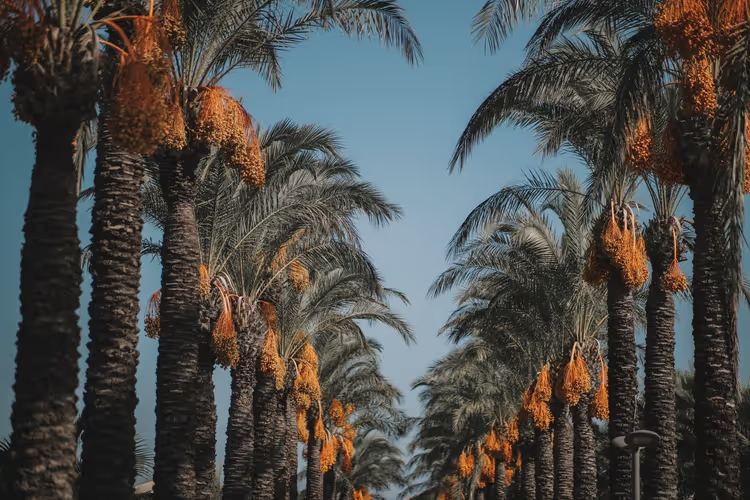
Joinville: city of dance, palm avenue and German cuisine
Brazil usually means the beaches of Rio, but the south of the country looks different. Joinville, the largest city in Santa Catarina, sits on the shore of Babitonga Bay. Descendants of German and Swiss colonists live here, and the city got its name from a French prince.
There is no ocean within the city limits: you can only swim in rivers. But the island of São Francisco do Sul lies nearby, and Joinville itself preserves a 19th-century palm avenue, an old market, and the Escola do Teatro Bolshoi no Brasil ballet school.
Below is everything you need for an independent trip: how to get there, when to go, where to stay, and what to see. Two or three days will be enough.
Ad: this article contains affiliate links, we earn a commission if you book through them, at no extra cost to you.
Joinville: a German colony in southern Brazil
💡 In short:
- Set aside two or three days for the city: the center, the park, and the observation deck are close together.
- Reserve a separate day for swimming in the sea on the island of São Francisco do Sul.
- Choose the second half of July for the Festival de Dança de Joinville or November for Festa das Flores.
- As of 09/2026, checked on the official Joinville tourism portal.
Joinville grew out of a German and Swiss colony, so there really are many fair-haired descendants of Europeans here. At the same time, the city got its name from a French prince. Today it is the largest city in the state and the ballet capital of the country.
The Escola do Teatro Bolshoi no Brasil ballet school has operated in Joinville since 2000 (as of 09/2026, official school website). Every July the city hosts the Festival de Dança de Joinville: the organizers call it the largest dance festival in the world and expect tens of thousands of spectators (according to the Joinville tourism portal).
How to get there?
Joinville has its own airport, Lauro Carneiro de Loyola, but there are few direct flights. It is more convenient to fly through São Paulo, Campinas, or Porto Alegre, and then continue by plane or bus. If tickets to Joinville are expensive, check neighboring cities: Navegantes, Florianópolis, and Curitiba, from which buses run to the city.
Flight prices rise noticeably in high season, so it is worth comparing routes in advance: find tickets to Brazil. The trip to the center is short, since the airport sits right within the city limits.
When to go?
You can come in any month. In summer the air warms up to 30 degrees, in winter it stays around 15-18 degrees (according to the Joinville tourism portal).
It’s easier to tie your travel dates to a festival. Festival de Dança de Joinville runs from July 20 to August 1 in 2026, and hotels in the center sell out several months in advance for those dates (as of 09/2026, festival’s official website). Plant lovers should come in November, when the city hosts Festa das Flores: in 2026 it runs from November 17 to 22 (as of 09/2026, Festa das Flores official website).
Both events draw visitors from across the country. Book your accommodation for those dates well in advance.
Where to stay?
Accommodation in Joinville comes down to two areas: the city center or the neighborhood near the bay. The center is compact, and from there you can walk to the palm avenue, the market, and restaurants. Options closer to the water suit you if you want quiet and greenery around you.
It’s easier to search using the map and filters: see hotels in Joinville on Trip.com.
What to see?
The city’s main sights are concentrated in the center and on Boa Vista hill, so your route won’t stretch over dozens of kilometers. It’s calm and safe to walk around here. You can cover everything in a couple of days.
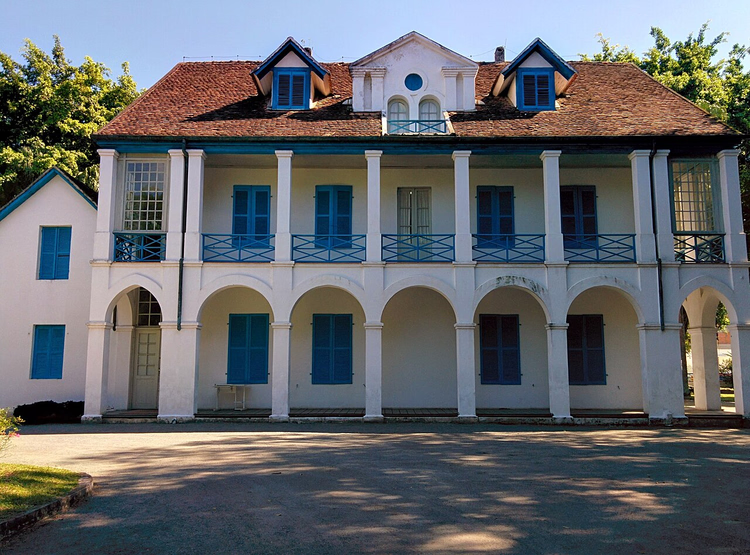
Escola do teatro bolshoi no brasil
The only overseas branch of the Bolshoi Theater opened in Joinville in 2000 (according to the school). Here, future ballet dancers are trained using the Vaganova method. If you miss the festival, you can still take a walk around the theater.
 © Giulianobr · CC BY-SAPhoto: Giulianobr, CC BY-SA (https://creativecommons.org/licenses/by-sa/4.0), Wikimedia Commons
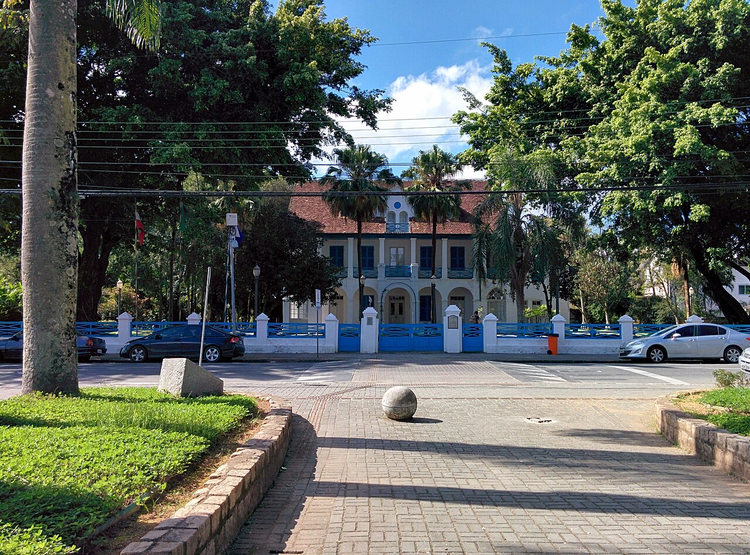
Rua das palmeiras and museu nacional de imigração e colonização
 © Giulianobr · CC BY-SAPhoto: Giulianobr, CC BY-SA (https://creativecommons.org/licenses/by-sa/4.0), Wikimedia Commons
Rua das Palmeiras was laid out in 1873: 52 palm trees were brought from Rio de Janeiro (as of 09/2026, Joinville tourism portal). Over a century and a half, the trees have become the city’s calling card. On a hot day, it’s pleasant to stroll here in the shade. Sit down on a bench.
At the end of the avenue stands the Museu Nacional de Imigração e Colonização. It preserves the history of the colonization of southern Brazil from 1851 (according to Joinville city hall). Inside you’ll see antique furniture, and the building itself has long been part of the city’s history.
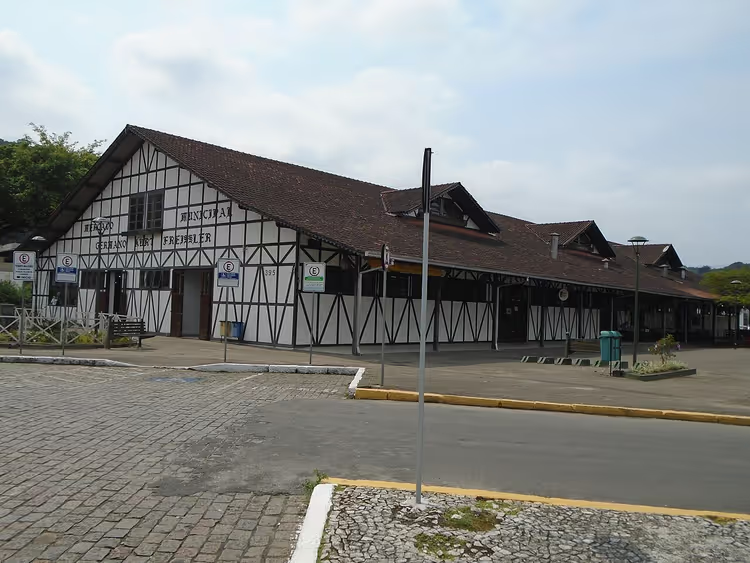
Mercado Público
The Mercado Público city market opened at the beginning of the last century and remains a popular spot to this day. It sells fresh fruit and vegetables, meat, fish, and goods made by local artisans. Several small eateries cook right on the spot, so at lunchtime you can grab an inexpensive bite.
 © Eugenio Hansen, OFS · CC BY-SAPhoto: Eugenio Hansen, OFS, CC BY-SA (https://creativecommons.org/licenses/by-sa/4.0), Wikimedia Commons
Mirante do morro da boa vista
The Mirante do Morro da Boa Vista lookout rises 250 meters above sea level (according to the Joinville city government). From the top you will see Babitonga Bay on one side and Serra do Mar on the other. You can get up by bus or on foot, about two kilometers uphill through the Atlantic forest.
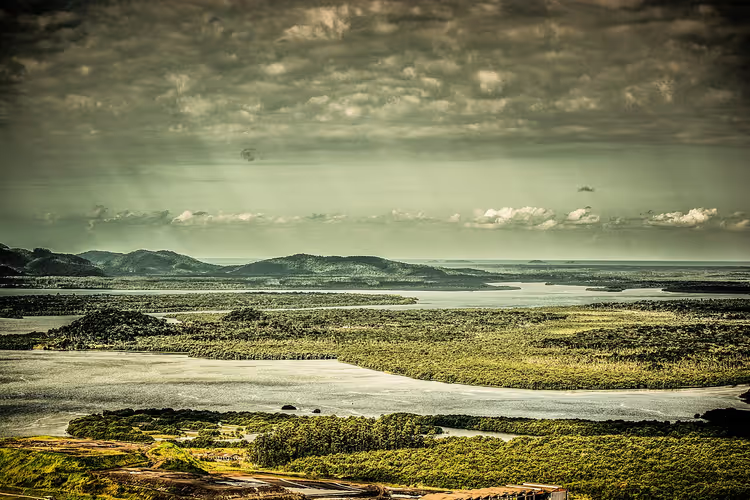 © Chrisporto · CC BY-SAPhoto: Chrisporto, CC BY-SA (https://creativecommons.org/licenses/by-sa/3.0), Wikimedia Commons
Admission is free. The catch: the climb in the heat is tough, so bring water.
Parque Zoobotânico
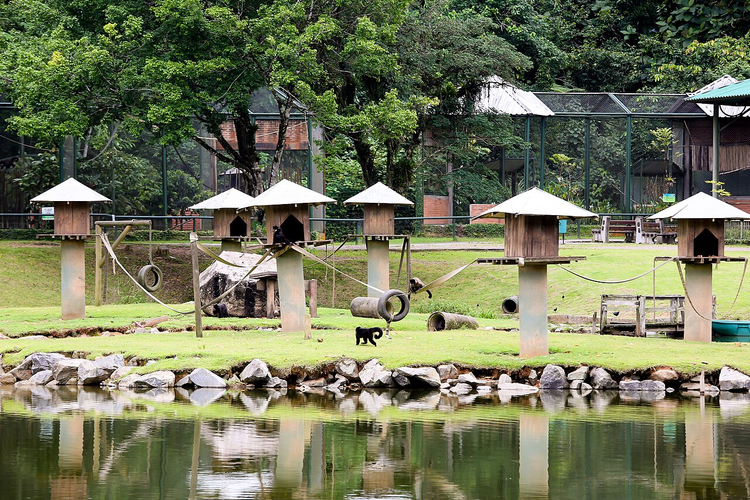
Next to the Atlantic forest lies Parque Zoobotânico. Tropical birds and animals live here, and admission is free (according to the Joinville tourism portal). On weekends families fill the grounds.
You will be more comfortable coming on a weekday. Inside there are pull-up bars and exercise equipment: working out outdoors is common in Brazil.
São francisco do sul island
For ocean swimming, people head to São francisco do sul island. A ferry runs between the city and the island (as of 09/2026, São Francisco do Sul city government). Plan the trip for a full day so you have time for the beaches and the old town.
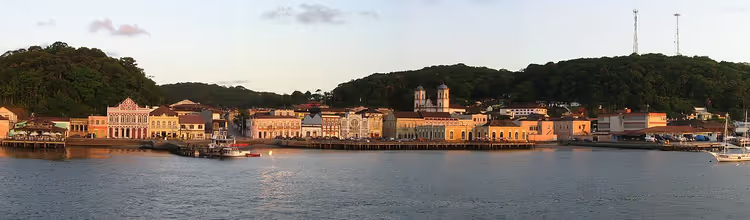 © Eduardo Marquetti from Itajai, Brazil · CC BY-SAPhoto: Eduardo Marquetti from Itajai, Brazil, CC BY-SA (https://creativecommons.org/licenses/by-sa/2.0), Wikimedia Commons
If you want a guided tour, check out regional tour options on GetYourGuide.
Where to eat
Joinville's cuisine is multicultural. German traditions sit alongside Italian, Mexican, and Asian recipes, so you have plenty of choice.
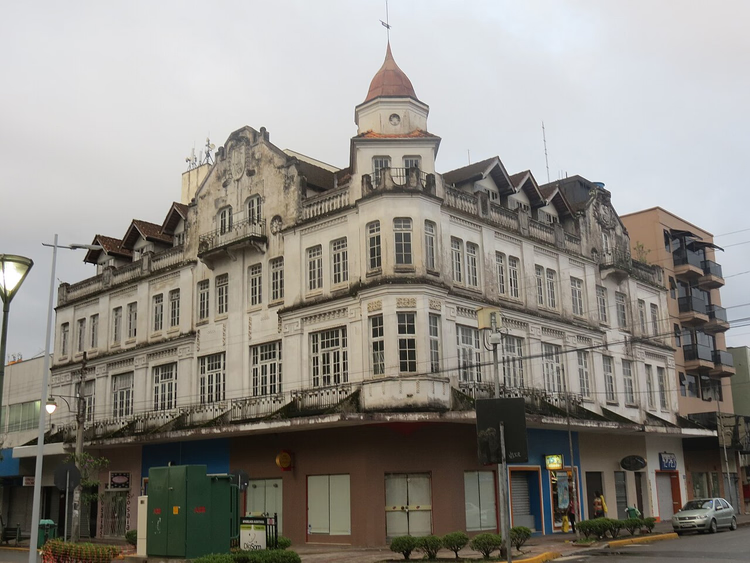 © Roberto de vasconcel… · CC BY-SAPhoto: Roberto de vasconcel…, CC BY-SA (https://creativecommons.org/licenses/by-sa/3.0), Wikimedia Commons
Start with Biergarten, which serves German cuisine. It is cozy, the staff is friendly, and the portions are fantastically large. One dish easily feeds two.
At Guacamole Cocina Mexicana you will find a festive atmosphere: the bright dining room is visible from afar. Here you can try on a sombrero, listen to Mexican music, and order nachos, tacos, or burritos.
The Italian Cantina Don Brunno rounds out the list. People come here for a quiet dinner after a walk through the center.
Find hotels in Joinville
Compare prices across booking sites and filter for rooms with free cancellation.
Compare prices on Trip.comThe widget loads once you give your consent.
⁉️🤔 Frequently asked questions
When is the best time to visit Joinville?
The city is open for travel year-round. In summer the air warms up to 30 degrees, in winter it stays around 15-18 degrees. For Festival de Dança de Joinville, choose the second half of July; for Festa das Flores, November.
Is it safe to walk around Joinville?
Joinville is considered a calm large city in Brazil, so during the day you can walk around without worry. As anywhere, do not leave your belongings unattended and ask at your hotel which areas to avoid in the evening.
Can you swim in the ocean?
Joinville itself has no beach access: you can only swim in rivers. For ocean water, people go to São francisco do sul island, which is served by a ferry. The trip takes almost a full day, so plan it in advance.
How many days do you need for Joinville?
Two to three days will be enough for the center, the palm avenue, the market, the lookout, and the park. If you add São francisco do sul island, allow one more day. That is enough to see the city without rushing.
What should you definitely try?
Try German cuisine, since the city grew out of a German colony. Specific restaurants are listed above in the "Where to eat" section.
In short: what to book
If you only have one day, focus on the center: the palm avenue, the market, and the observation deck. If you are going for the dance, plan for the second half of July and stay closer to the center. If you want the sea, set aside a day for São Francisco do Sul island.
Accommodation and flights for festival dates sell out quickly. You can compare options and prices here: find a hotel in Joinville on Trip.com.

A small editorial team writing guides for independent travel. We travel ourselves, but we haven’t been everywhere, so we check prices, opening hours and how to get there against official sources.