





 AIIllustrative image: AI-generated
Maldives by month: dry season, rains and cheap weeks
The dry season in the Maldives runs from January through March. The wet season starts in mid-May and lasts until late November. Year-round, the air warms up to 30-32 °C, and the sun shines for at least six hours a day (as of 09/2026, official meteorological service website).
So the month you choose isn't about heat, it's about two other things: how many rainy days there will be and how much a night at a hotel will cost.
Below is a breakdown of the seasons, a month-by-month climate table, and the honest catches of each period.
Ad: this article contains affiliate links, we earn a commission if you book through them, at no extra cost to you.
Maldives climate at a glance
💡 In short:
- Best months for the beach: January, February, March, and the first half of April.
- Cheapest weeks of the year: June, July, August, and September.
Month | Daytime | Rainy days | Sun per day | What it means for you |
|---|---|---|---|---|
January | 30 °C | 6-8 | 9-10 hours | Dry, calm sea, high season |
February | 30 °C | 5 | 10-11 hours | The sunniest and most expensive month |
March | 31 °C | 6-8 | 9 hours | Peak heat, almost no rain |
April | 31 °C | 8-10 | 8-9 hours | Warmest water of the year |
May | 32 °C | 16-19 | 7-8 hours | Downpours, wind, start of surf season |
June | 30 °C | 15 or more | 7-8 hours | Low prices and consistent waves |
July | 30 °C | 13 or more | 6-7 hours | Whale sharks off South Ari |
August | 30 °C | 14 or more | 7 hours | Manta season in Hanifaru Bay |
September | 30 °C | 7-15 | 7-8 hours | Rain, but the cheapest month |
October | 30 °C | 12 or more | 7 hours | Monsoon shift, calm spells lasting two weeks |
November | 30 °C | 10 or more | 6-7 hours | Sun returns, prices rise |
December | 29 °C | 7 or more | 7-9 hours | Holidays, hotels get booked well in advance |
Table data: 1991-2020 averages from the Maldives Meteorological Service, with a month-by-month breakdown at maldives.com. Note that only rain and sun change in the table. Air temperature stays put all year.
Humidity is also nearly constant, so the mugginess feels the same in January and July. The ocean breeze helps: on open beaches it takes a couple of degrees off, while in enclosed lagoons you'll feel the full heat.
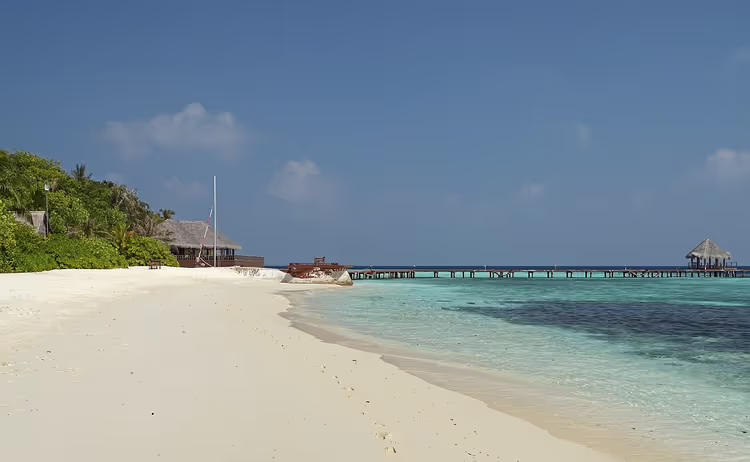 © Ввласенко · CC BY-SAPhoto: Ввласенко, CC BY-SA (https://creativecommons.org/licenses/by-sa/3.0), Wikimedia Commons
Best time for the beach, diving, and surfing
There's no single best month, because each activity has its own season. Divers come back happy during the dry weeks, surfers wait for ocean winds, and manta hunters arrive in the wet months.
Activity | Best months |
|---|---|
Beach vacation | January, February, March |
Diving and snorkeling | December, January, February, March, April |
Surfing and kiting | May, June, July, August, September, October |
Mantas and whale sharks | August through November |
Trip on a minimal budget | June, July, August, September |
The table is based on meteorological service data and a month-by-month weather overview. If your interests don't line up with the table, feel free to book the shoulder season: the weather stays warm regardless.
Maldives weather: two monsoons
The Maldives stretch nearly a thousand kilometers from north to south and cross the equator. There are more than a thousand islands here, and a precise forecast for each one is impossible. Official data is collected at three weather stations: in the northern, central, and southern parts of the archipelago.
The climate here is driven by two monsoons. The southwest monsoon arrives around mid-May and lasts until November, while the northeast monsoon takes up January, February, and March. The meteorological service classifies December and April as transitional months, when the weather changes from day to day (as of 09/2026, Maldives Meteorological Service).
Rainfall is heavier in the south: southern atolls get about 2,218 mm of rain per year, central atolls about 1,966 mm, and northern atolls about 1,779 mm (as of 09/2026, Maldives Meteorological Service). The record daily downpour was recorded in Addu on November 24, 2015: 228 mm in 24 hours.
Rain comes in short bursts, and even at the height of the wet season a downpour usually ends within half an hour to an hour, with the sun coming right back out. The meteorological service notes separately that the heat doesn't let up even in the rain: the air stays in the 25 to 32 °C range all year.
Dry season: January through March
The northeast monsoon brings clear skies, light winds, and a calm sea. This is the best time for both the beach and underwater activities: the water is clear and currents are gentle. These are the weeks of high season, which is why a hotel night costs the most.
The peak of the dry season falls in March: the month is usually called the hottest, and swimmers like it best of all. Prices in March stay high, and Easter weeks get snapped up several months in advance.
December and April stand apart: the meteorological service considers them transitional, but travel agencies like to lump them in with the dry season (as of 09/2026, official season months). In practice, you get good weather and a lower price than in February. Comparing prices for your dates is easy in the Maldives hotel search).
Wet season: May through November
The southwest monsoon changes the picture: winds pick up, humidity rises, and thunderstorms roll in across the islands. Downpours become more frequent but remain short, while hotels start offering discounts and the islands feel noticeably less crowded.
 © Hansueli Krapf · CC BY-SAPhoto: Hansueli Krapf, CC BY-SA (https://creativecommons.org/licenses/by-sa/3.0), Wikimedia Commons
The practical benefit is real: the same pool villas cost less in June than in March, and staff have more time for you. If this is your first visit and you are not ready to pay peak rates, the wet season suits you without any caveats.
Underwater life is thriving during these months. Plankton rises to the surface, drawing manta rays and whale sharks with it. Snorkelers are more likely to encounter large animals in summer, although visibility is worse in some spots than during the dry months.
The Maldives by month
January: dry weeks and calm seas
The northeast monsoon has already gained strength, the sky is clear most days, and the sea is smooth. This is the best month for a first visit to the archipelago. You get stable weather and good underwater visibility. The catch: January is expensive, and some islands get booked up long before the trip.
February: the sunniest month
February brings more sun than any other month of the year and the fewest rainy days. The weather is predictable, which is why February sees the peak of honeymoon travel. The catch: hotel prices are at their highest during this time, and available rooms run out fast.
March: heat and peak prices
The meteorological service calls March the hottest period of the year (as of 09/2026, month-by-month overview). There is almost no rain, and the sea is warm and clear. The catch: prices remain high. If you do not handle humidity well, move your trip to February or book a villa with air conditioning and a shady garden.
April: warm water and changeable skies
A transitional month: high season ends and prices start to drop. The sea warms up more than at any other time of year, so swimming is comfortable even with children. The sky is already changeable, and a couple of rainy days will happen. April is good for diving: the water is warm and plankton starts to move.
May: rain and the start of surf season
The southwest monsoon arrives in mid-May. Downpours come in bursts, with sun returning in between. Hotel prices fall, and you pay less for the same villa than in March. For surfers, May opens the best season of the year: the swell comes from the west and holds until autumn.
June: wind, swell, and low prices
In the central atolls, June is considered the windiest month. The reef swell is consistent, so breaks like Cokes, Chickens, and Sultans work almost every day. Beach time gets interrupted by short downpours, but the sun still breaks through. Hotels keep prices at their minimum and often throw in perks like free transfers.
July: whale sharks at South Ari
Plankton rises to the surface, and whale sharks come close to the atolls. At South Ari they are seen year-round, but from July through November the chances are highest (as of 09/2026, maldives.com). Rain is frequent, but a week at a hotel costs noticeably less, and the reefs stay just as alive.
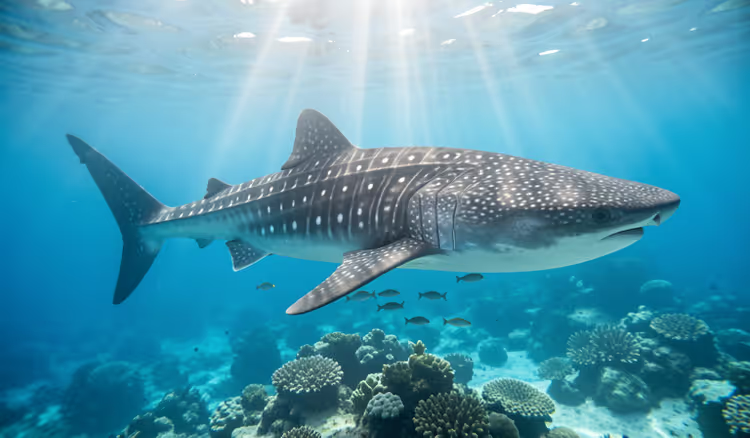 AIIllustrative image: AI-generated
August: manta season in Hanifaru Bay
Dozens of mantas gather in Hanifaru Bay in Baa Atoll: it is part of a UNESCO biosphere reserve, and the number of boats there is limited (as of 09/2026, Maldives travel guide). The feeding season falls during the wet months, and tropical downpours can push an excursion back by a day.
September: rain and the cheapest month
September has between 7 and 15 rainy days (as of 09/2026, Maldives Meteorological Service), yet the sun still breaks through every day. Hotels drop to their lowest prices, so the month suits those who are ready for weather whims.
October: monsoon shift and calm seas
The monsoon turns, the wind dies down, and rain becomes less frequent. The sea is warm, and underwater visibility improves. At the change of seasons, two-week calm spells happen, when surfers have nothing to ride. For the beach, October is already good, and prices stay low: you can still grab a hotel at summer rates.
November: the sun returns, prices rise
Rainfall keeps decreasing and the sky brightens, but the monsoon has not fully turned yet. Prices start climbing toward the holidays. You can get a hotel at autumn rates if you book in advance. Underwater visibility improves noticeably, and large schools return to the reefs.
December: holidays by the ocean
December opens the transition to the dry season and coincides with European holidays. Hotels put on festive dinners, and the reefs are especially lively. The catch is obvious: New Year's week is expensive, so you need to book it six months ahead. For a first visit, the month is still good.
Diving and snorkeling: when visibility is best
The calmest and clearest weeks fall in mid-January and March. The Indian Ocean settles down, currents are weak, and the water is clean. Beginners are most comfortable at this time: it is easier for an instructor to manage the group, and dives go according to plan.
Whale sharks stay around South Ari year-round, but from July through November they are seen more often. Mantas come for plankton during the wet season, when the water near shore is murkier but richer in food. Snorkelers are willing to put up with rain for a chance to see them.
Snorkeling works in the shoulder season too. Tours are sold at the hotel front desk or the dive center, so you can pick a program on the spot after checking the forecast. It is convenient to compare options in advance in tours and diving programs on GetYourGuide.
When to go for surfers and kiters
The southwest monsoon drives swell from May through October. The wind holds in the upper part of the Beaufort scale, and the reef breaks near Malé get as big as they come. Kiters pick the same months: steady wind and a shallow lagoon work well for learning.
There is a nuance the brochures do not mention. At the monsoon shifts, in May and October, a calm spell arrives and lasts about two weeks. On those days there is nothing to do on the water, and boards sit on the shore.
Calm water is also what snorkelers need. Swimming with a mask is most pleasant from December through April, when the sea is smooth and visibility is at its best. In other months you can still find sheltered lagoons where the wind is barely felt.
⁉️🤔 Frequently asked questions
When is the best beach weather in the Maldives?
The meteorological service considers January, February, and March the dry season, and places December and April in the transitional period (as of 09/2026, Maldives meteorological service). During these weeks there is the least rain, the sea is smooth, and the sun shines for several hours at a stretch. For a beach trip, pick February or March.
When is the cheapest time to go?
The cheapest time is the wet season from June through September: hotels lower prices because of the rain. The lowest weekly rates come in September. If you are fine with short downpours, you will save the most in these months, and the weather between rains stays warm and sunny.
Do the rains get in the way much?
Downpours in the wet season come in short bursts, usually from half an hour to an hour, and then the sky clears again (as of 09/2026, Maldives Meteorological Service). Thunderstorms more often arrive at night and early morning. A full day under clouds is rare, so plans get disrupted for a couple of hours, not a whole day.
What time is best for diving and mantas?
The clearest and calmest weeks fall in mid-January and March. Whale sharks at South Ari are seen more often from July through November. Mantas gather in Hanifaru Bay during the wet season, when plankton rises to the surface. That is enough for snorkeling, but plan deep dives for the dry months.
When is there a calm spell in the Maldives?
At the monsoon shifts, meaning in May and October, the wind dies down for about two weeks (as of 09/2026, maldives.com). For surfers this is dead time, but divers and snorkelers get a calm sea and mild weather without strong wind.
In short: what to book
If your vacation is in February, book the hotel several months ahead: demand in the dry season exceeds supply.
If you want to save money, look at weeks from June through September and do not be afraid of short downpours.
If diving or mantas are on your list, plan the trip for March, April, or the end of the wet season.
It’s convenient to compare hotels for your dates in the Trip.com Maldives search.

A small editorial team writing guides for independent travel. We travel ourselves, but we haven’t been everywhere, so we check prices, opening hours and how to get there against official sources.