










Malaysia by month: where it is dry and where the rainy season is
The right month matters more in Malaysia than the hotel category. The country is split by the South China Sea. The dry season on the west and east coasts does not coincide. In Kuala Lumpur in November you will get soaked, while on Langkawi the same days will be sunny.
We have put together the best time by region: Kuala Lumpur, Penang, George Town and Langkawi in the west, Sabah and Sarawak on Borneo, and the islands of Tioman, Redang and the Perhentians on the east coast.
The short answer: the west of the peninsula is best visited from December to February and from June to August, Borneo and the east coast from March to mid-September, and diving and snorkeling run from May to mid-September. Below you will find weather by region, the diving season, holidays by month, and hotels in Kuala Lumpur.
Ad: this article contains affiliate links, we earn a commission if you book through them, at no extra cost to you.
What the weather is like in Malaysia year-round
💡 In short:
- West Malaysia (Kuala Lumpur, Penang, Langkawi): driest from December to February and from June to August.
- East Malaysia and Borneo: best time from March to mid-September.
- East coast islands are closed from November to February, diving runs from May to mid-September.
- As of 12.09.2026, checked on the official METMalaysia website.
Malaysia sits almost on the equator, so there are no four seasons here. There are rainy months and short dry windows between them. It is hot year-round: the air rarely cools below 22 °C and rarely heats above 32 °C, humidity is high (as of 09/2026, open data from the Malaysian meteorological service). The water near the coast is also warm year-round, around 29 °C, so you can swim in any month.
It is coolest in the mountains. In the Cameron Highlands the nights are chilly, in Kuala Lumpur it is stuffy because of the dense development, and on Langkawi it stays around 30 °C almost all year (as of 09/2026, meteorological service climate summary).
The country is divided into two parts. The Malay Peninsula lies in the west, Borneo in the east, with the South China Sea between them. Each part falls under its own monsoon, so the dry season in Kuala Lumpur coincides with downpours on Tioman. The question "when to go to Malaysia" without specifying a region is meaningless.
Rain in the tropics comes down in sheets. Half an hour of downpour, then sun again and steam rising off the asphalt. The rainy season does not mean water pours around the clock. The dry season also does not guarantee a dry week. A short downpour happens even in the calmest month.
The calendar is set by two monsoons. The northeast monsoon brings storms to the east coast of the peninsula and to Borneo from November to February. The southwest monsoon covers the west of the peninsula from late May to September. Between them there are windows of calm weather, and those are the ones worth planning your trip around.
For you this means a simple rule: choose not the country, but a specific region and month. Budget one rainy day for every three days of your itinerary. Take a light rain jacket, it takes up less space than an umbrella and does not break in the wind.
The main season falls on June, July and August, and the second peak is the Christmas weeks. In these months hotels and flights cost more, and the islands are noticeably more crowded.
The low season runs from October to May, with January and February the quietest. In these months you pay less and queue less often, but you are more likely to get caught in a downpour on the east coast.
 AIIllustrative image: AI-generated
Best time for West Malaysia
The western route is the capital Kuala Lumpur, Penang with George Town, and Langkawi near the border with Thailand. An equatorial climate prevails here, with a tropical monsoon climate added in the north.
Region | Best months | What to keep in mind |
|---|---|---|
Kuala Lumpur | January, February, June, July, August | less rain, but hot and stuffy |
Penang and George Town | December-April | January and February are the driest |
Langkawi | December-April | the north is sheltered from the southwest monsoon |
The island of Sumatra absorbs most of the precipitation, so rain on the west coast is lighter than on Borneo. The region gets less water from the sky, and the dry season here is milder.
The southwest monsoon starts in late May and lasts until September. The northeast monsoon arrives in November and leaves in March, its storms hitting the east coast. On the west of the peninsula, November-March is considered the dry season.
The transition months in the west also work. In November and March there is noticeably less rain than at the height of the monsoon, and there are already or still few tourists. The weather in these weeks is changeable, but prices are lower.
In the low season you get two benefits at once: discounts on accommodation and open spots on tours. You pay for this with unpredictable weather and short downpours. If budget matters more than sun, take October or May and keep a rainy-day plan ready.
Kuala Lumpur: January, February, June and July
The capital is driest from January to February and from June to August: about 9-12 rainy days per month (as of 09/2026, Kuala Lumpur climate). The rainiest months are March, April, October, November and December, with up to 18 rainy days and about 290 mm of precipitation per month (as of 09/2026, capital precipitation summary). The city has no true dry season.
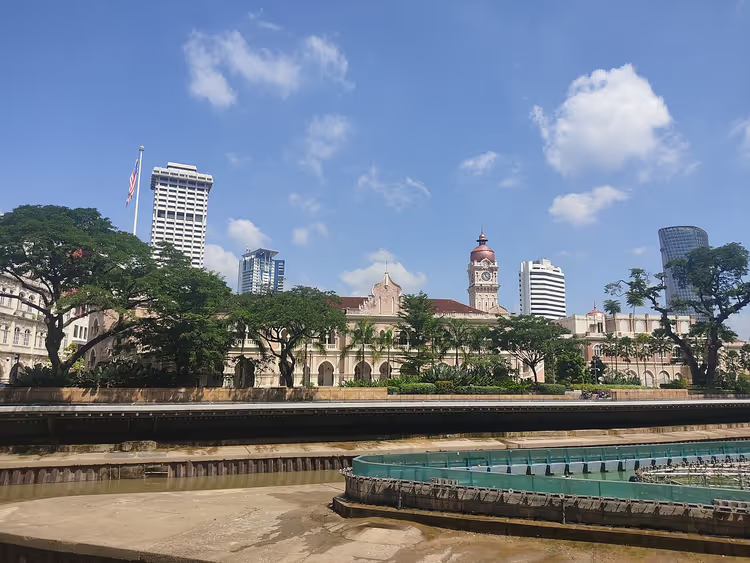 © *angys* · CC BY-SAPhoto: *angys*, CC BY-SA (https://creativecommons.org/licenses/by-sa/4.0), Wikimedia Commons
In dry months, the center can reach 35 °C, and dense development holds the heat even at night (as of 09/2026, annual temperature summary). Breathing is easier early in the morning and after sunset.
From August to September, haze from fires on Sumatra hangs in the air. The sky is murky, the sun is pale, and rain only partially washes the smoke away. If clean shots matter to you, plan the capital for January or February.
Two full days are enough to see the city; leave the third for a trip outside the city. Walk around the center in the morning: after lunch, thunderstorms often roll over Kuala Lumpur, and you will find yourself under a canopy again.
Penang, Georgetown and Langkawi
On Penang, rains intensify from August to November, with about 14-18 days of precipitation per month (as of 09/2026, Penang weather service data). January and February remain the driest, with only about 5 and 7 rainy days. Temperatures stay between 24 and 32 °C year-round.
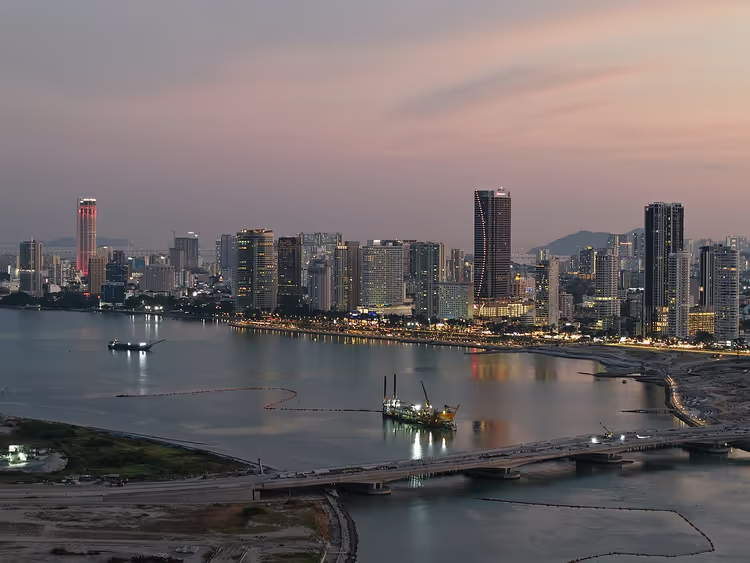 © HundenvonPenang · CC BY-SAPhoto: HundenvonPenang, CC BY-SA (https://creativecommons.org/licenses/by-sa/4.0), Wikimedia Commons
Langkawi in the north of the country remains the driest part of the west coast. Plan Georgetown and Langkawi from December to April: the sea is calm, rains are short, and the sun is steady. You can swim in other months too, but then allow extra time for bad weather.
On Penang, rain usually falls in the afternoon. See the city in the morning, and after lunch take shelter in museums and cafes with colonial interiors. You will feel more at ease if your morning plans do not depend on the weather.
hotels in Georgetown and on Langkawi on Trip.com
Kuantan and the east of the peninsula
Around Kuantan, rains fall from September to December, about 14-17 days per month (as of 09/2026, east coast data). Temperatures stay between 22 and 33 °C, and the sun appears most often from February to July. In November and December it is barely visible.
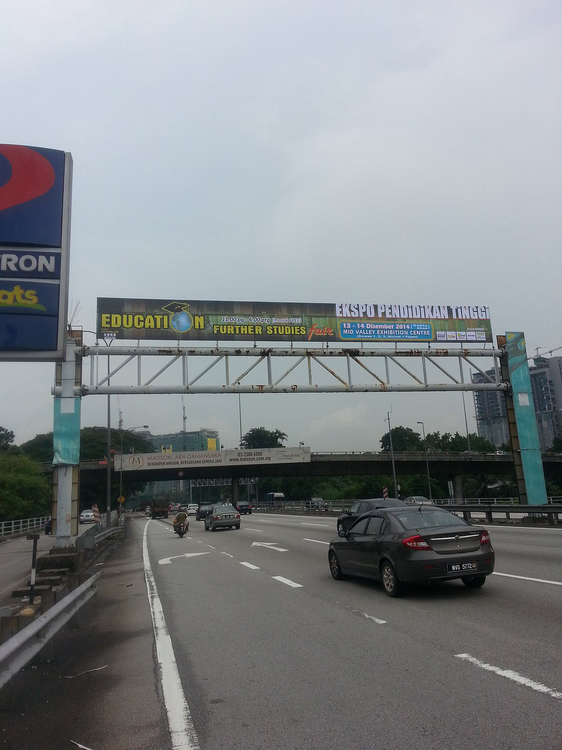 © Jerry Lim · CC BY-SAPhoto: Jerry Lim, CC BY-SA (https://creativecommons.org/licenses/by-sa/3.0), Wikimedia Commons
When planning a dive trip, avoid the period from October to March. In stormy months the water is murky, and boats often do not go out to sea. The same rule applies to small islands off the east coast.
The coolest month in Kuantan is December, but even then the air warms above 25 °C (as of 09/2026, annual east summary). The sun shines noticeably longer from February to July than at the end of the year, when the sky stays overcast for weeks.
The eastern part of the peninsula is closer to the islands, so the northeast monsoon is felt more strongly here. Waves reach small islands earlier than the mainland. If you are going snorkeling, check the sea forecast, not just the rain forecast.
Best time for East Malaysia and Borneo
East Malaysia is Sabah and Sarawak on Borneo. From March to mid-September there is less rain and more sun here, so these months are considered the best time to visit.
 © kallerna · CC BY-SAPhoto: kallerna, CC BY-SA (https://creativecommons.org/licenses/by-sa/4.0), Wikimedia Commons
From November to February, dive schools and hotels on Tioman, Redang, and the Perhentian Islands close. Storms make sea travel dangerous for boats, and there is no diving during this time. Check the seasonal closing dates if you are heading to the islands.
On the Malaysian part of Borneo, in Sarawak and Sabah, the best time runs from March to mid-September. The regions differ: Kuching gets more rain than Sandakan. Borneo overall is a very rainy island, and rainfall is possible in any month.
Orangutans and other wildlife in the rainforest are easier to see from March to September. During this period it is drier, animals stay closer to the trails, and a group finds them faster. Bring boots and repellent, the tropical forest does not forgive light sneakers.
In the evening on Borneo, look at the sky: rain here is most often short and heavy. If it catches you in a boat, that is a normal part of the route, not a ruined trip.
hotels in Kota Kinabalu on Trip.com
Climbing Kinabalu: March and April
Kinabalu is the highest point in Malaysia. At night on the summit it can drop below freezing, so warm layers and gloves go into your backpack even when the weather below is hot.
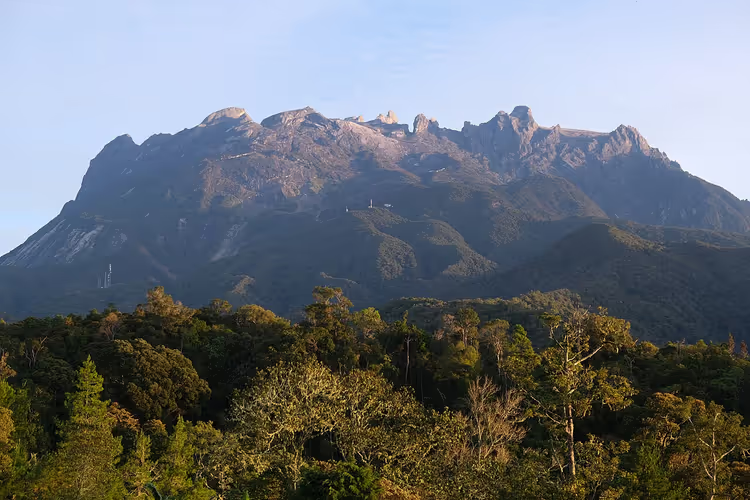 © kallerna · CC BY-SAPhoto: kallerna, CC BY-SA (https://creativecommons.org/licenses/by-sa/4.0), Wikimedia Commons
The best months for the climb are March and April: less rainfall, better visibility (as of 09/2026, Kinabalu climb organizer). The climb is only possible with a licensed guide, and a spot on the route is booked in advance.
In the dry season, available spots sell out fastest. If your dates fall in March or April, book several months ahead, otherwise the only option left will be a rainy window.
Plan the climb at the start of your trip, not at the end. That way you spend the remaining days without strain and can reschedule the climb if the weather turns bad.
Kinabalu rises above 4,000 m (as of 09/2026, Kinabalu route description). It is cold at the top even in the dry season. Dress in layers. A jacket, hat, and gloves will definitely be needed.
The route is usually split into two days with an overnight stay halfway up the mountain. The climb starts at night so you can meet the sunrise at the summit. This schedule is hard to handle without acclimatization, so it is better to spend the first night at the foot of the mountain.
Diving and snorkeling season in Malaysia
Diving and snorkeling in Malaysia are tied to the east coast of the peninsula and to Borneo. The season opens after the stormy winter and lasts until mid-autumn.
In May the sea gradually calms down, and boats head back out to the reefs. In June underwater visibility peaks: Tioman, Redang, and the Perhentian Islands have dry, hot weather, and the water stays warm.
July and August are peak visitor numbers. European schools are on holiday, the islands fill up, and accommodation prices rise. Book boats and rooms in advance, otherwise you will be left with only the expensive segment.
The best window for snorkeling and diving runs from May to mid-September. After that the water cools, the sea becomes rough, the rains return, and visibility drops with each passing day.
Mid-September works like a switch. Before it, the reefs are consistently clear; after it, the countdown to the season closing begins.
On Borneo there is a separate reason to visit: sea turtles. From June to September they are seen near Lankayan Island in northern Borneo. If you want to see migrating whale sharks, put Borneo on your list for March to May.
Take two short outings instead of one long one if you are a beginner. That way you will have time to get used to the mask and will not spend half a day on a boat for nothing. Dives are best scheduled for the morning: by midday the wind picks up.
The water is warm for almost the entire season, so a wetsuit is not required. A rash guard will help against the sun and small jellyfish. You will be more comfortable in reef shoes than barefoot on the rocks near the shore.
The beaches of the east coast live by the season. From November to February, most cafes and dive centers are closed, and staff leave for the mainland. Do not count on infrastructure during these months.
The closing season is confirmed by transport operators too: boats and most resorts operate only from March to October (as of 09/2026, Perhentian transport operator). In winter there is no service. The schedule appears again in March.
snorkeling and diving tours on GetYourGuide
Holidays and festivals by month
Holidays in Malaysia produce two effects at once: they showcase the culture and push prices up. Chinese New Year in January or February is a national holiday, celebrations take place across the whole country, and hotel demand rises (as of 09/2026, Malaysia holiday calendar).
In February, Federal Territory Day is celebrated: it is tied to the creation of Kuala Lumpur as a separate territory in 1974 (as of 09/2026, list of public holidays). After the fasting month comes Hari Raya Aidilfitri, families gather together, and transport and hotels are packed in the week before the date.
The most notable day in Penang is July 7, the anniversary of George Town's UNESCO listing. The city hosts free tours, performances, and night parades (as of 09/2026, official festival website).
In late August the country celebrates its national independence day, and September 16 is Malaysia Day (as of 09/2026, current year calendar). September also brings the Mid-Autumn Festival with a lantern parade and street fairs.
Awal Muharram, the start of the Islamic new year, is observed for one day. The date shifts each year according to the lunar calendar. Penang hosts the Penang International Dragon Boat Festival with boat races. If your dates overlap with the festival, book accommodation early.
Where to go in Malaysia by month
Month | Where it's dry | What's happening |
|---|---|---|
January | Kuala Lumpur, Penang, Langkawi | Chinese New Year, high demand |
February | Kuala Lumpur, Penang, Langkawi | Federal Territory Day |
March | Langkawi, Penang, Borneo | start of whale shark season |
April | east coast, Borneo | whale sharks, orangutans |
May | east coast | dive season opens |
June | Kuala Lumpur, Borneo, islands | turtles at Lankayan, peak visibility |
July | Borneo, islands | peak tourist numbers |
August | Borneo, Kuala Lumpur | haze from fires in Sumatra |
September | Borneo | end of turtle season, Malaysia Day |
October | no consistently dry regions | Borneo season ended in mid-September, lower prices |
November | Langkawi, Penang | east coast islands close for the season |
December | Langkawi, Penang | dry season in the north |
Where to stay in Kuala Lumpur
Kuala Lumpur is more spread out than it looks on the map, so pick your neighborhood before booking. All the options below are centrally located; the difference is in price and comfort level.
Budget | Hotel | Area |
|---|---|---|
Hostel | The Freedom Club Hostel | Bukit Bintang |
Hostel | Oa The Factory at Bukit Bintang | Bukit Bintang |
Mid-range | Ascott Star KLCC | KLCC |
Mid-range | The Platinum Suites KLCC | KLCC |
Upper mid-range | The RuMa Hotel and Residences | KLCC |
Upper mid-range | Grand Hyatt Kuala Lumpur | KLCC |
High-end | Four Seasons Hotel Kuala Lumpur | KLCC |
Bukit Bintang's streets are loud and lively, a good fit if you want to eat and walk around late into the night. The KLCC area is quieter, with the Petronas Towers and the park nearby. Choose based on how you plan to spend your days, not on the stars in the name.
Hotels change prices by season, so it's better to compare options for your specific dates. In the dry months the gap between budget and mid-range levels is more noticeable.
Kuala Lumpur hotel selection on Trip.com
Find hotels in Kuala Lumpur
Compare prices across booking sites and filter for rooms with free cancellation.
Compare prices on Trip.comThe widget loads once you give your consent.
⁉️🤔 Frequently asked questions
When is the best time to visit Malaysia for the first time?
Start with the west side of the peninsula: Kuala Lumpur, Penang, and Langkawi. The most comfortable months are December through February and June through August, with less rain and short transfers. If you want to add Borneo, plan your trip for June or July: that's when it's dry both in the capital and on the island.
Which months are the rainiest in Kuala Lumpur?
The most rain falls in March, April, October, November, and December: rainy days are almost twice as frequent as in the calmer months. The driest months remain January, February, June, July, and August. There's no true dry season in the capital, so a short downpour is possible in any month.
Is it true that the Perhentian Islands, Redang, and Tioman close in winter?
Yes. From November through February the sea is rough, boats don't run, and dive centers and hotels close. There are almost no tourists or infrastructure on the islands at that time. Boats run from March through October, and diving runs from May to mid-September. The best underwater visibility is in June.
When can you see orangutans and sea turtles in Borneo?
Orangutans are easier to find in the rainforest from March through September: there's less rain, and the animals stay closer to the trails. Sea turtles are seen from June through September near Lankayan Island in northern Borneo. Whale sharks draw visitors from March through May, and lodge spots are best booked in advance.
Is it worth going to Malaysia during the rainy season?
It is, if your route sticks to the mainland and major cities. Downpours are short, and prices and hotel occupancy are lower. Don't include the east coast islands in those months, they're closed. Bring a raincoat, plan outings for the morning, and leave one buffer day for transfers.
In short: what to book
If you have two weeks and want both a city and an island, go in June or July. Kuala Lumpur gets less rain in those months, and it's turtle season in Borneo. If your trip falls in January or February, build your route around the west: Kuala Lumpur, Penang, and Langkawi. The east coast islands are closed from November through February, where you'll find empty beaches and closed dive centers.
- You want beach and sun: Langkawi and Penang from December through April.
- You want diving: Tioman, Redang, and the Perhentians from May to mid-September.
- You want jungle and wildlife: Borneo from March through September.
- You want the capital without downpours: Kuala Lumpur in January, February, June, July, or August.
Compare available rooms for your dates on Trip.com.

A small editorial team writing guides for independent travel. We travel ourselves, but we haven’t been everywhere, so we check prices, opening hours and how to get there against official sources.