
















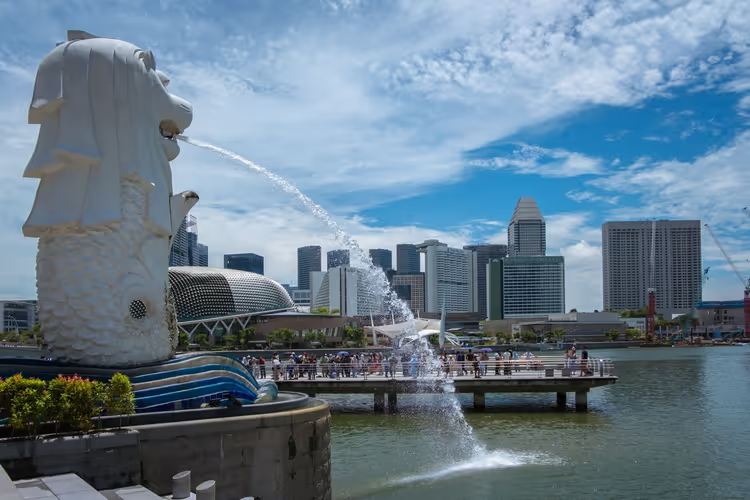
Merlion in Singapore: where the statue stands and where the 37-meter replica went
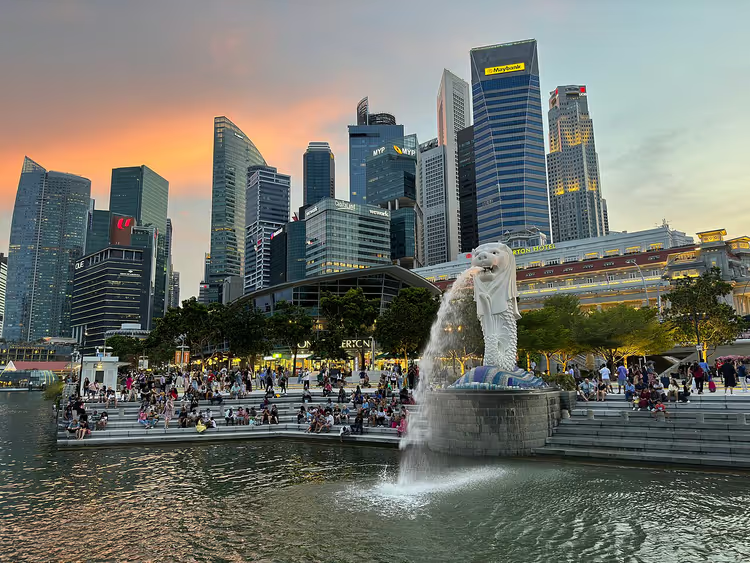
The white Merlion statue has stood at the mouth of the Singapore River for half a century. It has the head of a lion and the body of a fish, and it has long been a symbol of the city.
There is plenty of confusion around this symbol. There is one original, several copies, and the largest one has been closed for a long time. If you are going to Singapore, you need the exact address, some free time, and a clear route from the MRT.
We have gathered the legend, the history of the statue, all surviving copies, and tips on when the site is almost empty.
Ad: this text contains affiliate links, we earn a commission from them, the price for you does not change.
What the Merlion is
The Merlion serves as the official mascot of Singapore. It has the head of a lion and the body of a fish. The name combines two words: "mer" (sea) and "lion".
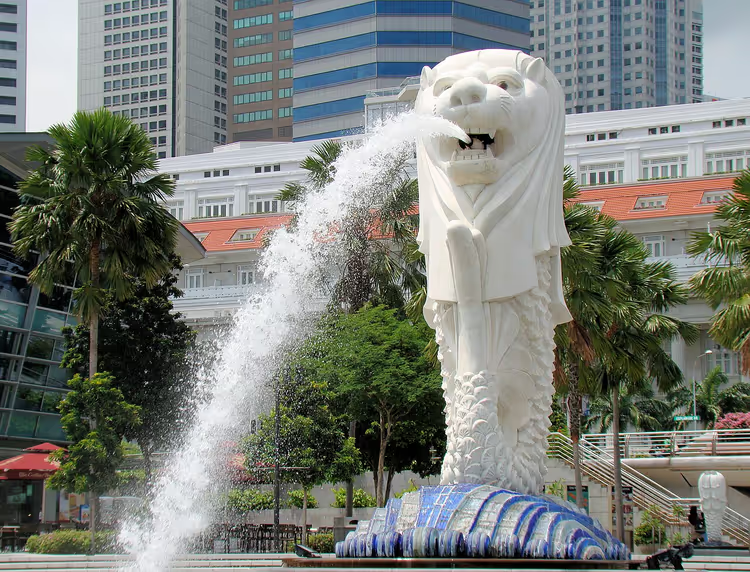 © Bjørn Christian Tørrissen · CC BY-SAPhoto: Bjørn Christian Tørrissen, CC BY-SA (https://creativecommons.org/licenses/by-sa/3.0), Wikimedia Commons
The fish body recalls the time when Singapore was the fishing village of Temasek. The lion head refers to the city's old name, Singapura, which means "lion city". The symbol was created by Alec Fraser-Brunner for the Singapore Tourist Promotion Board logo in 1964 (as of 09/2026, Wikipedia on the Merlion).
💡 In short:
- The 8.6 m original stands in Merlion Park, admission is free.
- The 37 m copy on Sentosa was closed in 2019.
- Entry and access: as of 09/2026, checked on 14.09.2026 on the official Merlion Park website.
Below we will look at where the legend came from and where you can find each copy.
Singapore in a nutshell
Singapore is located in Southeast Asia and covers about 735 km² (as of 09/2026, Wikipedia on Singapore). It is one of the smallest countries in the world.
The city's symbol, the Merlion, greets you on the waterfront of Marina Bay.
The legend of the sea lion
The name Singapore is made up of two Sanskrit words: "singa" (lion) and "pura" (city). The most interesting part is that lions have never lived on the island.
The city was named by Prince Sang Nila Utama. According to the Malay Annals, he held the title "Lord of Three Worlds" and set out to find new lands. On the way he came across a small island with white sand, which the locals called Temasek.
When the prince came ashore, he encountered a strange beast. The animal had a brown body and a large head. The beast immediately disappeared. The prince's retinue was at a loss: nobody knew what kind of creature it was. Only one old man said that it was a lion. The prince was struck by the animal's strength and grace. He later renamed Temasek as Singapura, the lion city.
This story explains why the city's coat of arms features a lion, even though you will not find one on the island.
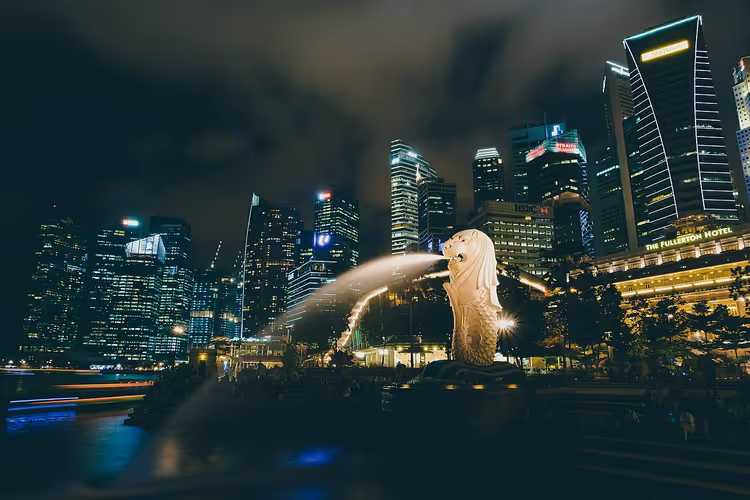
History of the statue: 1972
The decision to make the Merlion a symbol of the city was made in 1964 on the initiative of the Singapore Tourist Promotion Board. The design was created by Alec Fraser-Brunner, curator of the Van Kleef Aquarium. The statue was built from November 1971 to August 1972, with Lim Nang Seng as the sculptor (as of 09/2026, Merlion page on Wikipedia).
The figure was cast from white concrete. It is 8.6 m tall and weighs 70 tons. The project cost about S$165,000, and on September 15, 1972, the statue was officially unveiled by Prime Minister Lee Kuan Yew (as of 09/2026, official Merlion chronology).
The Merlion originally stood at the mouth of the Singapore River, next to Anderson Bridge. In 1997, the Esplanade Bridge was built, and it blocked the view of the statue from Marina Bay.
In April 2002, the sculpture was moved 120 m downstream. The new site was set up opposite The Fullerton hotel. The relocation and the new park landscaping cost S$7.5 million (as of 09/2026, Wikipedia on the Merlion).
If you visit the statue today, you will see its second location. The Merlion now faces due east: according to feng shui, this direction brings the city luck and prosperity.
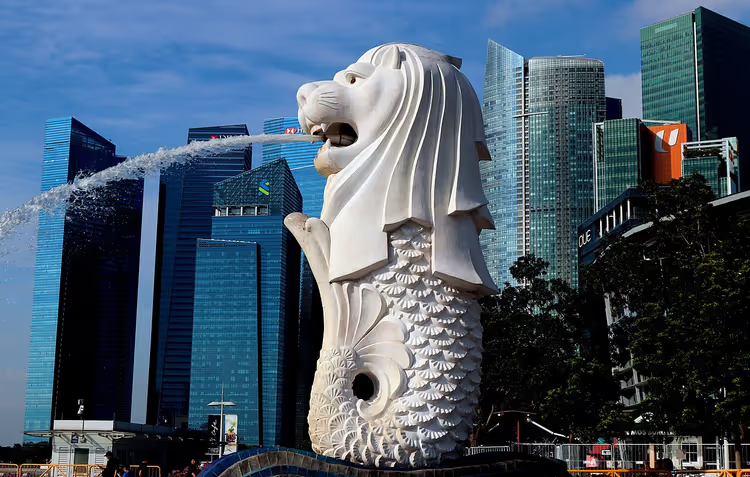 © Thank You (23 Millions+) views · CC BYPhoto: Thank You (23 Millions+) views, CC BY (https://creativecommons.org/licenses/by/2.0), Wikimedia Commons
The 2009 lightning strike and restoration
On February 28, 2009, lightning struck the statue. A thunderstorm was passing over the city in the afternoon. A large piece of concrete broke off the lion's mane, and a hole appeared at the base (as of 09/2026, Wikipedia on the Merlion).
The cause was said to be the lack of a lightning rod. The work went quickly. The restored Merlion reopened on March 18, 2009.
Today, the Singapore Tourism Board oversees the statue, the adjacent pool, and the entire park area. The site is open to everyone, and you can walk right up to the water.
Merlion replicas today
In addition to the original, the Tourism Board has approved several other sculptures (as of 09/2026, Wikipedia on the Merlion).
Replica | Location | Details |
|---|---|---|
Merlion cub | Merlion Park, behind the original | 2 m, about 3 tons |
Statue on the hill | Mount Faber, Faber Point | 3 m |
Statue by the office | Tourism Court, near Grange Road | 3 m |
Pair of sculptures | Ang Mo Kio area | installed in 1999 |
You will find the two-meter cub right behind the original. It is decorated with Chinese porcelain plates and bowls.
The most famous replica, the 37-meter giant on Sentosa, is no longer operating. It closed on October 20, 2019 (as of 09/2026, Sentosa Merlion closure). Sentosa Sensoryscape was built on the site (official Sentosa website). The observation decks on the ninth and twelfth floors and the laser show are now a thing of the past.
On Mount Faber, a 3 m statue greets visitors at Faber Point. Another figure, also 3 m, was placed at Tourism Court. A pair of small sculptures was installed by the Ang Mo Kio district committee in 1999.
If you are going for the big statue, plan on the 8.6-meter original in Merlion Park. The cub and the three-meter figures are noticeably smaller.
Where the original stands and how to get there
The original and the cub are in Merlion Park, on the shore of Marina Bay, opposite The Fullerton hotel.
The easiest way is to take the MRT. The nearest station, Raffles Place, serves the North-South and East-West lines. From the exit toward the river, it is about a 10-minute walk (on the map). The second option, Downtown station on the Downtown line, is slightly closer to the site.
 © LN9267 · CC BY-SAPhoto: LN9267, CC BY-SA (https://creativecommons.org/licenses/by-sa/4.0), Wikimedia Commons
If you also want to see the other replicas, the route is easy to plan. Mount Faber is connected to the city by the Singapore Cable Car. Another sculpture stands downtown on Grange Road, which is easy to reach by bus or taxi.
Admission and the best time for photos
Admission to Merlion Park is free. The park is open to everyone around the clock (as of 09/2026, official Merlion Park website).
For photos, it is best to come early in the morning, roughly from 7 to 9 am. At that time there are few people on the platform and the light is soft. During the day a crowd gathers around the statue, especially on weekends.
One more detail: the statue faces east, so the morning sun lights it from the front. For a shot from the bay side, choose the morning.
If one statue is not enough, check out Marina Bay tours on GetYourGuide. A guide will take you along the waterfront and show you the neighboring districts.
Tours and tickets in Singapore
Guided tours, skip-the-line tickets and activities — most offers can be cancelled free of charge.
See offers on GetYourGuideThe widget loads once you give your consent.
⁉️🤔 Frequently asked questions
What does the Merlion symbolize?
The fish body recalls the fishing village of Temasek, and the lion head refers to Singapore's name, the lion city.
How much does it cost to enter Merlion Park?
Entry to the park is free, and the grounds are open around the clock.
How do I get to the statue by subway?
Take the train to Raffles Place station; from there it is about a 10-minute walk to the park (on the map). Downtown station is slightly closer.
Can you see the 37-meter statue on Sentosa?
No. The 37-meter replica was closed on October 20, 2019, and Sentosa Sensoryscape was built in its place. The largest surviving statue stands in Merlion Park and is 8.6 m tall.
When is the best time to visit the Merlion?
Come early in the morning, roughly from 7 to 9 am. There are few people, and the morning sun lights the statue from the front on the bay side.
How many Merlion statues remain in Singapore?
The original and the cub stand in Merlion Park, one 3-meter figure each on Mount Faber and at Tourism Court, and another pair in Ang Mo Kio. The 37-meter replica on Sentosa has been closed since 2019.
In short: what to book
The original Merlion stands in Merlion Park, admission is free, and the statue faces east. Come between 7 and 9 a.m.: the area is empty, and the sun lights the statue from the front.
If you want more than one statue, a bay tour is easier to book in advance, especially on weekends. You can browse options in Singapore tours on GetYourGuide.

A small editorial team writing guides for independent travel. We travel ourselves, but we haven’t been everywhere, so we check prices, opening hours and how to get there against official sources.