
















Monaco: what to see, where to eat and how to get there from Nice
Monaco fits into two square kilometers between France and the sea. In fifteen minutes you can walk from the port with its yachts to the old town on the rock. The principality welcomes millions of visitors every year: some come for the casino, others for the oceanographic museum, and some just stop by for a day from Nice.
We have put together everything worth knowing before your first trip: where Monaco is, whether you need a visa, how to get there, how much accommodation costs, and what to see. We added ticket prices, opening hours, and honest catches.
Ad: this article contains affiliate links, we earn a commission if you book through them, at no extra cost to you.
Location and key facts
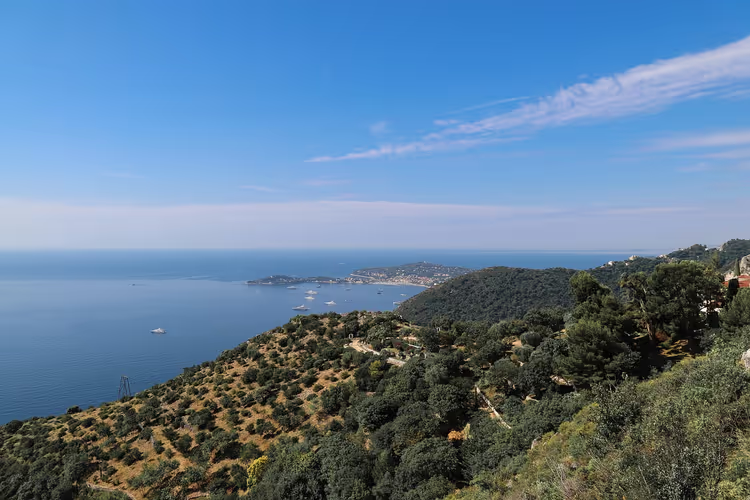
Monaco stretches as a narrow strip along the Ligurian Sea, 20 km east of Nice on the French Cote d'Azur (as of 09/2026, Monaco tourist office). By area it is the second smallest country in the world: about 2.1 km², only Vatican City is smaller. The permanent population is roughly 39,000 people (as of 09/2026, Monaco statistics). The climate is Mediterranean: summers are warm and dry, winters are mild and rainy.
The principality has only one land border, with France, so the geographic boundaries of the city and the country are the same. The territory is divided into ten districts, and the city itself is squeezed between the sea and the mountains. Because of the shortage of land, buildings are constructed on reclaimed areas and high-rise complexes rise right at the water's edge. You can walk across the entire principality in a couple of hours.
💡 In short:
- Monaco is formally not part of Schengen, but the border with France is open and there is no passport control.
- From Nice, the most convenient way to reach Monte-Carlo station is by train.
History: from Genoa to the Grimaldi dynasty
The first settlements on the Rock of Monaco were founded by ancient seafarers, the Phoenicians, and later Greeks and Romans stopped here. Modern history is counted from 1215, when the land was taken by the Republic of Genoa. In 1297 Francois Grimaldi arrived in Monaco, and his family has ruled the principality for more than seven centuries (as of 09/2026, Grimaldi dynasty chronicle).
 © giggel · CC BYPhoto: giggel, CC BY (https://creativecommons.org/licenses/by/3.0), Wikimedia Commons
Several times Monaco came under the rule of France and the Kingdom of Sardinia, until it gained independence in 1861. Today the country is linked to France by a customs union and a shared currency. In 1956 the American actress Grace Kelly married Prince Rainier III, and the modest principality turned into a world-famous destination (as of 09/2026, principality independence).
Monaco is a member of the UN, the OSCE, the Council of Europe, and the WHO, but it is not part of the European Union or NATO. The current ruler is Rainier III's son, Prince Albert II.
Visas and entry to Monaco
Monaco is not part of the European Union and has not formally signed the Schengen Agreement, but the borders with France are effectively open. EU citizens do not need a visa: you enter the principality as if it were just another French city. If your passport requires a Schengen visa, you apply through a French consulate following the same procedure (as of 09/2026, France visa portal).
US citizens and citizens of dozens of other countries also enter without a visa for up to 90 days. Keep your passport handy: you will be asked for it when checking into a hotel.
Transport: train, bus, helicopter
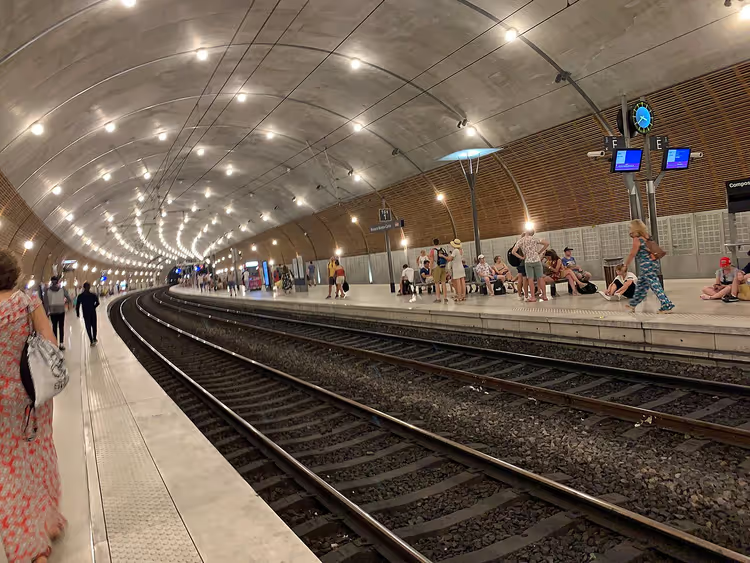
The principality has rail, bus, sea transport, and helicopter service. The railway line is short, about 1.7 km, and is operated by the French SNCF. The only station, Monte-Carlo, is built underground and connects Monaco with Nice, Cannes, and Italy. From Nice, the train takes about 25 minutes, and a ticket costs from 5 EUR (as of 09/2026, Nice-Monaco schedule). This is the cheapest and fastest way to get there without a car: Nice-Monaco trains on Trip.com.
 © Rberchie · CC BY-SAPhoto: Rberchie, CC BY-SA (https://creativecommons.org/licenses/by-sa/4.0), Wikimedia Commons
There are noticeably more roads, about 50 km, and seven bus routes run through the city, along with services to the port of Nice (as of 09/2026, Monaco transport). Monaco has two ports, La Condamine and Fontvieille, with water buses running between them. The only air gateway is the Monte-Carlo heliport, from which you can reach Nice airport in seven minutes. Parking in the center is expensive, so you are better off leaving your car outside the city.
Accommodation: where to stay
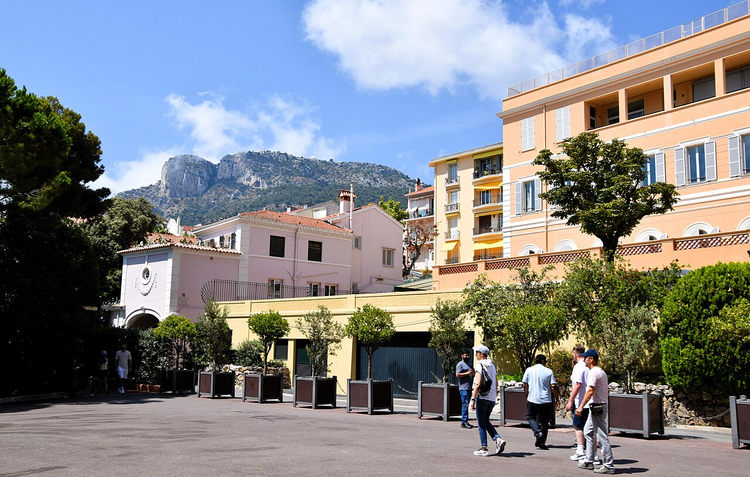
Monaco is divided into ten districts, but because of its tiny area, the distance between them is always small. Expensive hotels are concentrated in Monte-Carlo and on the first line by the sea; look for more affordable options in La Condamine, Fontvieille, and near the train station. Hotels in Monaco on Trip.com.
 © Charles from Port Chester, New York · CC BYPhoto: Charles from Port Chester, New York, CC BY (https://creativecommons.org/licenses/by/2.0), Wikimedia Commons
A budget reference point: a night at the five-star Fairmont Monte Carlo or at Le Méridien Beach Plaza on the beach costs several hundred euros. Renting an apartment, such as Apartments Monaco, is noticeably cheaper, and for a long stay a flat is more cost-effective. Prices depend heavily on the season: during the Formula 1 Grand Prix and major events, they double (as of 09/2026, Monaco districts). The advantage of the center is that you can walk to the Casino and the old town in 10-15 minutes.
Monaco cuisine and the best restaurants
Monaco does not have a separate national cuisine: it combines the traditions of France and Italy. Local dishes are close to Mediterranean cuisine, with plenty of seafood. Bouillabaisse, gnocchi, vegetable stews, salads, and pates are popular, so vegetarians also have plenty to choose from here.
The principality's restaurants are among the most decorated in Europe. Three Michelin stars are held by Alain Ducasse's Louis XV at the Hôtel de Paris Monte-Carlo: light, modern cuisine with an emphasis on the Riviera (as of 09/2026, Michelin guide). For views during dinner, head up to Horizon Rooftop on the seventh floor of the Fairmont Monte Carlo, which overlooks the sea and the city's rooftops.
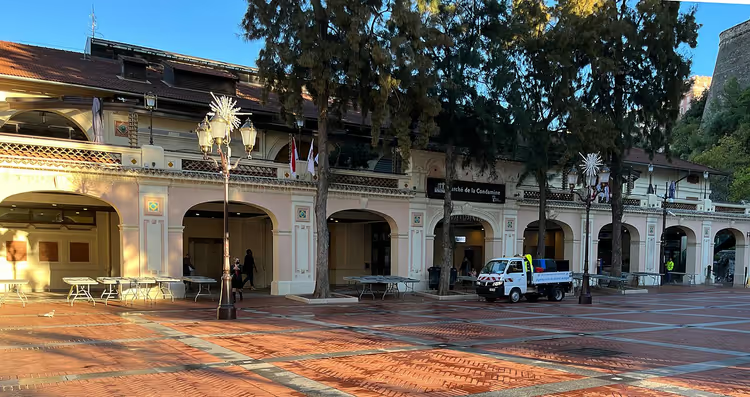
For atmosphere, go to Café de Paris Monte-Carlo, which has been operating since the 19th century and is considered the heart of the principality. Here people drink coffee, order desserts, and watch the crowd on Place du Casino. It is better to book a table at popular spots in advance: in summer, there are almost no free tables left in the evening.
Monaco attractions
Monaco's main sights are compact and connected by walking routes. Below are five places that give you a full picture of the principality, from the casino to the oceanarium. You can cover all of them in one day.
Monte Carlo and the casino
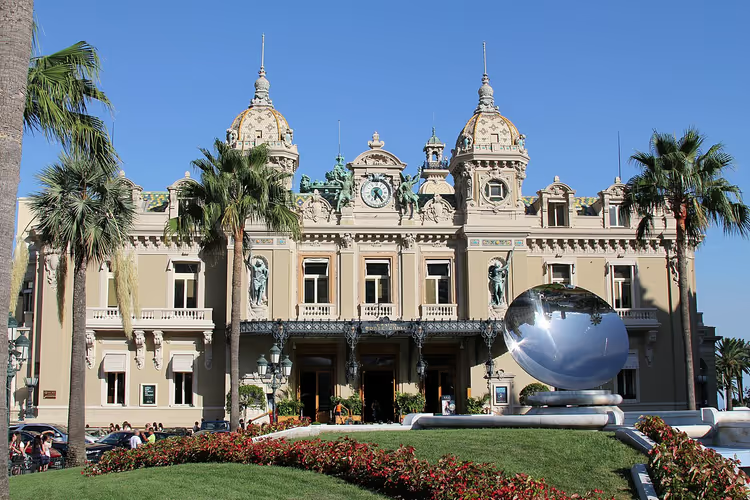
Monte Carlo, a separate district of the principality, is famous for its casino, opera house, and the Formula 1 Grand Prix circuit. The Monte Carlo Casino occupies an entire complex: in the morning people come for a tour of the halls, and in the afternoon the gaming tables open. You can see the interiors from 10:00 to 13:00: a ticket costs 20 € for adults, 15 € for teenagers aged 13 to 17, and children under 12 enter free (as of 09/2026, official casino website).
 © Fruitpunchline · CC BY-SAPhoto: Fruitpunchline, CC BY-SA (https://creativecommons.org/licenses/by-sa/4.0), Wikimedia Commons
The gaming rooms open at 14:00, and admission is also 20 €, of which 10 € is credited to slots, the bar, or the restaurant. Inside you will find a bronze statue of Fortuna and dozens of marble columns, and the games offered include French and English roulette, blackjack, poker, and punto banco. Follow the dress code: after 14:00 shorts, sweatpants, and sneakers are not allowed, and after 19:00 t-shirts are not allowed. Bring your passport or ID; copies and photos of documents are not accepted.
Prince's Palace
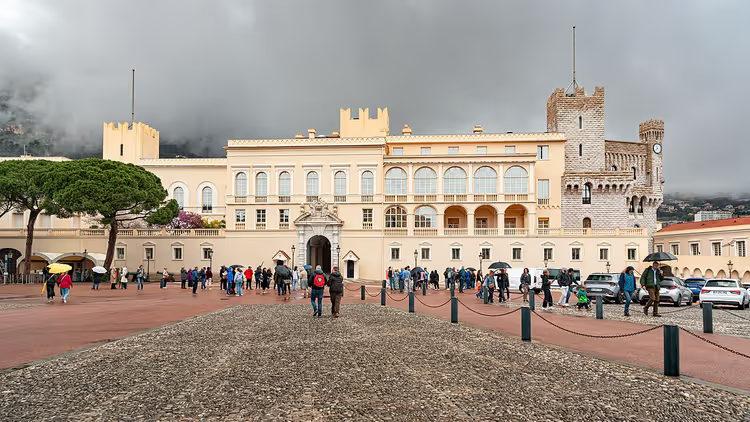
The Prince's Palace serves as the official residence of the Grimaldi family. A Genoese fortress stood on this site as early as the 13th century, and the building has been rebuilt dozens of times since. Today it is a beige palace with turrets and arched windows, where the country's fate is decided. The State Apartments are open to visitors from March 30 to October 15, 2026, from 10:00 to 18:00, and until 19:00 in July and August (as of 09/2026, Prince's Palace tickets and hours).
 © Jorge Franganillo · CC BYPhoto: Jorge Franganillo, CC BY (https://creativecommons.org/licenses/by/4.0), Wikimedia Commons
During the Formula 1 Grand Prix, the palace is closed to visitors. An adult ticket costs about 13 €, and it is a better deal to get a combo with the Oceanographic Museum for 31 € (as of 09/2026, museum combo tickets). Getting there is easy: take buses 1 and 2 to the Place de la Visitation stop, then walk up through the streets of the old town.
Princess grace rose garden
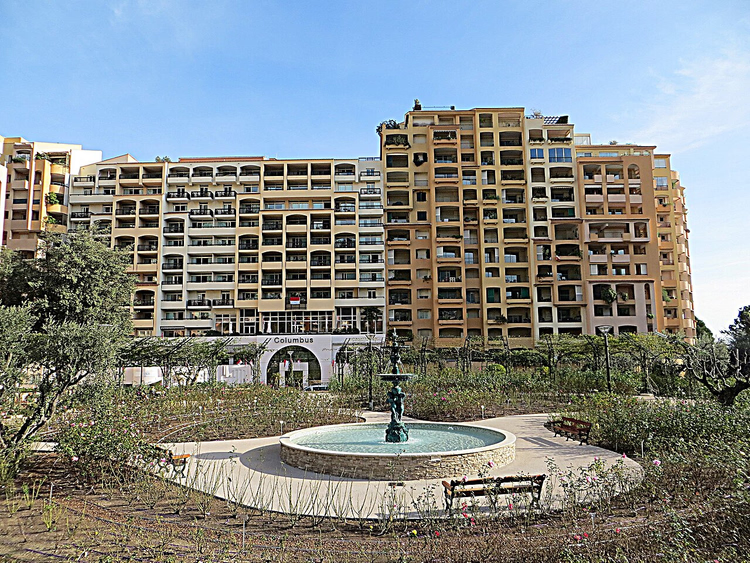
The Princess grace rose garden was created in memory of Grace Kelly, who loved flowers. The garden occupies a small area in Fontvieille Park and is planted with thousands of rose bushes, so it is worth a visit even for those who are indifferent to plants. Varieties named after the princess bloom here, and memorial statues are installed throughout.
 © Mister No · CC BYPhoto: Mister No, CC BY (https://creativecommons.org/licenses/by/3.0), Wikimedia Commons
The roses here bloom roughly from May to October. Stop by for half an hour while walking around the Fontvieille district.
Cathedral of St. Nicholas
The Cathedral of St. Nicholas was built in the second half of the 19th century from white stone quarried in La Turbie. It is designed in the Romanesque-Byzantine style and serves as the burial place of the princes of Monaco. Inside you will see the main altar and the bishop's throne made of white Carrara marble, and above the altar hangs a painting by the French artist Ludovico Brea.
The cathedral is active, so tourist access is restricted during services. Solemn liturgies are held on major church holidays, on Saint Devota's Day in January, and on Monaco's National Day in November. Sacred music concerts are also held here.
Oceanographic Museum of Monaco
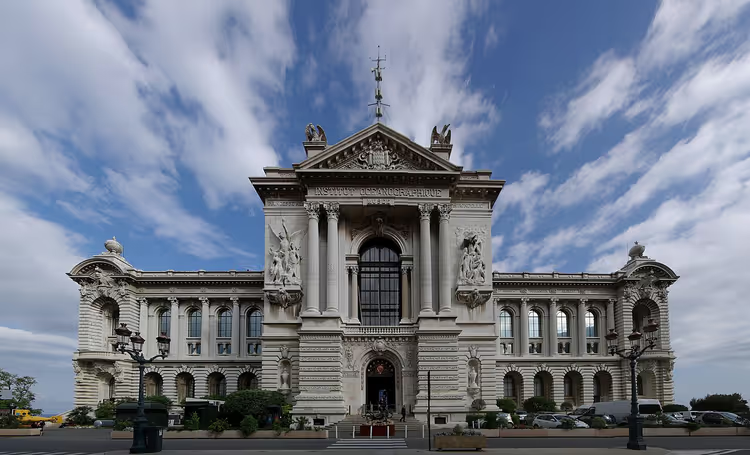
The Oceanographic Museum was founded in 1889 by Prince Albert I, and the famous explorer Jacques-Yves Cousteau served as its director for many years. The collection includes skeletons and taxidermied marine animals, ancient boats, tools, and weapons. A particular source of pride is the aquarium with tropical fish and a large shark lagoon (as of 09/2026, museum exhibits).
 © Berthold Werner · CC BY-SAPhoto: Berthold Werner, CC BY-SA (https://creativecommons.org/licenses/by-sa/3.0), Wikimedia Commons
The museum is open daily from 10:00 to 18:00, with longer hours in summer, and it is closed only on December 25 and during Grand Prix days. An adult ticket costs 20.50 €, and a ticket for children aged 4 to 17 costs 13 € (as of 09/2026, tickets and opening hours). You will spend a couple of hours here: the Mediterranean aquarium is under renovation, but the other exhibits and the terrace are accessible.
A combo ticket with the Prince's Palace helps you save. You can buy tickets in advance on Tiqets: tickets to the Oceanographic Museum.
Tours and tickets in Monaco
Guided tours, skip-the-line tickets and activities — most offers can be cancelled free of charge.
See offers on TiqetsThe widget loads once you give your consent.
⁉️🤔 Frequently asked questions
Do I need a visa to travel to Monaco?
EU citizens do not need a visa. US citizens and citizens of most countries can enter without a visa for up to 90 days; everyone else needs a French Schengen visa (as of 09/2026, French visa rules). Monaco does not issue its own visa: applications are handled by French consulates.
How to get from Nice to Monaco?
The easiest way is the TER train, with many departures per day (as of 09/2026, trains from Nice). The bus is cheaper but gets stuck in traffic, while a helicopter from Nice airport takes seven minutes and costs significantly more. If you drive, factor in toll roads and expensive parking.
When is the best time to visit Monaco?
Mild weather comes in May, June, and September: the sea is already warm and there is less heat. In summer the city is crowded and expensive, but all beaches are open. In winter it is quiet and cheaper, but some attractions operate on reduced hours. Avoid Grand Prix days: prices skyrocket and some roads are closed.
How much money do I need for a day in Monaco?
Without a hotel stay, a few dozen euros per person is enough: museum tickets, lunch, and transport. Lunch at a cafe starts at 20 €, and a night in a hotel will add several hundred euros.
In short: what to book
The takeaway for Monaco is simple: book everything that gets more expensive in season, in advance.
- If you are coming from Nice: take the train, it is faster and cheaper than driving.
- If you plan to stay overnight in the principality: compare hotels in Monte Carlo and La Condamine.
- If you are interested in museums: the Prince's Palace plus Oceanographic Museum combo pays for itself right away.
It is convenient to compare options all at once: compare Monaco hotels and Nice-Monaco train schedule.
And for tickets and tours, check out GetYourGuide.

A small editorial team writing guides for independent travel. We travel ourselves, but we haven’t been everywhere, so we check prices, opening hours and how to get there against official sources.