
















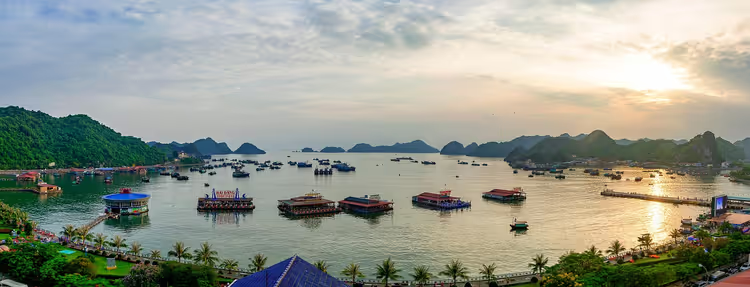
10 Places in Vietnam worth seeing on your first trip
Vietnam stretches from north to south, and you can't cover it all in one trip. Today you climb up to limestone mountains, tomorrow you wander through an old port full of lanterns, and a few days later you're lying on an island by a warm sea.
This list is put together for a first trip. Here are ten destinations from the capital Hanoi to the island of Phu Quoc: what to see, how much time to allow, and what to watch out for. Hoi An and the My Son sanctuary are included on the UNESCO World Heritage list.
💡 In short:
- Ten places from Hanoi to Phu Quoc: cities, an island, a national park, and underground tunnels.
- Ticket prices and museum opening hours are listed in the sections on Hanoi and Ho Chi Minh City.
- Tickets and museum opening hours: 09/2026, verified on the official website of the Museum of Ethnology.
Ad: this article contains affiliate links, we earn a commission if you book through them, at no extra cost to you.
1. Hanoi
 © NKSTTSSHNVN · CC BY-SAPhoto: NKSTTSSHNVN, CC BY-SA (https://creativecommons.org/licenses/by-sa/4.0), Wikimedia Commons
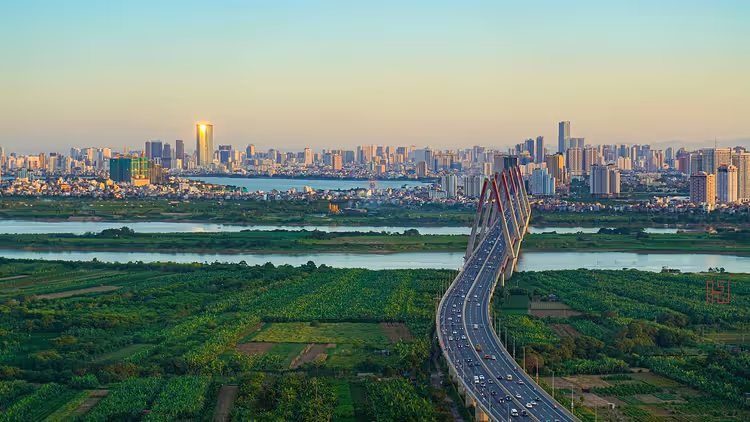
Hanoi is the starting point for almost any trip to Vietnam: most flights from Europe land here. The capital combines colonial facades, the narrow streets of the Old Quarter, and quiet lakes in the center.
Start with the Museum of Ethnology. It tells the story of the country's peoples, their daily life and crafts, and the courtyard has real stilt houses. The ticket costs about €1.5 (as of: 09/2026, official website), the museum is open Tuesday through Sunday from 8:30 to 17:30, closed on Mondays.
Next, head to the Old Quarter. Its craft streets survive there, named after the goods once sold on them. At Dong Xuan Market you can buy everything from household goods to street food, and prices here are lower than in the tourist alleys.
- Who it's for: those who want to start getting to know the country from its capital.
2. Ba Be National Park
 © Adam Jones from Kelowna, BC, Canada · CC BY-SAPhoto: Adam Jones from Kelowna, BC, Canada, CC BY-SA (https://creativecommons.org/licenses/by-sa/2.0), Wikimedia Commons
Ba Be National Park lies in the north of the country, among mountains and dense forests. Rare animals live here, including pangolins and flying squirrels, and the number of plant and animal species in the park exceeds a thousand.
Set aside a full day for the park. Most visitors take a boat and travel across Ba Be Lake between the cliffs. Near the lake there are caves that boat excursions also visit, and along the shores stand villages of local peoples.
Bring warm clothing: evenings in the mountains are cool even in summer. It's best to plan a trip here in advance, as the park lies off the main tourist route.
3. Trang An
 © Richard Mortel from Riyadh, Saudi Arabia · CC BYPhoto: Richard Mortel from Riyadh, Saudi Arabia, CC BY (https://creativecommons.org/licenses/by/2.0), Wikimedia Commons
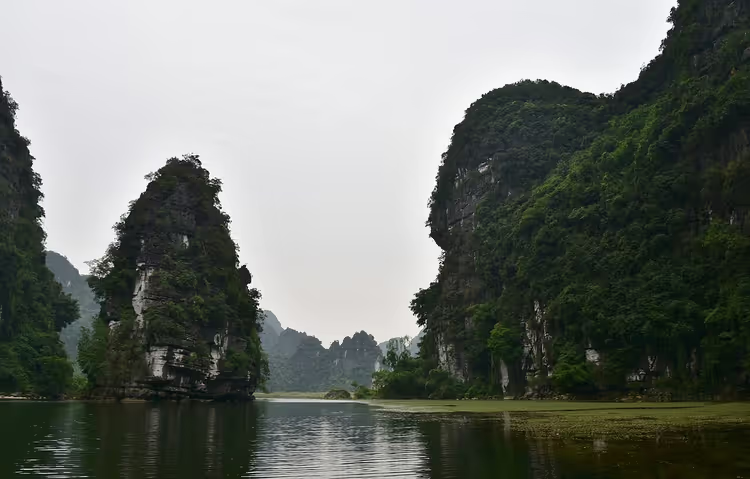
Trang An, a nature reserve in northern Vietnam, covers more than two thousand hectares. Here limestone mountains rise straight out of the water, and natural caves, marshes, and rivers hide among them.
The scenery is recognizable on screen: part of the film "Kong: Skull Island" was shot right here. Three boat tour routes are open to visitors, and each one leads through its own group of caves.
Boat tickets are bought at the pier, and tours leave from early morning. Take a boat tour in Trang An so you don't have to find the pier yourself. Morning is also better for the weather: by midday there is little shade on the water.
4. Hue
 © Bùi Thụy Đào Nguyên · CC BY-SAPhoto: Bùi Thụy Đào Nguyên, CC BY-SA (https://creativecommons.org/licenses/by-sa/3.0), Wikimedia Commons
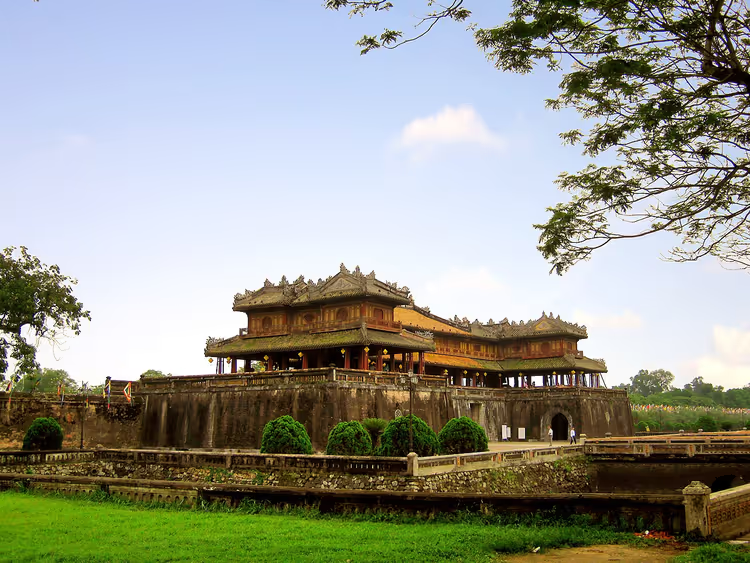
Hue was the capital of Vietnam under the Nguyen dynasty, and palaces, pagodas, and art deco mansions survive here. The city sits on the Perfume River, along which the main sights are located.
Be sure to add Thien Mu Pagoda to your itinerary. Its seven-story tower is reflected in the river, and the garden next to it provides shade on a hot day. Come at opening time: by midday, tour groups gather at the pagoda.
- How to get there: Hue lies on the main railway line between Hanoi and Ho Chi Minh City.
- Where to stay: in Hue it's easy to find a hotel in the center, see options on Trip.com.
5. Hoi An
 © Steffen Schmitz ( more photos ) · CC BY-SAPhoto: Steffen Schmitz ( more photos ), CC BY-SA (https://creativecommons.org/licenses/by-sa/4.0), Wikimedia Commons
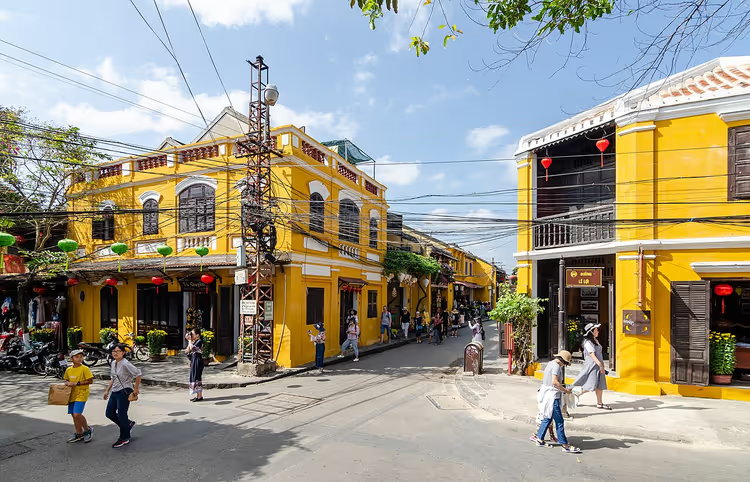
Hoi An, an old trading port, has survived almost in its original form. Narrow streets, merchants' houses, the Japanese bridge, and covered galleries make it a model of East Asian urban development, which is why UNESCO added the city to the World Heritage list.
The main thing here starts in the evening. Hundreds of silk lanterns are lit throughout the Old Town, and it is reflected in the Hoai River. Take a boat ride along the waterfront or simply walk among the lanterns.
Try the local cuisine for dinner. Take a tour of Hoi An to catch the sunset by the river and avoid getting lost in the alleys.
6. My Son Sanctuary
 © Chainwit. · CC BYPhoto: Chainwit., CC BY (https://creativecommons.org/licenses/by/4.0), Wikimedia Commons
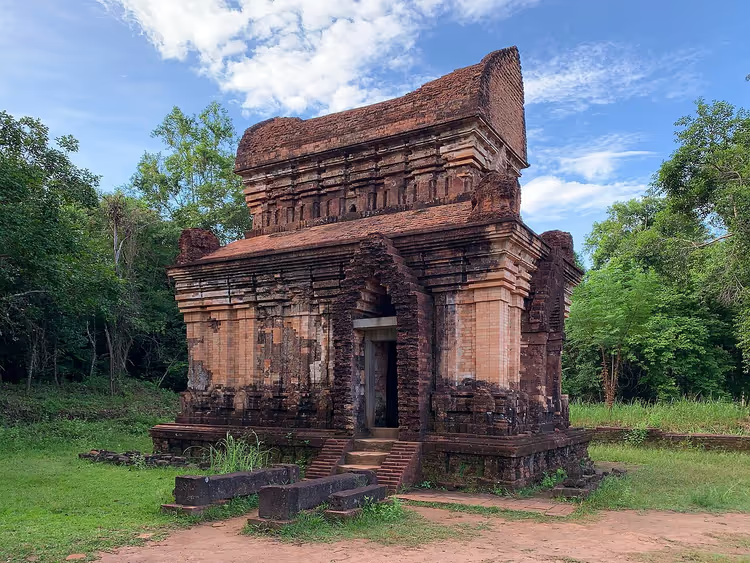
My Son lies in Quang Nam Province, not far from Hoi An. It is a Hindu sanctuary of the ancient Champa kingdom. The brick towers were built as early as the fourth century, and today they are considered one of the important monuments of Southeast Asia.
Come in the morning before it gets hot. The complex sits in a valley, and you walk between the towers across an open area. Bring water and a hat: the sun beats down hard here during the day.
My Son is easy to combine with Hoi An in one day. If you want to understand the history of Champa, take a guided tour, otherwise the towers will remain just ruins.
7. Ho Chi Minh City
 © Alexkom000 · CC BYPhoto: Alexkom000, CC BY (https://creativecommons.org/licenses/by/4.0), Wikimedia Commons
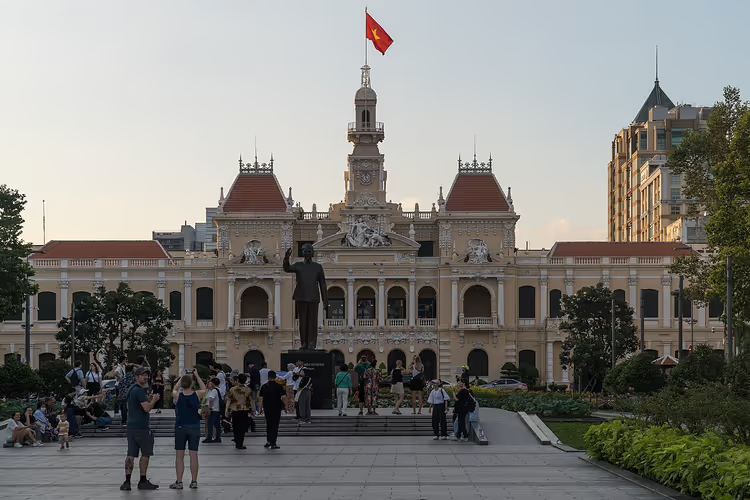
Ho Chi Minh City is called the most European-looking city in Asia. Notre-Dame Cathedral, glass skyscrapers, and Eastern pagodas stand side by side here, and religions and cuisines mix easily in the city.
In Ho Chi Minh City, be sure to visit the War Remnants Museum. The exhibition tells about the Vietnam War, and planes and tanks stand in the courtyard. The ticket costs about €1.5 (as of 09/2026, official website), and the museum is open daily from 7:30 to 17:30.
Also stop by the Hindu Mariamman Temple and the city's oldest pagoda, Giac Lam. In the evening, stroll through the city market and try street food. It's convenient to stay in the center, hotels in Ho Chi Minh City on Trip.com.
8. Mekong Delta
 © Jim Bendon from Karratha, Australia · CC BY-SAPhoto: Jim Bendon from Karratha, Australia, CC BY-SA (https://creativecommons.org/licenses/by-sa/2.0), Wikimedia Commons
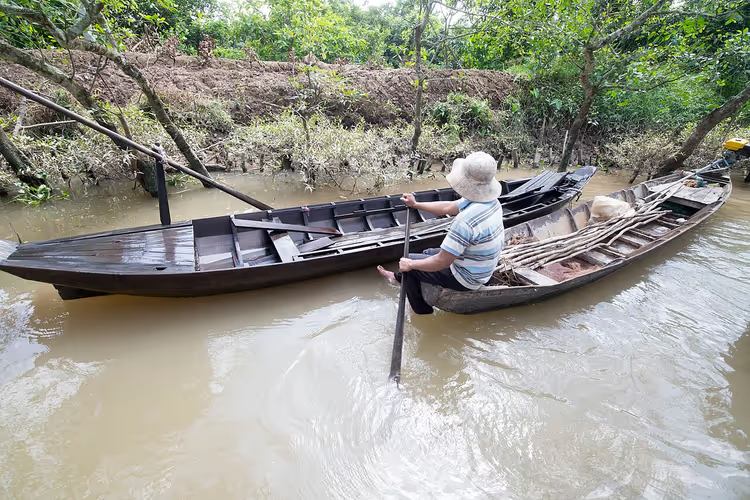
The Mekong Delta lies in the southwest of the country, where the river splits into hundreds of branches. It is one of the most photographed places in Vietnam: narrow canals, coconut palms, and boats.
People come here for the floating markets. Local vendors sell fruit and food right from their boats, and you will see how a village lives on the water. From Ho Chi Minh City, you can take a day trip here or stay overnight in a guesthouse.
Plan your trip for the morning: the markets open early, and by midday the heat becomes intense.
9. Cu Chi Tunnels
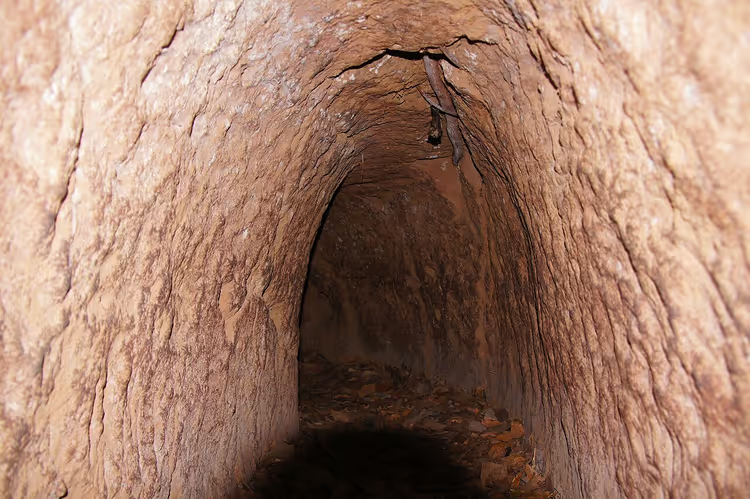 © Matthew Blissett · CC BY-SAPhoto: Matthew Blissett, CC BY-SA (https://creativecommons.org/licenses/by-sa/3.0), Wikimedia Commons
The Cu Chi Tunnels were built in the late 1940s as an underground network for shelter and communication. Today it is an open-air museum: you descend into widened sections of the tunnels and see traps, kitchens, and a hospital.
Even if history is not your main interest, it is worth a stop. The underground labyrinth is impressive on its own, and some sections of the tunnels were specially widened for tourists. The drive from Ho Chi Minh City takes about two hours, so book a Cu Chi Tunnels tour.
Wear comfortable shoes and do not bring large bags: they get in the way in the narrow passages.
10. Phu Quoc
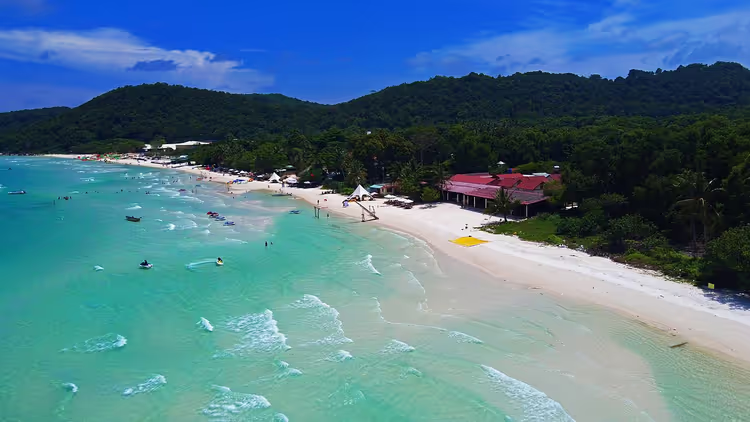 © [//commons.wikimedia.org/wiki/User:Trantuonglam Trantuonglam] · CC BY-SAPhoto: [//commons.wikimedia.org/wiki/User:Trantuonglam Trantuonglam], CC BY-SA (https://creativecommons.org/licenses/by-sa/4.0), Wikimedia Commons
Phu Quoc, an island in the south of the country, is known for its long beaches and warm sea. Here you can lie by the water all day and watch the sunset with a cocktail in hand in the evening.
Active travelers will also find plenty to do. Dive to the coral reefs or take a kayak and paddle along the coast. The best weather on the island is at the end of the year, during the dry season.
You can stay near any beach, as hotels on Phu Quoc are scattered along the entire coast: see options on Trip.com.
⁉️🤔 Frequently asked questions
When is the best time to go to Vietnam?
The north and south run on different rhythms. In the north (Hanoi, Ba Be, Trang An), the dry season runs from October to April; summers there are hot and rainy. In the south (Ho Chi Minh City, the Mekong Delta, Phu Quoc), December through March is more comfortable. If you are traveling across the whole country, go in spring.
How many days should I allow for the route?
For the ten places on this list, you need about two weeks if you want to travel without rushing. Hanoi, Hoi An, and Ho Chi Minh City are easy to connect by train and short flights. Ba Be and Phu Quoc are off to the side, so allow a separate day for each.
Can you cover all ten places in one trip?
It is doable, but tight. Split the route into north and south: first Hanoi, Ba Be, and Trang An, then Hue, Hoi An, and My Son, and finish with Ho Chi Minh City, the Mekong Delta, Cu Chi, and Phu Quoc. Allow about two weeks so you can travel at a relaxed pace.
Do you need to buy museum tickets in advance?
The major museums have lines, so it is better to check opening hours and tickets on official websites ahead of time. The Museum of Ethnology in Hanoi and the War Remnants Museum in Ho Chi Minh City admit visitors on a set schedule, and you should check the closing day separately. Popular tours also sell out.
What should I take on the trip?
Light cotton clothing, a hat, and comfortable shoes for the tunnels and valleys. Temples and pagodas do not allow shorts or bare shoulders, so keep a wrap in your bag. Mosquito repellent will come in handy in the delta and in Ba Be National Park.
In short: what to book
If this is your first trip, start with Hanoi and Hoi An: they give you the fullest impression of the country. For nature, go to Trang An and Ba Be National Park; for beaches and reefs, head to Phu Quoc; and for the history of the war, look to Ho Chi Minh City and the Cu Chi Tunnels.
- If you are going for cities and culture: book a hotel in Hanoi or Hue in advance.
- If you want nature and boats: plan Trang An and Ba Be for the first half of your trip.
- If you are dreaming of the sea: save Phu Quoc for the end.
Book hotels in Vietnam on Trip.com to match your route and season.

A small editorial team writing guides for independent travel. We travel ourselves, but we haven’t been everywhere, so we check prices, opening hours and how to get there against official sources.