





Nine trips from Dubrovnik to Mostar: tour, bus or car
From Dubrovnik to Mostar, you can get there in one day. The drive takes about three hours (as of 09/2026, FlixBus schedule), but the border is the deciding factor. In summer and on weekends, a line builds up at the crossing, and part of the itinerary doesn't fit into daylight hours.
We put together nine organized tours from Dubrovnik to Mostar and compared them with traveling on your own: by car, by bus, and with a private transfer. Below you'll also find stops along the way worth seeing if you're driving.
Ad: this article contains affiliate links, we earn a commission if you book through them, at no extra cost to you.
Dubrovnik and Mostar: comparing your options
Mostar sits on the Neretva River in Herzegovina, about 130 km from Dubrovnik (as of 09/2026, route on FlixBus). You're choosing between a group tour, a private transfer, a bus, and your own car. That determines how much time you'll spend at the border and how much you'll manage to see in the city.
💡 In short:
- You need a passport to enter, while EU, EEA, and Swiss citizens only need an ID card.
- A one-way bus ticket usually costs 20-30 € (as of 09/2026, FlixBus tickets).
- A group tour picks you up from your hotel and handles the border and parking for you.
Option | Travel time | Cost | What to keep in mind |
|---|---|---|---|
Group tour | full day | depends on season and group size | the organizer handles the border and parking |
Private transfer | about three hours | several hundred euros per car | flexible schedule, hotel pickup |
Bus | about three hours | 20-30 € one way (as of 09/2026, FlixBus prices) | several departures a day, book ahead in summer |
Your own car | about three hours | parking at Kravice 3 KM per hour (as of 09/2026, waterfall price list) | stops in Trebinje, Počitelj, and Blagaj |
Why a group tour is easier than traveling on your own
A group tour picks you up from your hotel in Dubrovnik and takes you across the border without you having to do anything. The driver knows where the line builds up at the crossing and plans the day so you can fit in both the city and the waterfall.
If you don't have a car, this is the most stress-free way to see Mostar and the surrounding area. You don't need to find parking in the Old Town or figure out local entry rules.
We looked at nine options, from small groups to private two-day tours. Compare the route, duration, and included tickets before you book.
1. Mostar and Kravice Waterfall: small group tour
A good fit if you're visiting Bosnia for the first time and want to combine the city with nature without your own car.
 © Matěj Baťha · CC BY-SAPhoto: Matěj Baťha, CC BY-SA (https://creativecommons.org/licenses/by-sa/2.5), Wikimedia Commons
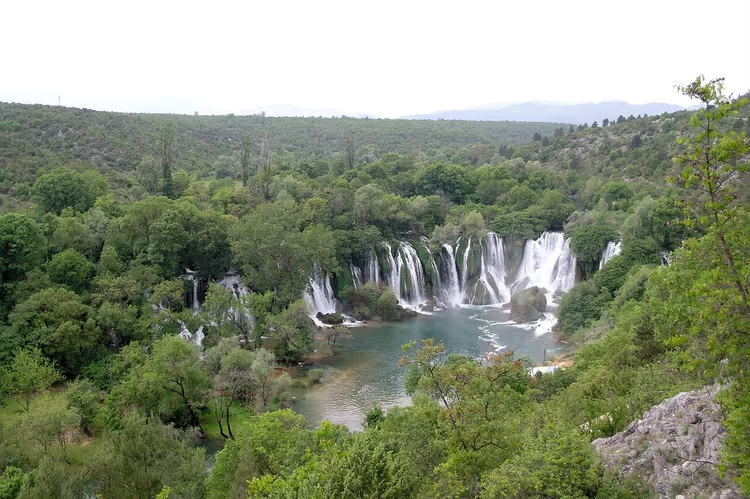
The tour starts with pickup from your hotel in Dubrovnik. From there, the bus travels through Croatia, crosses the border into Bosnia and Herzegovina, and makes its first stop at Kravice Waterfall.
The waterfall drops from a height of about 25 meters, and you'll have roughly an hour by the water. In summer, when the water level drops, you can swim in the shallow pools at the base. Entry to the site is paid separately: 20 KM for adults, free for children under 7 (as of 09/2026, official Kravice website).
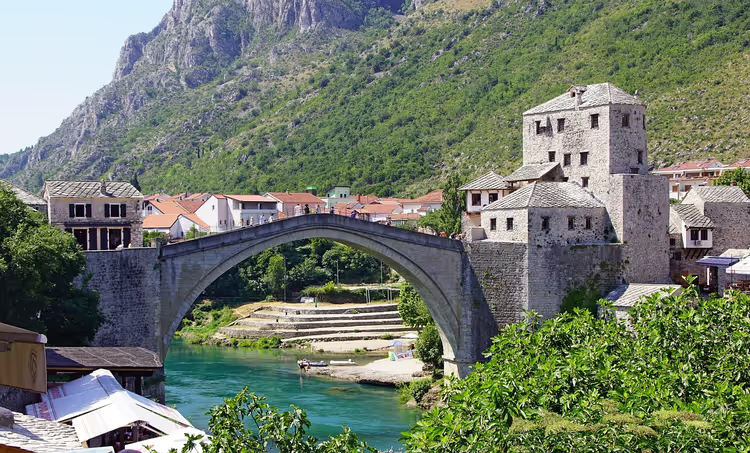
After Kravice, the group heads to Mostar. A guide leads a walking tour of the Old Town and shows you the Old Bridge (Stari Most), built by the Ottomans in the 16th century. After that, you have free time for lunch and shopping.
The price includes entry to the Turkish House, one of the city's most visited museums. When booking, you choose between a small group, a minivan, or a large bus.
- What's included: English-speaking guide, hotel pickup, entry to the Turkish House.
- What's not included: food and drinks, tips, waterfall entry.
- book the tour on GetYourGuide
2. Mostar and Medjugorje: a pilgrim's day
A good fit if you're interested in religious sites and Ottoman villages on the UNESCO list.
 © Berthold Werner · CC BY-SAPhoto: Berthold Werner, CC BY-SA (https://creativecommons.org/licenses/by-sa/4.0), Wikimedia Commons
The first stop on the route is Počitelj, a village on the left bank of the Neretva. UNESCO has placed it on the tentative list of candidates for World Heritage status (as of 09/2026, UNESCO list). A fortress, mosques, and a clock tower have survived here.
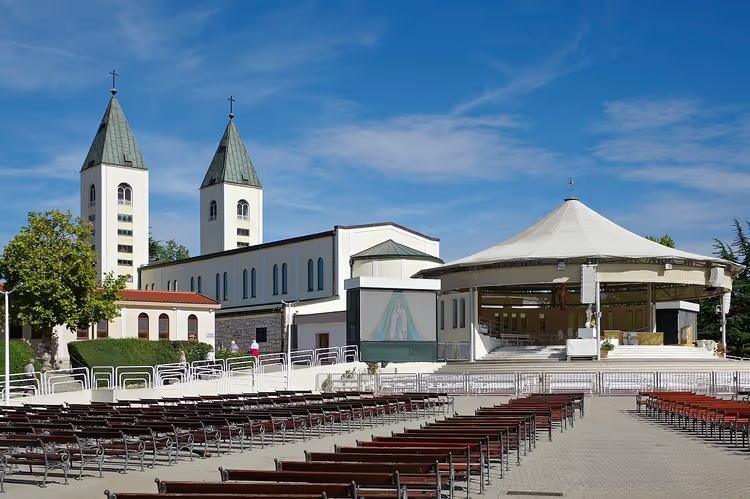
The second stop is Medjugorje. According to the accounts of six local teenagers, apparitions of the Virgin Mary have been occurring there since 1981 (as of 09/2026, article about Medjugorje). In September 2024, the Vatican recognized the spiritual experience of Medjugorje and permitted pilgrimage, but did not declare the apparitions themselves supernatural.
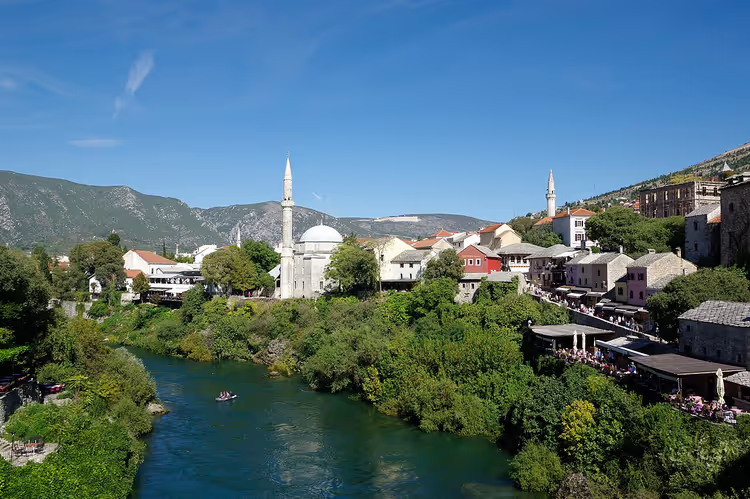
Next, the group arrives in Mostar. The guide shows the Old Bridge, and the best view of the city and the Neretva opens from the minaret of the Koski Mehmed Pasha Mosque.
The Old Bridge you see today was rebuilt in the early 2000s. The original 16th-century Ottoman bridge was destroyed during the war in the early 1990s, and the current one was reconstructed from the old plans. Today it is the main symbol of the city and a place where almost all tourists meet.
The Koski Mehmed Pasha Mosque has a paid climb up the minaret, and it takes a few minutes. In return, you get the best panorama of the Neretva and the rooftops of the Old Town. Medjugorje, near Mostar, is considered one of the main Catholic pilgrimage sites in Europe, so almost all tour groups stop here.
- What's included: air-conditioned bus transportation, English-speaking driver, pickup and drop-off.
- What's not included: food, drinks, tips.
- tour price on GetYourGuide
3. Mostar: classic day trip
A good fit for those who want to focus on one city and explore it with a guide.
 © Berthold Werner · CC BY-SAPhoto: Berthold Werner, CC BY-SA (https://creativecommons.org/licenses/by-sa/4.0), Wikimedia Commons
The route is built around Mostar itself, without long stops in villages. You walk through the Old Town, visit the Old Bazaar, where they sell engraved metalwork and coffee, and climb the minaret of the Koski Mehmed Pasha Mosque for a panorama of the city.
Don't miss the War Photo Exhibition. It occupies a former sniper tower and shows photographs from the war in the early 1990s. The walls of many houses still bear bullet marks, and that is part of the walk.
The tour follows one loop: the Old Bazaar, the bridge, the mosque, and the old Turkish street. The guide tells you how the city lived before the war and how it was rebuilt after. You can ask questions and linger wherever you find interesting.
Entrance to the Turkish House and the mosque is already included, so you don't pay twice on site. Lunch and drinks are on your own, but there are many places near the bazaar with home-style cooking and old-style coffee shops.
- What's included: transportation, local guide, entrance to the Turkish House and the mosque.
- What's not included: food, drinks, tips.
- book a Mostar tour
4. Private tour: Mostar, Stolac, Počitelj, and Blagaj
A good fit for those who want flexibility and several cultural sites in one day.
 © Julian Nyča · CC BY-SAPhoto: Julian Nyča, CC BY-SA (https://creativecommons.org/licenses/by-sa/3.0), Wikimedia Commons
This is a full-day private trip with pickup from your address in Dubrovnik. The driver picks you up early in the morning, and the route is adjusted to your pace.
The first stop along the way is Stolac. Here you get a short walk through the Old Town with medieval architecture, narrow streets, and stone houses beneath old fortifications. The town has been part of four empires, and that is visible in its buildings.
Next comes Počitelj on the Neretva, a candidate for the UNESCO list (as of 09/2026, UNESCO tentative list). Then you arrive in Mostar and walk through the Old Town with the Old Bridge.
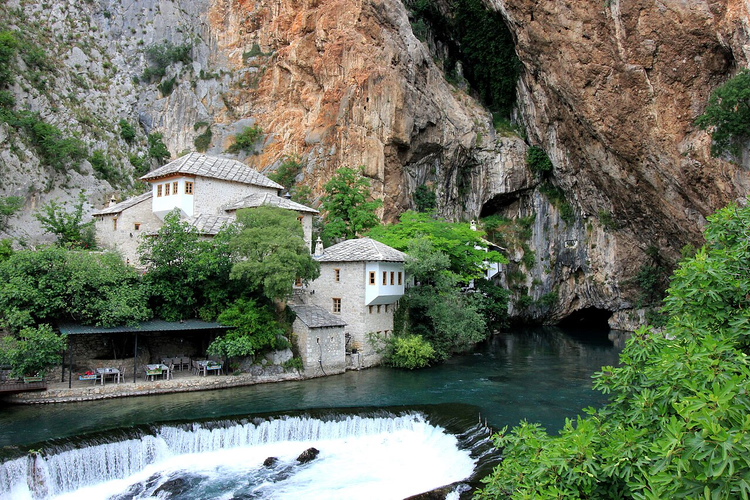
The last stop is Blagaj Tekke, a dervish monastery under a cliff at the source of the Buna River, south of Mostar. It was built in the 16th century and has served as a place of prayer for dervishes ever since. You will learn how the community lived and why this place is considered one of the best examples of Islamic architecture in the country.
- What's included: air-conditioned car, coffee and tea, private driver.
- What's not included: tips.
- book a private tour
5. Private tour: Mostar, Kravice and Blagaj
Good for couples and families: a relaxed pace and nature along the way.
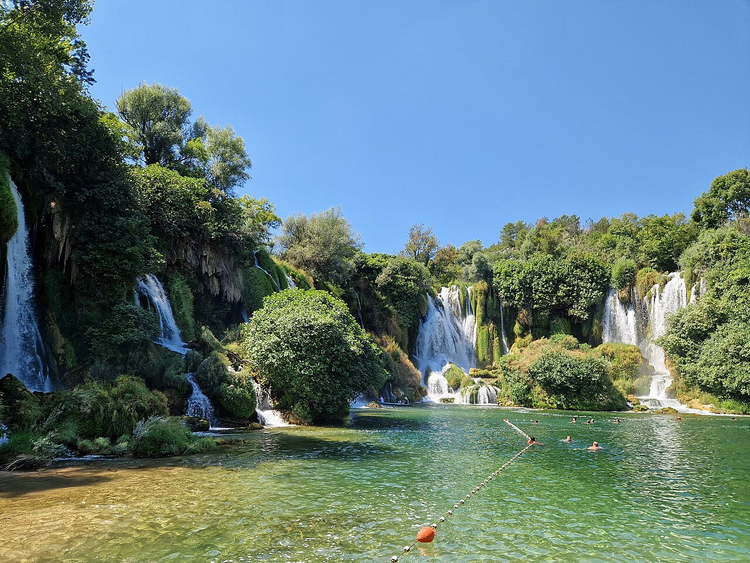 © Rkoster · CC BYPhoto: Rkoster, CC BY (https://creativecommons.org/licenses/by/4.0), Wikimedia Commons
If you don't want to travel in a large group, this option gives you a private car and a personal guide. The itinerary covers Mostar, Kravice Waterfall and Blagaj in one day.
The difference from a group tour is the pace. You don't have to wait for a bus, and you spend longer at each stop. The guide answers questions as you go, not through a microphone to the whole bus.
After the tour you have free time in Mostar. Stop by the bazaar and get lunch from the local cuisine: cevapi, burek and sweets. Bosnian food blends Turkish, Mediterranean and Balkan flavors.
The price includes entrance fees to the waterfall and Blagaj, plus transportation. This is convenient if you don't want to deal with small cash payments on the spot.
This tour is popular with people traveling with children. You can stop the car whenever you need to, without having to adjust to a shared bus.
- What's included: English-speaking driver and guide, hotel pickup, entrance fees to the waterfall and Blagaj.
- What's not included: tips.
- compare prices on GetYourGuide
6. Sarajevo and Mostar: a long day
Good for those who want to see the capital of Bosnia and Mostar in one trip.
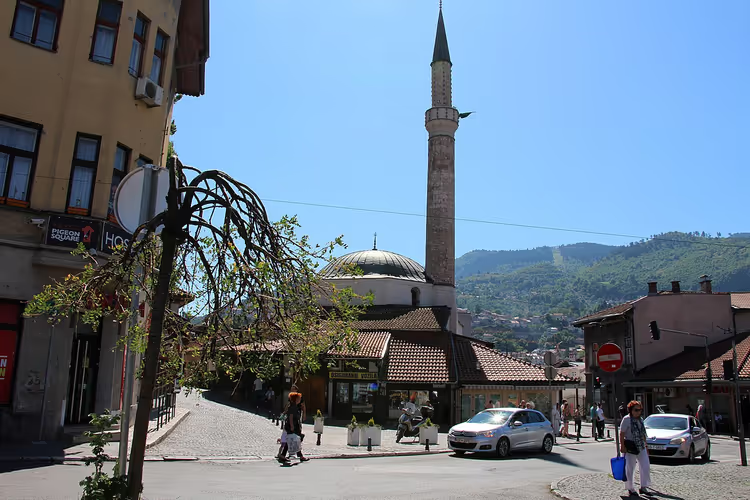 © Fred Romero from Paris, France · CC BYPhoto: Fred Romero from Paris, France, CC BY (https://creativecommons.org/licenses/by/2.0), Wikimedia Commons
This is the longest route in the selection. You leave Dubrovnik, cross the Franjo Tudman Bridge and drive through Neum, Pocitelj and Mostar to the capital of Bosnia.
Sarajevo is called the Jerusalem of Europe for its mix of mosques, synagogues and churches. World War I began here, and in the 1990s the city endured the longest siege of any European capital.
You have free time in the city, usually about three hours. That's enough to see the Latin Bridge, the Bascarsija bazaar and the Gazi Husrev-beg Mosque. The itinerary can be adjusted somewhat to your interests.
The Latin Bridge is important for European history: the shots that started World War I were fired here. Bascarsija is the old trading quarter of the city, with copper goods, coffee and artisan shops. The Gazi Husrev-beg Mosque is considered one of the most beautiful in the Balkans.
The round trip takes almost the whole day. If sitting in a car for long stretches is hard for you, split the trip into two days and stay overnight in Sarajevo. That way you'll have time for the capital and a relaxed evening in the Old Town.
- What's included: hotel pickup, private driver, air-conditioned car.
- What's not included: lunch, drinks, tips.
- book a tour to Sarajevo
7. Private tour to Mostar from Dubrovnik
Good for those who want a guide only for Mostar and maximum attention to detail.
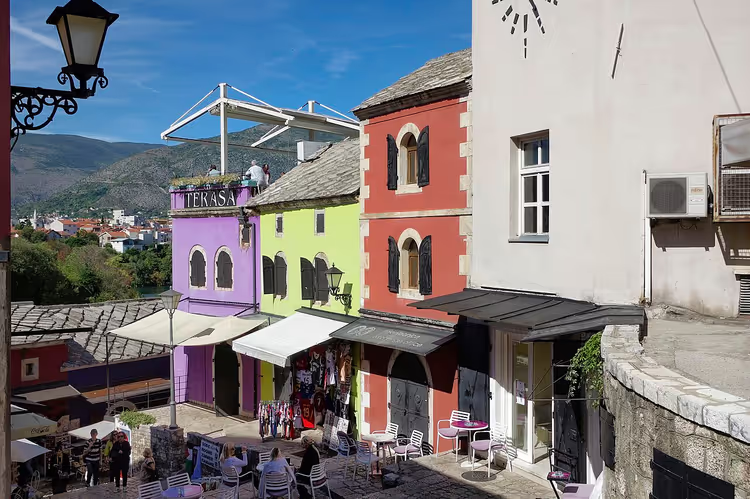 © Berthold Werner · CC BY-SAPhoto: Berthold Werner, CC BY-SA (https://creativecommons.org/licenses/by-sa/4.0), Wikimedia Commons
There's a short stop in Pocitelj along the way, then it's just Mostar. The city's name combines the words "bridge" and "old": it comes from the stone bridge over the Neretva.
There's less on the itinerary here, but more freedom. The guide is entirely yours, and the route through the Old Town can be adjusted as you go. If you want to linger at the bridge or in the bazaar, no one will rush you.
- What's included: local guide, hotel pickup, private car, water.
- What's not included: lunch, tips, entrance fees to the Turkish House and the mosque.
- book a private tour
8. Two days: Mostar, Pocitelj and Sarajevo
Good for those who don't want to return the same day and are fine with an overnight stay.
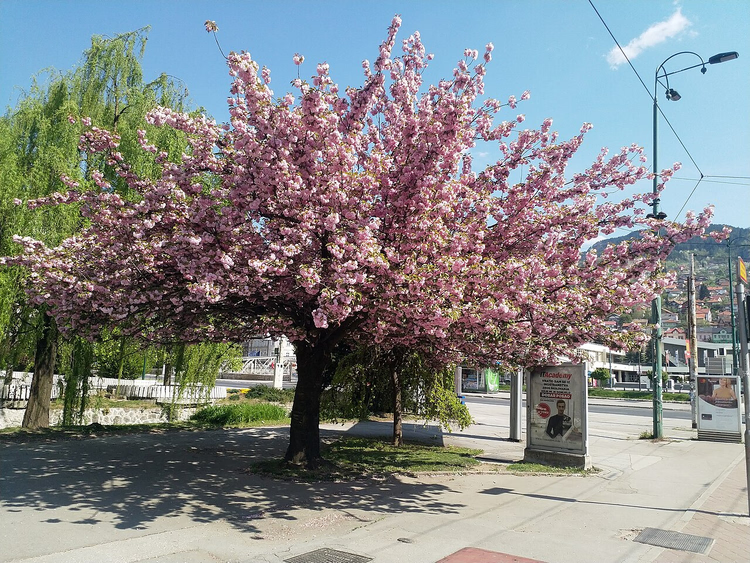 © Niegodzisie · CC BY-SAPhoto: Niegodzisie, CC BY-SA (https://creativecommons.org/licenses/by-sa/4.0), Wikimedia Commons
You can't really see Bosnia in one day, and this option solves that problem. The tour runs for two days and includes Mostar, Pocitelj and Sarajevo, so you won't have to drive back the same day.
You spend the night at a hotel in central Sarajevo. The group is small, so the guide has enough time for everyone. Lunch is included in the itinerary, and the evening and morning in the capital are yours.
Along the way you see the same route as on the one-day tours, but without the rush. In the morning you can take a relaxed walk through Bascarsija and be back in Dubrovnik by the evening of the second day.
The price includes a night at a hotel in central Sarajevo, so you don't need to find accommodation yourself. Lunch is also included, and you choose dinner on your own in the old town.
- What's included: night at a hotel in central Sarajevo, lunch, transportation, guide in Mostar and Sarajevo.
- What's not included: food and drinks outside the itinerary, tips.
- book a two-day tour
9. Semi-private tour: Mostar and Kravice
Good for solo travelers or small groups who want both structure and free time.
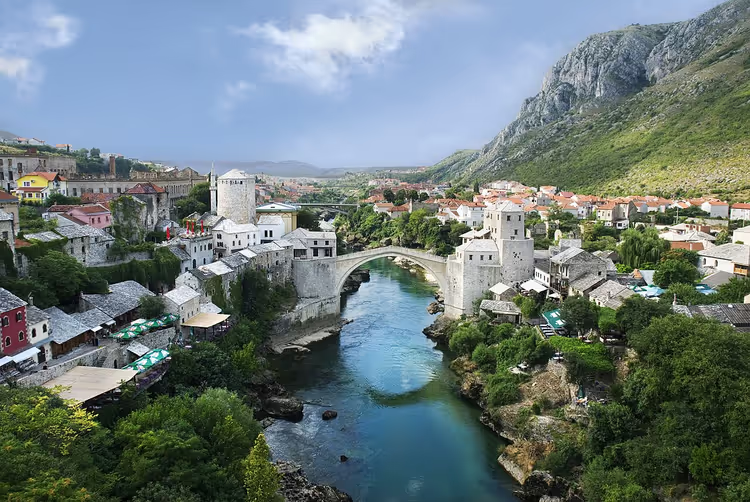 © Ramirez · CC BY-SAPhoto: Ramirez, CC BY-SA (https://creativecommons.org/licenses/by-sa/4.0), Wikimedia Commons
A first trip to a new country is always harder than it seems. Here the driver handles the border crossing and parking, and you just ride and take in the sights.
You're picked up from your hotel and driven past the coastal villages of the Dubrovnik Riviera, then through the Bosnian countryside to Mostar. In the city there's a guided tour and free time for the market and lunch.
The format is semi-private: the group is smaller than usual, but cheaper than a private tour. For solo travelers, it's a good compromise between price and the guide's attention.
On the way back you drive through Kravice and stop at the waterfall. The entrance fee to the site is paid separately.
- What's included: professional guide, hotel pickup, all taxes and fees.
- What's not included: food and drinks, tips, waterfall entrance fee.
- book a semi-private tour
Tours and tickets in Dubrovnik
Guided tours, skip-the-line tickets and activities — most offers can be cancelled free of charge.
See offers on GetYourGuideThe widget loads once you give your consent.
Map of the route from Dubrovnik to Mostar
The distance by road is about 130 km, and travel time depends on the border (as of 09/2026, FlixBus data).
 © Zysko serhii · CC BY-SAPhoto: Zysko serhii, CC BY-SA (https://creativecommons.org/licenses/by-sa/4.0), Wikimedia Commons
It's easy to check the stops on the Google Maps route. If you're driving, mark Trebinje, Počitelj and Blagaj in advance so you don't have to look for them along the way.
How to get from Dubrovnik to Mostar
There are four options: a tour, a private transfer, a bus and your own car. The difference isn't just the price, it's also how much time you lose at the border and how much time you have left for the city.
By car or private transfer
There are several routes between Dubrovnik and Mostar:
- via Trebinje, Stolac and Buna;
- via Metković along the coastal road;
- a detour via Trebinje, Bileća and Stolac, the longest route.
As a driver, you have freedom: you decide where to stop and how long to stay. The catch is parking. There are few spaces in the Old Town, and in summer it's better to look for one farther from the bridge.
If you don't want to drive, take a private transfer. It's convenient for a group of several people because the price is split among everyone. You cross the border the same way as in your own car, but without the navigation.
Border wait times between Croatia and Bosnia and Herzegovina vary. In summer and on weekends, the line can add an hour or more to the trip, so plan with some buffer time.
One detail for drivers: Mostar has introduced a local fee mainly for commercial vehicles. Private cars and rental cars don't need to buy a pass. If the fee does apply, it's arranged through the city website.
By bus
There aren't many buses from Dubrovnik to Mostar, usually a few per day. A one-way ticket costs 20-30 € (as of 09/2026, FlixBus prices).
Outside peak season, you hardly need to book the bus in advance. If your dates are already set, buy the ticket early: that way you'll get a window seat.
A tip for the ride: sit on the left side when heading to Mostar and on the right side on the way back. That way you'll see the valleys and mountains along the border, and the trip goes by faster.
By train
There is no direct train between Dubrovnik and Mostar. You can only get there by bus, car or tour.
What to see along the way by car
If you are driving, the road becomes a tour in itself. Between Dubrovnik and Mostar there are four places worth stopping for.
Trebinje
Trebinje, the southernmost city of Bosnia and Herzegovina, sits on the Trebišnjica River. The old center took shape back in Ottoman times, and the stone Arslanagić Bridge lies nearby. The city is the closest to Dubrovnik, so it works well as a first stop.
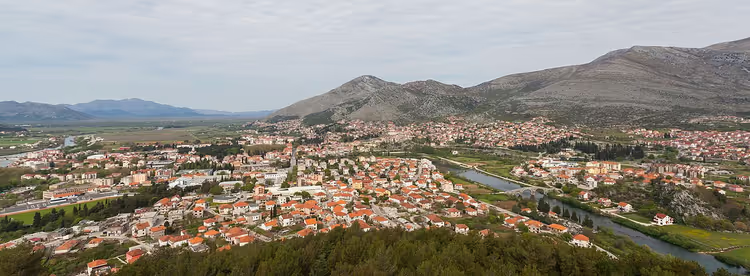 © Diego Delso · CC BY-SAPhoto: Diego Delso, CC BY-SA (https://creativecommons.org/licenses/by-sa/3.0), Wikimedia Commons
Besides architecture, there are wineries here where wine costs less than in Western Europe. You will often be offered young cheese or local olive oil. Further along the route are the 15th-century Tvrdoš Monastery, the Gračanica church, and river rafting in the warm season.
Trebinje is convenient because it is less than an hour from Dubrovnik. You have time to drink coffee on the square with plane trees and walk through the old center without rushing. Leave the car on the outskirts: the streets in the center are narrow, and parking right by the square is almost always taken.
Tvrdoš Monastery stands near the city and is among the oldest in the region. It is worth stopping for the wine and cheese made at the monastery, and to walk through the vineyards. If you have a free evening, Trebinje is also a good place to spend the night.
Stolac
Stolac lies between Dubrovnik and Mostar and has been part of four empires and three kingdoms. Roman, Byzantine, Ottoman, and Austro-Hungarian chapters of history can be read in its buildings.
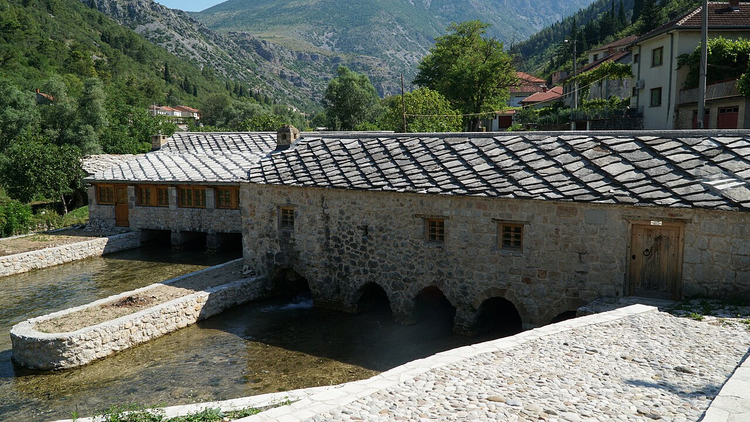 © Adam Harangozó · CC BY-SAPhoto: Adam Harangozó, CC BY-SA (https://creativecommons.org/licenses/by-sa/4.0), Wikimedia Commons
The city walls and the old fortress hold ruins, and above them stands a tall stone cross. Three kilometers to the west is a necropolis of stećci, medieval tombstones from the UNESCO list (as of 09/2026, World Heritage register).
Stolac is often skipped, and that is a mistake. Here you see several cultural layers at once, and an hour is enough for a walk. The old fortress stands on a hill, and from it you get a view over the valley.
The city was historically a meeting place of three religions: Christianity, Islam, and Judaism. This is visible in the buildings that stand side by side in a small area. The stećci necropolis lies by the road and is protected as a monument, and with a guide the history of these tombstones becomes clearer.
Počitelj
Počitelj stands on the left bank of the Neretva and is considered one of the main points in the south of the country. It took shape back in the Middle Ages, and Hungarians, Ottomans, and Venetians left their mark on it.
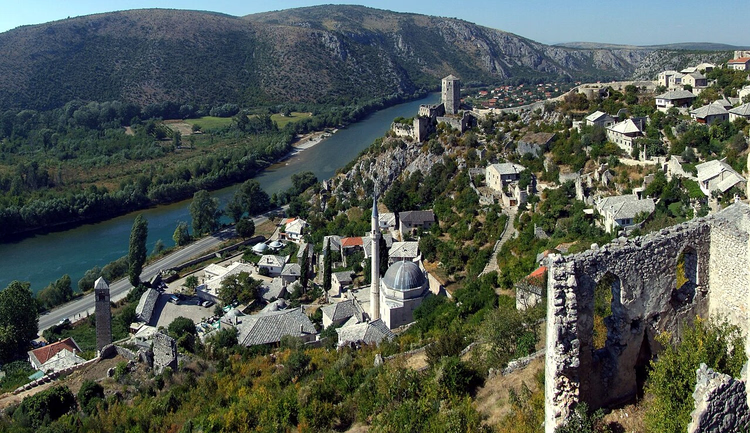 © Pudelek (Marcin Szala) · CC BY-SAPhoto: Pudelek (Marcin Szala), CC BY-SA (https://creativecommons.org/licenses/by-sa/3.0), Wikimedia Commons
The village is so well preserved that it is called an open-air museum. You should allow at least an hour here: the Kula fortress, the Sahat-kula clock tower, and the Hadži-Alija Mosque stand close to one another.
Entry to the old part is free, no payment needed. A staircase leads from the parking lot to the fortress, and the climb is hard in the heat: bring water and go in the morning.
Počitelj is often included in tours together with Blagaj and Stolac, so during the day in season it gets crowded. If you are driving, arrive before noon or closer to evening, and you will walk the streets almost alone.
Blagaj
In Blagaj it is worth stopping for at least a couple of hours. The village grew up at the source of the Buna River, and a dervish monastery has stood right under the cliff since the 16th century.
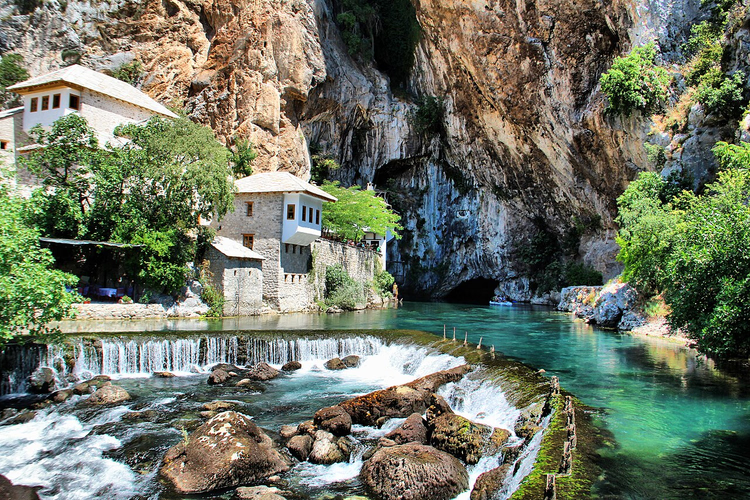 © Talha Şamil Çakır · CC BY-SAPhoto: Talha Şamil Çakır, CC BY-SA (https://creativecommons.org/licenses/by-sa/3.0), Wikimedia Commons
The monastery combines Ottoman and Mediterranean elements, and it is one of the most recognizable monuments in the country. It is quiet and uncrowded if you arrive outside the middle of the day. Blagaj is easy to add to any trip to Mostar.
Entry to the monastery is paid, and nearby there are restaurants over the water. They serve trout and local dishes, and the tables stand right at the source. Have lunch here if you want to combine sightseeing with a rest in the shade.
The road from Mostar to Blagaj is short, so it is convenient to stop here in either direction. An hour is enough for sightseeing, and with lunch by the water allow two so you do not rush.
What to see on the road from Mostar to Sarajevo
If you continue from Mostar to the capital, there are three stops along the way. They turn an ordinary transfer into a day of its own.
Konjic
Konjic stands north of Mostar and is considered one of the oldest cities in the country. It grew up on a trade route and took its current form by the end of the 14th century.
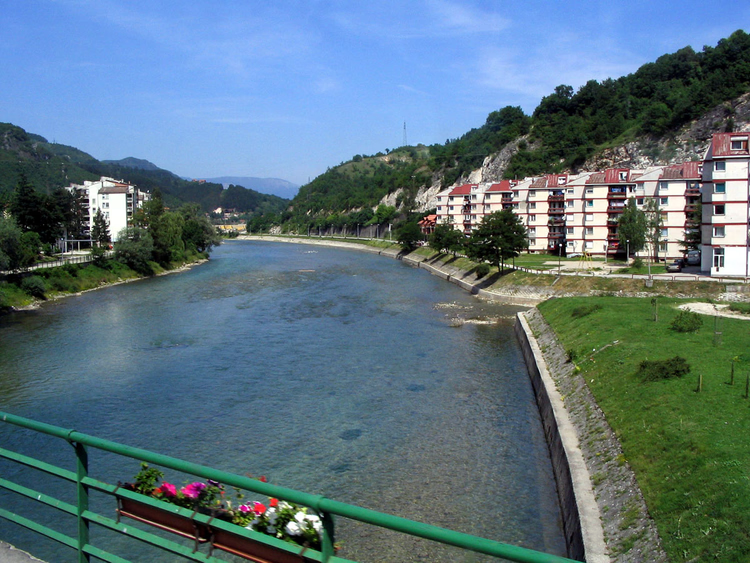 © Ante Perkovic · CC BY-SAPhoto: Ante Perkovic, CC BY-SA (https://creativecommons.org/licenses/by-sa/3.0), Wikimedia Commons
The main point of the city is the stone bridge Stara Ćuprija across the Neretva. It was built at the end of the 17th century and is recognized as a monument of national importance. If you are interested in history, a walk through Konjic will take a couple of hours.
Konjic is known for traditional woodcarving, and you can watch the work in the workshops. The old town is compact, and you can walk around it in one loop, then go down to the bridge.
Tito's bunker
Here in Konjic, ARK D-0 is hidden, a Cold War bunker and shelter of Yugoslav president Josip Broz Tito. It was built in case of a nuclear strike.
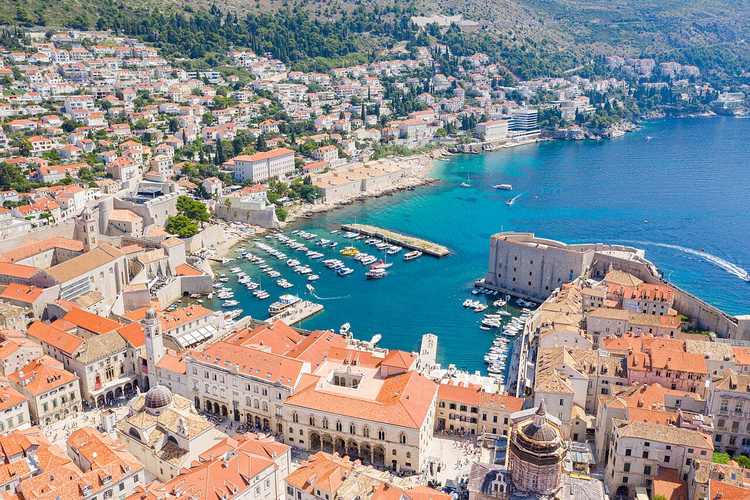 © dronepicr · CC BYPhoto: dronepicr, CC BY (https://creativecommons.org/licenses/by/2.0), Wikimedia Commons
For many years the site remained secret, and now it hosts exhibitions. The bunker still belongs to military infrastructure, so you can only get inside with a guided tour and by prior reservation.
Tours are organized and run on a schedule, so the site should be booked in advance. It is cool inside all year round, which makes it a pleasant stop on a hot day. Without a reservation you risk leaving empty-handed, and the road to Konjic takes time.
Jablanica
Jablanica lies west of Konjic and is known for its cuisine. This is meat country, where lamb is roasted on a spit, and many tours stop here specifically for lunch.
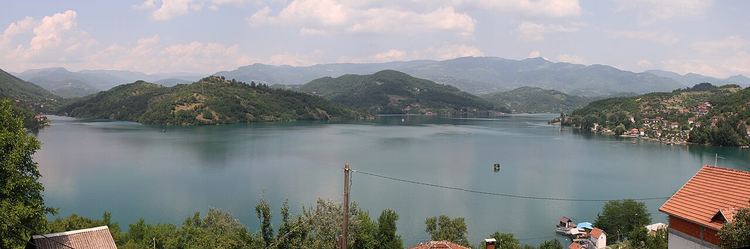 © Bjoertvedt · CC BY-SAPhoto: Bjoertvedt, CC BY-SA (https://creativecommons.org/licenses/by-sa/4.0), Wikimedia Commons
Besides food, there is a museum of the Battle of the Neretva and hiking routes in the surrounding hills. Nearby there are two sites with medieval stećci.
Lunch in Jablanica is a separate item on the itinerary, and many people come here specifically for the lamb. Order meat with salad and local bread, then take a walk to the river.
A separate note for drivers: Mostar has introduced a local fee mainly for commercial transport. Passenger cars and rental cars do not need to buy a pass. If the fee is required after all, it is arranged through the city website.
⁉️🤔 Frequently asked questions
Can you really see Mostar in one day from Dubrovnik?
Yes, it is a common route. One way takes about three hours, plus time at the border. In summer and on weekends allow extra time, and you will still have several hours for the Old Town and the bridge. An organized tour removes the questions of driving and parking.
Do you need a passport to travel to Mostar?
Yes, or an ID card. Croatia is in Schengen, while Bosnia and Herzegovina is not. Documents are checked for everyone at the border, including day-trippers. EU, EEA, and Swiss citizens only need an ID card to enter; everyone else needs a passport. Keep your document handy on the way back too.
Is Počitelj on the UNESCO list?
Počitelj is on the UNESCO tentative list, but it has not yet been granted World Heritage status (as of 09/2026, UNESCO data). The region does have individual sites already inscribed on the list, including the medieval stećak tombstones.
Can you swim at Kravice Waterfall?
Swimming is allowed in the warm months, when the water level is safe. In winter and spring the current is stronger, and swimming is not advisable.
Is there a train from Dubrovnik to Mostar?
No, there is no direct rail connection between the two cities. You travel by bus, car, or on a tour. In high season, bus tickets are best booked in advance.
Has the Church recognized the apparitions in Medjugorje?
In September 2024, the Vatican granted a "nihil obstat" to the spiritual experience of Medjugorje and permitted pilgrimage (as of 09/2026, recognition reference). The apparitions themselves have not been declared supernatural. These are two separate decisions, and they should not be confused.
Do you need a vignette to enter Mostar?
No. A separate permit is not required for private or rental cars. The local fee mainly applies to commercial transport: tour buses and some minivans on organized routes.
In short: what is worth booking
If your goal is to see the city and the waterfall in one day, take a small group tour. If you need flexibility and several stops at once, choose a private tour with a personal guide. If you are traveling alone, a semi-private option will be enough.
For an overnight stay in Sarajevo, a two-day tour works well. For the capital and back in one trip, take the long route with an early start.
A passport or ID card, comfortable shoes, and cash in convertible marks will make the day easier. See all tours from Dubrovnik to Mostar on GetYourGuide.

A small editorial team writing guides for independent travel. We travel ourselves, but we haven’t been everywhere, so we check prices, opening hours and how to get there against official sources.