
















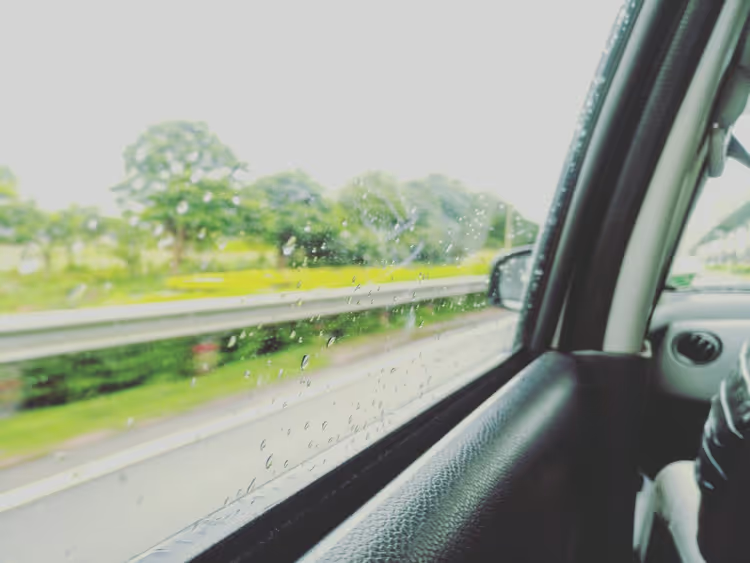
Rainy season in India: where to go to avoid downpours
From June to September, India experiences the monsoon. It is not a solid wall of rain, as many people assume. According to the India Meteorological Department (IMD), the southwest monsoon usually reaches Kerala around June 1 and covers almost the entire country by mid-July.
Many people postpone their trip out of fear of downpours, flooded streets, and landslides. In practice, the rainy season changes India for the better, and some regions are barely affected. You just need to figure out one thing: where to go and what to actually expect from the weather.
Ad: this article contains affiliate links. We earn a commission if you book through them, at no extra cost to you.
When the monsoon starts in India
💡 In short:
- The southwest monsoon arrives in Kerala in early June and covers the entire country by mid-July.
- The most rain falls in July, and by September the downpours are tapering off.
- Monsoon timing and rainfall: 09/2026, according to the India Meteorological Department.
The dates shift every year, and the exact start day is rarely predicted correctly. In 2026, the monsoon arrived in Kerala on June 4, three days later than normal (as of 06/2026, Onmanorama). If you book your trip in advance, do not tie your plans to a specific start date for the rains.
After that, the front moves north. About ten days later, the rains reach Mumbai, arrive in Delhi by late June, and by mid-July the monsoon is established across the entire country (according to IMD).
The season starts gradually. At first there are short pre-monsoon showers, getting stronger day by day. The official start of the monsoon is announced after a series of thunderstorms with lightning and thunder. For locals, the first downpour after the exhausting heat is a celebration: children run outside and dance in the streams of water.
How the monsoon forms
In summer, the air over the Thar Desert in Rajasthan heats up especially strongly. A low-pressure area forms above it, and moist air masses from the Indian Ocean rush toward it. The Western Ghats and the Himalayas stand in the path of these winds. The air rises, cools, water vapor condenses into droplets, and the rain begins.
The Western Ghats force the air to rise already on the west coast, so Kerala and southern India are among the first to receive rain. The southwest monsoon splits into two branches. The first travels over the Arabian Sea along the western coast. The second crosses the Bay of Bengal, passes through Assam, and hits the eastern Himalayas.
Terrain matters a lot. In some states you will find yourself under a wall of water, in others you will stay almost dry, and the distance between them is only a few hundred kilometers.
What happens during the monsoon month by month
The monsoon does not rain continuously. After the first heavy downpours, the weather settles into an alternating pattern: a few hours of rain, then bright sunshine. Sunshine can turn into a downpour within minutes. It is impossible to predict in advance, so you should keep your plans flexible.
Month | Weather | What it means for you |
|---|---|---|
June | The monsoon arrives in Kerala, then in Mumbai and Delhi | first thunderstorms in the south and west |
July | Maximum rainfall in most regions | the rainiest month, plan with extra time |
August | Downpours gradually weaken | weather improves, but the air is humid |
September | Last phase of the season, strong thunderstorms in places | rain is still possible, but there are fewer tourists |
During the heaviest rains, streets in Indian cities temporarily flood. Storm drains cannot handle that volume of water, and cars sit in traffic jams knee-deep in water. Rain comes in waves, so in between you have time to see the city. Humidity is high all season, and after rain the air becomes heavy. Bring a change of shoes, you will definitely need to dry them.
Where the rains are heaviest
Heavy downpours hit Mumbai and Kolkata, but the northeast gets the most water. The eastern Himalayas, the areas around Darjeeling and Shillong, receive enormous amounts of rainfall. The Bay of Bengal releases moisture without obstruction, which makes Meghalaya one of the rainiest places on the planet.
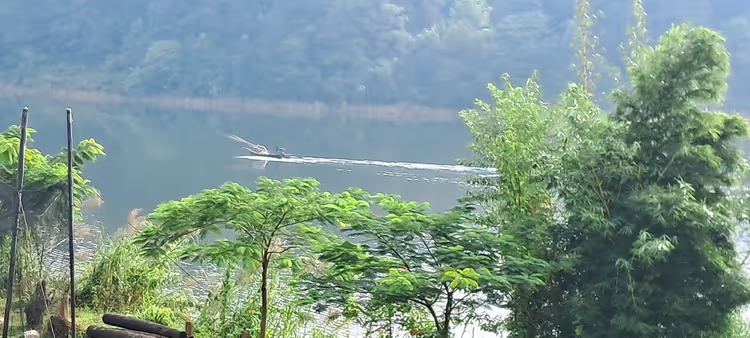
Cherrapunji in Meghalaya holds the world record for monthly rainfall: 9,300 mm in July 1861 (according to Guinness World Records). Nearby is the village of Mawsynram, considered the wettest inhabited place on Earth. If you go there in June or July, bring a waterproof jacket and a supply of dry clothes.
Where there is almost no rain
Not all of India turns into a river. Delhi, Bangalore, and Hyderabad get relatively little rain. Chennai is also comparatively dry in June and July, but from October to December the northeast monsoon dominates there.
The least rainfall occurs in the Rajasthan desert, on the Deccan Plateau east of the Western Ghats, and in Ladakh in the north of the country.
Region | Monsoon rainfall |
|---|---|
Delhi | little rainfall |
Bangalore and Hyderabad | little rainfall |
Chennai | dry in summer, rain from October |
Rajasthan (Thar Desert) | almost no rain |
Ladakh | almost no rain |
If you want a trip without umbrellas, look at Rajasthan and Ladakh. Just keep the difference in mind: Rajasthan has intense heat, while high-altitude Ladakh is cool and dry. For mild weather during the monsoon, look to the southeast, in Tamil Nadu and Chennai, where summer moisture arrives more weakly.
Why you should travel during the monsoon
The rainy season has significant advantages. The main attractions are yours with almost no queues, since there are noticeably fewer tourists than from December to February. Flights to India and hotels often cost less than in the high season, and hotels offer special rates. Compare flight prices to India two to three months before your trip.
Nature adds another argument in favor of this season. Rain transforms the landscape: scorched slopes become covered in lush greenery, and waterfalls reach full power. You will not see this India in winter.
⁉️🤔 Frequently asked questions
Can you travel to India during the monsoon?
Yes, you can. Millions of people live in India year-round, and the rainy season is a normal part of life for them. What bothers tourists is not so much the rain as the heat with high humidity and occasional flooding. If you are ready for a flexible plan and waterproof clothing, the trip will go fine.
When does the heaviest rain fall in India?
The peak comes in July. Individual powerful thunderstorms are possible even in September, so keep an umbrella and a raincoat handy until you leave.
Where in India is there almost no rain during the rainy season?
Look toward Rajasthan, the Deccan Plateau, and Ladakh. Delhi, Bangalore, and Hyderabad also get noticeably less rainfall. Chennai is also comparatively dry in summer, since the city receives most of its moisture from October to December.
What to pack for a monsoon trip?
A waterproof jacket or raincoat, quick-drying clothes, and waterproof shoes. Bring a dry bag for electronics and documents, as well as mosquito repellent, since mosquitoes become more numerous in damp conditions. Choose closed-toe shoes, flip-flops are not practical for walking through puddles.
Is a trip to India cheaper during the rainy season?
As a rule, yes, flights and hotels cost less in the low season. Compare insurance options in advance, since rain increases the risk of flight cancellations and long delays.
In short: what to book
The monsoon suits those who are ready for a flexible plan and waterproof clothing. Book the essentials in advance, before low-season prices rise.
- Flights: compare airfare prices.
- Accommodation: see hotels in India on Trip.com.

A small editorial team writing guides for independent travel. We travel ourselves, but we haven’t been everywhere, so we check prices, opening hours and how to get there against official sources.