
















Salzburg in one day: 15 places you can actually see on foot
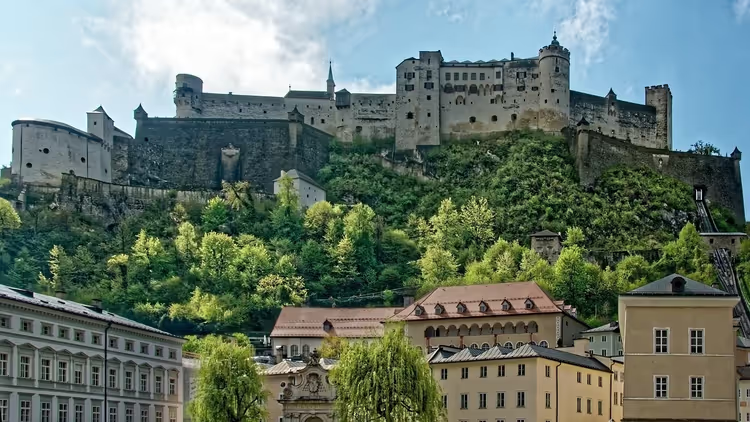
Salzburg can realistically be covered on foot in one day. The historic center fits between the Salzach River and Mönchsberg Mountain, so you barely spend any time on transport. In one day you can fit in the fortress, the cathedral, Mozart's house, and the Mirabell Gardens. Entry to Hohensalzburg Fortress costs €15.50 for an adult (as of 09/2026, fortress rates).
Below is a route of 15 stops in a convenient order. The museums are optional, you can't fit all of them into one day. You'll see what's worth buying in advance and what you can decide on the spot.
Ad: this article contains affiliate links. We earn a commission if you book through them, at no extra cost to you.
What you can fit into one day
💡 In short:
- The route starts at the train station and goes through the old town to the Mirabell Gardens.
- Allow 2-3 hours for the fortress, 30-40 minutes for the cathedral, about an hour for Mozart's house.
- Buy tickets for the fortress and Mozart's house online, the ticket office is slow in summer.
- Prices and opening hours: 09/2026, checked on the fortress page.
The day is built as a loop, so you don't need to backtrack. You walk from the train station to Kapuzinerberg, descend to the fortress, and finish at the Mirabell Gardens. On foot it comes to about 6 km, so wear comfortable shoes. There are cafes and benches between the sights, so you plan your own breaks.
How to get from the airport to the center
 AIIllustrative image: AI-generated
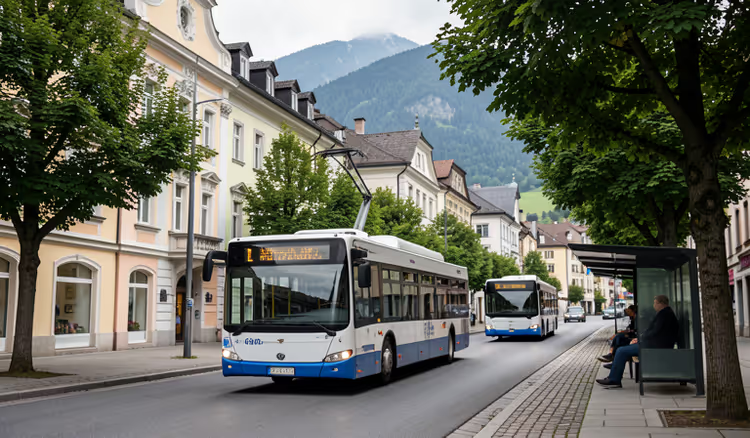
Salzburg Airport is only 4-5 km from the old town. Trolleybus No. 2 runs from the terminal to the main train station and then through the center. On weekdays it runs every 15-20 minutes, and the trip takes about 23 minutes (according to Salzburg Airport, 09/2026). You buy a ticket from the machine right at the stop.
Trolleybus No. 10 runs Monday through Saturday and gets you to the center in about 15 minutes. It's more convenient if your hotel is closer to Mozartplatz. A taxi from the terminal costs around €15-20, and you pick up a car right at the exit.
With a lot of luggage, a transfer is more convenient: the driver waits for you in the arrivals hall with a sign.
Tours and tickets in Salzburg
Guided tours, skip-the-line tickets and activities — most offers can be cancelled free of charge.
See offers on KiwitaxiThe widget loads once you give your consent.
Kapuzinerberg Mountain
 © Eweht · CC BY-SAPhoto: Eweht, CC BY-SA (https://creativecommons.org/licenses/by-sa/3.0), Wikimedia Commons
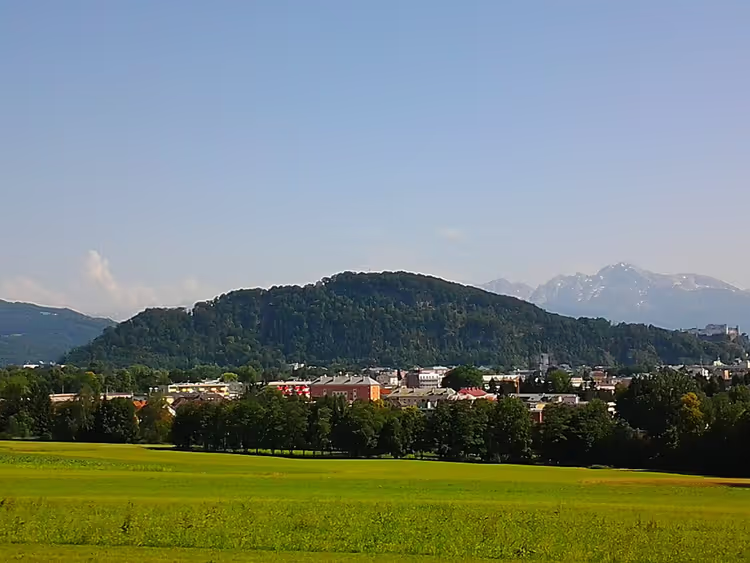
Kapuzinerberg Mountain rises to 640 meters and stands right across the river. You can go up two ways: by stairs from the embankment or by a switchback road from Stefan-Zweig-Strasse. The climb takes about 20 minutes and rewards you with a view over the rooftops of the old town.
At the top stands a Capuchin monastery built in the late 16th century. Tourists are not allowed inside the monastery itself, but you can visit the church freely. Nearby there is a preserved house where the writer Stefan Zweig lived, and a section of the fortress wall.
- How to get there: on foot from the Salzach embankment, about 20 minutes uphill.
- Cost: free entry.
- The catch: the monastery itself is closed to tourists, only the church is open.
Hohensalzburg Fortress
 © C.Stadler/Bwag · CC BY-SAPhoto: C.Stadler/Bwag, CC BY-SA (https://creativecommons.org/licenses/by-sa/4.0), Wikimedia Commons
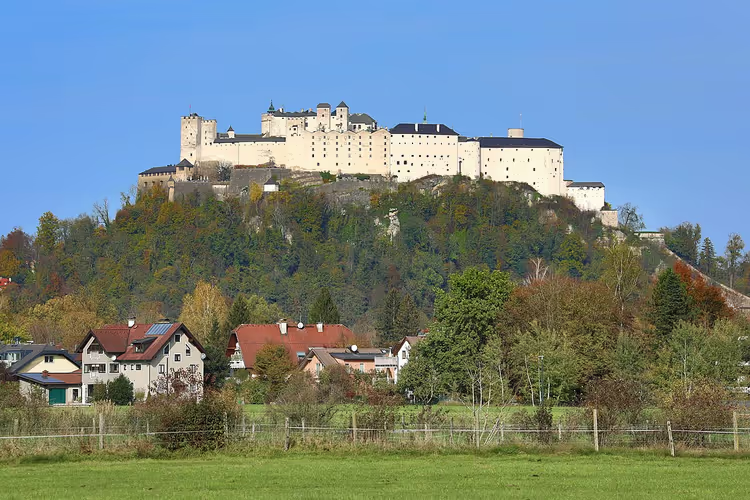
Hohensalzburg Fortress stands on Festungsberg Mountain and is considered one of the largest surviving citadels in Europe. The first structure was laid in 1077 under Bishop Gebhard, and towers and a bastion were added later. In the 16th century, residential chambers appeared inside, where the nobility lived in comfort. At the turn of the 15th and 16th centuries, the Reisszug freight lift was built here, considered the first in the world.
The fortress's history is tied to the uprising of 1525, when Prince Matthäus Lang took refuge behind its walls. Later the citadel was surrendered to Napoleon's troops without a fight, and in the early 20th century it housed a prison. Today the fortress welcomes tourists year-round.
Inside you can see a panorama of the city, St. George's Church, and the archbishop's palace. The Golden Hall with its leather wall coverings and the weapons museum stand separately. Admission to the fortress costs €15.50 with the funicular and €12.00 via the footpath (as of 09/2026, price list with funicular). A child ticket costs €6.30.
- Cost: €15.50 adult with funicular, €19.20 extended ticket.
- Time: allow 2-3 hours, the fortress is large.
- The catch: from November 9 to 13, 2026, the funicular is closed for maintenance, so only the footpath is available (according to the funicular schedule).
Nonnberg Abbey
 © Carsten Steger · CC BY-SAPhoto: Carsten Steger, CC BY-SA (https://creativecommons.org/licenses/by-sa/4.0), Wikimedia Commons
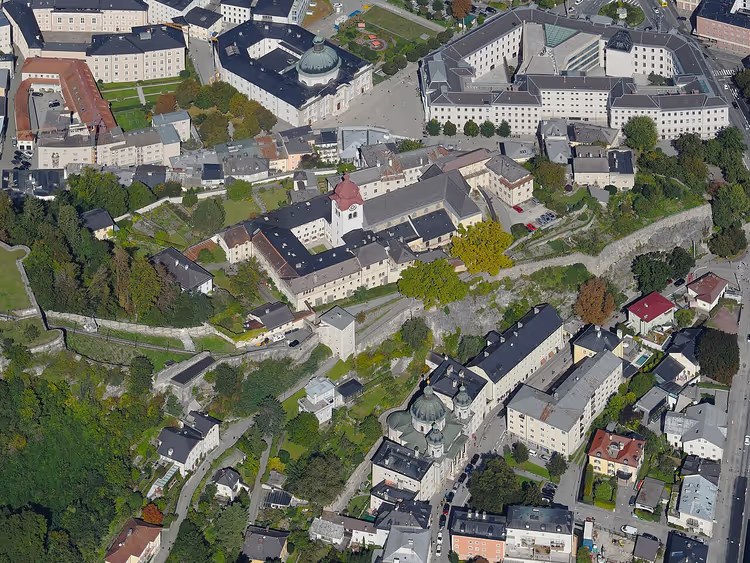
Nonnberg Abbey was founded in the early 8th century under Bishop Rupert, who was later canonized. The monastery was led by his sister Erentrude, and it accepted girls from noble families. In the early 15th century, a major fire destroyed the buildings, and reconstruction took more than a quarter of a century. After that, poor girls could also become nuns.
The abbey is still active today, but there is no free access to the grounds. You can enter the Christmas Church and listen to the nuns singing. A vegetarian restaurant operates nearby. The abbey became famous after the film "The Sound of Music," whose story is connected with this convent.
- Getting there: 10 minutes on foot downhill from the fortress.
- Cost: admission to the church is free.
- The catch: tourists are not allowed onto the monastery grounds.
St. Peter's Abbey
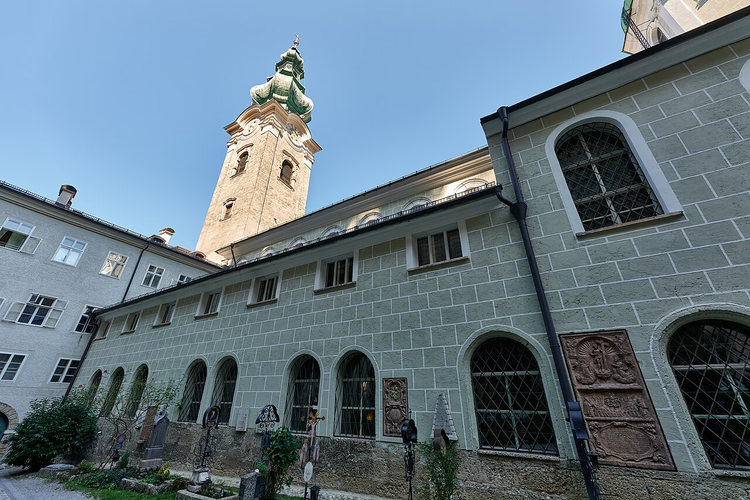
St. Peter's Abbey was founded by Bishop Rupert in 696, and his relics are kept here. It is a whole complex at the foot of the Mönchsberg: St. Peter's Church from the 12th century, buildings from the 17th and 18th centuries, a library, and a cemetery. The library holds scores by Haydn and Mozart.
At the entrance to the church you see a statue of St. Rupert, with a barrel of salt at his feet. Rupert is considered the patron saint of Salzburg, and salt gave the city its name. The old cemetery has been the burial place of noble people since the 9th century, and the grave of Nannerl, Mozart's sister, is preserved here.
Separately, you can visit the catacombs carved into the rock and the Long Gallery with paintings. The monks bake rye bread here, and the abbey restaurant serves monastery wine and old Austrian dishes made from family recipes.
- Cost: admission to the church is free, catacombs require a small ticket.
- Who it's for: those who want to see the city's oldest monastery.
- Getting there: 5 minutes on foot from Residenzplatz.
Franciscan Church
 © MatthiasKabel · CC BY-SAPhoto: MatthiasKabel, CC BY-SA (https://creativecommons.org/licenses/by-sa/3.0), Wikimedia Commons
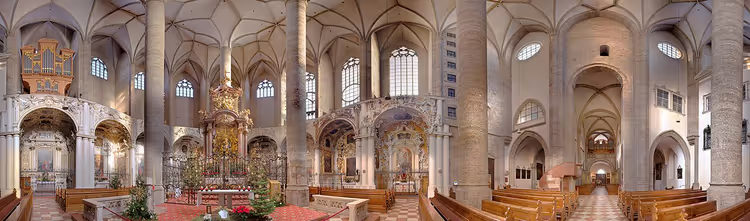
The Franciscan Church dates back to the 13th century and combines Romanesque and Gothic styles. Its history is connected with the Church of St. Vergilius, which was destroyed on the orders of Frederick Barbarossa. The church ceiling is painted like a starry sky, and statues of the Savior and saints decorate the interior.
The restoration was led by architect Hans von Burghausen. The 15th-century altar has not survived, but a sculpture of the Virgin Mary with Child by Michael Pacher has come down to us. In beauty, the church is second only to the cathedral, and admission here won't break the bank.
- Cost: admission is free.
- Time: a visit takes about 20 minutes.
- Who it's for: lovers of Gothic architecture and wood carving.
Archbishop's Residence
 © Andrew Bossi · CC BY-SAPhoto: Andrew Bossi, CC BY-SA (https://creativecommons.org/licenses/by-sa/2.5), Wikimedia Commons
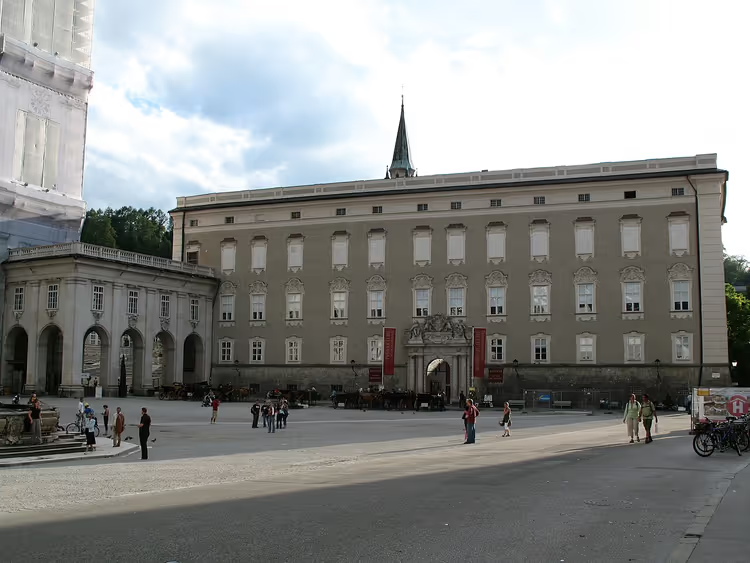
You will find the Archbishop's Residence on Residenzplatz. The Old and New buildings were constructed in the 17th century, when the city was being renovated in the Baroque style. Construction was started by Archbishop Wolf Dietrich von Raitenau and continued by his successor Markus Sittikus, who died in 1619.
The Baroque interiors look opulent: ceiling paintings, stucco work, tapestries, and paintings by artists from the 16th to 19th centuries. The most valuable canvas here is a portrait by Rembrandt, which art historians believe depicts the artist's mother. In front of the building stands a fountain with a sculptural group of horses and tritons.
- Cost: check tickets and opening hours on the tourist office website.
- Who it's for: those interested in Baroque interiors.
- Getting there: Residenzplatz, next to the cathedral.
Residenzplatz
 © Diego Delso · CC BY-SAPhoto: Diego Delso, CC BY-SA (https://creativecommons.org/licenses/by-sa/4.0), Wikimedia Commons
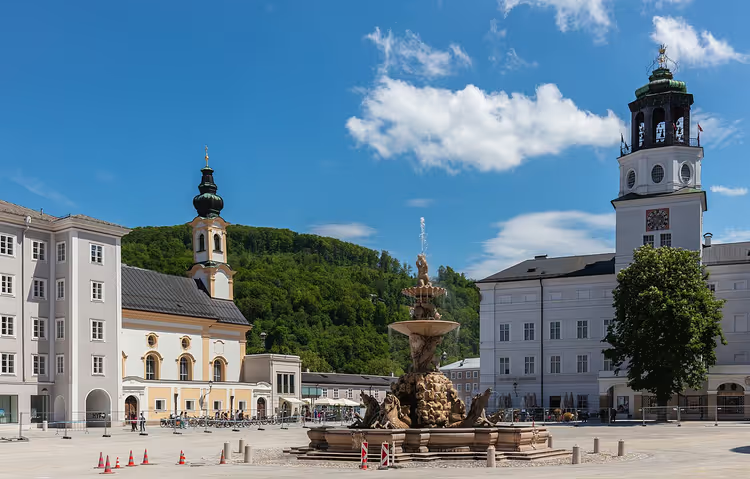
You definitely won't miss Residenzplatz, because from here you can see what Salzburg looked like in the 16th and 17th centuries. The surrounding buildings have retained their medieval appearance, and some structures date back to the early 16th century. In summer, you can come here for a broadcast of the Salzburg Festival.
The square's history is tied to the construction of the Old and New Residences, and a little later the cathedral was built nearby. In the center stands a Baroque fountain by Tommaso di Garzona, one of the largest in Austria.
- Getting there: old town center, between the Residence and the cathedral.
- Cost: admission is free.
- Who it's for: a short break and photos of the old town.
Residenzgalerie
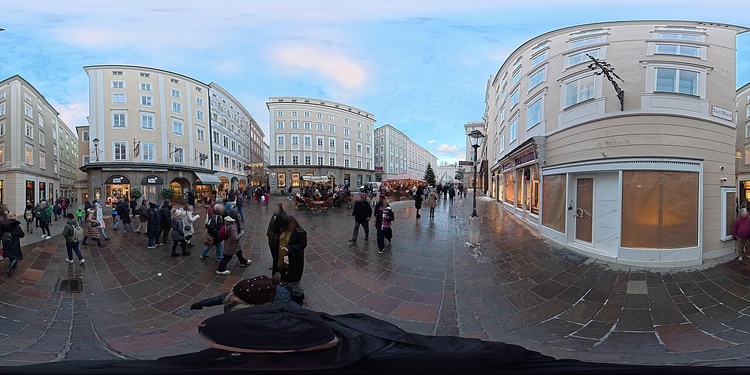
The Residenzgalerie is considered one of the best in the country. Here you will see paintings by Rembrandt, Rubens, and other Dutch, Italian, and French masters. The gallery welcomed its first visitors in 1923.
 © osmplus_org · CC BY-SAPhoto: osmplus_org, CC BY-SA (https://creativecommons.org/licenses/by-sa/4.0), Wikimedia Commons
Part of the collection was taken by Napoleon's troops, and the staff had to reassemble the paintings, borrowing them from museums and private collectors. After World War II, the gallery reopened in 1952.
- Cost: admission in the low double digits, exact prices on the official website.
- Time: 1-1.5 hours for the permanent exhibition.
- The catch: the permanent exhibition consists only of old masters.
Paul Fürst Monument
 © Ank Kumar · CC BY-SAPhoto: Ank Kumar, CC BY-SA (https://creativecommons.org/licenses/by-sa/4.0), Wikimedia Commons
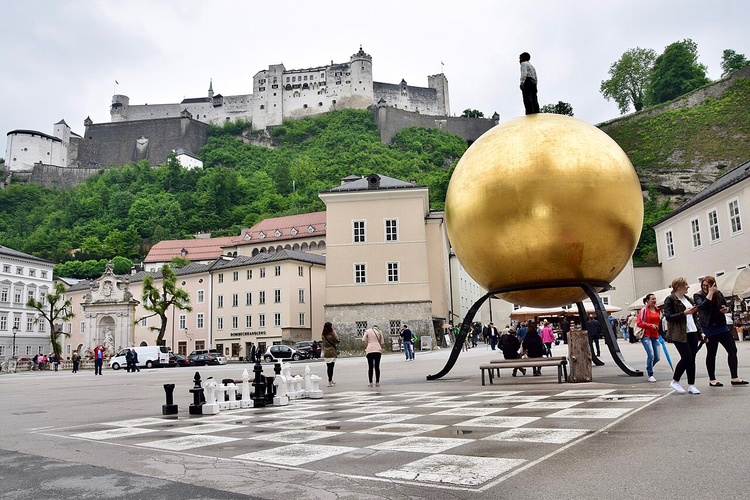
On Kapitelplatz stands an unusual monument that locals call the "Mozartkugel." It is a large golden ball, and on top stands confectioner Paul Fürst. He invented the chocolate candy and dedicated it to Mozart for the centenary of the composer's death.
The monument to the candy that became beloved across Europe was erected in the mid-20th century. Tourists always gather around the ball to take photos. The sculpture looks modern, although it is dedicated to an old Austrian tradition.
- Getting there: 3 minutes on foot from Salzburg Cathedral.
- Cost: free admission.
- Who it's for: for a quick photo and buying candies at the shop nearby.
Salzburg Cathedral
 © Ray Swi-hymn from Sijhih-Taipei, Taiwan · CC BY-SAPhoto: Ray Swi-hymn from Sijhih-Taipei, Taiwan, CC BY-SA (https://creativecommons.org/licenses/by-sa/2.0), Wikimedia Commons
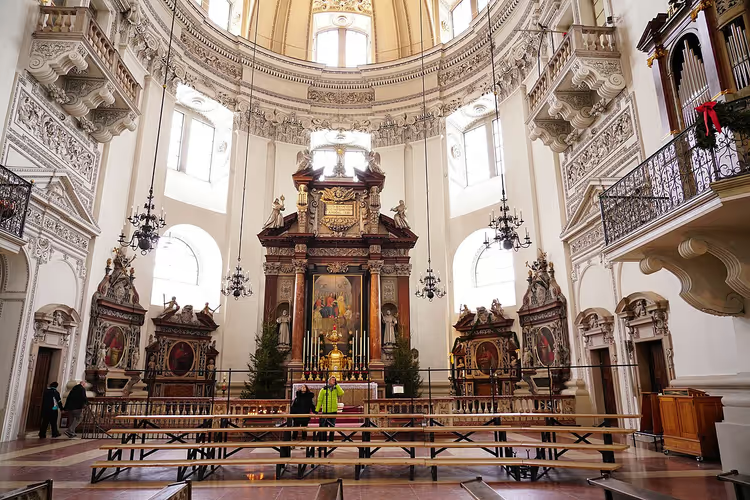
Salzburg Cathedral stands where Residenzplatz and Domplatz meet. In the 8th century, a small church stood on this site, and in 1167 it was destroyed by fire. A new cathedral was built thirty years later. The current baroque cathedral was built in 1614-1628. During World War II, a bomb destroyed the dome and the altar. The exterior was restored by 1959, and the bronze doors were made at the same time.
The cathedral can hold up to 10,000 people, and the facade is decorated with sculptures of the apostles Peter and Paul and saints Virgil and Rupert. Inside you see baroque decoration, frescoes, and the bronze font in which Mozart was baptized. The cathedral crypt is open Monday through Saturday, from 10:00 to 17:00 (as of 09/2026, Salzburg tourist office).
- Cost: cathedral admission is free, crypt by schedule.
- Time: 30-40 minutes to visit.
- The catch: the crypt is closed during services and concerts.
Salzburg Museum

The Salzburg Museum helps you understand the city's history from antiquity to the present day. The museum was founded in 1834, and since 2007 it has occupied the Neue Residenz. On the first floor you will find temporary exhibitions, on the second you learn about the people who brought fame to the city. Multimedia screens make the visit more visual.
On the third floor, you see how the city's architecture changed and how it turned into a collection of baroque masterpieces. The fourth floor is dedicated to archaeology and the Middle Ages: stone tools, weapons, jewelry, and coins. The collections are constantly growing, so some of the rooms will seem new to you.
- Cost: admission in the low double digits, details on the museum website.
- Time: 1.5-2 hours.
- Who it's for: those who want to understand the city's context, not just its facades.
Mozartplatz
 © Andrew Bossi · CC BY-SAPhoto: Andrew Bossi, CC BY-SA (https://creativecommons.org/licenses/by-sa/2.5), Wikimedia Commons
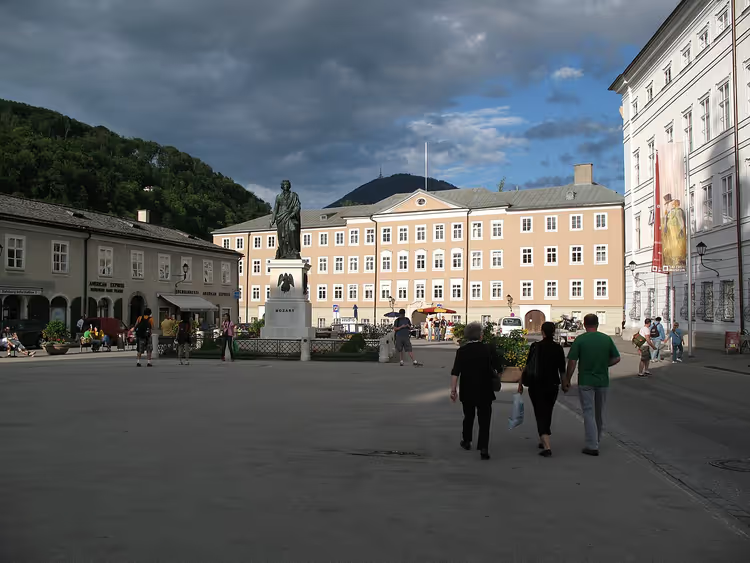
Mozartplatz lies in the center of the old town, and it is always crowded. In the center stands a monument to the composer by sculptor Ludwig von Schwanthaler, which has adorned the square since the mid-19th century. Mozart is depicted in loose, draped clothing, and his appearance combines grandeur and simplicity.
Nearby stands the archbishops' palace, and from the square you can hear the chimes of bells playing melodies by Mozart and Haydn. A museum with a collection of paintings also operates here.
- Cost: free admission.
- Who it's for: for relaxing in the center and photographing the monument.
- Getting there: 2 minutes on foot from Residenzplatz.
Mozart's Birthplace
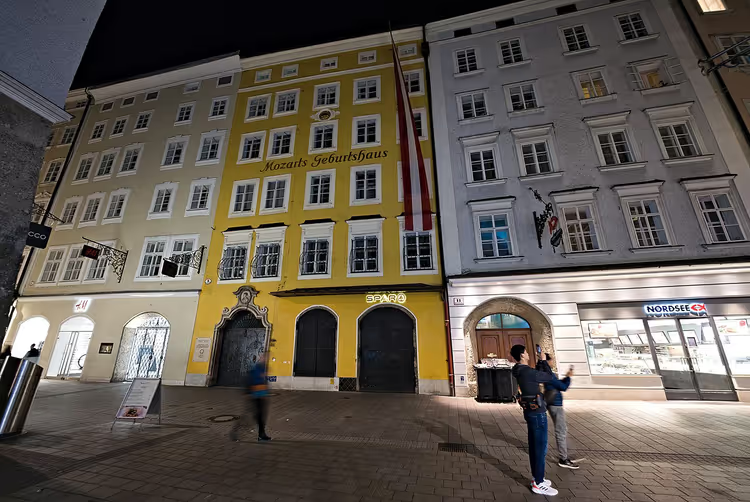
Mozart's Birthplace stands at number 9 on Getreidegasse. Wolfgang Amadeus Mozart was born here in 1756. The family apartment was small: a bedroom, a living room, and a study. Of seven children, only two survived, Wolfgang and Maria Anna. The museum opened in 1880.
Inside you see historic rooms, musical instruments, scores, letters, and portraits. Furniture is displayed on the first floor, exhibitions change on the second, and on the third you learn about theater in Mozart's life. A ticket costs 18 € (as of 09/2026, museum page), and with the Salzburg Card admission is free.
- Hours: daily 9:00-17:30, ticket office closes 30 minutes earlier.
- The catch: the museum is small, a visit takes about an hour, wheelchair access is limited.
- Who it's for: for everyone visiting Salzburg for the first time.
Haus der Natur
 © MatthiasKabel · CC BY-SAPhoto: MatthiasKabel, CC BY-SA (https://creativecommons.org/licenses/by-sa/3.0), Wikimedia Commons
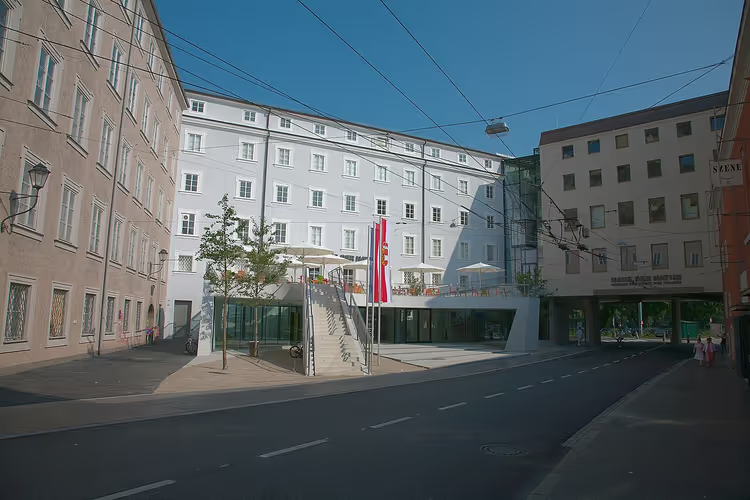
At the Haus der Natur museum you see dinosaurs and other extinct animals, learn about the universe, and try yourself as a researcher. The exhibition appeals to children and adults alike. In the interactive center you can generate an electric current or build a bridge.
The large aquarium with corals and tropical fish deserves special attention. A small zoo houses snakes and lizards, and the halls showcase cultures of distant countries and the structure of the human body. This is a good option if the weather turns bad.
- Cost: admission in the low double digits, see the Haus der Natur website.
- Time: 2-3 hours with children.
- Who it's for: families with children and rainy days.
Mirabell Palace and Gardens
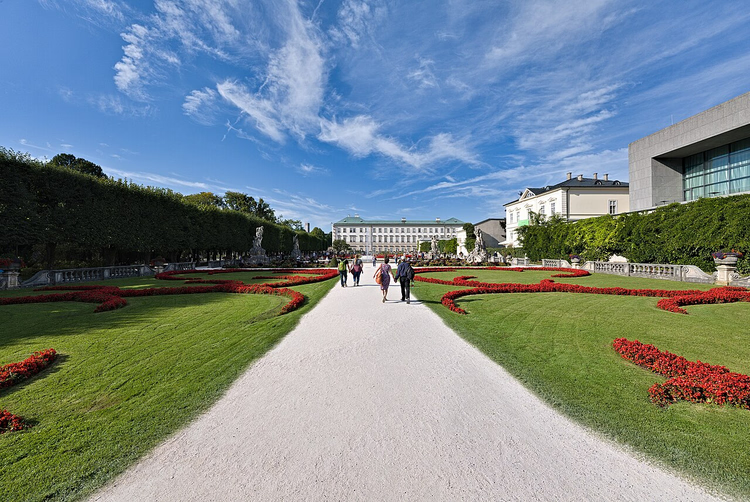
Mirabell Palace stands not far from the cathedral. It was built in the early 17th century by order of Archbishop von Raitenau for Salome Alt, who bore him children. The palace later passed to Markus Sittikus, and it was he who gave the building its current name. Since then the palace has been rebuilt several times, gaining baroque and neoclassical features.
The future King of Greece, Otto of Bavaria, was born in this building. For many years archbishops lived here, and today it houses the municipal administration. Mozart gave concerts in the Marble Hall. In the 17th century a garden with sculptures of Roman gods and the Dwarf Garden was laid out around the palace.
- Cost: the gardens are free, palace admission is ticketed.
- Time: 1 hour for the gardens and courtyard.
- Who it's for: a relaxed stroll at the end of the route.
One-day Salzburg route on the map
We marked all the stops on the map so you don't lose your way. Open it on your phone and you won't need public transport.
Salzburg in 1 Day — 16 Most Interesting Places
Places on the map
- 1Kapuzinerberg Capuchin monastery on the summit, view of the old town's rooftops
- 2Hohensalzburg Fortress One of the largest surviving citadels in Europe
- 3Nonnberg Abbey Active monastery dating from the early 8th century, known from The Sound of Music
- 4St Peter's Abbey The city's oldest monastery, relics of St Rupert and catacombs
- 5Franciscan Church Romanesque and Gothic architecture from the 13th century
- 6Archbishop's Residence Baroque interiors, a portrait of Rembrandt's mother
- 7Residenzplatz Central square with a Baroque fountain
- 8Residence Gallery Paintings by Rembrandt, Rubens and Dutch masters
- 9Paul Fürst Monument The Mozartkugel — a monument to the creator of the chocolate sweet
- 10Salzburg Cathedral Where Mozart was baptised, holds up to 10,000 people
- 11Salzburg Museum The city's history from antiquity to the present day
- 12Mozart Square Monument to the composer by Ludwig von Schwanthaler
- 13Mozart's Birthplace The house where Wolfgang Amadeus Mozart was born in 1756
- 14Haus der Natur Dinosaurs, an aquarium and an interactive science centre
- 15Mirabell Palace and Gardens Baroque palace, the Marble Hall where Mozart gave concerts
Tickets and opening hours
It's convenient to put all paid sights in one list. Below are the prices and times to check before your trip.
Sight | Admission | Visit time | Source |
|---|---|---|---|
Hohensalzburg Fortress | €15.50 with funicular | 2-3 hours | |
Mozart's Residence | €18, free with Salzburg Card | about an hour | |
Salzburg Museum | low double digits | 1.5-2 hours | |
Haus der Natur | low double digits | 2-3 hours | |
Salzburg Cathedral | crypt: Mon-Sat 10:00-17:00 | 30-40 minutes |
Tickets for the fortress and Mozart's Residence are better bought online: in summer the ticket office is slow. Below is a selection of tickets for the city's main sights.
Tours and tickets in Salzburg
Guided tours, skip-the-line tickets and activities — most offers can be cancelled free of charge.
See offers on TiqetsThe widget loads once you give your consent.
⁉️🤔 Frequently asked questions
Is one day enough for Salzburg?
Yes, the old town is compact, and the entire route is walkable in one day. You'll have time for the fortress, the cathedral, Mozart's house, and the Mirabell Gardens. The museums on the route are optional, so if you want to see all of them, plan for two days.
What should I buy in advance?
Book your Hohensalzburg Fortress and Mozart's house tickets online. In summer, ticket offices are slow, and a reserved time slot for the funicular saves you an hour. The other sights don't require reservations, and entry to the cathedral and churches is free.
How much does the fortress funicular cost?
A basic ticket with the funicular costs €15.50, children €6.30 (as of 09/2026, funicular fares). Walking up the footpath, an adult ticket is cheaper at €12.00. The extended option at €19.20 includes all fortress museums.
Is the Salzburg Card worth it?
The card pays off if you visit several paid museums in one day. It includes free entry to Mozart's house and Hohensalzburg Fortress. For a short trip with just two sights, buying individual tickets is a better deal.
How to get from the airport to the center?
Trolleybus No. 2 runs from the terminal to the main station and the center in about 23 minutes. On weekdays it runs every 15-20 minutes, and you buy your ticket from the machine at the stop. With a lot of luggage, a transfer with a driver waiting at the arrivals exit is more convenient.
In short: what to book
If you have one day, book your Hohensalzburg Fortress ticket online and set aside 2-3 hours. If you're traveling with kids, swap the gallery for Haus der Natur. If you want a relaxed finish, end your day at the Mirabell Gardens.
The main rule: buy your tickets online in advance, don't waste your morning in a ticket line. Everything else you can decide on the spot.

A small editorial team writing guides for independent travel. We travel ourselves, but we haven’t been everywhere, so we check prices, opening hours and how to get there against official sources.