
















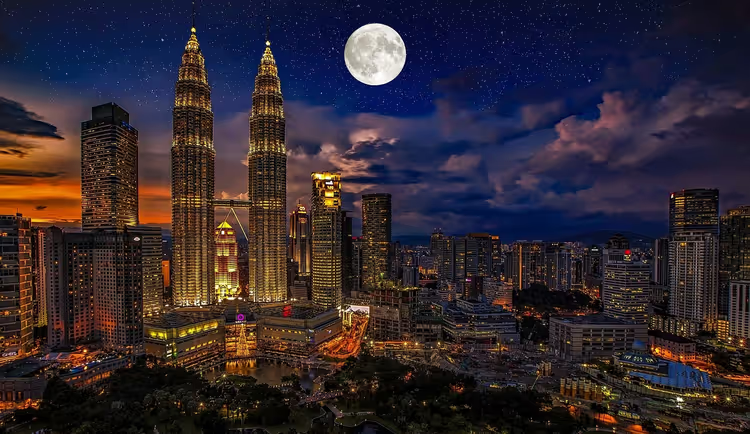
First trip to Kuala Lumpur: mosques, towers and parks, tickets and opening hours
Half of Kuala Lumpur's main sights can be covered on foot in one day. The historic center fits into a few blocks around Merdeka Square, while metro and commuter trains connect the farther points. We've put together 25 attractions in Malaysia's capital: mosques and temples, skyscrapers, parks, museums, and markets.
The spread between sites is wide. The Petronas Towers are connected by a bridge on the 41st floor, and the observation deck occupies the 86th floor (as of 09/2026, Petronas Towers description). Batu Caves lie outside the city limits and require a separate trip. Below you'll find prices, opening hours, directions, and honest catches for each place.
Plan for two to three days of sightseeing. Half of the sites are free, and you'll pay for the towers, the aquarium, the zoo, the bird park, and some museums.
Ad: this article contains affiliate links, we earn a commission if you book through them, at no extra cost to you.
How to get around and how much tickets cost
💡 In short:
- You walk around the city center and take the LRT, MRT, or monorail to farther sites.
- Single rides cost a few ringgit, and a Touch 'n Go card saves time at the ticket counter.
- Paid attractions are cheaper to book online, because on-site lines are longer.
- Prices and opening hours: 09/2026, verified on the Petronas Towers page and the Negara Zoo website.
Kuala Lumpur stretches from north to south, but the historic core is compact. Merdeka Square, Chinatown, Central Market, and Masjid Jamek sit close together, within a short walk. Between the center and the KLCC area, take the metro rather than a taxi stuck in traffic.
KL Sentral serves as the city's main transport hub. KTM Komuter trains depart from here, including to the Batu Caves station near the Batu Caves. Payment on most lines works with a Touch 'n Go card, which you can buy at major stations.
Book tickets for top attractions in advance. The Petronas Towers observation deck operates on time slots, and the aquarium and zoo draw many families on weekends. Buying online saves both time and money.
1. Masjid Jamek Mosque
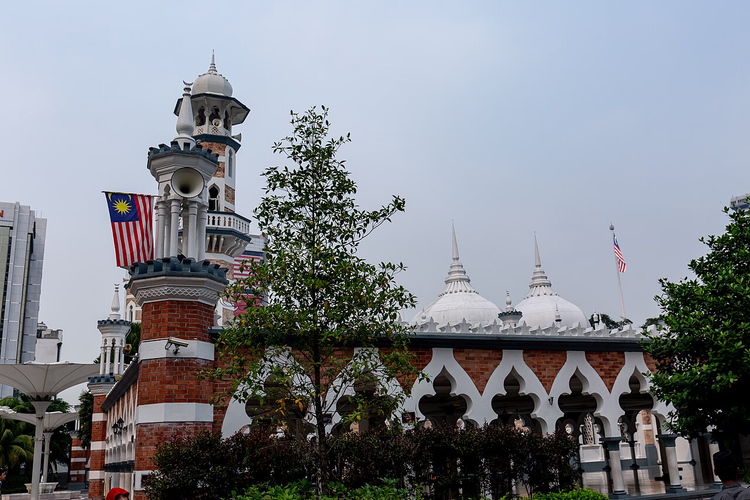
Masjid Jamek Mosque was built in 1909 to a design by British architect Arthur Hubback (as of 09/2026, Wikipedia). It stands at the confluence of the Klang and Gombak rivers, where the first settlement of the future capital once emerged. The facades are done in Moorish style: red-and-white trim, three domes, and tall minarets.
Coconut palms grow around it, and the complex incorporates tombs of prominent figures in Malaysia. Until 1965 the mosque remained the country's main one, until the title passed to Negara Mosque. The prayer hall is open to non-Muslims too, but you'll need to cover your shoulders and knees. Come outside prayer times, and your visit will be calm.
- How to get there: Masjid Jamek LRT station right at the entrance.
- Cost: free entry.
- Who it's for: for starting a walk through the historic center.
2. St. Mary's Anglican Cathedral
 © Vyacheslav Argenberg · CC BYPhoto: Vyacheslav Argenberg, CC BY (https://creativecommons.org/licenses/by/4.0), Wikimedia Commons
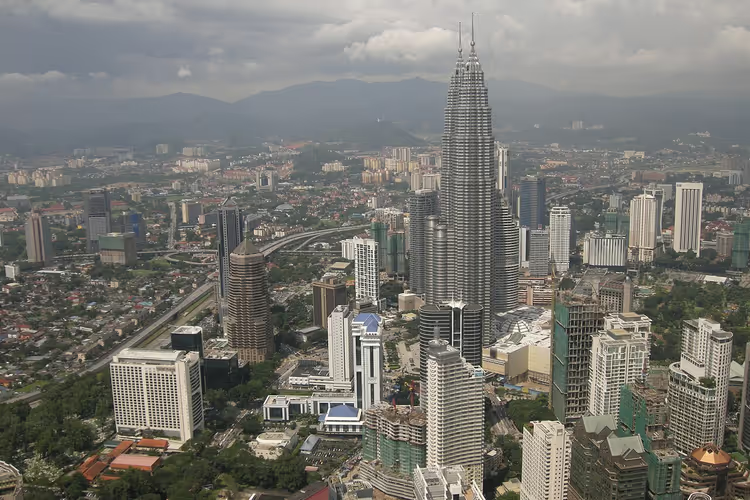
St. Mary's Cathedral was built in 1898 and remains a fine example of early Gothic architecture in the capital (as of 09/2026, Wikipedia). Its forms are restrained, with no unnecessary detail. Inside stands a historic organ from the London workshop of Henry Willis: instruments like this also sound in London's cathedrals.
The walls are faced in white stone, and the windows are made up of multicolored stained glass. Sunlight passing through them creates a soft play of color. Services used to be held only for the English, but now parishioners of many different ethnicities worship here. You'll find the cathedral open during daytime hours, and admission is free.
- How to get there: near Merdeka Square.
- Cost: free admission.
- The catch: photography is inappropriate during services.
3. Royal Selangor Golf Club
 © Gryffindor 10:54, 23 December 2006 (UTC) · CC BYPhoto: Gryffindor 10:54, 23 December 2006 (UTC), CC BY (https://creativecommons.org/licenses/by/2.5), Wikimedia Commons
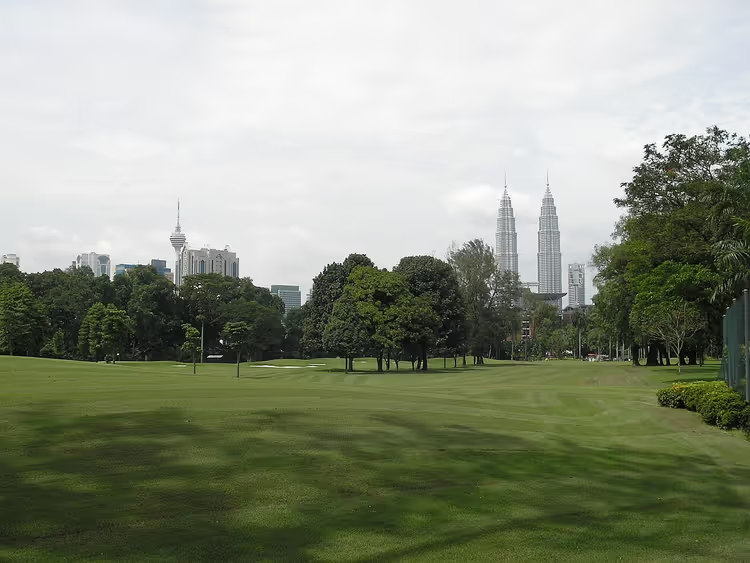
Royal Selangor Golf Club was founded in 1893 and is considered the oldest in Malaysia (as of 09/2026, Wikipedia). The first tournament was held on Petaling Hill after a newspaper notice inviting everyone who wanted to play. The English would come here after morning service at the cathedral.
The varied terrain and natural water hazards appealed to players right away. Over a century the club has grown: today its grounds include several courses of different lengths, tennis courts, swimming pools, and gyms. There is also a martial arts school, and several restaurants serving local, European, and Asian cuisine are ready to feed guests.
Major competitions are held here for professionals. Beginners can also find their footing: experienced instructors will teach you proper swing technique. You should check the access rules in advance, because the club remains private.
- How to get there: the main clubhouse is in the Bukit Bintang area.
- Cost: guest play is paid, check conditions with the club.
- The catch: without a booking, you won't get a tee time.
4. Merdeka Square
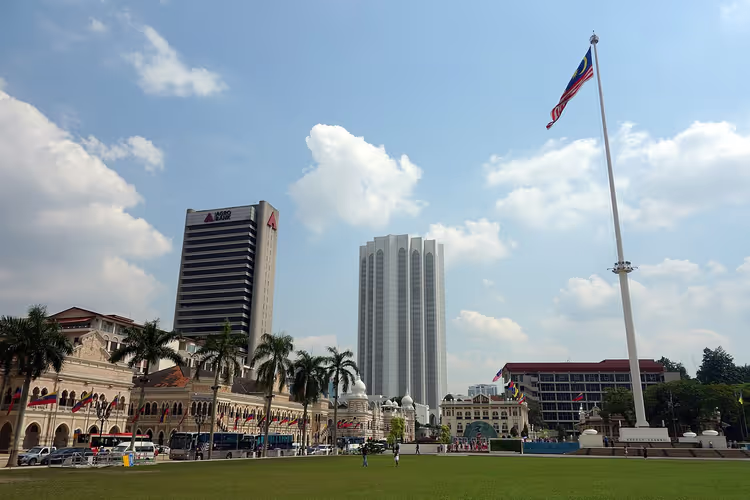 © Haakon S. Krohn · CC BY-SAPhoto: Haakon S. Krohn, CC BY-SA (https://creativecommons.org/licenses/by-sa/3.0), Wikimedia Commons
Merdeka Square began as a cricket field where the English played (as of 09/2026, Wikipedia). In 1957, the flag of independent Malaysia was raised here for the first time. A 95-meter flagpole was installed for the occasion, and it long remained the country's record holder.
The place preserves the memory of key events, which is why both tourists and locals come here. In the evening, people head to the square to see the surrounding buildings lit up. You should arrive around sunset: the light falls on the facades, and the crowds are thinner than during the day.
- How to get there: Masjid Jamek LRT and Pasar Seni MRT stations are nearby.
- Cost: free admission to the square.
- Who it's for: those who want to see the historic heart of the city.
5. Textile Museum
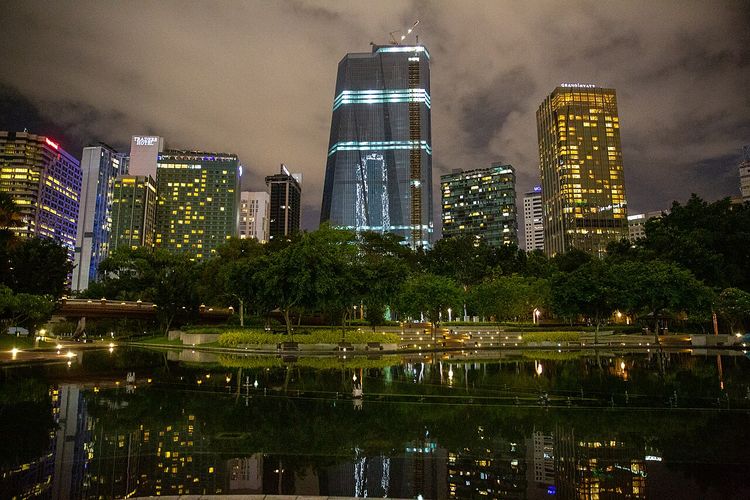 © Shesmax · CC BY-SAPhoto: Shesmax, CC BY-SA (https://creativecommons.org/licenses/by-sa/4.0), Wikimedia Commons
The National Textile Museum occupies a beautiful building in the Neo-Moorish style (as of 09/2026, Wikipedia). Towers, carved arches, and tall spires line the facade. The exhibition tells the story of Malaysian clothing and fabrics, whose patterns were once used to identify a person's social class.
The galleries are divided into four major themes. You'll see fabric samples, tools for applying patterns, and a collection of jewelry, hairpins, and brooches from different regions of the country. Separate rooms cover production techniques and how festive and everyday dress changed over time.
- How to get there: near Merdeka Square.
- Cost: free admission.
- Who it's for: lovers of history and crafts.
6. Batu Caves
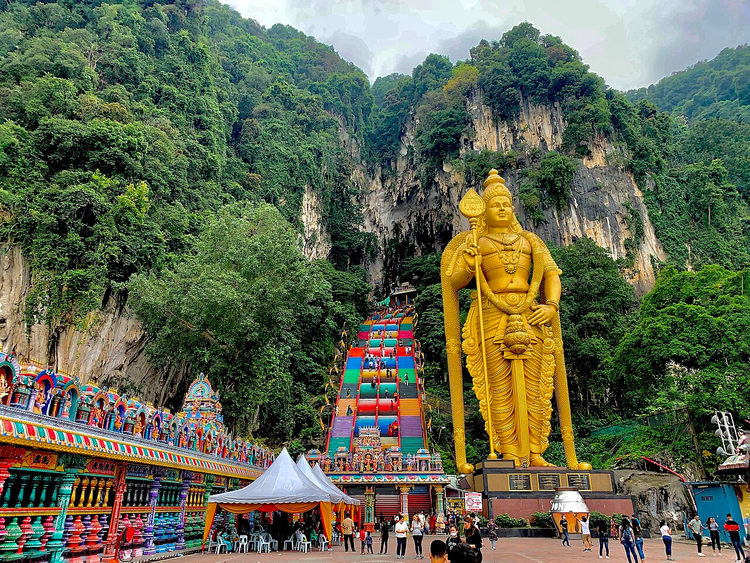 © Chainwit. · CC BY-SAPhoto: Chainwit., CC BY-SA (https://creativecommons.org/licenses/by-sa/4.0), Wikimedia Commons
The Batu Caves are about 400 million years old and lie outside the city limits, to the north of the capital (as of 09/2026, Wikipedia). An Indian trader founded a temple to the god Murugan at the entrance, and later a 43-meter statue was erected in front of the staircase. In 1920, a staircase of 272 steps was cut into the rock leading to the main cave.
The climb is not for everyone, especially in the heat, so bring water. Statues of deities stand alongside the steps, and light enters the cave through a natural opening above. In the far cave, Hindus pray at the altar, and one of the galleries is home to bats, with access closed to visitors. You'll need modest clothing and patience with the monkeys, which snatch food.
- How to get there: KTM Komuter train from KL Sentral to Batu Caves station.
- Cost: free admission to the main cave.
- The catch: the climb up the stairs is tough in the heat.
7. Sri Mahamariamman Temple
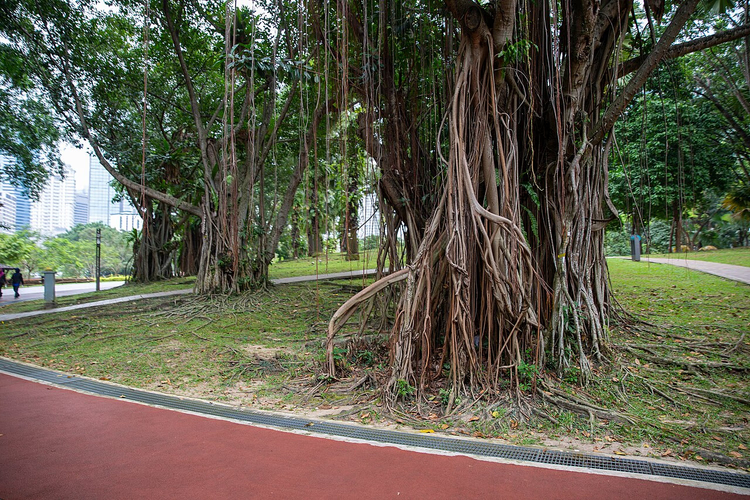 © Shesmax · CC BY-SAPhoto: Shesmax, CC BY-SA (https://creativecommons.org/licenses/by-sa/4.0), Wikimedia Commons
The Sri Mahamariamman Temple is considered the oldest Hindu temple in Kuala Lumpur, with its history dating back to the 19th century (As of 09/2026, Wikipedia). It was built for Tamil workers who came to the rubber plantations from southern India. Devotees pray to the goddess Mahamariamman here for protection from illness and for prosperity.
In 1885, the temple was moved to the edge of Chinatown and crowned with a five-tiered gopuram tower adorned with sculptures of deities. Inside, there is a silver chariot with bells. Every year during the Thaipusam festival, which falls in January or February, the statue of the god Murugan is carried through the streets to the Batu Caves. You should remove your shoes at the entrance and avoid disturbing worshippers during the ceremony.
- How to get there: edge of Chinatown, near Pasar Seni MRT station.
- Cost: free entry.
- Who it's for: for getting to know the city's Indian community.
8. Petronas Towers
 © Smuconlaw · CC BY-SAPhoto: Smuconlaw, CC BY-SA (https://creativecommons.org/licenses/by-sa/4.0), Wikimedia Commons
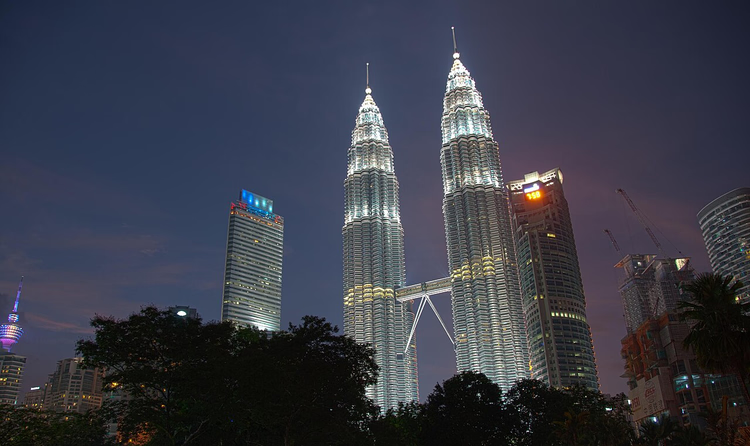
The Petronas Towers remain the tallest twin towers in the world (as of 09/2026, Wikipedia). The base is an eight-pointed star, which in Islam symbolizes harmony and unity. A "Sky Bridge" connects the towers at the 41st floor.
An observation deck with a city panorama operates on the 86th floor (as of 09/2026, observation deck and time slots). Inside there are exhibition halls, a theater, galleries, restaurants, and cafes. The observation deck admits visitors by time slot, and tickets for popular times sell out in advance. You're better off buying a slot online a few days ahead, otherwise only evening slots will be left.
- How to get there: LRT KLCC station, exit toward the Suria shopping center.
- Cost: the observation deck ticket is paid, check the price on the website.
- The catch: sunset slots sell out the fastest.
9. Menara Kuala Lumpur tower
 © Shesmax · CC BY-SAPhoto: Shesmax, CC BY-SA (https://creativecommons.org/licenses/by-sa/4.0), Wikimedia Commons
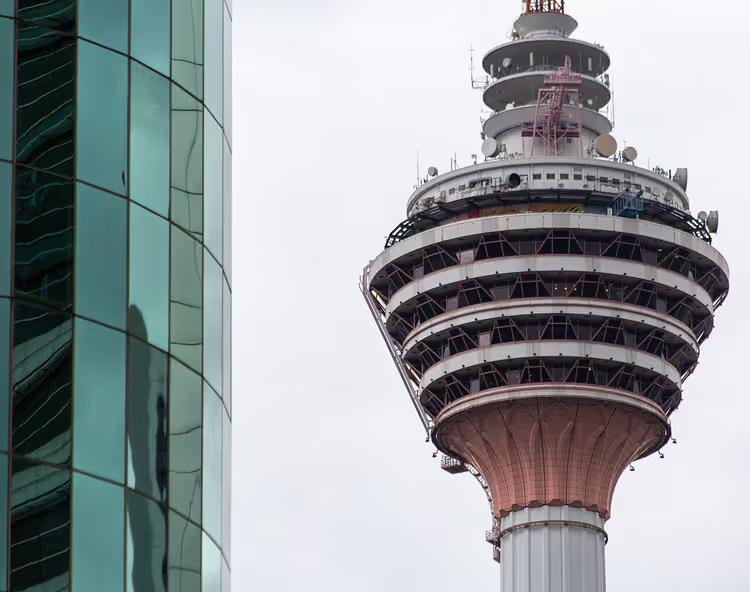
The Menara Tower in Kuala Lumpur is considered the tallest man-made structure in Malaysia (as of 09/2026, Wikipedia). It stands on Bukit Nanas hill, which offers a view over the entire city. At night the tower is illuminated, and locals call this illumination the "Garden of Light."
Observation decks are arranged at different heights: an enclosed observation deck and an open terrace with a glass balcony. From here you get a clear view of the Petronas Towers, so many people buy a ticket specifically for that photo. The time just before sunset works well: then a single photo captures both the daytime city and the lights.
- How to get there: monorail to Bukit Nanas station and a short uphill walk.
- Cost: the ticket is paid, children are usually cheaper.
- The catch: there can be a line for the glass balcony.
10. Bird Park
 © Rob Alter from Brazil or US · CC BYPhoto: Rob Alter from Brazil or US, CC BY (https://creativecommons.org/licenses/by/2.0), Wikimedia Commons
The Bird Park is considered one of the most visited places in the city (as of 09/2026, official website). More than three thousand birds from around the world live under the netting. Most birds move freely among the trees, and the netting keeps them within the park.
The conditions are close to natural, and almost all the inhabitants breed regularly. Shows are held throughout the day: parrots, toucans, ostriches, and flamingos sing, dance, and perform tricks. You're allowed to walk around freely, but you shouldn't scare the birds or feed them your own food.
- How to get there: Lake Gardens area, next to a bus stop.
- Cost: the ticket is paid for adults and children.
- Who it's for: families with children.
11. Istana Negara royal palace
 © CEphoto, Uwe Aranas · CC BY-SAPhoto: CEphoto, Uwe Aranas, CC BY-SA (https://creativecommons.org/licenses/by-sa/3.0), Wikimedia Commons
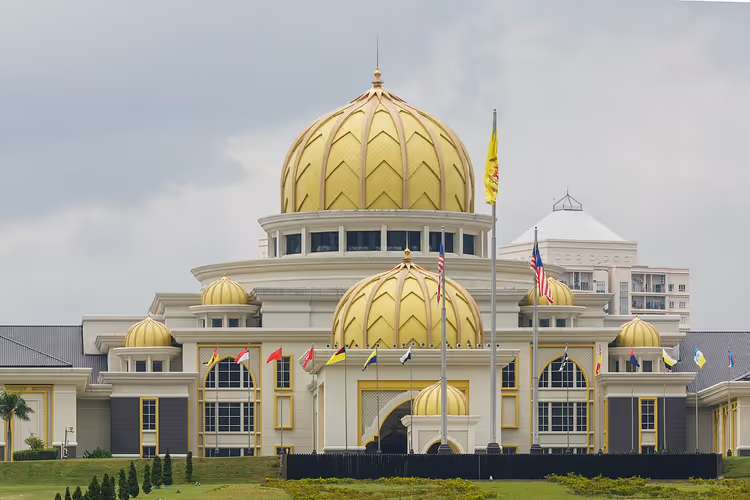
The Royal Palace, Istana Negara, serves as the official residence of the King of Malaysia (As of 09/2026, Wikipedia). The old palace was built in 1928, and the current one on Jalan Duta opened in 2011. The 28-acre grounds include a swimming pool, golf course, park, lake, tennis court, and gardens.
Tourists are not allowed inside. However, at the gates you can watch the changing of the honor guard: the movements are precise, and the British colonial-era uniforms make the ceremony quite a spectacle. A large crowd gathers at the gates, so get there early.
- How to get there: Duta district, farther from the center, easier by taxi.
- Cost: entry to the palace is not available.
- The catch: the ceremony may be rescheduled due to state events.
12. KLCC Park
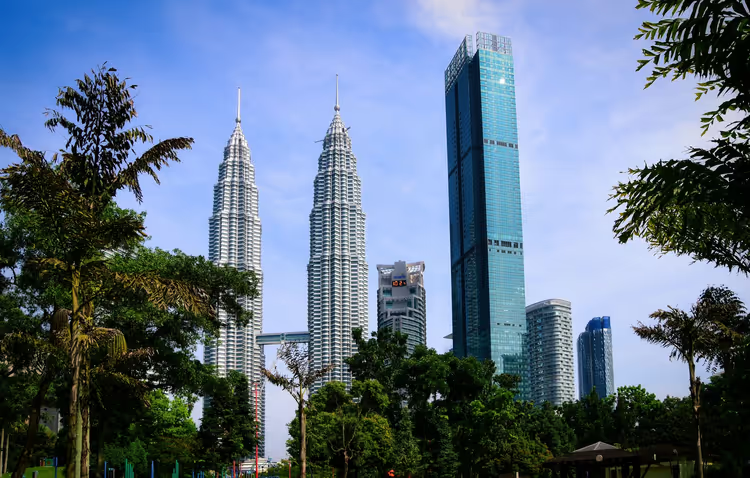
KLCC Park serves as a green oasis among the glass skyscrapers of KLCC (As of 09/2026, Wikipedia). It opened in 1998 on 20 hectares to showcase the value of tropical rainforests. Landscape designers combined palm trees, artificial lakes with fountains, sculptures, and footbridges.
There is a children's pool and a playground. The park offers the best view of the Petronas Towers, and from here you can see just how tall they are. You should come before sunset, when the fountain is turned on and a crowd of photographers gathers by the lake.
- How to get there: KLCC LRT station, exit toward the park.
- Cost: free entry.
- Who it's for: for a quiet break between sights.
13. Lake gardens and the butterfly park
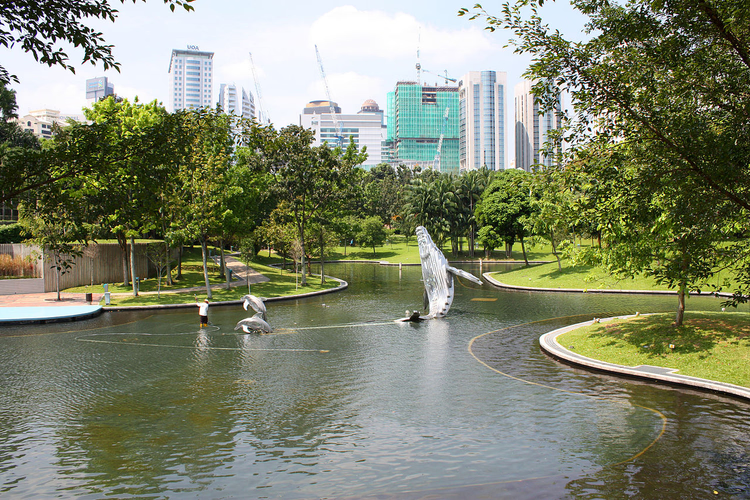 © Andy Mitchell from Glasgow, UK · CC BY-SAPhoto: Andy Mitchell from Glasgow, UK, CC BY-SA (https://creativecommons.org/licenses/by-sa/2.0), Wikimedia Commons
Lake Gardens is considered the capital's oldest botanical garden (As of 09/2026, Lake Gardens description). It covers 90 hectares and consists of several themed gardens. The grounds are designed so that the walkways create a sense of seclusion in the middle of a metropolis.
The Hibiscus Garden showcases the flowers that became the symbol of Malaysia. The Orchid Garden has thousands of species, and the Butterfly Park recreates conditions for them to breed. The national planetarium is nearby. Half a day is enough to cover the main parts of the garden.
- How to get there: Lake Gardens district, by taxi or bus from the center.
- Cost: entry to the gardens is free, the parks and planetarium charge admission.
- The catch: the sections are spread out, so you'll need to travel between them.
14. Zoo Negara
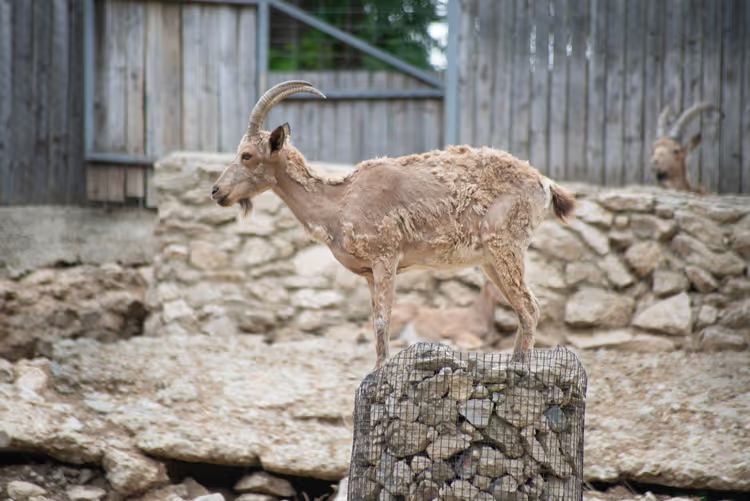
Zoo Negara has been open since 1963 and covers 110 acres (As of 09/2026, official website). The conditions for the animals are close to their natural habitats, and the zoo itself is divided into themed zones. The largest zone, "Savannah," is home to antelopes, giraffes, zebras, and rhinos.
Beyond that are the monkey, reptile, and bear parks, a bird lake, a panda center, and an aquarium with marine life. A free shuttle bus runs around the grounds and takes you to the exhibit you want. The zoo is far from the center, so plan a separate half day for it.
- How to get there: Ulu Klang district, by taxi or bus from the center.
- Cost: tickets for adults and children, more expensive for foreigners.
- Who it's for: for families with children.
15. Masjid Negara
 © CEphoto, Uwe Aranas · CC BY-SAPhoto: CEphoto, Uwe Aranas, CC BY-SA (https://creativecommons.org/licenses/by-sa/3.0), Wikimedia Commons
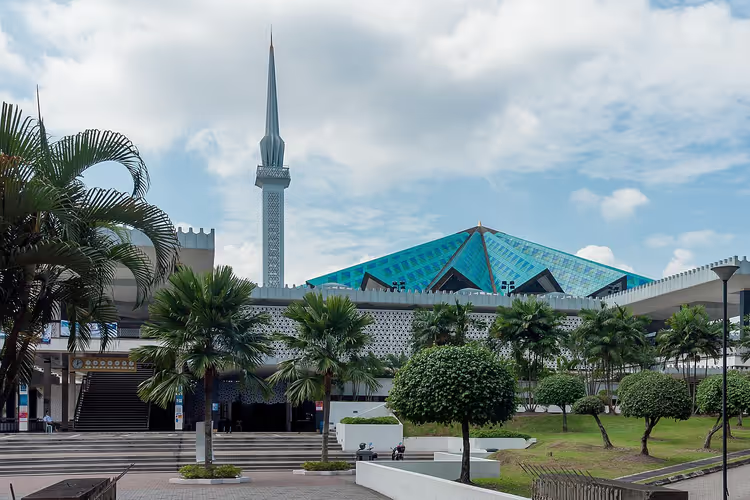
Masjid Negara is considered the spiritual center of the country (As of 09/2026, Wikipedia). The main hall can hold eight thousand people at once. Above the building rises a ribbed star-shaped dome with 18 angles: the symbolism refers to the five pillars of Islam and the thirteen states of Malaysia.
The dome is painted blue and green, and next to it stands a snow-white minaret 73 meters tall. Non-Muslims are allowed in at certain times and under a dress code. You'll be given a robe at the entrance, but it's better to come in covered clothing.
- How to get there: near KL Sentral station.
- Cost: free entry for tourists.
- The catch: visitors are not allowed in during prayer times.
16. Sultan Abdul Samad building
 © Ahmad Rithauddin from Ampang, malaysia · CC BYPhoto: Ahmad Rithauddin from Ampang, malaysia, CC BY (https://creativecommons.org/licenses/by/2.0), Wikimedia Commons
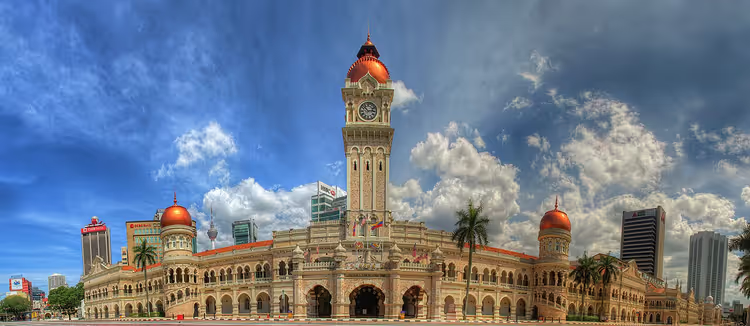
The Sultan Abdul Samad Building was built in the late 19th century in a blend of Victorian and Moorish styles (as of 09/2026, Wikipedia). English restraint meets Eastern ornamentation, which is why the facade is so recognizable. A clock tower rises from the center, earning the building the nickname of the local Big Ben.
In the evening, the lighting comes on and the palace turns into a set from an Eastern fairy tale. On New Year's Eve and on Independence Day, August 31, parades take place here. It's worth walking past at sunset, when natural light meets the artificial lighting.
- How to get there: on Merdeka Square.
- Cost: viewing from outside is free.
- Who it's for: for an evening walk through the center.
17. Aquaria KLCC Oceanarium
 © Shesmax · CC BY-SAPhoto: Shesmax, CC BY-SA (https://creativecommons.org/licenses/by-sa/4.0), Wikimedia Commons
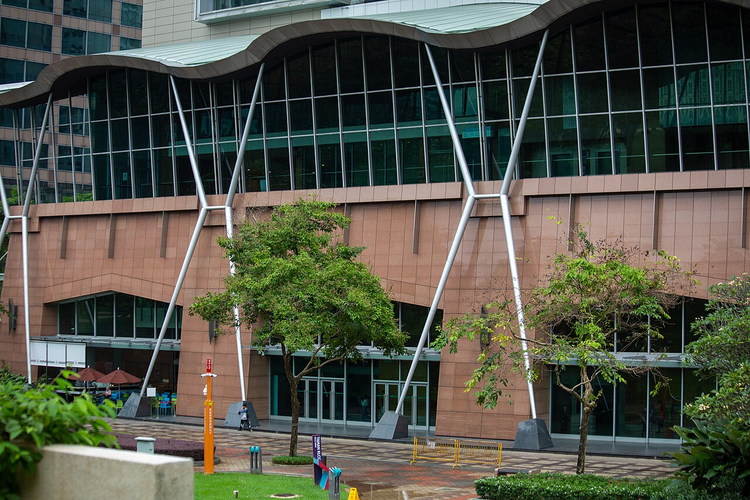
Aquaria KLCC occupies a large hall in the underground level of the KLCC complex (as of 09/2026, official website). Around twenty thousand marine creatures live here. The ticket office gives you a booklet with feeding times, which makes it easy to plan your route.
You'll see sharks and piranhas being fed, as well as rays and octopuses. Some of the animals can be touched. The main highlight of the route is a ninety-meter underwater tunnel where fish swim right above your head. It's worth buying tickets in advance, as the line is long on weekends.
- How to get there: LRT KLCC station, then the concourse level.
- Cost: paid ticket, cheaper online.
- Who it's for: for families with children and marine life enthusiasts.
18. Central Market
Central Market has been operating since 1888, when seafood, fruit, and vegetables were traded here (As of 09/2026, Wikipedia). Today the stalls are filled with souvenirs, clothing, and handmade goods. Local artisans also create jewelry and paintings right in front of shoppers here.
You'll find fabrics, bags, belts, figurines, and tableware, as well as gorgeous Indian saris. Even if you don't buy anything, it's worth stopping by for the atmosphere the market has preserved for over a century. You'll enjoy coming here in the morning, before the tour groups arrive.
- Getting there: MRT Pasar Seni and LRT Masjid Jamek stations are nearby.
- Cost: free entry, bargaining is appropriate.
- Who it's for: for souvenirs and gifts.
19. Chinatown
 © Goosmurft · CC BY-SAPhoto: Goosmurft, CC BY-SA (https://creativecommons.org/licenses/by-sa/2.0), Wikimedia Commons
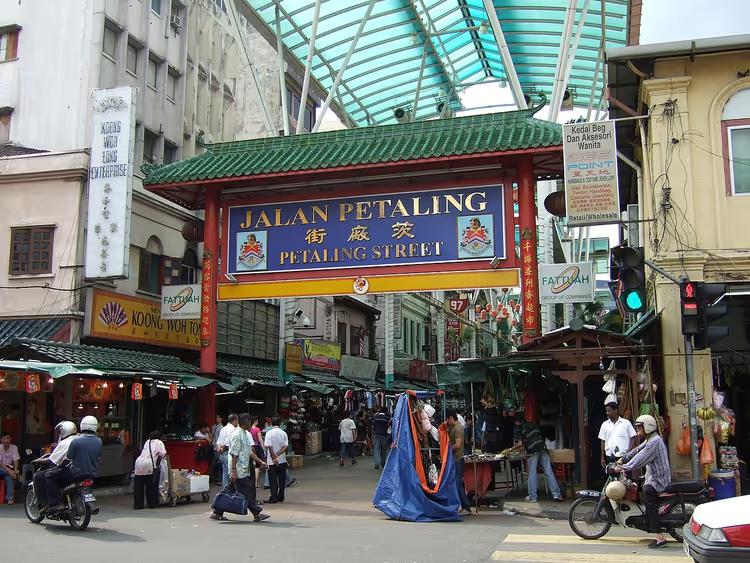
Chinatown occupies Petaling Street and the surrounding blocks in the city center (As of 09/2026, Wikipedia). Thousands of red lanterns hang above the street, the air smells of Asian cuisine, and vendors call out to passersby. The busiest time comes in the afternoon, when an additional row of stalls is set up in the middle of the street.
They sell everything here: from children's clothing to household appliances. Cafes and restaurants serve exotic dishes. By midnight the neighborhood empties out and becomes convenient for photos against the backdrop of the decorations. There are many inexpensive hotels and hostels nearby, so the area is convenient for an overnight stay. You should keep your bag close to you in the crowd.
- Getting there: MRT Pasar Seni station is nearby.
- Cost: free entry.
- The catch: crowded and noisy in the evening.
20. National Museum
The National Museum tells the story of Malaysia from ancient times to the present day (As of 09/2026, official website). The three-story building with Italian mosaics stands on top of a hill. The exhibits are divided into four halls: prehistoric era, Malay kingdoms, colonial period, and modern times.
The first hall displays ancient artifacts and wax figures. Further on, you'll see scenes of daily life before the arrival of Europeans and a lavish royal bed. The colonial hall features mannequins in traditional clothing and retro transportation, including the first bicycle and steam locomotives from the past century.
- Getting there: at the southern edge of Lake Gardens.
- Cost: tickets are purchased at the ticket office at the entrance.
- Who it's for: for a first introduction to Malaysia's history.
21. Perdana Botanical Garden
Since 2011, Lake Gardens has had a new name: Perdana Botanical Garden (As of 09/2026, Perdana Garden page). Thousands of exotic plants with labels are gathered here. The African "sausage" tree, baobab, and neatly trimmed shrubs create a jungle feel without leaving the city.
Part of the garden is covered by a glass roof, where you can wait out the rain. In the bamboo grove there's a treehouse, convenient for a picnic in the shade. The thickets of African and South American plants make for vivid photos. A couple of hours is enough to cover the main areas at a leisurely pace.
- Getting there: Lake Gardens area, further from the center.
- Cost: free entry.
- Who it's for: for a peaceful walk in the greenery.
22. Thean Hou Temple
 © *angys* · CC BY-SAPhoto: *angys*, CC BY-SA (https://creativecommons.org/licenses/by-sa/4.0), Wikimedia Commons
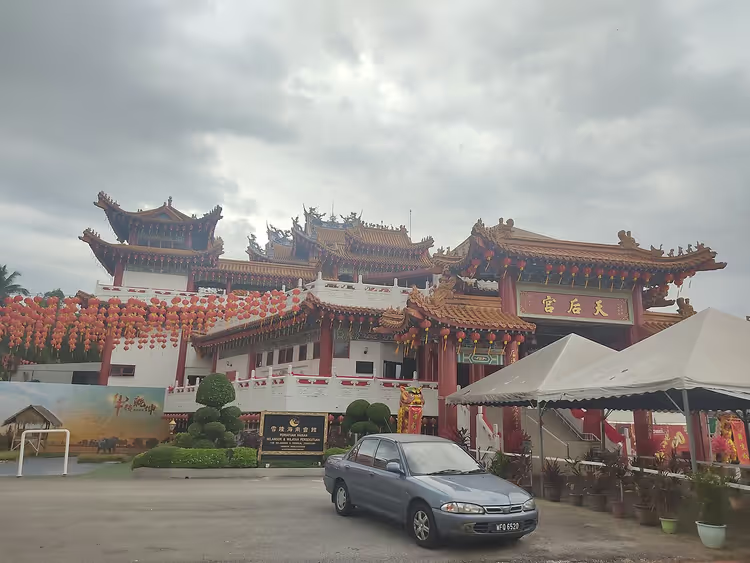
Thean Hou Temple is considered one of the most picturesque Buddhist temples in Malaysia (As of 09/2026, Wikipedia). It stands on a hill near Little India and is dedicated to the goddess Thean Hou, the patroness of seafarers. The multi-story building is built in Chinese style, and every detail deserves attention.
Exploring the figurines, sculptures, wall patterns, and hidden courtyards takes time. The grounds include a lake with turtles and a medicinal herb garden. The upper terrace offers a panoramic view of the city. You need to remove your shoes at the entrance to the hall, and you can make a wish at the well.
- Getting there: Seputeh area, by taxi from the center.
- Cost: free entry.
- Who it's for: for the panorama and atmosphere.
23. Federal Territory Mosque
 © CEphoto, Uwe Aranas · CC BY-SAPhoto: CEphoto, Uwe Aranas, CC BY-SA (https://creativecommons.org/licenses/by-sa/3.0), Wikimedia Commons
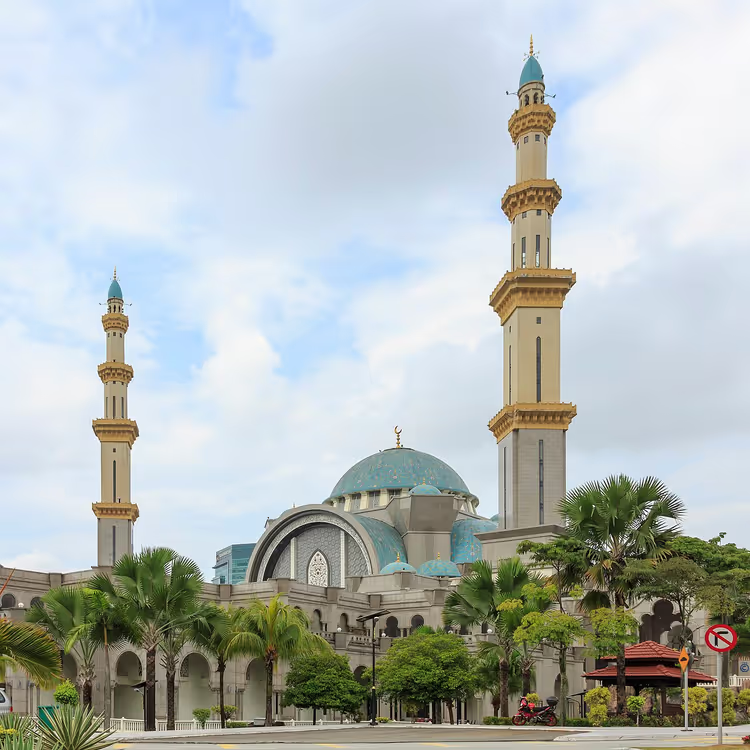
Federal Territory Mosque was completed in 2000 and became an architectural pride of the city (As of 09/2026, Wikipedia). The architects drew inspiration from Ottoman and Persian Empire architecture. Gray marble, pointed minarets, and blue gambiz domes create a distinctive look.
Fountains and palm trees around the complex give it an elegant appearance. Non-Muslims are allowed in with a dress code, and from the balcony you can observe the prayer in the main hall. You'll be given a robe, but modest clothing is still more comfortable.
- Getting there: Jalan Duta area, by taxi or bus.
- Cost: free entry.
- The catch: difficult to reach by public transport.
24. Islamic Arts Museum
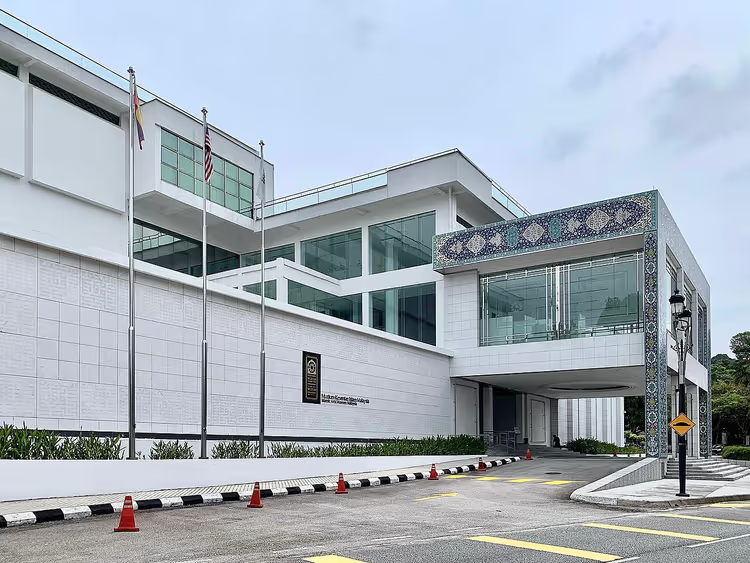 © Chainwit. · CC BY-SAPhoto: Chainwit., CC BY-SA (https://creativecommons.org/licenses/by-sa/4.0), Wikimedia Commons
The Museum of Islamic Art occupies a four-story building and houses relics of Islamic culture (as of 09/2026, official website). It contains ancient manuscripts in Arabic, handwritten texts, a collection of ceramics and Qurans, jewelry, and illustrations for traditional stories.
A separate hall displays weapons: daggers, bayonets, 19th-century pistols, and helmets. There is an exhibition with models of the world's most famous mosques, and the miniature details of the temples can be studied for a long time. The shop sells souvenirs, household items, and religious literature. You don't have to practice Islam to appreciate the collection.
- How to get there: near Lake Gardens, next to the National Mosque.
- Cost: paid ticket, children are usually cheaper.
- Who it's for: history and art lovers.
25. KidZania children's center
The KidZania children's center operates in Petaling Jaya and is designed for children aged four to seventeen (as of 09/2026, KidZania center page). After a break, the center reopened its doors and is now managed by the Sim Leisure group. Inside there are more than sixty scenarios where a child learns a profession through play.
Children put out fires, become chefs, pilots, doctors, or journalists and run a news broadcast. They are paid in internal currency for their work, which provides a first lesson in financial literacy. An adult ticket costs from RM 48.30, a child ticket from RM 84, and for toddlers from RM 40.60 (as of 09/2026, official website). The center is open daily from 10:00 to 18:00. You should book a slot in advance, as groups fill the halls on weekends.
- How to get there: Petaling Jaya, Curve NX complex, by taxi.
- Cost: tickets from RM 40.60 for younger children and from RM 84 for children.
- Who it's for: families with children aged four and up.
Tickets to attractions
For paid attractions, tickets are cheaper online, and slots for convenient times sell out quickly. The Petronas Towers observation decks, the TV tower, the aquarium, the bird park, and the zoo all sell tickets online. Kuala Lumpur attraction tickets help you secure a slot in advance and avoid waiting at the ticket office.
Below is a selection of tickets around the city. Choose the dates you need, and you'll skip the lines at some attractions.
Tours and tickets in Kuala Lumpur
Guided tours, skip-the-line tickets and activities — most offers can be cancelled free of charge.
See offers on TiqetsThe widget loads once you give your consent.
How to get from the airport
An express train runs from KLIA airport to the center, but with luggage and children a car is more convenient. Individual airport transfer on Kiwitaxi takes you directly to your hotel. The trip takes about an hour, and the driver waits in the arrivals hall with a sign.
If you arrive at night, book a car in advance: prices on the spot are higher. Metered taxis also work, but during rush hour the trip will stretch out due to traffic.
Kuala Lumpur attractions on the map
The map shows all the points from the list. When you open the map on your phone, it's easy to walk through the center and check off what you've seen. For distant attractions, the Batu Caves and the zoo, plan a separate route by transport.
Sights of Kuala Lumpur
Places on the map
- 1Masjid Jamek Mosque Built in 1909, stands at the confluence of the Klang and Gombak rivers, free entry
- 2St Mary's Cathedral Early Gothic from 1898, organ from the Henry Willis workshop
- 3Royal Selangor Golf Club Malaysia's oldest club, founded in 1893, guest access paid
- 4Merdeka Square A former cricket field, a 95-metre flagpole, evening illumination
- 5Textile Museum Neo-Moorish building, four galleries on fabric and costume, free entry
- 6Batu Caves Outside the city, 272 steps and a 43-metre statue of Murugan
- 7Sri Mahamariamman Temple The city's oldest Hindu temple, a gopuram tower by Chinatown
- 8Petronas Towers A sky bridge on the 41st floor and an observation deck on the 86th, timed entry
- 9Menara Kuala Lumpur Tower Bukit Nanas Hill, an enclosed observation area and a glass balcony
- 10Bird Park Over three thousand birds under netting in the Lake Gardens area, daytime shows
- 11Istana Negara Royal Palace Residence of the king, not open to the public, changing of the guard at the gate
- 12KLCC Park 20 hectares among the skyscrapers, the best view of the Petronas Towers
- 13Lake Gardens The oldest botanical belt on 90 hectares, hibiscus and orchid gardens
- 14Zoo Negara 110 acres, a Savannah zone, a panda centre and a free bus around the grounds
- 15Negara Mosque A main hall for eight thousand people, a 73-metre minaret, near KL Sentral
- 16Sultan Abdul Samad Building A clock tower on Merdeka Square, evening illumination
- 17Aquaria KLCC About twenty thousand inhabitants and a 90-metre underwater tunnel
- 18Central Market Operating since 1888, souvenirs, fabrics and handmade goods
- 19Chinatown Petaling Street with red lanterns, the busiest time is after lunch
- 20National Museum Four halls from prehistoric times to the present, near Lake Gardens
- 21Perdana Botanical Garden Thousands of exotic plants, a bamboo grove and a treehouse
- 22Thean Hou Temple A Chinese temple on a hill in Seputeh, a city panorama from the terrace
- 23Wilayah Persekutuan Mosque Built in 2000, grey marble and blue domes, in the Jalan Duta area
- 24Islamic Arts Museum Manuscripts, ceramics and models of mosques near the Negara Mosque
- 25KidZania Children's Centre Petaling Jaya, over sixty play professions for children
⁉️🤔 Frequently asked questions
How many days do you need for Kuala Lumpur?
Two or three days is enough for the main sights. On the first day you can cover the historic center, on the second go up the towers and walk around the KLCC parks, and on the third head to Batu Caves and the zoo. If you're into museums, add another day.
How much do tickets to the main sights cost?
Many places are free: mosques, temples, Merdeka Square, and the parks. You'll have to pay for the observation decks at the Petronas Towers and the KL Tower, the aquarium, the zoo, and the bird park. Check prices on the official websites, they change every year.
How to get from the airport to the city?
From KLIA to the center there's an express train and regular taxis, or you can book a transfer in advance. The trip takes about an hour. If you're arriving at night, book a driver ahead of time so you don't overpay on the spot.
When is the best time to visit Kuala Lumpur?
It rains year-round, and the wettest period falls at the end and beginning of the year. Other months also bring short downpours. Plan your walks for the morning and save museums and shopping malls for the afternoon.
Can you get around entirely on foot?
No, the city is too spread out. Walking is only practical for the historic core, where Merdeka Square, Chinatown, and Central Market are close together. For Batu Caves, the zoo, and the bird park you'll need the train, metro, or a taxi.
In short: what's worth booking
If you only have two days, start with Merdeka Square and the Petronas Towers, and leave Batu Caves for the morning of the second day. If you're traveling with kids, add the aquarium, the bird park, and the zoo. If you want some quiet, go for Lake Gardens, now called Perdana Botanical Gardens.
Book observation deck tickets online in advance, and arrange your airport transfer together with your hotel. Kuala Lumpur tours on GetYourGuide cover far-flung sights without transfers, and city hotels on Trip.com are easy to compare by neighborhood.

A small editorial team writing guides for independent travel. We travel ourselves, but we haven’t been everywhere, so we check prices, opening hours and how to get there against official sources.