
















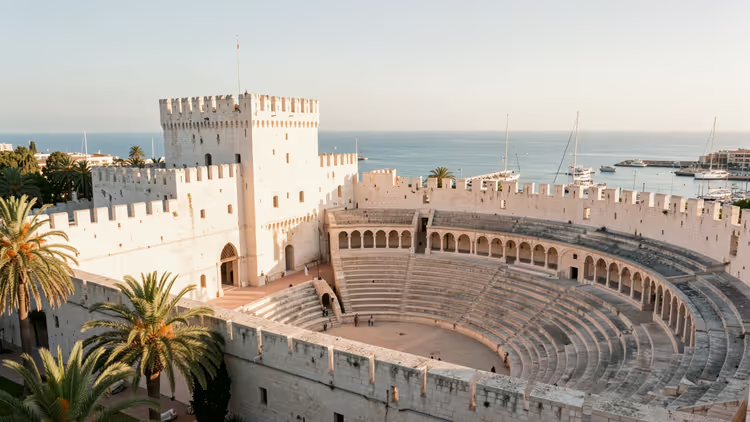
 AIIllustrative image: AI-generated
Walking around Malaga in a day: Alcazaba, cathedral and port views
Malaga fits into one day if you walk through the center. The old town is compact: from the port to the hilltop fortress is about 2.5 km, a 40-50 minute walk (on the map). In that day you can see the Alcazaba, the Cathedral, Museo Picasso Málaga, and the promenade by the lighthouse.
We put together a walking route through the main sights of the old town and Gibralfaro hill. It starts at the port and ends on the promenade, so you don't need a car. The most convenient way is to go clockwise: first the center, then the climb up the hill, and in the evening the descent to the sea. There's a map with all the stops at the end of the post.
Ad: this article contains affiliate links. We earn a commission if you book through them, at no extra cost to you.
Puerta del Mar square
💡 In short:
- In the morning, walk through the center: the market, the cathedral, and Museo Picasso Málaga are close to each other and don't require transport.
- After lunch, head up the hill to the Alcazaba and Gibralfaro, and come down to the promenade for sunset.
- Prices and opening hours: 09/2026, checked on the official Alcazaba website and the official cathedral website.
 © Maluoliveira · CC BY-SAPhoto: Maluoliveira, CC BY-SA (https://creativecommons.org/licenses/by-sa/4.0), Wikimedia Commons
Puerta del Mar square opens the route; the pedestrian zone of the old town starts here. In a nearby side street, Casa Aranda is known for its churros. In the morning, a line of locals forms here, so come at opening time.
You wash down the churros with hot chocolate or coffee, and the tables are practically on the street. Breakfast takes about twenty minutes, then the market awaits. Leave your car in the underground parking at the port: parking in the center is more expensive and finding a free spot is difficult.
Mercado Central de Atarazanas
 © Olliebailie · CC BY-SAPhoto: Olliebailie, CC BY-SA (https://creativecommons.org/licenses/by-sa/4.0), Wikimedia Commons
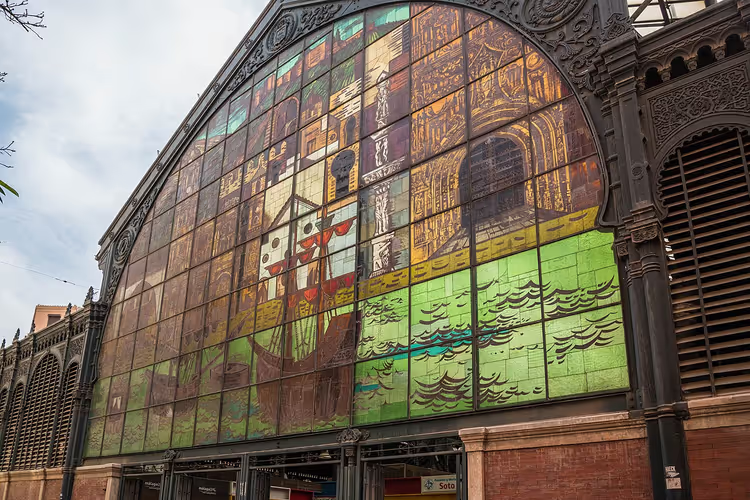
You walk to Atarazanas market in about ten minutes from the square (on the map). From the outside it's an ordinary city block, but inside you're greeted by a stained glass window and the marble portal of the main entrance. They sell jamón, olives, cheeses, fresh fish, and fruit at fair prices here.
The market got its name from the Arab ship repair workshops that stood on this site back in the 14th century (as of: 09/2026, official Malaga markets website). Only the white marble arch survives from that era; everything else was rebuilt in the 19th century.
The market is open from 8:00 to 15:00, closed on Sundays (as of: 09/2026, market opening hours). Come before noon, while the stalls are full: fish and seafood go first. The bars at the counter pour wine and fry fish, but don't linger too long: the cathedral and the fortress are ahead.
Cathedral
 © Euku · CC BY-SAPhoto: Euku, CC BY-SA (https://creativecommons.org/licenses/by-sa/3.0), Wikimedia Commons
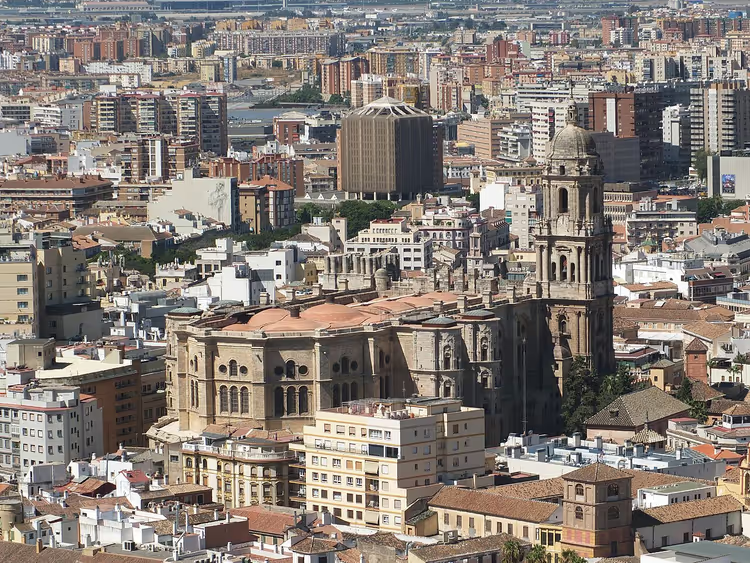
Malaga Cathedral is called "La Manquita," meaning "the one-armed one." The north bell tower was completed, but the south one was never built, so the church has only one tower. The cathedral was founded in 1528 on the site of an old mosque (as of: 09/2026, official cathedral website).
Construction went on for centuries, hence the mix of styles in one building: Gothic, Baroque, and Neoclassical. Inside you'll see marble columns, medallions with the Virgin Mary, and a carved dark wood choir. Orange trees grow in the inner courtyard, and in May they're in bloom.
The image of "Our Lady with Saints" is also kept here, and pilgrims come to see it. Tradition adds one more detail: the money for the south tower, according to rumor, went to the American War of Independence, so locals still argue about whether the second bell tower should be completed at all. It's better to visit the cathedral on weekday mornings: on Sundays services are held and tourists may not be allowed inside.
Admission costs €10, and the audio guide is already included in the price and works in 10 languages, including Russian (as of 09/2026, cathedral's official page). In summer on weekdays the cathedral is open from 10:30 to 20:00, on Saturdays until 18:00, and on Sundays from 14:00 to 18:00. From 8:30 to 9:00 admission is free, but that time is for prayer, not sightseeing.
Tip: buy your ticket online so you don't have to wait at the ticket office. And keep a light wrap handy: you may not be allowed in wearing shorts or with bare shoulders.
Bishop's Palace
 © Berthold Werner · CC BY-SAPhoto: Berthold Werner, CC BY-SA (https://creativecommons.org/licenses/by-sa/3.0), Wikimedia Commons
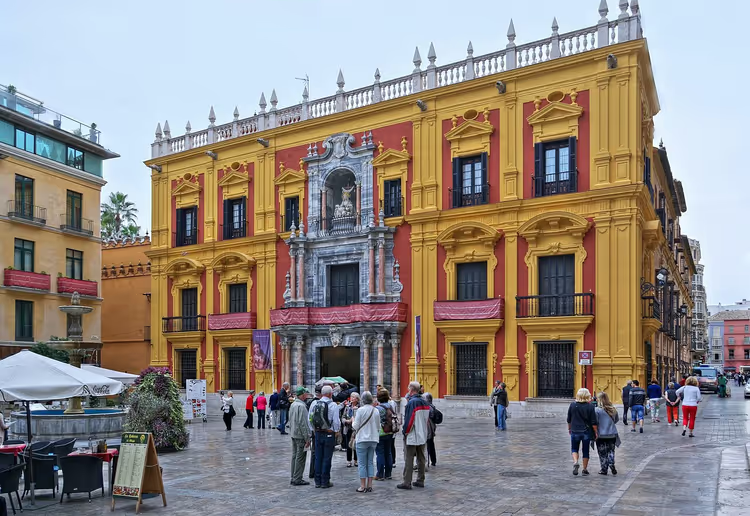
The Bishop's Palace stands directly opposite the cathedral, so you can walk there in a couple of minutes. The building was constructed during the Renaissance and rebuilt several times after that, which is why the facade combines austere pilasters, pink columns, and an alabaster sculpture of the Virgin of Angustias.
The palace was rebuilt in stages. The first building quickly proved too cramped, so a second one was erected next to it, and its towers and the arches connecting them have survived to this day. Later the architect Diego de Vergara laid out the inner courtyard, and Antonio Ramos gave the facade the elegant look you see now.
Today the building houses a museum of sacred art, and the ground floor displays a collection of African art. The palace rooms give you a clear picture of how the church elite lived while ordinary peasants paid tithes. The pink colonnade and the sculpture of the Virgin of Angustias in the inner courtyard deserve special attention.
You come here for the quiet and the paintings, not for flashy exhibitions. A visit takes about an hour, and this stop is easy to combine with the cathedral. If the museum is closed, walk around the outside of the building: the stone balustrade and the inner courtyard are worth a careful look.
Museo Carmen Thyssen
 © Daniel Capilla · CC BY-SAPhoto: Daniel Capilla, CC BY-SA (https://creativecommons.org/licenses/by-sa/4.0), Wikimedia Commons
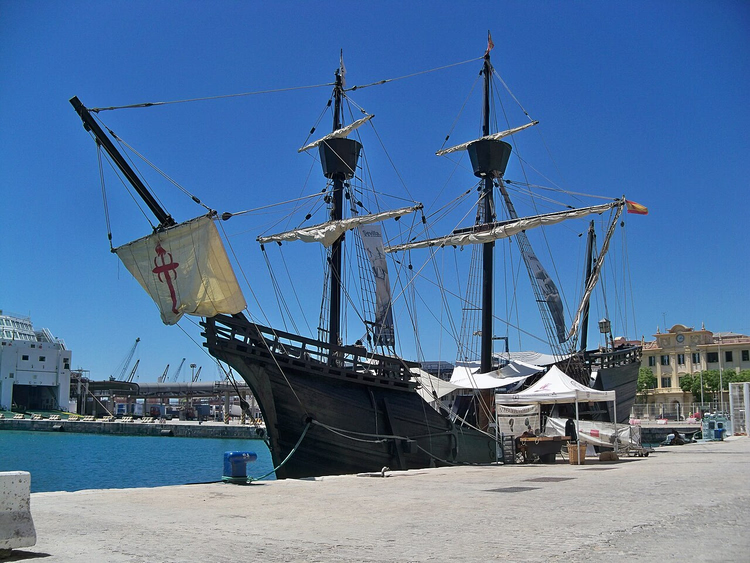
Museo Carmen Thyssen occupies the Villalón Palace, a stone's throw from Constitution Square. The core of the collection was assembled by Baroness Carmen Thyssen: it includes landscapes, still lifes, views of the botanical garden, and paintings by Francisco Iturrino in vivid colors.
A separate room is devoted to collages by Henri Matisse, which he cut out of plain paper. Temporary exhibitions change, so you may only catch the prints and posters once. The museum is small, and an hour is enough for a visit.
Choose it if you are tired of fortresses and want calm art in the city center. For families with children it is less engaging than Museo Picasso Málaga, but there are almost no crowds here.
Constitution Square
Constitution Square is the historic heart of Malaga. For centuries, important decisions for the city were made here, and today it serves as the main meeting point. The pavement is laid with dimensional patterns that create the illusion of a real mosaic.
The square has had several names: first it was called Four Streets Square, then Liberty Square. It received its current name in honor of the constitution. On the memorial plaques you can read pages from old Madrid newspapers.
Stop here for coffee and Andalusian dishes: the area is full of cafes and tapas bars. In the evening the square is lit up and becomes the best backdrop for photos of the old town. During the day it is a convenient place to arrange a meeting or wait out the heat in the shade of the buildings.
Iglesia de San Juan
Iglesia de San Juan was built shortly after the Christians recaptured the city from the Moors. Over the centuries the church was rebuilt several times: at first it was Gothic with two naves, later a tower and chapels were added, and after an earthquake the building had to be restored from scratch.
Today you will see a statue of John the Baptist, altars in the side naves, and the main chapel in neo-baroque style. Part of the restoration was carried out in our own time, so the interior looks bright and well kept.
The church stands away from the main tourist flow, so here you can get a break from the crowds. Admission is usually free, but visits are restricted during services. Take a relaxed fifteen minutes to see it, then move on toward the Alcazaba.
Alcazaba
 © Fernando · CC BY-SAPhoto: Fernando, CC BY-SA (https://creativecommons.org/licenses/by-sa/4.0), Wikimedia Commons
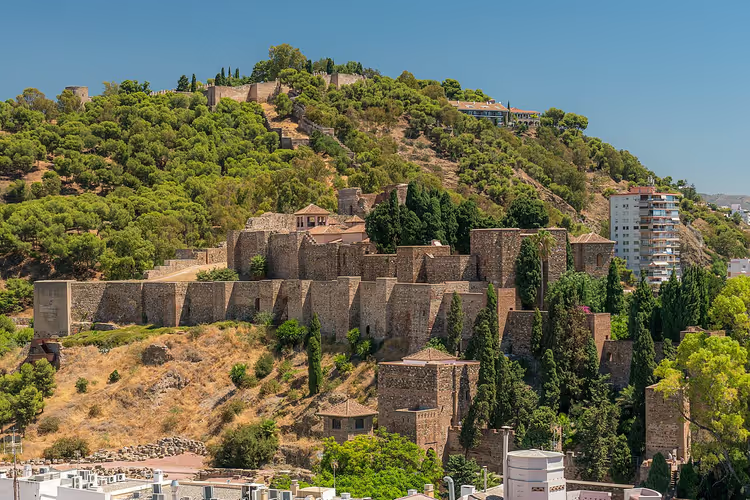
The Alcazaba is the main stop on the route, and it is worth climbing up here after lunch, once you have seen the center. The fortress was built under the Berbers as a military citadel, so you will be greeted by ring walls, narrow gates, and massive towers. From the top you get views of the port, the city, and the beaches.
Inside there is an archaeological museum: you will see what the fortress looked like in the past. The courtyards are planted with fruit trees, and fountains and small pools murmur among them. In summer people hide here from the heat, because the walls provide deep shade.
A combined ticket for the Alcazaba and Gibralfaro costs €5.50 (as of 09/2026, fortress tickets and hours). In summer, from April to October, the fortress is open from 9:00 to 20:00, with last entry at 19:00. In winter the hours are shorter: from 9:00 to 18:00, with last entry at 17:00.
Roman theater
 © andynash · CC BY-SAPhoto: andynash, CC BY-SA (https://creativecommons.org/licenses/by-sa/2.0), Wikimedia Commons
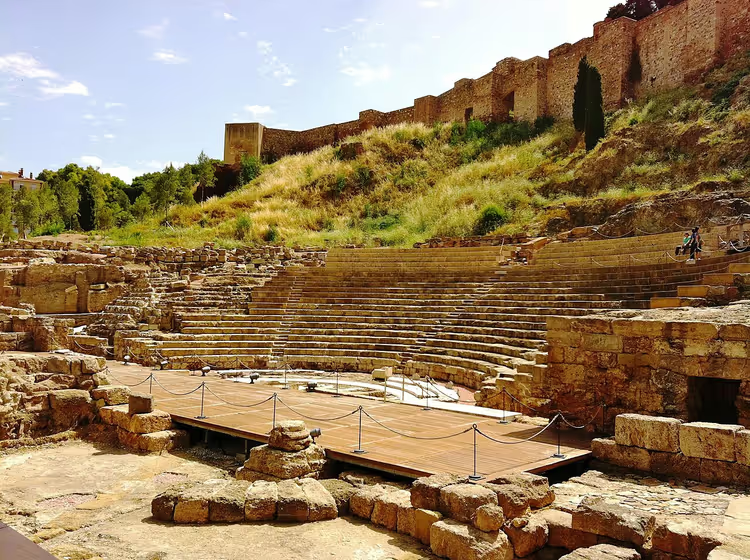
You will find the Roman theater at the foot of the Alcazaba, literally a two-minute walk from the fortress entrance. It was built under Emperor Octavian Augustus, and centuries later it was partially dismantled to reinforce the walls of the neighboring citadel.
The ancient ruins were discovered by accident during construction work on the site. What remains of the theater are the amphitheater seating, the stage platform, and the room where actors changed costumes. Since the early 2010s, performances have been held here again (as of 09/2026, Málaga tourism portal).
A visit takes about fifteen minutes, and it is free. Stop by after the Alcazaba so you can rest in the shade on the stone tiers.
El Pimpi
 © andynash · CC BY-SAPhoto: andynash, CC BY-SA (https://creativecommons.org/licenses/by-sa/2.0), Wikimedia Commons
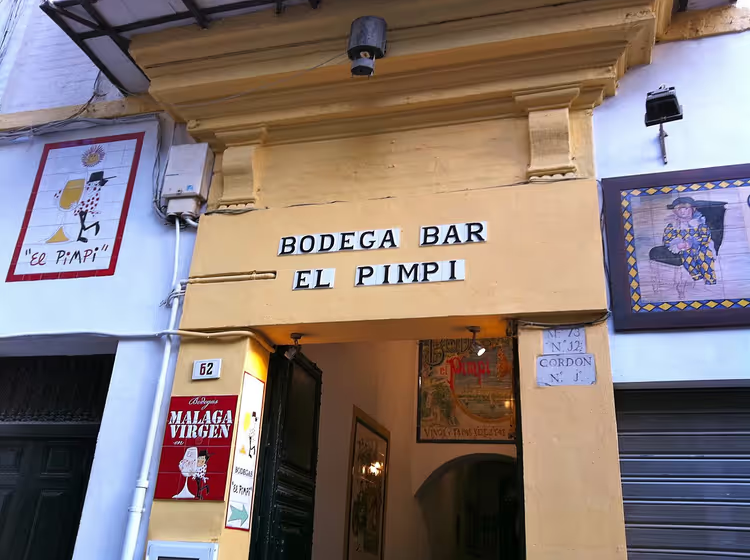
El Pimpi is a famous Málaga bar, and it is hard to miss: from the Roman theater you can walk there in five minutes. They serve local Málaga wine with prune notes, acorn-fed ham, cheeses, and olives.
The main room is lined with wine barrels signed by celebrities. The walls are covered with portraits of actors, musicians, and politicians, including Plácido Domingo and Antonio Banderas.
The terrace overlooks the Roman theater, so it is a convenient place to wrap up your visit to the hill in the evening. Stop in for a glass of wine, but for a full dinner head to Plaza de la Merced instead. You do not need to book a table, but on weekend evenings the place is packed, so arrive early.
Plaza de la Merced
 © Zangarreon · CC BY-SAPhoto: Zangarreon, CC BY-SA (https://creativecommons.org/licenses/by-sa/4.0), Wikimedia Commons
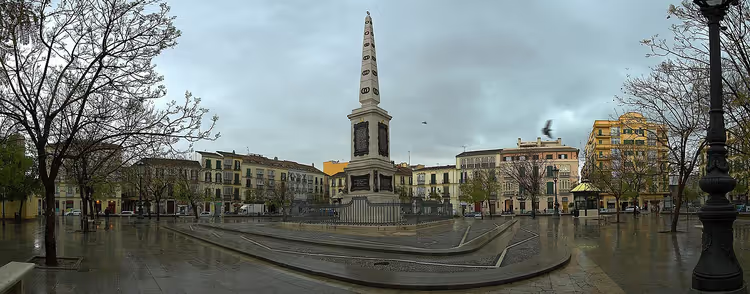
Plaza de la Merced serves as a meeting spot and a large open-air terrace. There are plenty of cafés with umbrellas, and street musicians perform in the evenings. The square used to be called Market Square, and its current name comes from a monastery that once stood nearby.
Pablo Picasso was born in one of the houses on the square. Museo Picasso Málaga is not located here, but a minute's walk from the square. The obelisk to General Torrijos, who died fighting the monarchy, long ago replaced the fountain on the square. The obelisk is a reminder of the city's turbulent history.
Take a seat at a table with a view of the obelisk and order tapas. From here the museum is a one-minute walk, so this stop is easy to combine with Museo Picasso Málaga.
Museo Picasso Málaga
 © Llecco · CC BY-SAPhoto: Llecco, CC BY-SA (https://creativecommons.org/licenses/by-sa/3.0), Wikimedia Commons
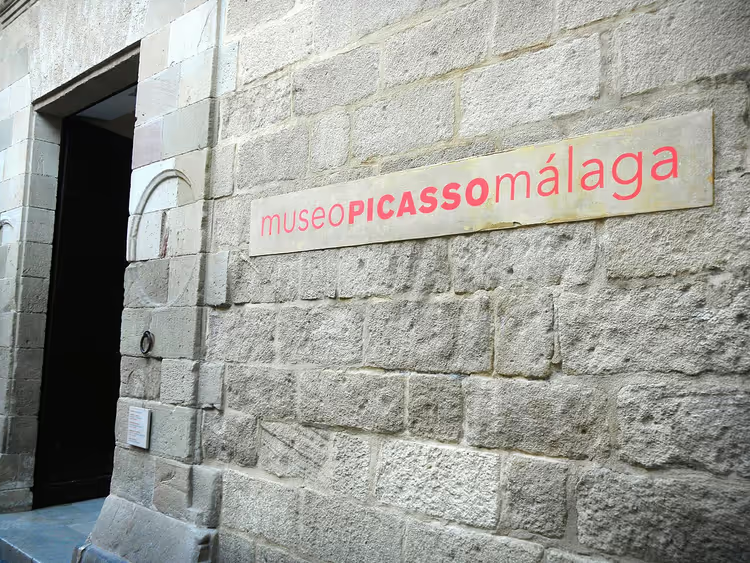
Museo Picasso Málaga opened in the Buenavista Palace. It houses around two hundred works by the master: paintings, sculptures, and ceramics (as of 09/2026, official museum page). Most of the collection was donated by the artist's relatives, including his grandson.
The most valuable exhibit is the portrait of Olga Khokhlova, Picasso's first wife. The house museum on Plaza de la Merced looks more modest, but that is where you will see the rooms where the artist grew up and his first drawings.
The museum is open seven days a week: in summer from 10:00 to 20:00, in the off-season until 18:00 or 19:00 (as of 09/2026, Museo Picasso opening hours). Buy your ticket online and arrive at opening time; by midday the galleries fill up.
Gibralfaro fortress
 © Olaf Tausch · CC BYPhoto: Olaf Tausch, CC BY (https://creativecommons.org/licenses/by/3.0), Wikimedia Commons
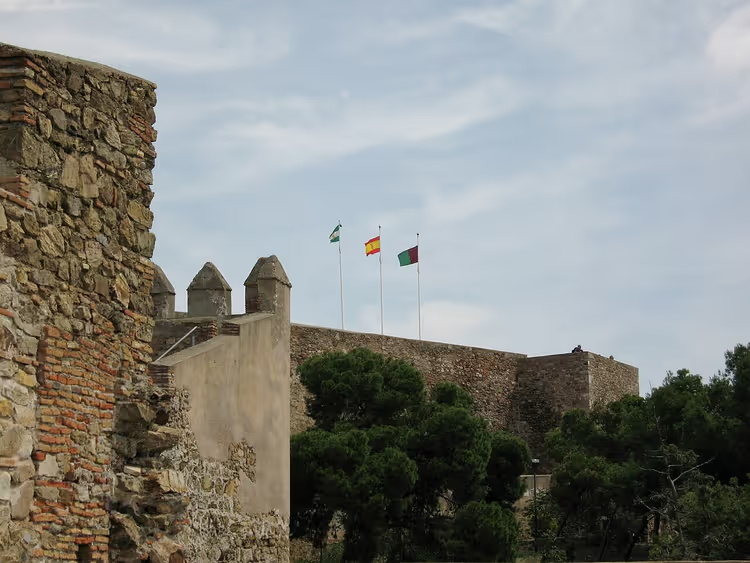
The Gibralfaro fortress stands above the Alcazaba on the same slope, and shared walls connect the two. The walk up the road takes about half an hour, but from the top you can see the entire city, the port, and on a clear day even the Strait of Gibraltar (as of 09/2026, official Alcazaba and Gibralfaro website).
The citadel was built to shelter the city's defenders: inside there were a well and service rooms. You can walk up here from the Alcazaba on the same ticket; admission is shared. The fortress was once considered impregnable, and today it is a historic monument and viewpoint.
Go up in the morning or closer to evening; during the day the open road gets very hot. Bring water and wear comfortable shoes, the climb is steep.
La Malagueta bullring
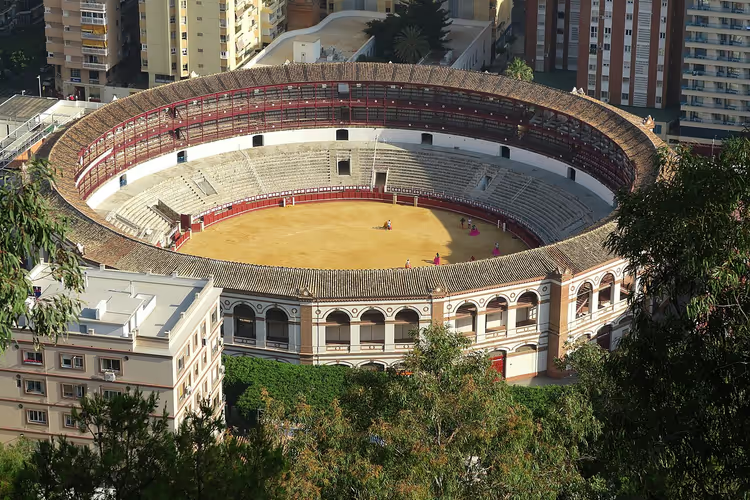 © Malopez 21 · CC BY-SAPhoto: Malopez 21, CC BY-SA (https://creativecommons.org/licenses/by-sa/4.0), Wikimedia Commons
La Malagueta Arena is a bullfighting ring built in the Neo-Mudéjar style. It is considered one of the largest in Spain and seats thousands of spectators. Bullfights here take place mainly in spring and autumn, and the main fight is held in September in honor of Saint Victoria, the city's patron saint (as of 09/2026, Málaga tourism portal).
Buy tickets online rather than at the box office: this gives you a better chance of getting seats on the shaded side, where the sun doesn't beat down. Some spectators even watch the fight from the hillside, bringing binoculars with them.
Inside, the Bullfighting Museum named after matador Antonio Ordóñez, whom Hemingway wrote about, is open to visitors. Here you'll see old posters and programs. Stop by if you want to understand the Spanish tradition, not just see the arena itself.
Centre Pompidou Málaga
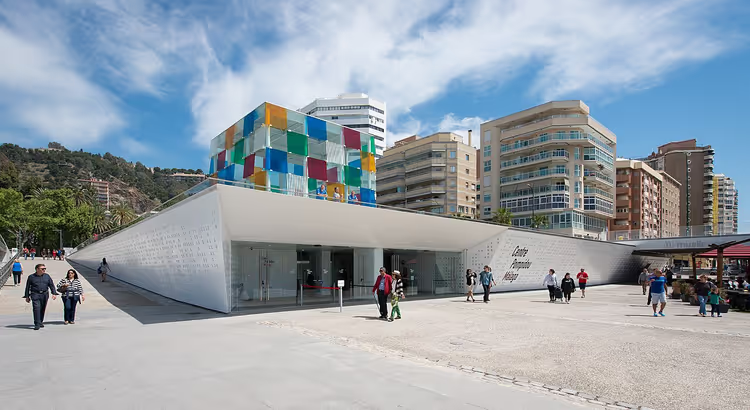 © Epizentrum · CC BY-SAPhoto: Epizentrum, CC BY-SA (https://creativecommons.org/licenses/by-sa/3.0), Wikimedia Commons
Centre Pompidou Málaga is the first branch of the Paris center outside France (as of 09/2026, the center's official website). The permanent collection brings together works by artists of the past and present centuries: Marc Chagall, Frida Kahlo, Francis Bacon, and Picasso himself. Temporary exhibitions focus on photography, design, film, and dance, which is why different generations visit.
The museum stands at the end of the port, in a cube with multicolored glass cladding. A visit takes about an hour. You come here if you're interested in modern art, not just history.
La Farola Lighthouse
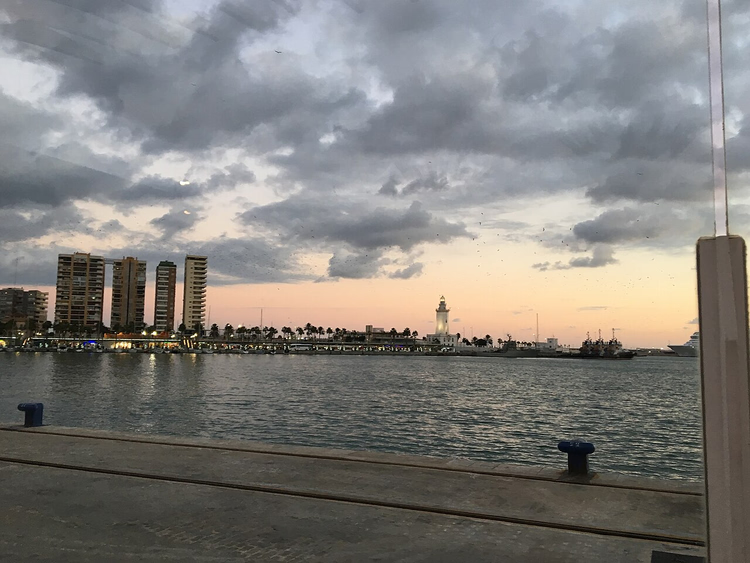
La Farola Lighthouse has long been a symbol of the city, and the promenade is named after it. It rises above the port to a height of more than thirty meters, and its light is visible far out at sea (as of 09/2026, Málaga tourism portal). From the sea side, the lighthouse looks especially striking.
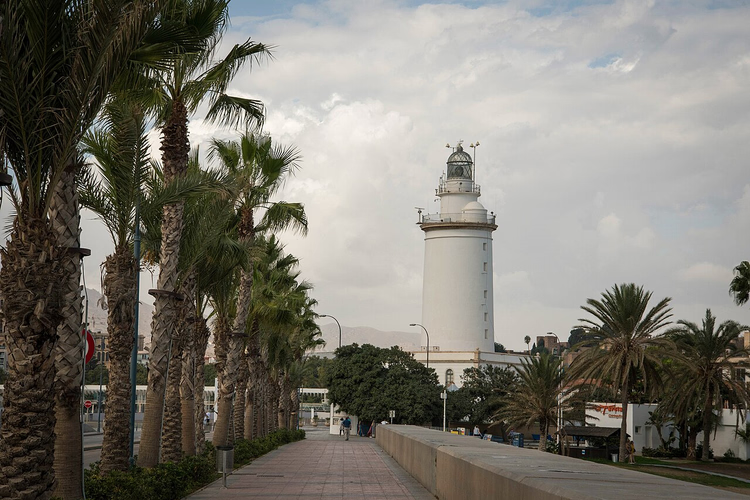 © Olliebailie · CC BY-SAPhoto: Olliebailie, CC BY-SA (https://creativecommons.org/licenses/by-sa/4.0), Wikimedia Commons
At the base stands a two-story building, and above it rises a tower with a lantern room and lens at the top. Near the lighthouse, tourists take photos by a huge anchor. At first, only an oil lamp burned inside, and the modern optical apparatus came later.
The lighthouse's history was not straightforward. The tower was reinforced and extended, and during the civil war the lighthouse was extinguished and camouflaged with protective paint so it would not become a landmark for bombers. After the war, the structure was rebuilt. Today, modern optics operate in the lantern room at the top, and the name "La Farola" means "lamppost" in Spanish.
Around the lighthouse there are now shops and restaurants, so you can rest and have dinner here. In the evening, the white tower is illuminated, and the promenade offers the best view of the port.
Palmeral de las Sorpresas
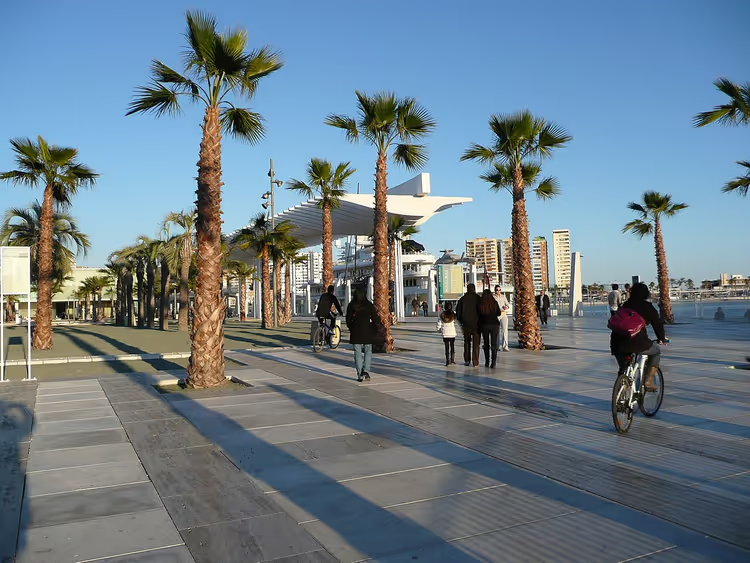 © chisloup · CC BYPhoto: chisloup, CC BY (https://creativecommons.org/licenses/by/3.0), Wikimedia Commons
Finish your route at Palmeral de las Sorpresas, a park right on the promenade by the port. Here you can give your tired feet a rest on one of the benches and look out at the sea. Palm trees, fountains, and exotic plants are arranged in a modern style.
Children can spend time at the playground, while couples settle in by the water at sunset. The park's café has something for every taste. From the park you can see both the lighthouse and the center of the port, so it's a convenient place to wrap up your walk.
The palm garden was laid out as part of the port's renovation, so it looks young and well maintained. The paths lead right to the water, and the benches sit in the shade of the palms. At the end, walk to the pier and look at the cruise ships docked at the port wall.
Come here toward evening: the sun sets over the sea, the heat subsides, and you can have a relaxed dinner by the water.
Málaga route on the map
All the stops are collected on one map, which you can use to walk the route. Open it on your phone and follow the order: port, center, Gibralfaro hill, finish on the promenade.
Route around Málaga in 1 day
Places on the map
- 1Puerta del Mar Square Start of the route, entrance to the old town's pedestrian zone
- 2Atarazanas Central Market City market with a stained-glass window and marble arch, open 8:00-15:00
- 3Málaga Cathedral La Manquita Cathedral with a single tower, entry 10 euros with audio guide
- 4Bishop's Palace Renaissance palace opposite the cathedral, houses a museum of sacred art
- 5Carmen Thyssen Museum Baroness's collection in the Villalón Palace, visit takes about an hour
- 6Plaza de la Constitución Historic heart of the city, surrounded by cafes and tapas bars
- 7Church of San Juan Church off the tourist trail, entry usually free
- 8Alcazaba Berber citadel with port views, combined ticket with Gibralfaro 5.50 euros
- 9Roman Theatre Ancient ruins at the foot of the Alcazaba, free to visit
- 10El Pimpi Tavern Málaga's oldest bar with wine barrels and a view of the Roman Theatre
- 11Plaza de la Merced Square with terraces and an obelisk, near Picasso's birth house
- 12Picasso Museum Málaga About two hundred of the master's works in the Buenavista Palace, open daily
- 13Gibralfaro Castle Citadel above the Alcazaba, about a 30-minute climb, view over the whole city
- 14La Malagueta Bullring Octagonal Neo-Mudéjar bullring, houses a bullfighting museum
- 15Centre Pompidou Málaga First branch of the Paris centre, a cube with colourful glazing at the port
- 16La Farola Lighthouse City symbol over thirty metres tall, lit up at night
- 17Palmeral de las Sorpresas Park with palms and fountains right on the port promenade, end of the route
If you want to buy tickets to museums and fortresses in advance, check the cards below: they show prices and available time slots at a glance.
Tours and tickets in Malaga
Guided tours, skip-the-line tickets and activities — most offers can be cancelled free of charge.
See offers on TiqetsThe widget loads once you give your consent.
⁉️🤔 Frequently asked questions
Is one day enough for Malaga?
Yes, the old town and the hill are more than enough. The walking route takes about six hours with stops for food, and the Alcazaba and Gibralfaro are covered by one ticket. If you add the Museo Picasso Málaga, plan another hour and leave your hotel in the morning.
When is the best time to go up to Gibralfaro?
It is better in the morning or after four in the afternoon. At midday, the open road to the fortress gets scorching hot, and there is almost no shade. Bring water, wear comfortable shoes, and remember that the ticket is shared with the Alcazaba, so you do not need to buy it separately.
Do I need to buy tickets in advance?
Tickets for the cathedral, Museo Picasso Málaga, and the bullring are best bought online. In high season, ticket offices get long lines, and shaded seats at the bullfight sell out first. The combined ticket for the Alcazaba and Gibralfaro is bought right at the entrance.
Where can I have lunch along the route?
There is plenty of food in the center: Atarazanas market with counter bars, tapas bars on Plaza de la Constitución, and Plaza de la Merced with terraces. The market serves food until mid-afternoon, so plan lunch before three. For dinner, head to the waterfront or El Pimpi.
Can you see Malaga if you only have half a day?
Yes, you can cover the main sights. Start with the cathedral in the center, go up to the Alcazaba after lunch, and in the evening walk down to the waterfront and the lighthouse. Leave the Museo Picasso Málaga and Gibralfaro for a second visit, otherwise you will be rushing between sights and will not see any of them properly.
In short: what to book
If you arrive in the morning and want to get to your hotel right away without a taxi, book a transfer from Malaga airport on Kiwitaxi. It is most convenient to stay in the old town, near Plaza de la Constitución and the waterfront.
- If you are short on time: get cathedral and Museo Picasso Málaga tickets in advance and start with the Alcazaba.
- If you are looking for a central hotel: see hotels in Malaga on Trip.com.
- If you do not want to walk the whole route: Malaga tours on GetYourGuide.
Save one evening for the waterfront and La Farola lighthouse: it is the best spot to end the day by the sea.

A small editorial team writing guides for independent travel. We travel ourselves, but we haven’t been everywhere, so we check prices, opening hours and how to get there against official sources.