

















The Vasa ship in Stockholm: 20 minutes of sailing and three centuries at the bottom
The royal ship Vasa sank on its maiden voyage without ever leaving Stockholm harbor. Three hundred years later it was raised from the seabed almost entirely intact, and now it stands in a museum on the island of Djurgården.
An adult ticket costs 240 SEK from May through September and 195 SEK from October through April (as of 09/2026, prices and opening hours on the museum website). Visitors under 18 enter free of charge, and the ticket office only accepts bank cards.
Below you will find directions to the museum, prices, opening hours, and what is worth seeing inside.
Ad: this article contains affiliate links, we earn a commission if you book through them, at no extra cost to you.
How to get to the Vasa Museum
💡 In short:
- Address: Galärvarvsvägen 14, Djurgården island.
- Tram 7 or bus 67 to the Nordiska museet/Vasamuseet stop.
- Prices and opening hours: 09/2026, verified on the museum pricing page.
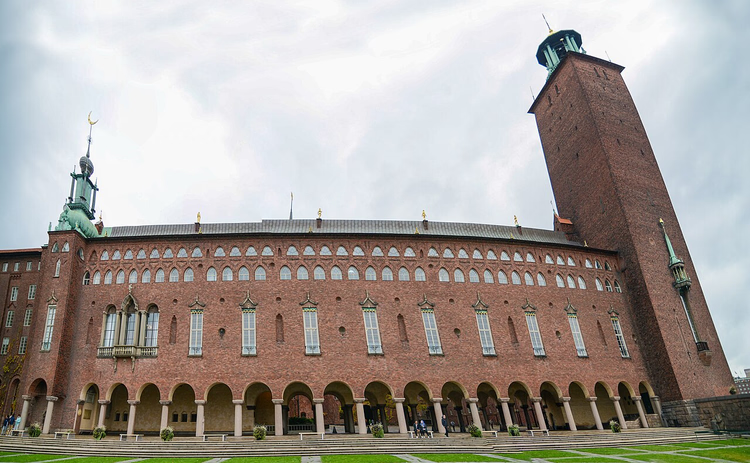 © Jorge Láscar from Melbourne, Australia · CC BYPhoto: Jorge Láscar from Melbourne, Australia, CC BY (https://creativecommons.org/licenses/by/2.0), Wikimedia Commons
The museum is located on Djurgården island, a half-hour walk from the city center (according to the museum, 09/2026, how to get there). The route follows the waterfront across the Djurgårdsbron bridge, then follow the signs. By bike you will get there noticeably faster.
Take tram 7: it runs from T-Centralen and stops right at the museum, at the Nordiska museet/Vasamuseet stop (according to the museum, transport to Djurgården). The line currently has occasional disruptions, so allow an extra fifteen minutes or choose the ferry instead.
Bus 67 stops at the same place, buses 69 and 76 take you to the Djurgårdsbron stop (according to the museum, bus routes). From Djurgårdsbron to the entrance it is about a ten-minute walk.
From the metro, the most convenient option is the red line, Karlaplan station: from there it is a ten-minute walk to the museum or bus 67 (according to the museum, travel options).
The ferry also works. Line 82 departs from Slussen, line 80 from Nybroplan, you get off at Allmänna gränd and walk to the museum in eight minutes. Check the schedule at sl.se.
Don't drive. There are few parking spots on the island, and from April 30 to September 27, Djurgårdsvägen is closed to cars on weekends and holidays from 10:00 to 17:00 (as of the museum, 09/2026, about the restrictions).
Plan your visit for the morning: the halls are empty at opening, and you can calmly explore the ship on all levels.
Tickets and opening hours
Period | Adult ticket | Combo with Vrak | Opening hours |
|---|---|---|---|
May-September | 240 SEK | 359 SEK | daily 10:00-17:00, June-August 08:30-18:00 |
October-April | 195 SEK | 315 SEK | daily 10:00-17:00, Wednesdays until 20:00 |
As of 09/2026, museum prices and opening hours.
Children and teens under 18 enter free, but a child under 12 must be accompanied by an adult. The combo ticket is valid for 72 hours and also gives access to Vrak, the museum of shipwrecks next door.
The museum is closed on December 24 and 25. On December 31 it is open from 10:00 to 15:00, and on January 1 from 10:00 to 17:00 (as of 09/2026, opening hours). Cash is not accepted here, bring a card.
A prepaid ticket does not give you skip-the-line access, the museum warns about this in its rules. In July and August, a line forms by opening time. You can buy Vasa Museum tickets on Tiqets in advance, but in summer still arrive by 08:30.
Tours and tickets in Stockholm
Guided tours, skip-the-line tickets and activities — most offers can be cancelled free of charge.
See offers on TiqetsThe widget loads once you give your consent.
History of the ship: twenty minutes at sea
The Vasa was built as the flagship of the Swedish fleet. King Gustav II Adolf commissioned the ship in 1625, and work went on from 1626 to 1628 (as of the museum, facts about the Vasa).
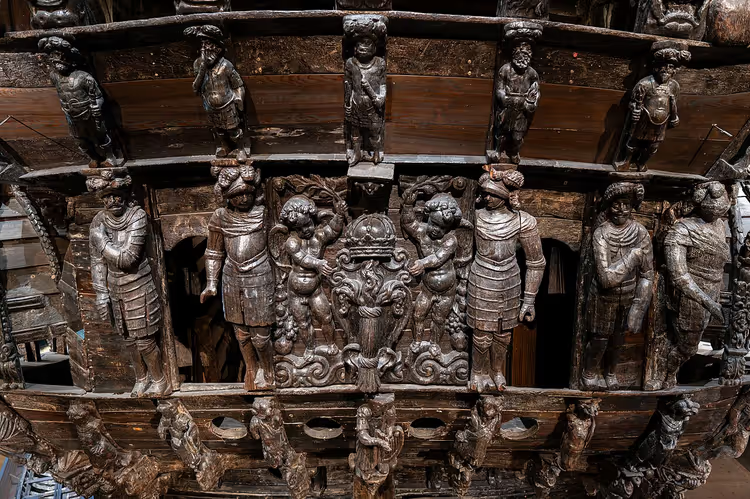 © Jules Verne Times Two · CC BY-SAPhoto: Jules Verne Times Two, CC BY-SA (https://creativecommons.org/licenses/by-sa/4.0), Wikimedia Commons
The two decks carried 64 bronze cannons, and the masts reached a height of 52 meters (as of Wikipedia on the ship). The ship's weight is estimated at between 800 and 1200 tons, and there is still no exact figure (as of the museum, about the Vasa).
The guns were installed not for defense but as a symbol of power: the king wanted the fleet to look imposing. Carvers decorated the sides with hundreds of figures.
On August 10, 1628, the ship set out on its maiden voyage and sank about 20 minutes later. It traveled roughly 1,300 meters, a gust of wind heeled the vessel over, and water poured in through the open gun ports (according to Wikipedia on the sinking of the Vasa). The reason was simple: the ship was too tall and narrow for that many guns. Of the roughly 150 people on board, about thirty died (according to Britannica).
The king ordered the guns salvaged, and 17th-century divers recovered most of the bronze cannons. The hull itself stayed on the seabed.
How the Vasa was raised: three centuries on the bottom
The ship was forgotten for three hundred years. In 1956, engineer Anders Franzen located the hull, and in 1961 the vessel was raised from a depth of about thirty meters (according to Wikipedia on the raising of the Vasa).
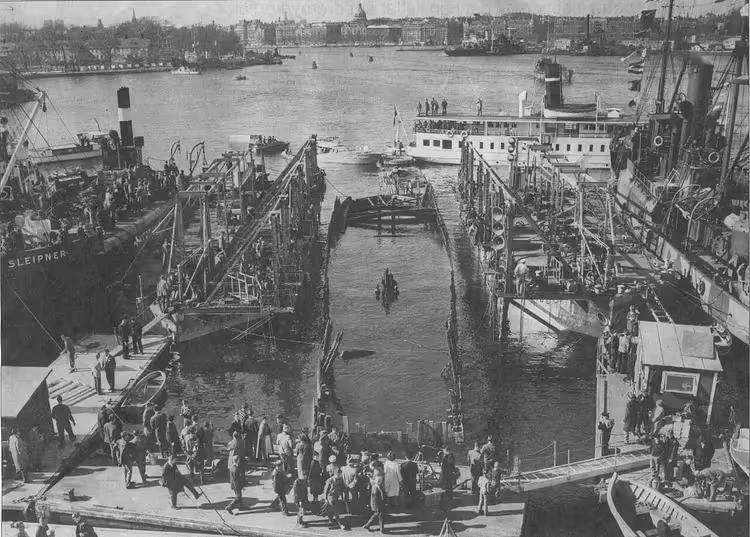
The recovered sections were washed clean of silt and stabilized. For several years the wood was impregnated with polyethylene glycol so it would not crack as it dried (according to the museum, museum fact sheet on the Vasa). Then about seven hundred carved sculptures and decorative details were returned to their original places.
The ship got its own home: in 1990 the Vasa Museum opened on Djurgarden, and a building with tiered galleries was erected around the vessel, letting visitors walk around it at different levels (according to Wikipedia).
Today the Vasa rests on special supports, and the humidity and temperature in the hall are maintained around the clock. Visitors go up to the upper galleries and see the ship from the bow, from the stern, and from above. If you arrive at opening time, you will have a chance to study the carvings without the crowds.
Main exhibits at the Vasa Museum
Almost the entire hull is original, which makes the Vasa the most complete relic of the 17th century. Start at the bow: it is decorated with carved ornaments and wooden figures of sea deities. Nearby, display cases hold sails recovered from the silt, giving a sense of the rigging of that era.
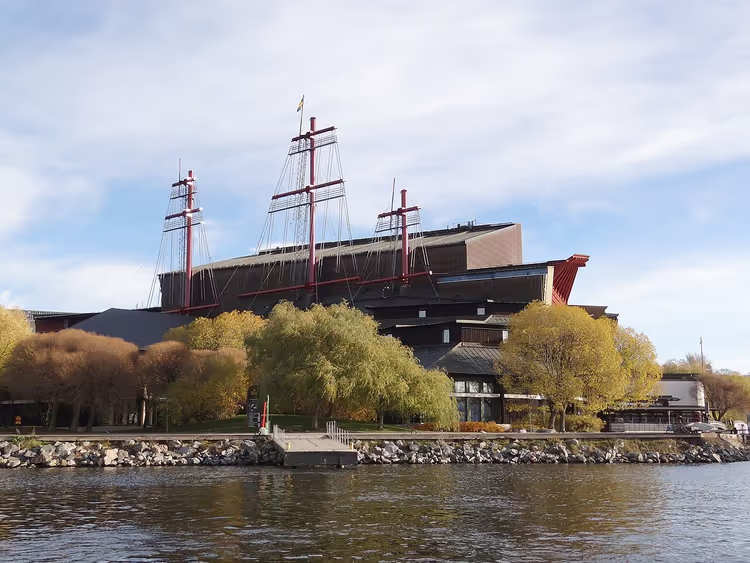 © Hanay · CC BY-SAPhoto: Hanay, CC BY-SA (https://creativecommons.org/licenses/by-sa/3.0), Wikimedia Commons
On the sides you will see figures of biblical characters, ancient gods, lions, and Roman emperors, as well as the coat of arms of the Vasa dynasty. Traces of gilding and red paint survive on the carvings, so it is easy to imagine how vivid the ship looked at launch. Even the shutters of the gunports are carved with lion faces.
Below the upper deck were two gun decks with cannons. Separate display cases show finds from the wreck site and the crew's working tools: axes, saws, chisels, hammers. Part of the exhibition is devoted to the people who died on the day of the launch.
Nearby there are exhibitions about the restoration and about how the wood is protected from decay. A film about the sinking and raising of the ship is shown in the cinema, and it is best to watch it before touring the galleries.
⁉️🤔 Frequently asked questions
How much does a ticket to the Vasa Museum cost?
An adult ticket costs 240 SEK from May through September and 195 SEK from October through April (as of 09/2026, Vasa Museum ticket prices). A combined ticket with Vrak costs more but is valid for 72 hours.
How do I get to the museum from Central Station?
Tram 7 runs from T-Centralen to the Nordiska museet/Vasamuseet stop, the shortest route (as of 09/2026, routes to Djurgården). You can also take the metro to Karlaplan and walk ten minutes. Ferries 80 and 82 run year-round; from the Allmänna gränd dock it is eight minutes to the museum.
How much time should you allow for the visit?
A relaxed walkthrough takes a couple of hours, and with the film, audio guide, and exhibitions it takes longer. The ship is viewed from several levels, so it takes more time than you planned. If you are in a hurry, watch the film first, then walk around the hull.
Are there discounts and free days?
Admission is free for visitors under 18, the main saving for families. A combined ticket with Vrak costs 359 SEK in high season and 315 SEK from October to April (as of 09/2026, prices). The museum has no separate free days, but club members get free admission year-round.
When is the museum least crowded?
Come at opening time: in summer the museum opens at 08:30, in other months at 10:00. On Wednesdays from October to April the doors stay open until 20:00, and the evening hours are noticeably quieter (as of 09/2026, museum opening hours). Monday is no different from other days; the museum is open every day.
In short: what to book
If you are visiting Stockholm for the first time, put the Vasa Museum on a weekday morning and get your ticket in advance. The plan is simple:
- Want to see the ship without the crowds: arrive when the museum opens.
- Traveling with family: you only pay for adults.
- Love maritime history: the combo ticket with Vrak is valid for 72 hours.
- Need city tours: Stockholm tours on GetYourGuide.
Do not leave the museum for the last day of your trip: by evening you will be tired, and the ship deserves to be viewed at a relaxed pace.

A small editorial team writing guides for independent travel. We travel ourselves, but we haven’t been everywhere, so we check prices, opening hours and how to get there against official sources.