
















Ceylon tea: how to choose a variety and brew it the English way
The word "Ceylon" on a tea package is confusing. The country has long been called Sri Lanka, yet the tea is still Ceylon.
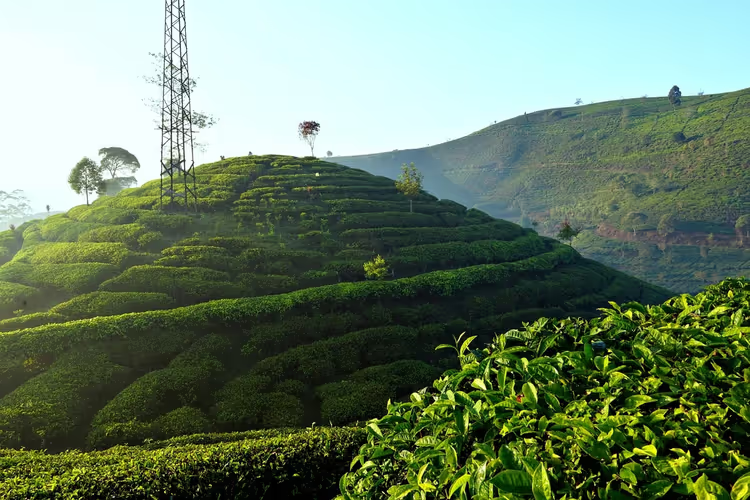
Plantations cover more than two hundred thousand hectares in the highlands of the Central Province. The most aromatic tea comes from the slopes of Nuwara Eliya at an altitude of almost two thousand meters. Below we look at where the name came from, where to see production, and how to brew this tea at home. If you are planning a route around the island, our guide to Colombo and Kandy will come in handy.
Ad: this article contains affiliate links, we earn a commission if you book through them, at no extra cost to you.
Where the name Ceylon tea came from
💡 In short:
- The name "Ceylon" was given to the island by the British, and the modern name Sri Lanka took hold only in the 20th century.
- Tea packages still carry the label "packed in Ceylon".
The Sinhalese, who arrived on the island in the first millennium BC, called their land "Sinhala Dvipa", meaning "land of the Sinhalese". The word "sinhala" translates as "lions". That is why the lion ended up on the coat of arms and flag of Sri Lanka, even though there have been no real lions on the island for a long time.
In 1505 the island was discovered by the Portuguese. They heard the name "Sinhala" as "Seilao". A hundred years later the Dutch displaced them and reshaped the word in their own way: "Zeylan". At the end of the 18th century the British took over the island and fixed the name "Ceylon". Tea began to be grown here precisely under the English colony.
After gaining independence, the island was renamed Sri Lanka, which means "glorious, shining land". The tea brand, however, was not changed. Packages still say "packed in Ceylon", so Ceylon tea today still comes from Sri Lanka.
Tea instead of coffee: the plantations of Taylor and Lipton
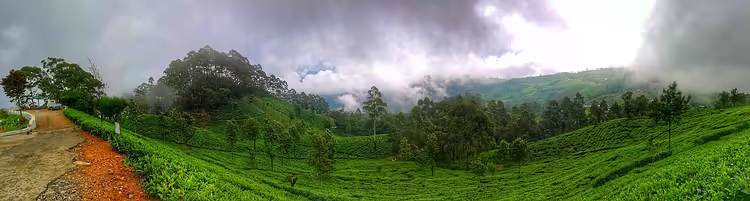
At first the British used the island's humid and warm climate for coffee. Ceylon beans sold well in Europe. But in the second half of the 19th century a fungus destroyed almost all the coffee plantations.
 © Nisal Senanayaka · CC BY-SAPhoto: Nisal Senanayaka, CC BY-SA (https://creativecommons.org/licenses/by-sa/4.0), Wikimedia Commons
The groundwork had already been laid. The English entrepreneur James Taylor had planted the first tea bushes in Loolecondera near Kandy back in 1867. By the time coffee collapsed, his experiment had grown into industrial-scale production. The first batch of Ceylon tea reached London only at the end of the 19th century.
Another Briton, Thomas Lipton, also saw the tea potential of Sri Lankan land. He bought up hectares of plantations at a low price and supplied tea to his own shops without middlemen. The affordable product helped him expand beyond Europe, including into the US market.
Today Sri Lanka ranks fourth in the world in tea exports, after China, Kenya, and India (as of 09/2026, World's Top Exports). Most of what is produced here is black tea. The local climate makes it especially brisk. Green tea, white tea, and oolongs are also produced on the island, but in taste they fall short of competitors from China and Japan.
Tea factories of Nuwara Eliya and Kandy
The aroma of the leaves depends on the region. High-grown tea from Nuwara Eliya and Dimbula is valued more than lowland tea. If you want to see the full production cycle, you need to head to the highland provinces. Both large and very small factories operate there.
One of the oldest sites stands four kilometers from Nuwara Eliya. That is Pedro Tea Estate. The factory was founded at the end of the 19th century, and some of the equipment here dates back to that era. In season you will catch hand-picking of leaves, and then you will see withering, rolling, fermentation, drying, and sorting. Leaves are picked several times a year, and each kilogram of finished tea requires several kilograms of fresh raw material. In the local cafe you can taste the factory's teas and immediately buy the ones you like.
A second option along the way: Damro Labookellie Tea Centre on the road between Kandy and Nuwara Eliya. The factory tour here is free, and at the end you get a cup of freshly brewed Ceylon tea with a view of the valley (ESriLanka). This place used to be called Mackwoods; now the factory operates under the Damro brand.
If you do not want to deal with transport and entry on your own, check out tea factory tours on GetYourGuide. They will also show you the plantations and explain how tea from different regions of the island differs.
Choosing Ceylon tea: altitude and leaf size
The first criterion: the altitude at which the bush grew. High-grown varieties are considered the most valuable, followed by medium-grown, and lowland ones are the cheapest. The region is often indicated on the package with the words high grown, medium grown, and low grown.
Category | Where it grows | Taste |
|---|---|---|
High grown | highlands: Nuwara Eliya, Dimbula | delicate, with floral notes |
Medium grown | mid elevations, Kandy area | smooth, moderately brisk |
Low grown | lowlands and the south of the island | full-bodied, strong |
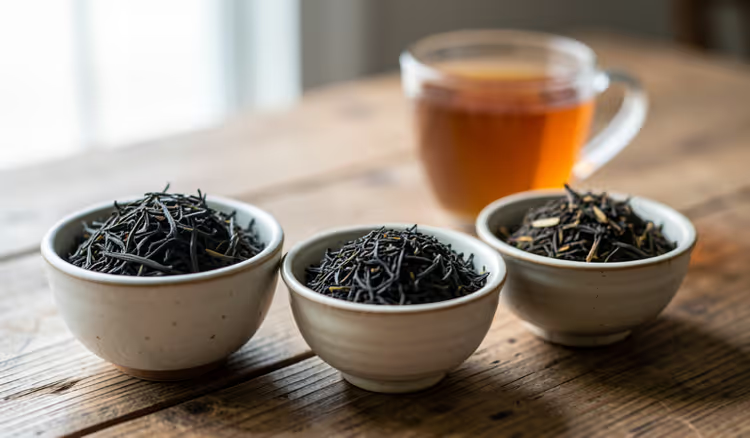
The second criterion: the size of the tea leaves. Whole large leaves belong to the highest category. Tea made from small and broken leaves costs less. The most affordable option: fine dust left over after sorting. Separately there is a premium category made from the top, still unopened leaves.
 AIIllustrative image: AI-generated
For a long time it was believed that genuine Ceylon tea only comes in packages with the lion emblem. That was indeed the case in the past. Today the lion mark belongs to the Sri Lanka Tea Board and is protected as a trademark (Sri Lanka Tea Board). It confirms that the tea was fully grown, picked, and packed on the island. At the same time, the package design is chosen by the brand itself, so the lion may not appear on the pack. The simplest way is to judge by the origin of the raw material.
How to brew black Ceylon tea
Black Ceylon tea is most conveniently brewed the classic English way. Bring the water to the first bubbles and rinse the teapot with it. Then add tea at the rate of one teaspoon per cup.
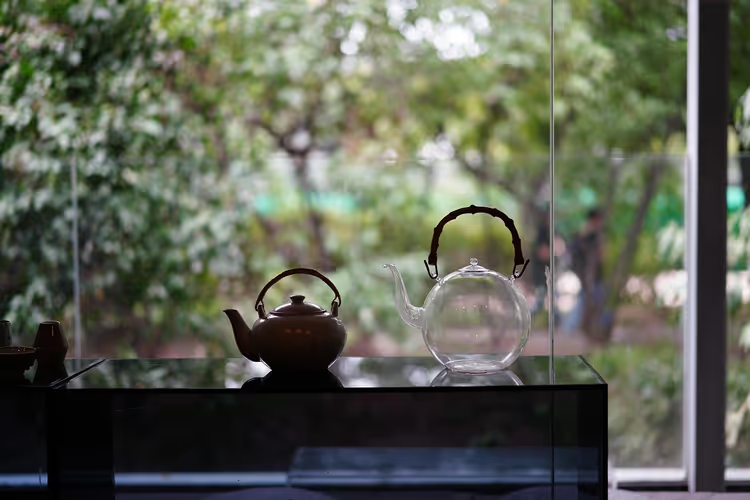
Before brewing, rinse the leaves: pour a little boiling water into the teapot and immediately pour it off. Then add as much hot water as you need for the tea session. Keep the tea covered for a few minutes, but no more than five. Do not dilute the remaining infusion with boiling water. However, the same leaves can be steeped a second time if you pour out the entire drink right away.
In the English style, tea is traditionally drunk with milk. First warm the cups with boiling water, then fill them a quarter full with milk or cream, and only then pour in the tea. Sri Lankans themselves, on the other hand, like finely cut tea and brew it quickly, without elaborate ceremonies. That works for you if you need a strong drink at breakfast.
⁉️🤔 Frequently asked questions
Why is Ceylon tea called that if the country of Ceylon no longer exists?
In colonial times the island bore the name Ceylon and was a British possession. After gaining independence it was renamed Sri Lanka, but the tea brand was left untouched. The name Ceylon Tea was already known worldwide by then, and no one was going to change it in export markets.
How does high-grown Ceylon tea differ from lowland tea?
High-grown plantations lie in a cool zone with frequent mists. The leaf grows more slowly there, so the taste comes out more delicate and aromatic. Lowland tea gains strength faster; it is full-bodied and holds milk well. That is why high grown is valued more, while low grown more often goes into tea bags and blends.
What does the lion mark on the package mean?
The lion mark confirms that the tea was grown, picked, and packed on the island. If the mark is absent, the tea can still be Ceylon, since the design is chosen by the brand. In that case judge by the origin of the raw material.
Can Ceylon tea be steeped a second time?
Yes, strong black Ceylon tea can handle a second steep. The one condition: after the first steep you must pour out the entire drink from the teapot, otherwise the infusion will turn bitter. The second steep is held a little longer than the first. The aroma will be softer, but new flavor notes will come through. For a second steep, whole-leaf tea works better than dust.
Where in Sri Lanka to see tea plantations?
The best views and the full production cycle are found in the highlands of the Central Province. Landmarks: the Pedro Tea Estate factory near Nuwara Eliya and Damro Labookellie Tea Centre on the road to Kandy. Both factories are open to visitors. If you are traveling by train, choose the route through Nuwara Eliya: tea-covered slopes will be outside the window almost the entire time.
In short: what is worth booking
If you like a delicate morning tea: go for high grown from Nuwara Eliya. For a full-bodied drink with milk, lowland low grown works well. For a gift, choose tea grown and packed on the island. The lion mark confirms this, but it may not appear on the pack.
Planning a trip around the island? Then it is worth booking a tea factory tour in advance: book a plantation tour. That way you will get to a tasting and see production with your own eyes.

A small editorial team writing guides for independent travel. We travel ourselves, but we haven’t been everywhere, so we check prices, opening hours and how to get there against official sources.