
















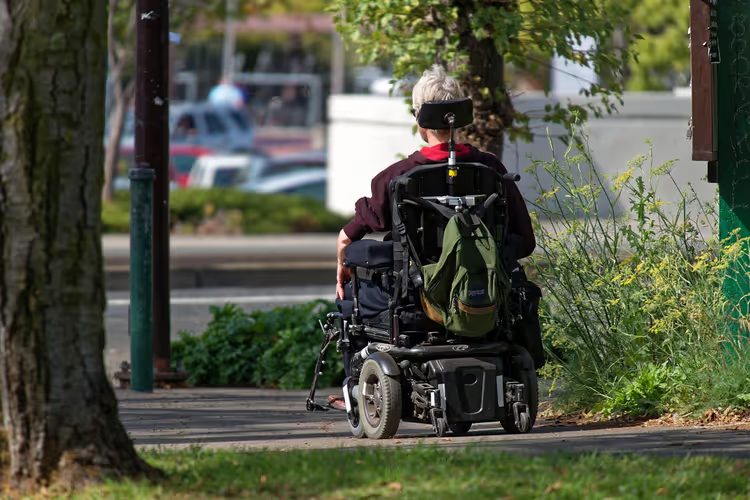
Where to go in a wheelchair: ten cities with barrier-free environments
Planning a vacation in a wheelchair is easier than it seems. We've put together ten cities where elevators, ramps, and clear signage have become the norm rather than the exception.
In Paris, for example, the Louvre offers concessions to visitors with disabilities and their companions (verified on 14.09.2026 on the museum's official website, accessibility page). Similar policies exist in other cities on the list. But there are nuances too: in some places the metro is step-free only at certain stations, and in others you need to book an accessible taxi in advance.
Below you'll find the selection criteria, a quick-reference table, and a breakdown of each city: what works, who it's for, and what catch to keep in mind.
Ad: this article contains affiliate links, we earn a commission if you book through them, at no extra cost to you.
How we compared cities
💡 In short:
- Selection criteria: accessibility information, safety and familiarity, infrastructure, concessions, attitudes toward people with disabilities.
- Check the route to your hotel first, not the hotel itself: station elevators, curbs, availability of accessible taxis.
We start with information. Before you go, you need to know whether the city has accessible transit, accessible hotels, and what to do in an emergency. Without that data, the trip becomes a lottery.
Second point: safety and familiarity of the area. Clear signage and no language barrier reduce stress, which is why many travelers we surveyed preferred to travel within their own country.
Infrastructure matters most. That means sidewalks and curbs, tactile paving with indicators, and working lifts. In the cities on this list, these elements are present on main routes, but not always in courtyards and on the outskirts.
Concessions are on the list too. In some cities you get in free yourself and with a companion, skipping the line, and the policy often applies to foreign tourists. We also consider attitudes toward people with disabilities separately: empathy doesn't remove physical barriers, but it noticeably softens them.
These are the five points we used to compare the cities below. Beaches and restaurants were not part of the assessment.
Our pick: ten cities
# | City | Strong point | What to keep in mind |
|---|---|---|---|
1 | Amsterdam | Adapted bicycles, transit with a trip planner | Cobblestones, metro and trams only partially accessible |
2 | Las Vegas | Hotels with lifts, wide pedestrian paths | Bellagio fountains and carpets on routes |
3 | London | Plenty of information, crossing signals, induction loops | Step-free metro is not fully equipped |
4 | New York | Buses, ferries, and clear planning data | Most metro stations are inaccessible |
5 | Orlando | Parks without shared queues, services for sensory impairments | Check specific park conditions in advance |
6 | Paris | Free entry and priority at the Louvre, accessible city guide | Metro accessibility is uneven |
7 | Shanghai | Smooth sidewalks and curbs in the center, metro with elevators | Little information, street lifts are rare |
8 | Singapore | All transit stations have restrooms, elevators, and indicators | Hotel accessibility data is incomplete |
9 | Sydney | Tactile navigation, accommodation near the center | Accessible restrooms are not everywhere |
10 | Tokyo | Tactile paving, transit assistance | Narrow streets and cramped shops |
Use the table as a cheat sheet for choosing. Below, each city is broken down separately, with details and a list of catches.
1. Amsterdam, Netherlands
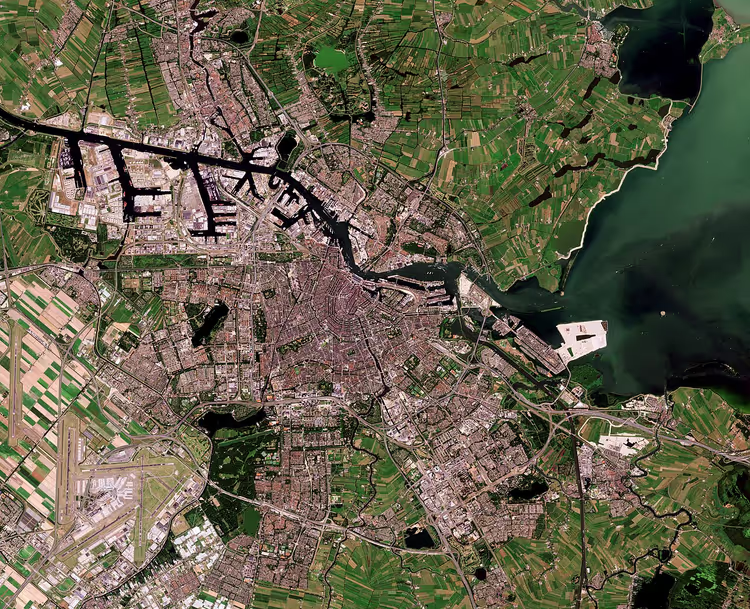 © ESA (European Space Agency) · CC BYPhoto: ESA (European Space Agency), CC BY, Wikimedia Commons
In Amsterdam, equal treatment is enshrined in law, and it shows in the urban environment. In Europe's most bike-friendly city, you can rent an adapted bicycle, including a model with space for a wheelchair. Public transit is linked to an online trip planner, but only partially accessible. Museums offer special audio and tactile tours.
The catches are honest. Old buildings, the metro, and trams remain hard to access in places. Accessible taxis need to be booked in advance, not an hour ahead. Cobblestones in the center are a problem for wheelchair users and people with low vision. There are few practical resources about city accessibility, so build your route from official pages.
- Who it's for: those who want to combine museums with bike routes.
- Not for: if you're planning long walks over cobblestones in a manual wheelchair.
- The catch: the metro and trams are not fully accessible, and accessibility information has to be pieced together.
- Where to stay: Amsterdam hotels on Trip.com
2. Las Vegas, Nevada, USA
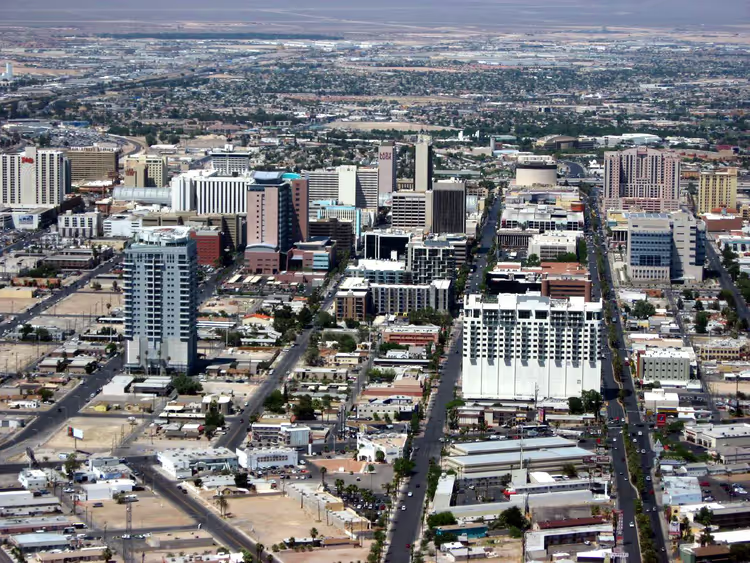 © Ken Lund from Las Vegas, Nevada, USA · CC BY-SAPhoto: Ken Lund from Las Vegas, Nevada, USA, CC BY-SA (https://creativecommons.org/licenses/by-sa/2.0), Wikimedia Commons
The city invests in accessibility not out of altruism: accessible tourism brings money into the budget. Hotels are equipped with ceiling lifts and pool lifts, and provide extra wheelchairs and scooters. Evacuation plans are designed for people with disabilities. Rooms are adapted, pedestrian paths are wide, and transit is inexpensive.
In casinos you'll be offered Braille and large-print cards, and if you have limited hand mobility, machines with simplified controls are available. Attractions are accessible too, including the observation wheel and the cable car. The catches: the Bellagio fountains are hard to reach by wheelchair. Carpeting and crowds get in the way, and there's almost no consolidated information about city accessibility.
- Who it's for: those going for shows, casinos, and hotels with ready-made infrastructure.
- The catch: some spots on the Strip are not wheelchair-accessible, and accessibility data is scattered.
- Where to stay: Las Vegas hotels on Trip.com
3. London, United Kingdom
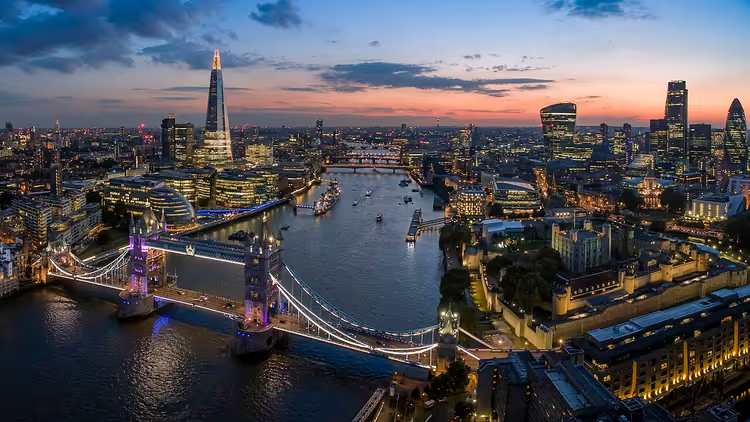 © Ilya Grigorik · CC BY-SAPhoto: Ilya Grigorik, CC BY-SA (https://creativecommons.org/licenses/by-sa/3.0), Wikimedia Commons
London has spent years removing architectural barriers. There's plenty of information for planning vacations and excursions here. Sidewalks and crossings are equipped with visual and audible signals, and hearing induction loops and guide dogs are available in many places.
Black cabs are technically adapted for wheelchairs, though not everyone would call them comfortable. The main problem remains the metro: not every station has an elevator. So plan your route around the city using buses and overground lines. After the Paralympic Games, finding a suitable hotel in London is noticeably easier.
- Who it's for: those who want a museum itinerary with clear navigation.
- The catch: not all metro stations are step-free, so some routes will need to be adjusted.
- Where to stay: London hotels on Trip.com
4. New York, USA
 © Fred Hsu on en.wikipedia · CC BY-SAPhoto: Fred Hsu on en.wikipedia, CC BY-SA (https://creativecommons.org/licenses/by-sa/4.0), Wikimedia Commons
Throughout the city, especially in Manhattan, there are Link-NYC kiosks. Inside you'll find free Wi-Fi, charging, a hearing loop, and Braille signage. Hotels have many accessible rooms, and museums and attractions are generally inclusive. New York gets its highest marks for information accessibility: you can plan your trip in advance and avoid disappointments.
Buses and ferries, as well as most above-ground trains and stations, are wheelchair accessible. You can book a shared ride in an adapted taxi in the city. The catch is predictable: most subway stations are still not accessible for people with disabilities.
- Who it's for: those who get around by bus and ferry and appreciate clear information.
- The catch: don't count on the subway, accessible stations are few.
- Where to stay: New York hotels on Trip.com
5. Orlando, Florida, USA
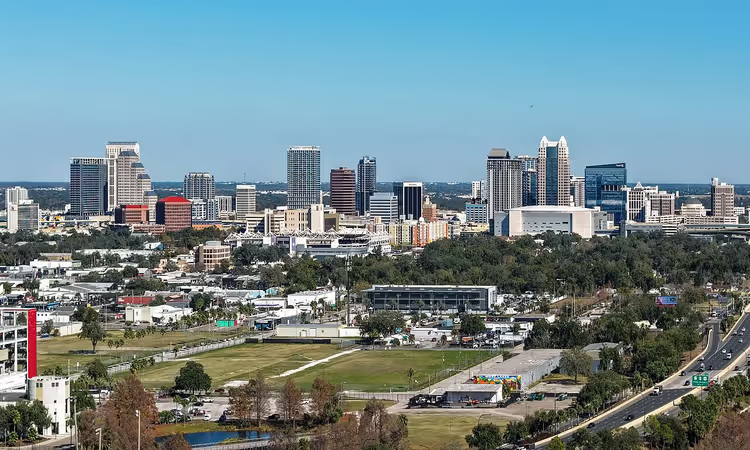 © Quintin Soloviev · CC BYPhoto: Quintin Soloviev, CC BY (https://creativecommons.org/licenses/by/4.0), Wikimedia Commons
Orlando runs on theme parks, and they're accessible to more than just wheelchair users. Visitors with low vision or hearing, as well as those with cognitive and sensory disabilities, get clear routes and staff support. You won't have to wait in the regular lines: the parks offer return times.
Hotels, transportation, and entertainment add inclusive services every year. The city is convenient because the leisure infrastructure is concentrated in one area, so you spend less time getting around. Check the specific park policies in advance, because the rules change.
- Who it's for: families with children and visitors with sensory disabilities.
- Where to stay: Orlando hotels on Trip.com
6. Paris, France
 © Yann Caradec from Paris, France · CC BY-SAPhoto: Yann Caradec from Paris, France, CC BY-SA (https://creativecommons.org/licenses/by-sa/2.0), Wikimedia Commons
Paris got serious about infrastructure and transport accessibility after the Paralympic Games. The metro situation is similar to London and New York: the underground remains a weak spot. But surface transport and museums are ready for wheelchair users. All city buses are equipped for passengers with limited mobility.
The Louvre deserves its own paragraph. Entry for a visitor with a disability and their companion is free, with priority access without queuing at the entrance. In the Assistance area, wheelchairs and folding chairs are provided free of charge against an ID deposit (verified on 09/14/2026 on the museum's official website, louvre.fr). Information about accessible places keeps growing: the accessible Paris guide from the tourist office can be downloaded and printed. Friendly establishments display special logos at the entrance.
- Who it's for: those planning a museum itinerary and wanting priority entry.
- The catch: metro accessibility is uneven, you can't avoid switching to a bus.
- Where to stay: Paris hotels on Trip.com
7. Shanghai, China
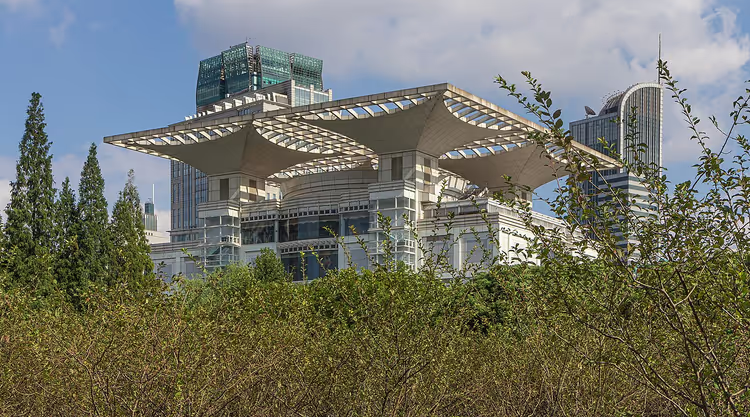 © Stefan Fussan · CC BY-SAPhoto: Stefan Fussan, CC BY-SA (https://creativecommons.org/licenses/by-sa/3.0), Wikimedia Commons
Shanghai gets praise for clear signage and adapted public transport, but accessibility here is uneven. Metro stations are adapted for people with disabilities, but street-level lifts are hard to find. Barrier-free transport is available only on some bus routes.
Sidewalks and curbs in the city center are in good condition. Wheelchair access to shops and restaurants is often limited. Attractions and museums try to offer accessible conditions, but there aren't enough elevators and lifts. Planning information is hard to gather, and there are few adapted hotels. Shanghai requires especially thorough preparation, otherwise you risk hitting a barrier.
- Who it's for: those willing to book a hotel in advance and check accessibility for every stop.
- Not for: a first independent wheelchair trip.
- The catch: little accessibility information, few adapted hotels, street-level lifts are rare.
- Where to stay: Shanghai hotels on Trip.com
8. Singapore
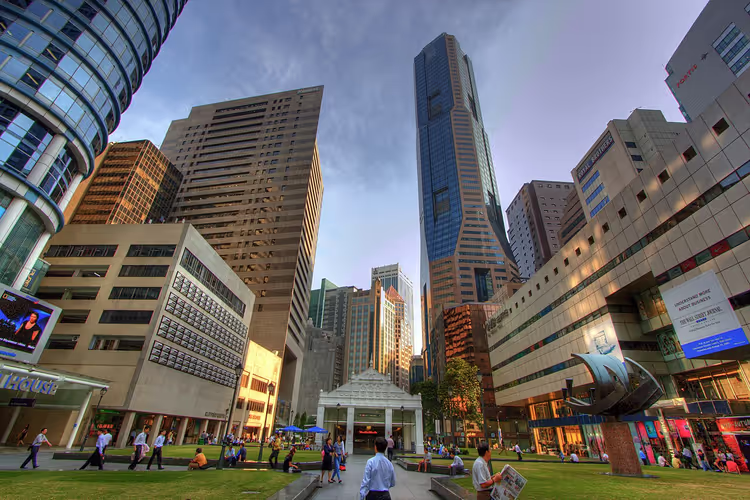 © Ramir Borja . · CC BY-SAPhoto: Ramir Borja ., CC BY-SA (https://creativecommons.org/licenses/by-sa/3.0), Wikimedia Commons
Singapore implemented a barrier-free scheme for everyone at once: wheelchair users, people with vision and hearing loss. Seniors and people with disabilities receive a card that gives extra time to cross the road. Sidewalks and curbs are in excellent condition, and most pedestrian paths and bus stops are accessible to wheelchair users and travelers with sensory impairments.
All rapid transit stations have wheelchair-accessible toilets and wide doorways. Signs are duplicated with tactile ones, and elevators, platforms, and trains have visual and audio indicators. Before doors close, red lights flash, so a hard-of-hearing passenger sees the signal in time. There's only one catch: accessibility information for individual hotels and venues could be more complete.
- Who it's for: those who want minimal barriers along the entire route.
- The catch: accessibility data for specific hotels and venues is incomplete.
- Where to stay: Singapore hotels on Trip.com
9. Sydney, Australia
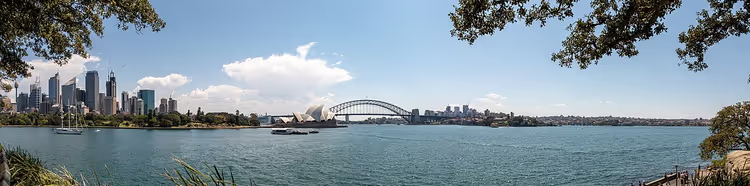 © Dietmar Rabich · CC BY-SAPhoto: Dietmar Rabich, CC BY-SA (https://creativecommons.org/licenses/by-sa/4.0), Wikimedia Commons
Sydney has plenty of suitable accommodation for people with disabilities. Apartments and hotels are located near attractions, shops, and restaurants. Most venues are equipped for wheelchair users, but toilet access remains a problem. Public transport is constantly being upgraded.
The Legible Sydney project serves blind and low-vision visitors. It's a navigation system in the city center: thousands of tactile and Braille signs, convenient maps, and information pillars along routes. Keep the distance in mind: Australia is far away, and the flight takes many hours.
- Who it's for: those who want to live in the center and get clear navigation for blind travelers.
- The catch: accessible toilets are not available in every venue, and the journey takes almost a full day.
- Where to stay: hotels in Sydney on Trip.com
10. Tokyo, Japan
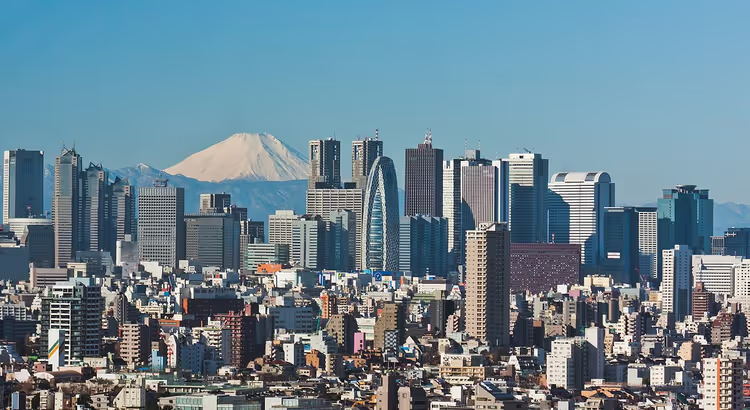 © Morio · CC BY-SAPhoto: Morio, CC BY-SA (https://creativecommons.org/licenses/by-sa/3.0), Wikimedia Commons
Tactile paving was invented in Japan, so in Tokyo it is everywhere: on platforms, stations, and along streets. Main streets have lowered curbs. Railway and metro staff will personally escort you to the right platform if needed.
There are weak spots too. Smaller streets often have no sidewalk, so a wheelchair shares the road with cars and bicycles. Shops in the center are cramped: the lack of space shows in the width of the aisles. Book accommodation and taxis in advance, but cherry blossom parks and major attractions are accessible.
- Who it's for: those who travel along main streets and want assistance on public transport.
- The catch: narrow streets without sidewalks and cramped shops limit maneuverability.
- Where to stay: hotels in Tokyo on Trip.com
⁉️🤔 Frequently asked questions
Where is museum entry free for a traveler with a disability?
In Paris. At the Louvre, a visitor with a disability and their companion get in free and skip the line; you need a document confirming your status (as of 09/2026, visiting rules). In London and New York there is no separate tourist discount, so check the conditions on museum websites in advance.
Which city has a metro that works for wheelchairs?
Singapore. Every rapid transit station has wheelchair-accessible toilets, wide doorways, tactile guidance, and elevators with indicators. In London, New York, and Paris the metro is only partially accessible, so it is better to plan routes around buses and surface lines, and check stations individually.
Where will I not have to stand in line?
In Orlando. Theme parks give people with disabilities a return time, so the general queue does not apply to you. In Paris you can skip the line at the Louvre. In Las Vegas hotels and transport are well adapted, but carpeting and dense crowds slow you down.
Which cities require especially thorough preparation?
Shanghai. Barrier-free transport there exists only on some bus routes, street lifts are hard to find, and information about accessible hotels is incomplete. In Amsterdam add cobblestones in the center to that, and in Tokyo narrow streets without sidewalks and cramped shops.
Do I need to book taxis and accommodation in advance?
Yes. In Amsterdam adapted taxis are booked in advance, and in Tokyo it is better to arrange accommodation and a car before the trip.
In short: what is worth booking
The short version: choose a city based on your type of limitations, not on a pretty picture.
If you use a wheelchair and transport matters: pick Singapore, New York, or London. If you are traveling with children and want parks without queues: Orlando. If you are a traveler with low vision: Sydney with its tactile navigation. If you need museums with free entry: Paris. If you are not ready to sort out details on the ground: Shanghai is not your option yet.
Accommodation in the cities on this list gets booked up early. First check the accessible route to the hotel, then book accommodation and tickets.

A small editorial team writing guides for independent travel. We travel ourselves, but we haven’t been everywhere, so we check prices, opening hours and how to get there against official sources.