

















Where to fly in winter: four warm destinations in Latin America
Winter in Europe is cold and gray, while Latin America is in its dry season and hot. In December, January, and February, the Caribbean, Mexico, and Costa Rica have a dry winter: the sea is warm, rains are short, and you'll see the sun almost every day.
We picked four destinations that Europeans fly to most often in winter: Punta Cana in the Dominican Republic, Tulum in Mexico, San Jose in Costa Rica, and Bahia in Brazil. Below you'll find what makes each one different, how to get there, and who it's for.
Book your tickets early, because prices rise fastest before the Christmas holidays, and good hotels get snapped up as early as fall.
💡 In short:
- From December through February, Latin America has its dry season, so it's the best time for a warm getaway.
- The list includes four destinations: Punta Cana, Tulum, San Jose, and Bahia.
- Flights from Europe involve a connection, and tickets get more expensive closer to the holidays.
Ad: this article contains affiliate links, we earn a commission if you book through them, at no extra cost to you.
1. Punta Cana, Dominican Republic
 © Oleg Yunakov · CC BY-SAPhoto: Oleg Yunakov, CC BY-SA (https://creativecommons.org/licenses/by-sa/4.0), Wikimedia Commons
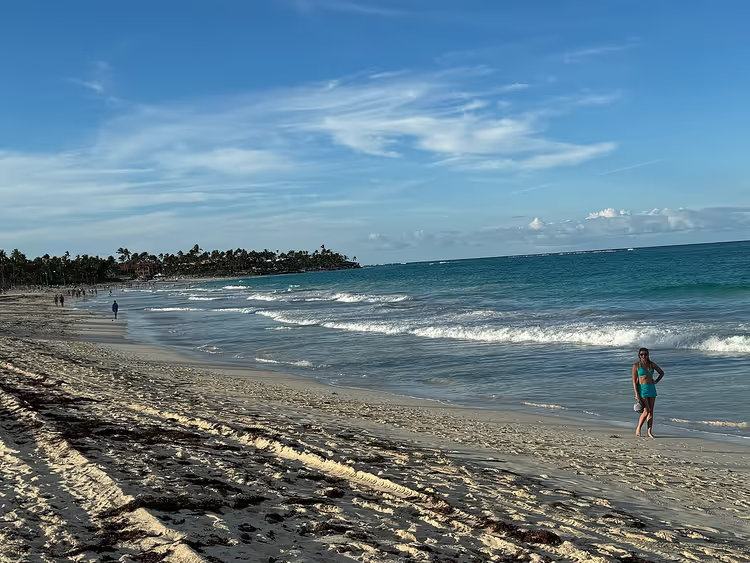
Punta Cana occupies the eastern tip of the Dominican Republic. A long strip of white-sand beaches with calm water runs along the coast. Behind it sit large resort complexes, which is why the area is considered one of the most touristy in the country.
The region's main beach is called Bavaro. It's wide, lined with palm trees, and naturally protected from waves, so families with kids come here. The water near the shore is often called some of the clearest in the Caribbean. Swimming is comfortable even for beginners because the bay is sheltered from strong waves.
New hotels have opened in the region in recent years, and conditions for family vacations have improved. Winter weather is more stable than in other months. December and January bring the most sun, and short rains usually pass at night.
You spend the morning on the beach, then move into the shade or to the pool in the afternoon to avoid sunburn. The activities are simple: snorkeling on the reef, kayaking, trips to Saona Island, and excursions inland. The resort area is calmer than major cities, but in the evening it's best not to wander far from your hotel.
- How to get there: flights from Europe connect through Madrid, Paris, or Frankfurt, then a transfer to the hotel.
- Cost: in high season, all-inclusive resorts are at their most expensive, so book early.
- Who it's for: families with kids and anyone who wants a beach without long transfers.
- Not for: fans of packed itineraries will find little going on here.
2. Tulum, Mexico
 © Haakon S. Krohn · CC BY-SAPhoto: Haakon S. Krohn, CC BY-SA (https://creativecommons.org/licenses/by-sa/3.0), Wikimedia Commons
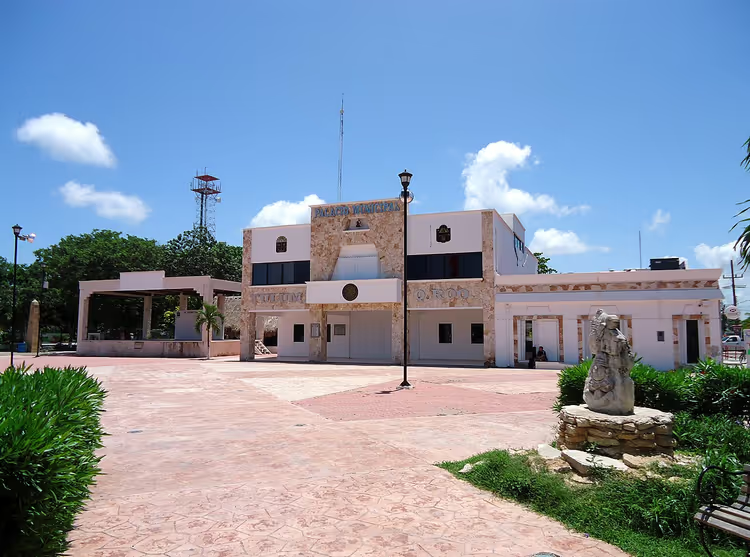
Tulum sits on the Caribbean coast in the state of Quintana Roo. It's a rare case where Mayan ruins come right up to the sea: the ruins stand on a cliff, with a beach below and jungle and cenotes beyond. So people come here for history and swimming at the same time.
In the past, the only way to reach Tulum was through Cancun airport. Now the city has its own international airport, Felipe Carrillo Puerto, about 30 km from the center (as of 09/2026, official airport website). Along with it, the Tren Maya train launched: the line connects Tulum with Cancun, Valladolid, Chichen Itza, Merida, and Bacalar (according to Tren Maya).
Winter in Tulum is dry and hot, and the dry season lasts until April. Beaches in the center are busy, while it's quieter south of the city, toward the biosphere reserve. Cenotes are best visited on weekdays: on weekends, local families come out.
Direct flights from Europe are still limited, so you'll usually fly through Cancun or the US. What to see: the ruins on the cliff, Gran Cenote, and the Sian Ka'an Biosphere Reserve. If you plan to explore outside the city, a rental car will be more convenient than taxis.
- How to get there: fly to TQO or Cancun, then take an ADO bus or the train to Tulum station.
- Cost: entry to the ruins and cenotes is paid, so buy tickets online and in advance.
- Who it's for: those who want the sea along with history and nature.
- The catch: in high season, the ruins and beaches are crowded.
see hotels in Tulum on Trip.com
3. San Jose, Costa Rica
 © Xlionheartx · CC BYPhoto: Xlionheartx, CC BY (https://creativecommons.org/licenses/by/3.0), Wikimedia Commons
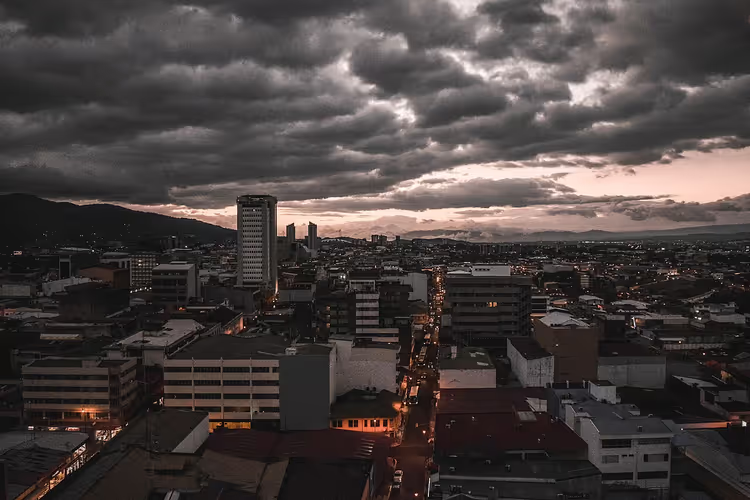
Costa Rica suits those who travel for nature. It has volcanoes, cloud forests, tropical beaches on two oceans, and most of its territory under protection. The capital sits in a valley surrounded by mountains and volcanoes.
San Jose is usually seen as a transit point. That's a mistake: the capital is a convenient place to start your route. The city has museums, markets, and colonial quarters, and volcanoes and coffee plantations begin right nearby.
Safety in the country is better than in neighboring countries, but San Jose itself has the highest rate of theft in Costa Rica. Keep your phone and documents at the hotel, don't walk empty streets after dark, and call taxis through an app. You'll feel more at ease in the Escazú and Santa Ana neighborhoods, which are usually considered safe.
The rest of the country is considered safe, including for solo travelers. From the capital, the classic route continues: Arenal Volcano, Monteverde, Manuel Antonio, and Tortuguero, where people come to see turtles. Travel between them takes from a couple of hours to half a day.
- How to get there: fly to San Jose with a connection, then use shuttles and buses.
- Who it's for: those who want volcanoes, jungle, and wildlife instead of lounging by the pool.
- Not for: those expecting a quiet beach vacation at a single hotel.
- The catch: there's a lot of driving between locations.
4. Bahia, Brazil
 © Cleide Isabel · CC BYPhoto: Cleide Isabel, CC BY (https://creativecommons.org/licenses/by/2.0), Wikimedia Commons
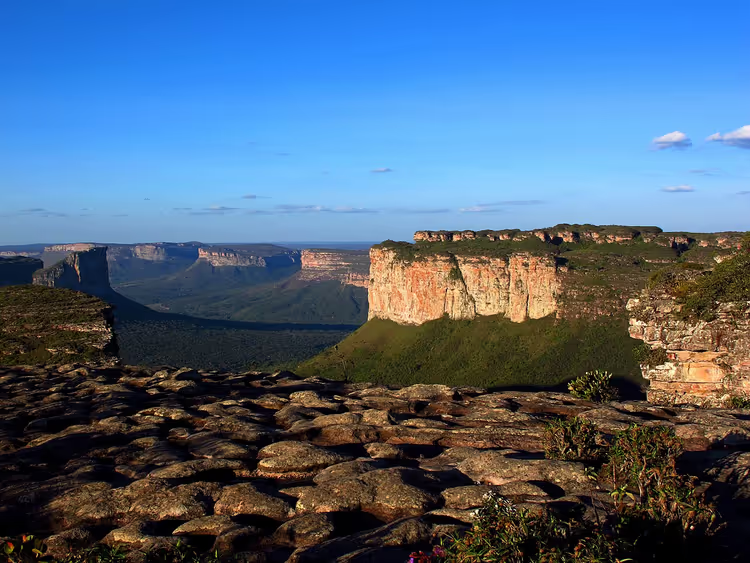
Bahia lies in northeastern Brazil. It's a state with a long coastline and a strong Afro-Brazilian culture, considered the cultural heart of the country. People come here for the music, the food, and the beaches, of which there are truly many.
The state capital, Salvador, sits on several levels above the bay. The upper city is built up with colonial houses, including the Pelourinho quarter. The lower city is closer to the port and markets, and the Lacerda Elevator connects the two.
To the south begins the state's resort coast. In Trancoso, people come for the Quadrado square with its colorful houses and for long beaches like Praia do Espelho. Further south, there are fewer people and the sand strip is wider.
Winter in Bahia is hot and humid, with short but heavy rains. It's best to hit the beach in the morning, and plan excursions or travel around the state for the afternoon. Cards are accepted almost everywhere, but a little cash in reais will come in handy.
- How to get there: fly to Salvador with a connection in Lisbon or Sao Paulo.
- Who it's for: those who want culture, music, and long beaches without crowds.
- Not for: those not ready for humid heat and long transfers.
- The catch: distances between towns are large.
compare hotels in Salvador on Trip.com
⁉️🤔 Frequently asked questions
When is the best time to go for winter holidays?
From December through February, Latin America has its dry season. In the Caribbean and Mexico, rains are at their lowest from December through April. If you want stable weather and are ready for high-season prices, plan your trip for the first half of January.
Where is it easiest to fly to from Europe?
The easiest destinations to reach are Punta Cana and Cancun, from which it's easy to get to Tulum. Flights to Costa Rica and Brazil are more expensive and longer. Compare prices by date: the difference between adjacent days can be significant.
Do I need a visa?
For short tourist trips, EU citizens usually don't need a visa for the Dominican Republic, Mexico, Costa Rica, or Brazil. Check the exact requirements in advance on official consulate websites: rules change. Your passport should be valid for several more months after the trip.
Where is it safest?
The calmest areas are the resort zones of the Dominican Republic and Costa Rica outside the capital. In San Jose and major Brazilian cities, the risk of theft is higher. Keep valuables at the hotel and don't walk empty streets at night.
What should I choose with kids?
With kids, Punta Cana is the easiest option: flat beach, calm water, and all-inclusive hotels. Tulum has more excursions and driving, and Costa Rica involves a lot of transfers. Choose a destination where you have one base and don't need to change hotels often.
In short: what to book
If you have two weeks and want a beach without transfers, book a hotel in Punta Cana. If Mayan ruins and cenotes matter, choose Tulum. If you're drawn to volcanoes and wildlife, start with San Jose. If you want music, culture, and long beaches, go to Bahia.
- Want a warm sea right at your hotel: Punta Cana.
- Want history and nature: Tulum.
- Want a route and volcanoes: San Jose.
- Want culture and beaches without crowds: Bahia.

A small editorial team writing guides for independent travel. We travel ourselves, but we haven’t been everywhere, so we check prices, opening hours and how to get there against official sources.