
















What to see in Croatia in summer: 10 festivals of 2026
In summer, Croatia lives on festivals. Films are shown in a Roman arena, reggae used to play at a fortress, and baroque music sounds in the monasteries of Korčula.
Planning a vacation around a specific event is harder than it seems. Dates shift every year, some festivals from old roundups closed long ago, and tickets for the arena in Pula sell out in advance.
Below are 10 summer events in Croatia: dates, tickets, and honest catches. Pick one and build your trip around it.
Ad: this article contains affiliate links. We earn a commission if you book through them, at no extra cost to you.
1. Bluefish festival in Zadar
💡 In short:
- Summer festivals in Croatia run from late June to mid-September.
- Get tickets for the arena in Pula and evenings in Dubrovnik weeks ahead, not on the day of the show.
- Dates and tickets: 09/2026, verified on the official Pula Film Festival website
 © dronepicr · CC BYPhoto: dronepicr, CC BY (https://creativecommons.org/licenses/by/2.0), Wikimedia Commons
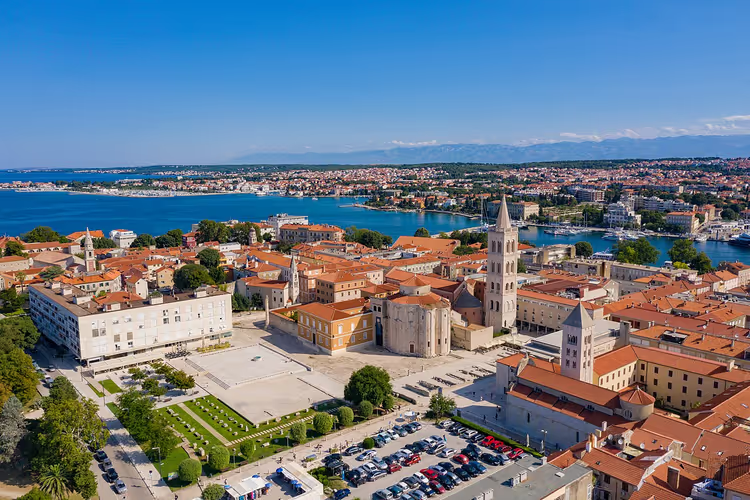
Zadar is called the oldest city in Croatia, and in late June its harbor turns into one big fish restaurant. Local chefs grill freshly caught bluefish right on the waterfront, music plays, and you walk between tables choosing where to sit. The point of the celebration is the food itself, not a big stage: people come here to have dinner and look at the water.
Come at sunset, when the heat eases and the lights come on over the port. You can also take a walk through the old town: a pedestrian street with cafes leads from the waterfront to the Roman forum. If you are passing through Zadar, one evening is enough to get the atmosphere.
2. Seasplash festival near Šibenik
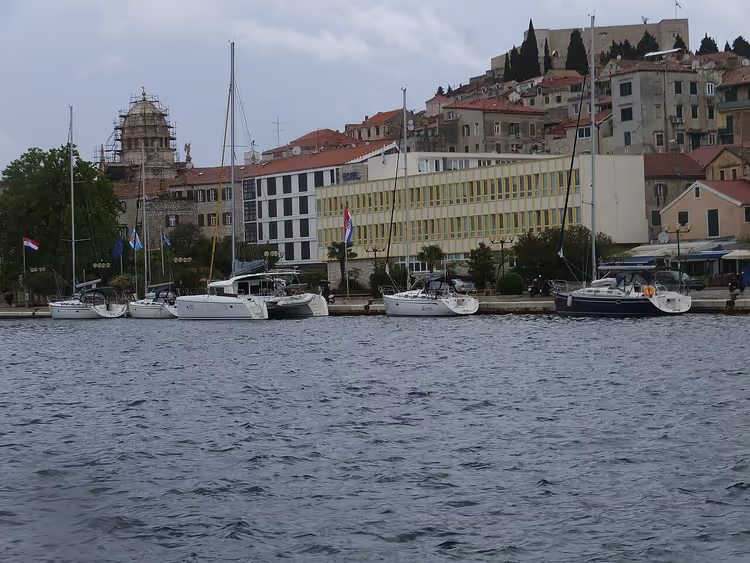
Salute Seasplash was the main reggae event on the Adriatic: four days of dub and Caribbean sounds on the Martinska coast near Šibenik. In July 2023 the festival played its 21st edition and closed, so today it is more a piece of music scene history than a stop on your itinerary (as of: 09/2026, official Seasplash website).
Day zero of the final edition took place at St. Michael's Fortress. The climb up there is still worth doing: it is about ten minutes on foot from the old town, and the sunset from there is the best view around. The local scene was carried on by the Sea Sound project, which the organizers called the successor to Seasplash. From there, check the club listings in Šibenik and the city's calendar of new summer events.
- The catch: the festival in its old format is gone, only recordings and new projects by the organizers remain.
 © lienyuan lee · CC BYPhoto: lienyuan lee, CC BY (https://creativecommons.org/licenses/by/3.0), Wikimedia Commons
3. Dubrovnik summer festival
Dubrovačke ljetne igre takes over the entire old town from mid-July to late August. Plays and concerts are performed in squares, at the Rector's Palace, and in front of the Cathedral, so in the evening you simply walk the streets and listen to music. The program includes theater, classical music, ballet, and folklore: over the years it has staged Shakespeare's "Twelfth Night" and hosted a concert by pianist András Schiff.
 © Jules Verne Times Two · CC BYPhoto: Jules Verne Times Two, CC BY (https://creativecommons.org/licenses/by/4.0), Wikimedia Commons
Tickets for evenings at the Rector's Palace sell out in advance, so book hotels in Dubrovnik on Trip.com together with your tickets, not in the last week. The finale is usually a gala concert in front of the cathedral; check the program on site.
4. Hvar summer festival
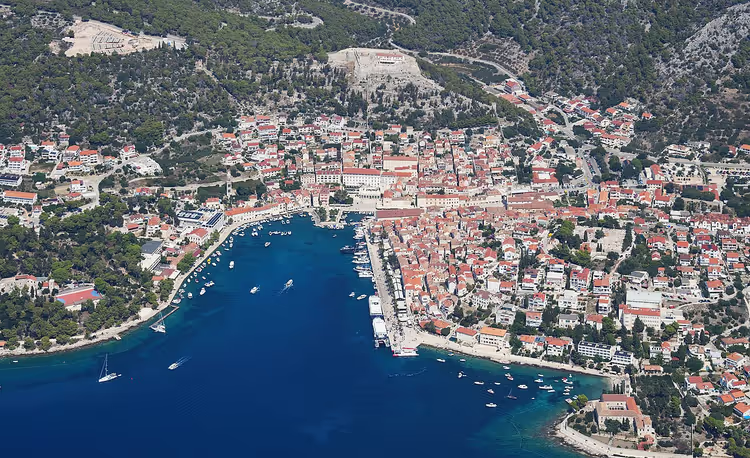
The island of Hvar has hosted its summer festival for over half a century, and it stretches across three months: from late June to mid-September. Concerts, ballet, and folklore evenings take place in Hvar, Stari Grad, and Jelsa, with stages set up in courtyards, squares, and by the sea.
 © Carsten Steger · CC BY-SAPhoto: Carsten Steger, CC BY-SA (https://creativecommons.org/licenses/by-sa/4.0), Wikimedia Commons
That way you listen to music right among the stone facades and can swim between concerts. The program for each month is published in advance, so it is easy to plan your route around the island around a specific evening. Book accommodation early: in August, options on the island run out quickly, especially in Hvar itself.
5. Disco Goulash festival on Vis
Disco Goulash was conceived as a crowdfunded festival, and that is its defining feature: the program is put together with money from guests and partners. It takes place in September in Komiža on the island of Vis. During the day you get beach parties, in the evening live performances by international artists, and in between, swimming in the bays.
You reach the island by ferry from Split, and it is better to leave your car on the mainland. The lineup is announced closer to August, so buy tickets after the program is published. Komiža itself has few hotels, so look for accommodation early or consider options on neighboring Hvar.
 © dronepicr · CC BYPhoto: dronepicr, CC BY (https://creativecommons.org/licenses/by/2.0), Wikimedia Commons
6. Split Summer Festival
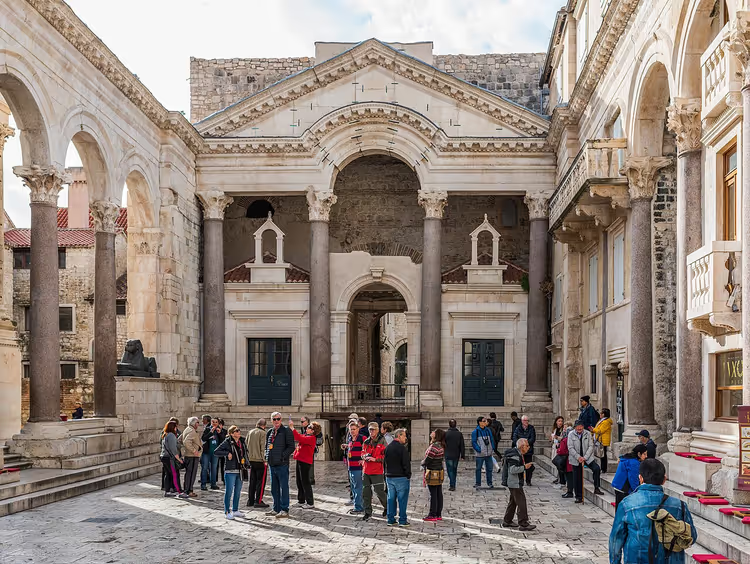
The Split Summer Festival performs against the backdrop of Diocletian's Palace: opera and concerts are staged in the Peristyle, among ancient columns. The program runs from mid-July to mid-August: jazz, classical music, dance, theater, and opera. The season opens with a major production, which in different years has included Verdi's Simon Boccanegra.
 © Bengt Nyman from Vaxholm, Sweden · CC BYPhoto: Bengt Nyman from Vaxholm, Sweden, CC BY (https://creativecommons.org/licenses/by/2.0), Wikimedia Commons
Besides the Peristyle, concerts take place in Sustipan Park on the waterfront and at the Meštrović Gallery. The day before the opening, a two-day blues festival is held on the Sustipan peninsula. Look for hotels in Split on Trip.com near the waterfront: on opening days the old town is packed, and available rooms get more expensive.
7. Pula Film Festival
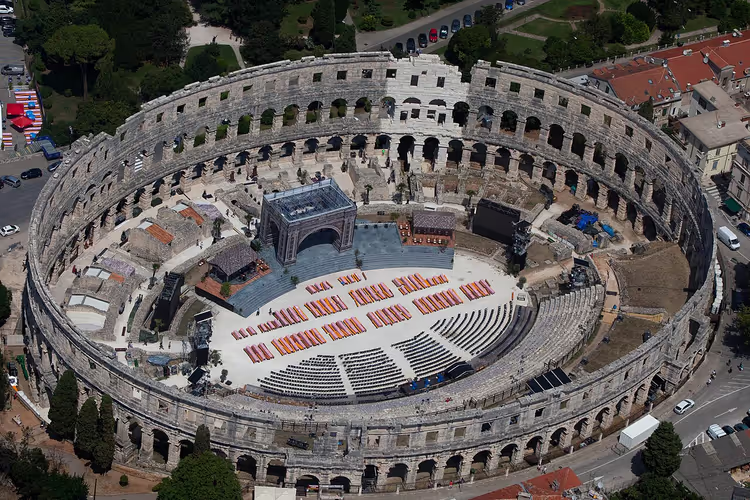
The Pula Film Festival screens films in the arena of an ancient Roman amphitheater. It is a rare case where audiences sit where people once watched battles. In 2026, the festival ran for the 73rd time, with awards presented on July 15 at the Istrian National Theater (as of 09/2026, official website).
 © Jeroen Komen from Utrecht, Netherlands · CC BY-SAPhoto: Jeroen Komen from Utrecht, Netherlands, CC BY-SA (https://creativecommons.org/licenses/by-sa/2.0), Wikimedia Commons
Besides the arena, screenings take place at the Valli Cinema and the Istrian National Theater: Croatian premieres, a regional competition, documentaries, and animated films. The top award is called the Golden Arena, the country's national film prize, given to the best Croatian films. Check tickets and the schedule in advance: screenings run at several venues around the city, and evening sessions sell out first.
8. Cinehill film festival near Motovun
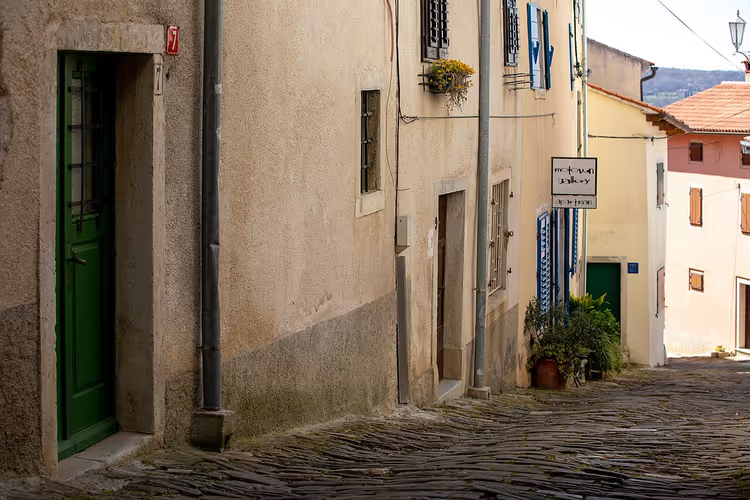
If you are already in Istria, add the small Cinehill festival near Motovun to your Pula trip. It runs for a few days in late July and turns the area around the town into an eco-camp at the foot of the hill: camping is free for ticket holders (as of 09/2026, festival website).
The program features documentaries and independent films, with concerts after the screenings. The festival also accepts competition entries from small production companies, so it is interesting for filmmakers as well. Motovun sits on a hill, and the walk up takes about half an hour, so wear comfortable shoes.
 © Jernej Furman from Slovenia · CC BYPhoto: Jernej Furman from Slovenia, CC BY (https://creativecommons.org/licenses/by/2.0), Wikimedia Commons
9. Festival on Dugi Otok island
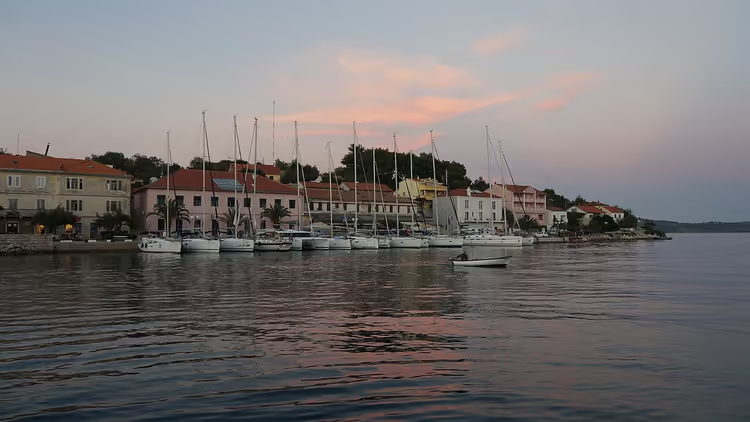
The island of Dugi Otok in the Zadar archipelago forgets about quiet for a few days in early August. The summer fiesta begins in the village of Sali, and it opens with Fishermen's Night: the port turns into an open-air restaurant, and local fishermen grill their catch.
 © Tatyana Peshkova · CC BY-SAPhoto: Tatyana Peshkova, CC BY-SA (https://creativecommons.org/licenses/by-sa/4.0), Wikimedia Commons
After that, two days of songs, live music, and sports competitions. The main attraction of the program, the donkey races, draws more spectators than any concert. Ferries and catamarans run to the island from Zadar; during the fiesta, buy tickets for them in advance.
10. Korkyra Baroque on Korcula
Korcula looks like a film set: Venetian facades, narrow alleys, stone staircases. In early September, baroque music joins them. The Korkyra Baroque Festival holds concerts in the Town Hall Atrium, St. Mark's Cathedral, and St. Nicholas Monastery (as of 09/2026, official website).
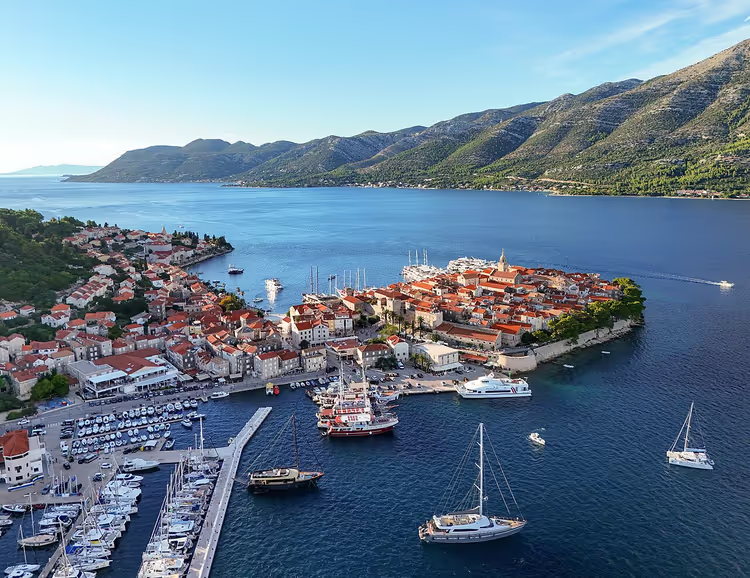 © Quintin Soloviev · CC BYPhoto: Quintin Soloviev, CC BY (https://creativecommons.org/licenses/by/4.0), Wikimedia Commons
The program brings together baroque ensembles and soloists from different countries, and some evenings take place outdoors, so bring something warm for your shoulders. A seaside vacation is easy to combine with music: a road runs along the shore to the town beaches, and you can walk around the old town in one relaxed evening.
⁉️🤔 Frequently asked questions
When does festival summer start in Croatia?
The first events kick off in late June: the bluefish festival in Zadar and concerts on Hvar. The main wave falls in July and August, and the season closes with baroque evenings on Korčula in early September. Dates shift every year, so plan your trip with a few days of buffer.
Do I need to buy tickets in advance?
For Pula Film Festival screenings and evenings at the Rector's Palace in Dubrovnik, yes, tickets sell out weeks ahead. Street concerts and port city festivals are usually free to enter. Check the lineup on official festival websites, where current dates and prices are listed.
Where should I stay during a festival?
In Dubrovnik, Split, and Hvar, available rooms run out fast in summer, and prices are higher than in neighboring towns. It's cheaper to stay half an hour away and get there by bus or ferry. In Istria, Pula or Rovinj make a convenient base, with easy access to both the arena and Motovun.
Can I combine two festivals in one trip?
Yes, if you check distances on a map. Pula and Motovun are close together in Istria, Hvar and Korčula are connected by ferries, and Split and Šibenik are linked by a bus route. The distance between Dubrovnik and Istria is greater, about six hours by car, so it's better to pick one half of the country.
What if a festival has shut down?
That happened with Seasplash near Šibenik: the last edition took place in 2023, and the Sea Sound project took its calendar slot (official Seasplash website). Small local events have similar stories, so before booking accommodation, check the current season's lineup rather than old roundups.
In short: what to book
Festival summer in Croatia comes down to two things: tickets for specific dates and accommodation near the venue. If you have a week in July, go with Split and Dubrovnik. Both summer festivals run from mid-July in the same part of the country. If you're traveling in August, plan for Split and the islands, where there's more flexibility and fewer crowds. For September, choose Korčula and Vis: baroque concerts and beach evenings go on without the July heat.
- If you have 3-4 days: Pula and Motovun, one trip through Istria.
- If you have a week and want the sea: Split, Hvar, and Dugi Otok with ferry transfers.
- If you're going for the music: Dubrovnik in July and Korčula in September.
Check out tours and excursions in Croatia on GetYourGuide and hotels in Croatia on Trip.com to lock in your dates ahead of time.

A small editorial team writing guides for independent travel. We travel ourselves, but we haven’t been everywhere, so we check prices, opening hours and how to get there against official sources.