
















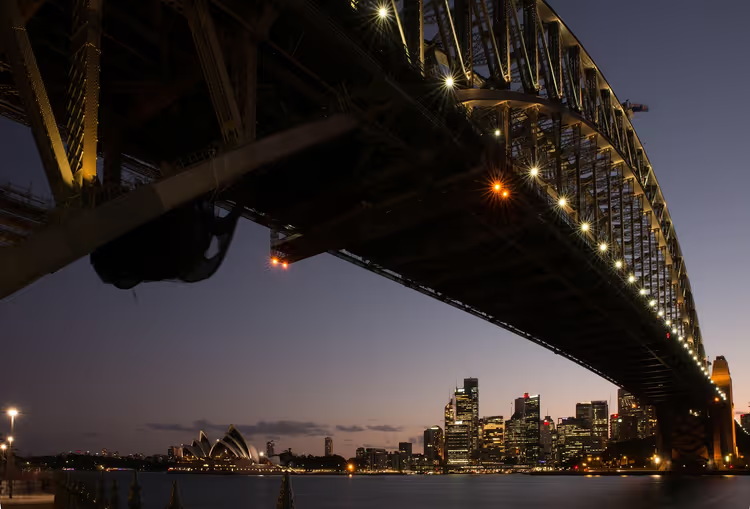
Active holidays in Australia: diving, surfing and snowy mountains
Australia starts where an ordinary beach vacation ends. One continent packs in coral reefs, deserts, snow-capped peaks, and rainforests. The distances between them run into hundreds of kilometers, and the seasons run opposite to European ones. The Great Barrier Reef, for example, stretches for nearly 2,300 km and includes about 3,000 individual reefs.
Planning an adrenaline trip is harder than planning a beach trip. You need to pick the season, spread diving, surfing, and mountains across your days, account for park rules and insurance conditions. Below we've gathered the destinations that active tours in Australia and New Zealand are built around, and noted what to check before booking.
You'll see where to dive, where to catch a wave, and which months to head to the snow-capped mountains. We also cover Tasmania, Darwin, and New Zealand separately, as they're usually added to an Australian itinerary.
Ad: this article contains affiliate links, we earn a commission if you book through them, at no extra cost to you.
Diving: the Great Barrier Reef and Kangaroo Island
💡 In short:
- Reef diving starts from Cairns and Port Douglas, snorkeling is accessible to beginners.
- Kangaroo Island is known for shipwrecks and cold currents.
The reef runs along the entire Queensland coast, but the easiest diving is in the north. Boats depart from Cairns and Port Douglas, stopping along the way at outer sections where walls drop down for dozens of meters. For a first dive, snorkeling is enough: the reef comes right up to the surface.
Experienced divers book a liveaboard. The boat heads out for several days, and during that time you see different sections, including Cod Hole and Ribbon Reefs. This format costs more than a day trip, but you don't waste time getting back to port.
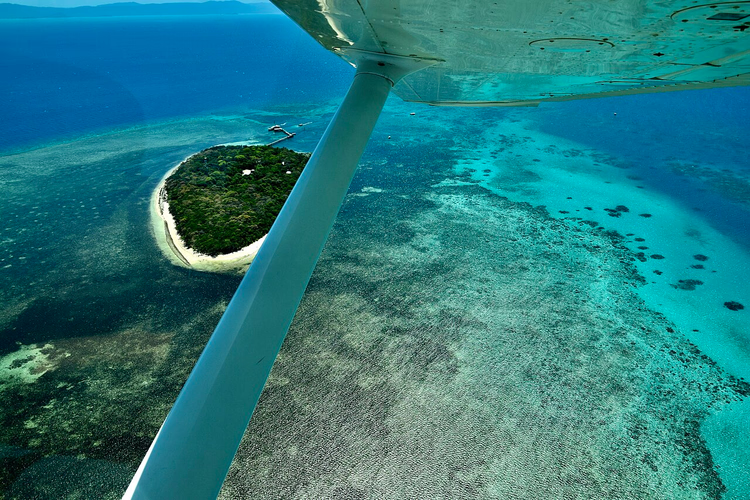 © Ank gsx · CC BY-SAPhoto: Ank gsx, CC BY-SA (https://creativecommons.org/licenses/by-sa/4.0), Wikimedia Commons
The reef has marine park status, so fishing and coral collecting are prohibited in some zones. Zones are marked on maps, and violations carry a fine (according to marine park rules), and the guide holds a briefing before the dive.
- How to get there: the main ports are Cairns, Port Douglas, and Townsville.
- When to go: the dry season from May to October gives the best visibility.
- The catch: in summer, jellyfish appear in the water, and you have to dive in a protective suit.
Farther south, off Kangaroo Island, divers look for traces of shipwrecks. Currents here are colder and visibility is lower, but the underwater walls hold remains of sunken vessels. You can combine diving with watching the island's wildlife.
Surfing on the Gold Coast and at Bells Beach
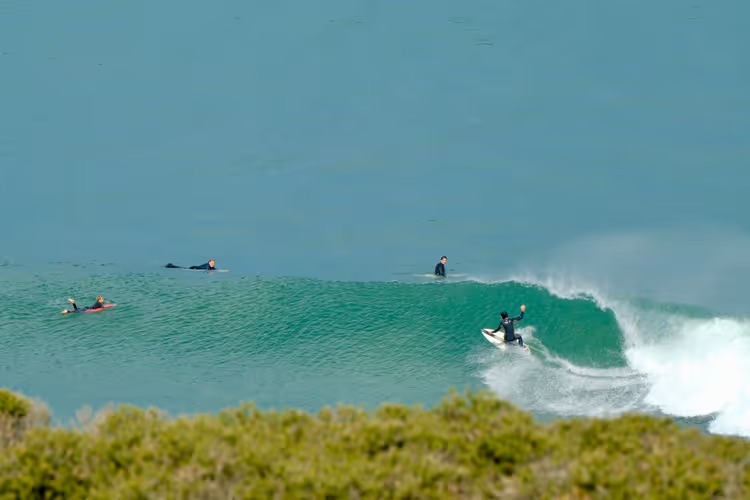
You can catch waves in Australia year-round, but for a first trip three regions are enough. In Queensland, it's the Gold Coast: long sandy beaches and gentle surf, easy for learning. In Victoria, it's Bells Beach near Torquay, where a world tour event takes place. In South Australia, it's the Fleurieu Peninsula.
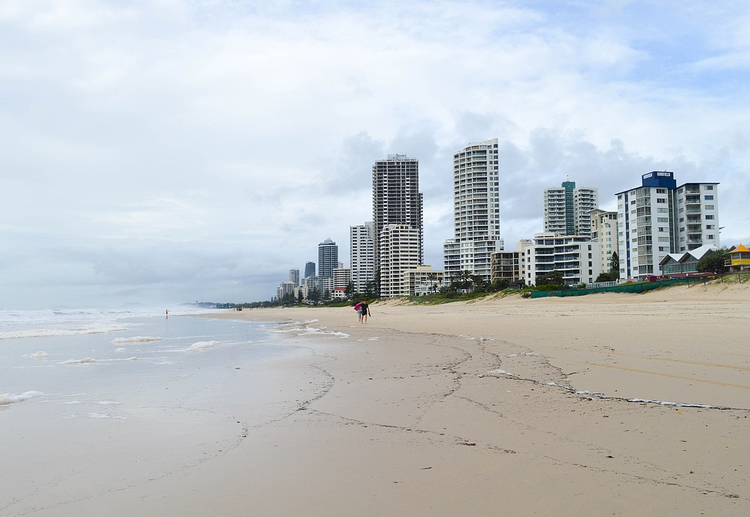 © Francisco Anzola · CC BYPhoto: Francisco Anzola, CC BY (https://creativecommons.org/licenses/by/3.0), Wikimedia Commons
Surf schools operate on almost every major beach. A group lesson includes a board, wetsuit, and instructor, so you don't need to bring gear with you. The instructor first explains technique on the sand, then takes you into the water.
- Best time: in the morning the wind is lighter and the waves are cleaner.
- Who it's for: beginners should pick beaches with sandy bottoms, experienced surfers need reef breaks.
- The catch: at popular spots in season, there's a lineup for waves in the morning.
Surf lessons are easy to book in advance on GetYourGuide: that way you choose a school near your hotel.
National parks and wildlife
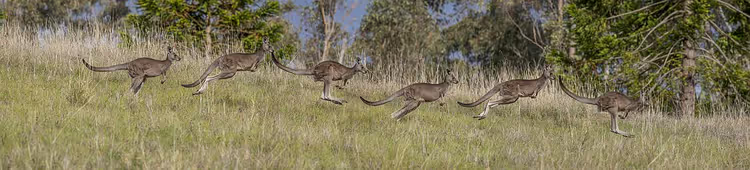
Parks take up most of an active itinerary. Here you can see kangaroos, koalas, and rare birds, and in some reserves animals are fed with a guide. Feeding them on your own is not allowed: environmental services enforce this strictly.
The rules are simple. Stay on the trail, don't touch animals with your hands, and don't take anything out of the park. At the entrance you get a map and a handout, and on longer routes you check in with a ranger.
Day passes and parking are usually paid for online, and on site they're verified by license plate number. If you're planning to visit several parks, it's cheaper to get a state-wide pass.
 © Charles J. Sharp · CC BY-SAPhoto: Charles J. Sharp, CC BY-SA (https://creativecommons.org/licenses/by-sa/4.0), Wikimedia Commons
Hiking trails: Blue Mountains, Snowy Mountains, and Tasmania
Hiking trails in Australia follow three different scenarios: short day hikes in the Blue Mountains, alpine terrain in the Snowy Mountains, and a multi-day trek in Tasmania.
Blue Mountains and the Three Sisters
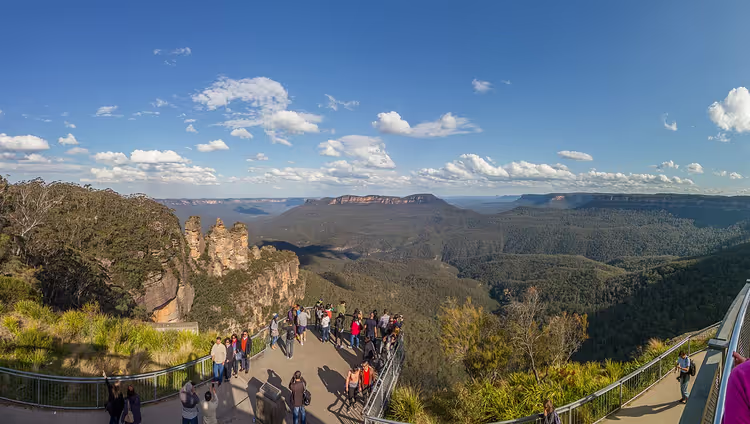
The Blue Mountains start about two hours from Sydney, so people do them as a day trip from the city. Trails lead to the Three Sisters rock formation, lookouts, and waterfalls. Some routes are short and easy with kids, while others require good footwear.
 © Maksym Kozlenko · CC BY-SAPhoto: Maksym Kozlenko, CC BY-SA (https://creativecommons.org/licenses/by-sa/4.0), Wikimedia Commons
Snowy Mountains and Mount Kosciuszko
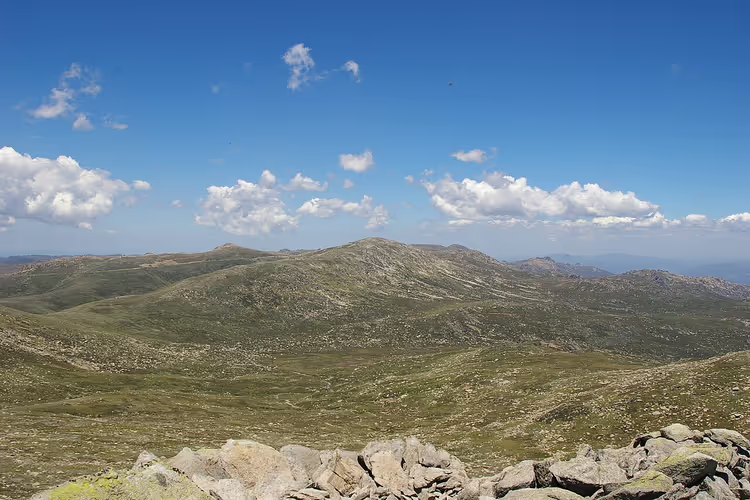
The Snowy Mountains are home to the highest peak on the mainland, Mount Kosciuszko. The climb doesn't require any gear: it's a long but technically easy trail. In summer it's cool here even in the heat, so bring a windbreaker.
 © John Wormell · CC BY-SAPhoto: John Wormell, CC BY-SA (https://creativecommons.org/licenses/by-sa/4.0), Wikimedia Commons
Tasmania and the Overland Track
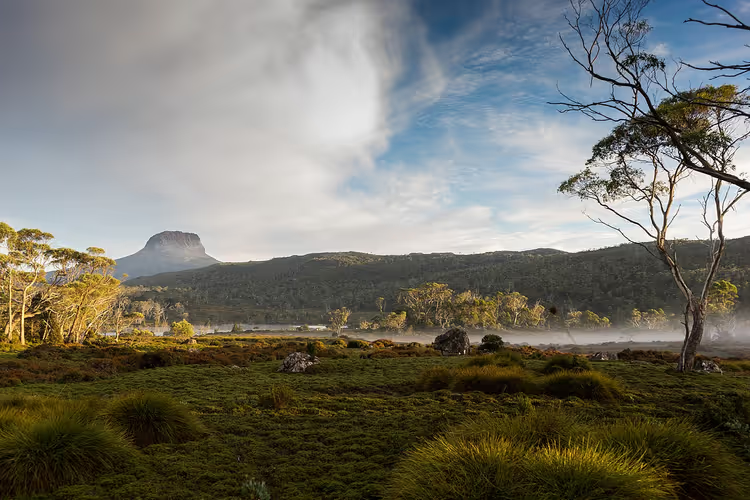
Tasmania offers the most serious experience. The Overland Track runs 65 km from Cradle Mountain to Lake St Clair and takes six days (according to Parks Tasmania trail notes). You can stay overnight in huts, but you need to book a pass for your start date in advance, and spots for the summer season fill up fast.
 © Andrew Jenssen · CC BY-SAPhoto: Andrew Jenssen, CC BY-SA (https://creativecommons.org/licenses/by-sa/4.0), Wikimedia Commons
- The catch: the weather changes within an hour, so rain gear is mandatory even in January.
For multi-day treks and day trips to lookouts, check GetYourGuide.
Ski resorts in Australia
You can ski in Australia from June to October, when it's summer in Europe. The main resorts are concentrated in New South Wales and Victoria: Perisher, Thredbo, Falls Creek, and Mount Hotham. In Tasmania, people ski at Ben Lomond.
Perisher is the largest resort in the hemisphere: four areas and 47 lifts (verified on the official Perisher website). The season opens on the first weekend of June and closes in early October.
You can rent gear right at the resort: skis, snowboards, and boots are available on site. The road to the slopes goes through a national park, so you need a vehicle pass.
- Who it's for: beginners will be fine with two days on the learning slope.
- The catch: accommodation prices spike during school holiday peaks.
Beer Can Regatta in Darwin
If your travel dates fall in July, add Darwin to your itinerary. That's where the Beer Can Regatta takes place: races on boats built from beer cans, bottles, and cardboard boxes. The festival was invented in 1974 to clean the city of tin cans (according to Beer Can Regatta).
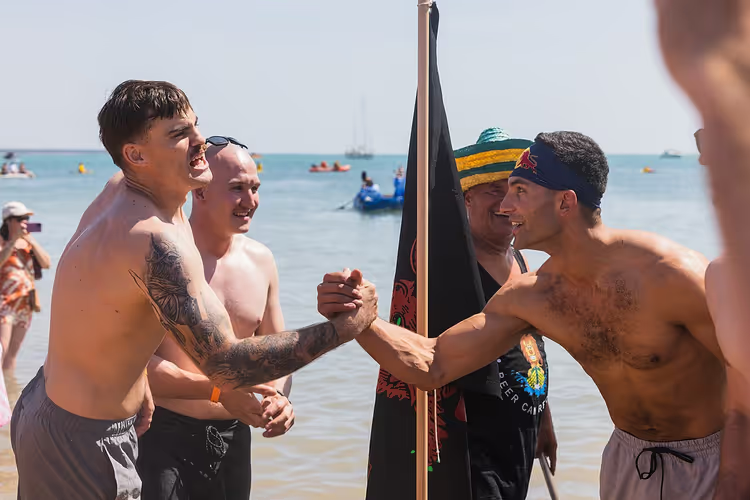
The competitions run all day. Spectator entry is free, and kids watch the races from the shore. For you, it's a ready-made day of rest between diving and trekking.
New Zealand: geysers and flights
New Zealand is often added to an Australian itinerary, and there's a reason for that. Te Puia operates in Rotorua: the Pohutu geyser erupts there, shooting water nearly 30 m into the air up to 20 times a day. Wooden boardwalks are laid out around it, and guided tours run across the site.
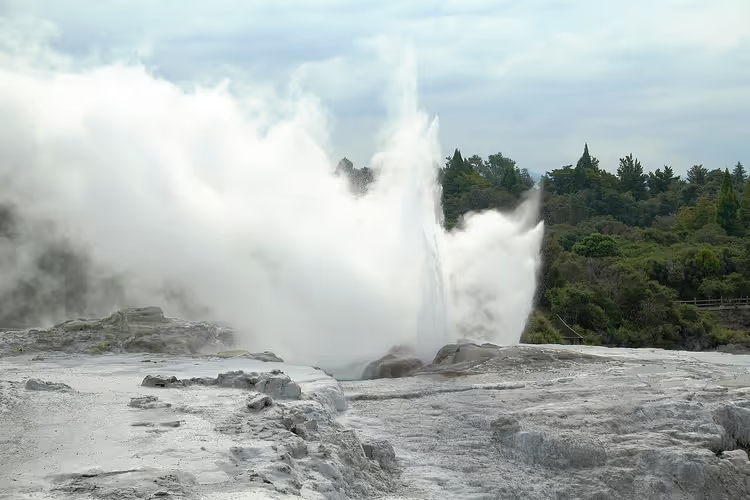
After that, the scenario changes. Helicopters and seaplanes fly over the rocky coastline and glaciers, and a flight like that shows you the country from above. Flights to New Zealand are easy to compare on Kiwi.com.
- The catch: Rotorua smells of sulfur, and not everyone gets used to that smell.
⁉️🤔 Frequently asked questions
When is the best time to go diving in Australia?
The dry season from May to October gives you the clearest water on the Great Barrier Reef. There is less rain, and dive sites operate reliably. Check the forecast with your operator before booking.
Do I need experience to surf on the Gold Coast?
No, beginners can get by with a single first lesson. Schools provide a board and wetsuit, and the instructor takes you into the water and tells you when to paddle. Book a morning session: the wind is lighter, the waves are cleaner, and there are fewer people. For noticeable progress, plan three lessons in a row.
How long does the Overland Track in Tasmania take?
The 65 km route is usually completed in six days from Cradle Mountain to Lake St Clair (according to Parks Tasmania). Some hikers take seven days to climb the side peaks.
When does the ski season start in Australia?
Resorts in New South Wales and Victoria operate from June to October, which is winter in the southern hemisphere. Snow cover is unreliable, so dates sometimes shift.
What should I see in Rotorua besides the geysers?
At Te Puia, next to the Pohutu geyser, you can visit Maori carving and weaving schools as well as a kiwi conservation center (according to Pōhutu Geyser). Boardwalks run along the thermal areas, so you can see the eruption from several points. The glaciers are on the South Island, and Rotorua is not close to them.
Tours and tickets
Guided tours, skip-the-line tickets and activities — most offers can be cancelled free of charge.
See offers on GetYourGuideThe widget loads once you give your consent.
In short: what to book
An active trip to Australia is built around the season. First you choose diving or the mountains, then you fit the other stops around them. Distances are long, so set aside separate days for travel.
- If you are going for the reef: base yourself in Cairns and book a two-night liveaboard.
- If you want waves: the Gold Coast for learning, Bells Beach for experience.
- If you are planning a trek: Tasmania in summer, the Blue Mountains as a short day trip from Sydney.

A small editorial team writing guides for independent travel. We travel ourselves, but we haven’t been everywhere, so we check prices, opening hours and how to get there against official sources.