













Train from Munich to Venice: schedule and prices 2026
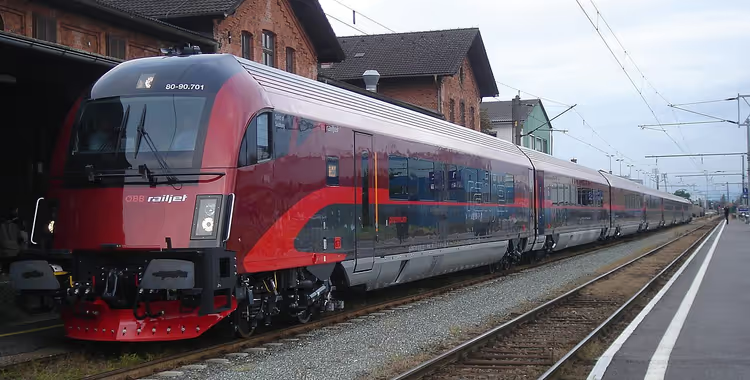
Munich and Venice are separated by the Alps, but no transfer is needed. The direct ÖBB train leaves Munich's main station at 11:32 and delivers passengers to Venezia Santa Lucia at 18:25 (as of 09/2026, ÖBB schedule).
After about 6 h 53 min you step out at the Grand Canal, not eight kilometers outside the city, as after landing at Marco Polo Airport. On this route, saving time matters more than top speed.
We've put together the current 2026 schedule, honest prices, and a breakdown of the Railjet 2 cars. At the end of the article there's a ready-made one-day Venice plan.
Ad: this article contains affiliate links, we earn a commission if you book through them, at no extra cost to you.
Why the train to Venice beats flying
💡 In short:
- The direct train takes about 6 h 53 min and arrives in the historic city center (as of 09/2026, official ÖBB schedule).
- Super Sparpreis Europa tickets start at 19.99 € in second class (as of 09/2026, DB fares).
- Direct trains from Munich also run to Bologna and Milan, and in summer to Rimini and Ancona (as of 09/2026, DB Italy destinations).
- Prices and schedule: 09/2026, checked on the official DB website.
 © Pechristener · CC BY-SAPhoto: Pechristener, CC BY-SA (https://creativecommons.org/licenses/by-sa/3.0), Wikimedia Commons
Count door-to-door time, not just hours in the air. Getting to the airport, security, baggage claim, and the transfer into the city eat up almost two hours.
The train removes those hassles entirely. A passenger boards in central Munich and steps off in central Venice.
In a single day, three countries pass outside the window. Bavaria, Tyrol, South Tyrol, and Veneto roll by like the scenery of a grand journey.
Autobahn traffic jams don't bother a train.
Which trains run to Venice
 © Lukas3333 · CC BY-SAPhoto: Lukas3333, CC BY-SA (https://creativecommons.org/licenses/by-sa/4.0), Wikimedia Commons
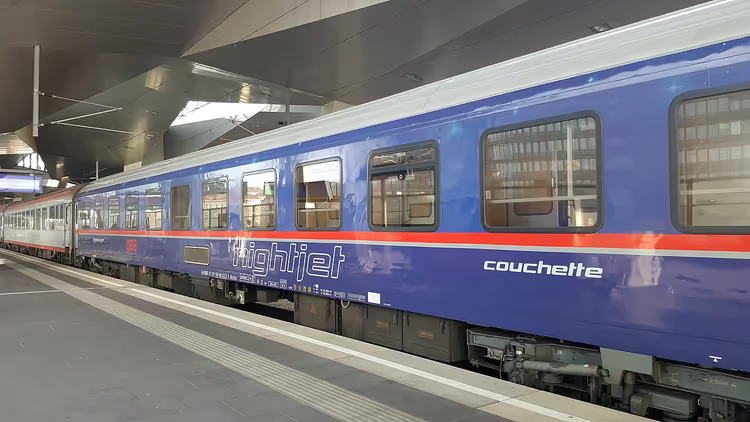
The route is served by daytime Railjets and one overnight Nightjet, and all of them run without transfers. For the Alps, that kind of consistency is a real rarity.
The main daytime option is RJ 85. The train runs daily on the Munich, Innsbruck, Verona, Venice route.
In April 2024 the line was switched to the modern Railjet 2. The former EuroCity EC 85 got the number RJ 85, and from June 15, 2026 the morning services were also renamed (as of 09/2026, ÖBB website).
The morning train gives you more time in the city. RJ 81 departs at 07:32 and arrives at Venezia Santa Lucia at 15:14 (as of 09/2026, ÖBB departure board).
On Saturdays and Sundays the same service runs as RJ 1281 and arrives at 14:25. In both cases you make it in time for an evening stroll along the waterfront.
The overnight Nightjet runs from Stuttgart via Munich (as of 09/2026, official Nightjet website).
Schedule: from Munich to the lagoon
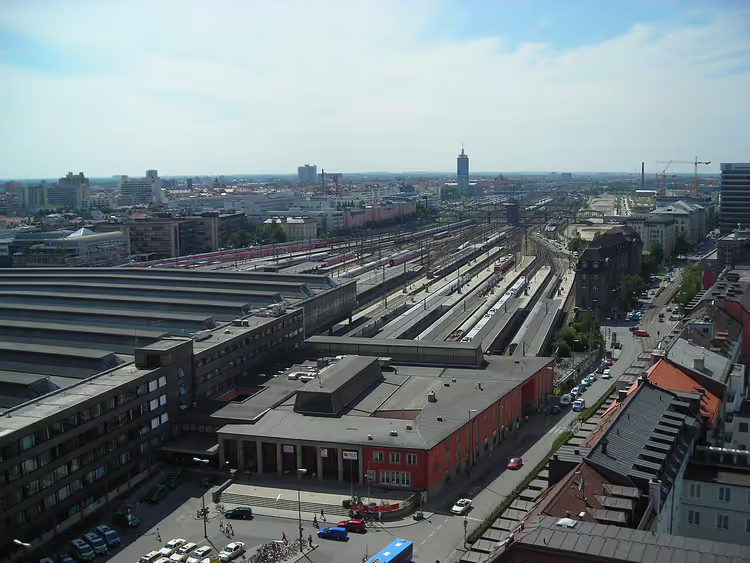
The daytime RJ 85 departs München Hbf at 11:32 and arrives at Venezia Mestre at 18:12 (as of 09/2026, checked on ÖBB).
 © User:Mattes · CC BYPhoto: User:Mattes, CC BY (https://creativecommons.org/licenses/by/2.5), Wikimedia Commons
Below is the full schedule by stop. The first column is the station, followed by arrival and departure.
Station | Arrival | Departure |
|---|---|---|
München Hbf |
| 11:32 |
München Ost | 11:42 | 11:44 |
Rosenheim | 12:12 | 12:13 |
Kufstein | 12:34 | 12:36 |
Wörgl Hbf | 12:44 | 12:46 |
Jenbach | 12:58 | 13:00 |
Innsbruck Hbf | 13:18 | 13:24 |
Brennero/Brenner | 14:00 | 14:14 |
Bressanone/Brixen | 14:55 | 14:56 |
Bolzano/Bozen | 15:27 | 15:31 |
Trento | 16:02 | 16:04 |
Rovereto | 16:17 | 16:19 |
Verona Porta Nuova | 16:58 | 17:10 |
Vicenza | 17:35 | 17:37 |
Padova | 17:56 | 17:58 |
Venezia Mestre | 18:12 | 18:14 |
Venezia Santa Lucia | 18:25 |
|
Checked on 12.09.2026 on the official ÖBB website: the schedule is valid from December 14, 2025.
Return trains run twice a day. RJ 84 departs Venice at 11:35, and RJ 80 at 15:35 (as of 09/2026, return schedule).
Comfort on Railjet 2: classes and outlets
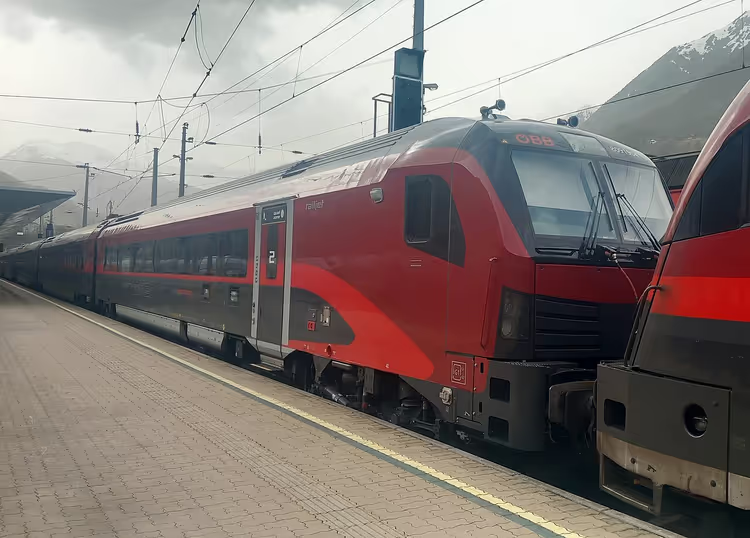
The train has three classes: Economy, First, and Business (as of 09/2026, class descriptions on the ÖBB website). For seven hours on the road, the difference is quite noticeable.
 © Michael1884 · CC BY-SAPhoto: Michael1884, CC BY-SA (https://creativecommons.org/licenses/by-sa/4.0), Wikimedia Commons
In the new cars, every seat has an outlet and a USB port. Phones and cameras drain quickly, so having charging within reach matters here.
Second class on Railjet 2 is spacious. The seats are wider than their German counterparts, and the cabin has noticeably more light.
First class adds quiet and more personal space. The supplement is usually moderate, and it is worth checking before buying a ticket.
Wi-Fi is available on the train, but the connection sometimes drops in the mountain passes. Download maps and podcasts in advance so you are not dependent on the network.
The onboard restaurant operates along the entire route. Prices there are higher than in town, so you can bring some food with you.
Restrooms are at the end of the car. There is separate access for wheelchair users, but it is best to check it for the specific train.
You can take a bicycle with a separate ticket and seat reservation (as of 09/2026, bicycle transport conditions). Fold it in advance, and loading will take only a minute.
Check the car number on the display by the door. That way you will find your class right away and avoid walking through the train with a suitcase.
Which seats to choose in the car
Railjet 2 has both open saloons and closed compartments. For a long daytime trip, window seats in the open saloon are the better choice.
Take the side facing the direction of travel and a seat on the left. That is where you get the best view of the Brenner and the Verona area.
Every seat has a folding table and a footrest. You can comfortably place a laptop right in front of you.
Seats near the doors are noisier, but they are close to the exit and luggage racks. If you are traveling with large suitcases, that is a real convenience.
Night train: is it worth sleeping on the way
Nightjet covers this route in one night. This option saves a day that would otherwise be spent traveling.
The train has seats, couchettes, and sleeping cars. Comfort increases with price, so choose according to your budget (as of 09/2026, Nightjet schedule).
A seat is only suitable for one night and only if you can sleep in a chair. A couchette gives you a proper rest for less money.
The night train does not run every day, so check the dates in advance. A ticket in a sleeping car costs more than a daytime one, but it saves a night in a hotel.
What you see from the window: the Alps and the Brenner
The journey starts off unremarkably, with the green fields of Bavaria stretching outside the window. Foothill villages pass by every few minutes.
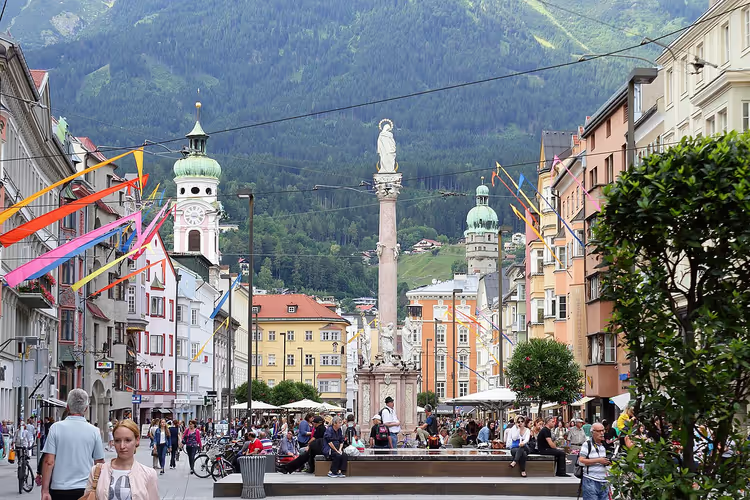
Innsbruck and the Inn valley
After Rosenheim the terrain rises, and by Kufstein the first ridges are already visible. From there the train enters the Inn valley.
 © Michael aus Halle · CC BY-SAPhoto: Michael aus Halle, CC BY-SA (https://creativecommons.org/licenses/by-sa/3.0), Wikimedia Commons
Innsbruck Hbf station closes out this segment.
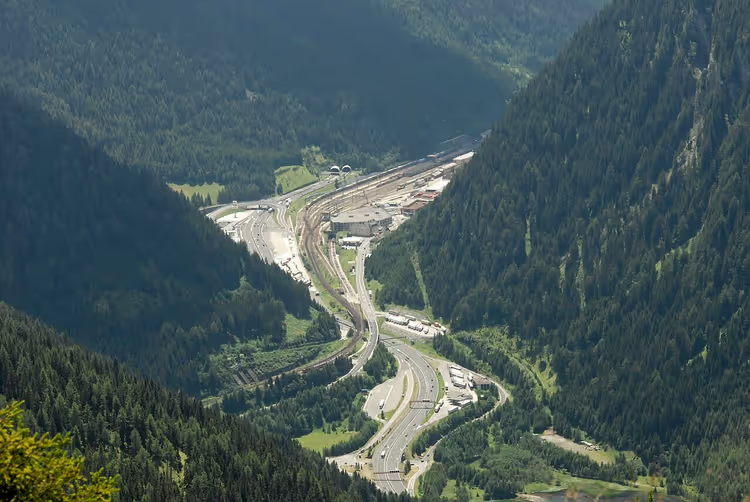
Brenner Pass
The main shot of the entire trip is the Brenner. The train cuts through the mountains at an altitude of about 1,370 meters (as of 09/2026, ÖBB route profile).
The landscape becomes sharp and high-contrast. Rocks, narrow gorges, and highway switchbacks run very close to the tracks.
At Brennero/Brenner station, the train stops longer than usual. This is a technical stop, so don't wander far from your car.
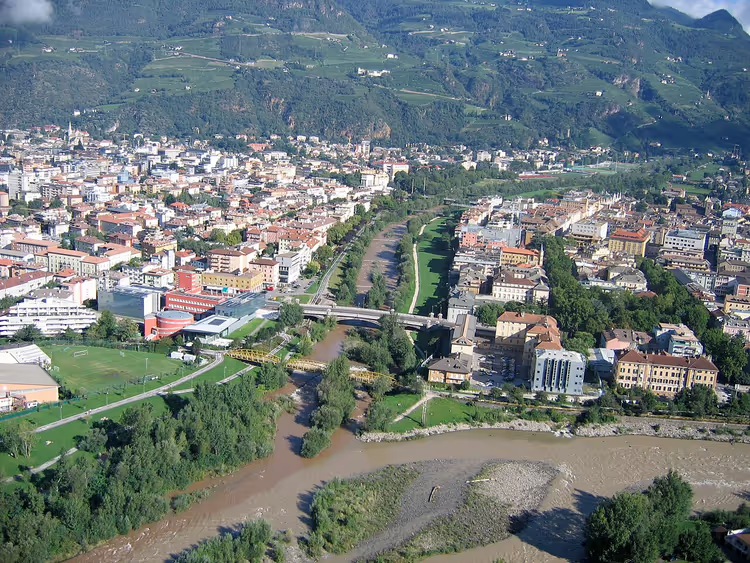
South Tyrol and Bolzano
Italy begins right after the pass. Rain is common here, but sunshine awaits you further on.
Vineyards and apple orchards stretch along the Adige River. Around Bolzano, the sky noticeably brightens, and the landscape becomes warmer.
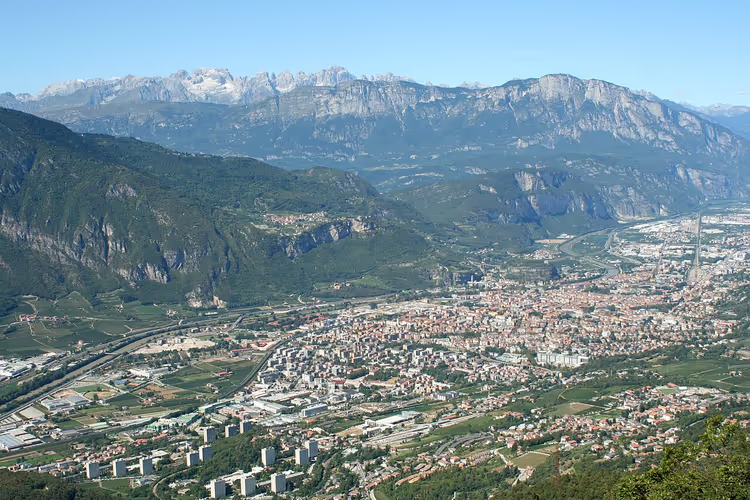
Trentino
The section from Trento to Rovereto is also worth watching closely. During the day, the sun lights up the slopes and makes your shots high-contrast.
This is also where your phone's time-lapse mode will come in handy. The scenery changes faster than you can get your camera out.
Coffee in the onboard bistro will cost more than in the city, but the view from the window justifies it. Get your drink on this exact stretch of the route.
Veneto and the lagoon
After Rovereto, the mountains recede, and a green plain begins. Cities with famous names come one after another at short intervals.
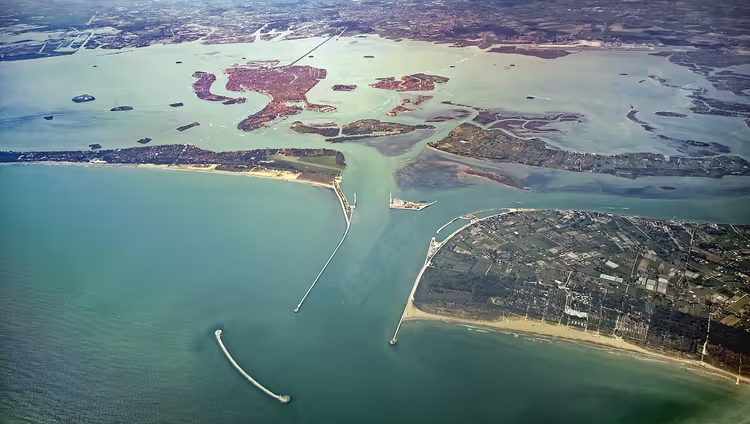
The final stretch before Venice is calm. But the last minutes along the causeway across the lagoon stay with you for a long time.
 © Didier Descouens · CC BY-SAPhoto: Didier Descouens, CC BY-SA (https://creativecommons.org/licenses/by-sa/4.0), Wikimedia Commons
Verona Porta Nuova: is it worth getting off
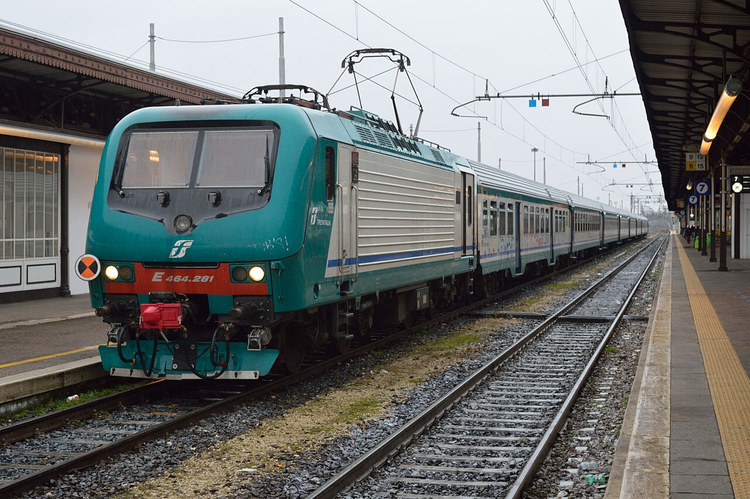
Verona comes up along the way as a separate trip. As you pull into Verona Porta Nuova, you can see the city deserves a stop.
 © Phil Richards from London, UK · CC BY-SAPhoto: Phil Richards from London, UK, CC BY-SA (https://creativecommons.org/licenses/by-sa/2.0), Wikimedia Commons
A lot of passengers get off here, and the car noticeably empties out. If you have an extra day, split up the route and spend it in Verona.
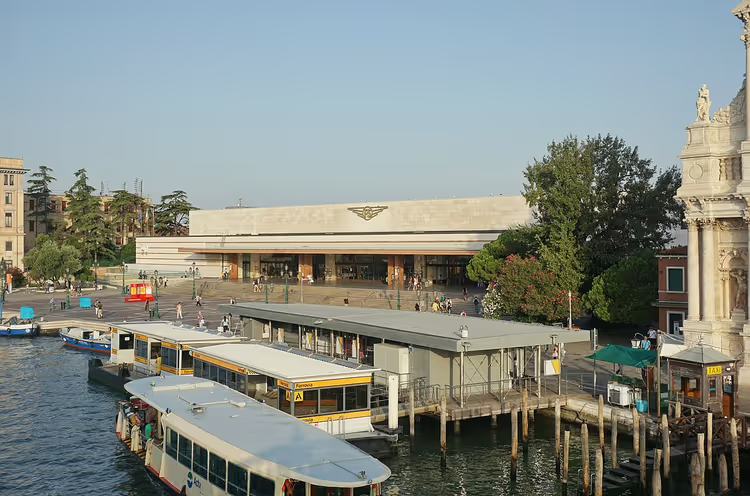
Arrival: Venezia Mestre or Santa Lucia
Decide where to get off ahead of time. Your costs and the time to your hotel depend on it.
The Venezia Mestre stop is on the mainland. Hotels here are noticeably cheaper than in the historic center on the islands.
 © Armin Kleiner · CC BY-SAPhoto: Armin Kleiner, CC BY-SA (https://creativecommons.org/licenses/by-sa/4.0), Wikimedia Commons
A regional train will take you to Santa Lucia. The ride takes about 10 minutes and costs under two euros (as of 09/2026, Trenitalia schedule).
Trains between Mestre and the center run frequently, so getting back in the evening is easy. This option works well for those saving on lodging.
You have two options: hotels in Mestre on Trip.com or a night right by the Grand Canal. The second option costs more, but it saves you the daily commute.
Mestre station looks modest, but everything you need is nearby. Cafes, a supermarket, and a bus stop are all a short walk from the exit.
Tickets: prices, classes, and the best days
The price range on this route is wide, and everything comes down to the fare and the day you buy. The same train can cost three times as much.
The cheapest option is Super Sparpreis Europa. Second class starts at 19.99 €, first class at 29.99 € (as of 09/2026, Super Sparpreis page).
A flexible fare without a fixed train costs several times more. You only need it if you might have to leave at the last minute.
An important rule for this fare: the ticket is tied to a specific train and cannot be exchanged. Check the date and time before paying, and reserve your seat right away.
Tickets to Italy open at most 6 months before the trip (as of 09/2026, DB booking rules). The earlier you book a seat, the lower the price.
Children aged 6 to 14 travel free when accompanied by an adult. You need to add the child at purchase, otherwise their seat will not be issued.
Prices also vary noticeably by day of the week. Tuesday, Wednesday, and Thursday are usually cheaper than Friday and the weekend.
There are few free seats in summer, so book a seat together with your ticket.
Compare trains across Europe on Trip.com ahead of time. You can also see prices for your dates there.
Where to go next from Venice
The trip does not have to end in the lagoon. From Venice it is easy to reach other cities in northern Italy.
Trains run to Bologna, Milan, and Padua, and in summer direct routes open up further afield (as of 09/2026, checked on DB).
Bologna is an hour away and works well for lunch between connections. Milan is convenient as a second base if you plan to spend a week in Italy.
Book tickets for long-distance legs in advance. Regional trains are cheaper, but they take longer and require transfers.
Entering Venice: the tourist fee
As of 2026, entry to the historic center is still paid. The rule applies to day-trippers who do not stay overnight in the city.
The fee is 5 € if paid in advance and 10 € in the final days (as of 09/2026, Comune di Venezia portal). The calendar includes 60 dates from April 3 to July 26.
The fee applies to the hours from 8:30 to 16:00. If you arrive by train and stay overnight, you usually do not need to pay.
Check the dates on the official portal before your trip. The list of days changes every year, and the entry fine is issued without warning.
What to see in Venice in one day
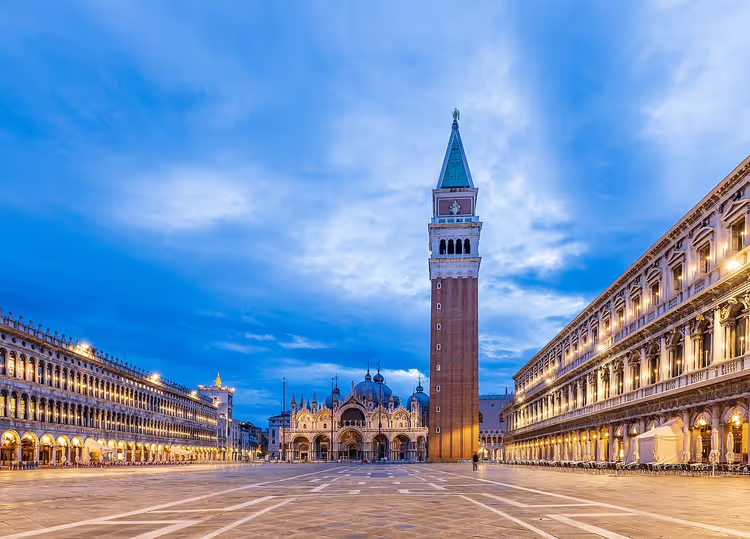
If you only have one day, start with St. Mark's Square. St. Mark's Basilica and the Doge's Palace are next to each other, and it's easy to walk between them.
From the square, head to the Rialto Bridge through the residential neighborhoods. Along the way you'll see the real city, not just shop windows.
The most convenient way to get around the city is by vaporetto on the Grand Canal. A day pass pays for itself after four rides.
Stay away from the crowds in the narrow passageways. Morning hours before 10:00 give you nearly empty embankments and soft light.
You can also take the vaporetto to the islands of Murano and Burano. There you'll find glassblowing workshops and colorful houses, and half a day is enough for that.
Tours and tickets for Venice on GetYourGuide will save you from waiting in line at the ticket office. It's better to book time slots for viewing platforms in advance.
Choose a ticket with a fixed entry time. That way you're not tied to a queue and you don't lose an hour in the sun.
 © Matthias Süßen · CC BY-SAPhoto: Matthias Süßen, CC BY-SA (https://creativecommons.org/licenses/by-sa/4.0), Wikimedia Commons
Popular time slots for the Doge's Palace and the viewing platform sell out a week in advance. Below is a selection of tickets with prices and entry times.
Tours and tickets in Venice
Guided tours, skip-the-line tickets and activities — most offers can be cancelled free of charge.
See offers on TiqetsThe widget loads once you give your consent.
⁉️🤔 Frequently asked questions
Do I need to change trains on the way from Munich to Venice?
No, the route has direct trains. The daytime RJ 85 runs from München Hbf to Venezia Santa Lucia without changing trains, and the journey takes about 6 h 53 min. The morning RJ 81 arrives earlier and leaves more time in the city. You don't need to look for a connection in Innsbruck or Verona.
How much does a train ticket to Venice cost?
The price depends on the fare and when you buy. Super Sparpreis Europa starts at €19.99 in second class and €29.99 in first class (as of 09/2026, DB fares). The flexible fare is several times more expensive. The earlier you book, the lower the price, and the cheapest seats sell out several weeks in advance.
Is there a night train to Venice?
Yes, the Nightjet night train once again connects Stuttgart, Munich, and Venice. The train does not run every day, so check dates and seat availability on the carrier's website in advance.
Where is it cheaper to stay: in Mestre or in the center?
It's usually cheaper in Venezia Mestre on the mainland. There are many hotels near the station, and a regional train gets you to Santa Lucia in 10 minutes. In the historic center you pay for the view and proximity to the Grand Canal. For two nights, the price difference can be very noticeable.
Do I have to pay an entry fee for Venice?
The fee applies only to day-trippers and is in effect in 2026 on 60 selected dates. The charge is €5 if you pay early and €10 later, from 8:30 to 16:00 (as of 09/2026, Comune di Venezia portal). If you're staying overnight in the city or in Mestre, you don't have to pay.
In short: what's worth booking
If you want a route with Alpine views, take the daytime RJ 85. If you want to sleep on the way, choose the Nightjet night train, but check the dates in advance.
On a limited budget, stay in Venezia Mestre and take the regional train to the center. For evening strolls along the Grand Canal, stay closer to Santa Lucia.
Tickets go on sale six months in advance, so starting early is almost always worth it. The scheduled journey takes about 6 h 53 min.
Choose a train to Venice on Trip.com is worth doing right after checking the schedule. Hotels in Mestre are easy to compare on Trip.com.

A small editorial team writing guides for independent travel. We travel ourselves, but we haven’t been everywhere, so we check prices, opening hours and how to get there against official sources.