
















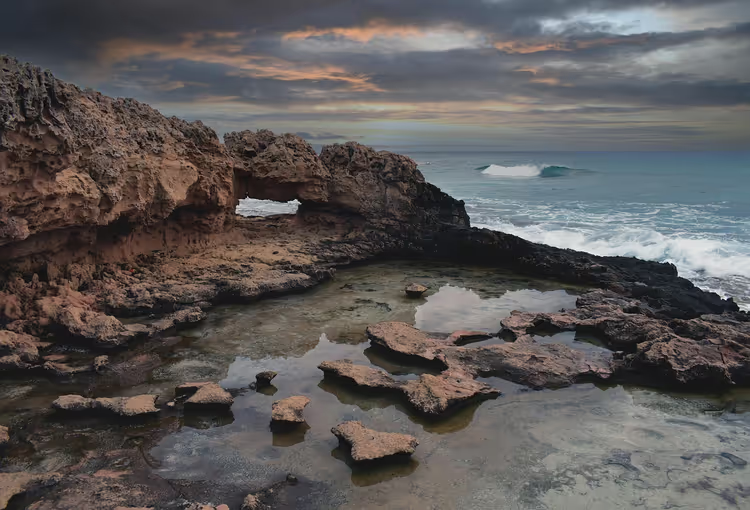
Barrika turbidites: how to reach the “dragon’s back” and when to go
The Barrika coastline is made up of stone "teeth." They rise straight out of the Atlantic 24 km from Bilbao (as of 09/2026, Wikipedia on Barrika). The rocks tilt toward the water and, in profile, read like the back of a sleeping dragon. That is exactly the angle tourists and photographers come here for.
If you arrive at high tide, you will see only the ocean, not the rocks. Plus, without a car it is not always obvious how to get there from Bilbao and how long it takes.
Below we have put together practical information on the Barrika turbidites: what kind of rock this is, when to go, and how to get there, so you do not have to figure it out on the spot.
Ad: this article contains affiliate links, we earn a commission if you book through them, at no extra cost to you.
Barrika turbidites: what they are
💡 In short:
- Turbidites are layered rocks that make up the entire Barrika coastline.
- The town's shoreline stretches for 6.1 km and includes three beaches.
- The rocks are fully exposed only at low tide, so plan your visit around the tide table.
- A flysch route runs along the coast: on foot or by boat.
- Beach and route access: 09/2026, verified on the official Biscay flysch website.
Turbidites are born on the ocean floor. A turbidity current carries sand and clay to great depths, where they settle in layers. Over millions of years the sediment hardens, and tectonics lifts the strata toward the surface and tilts them at an angle. That is how sharp ridges resembling teeth appear on the shore.
Geologists call this type of coastline flysch. It alternates hard stone layers with soft clay interlayers, so waves erode the rock unevenly. In Barrika the layers are folded, which is why the place is called the "cathedral of folds" (as of 09/2026, Biscay flysch route). Even if you are not a geologist, you will make out the layer patterns up close.
The rocky shore and the stone platform at its foot are of interest to geologists from around the world (as of 09/2026, article on Barrika). One of the reference sections, a "golden spike" marking the Lutetian boundary, is established at Gorrondatxe in neighboring Getxo. People come to Barrika to see such strata with their own eyes while walking along the shore.
 © Mentxuwiki · CC BY-SAPhoto: Mentxuwiki, CC BY-SA (https://creativecommons.org/licenses/by-sa/4.0), Wikimedia Commons
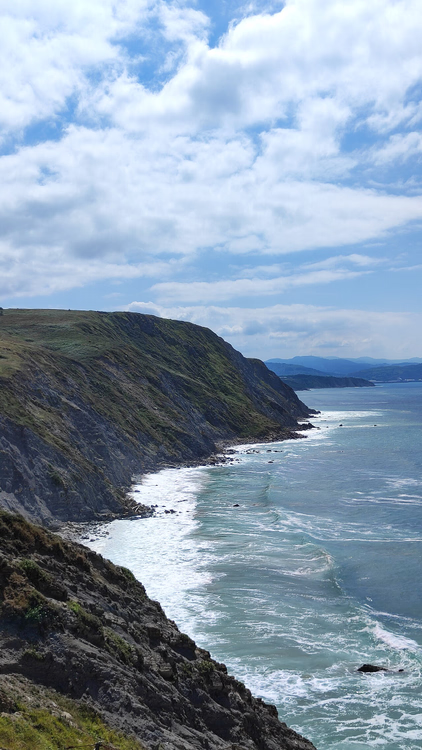
The "dragon's back" off the Barrika coast
The layers here tilt toward the sea, so from the water the rocks read like spinal vertebrae. That is why the local ridge has been nicknamed the "dragon's back." The best angle opens up from the beach and from the trail above the cliff.
 © Josi · CC BY-SAPhoto: Josi, CC BY-SA (https://creativecommons.org/licenses/by-sa/4.0), Wikimedia Commons
At low tide you can see how the layers slope straight into the ocean.
Geologists read a coastline like this as a stone chronicle. Each layer accounts for a span of thousands of years, and from the interlayers scientists reconstruct the climate of the distant past. For a tourist, it is a reason to look closely at the details rather than just grab a shot.
The town of Barrika and its beaches
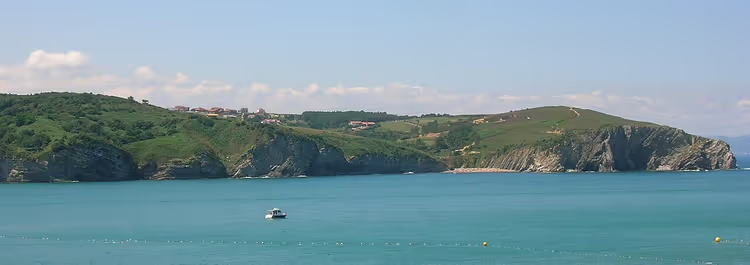
Barrika, a small municipality in the province of Biscay, is part of the Basque Country. It is one of the oldest settlements in the region: according to tradition, the town grew out of a family tower founded by Sancho Vela in 496 (as of 09/2026, history of Barrika). Archaeologists believe people lived here even earlier.
 © Javierme Javier Mediavilla Ezquibela · CC BYPhoto: Javierme Javier Mediavilla Ezquibela, CC BY (https://creativecommons.org/licenses/by/3.0), Wikimedia Commons
Three beaches stretch along the 6.1 km of coastline: Barrika, Meñakoz, and Muriola (as of 09/2026, beaches section). The main one, Playa de Barrika, runs for 270 m at a width of about 30 m, but the width depends heavily on the tide. Stone stairs lead down to the water, there are almost no loungers or umbrellas, so you will need a mat and shoes suitable for rocks.
Meñakoz beach is open to the ocean and popular with surfers. Muriola beach is sheltered from the waves and was formed from the deposits of a nearby silica quarry. If you are looking for calm water and protection from the wind, choose Muriola.
When to go: low tide, fog, and light
Plan your walk around the tide table, not a museum schedule. The water level in the Bay of Biscay changes by several meters, and at high tide the lower layers are hidden (as of 09/2026, Puertos del Estado). At low tide the shore opens up for dozens of meters, and you can walk right up to the edge of the rocks.
 © UTR (Tagzania user ID: 22700) · CC BY-SAPhoto: UTR (Tagzania user ID: 22700), CC BY-SA (https://creativecommons.org/licenses/by-sa/4.0), Wikimedia Commons
Dense fog often hangs over the coast. It softens shots but hides the panorama. If you came for the overall view, wait for the second half of the day, when the haze clears.
Photographers get lucky here: the weather changes within an hour, so shots come out high-contrast. In the morning and at sunset the light is softer. Shoot the rocks against the sun at dawn and along the shore in the evening, and you will get different takes on the same place.
How to get to the coast
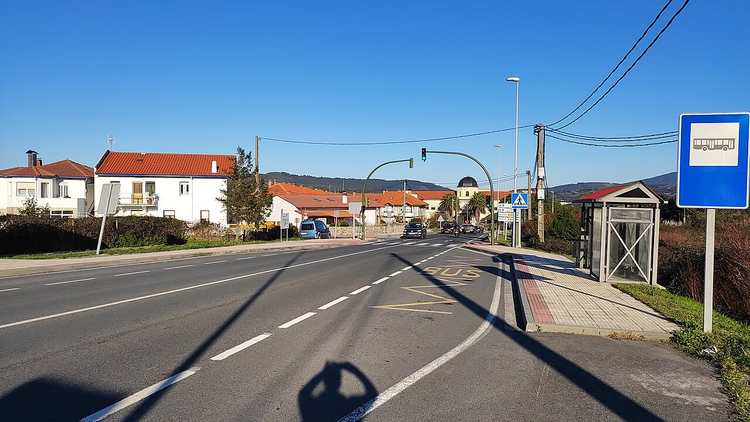
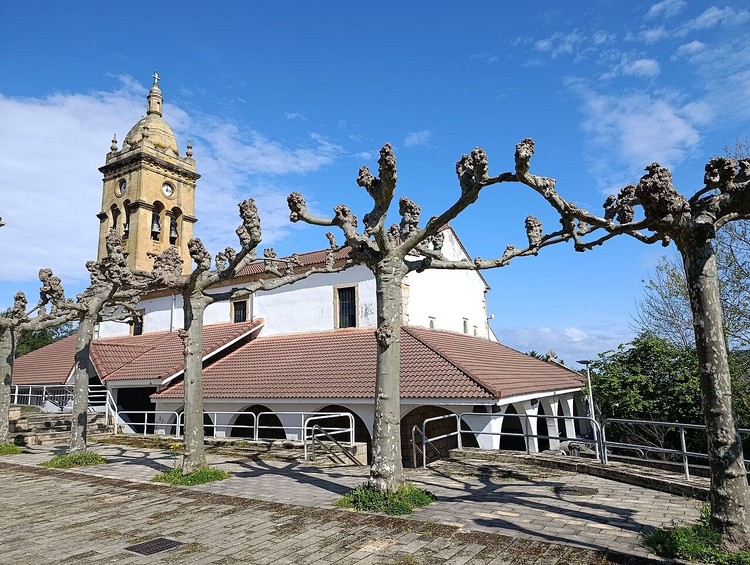
Barrika is easy to reach from Bilbao: 24 km by road. The rocks stand a couple of hundred meters from the town's central square, so you will not have to search for them long.
Without a car, take metro line 1 to the terminus in Plentzia: the line comes right up to the outskirts of Barrika. From there, continue to the shore on foot or by Bizkaibus bus (as of 09/2026, Metro Bilbao). The trip takes about an hour, so check the schedule in advance.
With a car everything is simpler: if you pick up a car at Bilbao airport, the drive takes about forty minutes. You can compare car rental options on DiscoverCars. Parking near the beach is small, and on weekends spots fill up early. Leave your car in central Barrika and walk to the rocks.
Tours and tickets in Bilbao
Guided tours, skip-the-line tickets and activities — most offers can be cancelled free of charge.
See offers on GetYourGuideThe widget loads once you give your consent.
⁉️🤔 Frequently asked questions
Are the turbidites in Barrika volcanic rocks?
No. Turbidites are sedimentary rocks, not lava. They were laid down by turbidity currents on the ocean floor: sand and clay settled in layers, hardened, and later tectonics lifted them to the surface. It is the tilt of the strata that creates the sharp ridges resembling teeth or a dragon's back.
How much does it cost to enter the turbidite coast?
There is no entrance fee: the Barrika shore is part of open natural areas. The beach is also public, with stone stairs leading to the water. The only costs are travel and parking. There are bars in the town center where you can have coffee after your walk.
How do I get there from Bilbao without a car?
Metro line 1 to Plentzia, then on foot or by Bizkaibus bus. The trip takes about an hour.
When is the best time to see the rocks?
At low tide, when the lower layers are exposed. Check the tide times at Puertos del Estado on the day of your trip.
What should I bring for a walk to the flysch?
Comfortable shoes with non-slip soles, water, and a windbreaker. The open coast is often foggy and windy even on a warm day. And watch the water: at high tide some of the lower rocks go under, so you are better off staying closer to the access point.
In short: what to book
The rocks and the beach at Barrika are free; you only need to book transport and accommodation. The choice depends on your plans.
- If you are going without a car: metro to Plentzia, then a Bizkaibus bus. No booking needed.
- If you want flexibility: car rental from Bilbao airport, compare options on DiscoverCars.
- If you want a flysch guide: check tours along the coast on GetYourGuide.
- If you are looking for a hotel: stay in Bilbao or Plentzia, from there it is under an hour to the rocks.
Set aside a day for low tide and leave time for the trail along the cliff.

A small editorial team writing guides for independent travel. We travel ourselves, but we haven’t been everywhere, so we check prices, opening hours and how to get there against official sources.