
















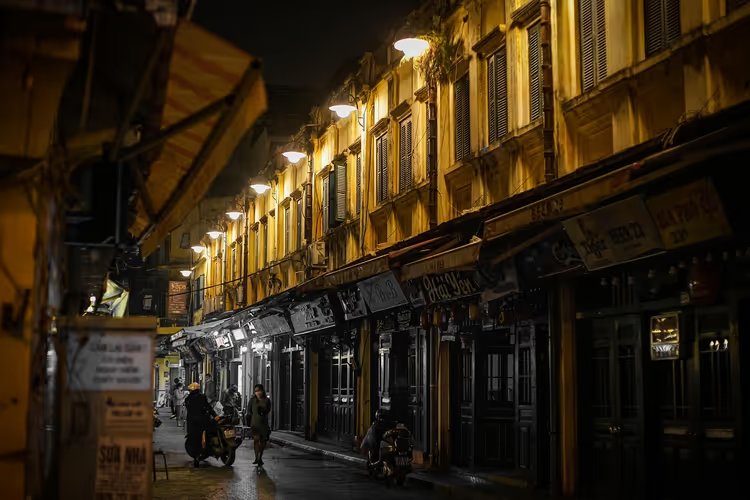
Hanoi in one day: 18 places with prices and opening hours
Hanoi has a problem: people often fly in for just one day. Transit travelers manage to see a couple of sights near Hoan Kiem Lake and leave. Yet almost all 18 of the city's main attractions sit close together and fit into a single walk.
Our editorial team put together a walking route through the old center from Ba Dinh Square to the Opera House. You'll cover about 6 km on the map and see Soviet monumentalism, 11th-century pagodas, and colonial Hanoi. The whole route takes roughly 8-9 hours with a lunch stop.
Below you'll find ticket prices as of 09/2026, opening hours, and the honest catch of each place. Start in the morning: some sites close after lunch, and by midday the squares get hot.
Ad: this article contains affiliate links, we earn a commission if you book through them, at no extra cost to you.
One-day Hanoi route
💡 In short:
- Start from Ba Dinh Square by 8:00, before it gets hot and the tour groups arrive.
- See the Mausoleum, Presidential Palace, and One Pillar Pagoda in one morning block.
- In the afternoon head to West Lake, in the evening finish at Hoan Kiem Lake and the Opera House.
- Prices and opening hours: 09/2026, verified on the official Thang Long Citadel website.
Part of day | Sites | Tickets in advance | On foot |
|---|---|---|---|
Morning | Ba Dinh Square, Mausoleum, Presidential Palace, One Pillar Pagoda | Mausoleum is open only in the morning | about 2 km |
Afternoon | Ho Chi Minh Museum, Citadel, West Lake, Quan Thanh Temple, Tran Quoc Pagoda | Yes, for the Citadel and Museum | about 2 km, to West Lake by taxi |
Evening | Hoan Kiem Lake, Temple of Literature, Cathedral, Hanoi Hilton, Opera House | Yes, for Hanoi Hilton | about 2 km |
Distances in the table are as shown on the map. Almost the entire route is walkable; getting to West Lake is easier by taxi or bus. The Vietnam Military History Museum has moved to the west of the city and is not part of the walking route. If you're short on time, skip the Hanoi Citadel and Lenin Park: they sit off the main line.
One-day route around Hanoi
Places on the map
- 1Ba Dinh Square Here in 1945 Ho Chi Minh declared Vietnam's independence
- 2Presidential Palace Building for the Governor-General of Indochina, closed to the public
- 3Ho Chi Minh Mausoleum Almost 22 m tall, open only in the mornings
- 4One Pillar Pagoda One of the oldest buildings in Hanoi, built in 1049
- 5Ho Chi Minh Museum Building shaped like a blooming lotus, about 100,000 exhibits
- 6National Assembly of Vietnam New parliament building, closed to tourists
- 7West Lake West Lake covers 2.3 km², with a 17 km shoreline
- 8Quan Thanh Temple Northern shore of West Lake, a 4 m bronze statue of the saint
- 9Tran Quoc Pagoda Golden Fish Islet on West Lake, one of the oldest buildings in Vietnam
- 10Hoan Kiem Lake The most visited site in the capital, legend of the magic turtle
- 11Vietnam Military History Museum New building in the west of the city, wreckage of a B-52 and a MiG-21
- 12Lenin Park 1982 statue of Lenin, a spot for Hanoians' morning exercise
- 13Vietnam Fine Arts Museum Three floors, from Buddhist statues to 20th-century painting
- 14Temple of Literature The country's first university, dedicated to Confucius
- 15St. Joseph's Cathedral Neo-Gothic cathedral from the late 19th century, resembling Notre-Dame de Paris
- 16Hanoi Hilton (Hoa Lo Prison) Part of Hoa Lo Prison, where captured American pilots were held
- 17Imperial Citadel of Thang Long Complex of palaces and temples, a UNESCO site
- 18Hanoi Opera House Built in 1911 as a copy of the Paris Garnier Opera
You can change the order of the sites below. The key is to move clockwise from Ba Dinh to Hoan Kiem Lake so you don't backtrack and waste time on the road.
1. Ba Dinh Square
 © Vyacheslav Argenberg · CC BYPhoto: Vyacheslav Argenberg, CC BY (https://creativecommons.org/licenses/by/4.0), Wikimedia Commons
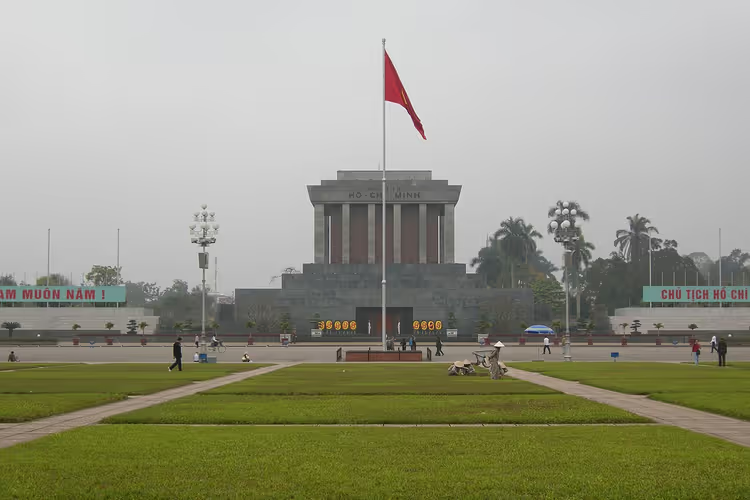
Ba Dinh Square serves as both the heart of the country and the center of Hanoi's architectural ensemble. It was here in 1945 that Ho Chi Minh declared Vietnam's independence. After his death, a gray granite mausoleum resembling the tomb on Red Square was built on the site of the reviewing stand.
The grounds are laid out in rectangular lawns with neat tiled paths between them. By day the square looks understated: flags, emblems, trimmed grass. You're allowed to sit on the lawns if you're tired, and in the evening unusual lanterns light up over the square.
Parades and formations have been held here for decades; the last major parade took place in 2025. On ordinary days the square lives a measured life: people come to take photos, stroll, or simply sit on the grass.
- How to get there: it's the city center, the Mausoleum stands right on the square, entry is free.
- The catch: there's almost no shade, and at midday it's scorching. Come at opening time or after 5:00 PM.
2. Presidential Palace
 © Richard Mortel from Riyadh, Saudi Arabia · CC BYPhoto: Richard Mortel from Riyadh, Saudi Arabia, CC BY (https://creativecommons.org/licenses/by/2.0), Wikimedia Commons
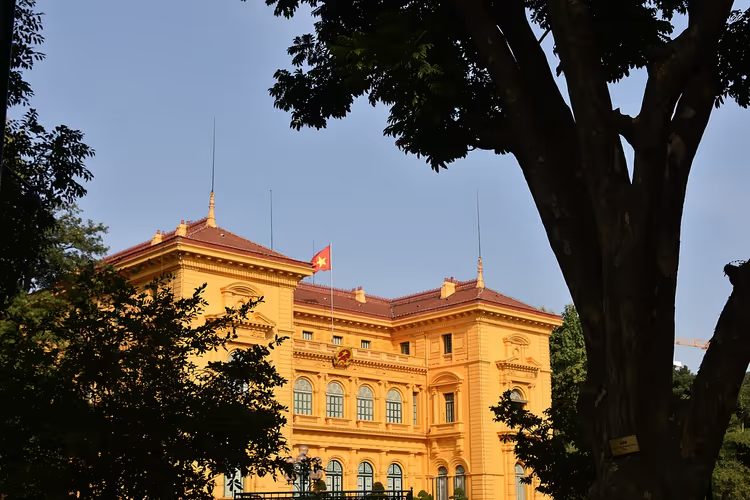
The palace was built for the Governor-General of Indochina and took 6 years to complete. The design belongs to architect Vildieu, and the building itself clearly leans toward European Neo-Renaissance. The colonial authorities demolished a nearby pagoda that was about 1,000 years old to clear the site for construction.
First the Governor-General lived here, then French officers, and after independence the building was used as a guesthouse for party officials. Ho Chi Minh refused to live in the palace and instead took a modest wooden stilt house nearby. Today tourists photograph the dark yellow facade, and in the evening it's beautifully lit up.
The construction site was cleared without ceremony: the land was seized from the previous owner without compensation, and the old pagoda was torn down. But later the grounds were planted with mango trees, lawns were laid out, and ponds were dug according to European landscape design rules. At one time, a grand ceremonial staircase behind wrought-iron gates welcomed visitors to the palace.
- How to get there: 200 m from Ba Dinh Square, entry to the grounds is free.
- The catch: you can't go inside; you'll only see the facade and the surrounding parks.
3. Ho Chi Minh Mausoleum
 © Gregor Dodson · CC BY-SAPhoto: Gregor Dodson, CC BY-SA (https://creativecommons.org/licenses/by-sa/2.0), Wikimedia Commons
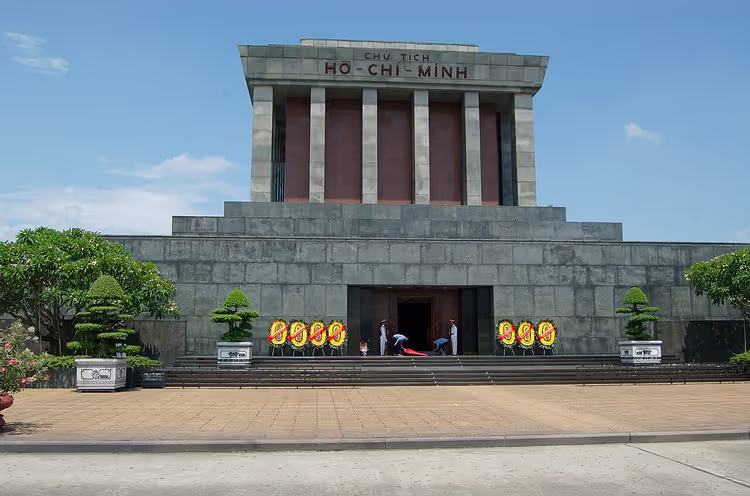
The Ho Chi Minh Mausoleum reaches a height of almost 22 m. Construction began after the United States abandoned its attempts to conquer Vietnam in 1973, and the project went to Soviet architect Isakovich, one of the authors of the Lenin ensemble. That's why the two mausoleums at opposite ends of the world look so similar.
Inside lies the leader's body in a modest, faded suit. Rare plants are planted around it, a fruit orchard has been laid out, and at night the building is lit with red lamps. Entry is free, but the Mausoleum is open only in the morning, and you can get inside after a security check.
- Hours: morning, except Monday and Friday. In 2026 the mausoleum is closed for scheduled conservation from September 4 to November 2 (as of 09/2026, source).
- The catch: lines are long, and the dress code is strict. Cover your shoulders and knees.
4. One Pillar Pagoda
 © Clay Gilliland · CC BY-SAPhoto: Clay Gilliland, CC BY-SA (https://creativecommons.org/licenses/by-sa/2.0), Wikimedia Commons
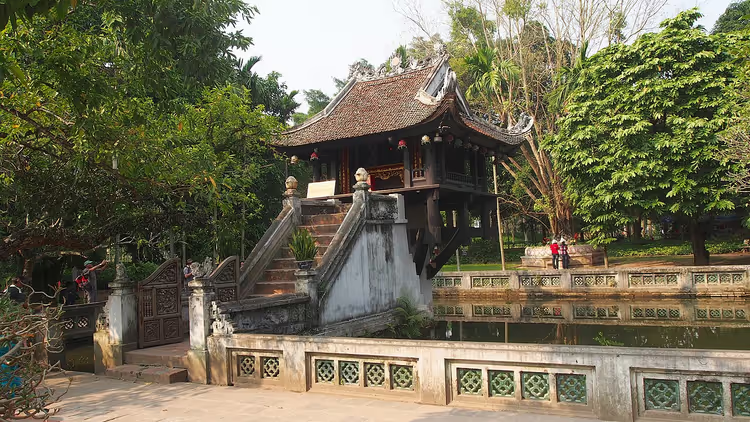
One Pillar Pagoda stands a few hundred meters from the mausoleum, and the city considers it one of the oldest buildings in Hanoi. Emperor Ly Thai Tong ordered it built in 1049 in gratitude to the goddess of mercy for a long-awaited heir. The original was destroyed by the French, but the structure was rebuilt on the same site.
The delicate pagoda rises on a stone pillar 4 m above a pond. A stone staircase leads to the shrine, stone lotus buds stand on either side, and matching sculptures gaze into the water. You cannot go inside: visitors stop at the entrance and pray from outside.
- Getting there: a 5-minute walk from the mausoleum, free entry.
- The catch: the platform is tiny, and at peak hours tour groups take it over. Come by 8:00.
5. Ho Chi Minh Museum
 © Aaron from san francisco, United States · CC BY-SAPhoto: Aaron from san francisco, United States, CC BY-SA (https://creativecommons.org/licenses/by-sa/2.0), Wikimedia Commons
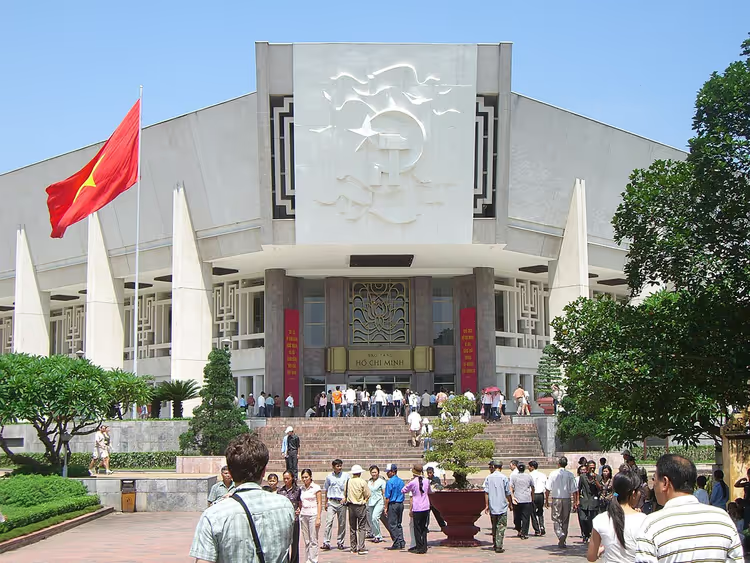
The Ho Chi Minh Museum building is shaped like an opening lotus, a symbol of purity and kindness. The main hall follows Eastern philosophy: a blue ceiling dome over a square floor, with the statue standing between heaven and earth and connecting the two.
The exhibition is extensive and covers not only the struggle for independence but also world events of the 19th and 20th centuries connected to Vietnam. There are interactive screens and audio guides, and some rooms are devoted to folk crafts: lacquering, wood carving, and stone carving.
According to the museum, the collection holds about 100,000 items. You can tour the halls with a local student guide: they earn extra money this way while improving their language skills. There are also themed exhibitions and a small library with the first president's correspondence.
- Hours: the museum welcomes visitors daily except Monday (as of 09/2026, according to the complex administration).
- The catch: labels are mostly in Vietnamese. The audio guide costs extra.
6. National Assembly of Vietnam
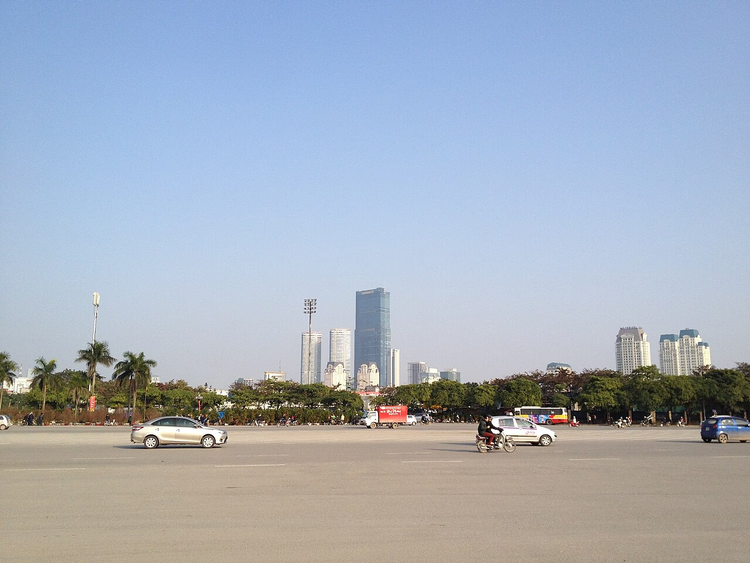
The old Ba Dinh Hall, where the government of the free country once met, no longer exists: it was demolished in 2008 to make way for a new parliament building. During excavations beneath the hall, remains of the imperial capital of Thang Long were found, so construction was halted and the site was turned into an archaeological area.
 © Phan Minh Tuấn · CC BY-SAPhoto: Phan Minh Tuấn, CC BY-SA (https://creativecommons.org/licenses/by-sa/4.0), Wikimedia Commons
General Vo Nguyen Giap, a hero of the war of independence, openly opposed the demolition. Today the new building closes off the square's ensemble, but tourists are not allowed inside. Still, the spot lies right on the way from Ba Dinh Square to the Ho Chi Minh Museum, so you will see it anyway.
- Getting there: between Ba Dinh Square and the Ho Chi Minh Museum, viewed from outside.
- The catch: you cannot get inside, and there is not much to see from the outside.
7. Tay Lake
 © cloud.shepherd · CC BYPhoto: cloud.shepherd, CC BY (https://creativecommons.org/licenses/by/2.0), Wikimedia Commons
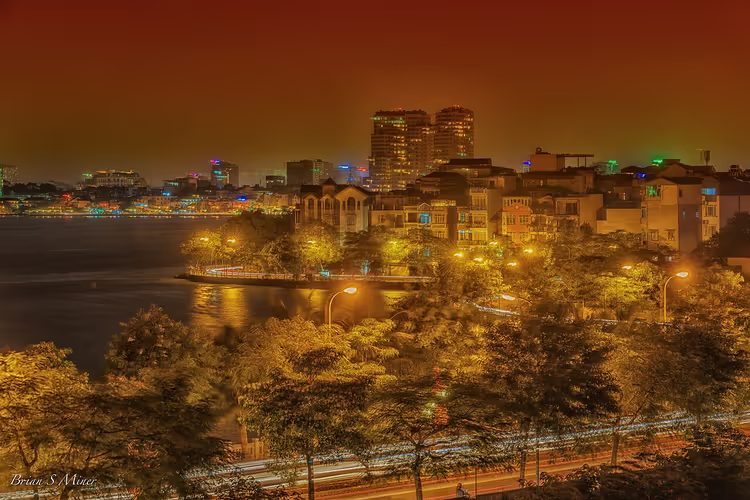
Tay Lake, or West Lake, is considered the city's natural treasure. The water surface covers 2.3 sq km, and the shoreline stretches for 17 km. The waterfront is built up with villas, hotels, and restaurants, and the air here is noticeably cleaner than in the dense old quarter.
Fruit orchards and tea fields surround the lake. Locals come to the shore for morning exercise and for some quiet, and weddings aboard a floating restaurant have become a fashionable tradition. You will easily find a cafe with a water view and local fish and shrimp dishes.
- Getting there: bus or taxi from the center, about 20 minutes; walking from Ba Dinh is too far.
- The catch: parts of the promenade have no shade, and a busy road runs along the shore.
8. Quan Thanh Temple
Quan Thanh Temple was built by ruler An Duong Vuong in gratitude to Saint Tran Vu, who protected the fortress builders from an evil spirit. Inside stands a 4-meter bronze statue of the saint, and since the 11th century the pagoda has guarded the city from the north.
The building has been rebuilt several times, with the latest renovation dating to the 19th century. Inside there is a small library with 12th-century poems, and locals hold this place in special reverence.
- Getting there: on the north shore of Tay Lake, next to Tran Quoc Pagoda.
- The catch: the interior is modest and the rooms are a bit cramped. Many tourists expect more.
9. Tran Quoc Pagoda
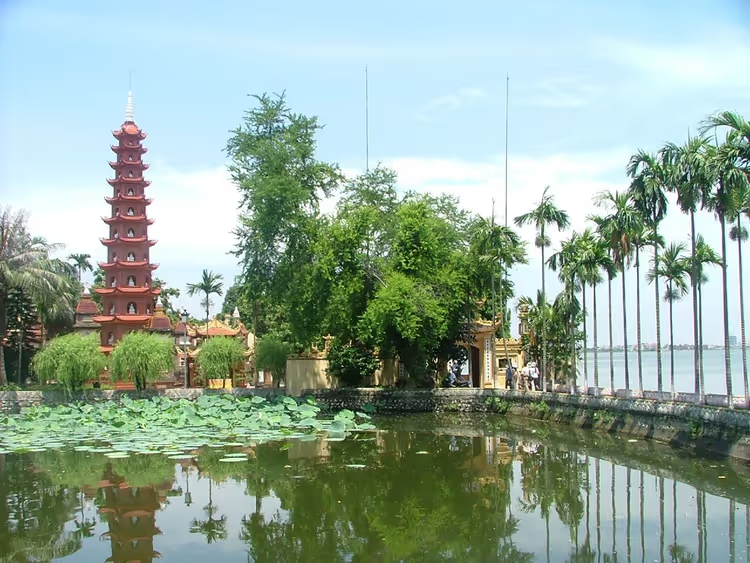 © Thang Nguyen · CC BY-SAPhoto: Thang Nguyen, CC BY-SA (https://creativecommons.org/licenses/by-sa/2.0), Wikimedia Commons
Tran Quoc Pagoda stands on a small Golden Fish Island in the middle of Tay Lake. An earthen causeway connects it to the shore, and you can reach the temple by bus or on foot. The construction date goes back to the 6th century, and researchers consider this pagoda one of the oldest buildings in Vietnam.
Tran Quoc originally stood on the bank of the Red River, but due to the threat of flooding it was moved to the island in the 17th century. The complex was rebuilt in the early 19th century: it now has three entrances, a central tower, and a guest hall. The grounds are well maintained, the lawns are trimmed, and the pagoda reflects beautifully in the water.
- Getting there: walk along the causeway from Quan Thanh Temple, admission is free.
- The catch: there is no shade on the causeway, and traffic moves alongside it.
10. Hoan Kiem Lake
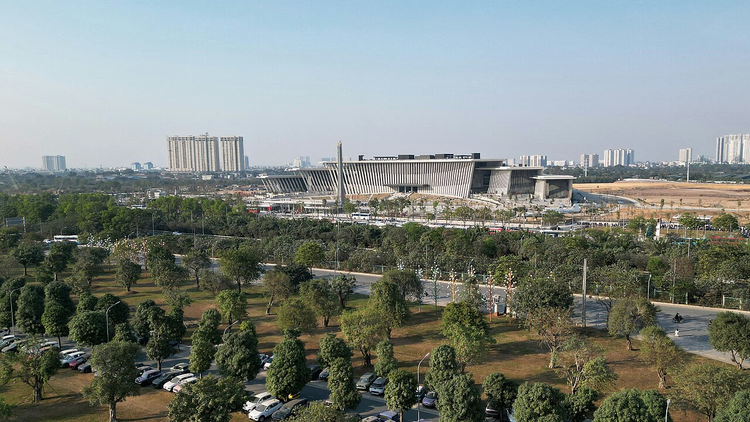 © The Hanoian · CC BY-SAPhoto: The Hanoian, CC BY-SA (https://creativecommons.org/licenses/by-sa/4.0), Wikimedia Commons
Hoan Kiem Lake's second name is Luc Thuy, meaning Green Water, and the surface stays green all year round. The lake lies in the old bed of the Red River and is considered the most visited place in the capital: both tourists and locals come here.
An ancient legend is tied to the lake. A magical turtle appeared to the hero Le Loi and gave him a magic sword, with which he defeated his enemies. After the victory, the turtle took the weapon back and went to the bottom with it, which is why the lake is called the Lake of the Returned Sword.
At first scientists assumed that microalgae gave the water its green color, but the lake is constantly cleaned and the water still remains green. Hanoians believe that the magical turtle still lives in the depths and will give the sword to a hero again in times of danger.
The shoreline is very picturesque: lawns, flower beds, benches, and vine-covered pavilions. Hanoians exercise outdoors here, and many hotels in different price ranges stand along the shore. You can easily spend the night right by the water.
- Getting there: this is the center of the old town, you can walk from St. Joseph's Cathedral.
- The catch: the embankment is very crowded in the evening and on weekends.
11. Vietnam military history museum
The museum was founded by Vietnam's first president, Ho Chi Minh, and the grand opening took place in 1956 for the 15th anniversary of the national army. The exhibition covers the wars with France and the United States, and military equipment in varying states of preservation is displayed outside.
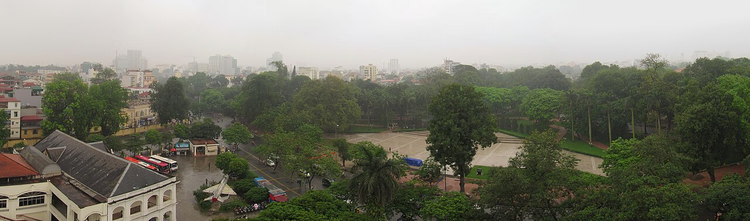 © Grenouille vert · CC BY-SAPhoto: Grenouille vert, CC BY-SA (https://creativecommons.org/licenses/by-sa/3.0), Wikimedia Commons
Important update: in late 2024 the museum moved to a new building in the Nam Tu Liem district in the west of the city (as of 09/2026, source). The new complex covers almost 39 hectares and displays four national treasures, including wreckage of a B-52 bomber and a MiG-21 fighter jet. Admission costs about 40,000 dong (as of 09/2026, museum guide).
- Getting there: the new building is far from the center and is not part of a walking route, take a taxi or bus.
- The catch: because of the move, the museum dropped out of the walking route through the old center.
12. Lenin Park
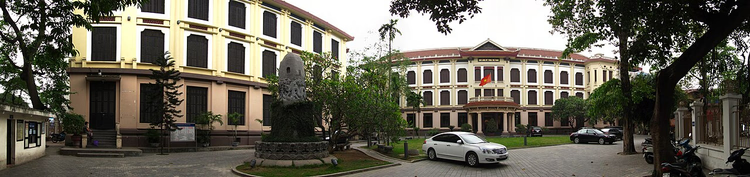 © Grenouille vert · CC BY-SAPhoto: Grenouille vert, CC BY-SA (https://creativecommons.org/licenses/by-sa/3.0), Wikimedia Commons
The park was first called Thong Nhat, meaning united, and it received Lenin's name in April 1980. The statue of the founder of the USSR's October Revolution was a gift to Vietnam in 1982 for the 5th Congress of the Communist Party, and the sculptor was Tyurenkov.
Fresh flowers are constantly laid at the monument. The park has become a favorite spot for residents: Hanoians do gymnastics here, and a flower festival takes place in spring. You can rest here before continuing your city tour.
- Getting there: on Dien Bien Phu Street, between the Hanoi Citadel and the former military museum building.
- The catch: it is an ordinary city square without standout attractions.
13. Fine Arts Museum
The Fine Arts Museum's exhibition is logically structured: each section corresponds to a stage in the country's development. The collection was assembled from around the world and covers the period from ancient times to the present.
The first floor displays Buddhist statues made of stone and wood, images of national heroes and fairy-tale characters. The second floor shows interior objects, costumes, lacquer painting, and wood carving. The third floor is dedicated to 20th-century painting, which Vietnamese artists began doing in oils largely thanks to the French artist Victor Tardieu.
- Cost: admission about 60,000 dong for an adult, with student discounts available (as of 09/2026, source).
- The catch: the museum is closed on Mondays, and some halls are sometimes only partially open.
14. Temple of literature, Van Mieu
 © Jakub Hałun · CC BYPhoto: Jakub Hałun, CC BY (https://creativecommons.org/licenses/by/4.0), Wikimedia Commons
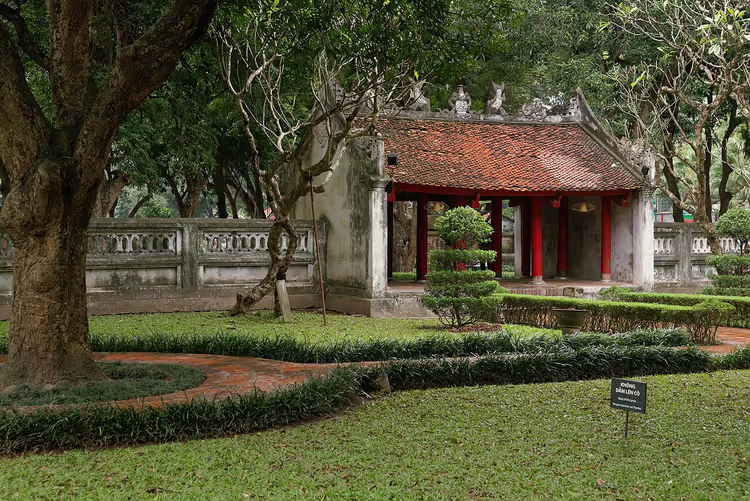
The Temple of Literature, Van Mieu, is dedicated to Confucius and his teachings, and there are few such temples in Vietnam. It is considered the country's first university: exams in the Confucian tradition used to be held here. The complex survived the wars reasonably well, so you will see buildings from different dynasties.
After passing through the entrance gate, visitors arrive at three paths that divide the grounds into five sections. In the second section stands the red stone Literature Pavilion from the early 19th century. Further on are the Well of Heavenly Clarity and storerooms for offerings, and in the depths lies the Imperial Academy, which French troops destroyed during their retreat and which was restored in 2000.
Here visitors pass through small arches, choosing between Acquired Talent and Perfect Virtue. The stone steles bearing the names of doctors who passed the exams are listed in the UNESCO Memory of the World register. The complex resembles an improved copy of the Qufu temple built in the philosopher's birthplace.
- Cost: entry is about 70,000 dong for an adult (as of 09/2026, source).
- The catch: it gets crowded here during the day because of school groups. Come at opening time.
15. St. Joseph's Cathedral
 © Linhcandng ( thảo luận ) · CC BY-SAPhoto: Linhcandng ( thảo luận ), CC BY-SA (https://creativecommons.org/licenses/by-sa/3.0), Wikimedia Commons
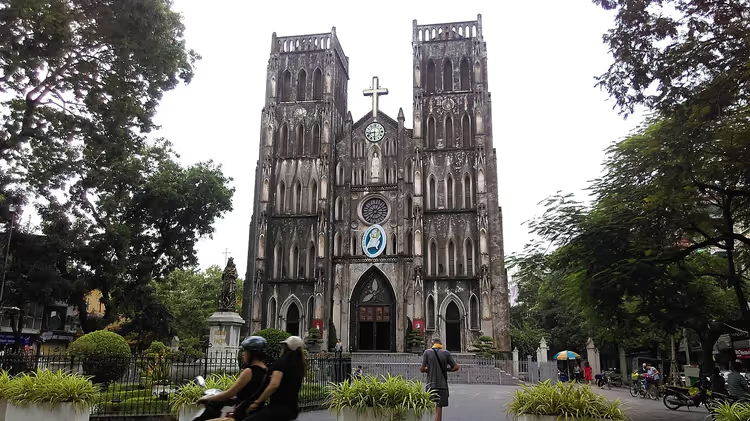
St. Joseph's Cathedral was built by the French in the late 19th century, and from the outside it resembles Notre-Dame in Paris. To clear the site, the colonial authorities demolished the Bao Thien Pagoda. After the French left, the church fell on hard times: priests were repressed, treasures were looted, and the cathedral itself was closed and returned to worshippers only in 1990.
Today it is the country's main Catholic cathedral, built in the neo-Gothic style. Two symmetrical towers rise more than 30 m, and the stained glass windows were made in France. The walls keep darkening because of the city smog, but in the courtyard you can rest and listen to live music.
- Getting there: in the old quarter, a 5-minute walk from Hoan Kiem Lake, free entry.
- The catch: services are often held inside, and during those times tourists are asked not to disturb.
16. Hanoi Hilton
 © dronepicr · CC BYPhoto: dronepicr, CC BY (https://creativecommons.org/licenses/by/2.0), Wikimedia Commons
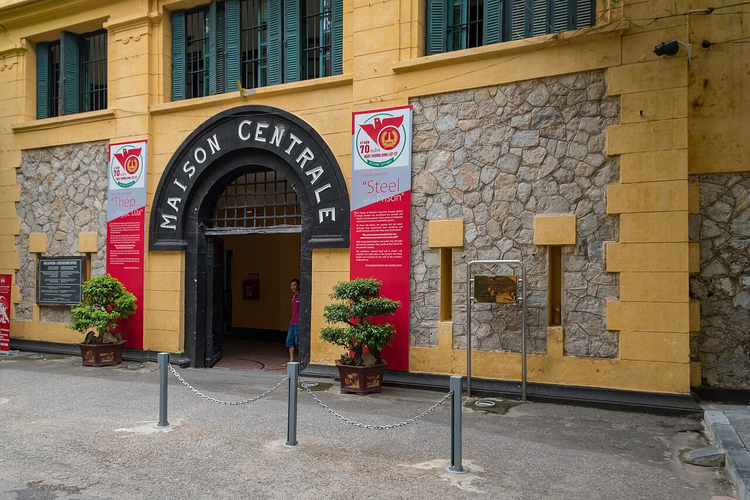
Hanoi Hilton is not a hotel, but part of the grim Hoa Lo Prison, nicknamed by American POWs. The facility was built by the French to hold Vietnamese who resisted the colonial regime. During the war with the US, downed American pilots were held here, and conditions only worsened over time.
In the late 20th century, the prison was almost completely demolished, but a small section was preserved. Today you can see a fragment of the stone wall and a barracks building, and inside you will find photographs, documents and cell furnishings, including a guillotine. Admission costs about 50,000 dong (as of 09/2026, source).
- Hours: daily from 8:00 to 17:00, no days off.
- The catch: the exhibition is emotionally heavy, so think carefully before bringing children.
17. Imperial citadel of Thang Long
 © Grenouille vert · CC BY-SAPhoto: Grenouille vert, CC BY-SA (https://creativecommons.org/licenses/by-sa/3.0), Wikimedia Commons
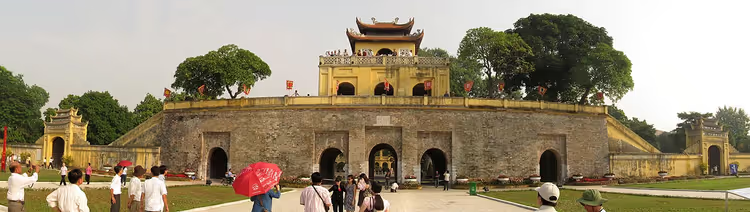
The Imperial Citadel of Thang Long is a huge complex with palaces, temples and service buildings. The first structures were built under the emperors of the Ly dynasty, but the fortress was constantly rebuilt and destroyed in wars, so little of the historic construction has survived. In the early 21st century, excavations began here, and archaeologists found artifacts from the 11th century.
Among the above-ground structures, tourists are drawn to the Kinh Thien imperial palace, the Flag Tower and the north gate. The palace is poorly preserved, essentially ruins, but the tower and gate look far better. In 2010, the citadel was added to the UNESCO World Heritage list, and admission now costs 100,000 dong (as of 09/2026, official website).
- Getting there: on foot from Lenin Park and the mausoleum, about 15 minutes.
- The catch: the northern part of the grounds is closed to visitors.
18. Opera House
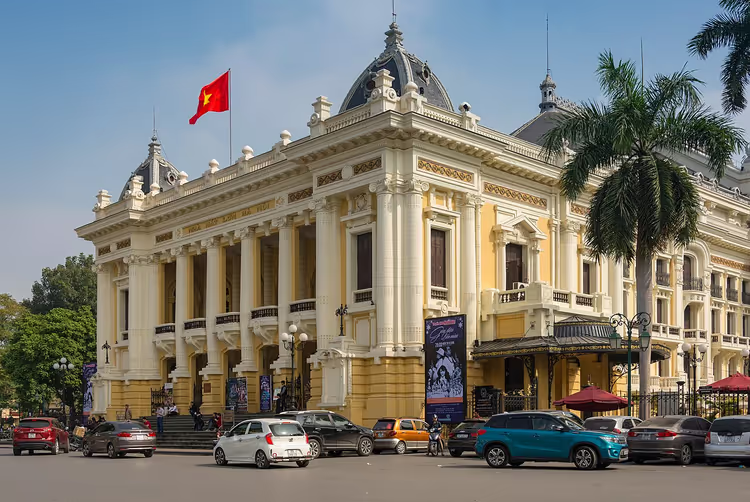 © xiquinhosilva · CC BYPhoto: xiquinhosilva, CC BY (https://creativecommons.org/licenses/by/2.0), Wikimedia Commons
The Opera House was built by the colonizers in 1911 as a simplified copy of the Paris Opera. From the day it opened, world-famous performers appeared on its stage, but during the war of independence the building was badly damaged in street fighting. After independence, performances resumed, and in the late 20th century the theater was restored.
Today its stage meets world standards, and local and international artists perform here again. In the evening, the facade is beautifully lit and makes a great backdrop for the final photos of your walk.
- Getting there: 10 minutes on foot from Hoan Kiem Lake, viewing the exterior is free.
- The catch: you can only get inside with a ticket to a performance.
The walking route ends at the Opera House. If you want to add guided tours and city excursions to your walk, check out the options below.
Tours and tickets in Hanoi
Guided tours, skip-the-line tickets and activities — most offers can be cancelled free of charge.
See offers on GetYourGuideThe widget loads once you give your consent.
You can open the route map in a separate window and lead your whole group with it, without checking your phone at every intersection.
⁉️🤔 Frequently asked questions
How much time do I need for the Hanoi route?
The entire walking route takes 8-9 hours including lunch and stops. If you are in the city in transit and only have half a day, keep just the morning block around Ba Dinh Square and the evening walk around Hoan Kiem Lake, and save the rest for your next visit.
Is the Ho Chi Minh Mausoleum open, and when is the best time to go?
The mausoleum is open only in the mornings, except Mondays and Fridays. Arrive at opening time, as lines grow quickly. In 2026 it is closed for scheduled conservation from September 4 to November 2, so check the dates in advance before your trip.
How much do museum tickets in Hanoi cost?
Most sights on the route are free: squares, lakes and pagodas. You will pay about 100,000 dong for the Imperial Citadel (as of 09/2026, official Thang Long Citadel website), about 60,000 dong for the Fine Arts Museum, and about 70,000 dong for the Temple of Literature (as of 09/2026, official Temple of Literature website). The mausoleum and many temples are free to enter.
Can I do the route on foot, or do I need transport?
The main line from Ba Dinh Square to the Opera House is walkable, about 6 km in total on the map. You will need transport for West Lake. The Military History Museum has moved to the Nam Tu Liem district and is not part of the walking route.
Where can I eat and stay along the route?
It is convenient to eat at West Lake and in the Old Quarter near Hoan Kiem Lake, where there are many cafes serving local cuisine with fish, shrimp and rice. Hotels in various price ranges line the shore of Hoan Kiem, so staying within steps of the evening part of the route makes sense.
In short: what to book
If you have only one day, build your trip around the morning block at Ba Dinh Square. It gives you the most impressions for the least walking: the mausoleum, the Presidential Palace and the One Pillar Pagoda are right next to each other.
If you came for colonial architecture, leave more time for St. Joseph's Cathedral and the Opera House, and move the citadel to a second pass. If you are traveling with children, start with the museums, where it is cool and there are interactive screens.
One booking here pays off immediately: get your tickets for the Imperial Citadel and the Fine Arts Museum in advance. find a Hanoi tour on GetYourGuide

A small editorial team writing guides for independent travel. We travel ourselves, but we haven’t been everywhere, so we check prices, opening hours and how to get there against official sources.