
















Soča in Slovenia: rafting in Bovec, fishing and waterfalls of the valley
The Soča crosses the border of two countries and barely loses its color anywhere along the way. The river begins in Slovenia's Julian Alps and flows into the Adriatic Sea under its Italian name, the Isonzo. Its total length is 138 km, of which 96 km lie in Slovenia and the rest in Italy (as of 09/2026, Wikipedia: Soča).
Many people come here for just a couple of hours, photograph the water by the road, and leave. That way you will miss the narrow canyons, the Kozjak waterfall, and the calm stretches with trout. Below we have gathered facts about the river along with practical information: where to go rafting, how much a rafting trip and a permit cost, how to get a fishing license, and what to see along the way.
Ad: this article contains affiliate links, we earn a commission if you book through them, at no extra cost to you.
Where the Soča River flows
💡 In short:
- Plan for two to three days. On a single trip you will only see the canyon by the road, not the whole valley.
- Use Bovec as your base: rafting, canyoning, and mountain routes all start from there.
- A river access permit is mandatory from March 15, 2026. The price is listed in the section on rafting in Bovec.
- Prices and permits: 09/2026, verified on the Soča Valley tourism office website
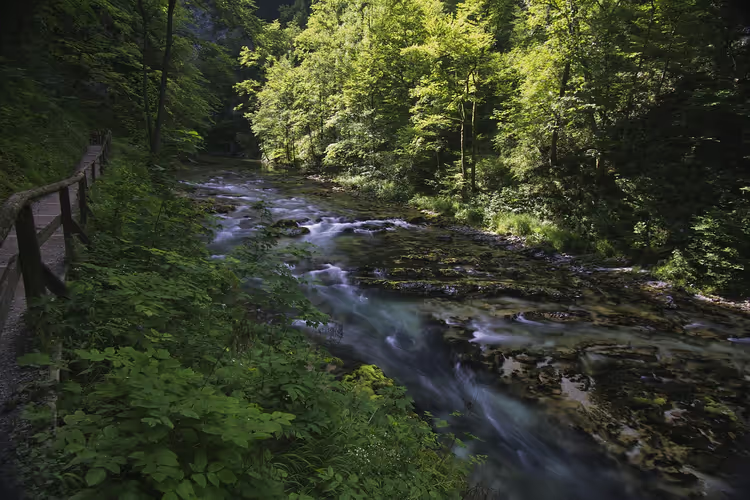
The Soča runs through western Slovenia, crosses the border near Nova Gorica, and continues through Italy as the Isonzo. Most of its course lies within Triglav National Park. The banks are almost undeveloped, so the water's color here depends only on the rock on the riverbed and on the light.
 © Johann Jaritz · CC BY-SAPhoto: Johann Jaritz, CC BY-SA (https://creativecommons.org/licenses/by-sa/4.0), Wikimedia Commons
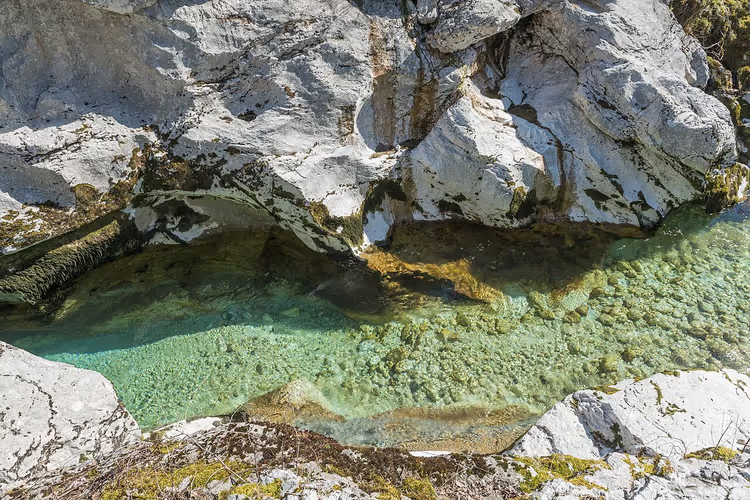
The shade comes from limestone: fine rock particles hang in the water and reflect light. In the morning, before direct sunlight, the water looks milky blue; during the day it shifts to a deep turquoise; and after rain it turns cloudy within a matter of hours. The river's width changes noticeably: on flat sections it widens several times over, yet remains shallow.
The source of the Soča in the Trenta Valley
The river rises in the Trenta Valley, at the foot of Travnik peak in the Mangart-Jalovec massif. The spring bursts from a limestone slope in the upper valley, where the Soča still resembles a playful mountain stream. Further down, it gathers water from the surrounding peaks and picks up speed.
 © Tiia Monto · CC BY-SAPhoto: Tiia Monto, CC BY-SA (https://creativecommons.org/licenses/by-sa/3.0), Wikimedia Commons
Downstream the channel enters gorges, the river accelerates, and it stays cold all season. Even in July the water in the upper reaches numbs your legs: it is fed by snowmelt from the Julian Alps. Few people dare to swim here, but it is precisely the cold and the purity of the water that sustain the marble trout. Along the road you will pass rocky banks and suspension bridges, which offer the best view of the water's color.
Rafting and canyoning in Bovec
The main draw on the river is Bovec. The town sits among the Julian Alps, within the Triglav protected area, and nearly all the valley's water routes start from here. Rapids, ledges, and steep slopes create sections of varying difficulty, which is why both experienced athletes and beginners come here.
 © Tiia Monto · CC BY-SAPhoto: Tiia Monto, CC BY-SA (https://creativecommons.org/licenses/by-sa/3.0), Wikimedia Commons
International rafting competitions have been held in Bovec for decades, and local clubs put groups on the water every day. The classic route takes about three hours including the briefing and changing. You will be given a wetsuit, a helmet, and a life jacket, and you will go out on the water with a guide.
There are options for beginners too: river sections of different difficulty, schools, and instructors. On the first day, take an easy section; on the second, move on to something more challenging. The narrowest spots are in the canyon, where the current is squeezed into a gap between the rocks. A separate option for those who want more than a raft is river bugging: you float lying on a plastic board and steer it with handles.
Canyoning and kayaking follow the same principle but require more technique. In canyoning you descend the rocks with ropes and jump into the water; in kayaking you control a single-person boat with a paddle. Book both options in advance, especially for weekends in July and August. Organizers in Bovec publish current prices for the 2026 season in their price lists, and the municipal water access permit is paid separately: €18-21 per person depending on the season (as of 09/2026, Soča Splash price list).
It is convenient to compare routes, groups, and start times in advance: tours and rafting in Bovec on GetYourGuide. That way you can see which slots are left for your dates and what is included in the price.
Tours and tickets in Bovec
Guided tours, skip-the-line tickets and activities — most offers can be cancelled free of charge.
See offers on GetYourGuideThe widget loads once you give your consent.
More than rafting: trails, mountains and bikes
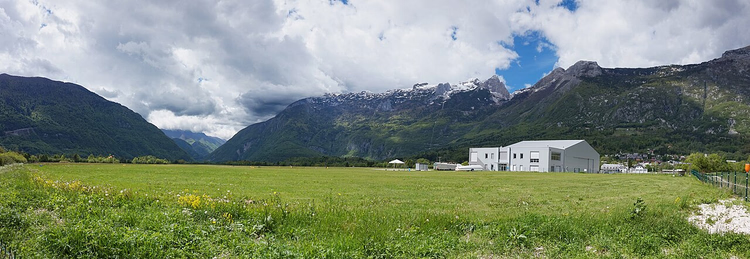
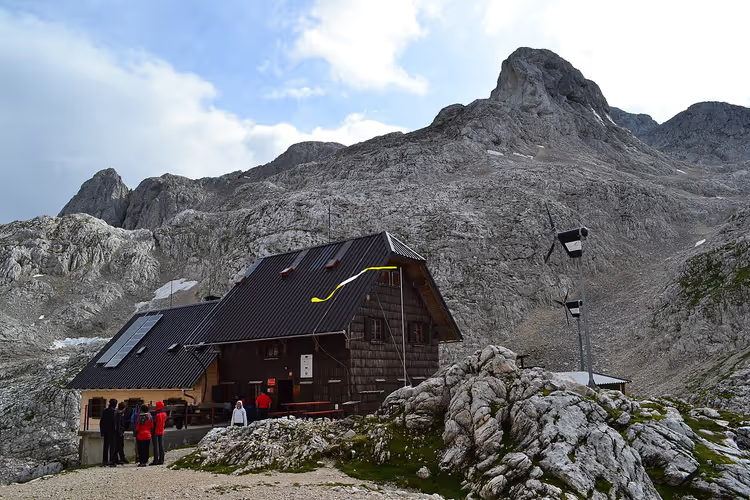
You can switch from the water to climbing, hiking routes, mountain bikes and paragliding. The valley also suits those who just want to look: the peaks of the Julian Alps, with no vegetation on them, seem snow-covered all year round and serve as the backdrop for the whole panorama.
 © Sefjo · CC BY-SAPhoto: Sefjo, CC BY-SA (https://creativecommons.org/licenses/by-sa/3.0), Wikimedia Commons
Besides sports events, Bovec hosts music and folklore evenings and a theater arts festival. The best season for walks runs from April to November. In summer there are many people in the valley, so come early in the morning or in the evening for quiet. In winter Bovec operates as a ski resort, and the river retreats into the shade between snow-covered banks.
Hiking routes are marked on both banks, and some of them run right along the water. Cyclists choose roads through the valley to Tolmin and further to the plateau. Paragliding launches from the peaks above Bovec when the weather allows.
Fishing on the Soča: marble trout
The clean water holds a rare fish. The Soča is home to the marble trout, which locals call the "ghost" of the river: it is cautious and far from everyone catches it. The species is protected, so such fish are released back. There are also other trout species here, as well as grayling and other local breeds.
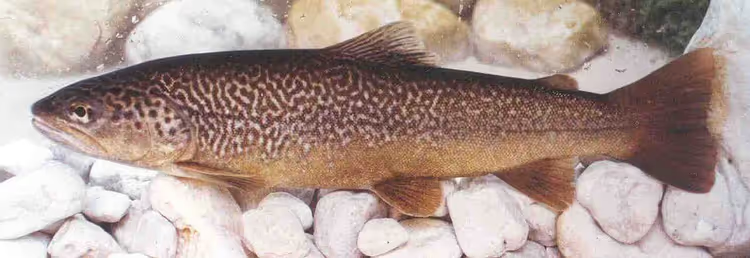
The Soča Valley is considered one of the best places in Europe for fly fishing. If you are serious about it, hire a local guide: they will suggest a section for the season and show you the technique. Fishing without a license is not allowed. Permits are sold by local fishing societies, such as RD Tolmin, and the 2026 season opened on April 1 (as of 09/2026, Ribiška družina Soča). A daily license is easiest to buy online at ribiskekarte.si.
What to see along the way
If you are traveling by car, stop at campsites along the river: this way you will see the water in the morning, before excursions. Further on, the route leads through small villages, and at Most na Soči the river merges with the Idrijca. It is worth stopping here for a coffee and looking at the confluence of the two streams.
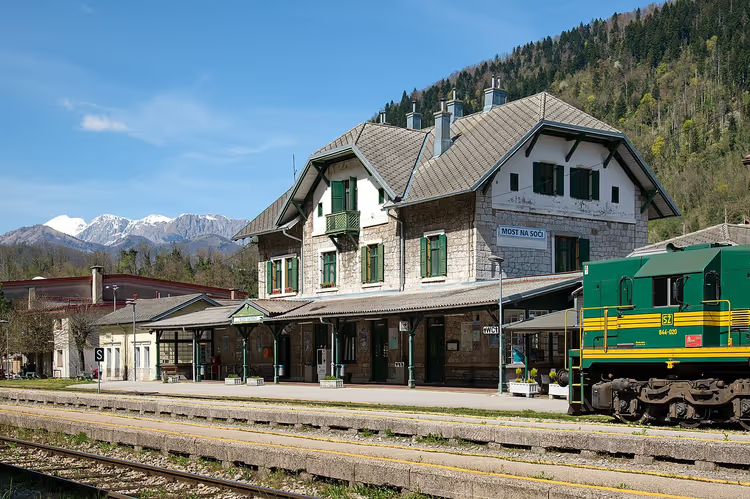 © Petr Štefek · CC BY-SAPhoto: Petr Štefek, CC BY-SA (https://creativecommons.org/licenses/by-sa/3.0/cz/deed.en), Wikimedia Commons
A separate stop: the Solkan Bridge near Nova Gorica. It is 219.7 meters long, and its arch span is 85 meters, which makes it the longest stone arch railway bridge in the world (as of 09/2026, Wikipedia: Solkan Bridge). It was built in 1906 on the Bohinj Railway. You cannot walk across the bridge, but views of the water and the valley open up right from the road next to it.
In Kobarid, the Kobariški muzej operates: the exhibition tells about the battles on the Isonzo Front in World War I. Over two and a half years of trench warfare, these places saw twelve battles (as of 09/2026, Kobariški muzej). This is where the novel "A Farewell to Arms" is set. Later, several scenes of "The Chronicles of Narnia: Prince Caspian" were filmed in the valley. Nearby, a few kilometers away, is the Kozjak waterfall, reached by a trail from Kobarid.
Place | Where it is | What to see | Entry |
|---|---|---|---|
Sochi Canyon | along the road near Bovec | turquoise water and rapids | free |
Kozjak Waterfall | 3 km from Kobarid | waterfall in a stone chamber | ticketed, entry point open 2.04-31.10 (as of 09/2026, Soča Valley) |
Kobariški muzej | Kobarid center | exhibition about the Isonzo Front | ticketed, prices and hours on the museum website) |
Solkan Bridge | near Nova Gorica | 85-meter arch and valley panorama | free, from the road |
The main hydroelectric plants on the river, Doblar, Plave and Solkan, are downstream, near Kanal and Nova Gorica. Water levels in certain sections change according to the plants' schedules, so in the morning the riverbed may look different than in the afternoon. Keep this in mind if you plan to swim or take photos by the water.
⁉️🤔 Frequently asked questions
When is the best time to visit the Sochi Valley?
The rafting and hiking season runs from April through November. In summer, all canyons and the Kozjak Waterfall are open; the entry point to the waterfall operates from April 2 through October 31. In spring and fall there are fewer people, but some operators close the season earlier. Go on a weekday and early in the morning: on weekends the parking areas near the canyon get crowded.
How much does rafting on the Soča cost?
The price has two parts. The tour itself in Bovec costs a few dozen euros per person. On top of that, there is a municipal river access permit; its price is listed in the rafting in Bovec section. Gear and transfer from the camp are usually included in the tour; the permit is paid separately.
Can you swim in the Soča?
Yes, but the water is cold even in July: the mountain river is fed by snowmelt from the Julian Alps. It is more comfortable in the wide, calm stretches below Bovec and near Most na Soči, where the current is weaker. In the canyons and rapids, do not enter the water without a guide: the current is strong and the rocks are slippery.
Do you need a fishing permit?
Yes, fishing is allowed only with a daily or multi-day license. Permits are sold by local fishing associations, such as RD Tolmin, and the 2026 season opened on April 1 (as of 09/2026, season opening on the association's website). Marble trout is protected, so it is released back.
What can you see near the river in one day?
Three spots are easy to combine into one route: the Kozjak Waterfall near Kobarid, the Kobariški muzej in the town center, and the Solkan Bridge near Nova Gorica. Between them you will drive along the most turquoise stretch of water. To see all the stops properly, it is better to allow two days and spend the night in Bovec or Kobarid.
In short: what to book
- If you are going for the water: book rafting or canyoning in Bovec, and arrange the permit in advance.
- If you want quiet: put Kobarid and the Kozjak Waterfall in the morning, before tour groups arrive.
- If you are fishing: buy an RD Tolmin license online before the trip and hire a guide for the first day.
The rest is up to you: compare routes and available slots on GetYourGuide and pick a day based on the weather.

A small editorial team writing guides for independent travel. We travel ourselves, but we haven’t been everywhere, so we check prices, opening hours and how to get there against official sources.