
















What to check in a hotel room: 8 places in the first five minutes
Five minutes in the room cost less than a sleepless night. You walk in after the flight, put your suitcase by the door, and turn on the light. This is the most convenient time to check eight spots that are more often dirty or unsafe than others. By evening you will have already unpacked and put your things on the shelves.
We put together eight spots in a hotel room and found one simple action for each. You don't need to bring a whole first aid kit: wet wipes and flip-flops are enough. Below, each spot is covered in order, with an explanation of the risk.
What to check in the room: a short checklist
💡 In short:
- Inspect the mattress and bed seams before you unpack your suitcase.
- Wipe the remote, phone, and light switches with a wet wipe.
- Cover the door peephole if it doesn't have a protective cover.
- Hygiene and safety in the room: 09/2026, verified on the EPA page.
Below are the same eight items in more detail: with an explanation of the risk and one action. The table helps you quickly refresh the list in your memory.
Spot in the room | Risk | What to do |
|---|---|---|
Remote, phone, light switches | Bacteria and dirt | Wipe with a wet wipe |
Glasses and cups | Poorly washed dishes | Wash before first use |
Door peephole | Observation from outside | Cover with a cap or tape over it |
Blankets and bedspreads | Rarely washed | Remove the bedspread, ask for a duvet cover |
Mattress and bed seams | Bed bugs | Inspect before unpacking your things |
Floors and shower | Mold and mildew | Don't walk barefoot, bring flip-flops |
Hotel Wi-Fi | Data interception | Don't enter card details |
"Do not disturb" sign | Theft while the guest is away | Leave the sign on the door |
1. Remote, phone, and light switches
Guests' hands touch the remote more often than any other object in the room. In a 2012 study, the level of bacteria on the TV remote turned out to be comparable to the toilet and bathroom sink (as of 2012, CBS News). The same list includes bedside light switches, the phone on the nightstand, and air conditioner buttons. These are the objects you touch first after a shower and before eating.
- What to do: wipe the remote, phone, and light switches with an antibacterial wet wipe, then wash your hands.
- The catch: a wipe removes surface dirt, but it doesn't replace disinfecting the entire room.
2. Glasses, cups, and stemware
Dishes look clean, but in some hotels they are only rinsed under water. Dishes sealed in plastic wrap or a paper bag are more reliable. It's impossible to check in advance how your particular glass was washed. Hot water reduces the risk, although it doesn't fully sterilize the dishes.
- What to do: rinse glasses and cups with hot water before first use, even if they are sitting under a cap in the bathroom.
- The catch: sealed dishes can also collect dust during storage.
3. Door peephole without a protective cover
The peephole is there so you can see who is standing outside the door. The flip side: in older hotels, someone can look through it from outside if there is no protective cover. Reversing attachments are sold for this purpose, which flip the image in the peephole. Check the peephole right away, not before bed.
- What to do: cover the peephole with the standard cap or tape over it with a bandage while you rest.
- The catch: a covered peephole won't help if the door isn't locked from the inside.
4. Blankets, bedspreads, and throws
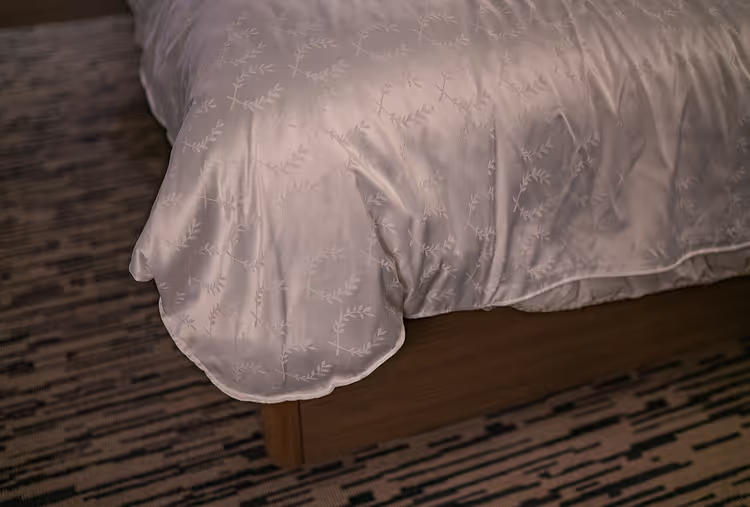 © Tony Webster from Minneapolis, Minnesota, United States · CC BYPhoto: Tony Webster from Minneapolis, Minnesota, United States, CC BY (https://creativecommons.org/licenses/by/2.0), Wikimedia Commons
Bed linen is changed after every guest, but bedspreads and decorative throws often stay on the bed for months. They are washed less often than pillowcases, and you can't check this in advance. You can still reduce contact, and it will take you half a minute.
- What to do: remove the bedspread from the bed and ask for a duvet cover if the blanket is without one.
- The catch: not every hotel provides a duvet cover. If there isn't one, sleep under a sheet.
5. Mattress and bed seams: bed bugs
Bed bugs arrive at hotels in guests' suitcases and hide in mattress seams, behind baseboards, and in the bed frame. In the fall of 2023, Paris experienced a notable bed bug outbreak that was covered by global media (as of 10/2023, BBC). According to the EPA, the insects leave rusty stains and dark spots on sheets, and they also hide near tags and in seams (EPA bed bug guide). The inspection takes a couple of minutes if you do it before unpacking.
- What to do: lift the mattress, shine a flashlight into the seams and on the tags, inspect the bed frame and luggage rack. If you find signs: immediately ask for another room.
- The catch: even the most careful inspection doesn't give a full guarantee, some insects hide in cracks behind the baseboard.
6. Floors and shower stall
Mold and mildew in tile grout are not always visible, and no one is required to wash the shower floor after every guest. You shouldn't walk barefoot in the room, especially if you have carpeting. Damp carpet holds fungus longer than tile. Flip-flops solve most of this problem.
- What to do: bring flip-flops and wear them both in the shower and throughout the room.
- The catch: flip-flops take up space in your suitcase.
7. Open Wi-Fi in the hotel
An open network without a password is convenient, but data in it is often transmitted without encryption. According to the US Federal Trade Commission USA, you shouldn't enter passwords and card details on public networks (FTC rules). Hotel Wi-Fi falls into this category, even though you pay for the room.
- What to do: for banking, bookings, and tickets, use mobile data or a VPN rather than the hotel's open network.
- The catch: mobile data while roaming costs more than hotel Wi-Fi.
8. "Do not disturb" sign on the door
The "Do not disturb" sign creates the impression that the guest is in the room. It's harder for outsiders to tell that the room is empty. Keep in mind that with the sign on the door, housekeeping won't clean the room. The trick is simple, but it only works together with a locked door. Check the lock every time you leave.
- What to do: when leaving, leave the sign on the handle and lock the door.
- The catch: the sign doesn't replace a safe, so keep documents and electronics in the safe or with you.
⁉️🤔 Frequently asked questions
Can you catch something from the remote or a light switch?
There is a risk, but it's lower than it seems. Not many infections are transmitted through surfaces, but you should wash your hands after touching the remote. A wipe reduces the number of bacteria, but it doesn't kill all viruses. Don't touch your face before washing your hands.
What should you do if the room turns out to be dirty?
Take a photo of the problem and go to the front desk with a request to clean or change the room. At most hotels, housekeeping will clean again or offer another room. The request is justified: you paid for the stay, not just the bed.
In short: what to book
Before booking, check recent reviews from the last few months: complaints about bed bugs and mold appear there faster than in the hotel description. After that, everything is decided in the first five minutes in the room. Below is a short decision matrix.
- If you're going to a city with heavy tourist traffic: choose a room with laminate flooring instead of carpet and check the mattress.
- If you work from the room: use mobile data instead of hotel Wi-Fi.
- If you're staying in an older hotel: start with the peephole and the interior lock on the door.
- If you're traveling with children: bring wet wipes and flip-flops, and inspect the room before unpacking.
Save the checklist and check the room in the first few minutes, while your suitcase is still closed.

A small editorial team writing guides for independent travel. We travel ourselves, but we haven’t been everywhere, so we check prices, opening hours and how to get there against official sources.