
















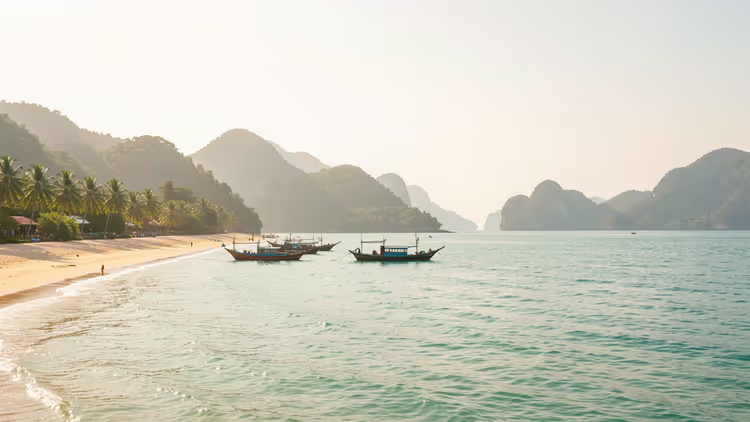
 AIIllustrative image: AI-generated
Weather in Vietnam in June: where to go and where there is no rain
Vietnam in June is never the same. While Hanoi drowns in humidity and evening downpours, the central coast stays dry until August. The country's official tourism portal divides this month into three weather zones, and each one runs on its own schedule.
For you, that means one simple rule. Don't pick the country as a whole, pick a region: it determines swimming, sightseeing, and even accommodation prices. Below you'll find the weather by zone and understand which resort actually works in June.
June in Vietnam: three different climates
💡 In short:
- The north and south are in the rainy season in June, while the center stays dry.
- The central coast and the mountains are the most comfortable; Hanoi is the most stifling.
- Seasonality and weather norms: 09/2026, verified on the official Vietnam tourism portal.
June is a turning-point month for Vietnam. The northern part is soaking up moisture, the central part stays in its dry season until August, and the south settles into a daily rhythm of afternoon downpours. There is no single forecast for the whole country, so pick a region based on what you want: beach, mountains, or city.
Long-term averages from the climate reference (as of 09/2026, Weather & Climate):
City | Daytime | Nighttime | Monthly rainfall |
|---|---|---|---|
Hanoi | 35 °C | 27 °C | 251 mm |
Ho Chi Minh City | 33 °C | 26 °C | 261 mm |
Da Nang | 33 °C | 27 °C | moderate |
The numbers show the main point. In the north and south it's hot and wet at the same time, while the central part stays dry during this same period.
Weather in northern Vietnam
The north enters the rainy season in June, with the peak of downpours coming in July and August. Hanoi in June is the most stifling city in the country: humidity is high, the air is heavy, and downpours hit almost every day. The good news is that the rain here is short and intense. In half an hour the streets turn into a torrent, but an hour later the air feels fresher.
Plan your walks for the morning. By midday the heat drives even locals off the streets, and you'll appreciate museums, air-conditioned cafes, and shady lakeside paths. In the afternoon, take an umbrella: a downpour can catch you at the worst possible moment. Figure out in advance where you'll wait out the rain, and the day won't fall apart.
Ha Long Bay looks different in summer than it does on postcards. Thunderstorms and haze often hide the limestone cliffs, but the sea breeze noticeably softens the humidity. The water in the bay stays warm, so swimming at a boat anchorage is quite realistic.
In the northern mountains, in Sapa, the weather is milder. Daytime is cooler here than on the coast, but June opens the wet season: trails get muddy, and landslides are possible on mountain roads. The rice terraces are at their greenest at this time, and there are few tourists. Bring waterproof footwear if you're planning to trek.
 © Andrea Schaffer from Sydney, Australia · CC BYPhoto: Andrea Schaffer from Sydney, Australia, CC BY (https://creativecommons.org/licenses/by/2.0), Wikimedia Commons
Central regions: dry season
The center of the country is in the middle of its dry season in June, which lasts until August. Rain is rare here, there's almost no wind, and nothing disrupts a beach vacation. Da Nang is the most predictable option this month: clear mornings, calm seas, and thunderstorms arriving closer to evening.
Hoi An, south of Da Nang, follows the same rules, with one caveat. The low-lying streets of the old town flood after heavy downpours, and the water recedes only after several hours. City tours are best scheduled for the morning, so you can see everything before the rain.
Further north, in Hue, there's more rain than in Da Nang: monsoon downpours arrive here first. They rarely last all day, so you can comfortably see the imperial palaces and pagodas between showers.
Weather in southern Vietnam
The south runs on a clock in June. Mornings are usually clear and hot, dark clouds gather during the day, and the downpour starts after lunch. It comes down hard and fast, then stops suddenly. This pattern repeats almost every day, sometimes twice.
Ho Chi Minh City handles these downpours calmly. The rain cools the streets, work doesn't stop, and cafes fill with people waiting out the storm. Schedule museums and markets for the second half of the day, and the rain won't get in your way.
Mui Ne is the windy south. In summer a strong wind picks up here, which attracts kitesurfers but gets in the way of relaxed swimming. The water is somewhat murky at this time, so a family beach vacation won't work out well.
Phu Quoc enters its wet season in June. The sea gets rougher, storms are frequent, and boat trips and snorkeling get canceled. If the island is in your plans, move it to the dry season and don't risk it.
The Mekong Delta, on the other hand, is running at full capacity. Rivers and canals are full of water, floating markets welcome tourists, and early departures let you avoid the afternoon rain.
 © Alexkom000 · CC BYPhoto: Alexkom000, CC BY (https://creativecommons.org/licenses/by/4.0), Wikimedia Commons
Which resort to choose in June
The simple answer for June: stick to the central coast and the mountains. Nha Trang is in its shoulder season at this time. There's plenty of sun, rain is brief, and the sea stays warm and swimmable. The catch is that the water no longer has the perfect clarity it has in February.
Da Nang and Hoi An give you reliable mornings for the beach and walking around. This is the best choice if your trip is short and you don't want to depend on the whims of the weather.
Da Lat suits those who are tired of the heat. It's a highland plateau, and the central dry season doesn't apply here. It's cool at any time of day, but afternoon rain falls almost daily. On the plus side, the waterfalls are full of water in June, and the city's cafes offer refuge from the damp. Here you get cool air, waterfalls, and cafes instead of a beach, and that's an honest substitute for a seaside vacation.
Ho Chi Minh City remains a convenient base for sightseeing. The downpours are predictable, and the city program barely depends on the sun.
Resort | Weather in June | Who it suits |
|---|---|---|
Nha Trang | sun and brief rain | beach and swimming |
Da Nang and Hoi An | dry mornings, thunderstorms in the evening | short trips |
Da Lat | cool, rain during the day | escaping the heat |
Ho Chi Minh City | downpours after lunch | cities and sightseeing |
Phu Quoc | storms and rain | not in June |
Mui Ne | strong wind | kitesurfing |
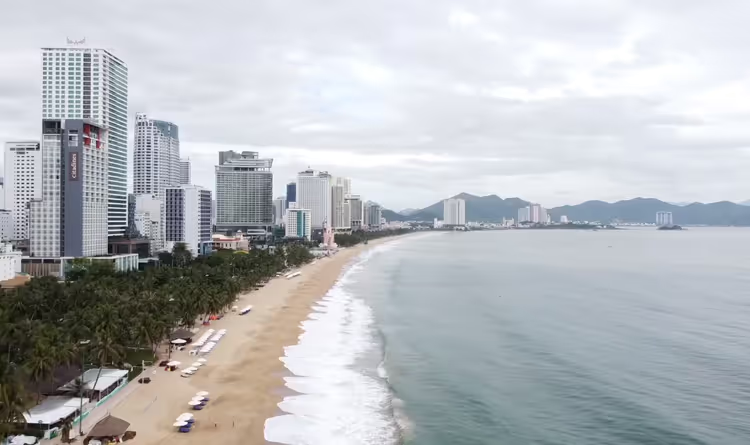 © Chris Lewis · CC BYPhoto: Chris Lewis, CC BY (https://creativecommons.org/licenses/by/3.0), Wikimedia Commons
⁉️🤔 Frequently asked questions
Can you swim in Vietnam in June?
Yes, but the choice of beach decides everything. On the central coast, from Da Nang to Nha Trang, the sea is calm and warm, and swimming is comfortable almost every day. In the north and south, waves pick up and the water turns murky after downpours. Plan swimming for the first half of the day, while the sea is calm.
Where is there the least rain in June?
In the central part of the country. From Da Nang to Nha Trang the dry season continues, rain is rare and short, and there's more sun than in the north and south.
Is it worth going to Phu Quoc in June?
Better to wait for the dry season. In June the island enters its wet season: frequent storms, rough seas, and canceled boat trips. For snorkeling and the beach, this is the worst month of the year.
What should you bring on the trip?
A compact umbrella or a light raincoat, sandals that can handle water, and a spare set of clothes. Rain comes suddenly, and there may be no shelter nearby. Don't forget sunscreen: the sun is strong in June even in cloudy weather.
When is it better to go if weather matters?
November to March are the dry months for the north and south. On the central coast, October to December is, on the contrary, the rainy season. In June, choose the central coast or the mountains.
In short: where to go in June
In June, Vietnam splits into three different vacations. If you want a beach, take the central coast: Da Nang and Nha Trang are dry, sunny, and warm. If you want cool air and greenery, go to Da Lat or Sapa. Leave the north and south for city programs: Hanoi and Ho Chi Minh City offer museums, food, and atmosphere even in the rain.
Before buying tickets, check the months in our guide: When to go to Vietnam on vacation.

A small editorial team writing guides for independent travel. We travel ourselves, but we haven’t been everywhere, so we check prices, opening hours and how to get there against official sources.