
















Which Vietnam resort to choose: 14 places by type of holiday and season
Beach, mountains, or old cities? In Vietnam, these are three different vacations. The country stretches from north to south, and the seasons in its regions don't line up: the south is dry from December through April, while Hue gets rain at the same time (as of 09/2026, Vietnam Tourism climate reference). So you choose your destination twice: first by the type of trip, then by the month of travel. Below are 14 places, organized exactly that way.
Ad: this article contains affiliate links, we earn a commission if you book through them, at no extra cost to you.
How to choose a destination by trip type and season
💡 In short:
- For a winter beach trip, head south: Phu Quoc, Con Dao, Mui Ne, or Vung Tau.
- For beach time from January through August, Nha Trang and Cam Ranh work well; from February through August, Hoi An.
- For mountains and cooler weather, go to Sapa and Da Lat; for limestone cliffs in the sea, head to Halong Bay and Cat Ba.
- For history and food, choose Hoi An, Hue, Hanoi, and Ho Chi Minh City.
- Seasons by region: 09/2026, verified on the official Vietnam Tourism website.
First, decide what matters most to you on vacation. Some people want a warm sea and a hotel by the water. Others want trekking and rice terraces. Still others travel for temples, markets, and street food. Then check the month: central Vietnam gets typhoons in the fall, and the north is cool and foggy in winter. The table below puts both filters on one screen.
Destination | Trip type | Region | Dry and sunny months |
|---|---|---|---|
Nha Trang | beach, islands, nightlife | central, southern coast | January-August |
Cam Ranh | quiet beach near the airport | central, southern coast | January-August |
Mui Ne | kitesurfing, surfing, dunes | south | December-April |
Vung Tau | short getaway from Ho Chi Minh City | south | December-April |
Phu Quoc | island, sunsets, snorkeling | south | October-March |
Con Dao | seclusion, diving, turtles | south | December-April |
Halong Bay | cruise among limestone cliffs | north | April-June |
Cat Ba | national park, biking, beach | north | April-June |
Sapa | trekking, mountains, terraces | north | late April, early October |
Da Lat | cool weather, gardens, cafes | central, mountains | November-March |
Hoi An | old town and sea | central | February-August |
Hue | imperial monuments | central | March-August |
Hanoi | capital, old quarters, theater | north | April-June, September-December |
Ho Chi Minh City | metropolis, markets, museums | south | December-April |
The months in the table come from the Vietnam tourism office climate reference (as of 09/2026). They're a guideline, not a guarantee: weather shifts by a couple of weeks from year to year.
1. Nha Trang: beach, islands, and nightlife
 © Chris Lewis · CC BYPhoto: Chris Lewis, CC BY (https://creativecommons.org/licenses/by/3.0), Wikimedia Commons
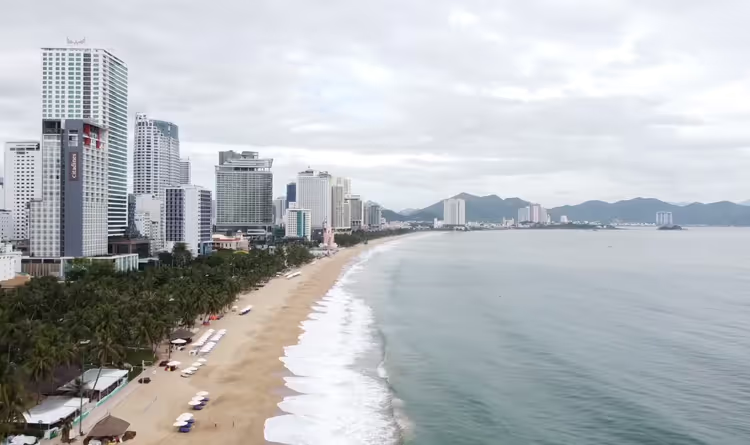
Nha Trang suits those who want a beach and a city in one place. A long urban stretch of sand runs along the bay, backed by hotels at every level: from chain resorts to simple guesthouses. According to Vietnam Tourism, it has the most sunny days in the country. The rainy season runs from September through December, so a winter seaside vacation is better planned in the south.
The resort's main strength: everything is close by. During the day, you take a boat to Hon Mun, Monkey Island, or Yen Island. In the evening, you stroll along the waterfront, which is packed with bars and seafood restaurants. For cultural sights, it's worth seeing the Po Nagar towers, built by the Cham people several centuries ago, and the Long Son Pagoda with its large Buddha statue.
For post-beach relaxation, mud baths and hot springs operate in the surrounding area. Families with kids head to VinWonders park on a nearby island. Getting there is easy: flights, trains, and buses run from major cities.
- Who it's for: those who want to swim by day and go out in the city by night.
- Not for: those looking for an empty beach and quiet after sunset.
- The catch: from September through December, it's the rainy season here.
Hotels in Nha Trang on Trip.com
2. Cam Ranh: a quiet beach near the airport
 © L.K.Phung · CC BY-SAPhoto: L.K.Phung, CC BY-SA (https://creativecommons.org/licenses/by-sa/4.0), Wikimedia Commons
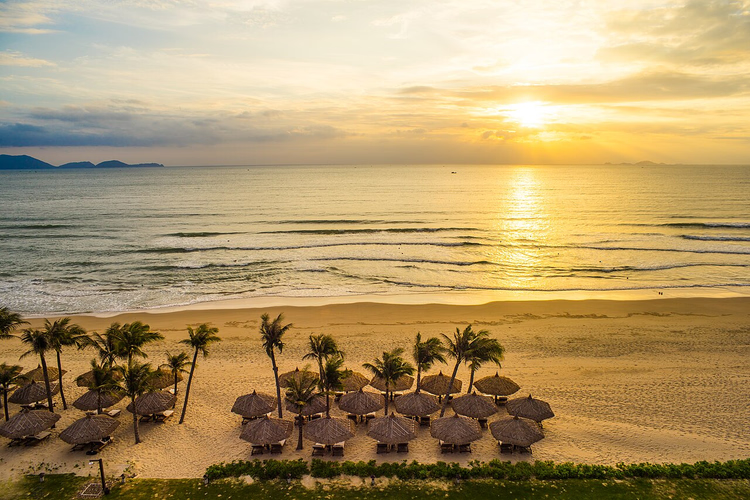
Cam Ranh lies in the same Khanh Hoa province as Nha Trang, but further south, on the shore of a deep, calm bay. This is where the international airport serving Nha Trang visitors is located. Most tourists head straight to the city. That's a shame if you're after peace and quiet.
A long beach with white sand and secluded lagoons stretches along the coast. The bay used to be a closed military harbor, so development arrived late here. Today, the shore is mostly lined with large resort hotels with their own beaches. There's no town in the usual sense: a couple of shopping centers, a few restaurants, and small shops.
It's a convenient choice for a short vacation. You land and within minutes you're by the sea. For excursions and nightlife, you'll need to travel to Nha Trang, about 30 km on the map. The season is the same as its neighbor: dry from January through August.
- Who it's for: couples and families who spend the day at the hotel and on the beach.
- Not for: those who want to explore a city on foot.
- The catch: infrastructure outside the hotels is still limited.
Hotel rooms in Cam Ranh on Trip.com
3. Mui Ne: wind for kitesurfing and dunes
 © Jean-Marie Hullot · CC BYPhoto: Jean-Marie Hullot, CC BY (https://creativecommons.org/licenses/by/3.0), Wikimedia Commons
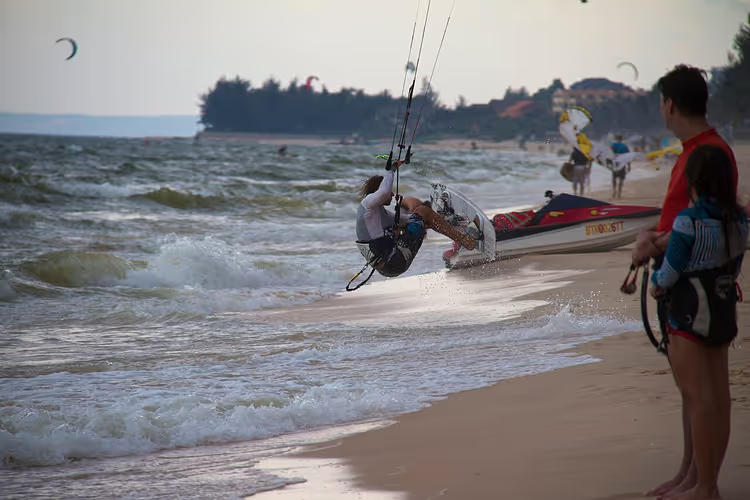
Mui Ne is chosen for active water sports. For decades, the bay has been one of Vietnam's main spots for kitesurfing and windsurfing. The wind blows here most of the year, and schools near the beach get beginners up on a board within a few lessons. If you're going to learn, book a package of lessons for several days at once.
The second reason to come: the sand dunes behind the village. The White and Red Dunes are usually viewed at sunrise, before the sand heats up. Guesthouses, cafes, and surf clubs line the main road. Food prices right by the water are higher than in neighboring Phan Thiet, so to save money, rent a bike and go for dinner at local cafes farther from the beach.
The road here has become shorter. The 99 km Dau Giay - Phan Thiet expressway cuts the trip from Ho Chi Minh City to Phan Thiet and Mui Ne to about 2-2.5 hours instead of the previous 4-5 (according to VnExpress). The dry season in the south lasts from December to April.
- Who it's for: kiters, surfers, and anyone who likes a beach with wind.
- Not for: families with small children who need a calm sea.
- The catch: in windy months there are waves, so swimming with children is inconvenient.
4. Vung Tau: a seaside weekend from Ho Chi Minh City
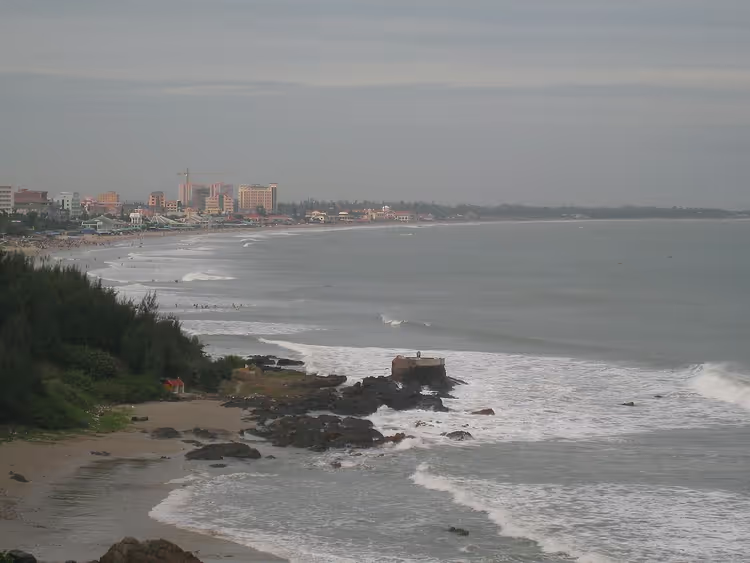
Vung Tau is the closest seaside city to Ho Chi Minh City. Residents of the metropolis come here for weekends, and the trip by speedboat or bus takes a couple of hours. If you have a layover or a few free days in Ho Chi Minh City, this is the fastest way to see the sea.
Evening life is calm: family seafood restaurants, bars with live music, and walks along the promenade. The main catch is tied to the city's economy. Vung Tau remains an oil production center, and drilling platforms are visible off the coast. There are clean beaches, but you'll have to drive several dozen kilometers along the shore to reach them.
- Who it's for: couples and families who live in Ho Chi Minh City and want the sea for a couple of days.
- Not for: those flying to Vietnam for a perfect beach.
- The catch: the city beaches fall short of the resorts on Phu Quoc and Con Dao.
Hotels in Vung Tau on Trip.com
5. Phu Quoc: an island for a winter beach
 © [//commons.wikimedia.org/wiki/User:Trantuonglam Trantuonglam] · CC BY-SAPhoto: [//commons.wikimedia.org/wiki/User:Trantuonglam Trantuonglam], CC BY-SA (https://creativecommons.org/licenses/by-sa/4.0), Wikimedia Commons
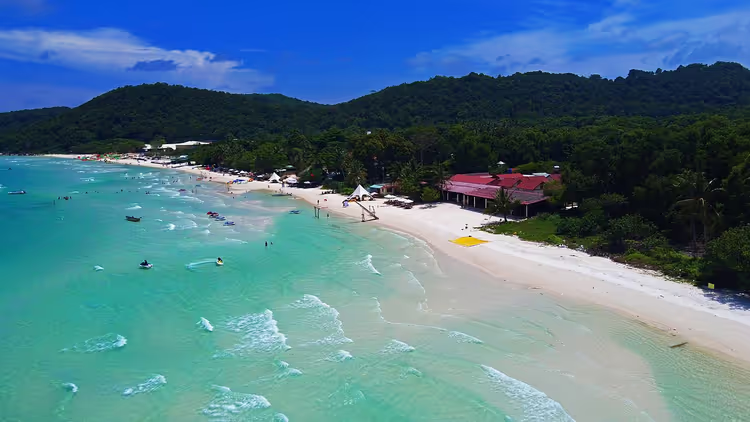
Phu Quoc is an island off the southern coast for a relaxed beach vacation. The coastline is about 150 km long, and Long Beach on the west side stretches for 20 km and faces the sunset (as of 09/2026, Phu Quoc pages on Vietnam Tourism). More than half of the island has been part of a UNESCO biosphere reserve since 2006. The best months are October through March; April and May are hotter and rains begin.
There are almost no loud clubs here, but there is plenty to fill your day. The island is famous for three products: fish sauce, black pepper, and pearls. You can visit a fish sauce factory, a pepper plantation, and a pearl farm. For water activities, snorkeling and diving near the southern islands work well. Among historical sites, tourists visit the former Cay Dua prison.
- Who it's for: couples and families who want a warm sea in December and January.
- Not for: those who need a vibrant nightlife.
- The catch: from July to September the island has stormy weather.
Hotels on Phu Quoc on Trip.com
6. Con Dao: seclusion, diving, and turtles
 © Thuy Vu Rhys · CC BY-SAPhoto: Thuy Vu Rhys, CC BY-SA (https://creativecommons.org/licenses/by-sa/4.0), Wikimedia Commons
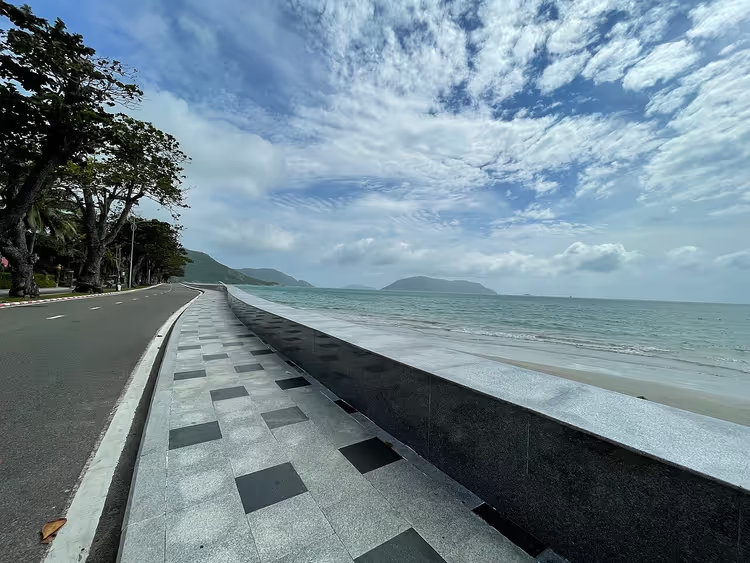
Con Dao is the choice when you want to get far away from the crowds. Con Dao is an archipelago off the southern coast, and most of the main island is covered by a national park with jungle. There are few hotels, the town is small, and the streets are quiet in the evening. Almost all activities are tied to the sea and nature.
According to Vietnam Tourism, snorkeling and diving at Con Dao reveal one of the country's best underwater worlds. From mid-August to early December, sea turtles hatch on the beaches, and you can only observe them through national park programs. The secluded beaches of Dam Trau, Dat Doc, and Ong Dung are good for swimming and snorkeling.
There is also a dark chapter of history here. The island still has a prison where detainees were held first by French, then by American authorities. Daily flights from Ho Chi Minh City land here, and the second route is a bus to Soc Trang plus a ferry of about two hours. The dry season on the islands runs from December to April.
- Who it's for: divers, nature lovers, and couples with no interest in nightlife.
- Not for: those who need shopping malls and amusement rides.
- The catch: there are few hotels, and the town is quiet in the evening.
7. Ha Long Bay: a cruise among limestone cliffs
 © Thomas Hirsch / User:Ravn · CC BY-SAPhoto: Thomas Hirsch / User:Ravn, CC BY-SA (http://creativecommons.org/licenses/by-sa/3.0/), Wikimedia Commons
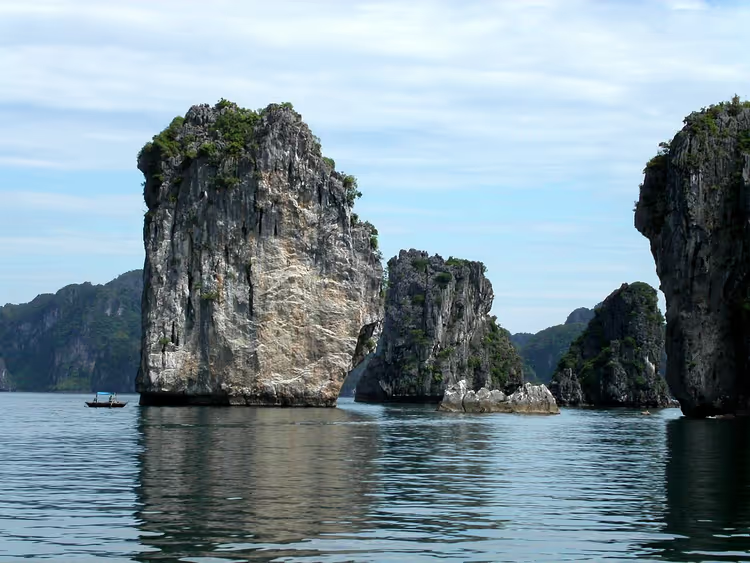
Ha Long Bay in the northeast of the country is a good fit if you want to see the sea without a beach vacation. Hundreds of limestone cliffs and islands covered in greenery rise out of the water. The bay has long been on the UNESCO World Heritage list. In September 2023, the status was extended to the neighboring Cat Ba archipelago, making it the country's first site located in two provinces at once: Quang Ninh and Hai Phong (according to Vietnam Tourism on the UNESCO status, 09/2026).
The main format of a vacation here is a cruise. Boats depart from the piers of Ha Long city for a day trip or with an overnight stay on board. The itinerary usually includes island viewpoints, caves with stalactites, kayaking, and floating fishing villages. Choose an overnight cruise if you want to catch the bay at dawn, when there are still few boats around.
Season matters. From April to June it is warm and clear, while from June to August tropical storms sometimes cancel boat departures (as of 09/2026, Vietnam tourism office). In winter the bay is cool and often foggy.
- Who it's for: those traveling for scenery and willing to spend a day or two on the water.
- Not for: those who need a beach and swimming every day.
- The catch: in summer, storms can derail a planned cruise.
Ha Long Bay cruises on GetYourGuide
8. Cat Ba: national park and a beach on the island
 © duymanh.do89@gmail.c… · CC BY-SAPhoto: duymanh.do89@gmail.c…, CC BY-SA (https://creativecommons.org/licenses/by-sa/3.0), Wikimedia Commons
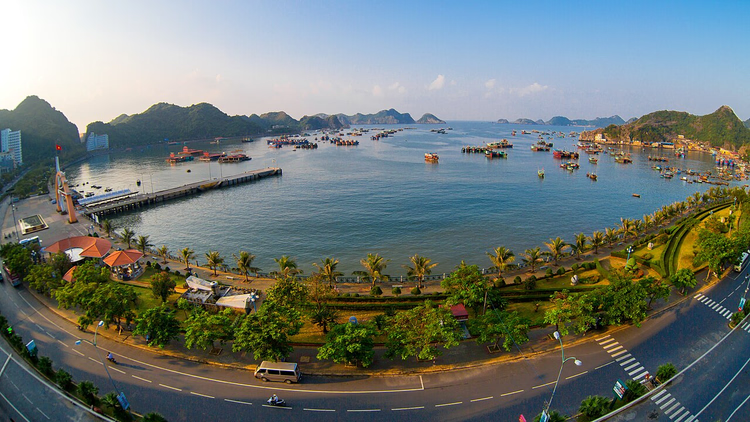
Cat Ba is the largest island of the archipelago of the same name south of Ha Long Bay. According to Vietnam Tourism, the archipelago has more than 360 islands and is the country's largest limestone archipelago. Most of the island is covered by a national park with primary forest, caves, and trails to viewpoints.
Cat Ba is a convenient base instead of the busy city of Ha Long. Hotels here come in a range of levels, and the easiest way to reach spots in the park is by rented motorbike. Boats also leave from the island's harbor for trips among the cliffs. In the evening you return to a small town with seafood restaurants.
For swimming, the small beaches near the Cat Ba settlement work well. The shore is narrow, the water entry is gentle, and the sand is light. There are almost no water attractions: loungers, a couple of cafes, and the sea. The season is the same as Ha Long's: best from April to June.
- Who it's for: active travelers who combine trekking, a motorbike, and the bay.
- Not for: those looking for long beaches with developed infrastructure.
- The catch: the beaches are small, and on weekends they fill with local vacationers.
Hotels on Cat Ba Island on Trip.com
9. Sapa: trekking among rice terraces
 © Christophe95 · CC BY-SAPhoto: Christophe95, CC BY-SA (https://creativecommons.org/licenses/by-sa/4.0), Wikimedia Commons
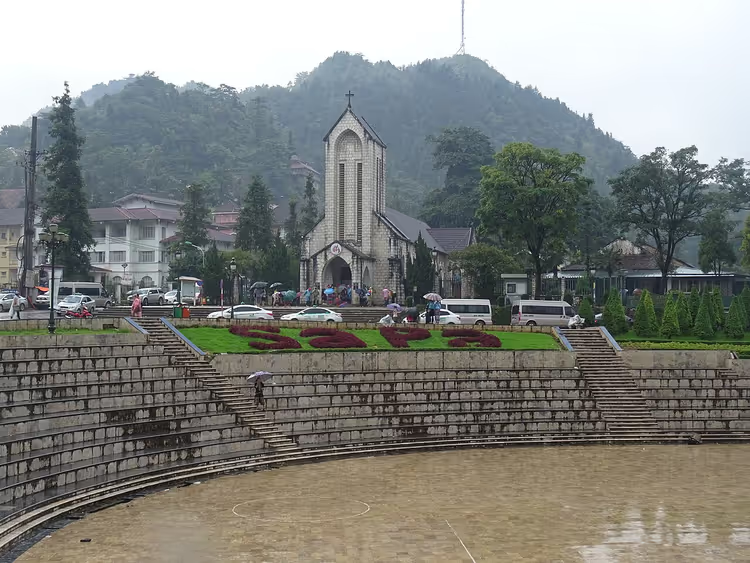
Sapa suits travelers for whom a vacation means mountains, trails, and villages. The town sits in a deep valley in the northwest of the country, surrounded by rice terraces. Fansipan rises above the ridge at 3,143 m, the highest peak in Indochina. A cable car takes you up in about 15 minutes (according to Vietnam Tourism, 09/2026). Check the ticket price on the operator's website before your trip.
The main reason to go to Sapa is hiking. Trails lead through Cat Cat and Ta Phin villages, home to the Dao, Tay, and other ethnic groups. On Sundays, tourists head to the Bac Ha market, where residents of nearby villages come in traditional clothing. Many visitors stay overnight in homestays with local families. Bring sturdy shoes: trails get slippery after rain.
Getting there from Hanoi takes a night train to Lao Cai or five to six hours by bus. The best time to visit is late April and May with clear skies, as well as September and early October, when the terraces turn yellow before harvest. From December to March, the mountains are cold and foggy.
- Who it's for: trekkers, photographers, and those who want to see the rural north.
- Not for: those who come to Vietnam only for the sea.
- The catch: it's chilly in winter, and clouds often block the valley view.
Tours and trekking in Sapa on GetYourGuide
10. Dalat: mountain coolness and gardens
 © Roy Kim · CC BYPhoto: Roy Kim, CC BY (https://creativecommons.org/licenses/by/2.0), Wikimedia Commons
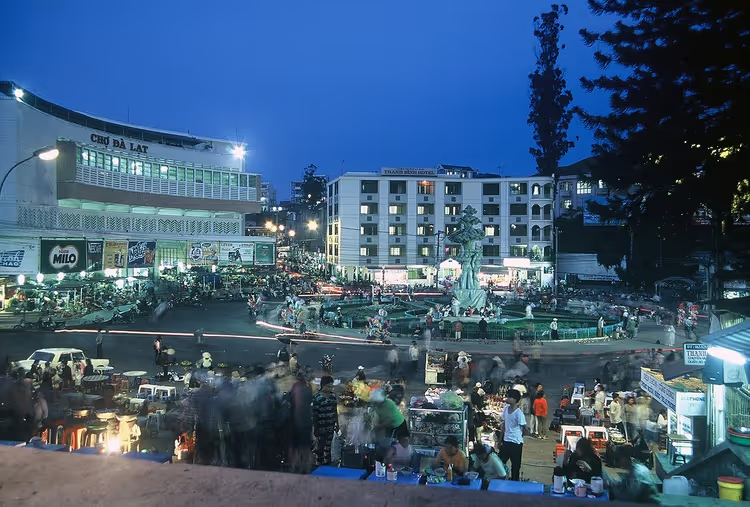
Dalat comes to the rescue when you need a break from the coastal heat. The city sits in the mountains of the south-central part of the country, and it stays cool here year-round. The dry, clear season runs from November to March, while rain is more frequent from April to October (as of 09/2026, seasonal overview from the tourism office).
Dalat doesn't look like the Vietnam you're used to. The French founded the resort in the early 20th century, and they left behind villas, a cathedral, and a European-style train station. People come here for coffee, local wine, walks by the lakes, and flower gardens. Spend a couple of days here after the beach to change up the pace.
The city's most unusual building is the Hang Nga Guesthouse, which everyone calls the "Crazy House." The structures resemble a giant tree, with guest rooms and a gallery inside. In the surrounding area, you can ride through pine forests, hike to waterfalls, and visit farms.
- Who it's for: those tired of the heat who enjoy walks, cafes, and nature.
- Not for: those who need the sea.
- The catch: from April to October, the mountains are often rainy.
11. Hoi An: old town with lanterns and the sea
 © Steffen Schmitz ( more photos ) · CC BY-SAPhoto: Steffen Schmitz ( more photos ), CC BY-SA (https://creativecommons.org/licenses/by-sa/4.0), Wikimedia Commons
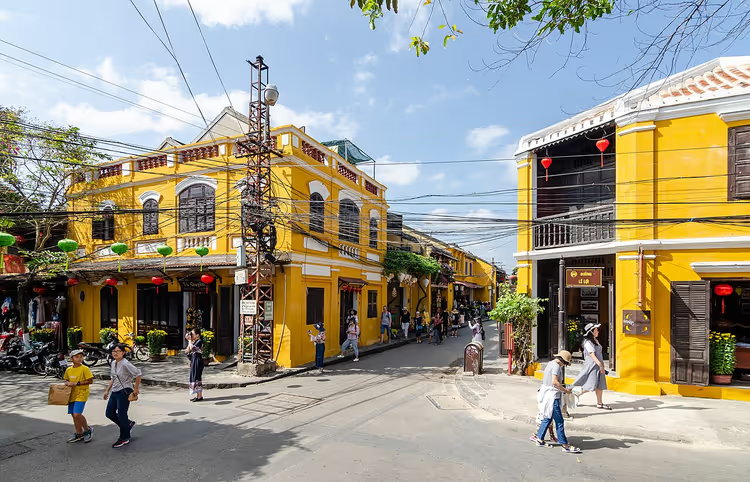
Hoi An suits those who want to combine history and beach in one trip. The old trading quarter flourished from the 15th to the 19th century thanks to Chinese, Japanese, and European merchants. The streets are lined with low houses with tiled roofs, and in the evening the town is lit by thousands of lanterns. You need an entrance ticket to walk around the old quarter.
The main stops on the route are the Japanese Covered Bridge, the Tan Ky house, and the Phuc Kien assembly hall (according to Vietnam Tourism, 09/2026). Many tourists have clothes made here by local tailors. About 40 km from town lies the My Son sanctuary with Cham temples, a separate half-day trip.
The beach is close too. According to the Vietnam tourism office, An Bang beach is about 10 minutes away by car, with seafood restaurants and boats to the Cham Islands. The dry months for a visit are February through August. From September, tropical storms hit the central part of the country, so choose the south in autumn.
- Who it's for: couples and those who want to stroll through old streets in the evening.
- Not for: those who need quiet and empty streets during the day.
- The catch: from September to January, Hoi An is rainy and cool.
12. Hue: capital of the Nguyen dynasty
 © Christophe95 · CC BY-SAPhoto: Christophe95, CC BY-SA (https://creativecommons.org/licenses/by-sa/4.0), Wikimedia Commons
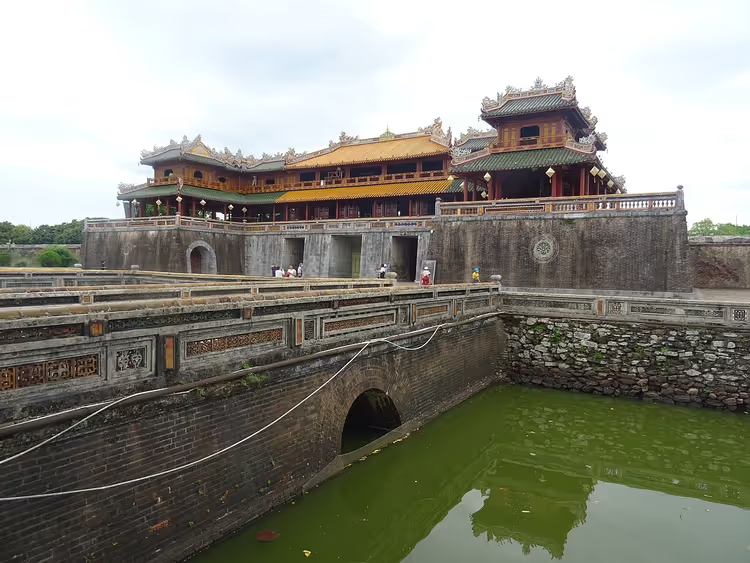
Choose Hue if you're more interested in history than the sea. The city in the center of the country sits on the Perfume River (Song Huong) and was the capital of the Nguyen dynasty in the 19th and early 20th centuries. The Complex of Hue Monuments is a UNESCO World Heritage Site. There is no beach vacation in the city itself.
The route usually starts with the citadel and the Imperial City with the Thai Hoa Palace. Then you head to the Thien Mu Pagoda on the riverbank and to the imperial tombs outside the city. If you have an extra day, visit Bach Ma National Park with its jungles, waterfalls, and mountain trails. The city is also known for the court music Nha Nhac, which UNESCO has recognized as intangible heritage.
Hue is famous for its sophisticated cuisine, and many local recipes are tied to the imperial court. The best time to visit: March through August. From September to November, flooding is possible, and in winter it's cool and rainy here (as of 09/2026, regional weather reference).
- Who it's for: history, architecture, and local food lovers.
- Not for: those who want a beach next to their hotel.
- The catch: the city can flood in the fall.
13. Hanoi: quarters, lakes, and water puppet theater
 © NKSTTSSHNVN · CC BY-SAPhoto: NKSTTSSHNVN, CC BY-SA (https://creativecommons.org/licenses/by-sa/4.0), Wikimedia Commons
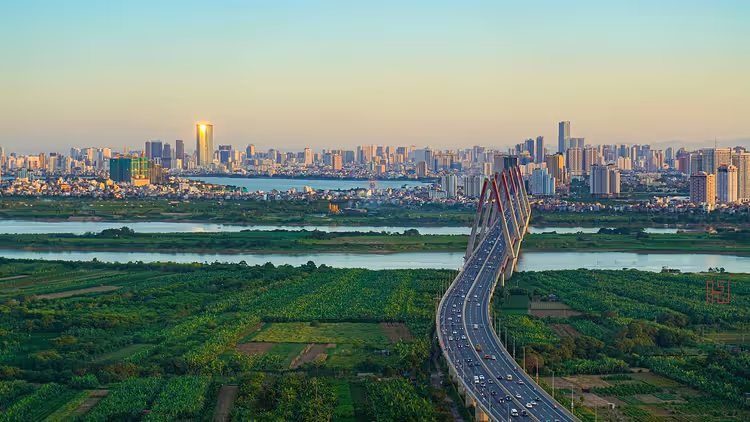
Hanoi suits you if you want to understand the country's culture. The capital sits on the Red River, and its history spans more than a thousand years. Street food stalls, scooters, temples, and French buildings share the same streets here. Trips to Halong Bay and Sapa also start from here.
Most walks begin at Hoan Kiem Lake, surrounded by a park. According to legend, a turtle that returned a magic sword lives in it. Nearby are the Old Quarter with its narrow shopping streets and the French Quarter with the opera house. Don't miss the Temple of Literature, the One Pillar Pagoda, and a water puppet theater performance.
The most convenient place to stay is in the Old Quarter or near the lake: you can walk to most sights. The best months for Hanoi: April through June and September through December. From June through August it's hot, humid, and rainy, and from December through March it's cool and overcast. According to the German Foreign Office, air pollution in Hanoi is worse in winter.
- Who it's for: those traveling for food, history, and urban atmosphere.
- Not for: those who dislike noise and heavy traffic.
- The catch: the city has high air pollution levels in winter.
14. Ho Chi Minh City: a metropolis for food and markets
 © Alexkom000 · CC BYPhoto: Alexkom000, CC BY (https://creativecommons.org/licenses/by/4.0), Wikimedia Commons
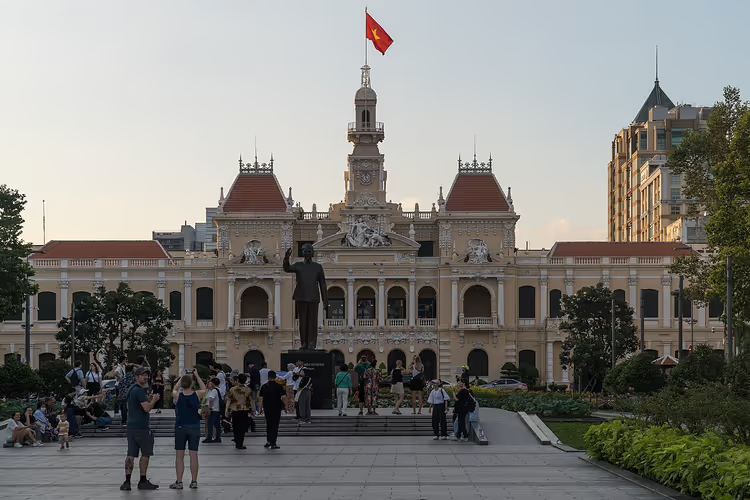
Ho Chi Minh City is Vietnam's largest city and the main gateway to the south. Glass towers, French mansions, and socialist-era buildings stand side by side here. Noisy markets, upscale restaurants, and street food vendors operate on neighboring streets. Many flights arrive here, so it's convenient to start your trip to Phu Quoc, Con Dao, or Mui Ne from here.
Choose a hotel in District 1. There are plenty of hotels at every level, and you can walk to the main sights: Notre-Dame Cathedral, the Reunification Palace, the Central Post Office, and history museums. Be sure to stop by Ben Thanh Market for food and souvenirs. A separate day trip outside the city: the Cu Chi Tunnels and the Mekong Delta.
The season in Ho Chi Minh City is simple. It's hot year-round, dry from December through April, and short downpours come from May through November (as of 09/2026, southern weather according to the tourism office). A downpour rarely ruins a day, just bring a light raincoat.
- Who it's for: foodies, shopping lovers, and those starting a southern route.
- Not for: those looking for a quiet beach vacation.
- The catch: heat and high humidity all year round.
Hotels in Ho Chi Minh City on Trip.com
Beaches for different travel styles
If you've already picked a region, all that's left is to find a beach that matches your pace. Vietnam's coastline is very long, and the beaches along it vary: white and golden, busy and hidden behind jungle. Below are four beaches from different parts of the country. Each one serves its own purpose: an active day, a family vacation, seclusion, or sunset walks.
My Khe: an active beach near Da Nang
 © Christophe95 · CC BY-SAPhoto: Christophe95, CC BY-SA (https://creativecommons.org/licenses/by-sa/4.0), Wikimedia Commons
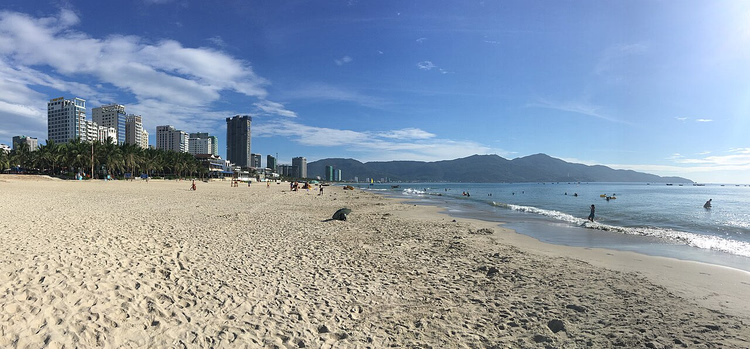
My Khe stretches along the city of Da Nang in the center of the country, and you definitely can't call it deserted. Before noon, people sunbathe on the light sand, and after lunch surfers hit the water, along with water skiers and volleyball players. Choose it if you want a beach with energy and a city right behind you. The season is the same as Hoi An: from spring through late summer.
Long Beach: a family beach on Phu Quoc
 © Dan Searle from London, England · CC BY-SAPhoto: Dan Searle from London, England, CC BY-SA (https://creativecommons.org/licenses/by-sa/2.0), Wikimedia Commons
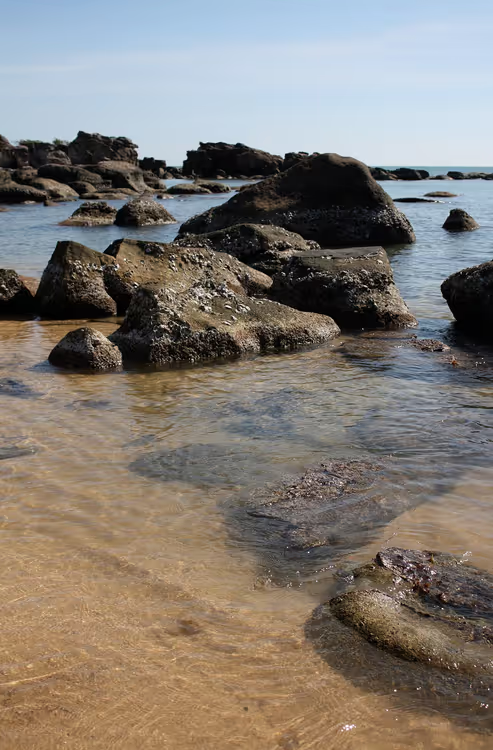
Long Beach on Phu Quoc's west coast stretches for 20 km and faces the sunset (as of 09/2026, island description from the tourism office). Hotels of various categories, bars, restaurants, and water sports rentals line the shore. Even in high season, you can find a quiet stretch on the long shore, which is why families with kids often choose it.
Doc Let: seclusion north of Nha Trang
 © Victor311 · CC BY-SAPhoto: Victor311, CC BY-SA (https://creativecommons.org/licenses/by-sa/4.0), Wikimedia Commons
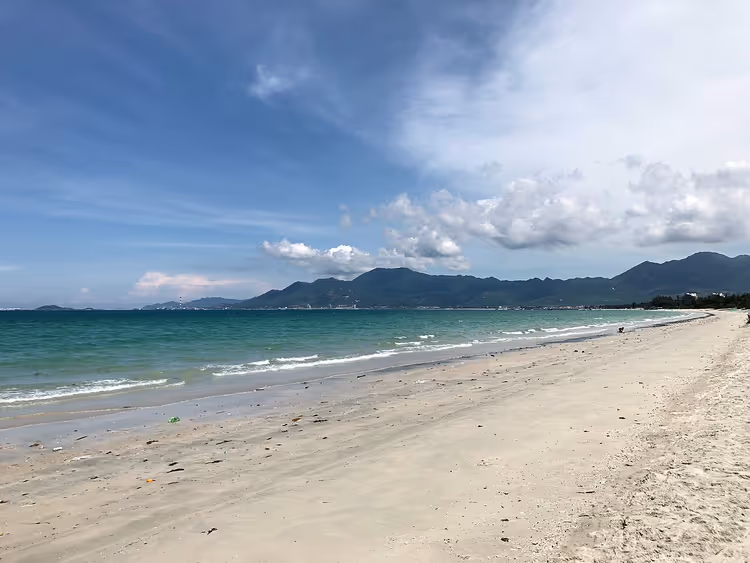
Doc Let lies about 50 km north of Nha Trang (on the map). It's a long strip of sand lined with conifers and low dunes. The water entry is gradual and the waves are small, so the beach works well for a trip with kids. Come here for a day from Nha Trang or stay nearby if you want quiet and sunset walks.
Dam Trau: a hidden cove on Con Dao
Dam Trau hides in the jungle near the Con Dao airport, and from the beach you can watch planes coming in to land. The road to it is rough, and there are few signs. But at the end, clear water and soft light sand await. Vietnam's tourism office calls Dam Trau one of the archipelago's secluded beaches; bring water and snacks with you.
Resorts for traveling with kids
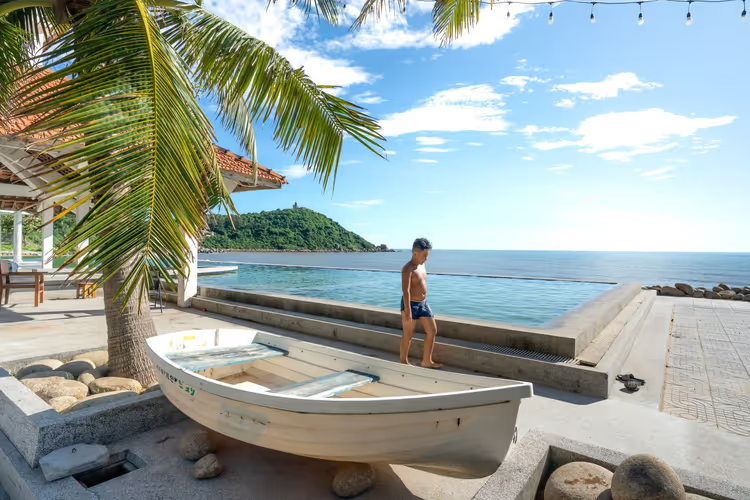
With kids, what matters most is a calm sea, a short transfer, and a hotel with a pool. From our selection, Phu Quoc is the easiest with little ones, thanks to Long Beach's long, gradual shore. Nha Trang with its sheltered bay and Cam Ranh with hotels right at the water's edge also work well. Teenagers who love sports will enjoy the kite schools in Mui Ne.
Older kids will enjoy the parks. Near Nha Trang, on an island, VinWonders offers rides and a water park, and a day boat trip to Monkey Island suits the whole family. In Ho Chi Minh City itself, there's the large Dam Sen water park. Da Lat is a lifesaver if your child doesn't handle heat well: it's cool there year-round.
Take care of health matters in advance. There are no mandatory vaccinations for entry from Germany. According to the German Federal Foreign Office, adults and children should check their standard vaccinations. For the trip, the agency recommends a hepatitis A shot. For longer stays, hepatitis B, typhoid, and others are added. Discuss your vaccination plan with a tropical medicine doctor at least a month before departure.
Malaria and dengue fever are transmitted by mosquitoes, and there is no malaria vaccine. So protect your skin with clothing and repellent during the day and evening, and check the mosquito nets in your rooms. Preventive medication should only be prescribed by a doctor.
Seasons by region: when to go where
When planning your dates, remember: Vietnam stretches from north to south, and monsoons divide it into three climate zones. That's why there's no perfect month for the whole country. But in almost any month, some region is dry and warm. Below is a summary based on the Vietnam Tourism weather guide (as of 09/2026).
In the north, winters are cool and foggy, while summers are hot and humid. For Hanoi and Ha Long, go in spring or fall. In the center, the sun holds from February through August, and tropical storm season starts in September. Nha Trang is an exception here in terms of sunshine, but from September to December the rains arrive there too.
The south is hot year-round. From December to April it's dry, and from May to November short downpours pass through, mostly after lunch. According to Auswärtiges Amt recommendations, typhoons occur mainly from June to November, and before your trip you should monitor forecasts and warnings from local authorities.
Vietnam resorts on the map
All 14 resorts in the selection are marked on the map below. See how they're positioned relative to the airports in Hanoi, Da Nang, Cam Ranh, and Ho Chi Minh City, and build a route without unnecessary flights.
Resorts of Vietnam
Places on the map
- 1Nha Trang Beach and city in one place, Hon Mun and Yen islands, sunny January-August
- 2Cam Ranh Quiet bay by the international airport, resort hotels
- 3Mui Ne Kitesurfing, windsurfing and the red and white dunes
- 4Vung Tau The closest sea to Ho Chi Minh City, a couple of hours by boat
- 5Phu Quoc Island with fish sauce, pearls and Long Beach sunsets
- 6Con Dao Archipelago with a national park, diving and sea turtles from August to December
- 7Ha Long Bay UNESCO limestone cliffs, day or overnight cruises
- 8Cat Ba The archipelago's largest island, national park and bike trekking
- 9Sapa Trekking among rice terraces, Fansipan peak 3143 m
- 10Da Lat Mountain coolness, French villas and the Crazy House
- 11Hoi An Old trading town with lanterns, the Japanese Bridge
- 12Hue Capital of the Nguyen dynasty, citadel and imperial tombs
- 13Hanoi Capital by Hoan Kiem Lake, the Old Quarter and a puppet theatre
- 14Ho Chi Minh City The south's largest metropolis, Ben Thanh market and the Cu Chi tunnels
- 15Mai Khe Lively beach near Da Nang, surfers and volleyball
- 16Long Beach Beach 20 km on the west side of Phu Quoc, family holidays
- 17Doc Let Beach Secluded beach 50 km north of Nha Trang, pine dunes
- 18Dam Trau Hidden bay by Con Dao airport, view of landing planes
⁉️🤔 Frequently asked questions
Which Vietnam resort should you choose for the beach in December and January?
In winter, go south. Phu Quoc is dry from October, and the best beach months there are December and January. Mui Ne, Vung Tau, or Con Dao also work, where the dry season runs from December to April. The center of the country is rainy at this time, and the north is too cool for swimming.
Where to go in Vietnam in summer?
In summer, the center of the country is dry. Hoi An, My Khe Beach near Da Nang, Nha Trang, and Cam Ranh offer sun and sea until the end of August. In the south, short downpours pass through during these months, and the north is hot and humid. If you're traveling in July, choose the central coast.
Can you combine beach time and sightseeing in one trip?
Yes. The easiest way to do this is in the center of the country: Hoi An with An Bang Beach, and nearby Hue and the My Son sanctuary. A second option for the south: a few days in Ho Chi Minh City, then Phu Quoc or Mui Ne. In the north, combine Hanoi, a Halong Bay cruise, and trekking in Sapa.
Do German citizens need a visa for Vietnam?
According to the entry rules on the Auswärtiges Amt website, German citizens can enter without a visa for up to 45 days, provided they have a return ticket. For a longer trip, apply for an e-visa in advance. Entry rules change, so check the current information on the agency's website before buying tickets.
Which resort suits people who don't like the heat?
Choose Dalat: the city sits in the mountains, it stays cool all year round, and the dry season runs from November to March. A second option: Sapa in spring or early October, when it's warm but not hot. On the coast, plan swimming for the morning and rest in the shade at midday.
In short: what's worth booking
If you want a beach in winter, go for Phu Quoc or Con Dao. If you're traveling in summer, choose Nha Trang, Cam Ranh, or Hoi An. If your vacation is about mountains and walks, your choice is Sapa in spring or Dalat in the dry season. For history and food, put together a route of Hanoi, Hue, Hoi An, and finish it at the sea. Once the month and resort are decided, compare hotels on Trip.com and book in advance for the high season.

A small editorial team writing guides for independent travel. We travel ourselves, but we haven’t been everywhere, so we check prices, opening hours and how to get there against official sources.