

















Weather in Vietnam in January: where to swim and where you need a jacket
On a January day in Vietnam, you can both freeze and get sunburned. In Hanoi at this time it's around 20 °C with gray skies, while on Phu Quoc it's above 30 °C with calm seas (as of 09/2026, official Vietnam tourism website).
The country stretches more than 1,600 kilometers from north to south, so in winter the weather depends not on the calendar but on the region (as of 09/2026, Vietnam tourism office data).
Below we break down January by three regions: air and water temperatures, rainfall, how busy the resorts are, and which destination is right for you.
Ad: this article contains affiliate links, we earn a commission if you book through them, at no extra cost to you.
How the weather changes from north to south
💡 In short:
- North (Hanoi, Sapa, Halong Bay): cool and dry, season for excursions and trekking.
- Central (Da Nang, Hoi An, Hue): dry and warm, the best balance of city and beach.
- South (Nha Trang, Mui Ne, Phu Quoc): hot and sunny, full beach season.
- Weather and prices: 09/2026, verified on the official Vietnam tourism website.
The rule is simple: the further south, the warmer. The difference between north and south in January reaches up to 15 degrees (as of 09/2026, Vietnam tourism office). On the same day, Hanoi can be 15 °C while Nha Trang is 29 °C.
The regional breakdown helps you choose a destination before you even buy tickets. In the south, dry heat lasts all January; in the center it's warm and sunny; and the north greets you with cool air and fog.
Northern Vietnam: Hanoi, Halong and Sapa
The north in January is colder than most tourists expect. In Hanoi it's around 20 °C during the day, just 12-14 °C in the mornings, and the sky is often gray (as of 09/2026, Vietnam tourism office).
 © Clay Gilliland · CC BY-SAPhoto: Clay Gilliland, CC BY-SA (https://creativecommons.org/licenses/by-sa/2.0), Wikimedia Commons
Rain in the north is infrequent. In Hanoi, January averages 47 mm over ten rainy days (as of 09/2026, Hanoi climate normals). Bring a warm jacket, a hat, and closed-toe shoes: without them you'll be uncomfortable.
In the north, January is the quietest month. There are almost no lines, and accommodation is cheaper than in October or November. You can compare hotels in Hanoi on Trip.com.
Further east lies Ha Long Bay. In winter it gets covered in fog, and you'll see the limestone cliffs disappear and reappear from the haze (according to the Vietnam tourism website, 09/2026). The drive from Hanoi to the bay takes 2.5-3 hours.
The mountains in the north follow their own rules. Sapa sits at an altitude of 1500-1600 meters, so in January it's 5-10 °C here, and frost is possible at night (as of 09/2026, official Vietnam tourism website). The rice terraces are brown in winter, but trekking goes on without the summer crowds.
- Who it's for: those who want to see the cities, the bay, and the mountains without the heat.
- Not for: those who are only coming for warm sea and sunbathing.
- The catch: without warm clothes, walking around Hanoi and Sapa is cold, and Ha Long is often foggy.
Central Vietnam: Da Nang, Hoi An, and Hue
The center offers the best balance in January. The rainy season ends in December, and dry, warm weather sets in (as of 09/2026, official Vietnam tourism portal). Daytime temperatures are 22-27 °C, water near the shore is 24-25 °C, so swimming is comfortable.
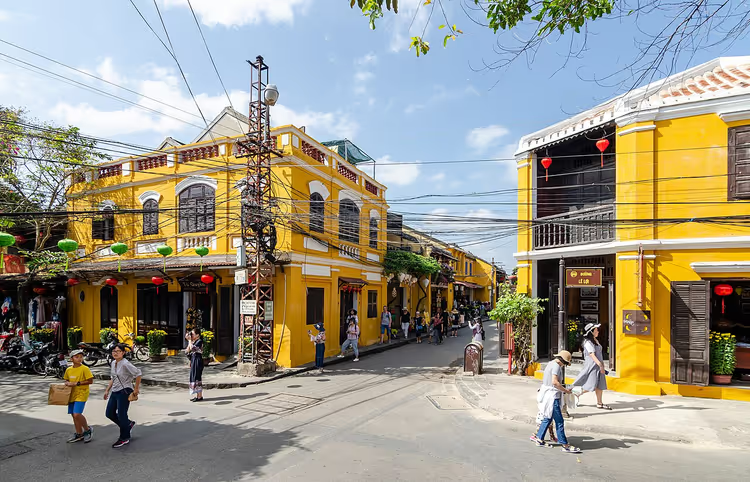 © Steffen Schmitz ( more photos ) · CC BY-SAPhoto: Steffen Schmitz ( more photos ), CC BY-SA (https://creativecommons.org/licenses/by-sa/4.0), Wikimedia Commons
Da Nang is a convenient base for the region. My Khe Beach is clean and uncrowded, and street food operates without winter breaks.
From Da Nang to Hoi An it's a 45-minute taxi or Grab ride (according to the Vietnam tourism office, 09/2026). Stay in Da Nang and come to Hoi An in the evening: this way you'll save on accommodation and see the lanterns without the daytime heat.
Hoi An is the busiest city in the center in January. The evening streets of the old town draw crowds, and hotels are more expensive than in Da Nang.
Hue lies further north and in January is 3-5 °C cooler than Da Nang (as of 09/2026, Vietnam tourism portal). On the plus side, the imperial citadel is comfortable to walk around without the heat.
- Who it's for: for the beach, old towns, and photos without exhausting heat.
- Not for: those who want guaranteed hot weather.
- The catch: Hoi An is crowded in the evening, and in Hue you'll need a jacket after sunset.
You can find tours in central Vietnam on GetYourGuide.
Southern Vietnam: Nha Trang, Mui Ne, and Phu Quoc
The south opens a full beach season in January. Rainfall is rare, the air is warm, and swimming is easy to combine with excursions.
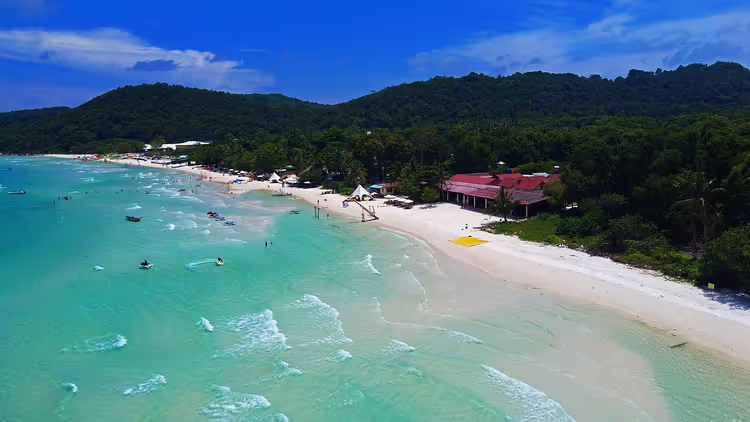 © [//commons.wikimedia.org/wiki/User:Trantuonglam Trantuonglam] · CC BY-SAPhoto: [//commons.wikimedia.org/wiki/User:Trantuonglam Trantuonglam], CC BY-SA (https://creativecommons.org/licenses/by-sa/4.0), Wikimedia Commons
In Nha Trang, the water warms up to about 24-26 °C in January (according to the official tourism office page, 09/2026). January is high season here, so book accommodation in advance.
Phan Thiet and Mui Ne are also dry and sunny, and you can sunbathe from morning to evening. These resorts suit those who want a beach holiday without the city bustle.
People go to Phu Quoc Island for the main beach holiday of the south. January is the peak of the dry season here: calm sea, 28-32 °C, the western beaches are packed, while the southern shore near Sao Beach is quieter (as of 09/2026, official Vietnam tourism website).
If you want fewer people, look at the Con Dao islands. There are empty beaches there, but getting there is harder and more expensive.
- Who it's for: those who want to swim and sunbathe every day.
- Not for: those who don't handle heat and bright sun well.
- The catch: in Nha Trang and on Phu Quoc in January there are many tourists, so accommodation gets more expensive.
Flights to the islands are easy to check on Kiwi.com.
Tet, prices, and what to pack
January falls in high season. Accommodation prices are 20-40% higher than in the off-season, and good hotels get booked out weeks in advance (as of 09/2026, Vietnam national tourism administration).
Late January often coincides with preparations for Tet, the Vietnamese New Year. The holiday falls in late January or February: a couple of weeks before it, tickets and hotels get more expensive, and some cafes close for a week.
Pack your suitcase by region. For the north, bring thermal underwear, a down jacket, a hat, and gloves. For the center, light clothes for the day and a jacket for the evening are enough. If you're going south, bring a swimsuit, sunscreen, and a hat.
⁉️🤔 Frequently asked questions
Where to go in Vietnam in January for the beach?
To the south: Nha Trang, Mui Ne, and Phu Quoc. It's 28-32 °C there, dry, with a calm sea (as of 09/2026, national tourism office website). If you want quiet, choose the southern shore of Phu Quoc or the Con Dao islands. In the north, January is cool, but there are no crowds.
Can you swim in Da Nang in January?
Yes. The rainy season ends in December, and swimming is comfortable in January (as of 09/2026, Vietnam tourism office regional data). See the section on Central Vietnam for water temperature and beaches. Bring a light jacket for the evening: it gets cooler after sunset.
How many degrees is it in Hanoi in January?
Around 20 °C during the day, noticeably cooler in the mornings (as of 09/2026, Vietnam weather and climate). See the section on Northern Vietnam for morning temperatures and precipitation. You need a warm jacket for walking around the city.
What should I bring to northern Vietnam?
The list of warm clothes is in the "Tet, prices, and what to pack" section. In Hanoi and on Halong Bay it's cold and damp in winter, and in the mountains of Sapa frost is possible at night. Without warm clothes, walks and boat trips will be uncomfortable.
When is Tet in Vietnam and does it interfere with a holiday?
Tet, the Vietnamese New Year, falls in late January or February. During these days, some cafes and shops close, and tickets and hotels get more expensive. For a relaxed trip, come before or after the holiday.
In short: what to book
If you want the beach, choose the south: Nha Trang, Mui Ne, or Phu Quoc. For cities and excursions, head to the center or the north, and bring warm clothes for Hanoi and Sapa.
- Want to swim every day: book the south in advance, it's high season there.
- Love cities and history: choose the center with Da Nang and Hoi An.
- Going for mountains and trekking: plan for the north and Sapa.
Book hotels in Vietnam on Trip.com for your region and month.

A small editorial team writing guides for independent travel. We travel ourselves, but we haven’t been everywhere, so we check prices, opening hours and how to get there against official sources.