
















Barcelona in one day: a walking route through Gaudi, Rambla and Montjuic
One day in Barcelona seems like an unrealistic amount of time. Gaudí, the Gothic Quarter, La Rambla, and Montjuïc are usually recommended as a week-long itinerary. You have one day and roughly 10-12 hours.
Below is a walking route that crosses central Barcelona in a single line from north to south. Between stops you walk or take the metro for two or three stops. Book tickets for the main sights in advance: in summer, ticket offices have lines of an hour or more.
The main rule for the day: get there at opening time. Start with Casa Milà, because by midday Passeig de Gràcia gets crowded.
Ad: this article contains affiliate links, we earn a commission if you book through them, at no extra cost to you.
One-day Barcelona route
💡 In short:
- Morning: Casa Milà and Casa Batlló on Passeig de Gràcia.
- Afternoon: Plaça de Catalunya, the Gothic Quarter, La Rambla, and La Boqueria market.
- Evening: the seaport, the National Art Museum of Catalonia, and the Magic Fountain on Montjuïc.
- Map with stops and walking sections: at the end of the article.
- Prices and opening hours: 09/2026, checked on the official Park Güell website
The route runs in a single line, so you almost never backtrack. The table below shows where to book in advance and how much walking is involved on the map.
Time | Main sights | Book in advance | Walking (on the map) |
|---|---|---|---|
Morning | Casa Milà, Casa Batlló | timed tickets | 1.5-2 km |
Afternoon | Plaça de Catalunya, Gothic Quarter, La Rambla, La Boqueria | market and streets, no ticket needed | 3-4 km |
Evening | National Art Museum of Catalonia, Magic Fountain | museum on schedule | 2-3 km |
Casa Milà
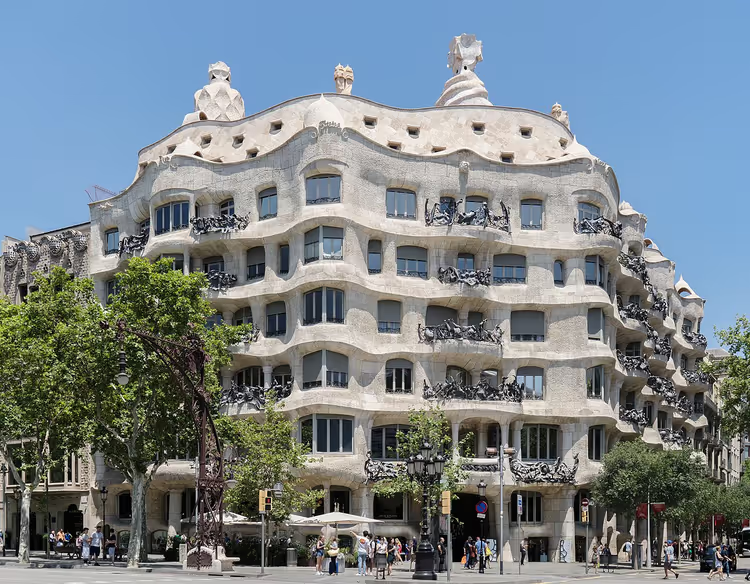
Casa Milà opens the route: it stands on Passeig de Gràcia next to Casa Batlló. The wavy stone facade with no straight lines earned it the nickname "the drunk house" among locals. Antoni Gaudí designed it for the Milà family, and today the building houses a bank, residential apartments, and a museum.
 © Thomas Ledl · CC BY-SAPhoto: Thomas Ledl, CC BY-SA (https://creativecommons.org/licenses/by-sa/4.0), Wikimedia Commons
Go up to the roof. That's where the warrior chimneys and mosaic towers stand, the reason people come here. The halls display Gaudí's furniture and sketches, and admission includes an audio guide. The building is a UNESCO World Heritage site.
The ticket office is more expensive than the online rate, so book your time slot in advance. If you want to enter without waiting in line and with a guide, the timed Casa Milà ticket works well.
- How to get there: Passeig de Gràcia metro station (L2, L3, L4), exit to the boulevard.
- Cost: about €29 for a daytime visit (as of 09/2026, La Pedrera pricing page).
- Who it's for: those who want to see Gaudí's roof and aren't ready to go to Park Güell.
- The catch: in summer the roof gets crowded, so take the first morning slot.
Casa Batlló
 © Fred Romero · CC BYPhoto: Fred Romero, CC BY (https://creativecommons.org/licenses/by/2.0), Wikimedia Commons
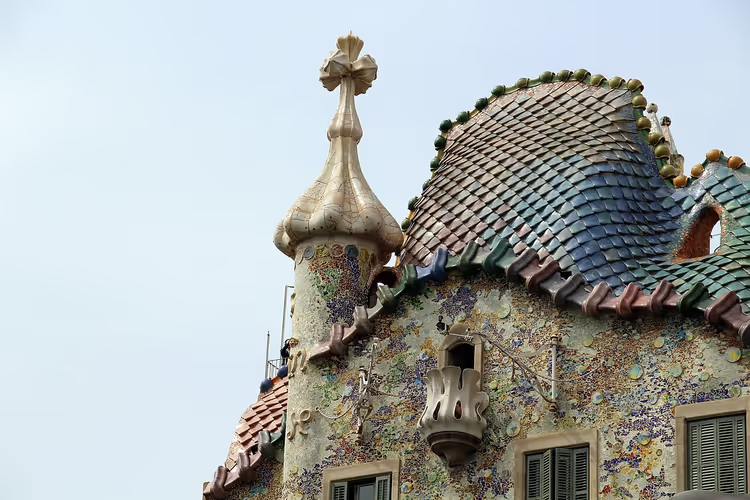
Casa Batlló (Casa Batlló) stands two blocks from Casa Milà, on the same Passeig de Gràcia. The facade is covered in multicolored mosaic, the balconies look like masks, and the roof mimics dragon scales. Gaudí rebuilt an ordinary house for the textile magnate Batlló and pushed his love of curved lines to the limit.
Inside, you pass through a light well with blue tiles that shifts in shade from bottom to top, and enter a salon with stained-glass windows. The attic displays a model of the building and the history of its restoration. Tickets are sold by time slot, and evening visits include facade lighting.
An online ticket costs from €29, and it's €4-12 more at the ticket office (as of 09/2026, official Casa Batlló website). Slots with a guide and video guide cost more than the basic option. Casa Batlló ticket with video guide should be booked in advance: getting in without a reservation is almost impossible in summer.
- How to get there: Passeig de Gràcia metro station, 200 m along the boulevard (see map).
- Who it's for: people who love mosaics and want to see the house from the inside, not just the facade.
- The catch: the narrow halls get crowded with a group, so it's better to book an early slot.
Plaça de Catalunya
 © Zioljda · CC BY-SAPhoto: Zioljda, CC BY-SA (https://creativecommons.org/licenses/by-sa/3.0), Wikimedia Commons
Plaça de Catalunya connects the old town and the Eixample district. Streets radiate out from it, which makes the square easy to recognize on a city map. Metro lines, buses, and trains all intersect here, and the surrounding area is full of shops and cafes.
La Rambla starts at the square, and Passeig de Gràcia runs uphill from it. It's a convenient spot to take a break and check your route. In winter there's an ice rink on the square, and in autumn it hosts city festivals.
Hotels in this part of the center are convenient for a short trip: you can walk to the main sights. Hotels near the square on Trip.com are worth checking in advance, as prices go up in summer.
- How to get there: Catalunya metro station (L1, L3), Aerobús from the airport.
- Who it's for: people staying in the center who want to see everything on foot.
- The catch: it's noisy and crowded all day, there's no quiet corner here.
Barcelona museum of contemporary art
The Barcelona museum of contemporary art (MACBA) occupies a large building in the Raval district. The collection covers Spanish and international art from the mid-20th century, and several neighboring buildings are used for exhibitions. They host shows by contemporary artists and house a library.
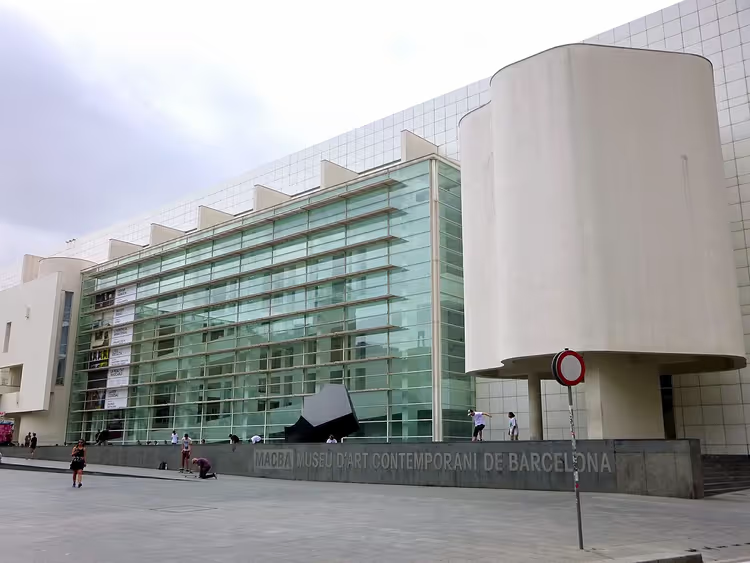
The square in front of the museum has become a favorite spot for skateboarders, and it's one of the most famous skate spots in Europe.
Admission is paid, and free hours and days change by season. Check the exact schedule at the ticket office or on the museum's website before your visit.
- How to get there: Universitat or Catalunya metro station, then walk.
- Who it's for: people who are tired of Gaudí and want contemporary art.
- The catch: some galleries are closed between exhibitions, so check what's on display in advance.
Palau Güell
 © Eric Fischer · CC BYPhoto: Eric Fischer, CC BY (https://creativecommons.org/licenses/by/2.0), Wikimedia Commons
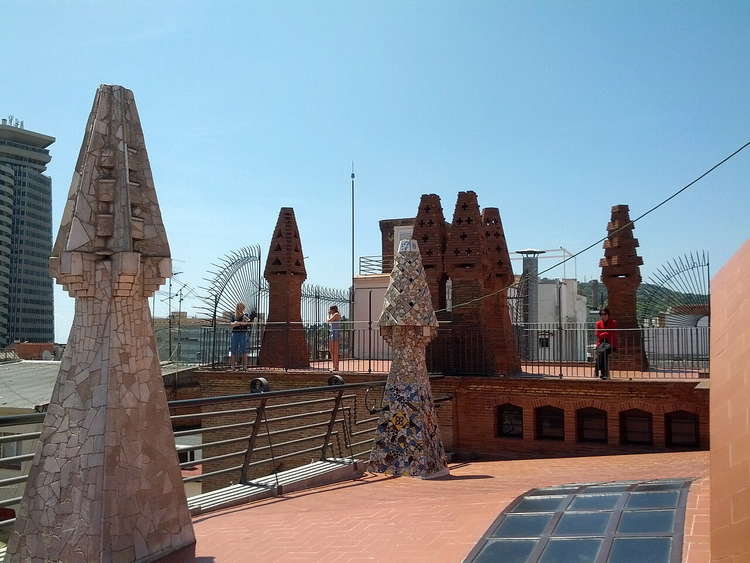
Palau Güell, Gaudí's first major work for his friend and patron Eusebi Güell. The architect began developing his own style with the gray marble facade. The palace is listed as a UNESCO World Heritage Site along with Gaudí's other works.
Pay attention to the wrought-iron gates and balcony railings. On the roof there are unusually shaped mosaic chimneys that later reappeared in the architect's other projects. Inside, marble columns, candelabras, and inlaid furniture have been preserved.
Admission is paid, with discounts for children and students. Check exact prices and opening hours on the palace's official website, because the seasonal schedule changes.
- How to get there: Liceu metro station (L3), near La Rambla in the Raval district.
- Who it's for: people who want to see early Gaudí without big crowds.
- The catch: entry is strictly by time slot, and in high season there are few available windows.
Sagrada Família
 © Canaan · CC BY-SAPhoto: Canaan, CC BY-SA (https://creativecommons.org/licenses/by-sa/4.0), Wikimedia Commons
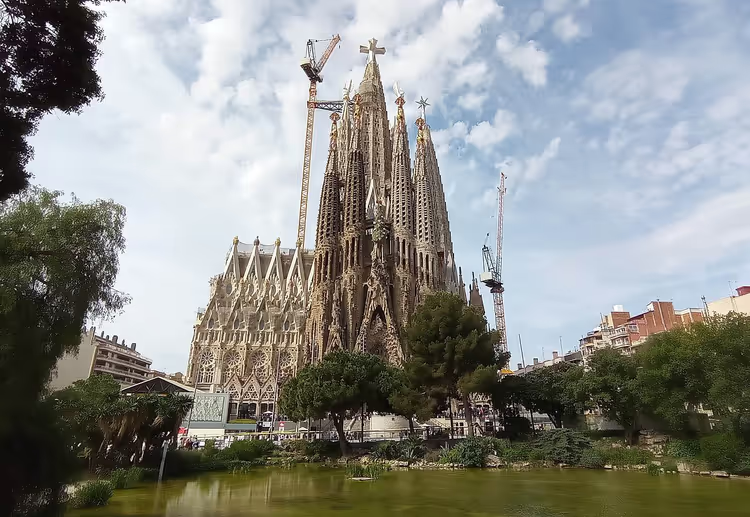
Sagrada Família, Gaudí's main work and the symbol of the city. The architect devoted decades to it and didn't manage to finish it in his lifetime, and construction continues to this day. Three facades tell the story of Christ's birth, death, and resurrection, with spire towers rising above them. The basilica doesn't fit into a one-day itinerary, so save it for your second day.
Inside, light falls through stained glass and paints the columns in different colors. Around midday and closer to evening the shades shift, so the time of your visit affects the impression. Tower access requires a separate ticket and is strictly by time slot.
Basic admission costs around €26 (as of 09/2026, official Sagrada Família website). A ticket with a specific time slot saves you from waiting in line at the ticket office. Sagrada Família ticket with time slot should be booked days in advance, as you'll be stuck waiting at the entrance without a reservation in summer.
- Getting there: Sagrada Família metro station (L2, L5), exit right at the cathedral.
- Cost: around 26 € for the base ticket, tower access costs more (as of 09/2026, sagradafamilia.org).
- Who it's for: those willing to set aside at least an hour and a half for a single site.
- The catch: there is little shade around the cathedral, so it gets hot in the afternoon during summer.
Park Güell
 © Canaan · CC BY-SAPhoto: Canaan, CC BY-SA (https://creativecommons.org/licenses/by-sa/4.0), Wikimedia Commons
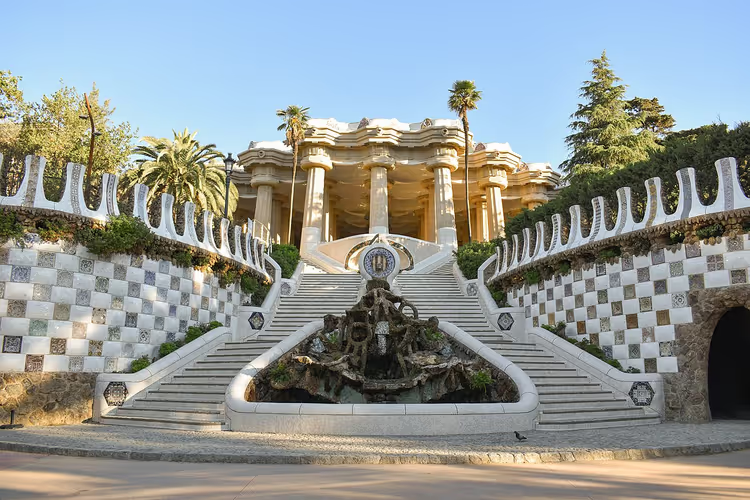
Park Güell grew out of Güell's idea to build a garden suburb away from the city center. The project never paid off, but it left behind a park that once again carried Gaudí's signature style. Today it is one of the most recognizable views of Barcelona. The park doesn't fit into a one-day itinerary; it's better to save it for the second day.
The paid section is the Monumental Zone, where the entrance pavilions, the hypostyle hall, and the terrace with the long mosaic bench are located. The rest of the park is free, and you simply walk through it among pine trees and viaducts. The city view opens up from the upper paths.
Admission to the Monumental Zone costs €18 for an adult (as of 09/2026, Park Güell official website). Tickets are sold in 30-minute windows, so arrive for your slot, not earlier. A Park Güell admission ticket is easy to buy online along with the rest.
- How to get there: Vallcarca or Lesseps metro (L3), then walk uphill.
- Cost: €18 adult for the Monumental Zone, the rest of the park is free (as of 09/2026, parkguell.barcelona).
- Who it's for: those who want Gaudí's mosaics and a city panorama in one place.
- The catch: the walk up from the metro is uphill, tough with a stroller.
Columbus Monument
 © Enric · CC BY-SAPhoto: Enric, CC BY-SA (https://creativecommons.org/licenses/by-sa/4.0), Wikimedia Commons
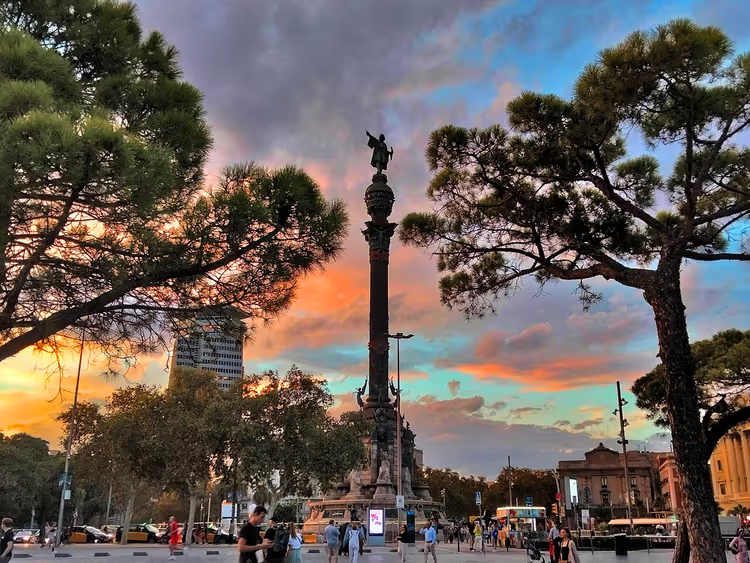
The Columbus Monument stands at the end of La Rambla, by the Port Vell. The column, about 60 meters tall, was erected for the 1888 Universal Exposition, and sculptures of people connected to the navigator's discoveries were placed at its base. From the waterfront side, the monument is visible from several points around the city.
Inside the column there is an elevator that takes you up to an observation deck just below the figure of Columbus. From up there you see the port and the rooftops of the old town. The ride up is paid, and the deck is small, so in high season come at opening time.
- How to get there: Drassanes metro (L3), about 300 m to the waterfront (per the map).
- Who it's for: those who want to see the port from above without hiking up Montjuïc.
- The catch: the observation deck is cramped, and there can be a line for the elevator.
Port Vell
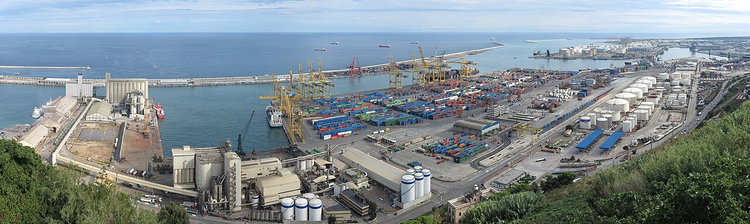
Port Vell lies at the end of La Rambla, next to the Columbus Monument. The waterfront square serves as a promenade, and along the water there are yachts, cafés, and souvenir shops.
 © Alexandar Vujadinovic · CC BY-SAPhoto: Alexandar Vujadinovic, CC BY-SA (https://creativecommons.org/licenses/by-sa/4.0), Wikimedia Commons
From here, routes lead to La Rambla, the Boqueria Market, Columbus Avenue, and the Museum of the History of Catalonia. Across the wave-shaped Rambla de Mar bridge you reach the aquarium and shopping centers. In the evening it's cooler by the water, and it's a pleasant place to end the day.
- How to get there: Drassanes or Barceloneta metro (L3, L4).
- Who it's for: those who want a short break between museums and a view of the water.
- The catch: it's windy by the port; even on a warm day, bring a light jacket.
La Rambla
 © Enric · CC BY-SAPhoto: Enric, CC BY-SA (https://creativecommons.org/licenses/by-sa/4.0), Wikimedia Commons
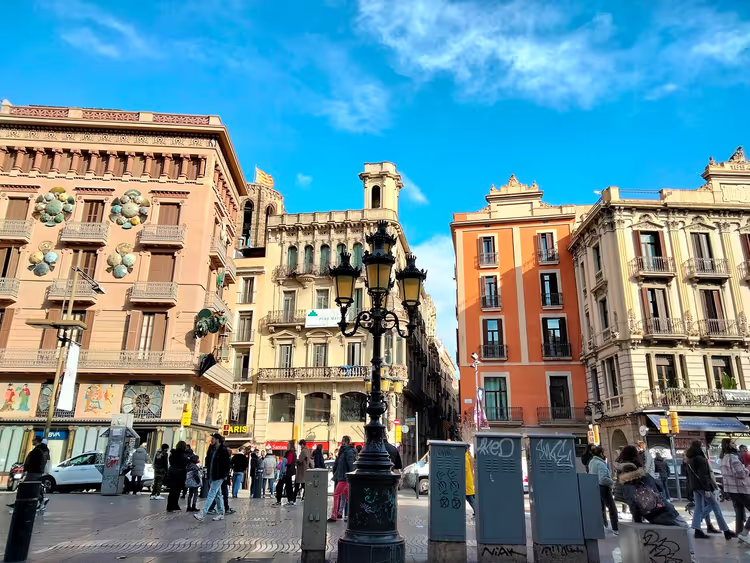
La Rambla connects Plaça de Catalunya and Port Vell. It's about 1.2 km long per the map, and along it you pass through several historic boulevards. Each has its own character: a fountain here, the opera house stage there.
Street performers, mimes, and living statues perform here, so the street looks different throughout the day. Food and souvenirs on La Rambla itself are sold at higher prices than in the neighboring blocks. Step into the side streets: prices are lower there, and the food is the same.
- How to get there: Catalunya, Liceu, or Drassanes metro (L1, L3).
- Who it's for: those who want to see the city's main street and stop by the market.
- The catch: lots of tourists and pickpockets, keep an eye on your bag.
Boqueria Market
 © Thingstodoinbarcelona · CC BY-SAPhoto: Thingstodoinbarcelona, CC BY-SA (https://creativecommons.org/licenses/by-sa/4.0), Wikimedia Commons
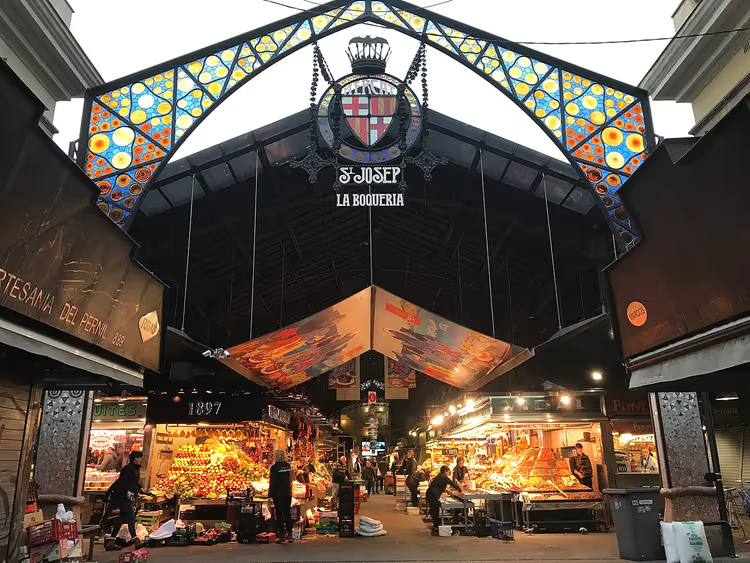
Boqueria Market (Mercat de la Boqueria) opens right off La Rambla. The stalls with fruit, vegetables, and seafood are decorated so elaborately that they look like festive displays. Vendors stack their goods in pyramids, and it's hard to walk past the colorful variety.
The back rows are given over to fresh fish and seafood, which they'll cook for you on the spot. A separate section is devoted to jamón and sausages, and strings of peppers, garlic, and dried mushrooms hang from the ceiling. The best selection is before lunch: by evening the stalls thin out, and some stands close earlier.
- How to get there: Liceu metro (L3), entrance right off La Rambla.
- Who it's for: those who want to grab a bite and buy groceries along the way.
- The catch: most of the stalls are closed on Sundays.
Gothic Quarter
 © Richard Mortel from Riyadh, Saudi Arabia · CC BYPhoto: Richard Mortel from Riyadh, Saudi Arabia, CC BY (https://creativecommons.org/licenses/by/2.0), Wikimedia Commons
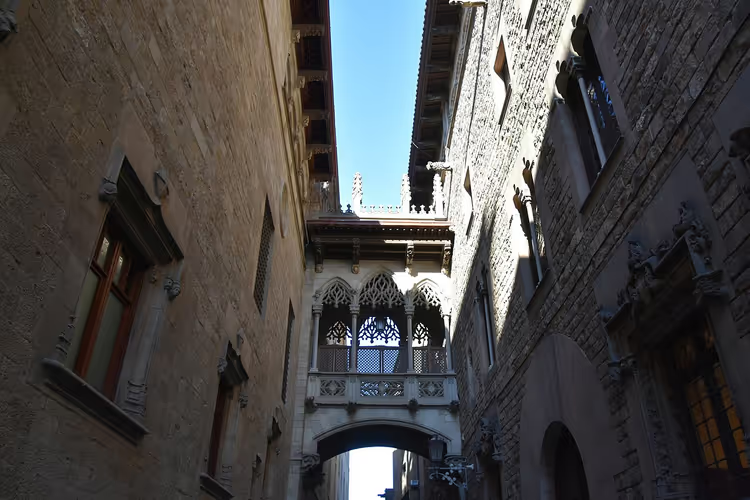
The Gothic Quarter (Barri Gòtic) stands on the site of a Roman settlement. The medieval buildings are built almost wall to wall, and working churches and basilicas rise above the narrow streets. The quarter is home to the Barcelona Cathedral and Plaça Reial with its fountains and palm trees.
Walk to Pont del Bisbe (the Bishop's Bridge), a delicate bridge between parts of the Catalan government residence. Nearby you can see Roman-era excavations and the city history museum. If you want to understand the area more deeply, a Gothic Quarter tour is a good fit.
- How to get there: Jaume I (L4) or Liceu (L3) metro station.
- Who it's for: those who love narrow streets, history, and the atmosphere of the old city.
- The catch: it's easy to get lost here, so you'll need the map on your phone at all times.
National art museum of Catalonia
 © MARIA ROSA FERRE ✿ from Vilafranca del penedes, Catalunya · CC BY-SAPhoto: MARIA ROSA FERRE ✿ from Vilafranca del penedes, Catalunya, CC BY-SA (https://creativecommons.org/licenses/by-sa/2.0), Wikimedia Commons
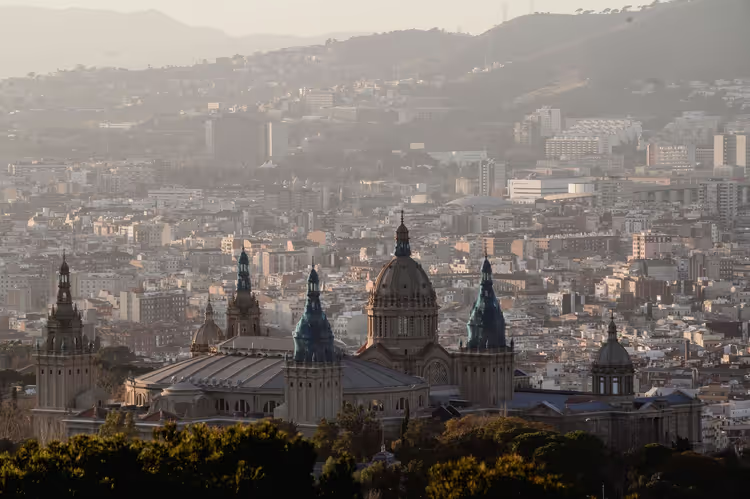
The National art museum of Catalonia (MNAC) occupies the National Palace on the slope of Montjuïc. The collection's main pride is its Romanesque painting collection, one of the largest in the world. The museum also displays Gothic art, coins, medals, and Gaudí furniture.
A wide staircase with a cascading fountain leads up to the museum, lined with trimmed trees. From the terrace in front of the palace, you get a panoramic view of the city. Admission is paid, but the museum has free time slots and discounts; check the schedule on the museum's website.
- How to get there: Espanya metro station (L1, L3), then up the stairs.
- Who it's for: those who want to see Romanesque frescoes and a panoramic view from one spot.
- The catch: there are a lot of steps on the way up, and it's a tough climb in summer.
Magic Fountain of Montjuïc
 © DagafeSQV · CC BY-SAPhoto: DagafeSQV, CC BY-SA (https://creativecommons.org/licenses/by-sa/3.0), Wikimedia Commons
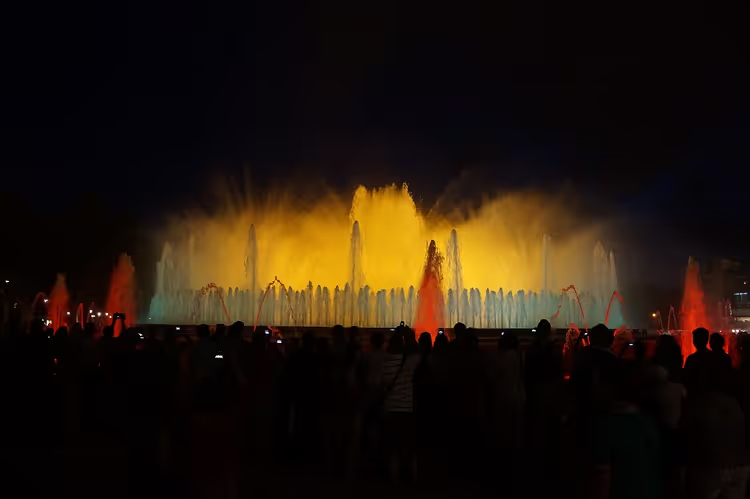
The Magic Fountain of Montjuïc is turned on after dark, when the museums are already closed. The jets move to music and the lighting changes color, so families and couples come to the fountain together. The project was designed by engineer Carles Buïgas, who combined water, light, and sound.
The show repeats several times an evening, with pauses in between. Around the fountain there are viewing platforms and cafés that stay open until midnight. The schedule depends on the season and the city's water restrictions, so check the timetable on the city's official website before you go.
- How to get there: Espanya metro station (L1, L3), then toward the National Palace.
- Who it's for: those wrapping up their day on Montjuïc and wanting a free show.
- The catch: in high season the area gets crowded, so arrive early.
Arc de Triomf
The Arc de Triomf was built for the 1888 Universal Exposition, designed by architect Josep Vilaseca. The red brick with gray stone looks simple, and the reliefs tell the story of the city's achievements. The arch stands at the entrance to Parc de la Ciutadella.
Passing through it, you enter a park with a fountain, palm trees, and boats on a pond. Nearby are the zoology museum and several old fortress structures. It's a calm spot where you can sit on a bench and take a break.
- How to get there: Arc de Triomf metro station (L1) or Estació del Nord station.
- Who it's for: those heading to Parc de la Ciutadella who want to see the arch along the way.
- The catch: the arch is small, so it's not worth a separate trip on its own.
Tours and tickets online
For this route, it's convenient to book guided tickets with skip-the-line entry in advance. Below is a selection of Barcelona tours for you: timed entry slots, walks through Gaudí sites, and trips to Montjuïc.
Tours and tickets in Barcelona
Guided tours, skip-the-line tickets and activities — most offers can be cancelled free of charge.
See offers on GetYourGuideThe widget loads once you give your consent.
How to save on tickets and transport
Online tickets are cheaper than box office tickets almost everywhere. Sagrada and Park Güell sell timed entry slots, so buying early saves you both money and time in line.
The cheapest way to get around the city is the T-casual card: €13 for ten metro and bus rides (as of 09/2026, TMB). For trips to and from the airport, get the Hola BCN card for 2-5 days: it covers both transit and the airport.
- How to save: buy tickets online and walk around the center.
- Who it's for: those spending one or two days in the city.
- The catch: fares and discounts change, so check prices on official websites before your trip.
How to get from the airport to the center
El Prat Airport is about 12 km from the center, and you can get to the city quickly. The Aerobús runs routes A1 and A2 to Plaça de Catalunya and Plaça d'Espanya; tickets are sold online and at machines (as of 09/2026, official Aerobús website).
The RENFE R2 Nord train stops at Passeig de Gràcia and Sants, so it's convenient if you're staying near the station. Metro L9 Sud connects the terminals with the center, and at night bus N17 runs. For city transit fares, see TMB.
If you don't want to deal with transfers, book a Barcelona airport transfer in advance so you don't have to find a car at the terminal.
- How to get there: Aerobús A1/A2, R2 Nord train, or metro L9 Sud.
- Who it's for: those who land and head straight to a hotel in the center.
- The catch: at night there are fewer transit options, leaving bus N17 or a taxi.
Tours and tickets in Barcelona
Guided tours, skip-the-line tickets and activities — most offers can be cancelled free of charge.
See offers on KiwitaxiThe widget loads once you give your consent.
Barcelona route on the map
The map below shows all the route stops. Open it in advance and save it on your phone so you don't have to look up addresses on the go.
Barcelona in one day
Places on the map
- 1Casa Batlló Mosaic facade and a dragon-scale roof, online ticket from 29 euros
- 2Plaça de Catalunya Metro and bus hub between the old town and Eixample, where La Rambla begins
- 3Palau Güell Gaudí's first major work in the Raval district, mosaic chimneys on the roof
- 4Sagrada Família Gaudí's main work, stained glass and spire towers, basic ticket about 26 euros
- 5Park Güell The Monumental Zone with the Hall of Columns and mosaic bench costs 18 euros, the rest is free
- 6Columbus Monument About 60-meter column at the end of La Rambla, a lift inside to the viewing platform
- 7Old Port Old port with yachts and cafés, the Rambla de Mar bridge leads to the aquarium
- 8La Rambla About 1.2 km boulevard from Plaça de Catalunya to the port, street performers and living statues
- 9Boqueria Market Entrance right off La Rambla, seafood and jamón, almost everything is closed on Sundays
- 10Gothic Quarter Medieval streets on the site of a Roman settlement, the Cathedral and the Bishop's Bridge
- 11National Art Museum of Catalonia National palace on the slope of Montjuïc, the largest collection of Romanesque painting
- 12Montjuïc Magic Fountain Water, light and music show after dark, the schedule depends on the season
- 13Arc de Triomf Red brick and reliefs, built for the 1888 World's Fair
- 14Ciutadella Park Behind the arch a fountain, palms and boats on the pond, near the Zoology Museum
- 15El Prat Airport About 12 km from the center, the Aerobus, R2 Nord train and metro L9 Sud go to the city
⁉️🤔 Frequently asked questions
Is one day enough for Barcelona?
One day is enough for the main central sights: Casa Milà, Casa Batlló, Plaça de Catalunya, the Gothic Quarter, La Rambla, the seafront port, and Montjuïc. The pace will be intense, and you'll only skim the museums. Park Güell and Sagrada don't fit into that day; plan a second day for them.
Do I need to buy Sagrada and Park Güell tickets in advance?
Yes. Both sites admit visitors by timed slots, and in summer the available windows sell out days ahead. Without a reservation, you risk standing at the entrance for over an hour.
How much does a day in Barcelona cost?
Main expenses: entry tickets and transport. Sagrada costs about €26 (Sagrada pricing page), Park Güell €18 (Park Güell tickets and hours), Casa Milà about €29 (as of 09/2026, La Pedrera rates). Plus transport with a T-casual card. Lunch away from La Rambla will cost less.
How to get from the airport El Prat to the center?
From El Prat to the center, you can take the Aerobús, the RENFE train, or metro line L9 Sud. The Aerobús stops at Plaça de Catalunya and Plaça d'Espanya, the train at Passeig de Gràcia and Sants (as of 09/2026, Aerobús schedule and fares). At night, bus N17 runs. Decide in advance which stop is closer to your hotel.
Where to eat along the route?
Stop by La Boqueria market: you can grab seafood and fruit on your way from La Rambla. For a relaxed lunch, duck into the side streets of the Gothic Quarter or El Raval, where prices are lower than on La Rambla itself. In the evening, it's convenient to have dinner near the Port Vell.
In short: what's worth booking
A day in Barcelona goes smoothly when you already have your tickets in hand. Below is a quick matrix: if you have a specific goal, book accordingly.
- If you want Gaudí without queues: Sagrada and Park Güell tickets with time slots.
- If you need a central hotel: Barcelona hotels on Trip.com.
- If you're planning the trip in advance: compare insurance options before you leave.
One day in Barcelona is realistic to cover entirely on foot if you start in the morning and book your entries in advance.

A small editorial team writing guides for independent travel. We travel ourselves, but we haven’t been everywhere, so we check prices, opening hours and how to get there against official sources.