










What to see in Croatia: 10 places from Plitvice Lakes to Dubrovnik
Croatia only looks compact on the map. Between Istria and Dubrovnik there are hundreds of kilometers of coastline, and the ten places in this selection are scattered so far apart that you won't cover even half of them in a week.
We picked sites that give you the full picture of the country: a national park with waterfalls, an underground cave, a Roman amphitheater, medieval walls, and two places where nature itself is the attraction. For each item below you'll find the season, entry price, and how to get there.
Ad: this article contains affiliate links, we earn a commission if you book through them, at no extra cost to you.
What to see in Croatia: the highlights
💡 In short:
Cover the nature part first: Plitvice Lakes and Baredine Cave.
Then add the cities: Dubrovnik, Split, Zadar, and Pula.
Plan the sea for May through October, and save the parks and cities for the mild shoulder season.
Prices and hours: 09/2026, verified on the official Plitvice Lakes National Park website.
1. Plitvice Lakes: waterfalls in the heart of the country
 © Pablo BM from London, England · CC BYPhoto: Pablo BM from London, England, CC BY (https://creativecommons.org/licenses/by/2.0), Wikimedia Commons
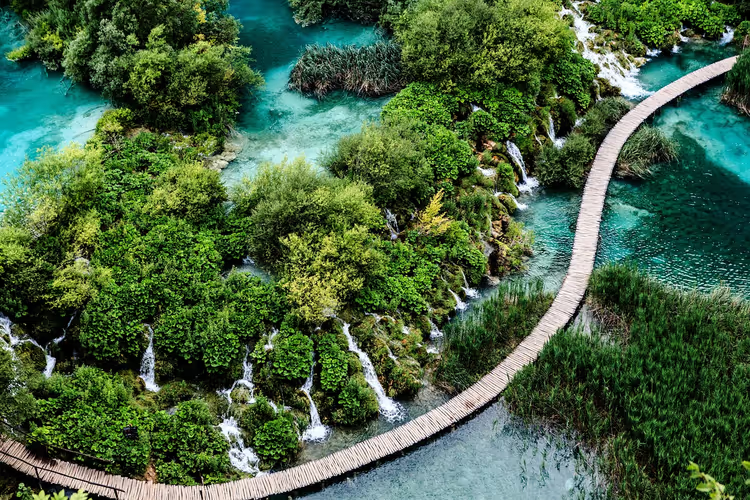
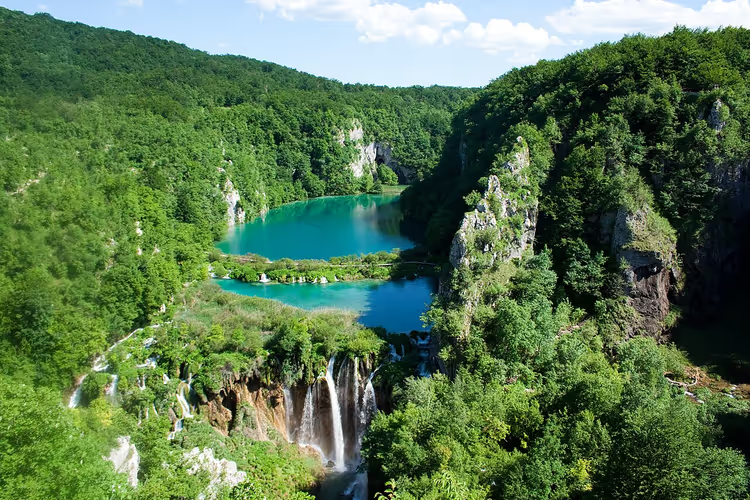
Plitvice Lakes lie in the center of Croatia and are a UNESCO World Heritage site. The cascade is connected by travertine barriers, with wooden boardwalks laid across them. An electric boat and a panoramic train are included in the ticket, so you move between the cascades at no extra charge.
The park has 22 km of boardwalks and 36 km of hiking trails marked out, so you can pick a route that matches your fitness level (as of 09/2026, official park website). Check the weather forecast the day before your visit. The visitor center has interactive exhibits, and themed tours are available for groups.
Tickets: a day ticket for an adult costs €40 from 06/01 to 09/30, €23 in April, May, and October, €10 from 11/01 to 12/31; after 4:00 PM the summer ticket is cheaper, €25 (as of: 09/2026, official park rates).
Tip: arrive at opening time. By midday the upper lakes already have a dense flow of visitors.
Tours: tickets and tours on GetYourGuide are a lifesaver if you're traveling without a car.
The catch: swimming in the lakes is prohibited, and some trails close when the weather changes abruptly.
2. Baredine Cave: an underground lake in Istria
 © Bernhard Wintersperger from Graz, Austria · CC BYPhoto: Bernhard Wintersperger from Graz, Austria, CC BY (https://creativecommons.org/licenses/by/2.0), Wikimedia Commons
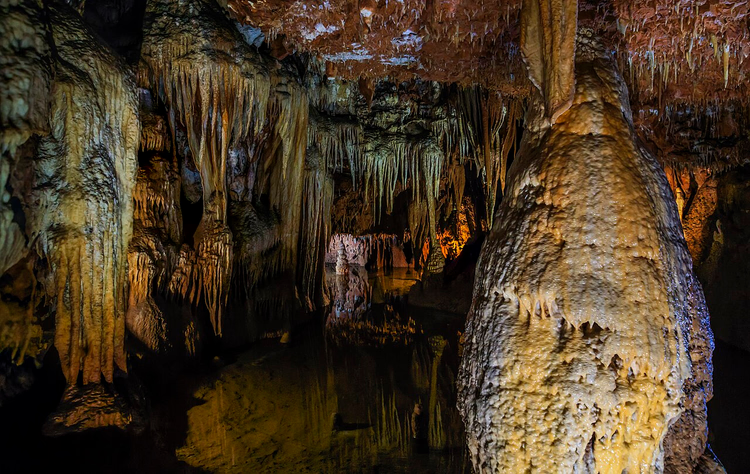
Baredine Cave is open near the village of Nova Vas in Istria. Visitors follow a 300-meter route that descends about 60 meters underground, and the chambers stay at around 14 °C year-round (as of: 09/2026, official cave website). In the heat, the underground chill feels like a relief.
Tours start twice an hour from April through October. In the off-season, visits must be booked at least a day in advance. Among the cave's inhabitants is the olm, a rare tailed amphibian that Croatians call the human fish.
Tickets: an adult ticket costs €14, children aged 5 to 15 pay €10 (as of: 09/2026, cave price list).
What to bring: a jacket or sweater, since the temperature in the chambers barely changes.
The catch: there's no free wandering through the cave; the route is only done as part of a guided group.
3. Zlatni rat: pebbles and a gentle entry into the water
 © Miran Hojnik · CC BYPhoto: Miran Hojnik, CC BY (https://creativecommons.org/licenses/by/2.0), Wikimedia Commons
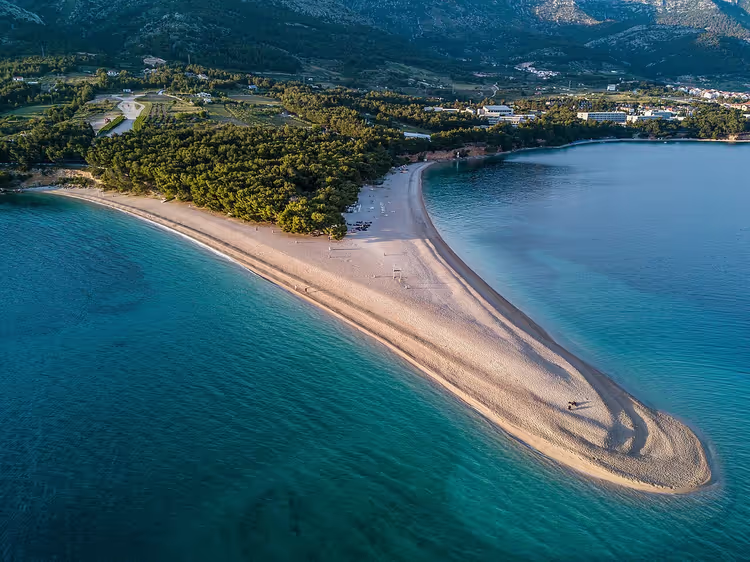
Zlatni rat on the island of Brač is recognized by its horn-like shape. The spit extends into the sea for almost half a kilometer, the shore is made of small round pebbles, and the entry into the water is gradual. That's why there are so many families with young children here.
A great shot of the beach comes from the top of Vidova Gora. It rises above the island and is visible from any point along the coast.
How to get there: a path along a pine grove leads from the town of Bol to the beach.
Who it's for: families with children, because the depth increases slowly.
The catch: there's no shade on the spit itself, so bring an umbrella and water with you.
4. Dubrovnik: the old town walls
 © dronepicr · CC BYPhoto: dronepicr, CC BY (https://creativecommons.org/licenses/by/2.0), Wikimedia Commons
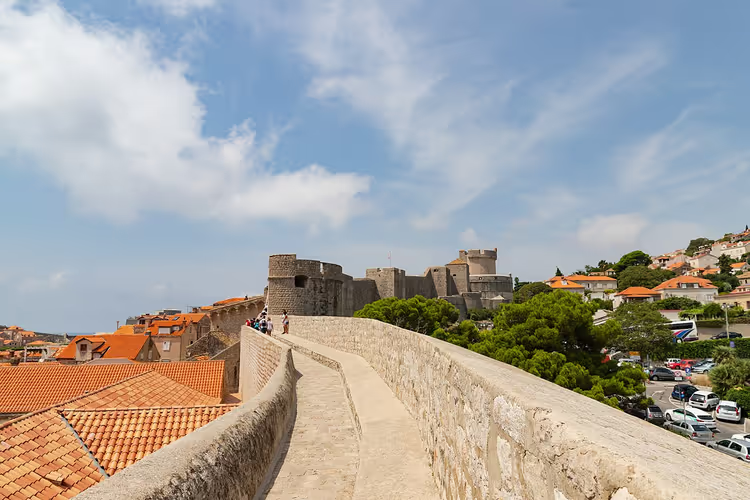
The creators of Game of Thrones filmed Dubrovnik from season two through season eight and gave the city the role of King's Landing. The old town is entirely pedestrian. Narrow streets, the preserved fortress wall with towers, and the port look like ready-made sets.
Fans of the series follow a route through the Pile Gate, Minčeta Bastion, Lovrijenac Fortress, the Rector's Palace, and the island of Lokrum. Take an organized tour or do the route on your own using a filming locations map.
Who it's for: those who watched the series, because half of the recognizable shots were filmed right here.
Tickets: entry to the city walls is paid; buy a ticket at the entrance to the old town.
The catch: you'll leave your car outside the walls and walk with your luggage.
5. Zadar: the sea organ and the sunset
 © Böhringer Friedrich · CC BY-SAPhoto: Böhringer Friedrich, CC BY-SA (https://creativecommons.org/licenses/by-sa/2.5), Wikimedia Commons
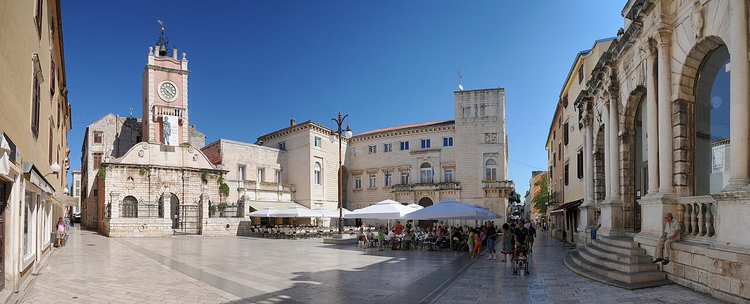
Two works by architect Nikola Bašić stand on Zadar's waterfront. The Sea Organ (Morske orgulje) looks like steps leading into the sea, but through pipes built into the stone, it turns waves and wind into sound.
Nearby, the Greeting to the Sun (Pozdrav suncu) is made of three hundred glass plates arranged in a circle more than twenty meters in diameter. During the day the circle stores light; in the evening it releases it as a light show.
When to go: at sunset, because both installations only work together in the evening.
Who it's for: those who want to experience the sea without museums and lines.
The catch: in a complete calm, the sea organ is silent; the sound depends on waves and wind.
6. Pula: the amphitheater and gladiators
 © Berthold Werner · CC BY-SAPhoto: Berthold Werner, CC BY-SA (https://creativecommons.org/licenses/by-sa/3.0), Wikimedia Commons
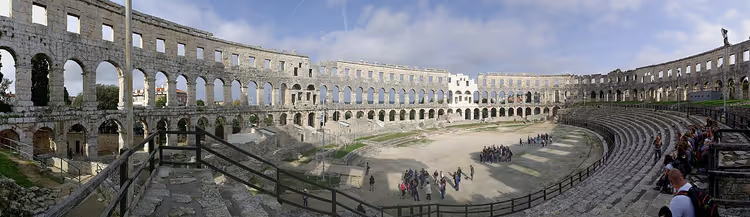
The Pula Amphitheater is among the six largest in the world and has stood since the first century AD. In Roman times, the stands held more than twenty thousand spectators; today they accommodate about five thousand. From June through September, the Spectacula Gladiatoria school performs here: gladiators in armor stage fights, and in the evenings the arena hosts concerts and film festival screenings.
Tickets: an adult ticket costs €10, for schoolchildren and students €5; prices for 2026 were left unchanged (as of: 09/2026, official arena website).
Tip: amphitheater tickets on Tiqets are worth booking in advance if you're visiting in high season.
The catch: gladiator shows run only from June through September; in other months you'll see just the stone stands.
7. Split: Diocletian's Palace
 © Berthold Werner · CC BY-SAPhoto: Berthold Werner, CC BY-SA (https://creativecommons.org/licenses/by-sa/4.0), Wikimedia Commons
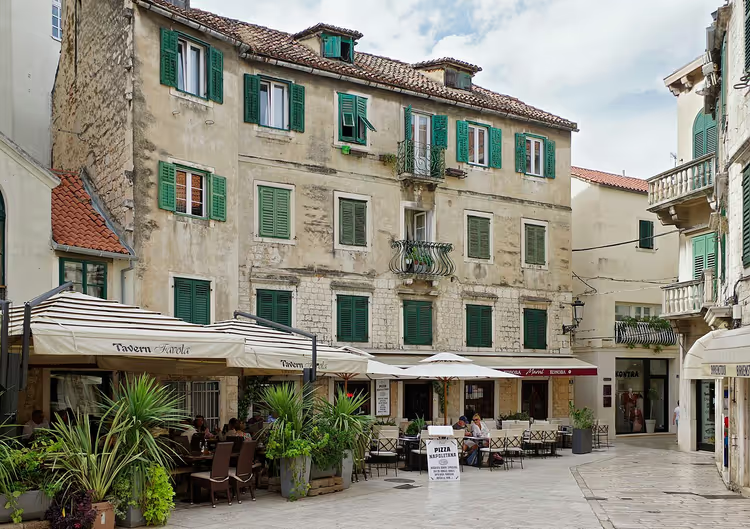
Diocletian's Palace was built at the turn of the third and fourth centuries as the emperor's summer residence and military camp. After abdicating, Diocletian lived here for the rest of his life. The Roman walls are so well preserved that city life still goes on inside them.
In a single walk you pass through the main Golden Gate (Porta Aurea), find yourself on the central Peristil square, and see the former imperial mausoleum and the Temple of Jupiter. Entry to the palace grounds is free; tickets are required only for certain parts of the complex.
Who it's for: anyone who wants to see Roman architecture right in the middle of a living city.
How to get there: the palace occupies blocks of the old town along Split's waterfront.
The catch: the cathedral and the palace's underground halls are paid separately; there's no single ticket for the whole complex.
8. Ston: walls and oysters
 © Carsten Steger · CC BY-SAPhoto: Carsten Steger, CC BY-SA (https://creativecommons.org/licenses/by-sa/4.0), Wikimedia Commons
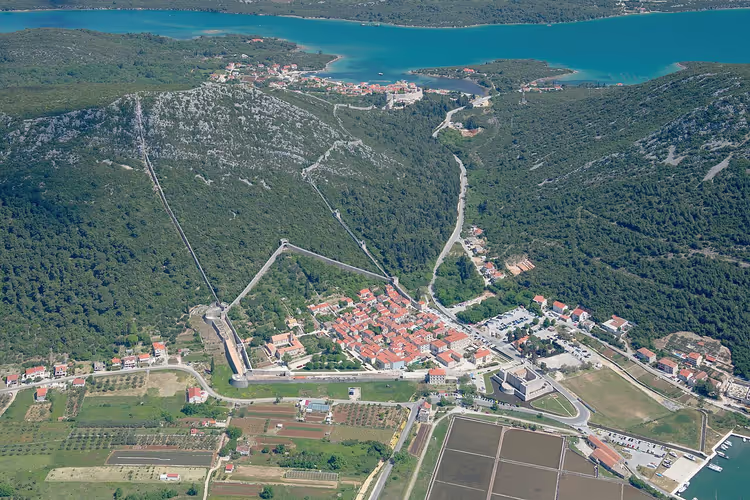
The Walls of Ston stretch for more than five kilometers and are considered the second-longest fortification wall in the world after the Great Wall of China. They connect Mali Ston and Veliki Ston and are fully open for walking.
Of the forty-one towers, twenty survive today. Construction of the fortifications began in the fourteenth century to protect the salt works of the Pelješac peninsula. After the climb, head down into town: restaurants by the bay serve fresh mussels and oysters.
How to get there: Ston sits on the Pelješac peninsula, on the coastal road from Dubrovnik.
Who it's for: anyone who wants to combine the wall with a seafood lunch by the water.
The catch: the climb follows exposed steps, and in summer there's almost no shade on the wall.
9. Jadranska Magistrala: the road along the sea
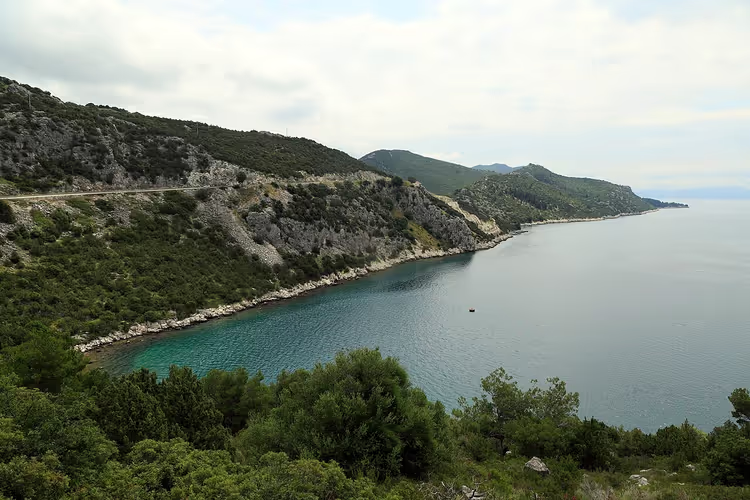 © Falk2 · CC BY-SAPhoto: Falk2, CC BY-SA (https://creativecommons.org/licenses/by-sa/3.0/de/deed.en), Wikimedia Commons
Jadranska Magistrala runs along the eastern Adriatic coast between Trieste and Montenegro, and more than half of the route passes through Croatia. On the right, the sea opens up with hundreds of islands, fishing villages, and cities like Zadar, Šibenik, Trogir, and Dubrovnik. On the left, cliffs rise up.
The stretch from Rijeka to Dubrovnik takes a full day behind the wheel, so split the drive into stages. Stop in small coves: there you'll see the same Adriatic without the tour buses.
When to go: from early summer to fall, when there are no prolonged rains.
Car rental: renting a car on DiscoverCars is useful if you want to spend the night in coves along the way.
The catch: in strong bora winds the road gets closed, and in rain the route is not suitable for inexperienced drivers.
10. Solana Nin: sea salt as a souvenir
The Solana Nin salt pans near Nin are worth visiting if you're looking for a practical souvenir rather than a magnet. Seawater is collected into basins and left to the sun and wind, so the salt comes out natural and rich in iodine and minerals. In fall, it's harvested by hand.
A tour of the salt pans shows how traditional production works. The museum tells the story of salt that has been harvested here for over a thousand years and was valued as far back as Roman times.
What to buy: Fleur de sel, cosmetics, and seasonings made with organic-certified sea salt.
Who it's for: for those who want to bring home an edible reminder of their vacation.
When to go: in late summer or fall, when the salt is harvested by hand.
Tours and tickets
Guided tours, skip-the-line tickets and activities — most offers can be cancelled free of charge.
See offers on GetYourGuideThe widget loads once you give your consent.
Camping in Croatia: from a tent to glamping
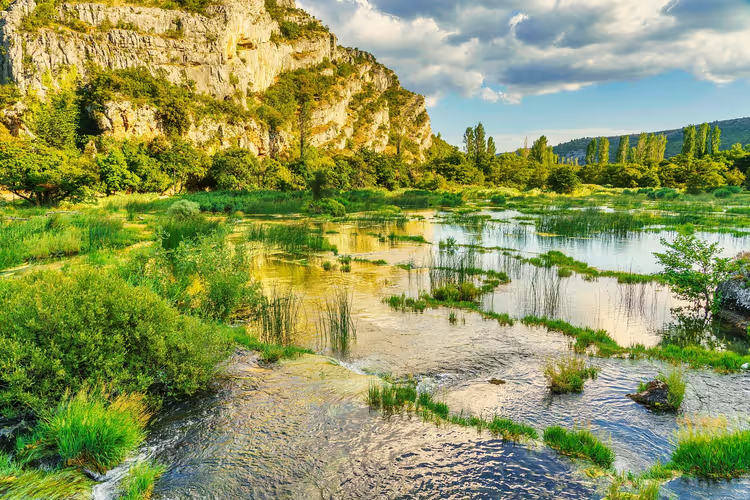
Croatia is considered one of Europe's top camping destinations. You set up with your own tent or camper, and if you don't want to haul gear, you rent a mobile home or a fully furnished glamping tent.
Sites sit in pine shade and in coves with clear water, so getting into the sea is easy even with kids. Compare options by distance to the water and by shade: open pitches heat up during the day. If you're heading to an island, add ferry schedules to your plan.
Yachting: Trogir, Hvar, Mljet, and Dubrovnik
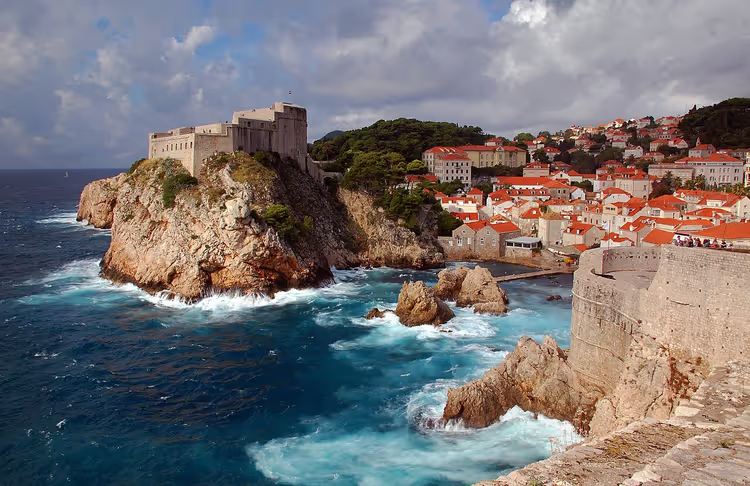 © Edwardwexler at English Wikipedia · CC BY-SAPhoto: Edwardwexler at English Wikipedia, CC BY-SA (https://creativecommons.org/licenses/by-sa/3.0), Wikimedia Commons
The classic route starts in Trogir, where the medieval old town is worth a stop on its own. From there the yacht goes in stages to Zlatni rat cape on Brač, to Hvar and Mljet, and finishes in Dubrovnik. On Hvar, the main town recalls Venetian rule with its square featuring a clock tower, loggia, and bell tower. The western part of Mljet is a national park.
The passage from Trogir to Dubrovnik easily splits into a week: swimming in coves by day, mooring in a marina by evening. Check exact distances between stages with the charter company, because buoys and berths are booked in advance.
Ćevapčići recipe: grilled meat sausages
Ćevapčići are on the menu of almost every restaurant on the coast, and they're easy to recreate at home. For four servings, take half a kilo of mixed ground meat, two garlic cloves, two sprigs of parsley, one egg, two teaspoons of sweet paprika, a teaspoon of dried marjoram, salt, and pepper.
Chop the garlic and parsley and mix with the ground meat.
Add the egg, paprika, marjoram, salt, and pepper, and knead the mixture.
Roll sausages about the length of a finger.
Grill them or fry in three tablespoons of olive oil, turning, for about ten minutes.
Serve with onion rings, djuvec rice, and Ajvar.
⁉️🤔 Frequently asked questions
When is the best time to go to Croatia?
The optimal window runs from April to October. In May, June, and September the sea is already warm and the heat is milder, so these months work for both the beach and the cities. Pick July and August if you want the warmest water, but be ready for crowds in Dubrovnik and at Plitvice Lakes.
What currency is used in Croatia and is the border part of Schengen?
Since January 1, 2023, Croatia has been part of both the eurozone and the Schengen Area (as of 09/2026, European Commission). The kuna is gone, and cash and cards in euros are accepted everywhere. Border control operates under general Schengen rules.
How much does entry to Plitvice Lakes cost?
Prices for a one-day ticket by season are listed in the Plitvice Lakes section above. A two-day ticket in summer costs €60 and is convenient for those who want to cover both the upper and lower lakes (as of 09/2026, park price list for 2026). Buy tickets online for a specific entry time.
Does Croatia only have pebble beaches?
Most often the shore is pebbly, but sandy beaches do exist. Well-known options: Bijeca near Medulin, the Royal Beach in Nin, San Marino in Lopar on Rab island, and the wild Divna beach on the Pelješac peninsula. On pebble beaches, bring water shoes so you don't cut your feet.
Is Croatia suitable for a vacation with kids?
Yes, because many beaches slope gently into the sea and the infrastructure along the coast is well developed. Kids will enjoy Zlatni rat on Brač and the sheltered coves of Istria, where there are almost no waves. Restaurants usually have children's dishes, and campsites have outdoor playgrounds.
What should I try from the local cuisine?
Order meat from the peka, Ćevapčići, and Pljeskavica. In Istria, try truffles; on the coast, fresh fish and seafood. With cheese, get Paški sir, and for dessert, Prošek. Portions are large, so it's best to come to dinner hungry.
In short: what to book
If you have a week, put your route together like this: two days for Dubrovnik and Ston, a day for Split, a day for Plitvice Lakes, and a day for Zadar.
If you want cities and history: pick Dubrovnik, Split, and Zadar.
If you're going for nature: Plitvice Lakes and Baredine cave.
If you're traveling with kids: Zlatni rat and the coves of Istria.
If you're driving: Jadranska Magistrala and Ston along the way.
Hotels in Dubrovnik and Split are more expensive in summer, so check options in Croatia on Trip.com in advance.

A small editorial team writing guides for independent travel. We travel ourselves, but we haven’t been everywhere, so we check prices, opening hours and how to get there against official sources.