
















London in one day: a route with twenty stops
One day in London always comes down to choices. You want to see the Tower, Westminster, and Buckingham Palace, but there is never enough time for everything. We walked this route on the map and put together twenty stops in one logical loop.
The route starts at Tower Bridge and ends at the zoo. In between are the City, St Paul's Cathedral, Westminster, Trafalgar Square, and the Marylebone district. You will walk about eight kilometers on foot.
This loop is realistic to complete in a day if you buy tickets in advance and take the Tube for the longer stretches. You will see some sights for free, while the Tower and Westminster Abbey require separate tickets.
Ad: this article contains affiliate links, we earn a commission if you book through them, at no extra cost to you.
How the one-day route works
The route runs clockwise along the Thames. In the morning you start in the City, in the afternoon you move over to Westminster, and in the evening you head up to Marylebone. This way you cross the city less and waste almost no time backtracking.
Part of the day | What you see | Ticket in advance |
|---|---|---|
Morning | Tower Bridge, Tower of London, Sky Garden | yes, for the Tower |
Afternoon | Tate Modern, Millennium Bridge, St Paul's Cathedral, Covent Garden | yes, for the cathedral |
Evening | Buckingham Palace, Westminster, Trafalgar Square, Piccadilly | yes, for the abbey |
Finale | Sherlock Holmes, Madame Tussauds, the zoo | yes, for Madame Tussauds |
💡 In short:
- Start at Tower Bridge while there are no lines at the ticket offices.
- Buy the main tickets online in advance: the Tower, St Paul's Cathedral, Westminster Abbey, and Madame Tussauds.
- Stick to the Thames, and save the Tube for the stretches to Marylebone.
- Tickets and opening hours: 09/2026, check the official Tower of London website.
Tower Bridge
 © Sarahhoa · CC BY-SAPhoto: Sarahhoa, CC BY-SA (https://creativecommons.org/licenses/by-sa/2.0), Wikimedia Commons
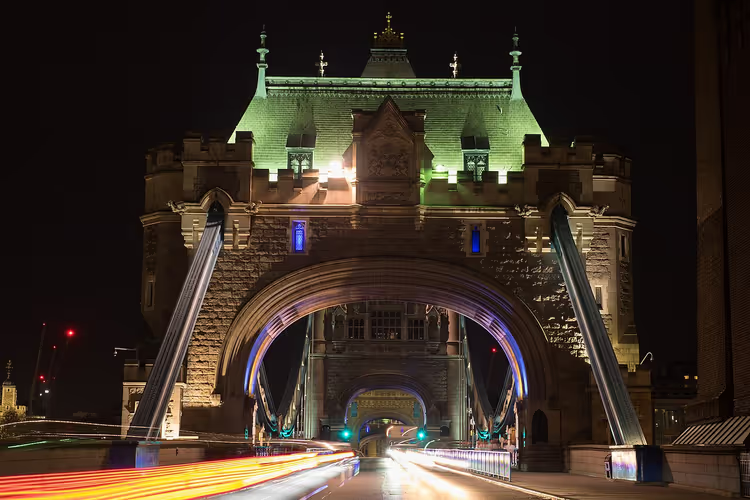
The route starts in the Tower Hamlets area, at Tower Bridge. The bridge connected the banks of the Thames at the end of the nineteenth century and became a recognizable symbol of the city. Its lower walkway opens for ships to pass, while the upper walkway is for pedestrians.
Support towers with staircases rise on both sides of the bridge. They lead to the pedestrian walkway, which operates as an observation deck. Through the large windows you will see The Shard skyscraper, St Katharine Docks, and the green dome of Greenwich.
Inside the walkway there is an exhibition about the history of the bridge. Check opening hours and ticket prices on the official website (as of: 09/2026), and exhibition tickets are available on GetYourGuide.
- Getting there: Tower Hill Tube station, then follow the signs to the bridge.
- Cost: viewing the bridge from outside is free, the exhibition is paid.
Tower of London
 © Richard Nevell · CC BY-SAPhoto: Richard Nevell, CC BY-SA (https://creativecommons.org/licenses/by-sa/3.0), Wikimedia Commons
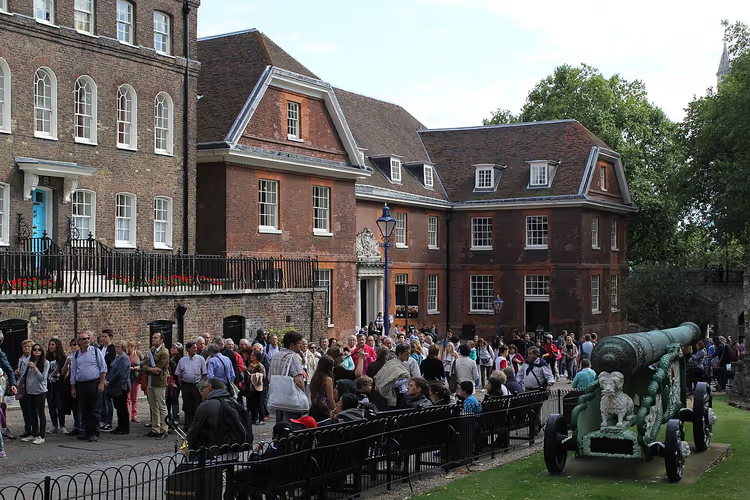
The Tower of London stands next to the bridge. Over the centuries it has been a royal residence, a storehouse, and a prison. The fortress got its name from the White Tower and gradually grew into an ensemble of several dozen buildings within two rings of walls.
Inside you will see the Crown Jewels with the coronation regalia and the Koh-i-Noor diamond. Separate rooms are dedicated to weapons and armor, and guards serve in the courtyards.
It is better to buy tickets online, as it is cheaper and faster. Check hours, prices, and time slots on the official website (as of: 09/2026), and skip-the-line tickets are available on GetYourGuide.
- The catch: in summer, long lines form at the ticket offices, so book a morning slot.
- Getting there: Tower Hill station, a five-minute walk to the entrance.
Sky Garden observation deck
 © Colin · CC BY-SAPhoto: Colin, CC BY-SA (https://creativecommons.org/licenses/by-sa/4.0), Wikimedia Commons
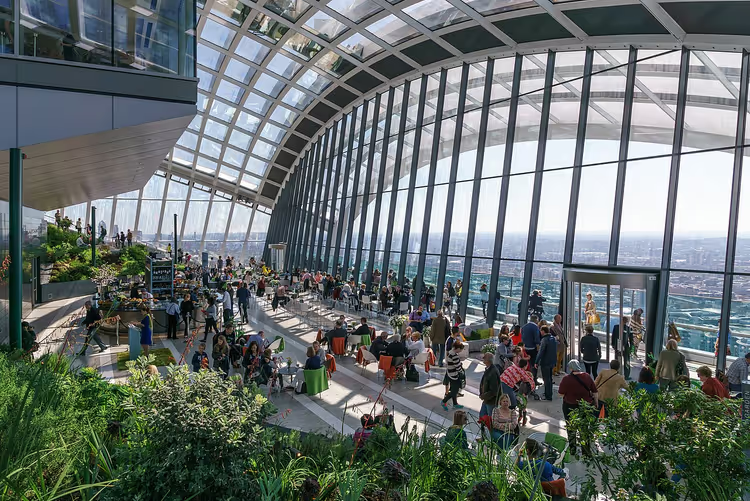
From the Tower you can clearly see the Walkie Talkie skyscraper, which is a stone's throw from Monument station. Its upper floors are occupied by the Sky Garden terrace, which locals call the "sky garden."
The glass space with tropical palms and flowers looks out over the City. Observation decks with an open terrace are set up on two sides.
Admission is free, but you need a free ticket and a reservation. You can book a date and time on the official website (as of: 09/2026).
- Getting there: Monument and Bank stations, then follow the signs inside the tower.
- Cost: free, but only with advance booking.
Tate Modern
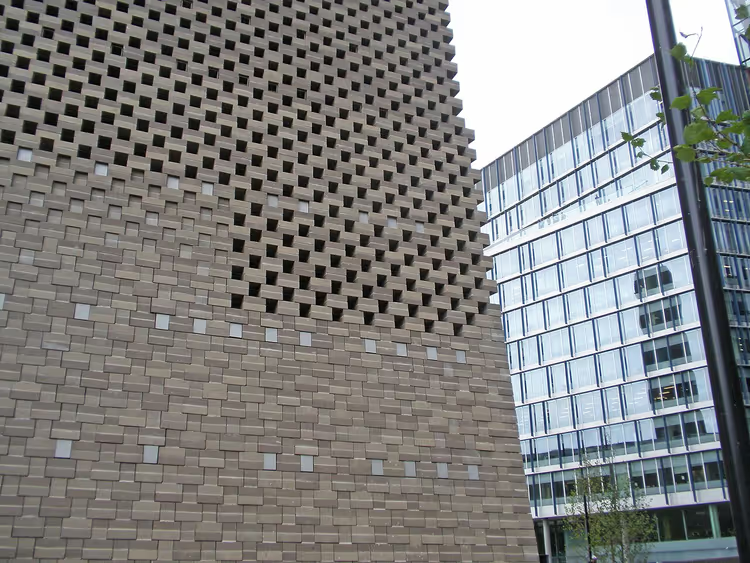 © Amanda Slater from Coventry, West Midlands, UK · CC BY-SAPhoto: Amanda Slater from Coventry, West Midlands, UK, CC BY-SA (https://creativecommons.org/licenses/by-sa/2.0), Wikimedia Commons
Tate Modern occupies a former power station building with a tall chimney. The closest stations are Southwark and Blackfriars. The industrial walls and steel structures serve as a backdrop for contemporary art.
The galleries display works ranging from Impressionism and Cubism to pop art. You'll see paintings by Matisse, Kandinsky, Malevich and Picasso, as well as posters by Andy Warhol.
Admission is free; you only pay for special exhibitions. Check opening hours on the official website (as of: 09/2026).
- The catch: popular galleries can get crowded on weekends, so it's better to arrive at opening time.
- Getting there: Southwark station, then walk along the riverbank.
Millennium Bridge
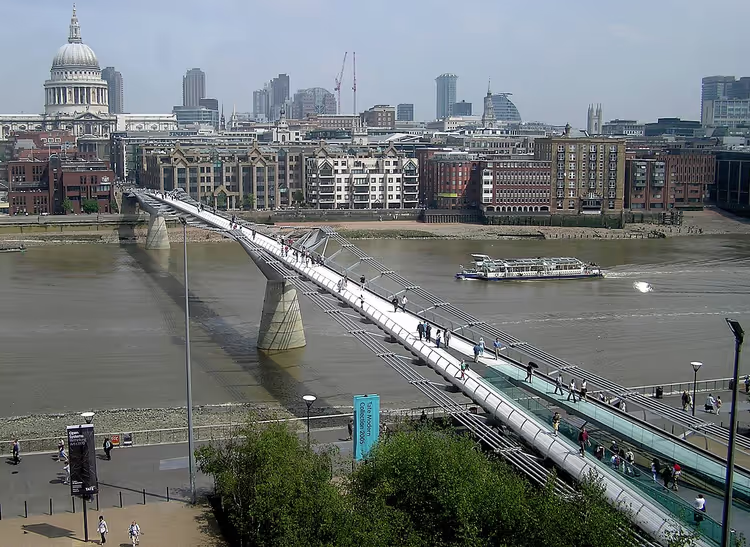
From the gallery you step out onto Millennium Bridge. It was built for the new millennium, but a couple of days after opening it was closed due to swaying. That's where the joking nickname "the wobbly bridge" comes from.
It's a pedestrian suspension bridge with two Y-shaped supports. The deck is fairly narrow, but it offers a view of St Paul's Cathedral on the opposite bank.
- Getting there: the bridge starts right at Tate Modern.
- Cost: free, open 24 hours.
St Paul's Cathedral
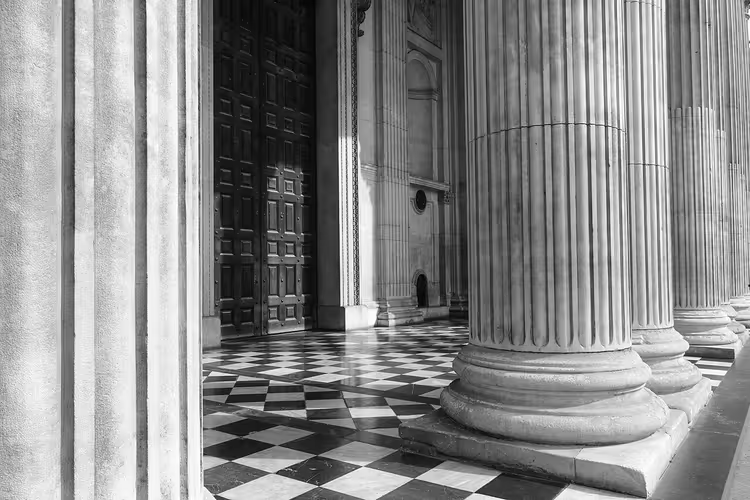 © Valentin Poleac · CC BY-SAPhoto: Valentin Poleac, CC BY-SA (https://creativecommons.org/licenses/by-sa/4.0), Wikimedia Commons
St Paul's Cathedral greets you on the north bank of the Thames. It got its current appearance in the early eighteenth century. The cathedral's main pride is its enormous dome, similar in construction to the dome of St Peter's Basilica in Rome.
Inside, the "Whispering Gallery" is famous: a word whispered near the wall can be heard on the other side. Steps lead up to the upper gallery, which offers a panorama of the city center.
On Sundays admission is free; on other days a ticket is required. Check prices, hours and time slots on the official website (as of: 09/2026), and a fast-track ticket is available on GetYourGuide.
- Getting there: St Paul's station, then follow the signs to the cathedral.
- The catch: the climb to the upper gallery goes up a narrow spiral staircase, which is tough for those who aren't in shape.
Covent Garden
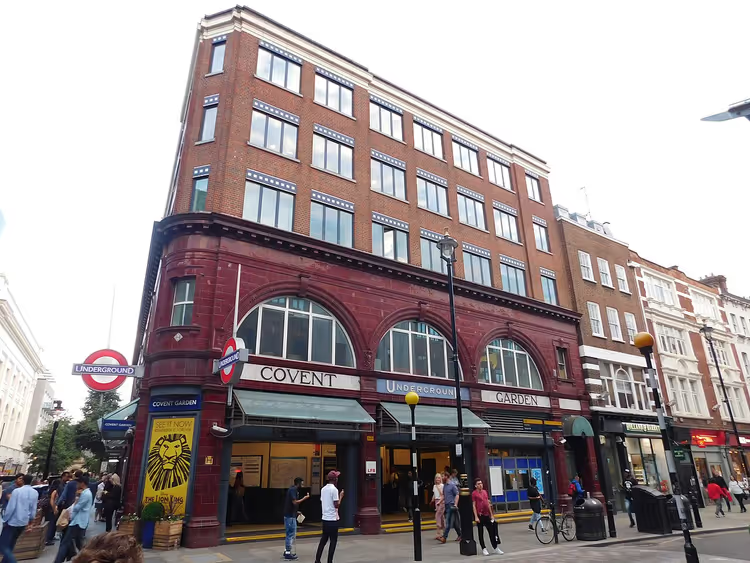 © Paul the Archivist · CC BY-SAPhoto: Paul the Archivist, CC BY-SA (https://creativecommons.org/licenses/by-sa/4.0), Wikimedia Commons
Covent Garden is the area around the Tube station of the same name. The main landmark here is the Royal Opera House, a Baroque building from the mid-nineteenth century. It serves as home to the opera and ballet companies.
The auditorium has more than two thousand seats, and the seat backs have built-in screens with librettos. Tours of the building are available for visitors, including a "Backstage" tour and a walk through the grand halls.
- Getting there: Covent Garden station, Piccadilly line.
- Cost: the square and market are free, while theater tours are paid (as of: 09/2026, official website).
- Theater tour: find a Covent Garden tour.
Buckingham Palace
 © MrsEllacott · CC BY-SAPhoto: MrsEllacott, CC BY-SA (https://creativecommons.org/licenses/by-sa/4.0), Wikimedia Commons
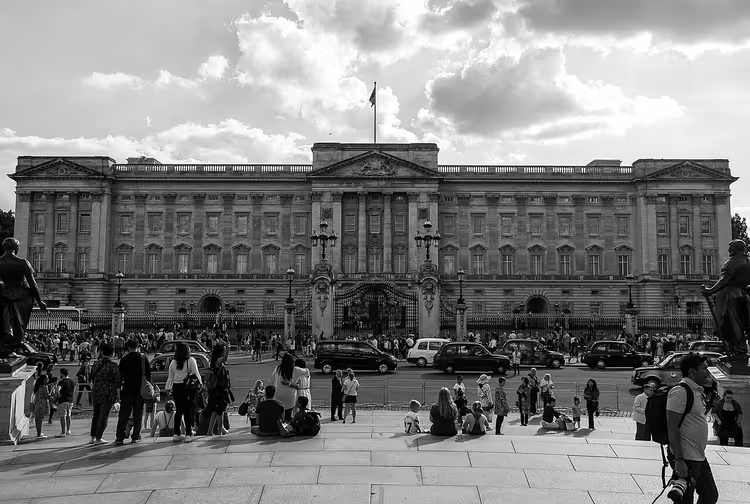
Buckingham Palace is the monarch's official residence. It faces Pall Mall and Green Park. The palace's architecture blends Baroque and Rococo.
The state rooms, including the ballroom and royal apartments, are open to visitors only in summer, when the court is away. The Queen's Gallery and the Royal Mews with the Gold State Coach operate year-round.
Crowds of tourists watch the Changing of the Guard at the gates, but the ceremony schedule changes. Check days and tickets on the official website (as of: 09/2026).
- Getting there: Victoria, Green Park, and St. James's Park stations.
- The catch: in summer the palace gates get very crowded, and access to the state rooms is limited to the season.
Queen Victoria Memorial
 © Johnm9218 · CC BY-SAPhoto: Johnm9218, CC BY-SA (https://creativecommons.org/licenses/by-sa/3.0), Wikimedia Commons
The Queen Victoria Memorial was erected ten years after her death, opposite the palace. It sums up an entire era of rule and tells the story of the country's achievements over many years. At the center of the composition sits the queen herself with a scepter and orb, surrounded by allegorical figures.
The pedestal is shaped like a four-leaf form with curved edges that resemble a ship's bow. More than two thousand tons of material went into the white stone, and the monument rises about twenty-five meters. The figure of the queen is over five meters tall and stands out clearly against the square.
The monument is built of white stone, and the top is crowned by a gilded winged Victory surrounded by figures of Courage and Constancy. On three sides of the empress stand compositions representing Truth, Justice, and Motherhood. Fountains with figures of sea creatures play in the arches of the monument, recalling Britain's maritime power.
The memorial stands directly in front of the Buckingham Palace gates, so it is easy to see on the way to the changing of the guard. During the day it is crowded here, and in the evening, when the lighting comes on, the figures look especially striking. The easiest way to photograph the whole monument is from the middle of the square.
- Getting there: directly in front of Buckingham Palace, at the start of The Mall.
- Cost: free to view, the monument stands in an open square.
Wellington Arch
 © Canaan · CC BY-SAPhoto: Canaan, CC BY-SA (https://creativecommons.org/licenses/by-sa/4.0), Wikimedia Commons
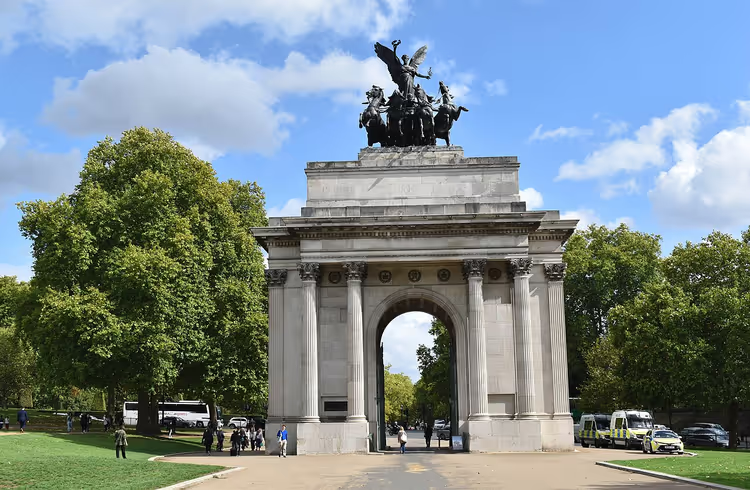
Wellington Arch stands at the corner of Hyde Park and outwardly resembles the Arc de Triomphe in Paris. It was built to commemorate the victory over Napoleon. The arch received the name of the commander Wellington later, when it was topped with an equestrian statue.
Half a century later the arch was moved to its current location, and the equestrian statue was removed. In its place, a bronze quadriga with a chariot and an angel of peace was installed on top. A small museum about its history was opened inside the arch.
A terrace at the top offers views of Trafalgar Square, the Royal Artillery Memorial, and Admiralty Arch. The ascent goes up a narrow spiral staircase, so wear comfortable shoes. The terrace is not open around the clock; opening hours depend on the season.
The arch stands right by Hyde Park, so after your visit you can walk through the park or head down to Buckingham Palace. Buses stop nearby, and Hyde Park Corner station is a couple of steps away.
- Cost: the terrace and museum are paid, entry through English Heritage (as of 09/2026, official website).
- Getting there: Hyde Park Corner station, the arch is right by the exit.
Trafalgar Square
 © Charlie Forman · CC BY-SAPhoto: Charlie Forman, CC BY-SA (https://creativecommons.org/licenses/by-sa/4.0), Wikimedia Commons
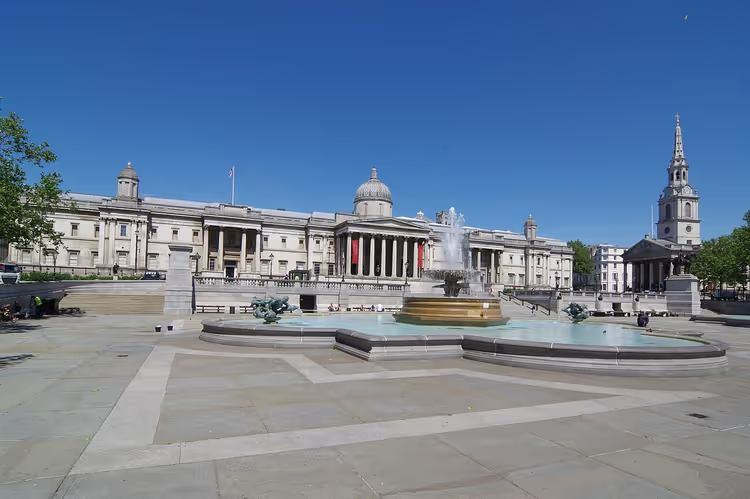
Trafalgar Square lies at the intersection of the Strand, Whitehall, and The Mall. It is framed by the National Gallery, St Martin-in-the-Fields, and Admiralty Arch. At the center stands Nelson's Column with the admiral's figure on top.
The base of the column is decorated with bas-reliefs made from captured cannons. At the corners of the square stand pedestals with sculptures, and on one of them contemporary works appear from time to time. The fourth plinth stood empty for a long time, and now a temporary sculpture is displayed on it each time, so it looks different.
It is worth stopping by both during the day and in the evening, when the fountains and facades are lit up. From here you can reach the National Gallery in a couple of minutes, and through the arch you come out onto The Mall and Buckingham Palace.
The square remains a convenient starting point: walking tours of the center depart from here, and Charing Cross station is a minute away on foot.
- Getting there: Charing Cross station, then a two-minute walk.
- Cost: free to view.
National Gallery
 © https://www.flickr.com/photos/bryansjs · CC BY-SAPhoto: https://www.flickr.com/photos/bryansjs, CC BY-SA (https://creativecommons.org/licenses/by-sa/2.0), Wikimedia Commons
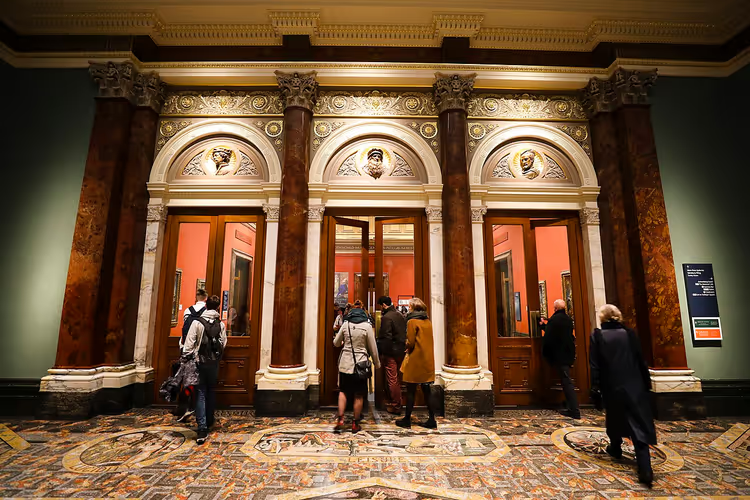
The National Gallery occupies a building with columns and a dome right on Trafalgar Square. It is one of the largest collections of painting in the country. The rooms display works by European masters from the Middle Ages to the end of the nineteenth century.
A separate Spanish room is known for its large collection of Velázquez, while the Italian section is built around works by Titian and Bellini. There are rooms of German, French, Flemish, and English artists.
Admission is free, but opening hours change, so check the official website (as of 09/2026).
- Getting there: right on the square, five minutes from Charing Cross station.
- Cost: admission is free, individual exhibitions are paid.
Big Ben
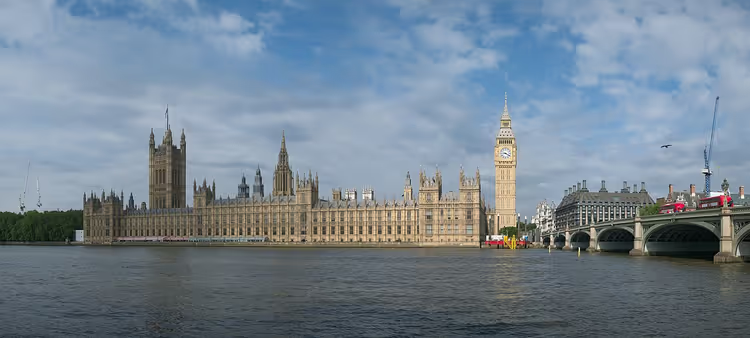 © Domob · CC BY-SAPhoto: Domob, CC BY-SA (https://creativecommons.org/licenses/by-sa/4.0), Wikimedia Commons
Big Ben is the great bell in the Elizabeth Tower of the Palace of Westminster. The tower itself rises almost one hundred meters. Inside, a spiral staircase with hundreds of steps leads to the platform with the bell.
The clock on the tower was started in the mid-nineteenth century, and it remains one of the largest in the world. It has four dials of opaque glass and gilded frames.
For a long time, tourists were not allowed inside the tower; now tours are offered on a limited basis. Check the conditions and tickets on the Parliament website (as of: 09/2026).
- The catch: you rarely get to see the tower from the inside; most people come here just for a photo from outside.
- Getting there: Westminster station, exit toward Westminster Bridge.
Houses of Parliament
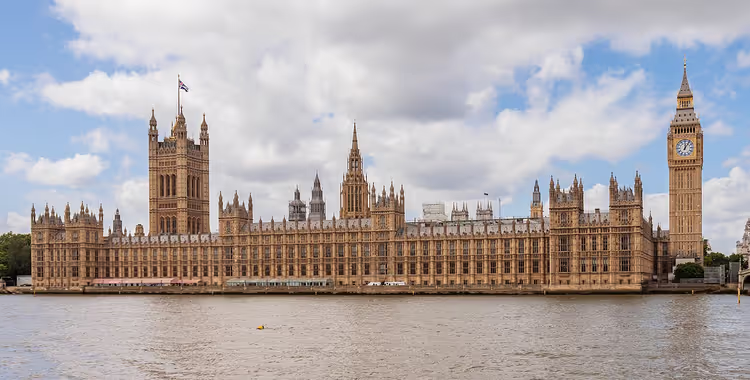 © Terry Ott from Washington, DC Metro Area, United States of America · CC BYPhoto: Terry Ott from Washington, DC Metro Area, United States of America, CC BY (https://creativecommons.org/licenses/by/2.0), Wikimedia Commons
The Palace of Westminster serves as the workplace of the British Parliament. Until the sixteenth century, it was the residence of the kings. After the fire, the reception hall and the Jewel Tower, where the treasury was kept, survived.
The neo-Gothic facade of the palace impresses with its scale and intricate decoration. Inside there are dozens of courtyards, more than a thousand rooms, and several kilometers of corridors. On tours, visitors follow the Queen's route: from Westminster Hall through the royal robing room and gallery to the House of Lords and the House of Commons.
A separate stop is St Stephen's Hall with statues of the patron saints of Britain. On sitting days, the route changes, so it is worth checking the date in advance.
The palace stands right by Westminster Bridge, so it is easy to see on the way to the abbey. From outside, the building looks best from the opposite bank of the Thames. You can only get inside on a scheduled tour. Check dates and tickets on the Parliament website.
- Getting there: Westminster station, exit toward Big Ben.
- The catch: on sitting days, tours are canceled, so it is best to check the date in advance.
St Margaret's Church
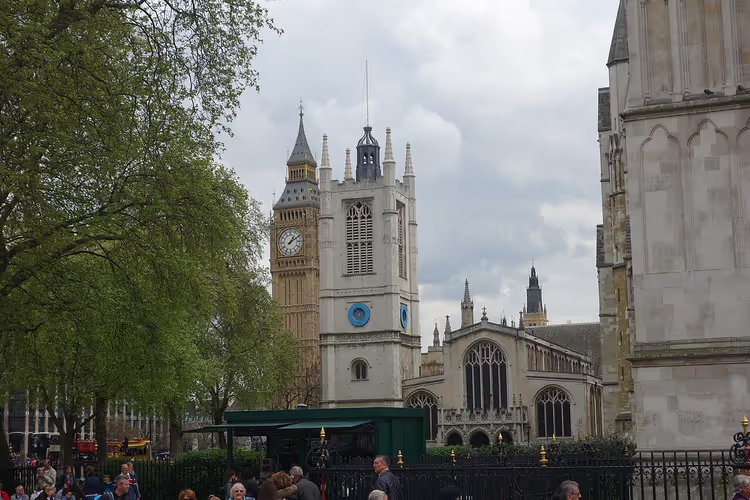 © Александр Спиридонов · CC BYPhoto: Александр Спиридонов, CC BY (https://creativecommons.org/licenses/by/3.0), Wikimedia Commons
St Margaret's Church faces Parliament Square. Its history begins in the twelfth century, and its current appearance took shape after several rebuilds. Today it is the parish church of the British Parliament.
Inside, stained glass windows and a medieval organ have been preserved. Aristocratic families were married under its vaults, including Winston Churchill. Famous people are also buried here, as the stained glass windows with their images attest.
The church is a UNESCO World Heritage Site and is open to the public free of charge. Hours change, so check the official website (as of: 09/2026).
- Cost: admission is free.
Westminster Abbey
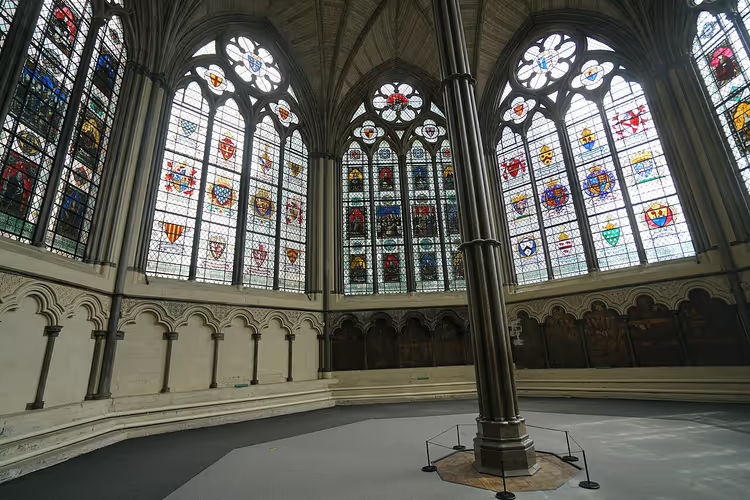 © ChrisVTG Photography · CC BY-SAPhoto: ChrisVTG Photography, CC BY-SA (https://creativecommons.org/licenses/by-sa/4.0), Wikimedia Commons
Westminster Abbey captivates with the silhouette of its two towers and intricate arches. Inside, you will find stained glass, paintings, and sculptural compositions. The abbey is known for its pantheon, where distinguished citizens of the country are buried.
Queens Elizabeth and Victoria rest here, along with poets Chaucer and Burns, scientists Newton and Darwin, and writers Dickens and Kipling. In total, the abbey holds thousands of tombs, and among its exhibits are rare church items and ancient books.
Visiting hours depend on the day of the week, and services are held on Sundays. Check tickets and the schedule on the official website (as of: 09/2026), and an admission ticket with an audio guide is available on GetYourGuide.
- The catch: there can be lines at the entrance on weekends, so arrive at opening time.
- Getting there: Westminster station, then follow the signs to the abbey.
Piccadilly Street
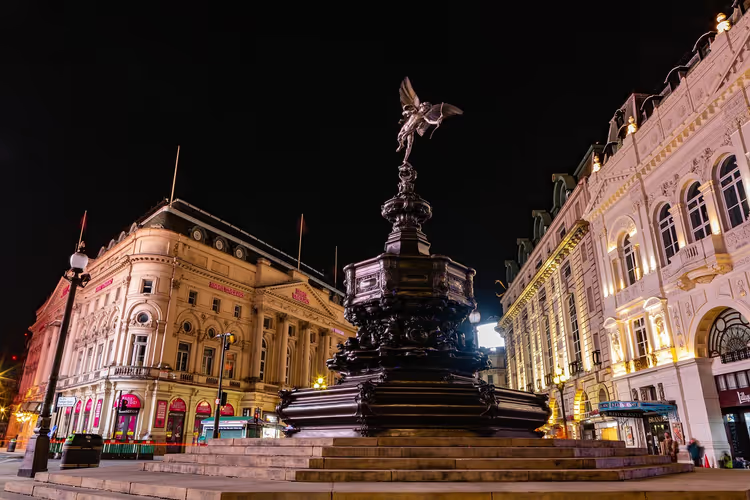
Piccadilly Street has been drawing the elite and tourists for more than three centuries. It is known for its grand mansions, shop windows, and hotels. The Criterion Theatre and the large London Pavilion are also located here.
The street runs from Piccadilly Circus to Hyde Park and passes the Royal Academy of Arts. Major hotels and theaters line it, and the Criterion Theatre operates underground. The shop windows and boutiques attract visitors just as much as the architecture, so a leisurely walk takes about an hour.
It is worth walking along it in the evening, when the lights come on. It is a short but packed stretch of the route between Hyde Park and Trafalgar Square.
The street is also convenient for a bite to eat: cafes and restaurants here stay open late, and from Piccadilly Circus it is a stone's throw to the Soho theater district.
- How to get there: Piccadilly Circus station at the very start of the street.
- Cost: the walk is free.
Sherlock Holmes Museum
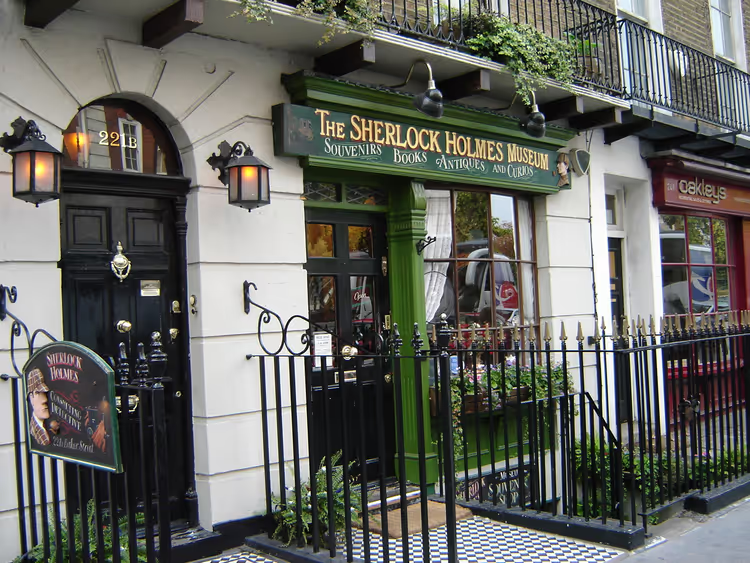
The Sherlock Holmes Museum is on Baker Street, near Baker Street station. As you exit, a bronze statue of the detective greets you, and a policeman in a nineteenth-century uniform stands at the door.
Inside, Holmes's study has been recreated with a violin, letters, test tubes, and Dr. Watson's pistol. The rooms of Dr. Watson and Mrs. Hudson display the characters' personal belongings, and on the top floor wax figures of Conan Doyle's characters await you. In the sitting room you can take a photo in the armchair by the fireplace with the detective's pipe.
The house stands away from the main tourist streets, so it is often quieter inside than the major museums. The museum is open seven days a week, but closes earlier in winter. Check tickets and hours on the official website (as of 09/2026).
- Address: the house on Baker Street you know from the books.
- The catch: the space is small, and it gets crowded inside on weekends.
- Tickets: find a museum ticket.
Madame Tussauds
 © Citizen59 · CC BY-SAPhoto: Citizen59, CC BY-SA (http://creativecommons.org/licenses/by-sa/3.0/), Wikimedia Commons
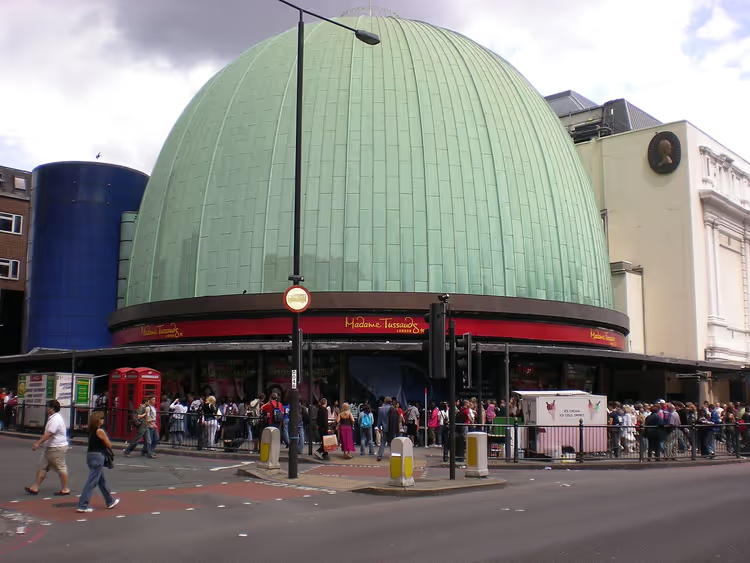
From the Holmes Museum to Madame Tussauds is a two-minute walk if you turn onto Marylebone Road. It is one of the largest collections of wax figures in the world. Here you can not only see film, music, and political figures, but also take photos next to them.
Separate halls are dedicated to world leaders and pop music. Some figures move and react to visitors, so the photos come out lively.
The museum is open every day, but closes earlier than you might expect. Tickets are cheaper online, details on the official website (as of 09/2026), and a ticket is available on GetYourGuide.
- How to get there: Baker Street station, about a five-minute walk.
- Cost: admission is paid, online is usually cheaper.
Zoo
 © heena_mistry · CC BYPhoto: heena_mistry, CC BY (https://creativecommons.org/licenses/by/2.0), Wikimedia Commons
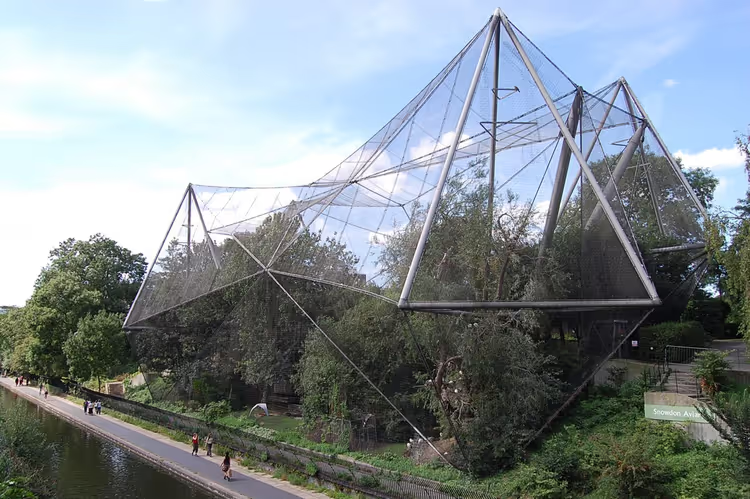
London Zoo lies on the north side of Regent's Park. From Baker Street station a bus takes you here, and on foot the walk takes about half an hour. The zoo opened in the first half of the nineteenth century and was the first in the world to introduce an aquarium, a reptile house, and a children's zoo.
Today hundreds of animal species live here. There are no elephants or rhinos in London, but there is a large collection of marine life and enclosures with tigers and lemurs.
You need at least three hours to see it, so put the zoo at the end of the day. Check tickets and opening hours on the official website (as of 09/2026).
- How to get there: bus to the London Zoo stop or on foot from Baker Street.
- The catch: in the evening some pavilions close earlier than the entrance, so plan your visit for the morning.
If you are planning several paid attractions, it is better to buy tickets online in advance. That way you choose a convenient time and avoid standing in ticket lines.
Tours and tickets in London
Guided tours, skip-the-line tickets and activities — most offers can be cancelled free of charge.
See offers on TiqetsThe widget loads once you give your consent.
How to save money in London
London is an expensive city, but you can save on transport, tickets, and tours here. Below are several practical options that pay for themselves on your very first trip. Choose based on your pace and the number of paid attractions.
Oyster transport card
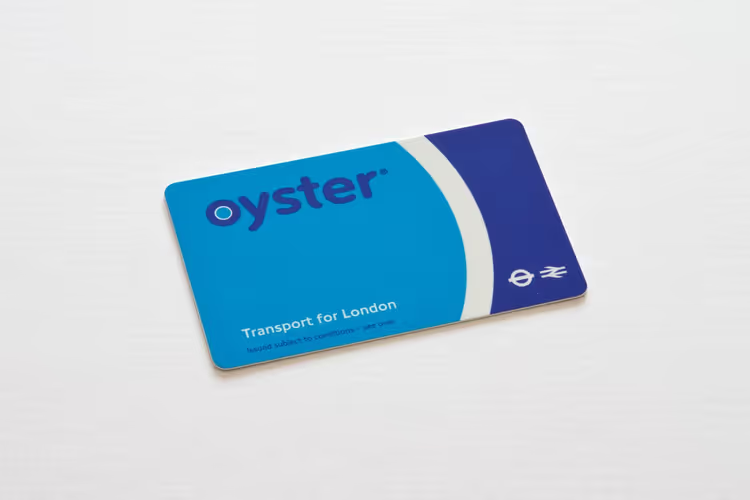
The Oyster card helps you save on public transport. You can buy it at the airport, at train stations and metro stations, and top it up there as well. You use the card to pay for the metro, trams and buses within the first two zones.
On the metro and trains, you tap the card on entry and exit so the system can calculate the distance. On buses, you tap it once when boarding. The minimum amount is charged per day until the daily cap kicks in.
You can get the remaining balance refunded or use it on your next trip. Check current fares and the deposit on the Transport for London website (as of 09/2026), and you can order the card itself on GetYourGuide.
Hop-on hop-off bus
 © Ilya Grigorik · CC BY-SAPhoto: Ilya Grigorik, CC BY-SA (https://creativecommons.org/licenses/by-sa/3.0), Wikimedia Commons
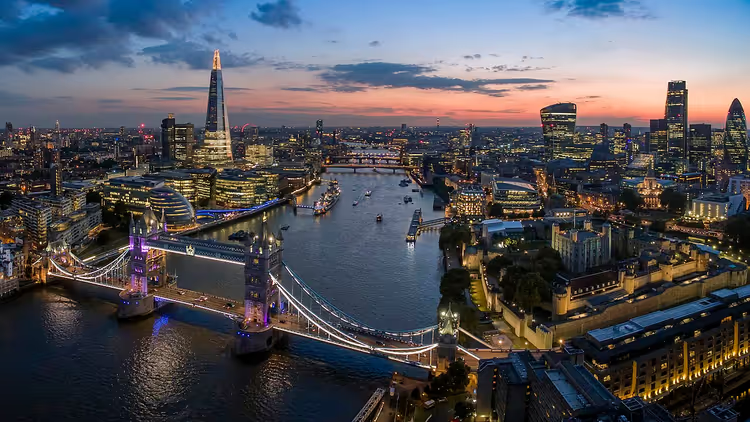
If you only have one day in the city, a hop-on hop-off sightseeing bus saves your energy. The ticket is valid for twenty-four hours from the first boarding. It lets you ride several routes with dozens of stops and get off wherever you like.
Buses run at short intervals, and an audio guide plays through headphones. The route goes along Piccadilly, past Buckingham Palace, Westminster and the Tower.
You book online, and an open-top ticket is available on GetYourGuide (as of 09/2026).
London Pass
The London Pass gives you entry to dozens of museums and attractions with a single ticket. It pays off if you plan to visit three or four paid sights in a day. The pass pays for itself fastest at the Tower, St Paul's Cathedral and Westminster Abbey.
You activate the pass at the entrance to the first attraction. A booklet with the pass and the list of venues is given to you when you pick it up.
Check options and validity periods on the official website (as of 09/2026), and the pass with a guidebook is available on GetYourGuide.
Central London walking tour
 © trolvag · CC BY-SAPhoto: trolvag, CC BY-SA (https://creativecommons.org/licenses/by-sa/3.0), Wikimedia Commons
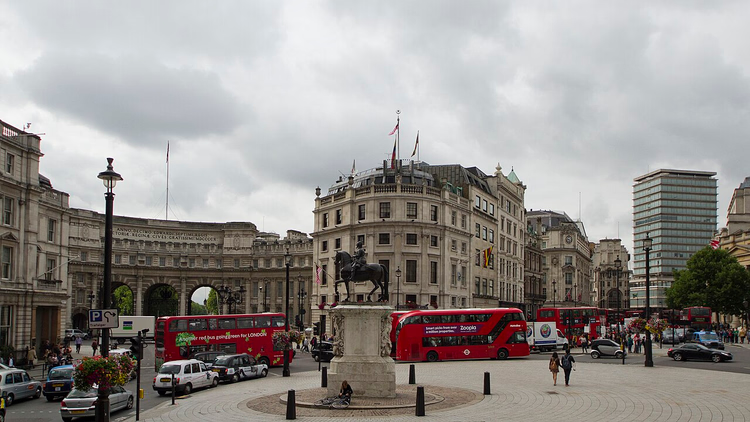
A central London walking tour works well if you have very little time. In a few hours you cover the main sights of Westminster and Whitehall. The guide leads from Trafalgar Square through Downing Street, Admiralty Arch and Parliament to Westminster Abbey.
The finish is at Buckingham Palace and Piccadilly. The format suits both couples and small groups.
Check available dates and prices with the provider, and you can find a walking tour option on GetYourGuide (as of 09/2026).
Four-hour car tour
 © Matt Brown · CC BYPhoto: Matt Brown, CC BY (https://creativecommons.org/licenses/by/2.0), Wikimedia Commons
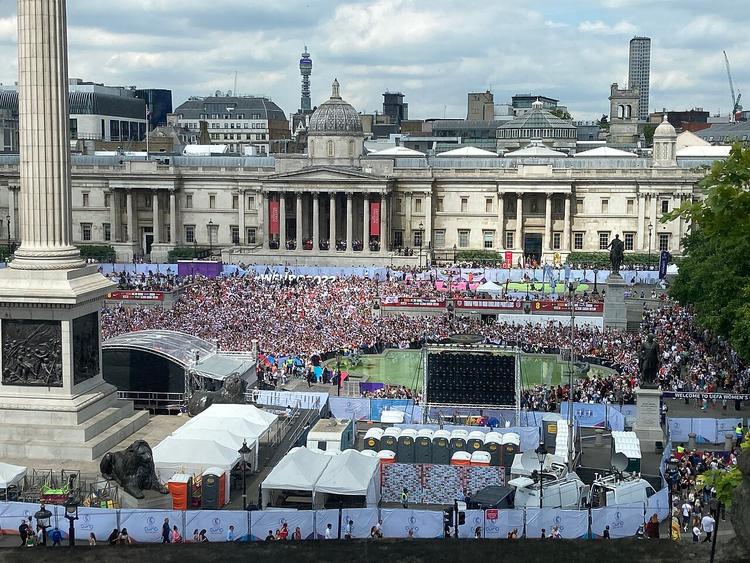
A minibus tour by car works well if you want to cover outlying areas too. In a few hours you pass Westminster, Buckingham Palace, the Tower and Trafalgar Square. The guide talks about the architecture and history.
The itinerary also includes less obvious places: the oldest toy shop and the house where John Lennon lived. This is a private route for a group.
Check options and prices with the provider; you can view the car tour on GetYourGuide (as of 09/2026).
Group sightseeing tour
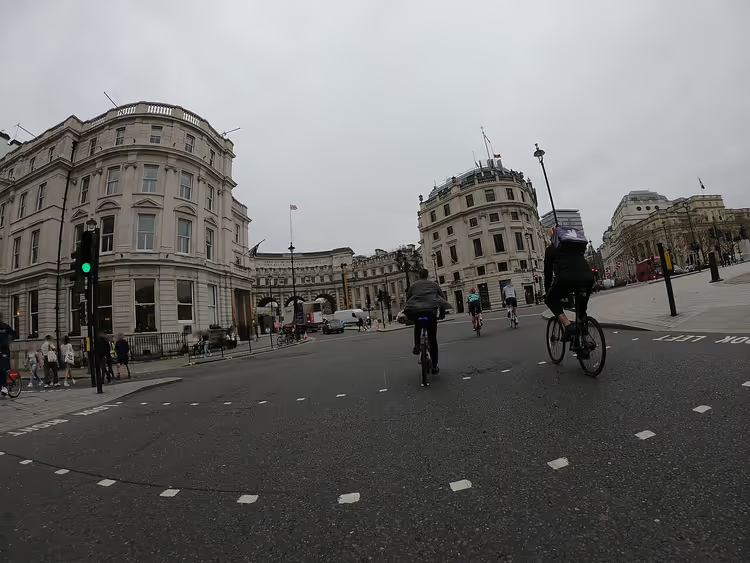 © wasd42 · CC BY-SAPhoto: wasd42, CC BY-SA (https://creativecommons.org/licenses/by-sa/4.0), Wikimedia Commons
A group sightseeing tour covers the city's main landmarks in a couple of hours. You walk through historic districts and listen to stories about Westminster Abbey, the palace and the Tower. Part of the route passes St Paul's Cathedral.
The tours are led by guides who work with groups, so it is better to book in advance. The format suits first-time visitors.
Check dates and tickets with the provider; you can book the sightseeing walk on GetYourGuide (as of 09/2026).
How to get from the airport to the center
Heathrow Airport is a major transport hub for the country, with five terminals connected by a free shuttle. There are three main ways to get from it to the center.
The fastest way is the Heathrow Express train to Paddington station. The most budget-friendly option is the Tube on the Piccadilly line. The most convenient for the center is the Elizabeth line train: it runs without changes and stops near Tottenham Court Road and Paddington.
Check journey times and fares on the Transport for London website and the Heathrow Express website (as of 09/2026). You can book a transfer to your hotel in advance: book a transfer from Heathrow.
Tours and tickets in London
Guided tours, skip-the-line tickets and activities — most offers can be cancelled free of charge.
See offers on KiwitaxiThe widget loads once you give your consent.
One-day London route on a map
The whole route is easy to open on a map and save in advance. That way you can see the order of stops and avoid wasting time searching on your phone during the walk.
The map below is built for the walking option: the points go in order from Tower Bridge through the center to the zoo. If you skip a sight, just move on to the next point, the loop will not fall apart.
Tip: turn on an offline map and charge your phone in the morning, navigation drains the battery quickly over a full day. Mark the points you have passed so you can see the rest of the route and do not get ahead of yourself.
If you want to shorten the route, take the Tube between the City and Westminster, and keep the walking sections for the most scenic stretches along the Thames.
What to see in London in 1 day
Places on the map
- 1Tower Bridge The city's symbol, with a pedestrian gallery and exhibition
- 2Tower of London The Crown Jewels and the Koh-i-Noor diamond
- 3Sky Garden A garden terrace on the upper floors of the Walkie Talkie skyscraper
- 4Tate Modern Gallery of modern art in a former power station
- 5Millennium Bridge The pedestrian «wobbly bridge» with a view of St Paul's Cathedral
- 6St Paul's Cathedral The dome and the «whispering gallery»
- 7Covent Garden Royal opera house and a square with a market
- 8Buckingham Palace Official residence of the monarch, changing of the guard
- 9Victoria Memorial Monument opposite the palace with allegorical figures
- 10Wellington Arch Triumphal arch with a terrace and a view of the square
- 11Trafalgar Square Nelson's Column and the National Gallery
- 12National Gallery Paintings by Velázquez, Titian and Bellini
- 13Big Ben Elizabeth Tower of the Palace of Westminster
- 14Houses of Parliament Palace of Westminster, neo-Gothic facade
- 15St Margaret's Church The parish church of Parliament with stained-glass windows
- 16Westminster Abbey Pantheon of the nation's kings, poets and scientists
- 17Piccadilly Upscale mansions, theatres and boutique storefronts
- 18Sherlock Holmes Museum A recreated detective's study on Baker Street
- 19Madame Tussauds One of the largest collections of wax figures
- 20London Zoo The world's oldest zoo, in the north of Regent's Park
⁉️🤔 Frequently asked questions
Is one day enough for the whole route?
Yes, if you move along the loop and do not go into every paid sight. Twenty stops is roughly six to eight hours of walking with breaks. Plan to start in the morning, and book Tower of London and Westminster Abbey tickets for morning and afternoon slots in advance.
What can you see in London for free?
For free you can see Tower Bridge from the outside, the Millennium Bridge, Trafalgar Square and the Queen Victoria Memorial. Entry to the National Gallery and Tate Modern is always free. Sky Garden entry is also free, but only with a booked ticket for a specific time.
Do you need to book tickets in advance?
Yes. For the Tower of London, St Paul's Cathedral, Westminster Abbey and Madame Tussauds, tickets are cheaper online and let you skip the line. In summer, morning slots sell out quickly. Official websites and GetYourGuide let you choose a convenient time.
How do you get between sights?
The Tube remains the fastest transport between distant points, for example from Westminster to Baker Street. An Oyster card or contactless payment is convenient for trips. Between the City and Westminster it is easier to walk along the Thames, so you see more.
What should you see if you have a second day?
On the second day it is worth going beyond the center. Greenwich with its observatory, the Camden area and the Victoria and Albert Museum are popular. Tickets for viewing platforms, such as The Shard, are also booked in advance for an exact time.
In short: what to book
If you have one day, take a morning slot at the Tower of London and a Westminster Abbey ticket for the afternoon. Leave time between them for St Paul's Cathedral and a walk across the Millennium Bridge.
For a family with children, add Madame Tussauds or the zoo. For a first trip, a hop-on hop-off bus works well, and for a short walk choose a walking tour of the center.
One last step: see tickets on GetYourGuide.

A small editorial team writing guides for independent travel. We travel ourselves, but we haven’t been everywhere, so we check prices, opening hours and how to get there against official sources.