



When to go to Croatia: sea temperature by month
In Croatia, the weather depends heavily on the region. Istria in the north, the Kvarner Gulf in the center, and Dalmatia in the south lie in different climate zones. The warmest sea occurs in July and August, but those are exactly the months with crowds of tourists and high prices.
That said, you can plan a trip here in any season. According to the country's tourism portal, traveling around Croatia is realistic year-round because the regions differ greatly in weather (croatia.hr). We gathered 30-year averages for water temperature and broke them down by month so you can immediately see the difference between the north and the south.
Ad: this article contains affiliate links, we earn a commission if you book through them, at no extra cost to you.
Croatia's climate in three zones
💡 In short:
- You can swim on the coast from May through October.
- The warmest sea is in July and August, while the fewest people are around in May, June, and September.
- Water temperature by month: 30-year DHMZ averages, checked 09/2026 on the Putovnica portal.
Croatia lies on the border between Central and Southeastern Europe, so the climate here is not uniform. The north and east of the country live in a continental zone: summers are hot, winters are cold, and the seasons are far more pronounced than on the sea.
In the mountains and near Plitvice Lakes, snow lies in winter. Hikes and trips to the mountains are best planned for the summer months, when it is warm and all routes are open.
On the Adriatic coast, the climate is much milder. Summers here are warm and dry, and in winter the temperature rarely drops to freezing, so people head to the sea almost year-round.
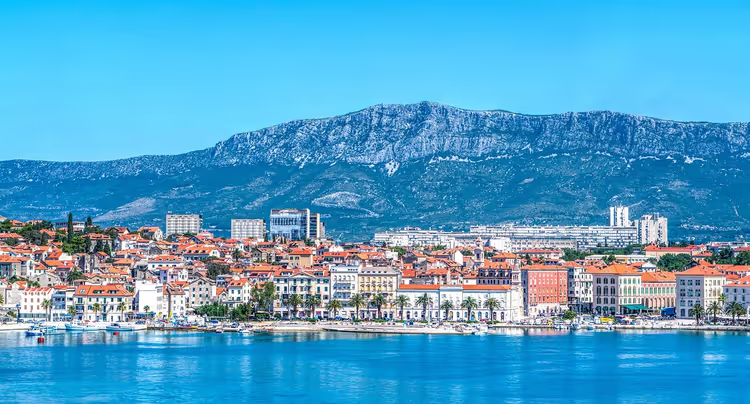
Water temperature differs not only by month but also from north to south. Below are 30-year averages for four points on the coast.
Month | Rovinj (Istria) | Zadar | Split (Dalmatia) | Dubrovnik |
|---|---|---|---|---|
January | 10.0 °C | 10.8 °C | 12.0 °C | 13.2 °C |
February | 9.3 °C | 10.1 °C | 11.5 °C | 12.8 °C |
March | 9.9 °C | 10.9 °C | 11.9 °C | 13.1 °C |
April | 12.3 °C | 13.3 °C | 13.8 °C | 14.5 °C |
May | 16.7 °C | 16.8 °C | 17.3 °C | 17.2 °C |
June | 21.0 °C | 20.3 °C | 21.1 °C | 21.1 °C |
July | 23.7 °C | 22.6 °C | 23.2 °C | 22.9 °C |
August | 24.2 °C | 22.8 °C | 23.6 °C | 23.3 °C |
September | 22.0 °C | 21.1 °C | 21.7 °C | 21.8 °C |
October | 18.6 °C | 18.7 °C | 19.3 °C | 19.5 °C |
November | 15.3 °C | 15.8 °C | 16.4 °C | 16.6 °C |
December | 12.1 °C | 12.7 °C | 13.7 °C | 14.7 °C |
Source: 30-year DHMZ averages.
When the sea warms up and the season begins
In May, the water stays around 17 °C, in June it rises to 21 °C, and in July and August it reaches 23-24 °C (according to DHMZ). For most swimmers, it is comfortable from June onward, but the warmest months are July and August.
In September, the sea remains warm, around 22 °C, and in October it cools to 19-20 °C (same DHMZ averages). In summer, the water in Rovinj is even slightly warmer than in Dubrovnik. In spring and autumn, the south is warmer: in Dubrovnik, the water in May and October is 0.5-0.9 °C higher than in Rovinj.
The peak season falls on July and August, and hotels in those months sell out the fastest. The widest selection is in May, June, and September (hotel prices in Croatia on Trip.com).
 © Michal Klajban · CC BY-SAPhoto: Michal Klajban, CC BY-SA (https://creativecommons.org/licenses/by-sa/4.0), Wikimedia Commons
Best time for Istria
Istria is the northernmost stretch of the coast. Peak season here falls in July and August, and it really is hot at that time. For hiking and exploring old towns, May, June, and September are more comfortable: the weather is milder and there are fewer visitors. If you're coming for the beach, June and September work well.
In May and June, hotels and beaches are not yet overcrowded. In summer, the heat becomes exhausting even for walks, so active recreation is better shifted to the shoulder season. In winter, temperatures on the peninsula rarely drop below freezing, but nobody plans to swim at that time.
Water temperatures in Rovinj: around 17 °C in May, 21 °C in June, 22 °C in September, and 18.6 °C in October (DHMZ data).
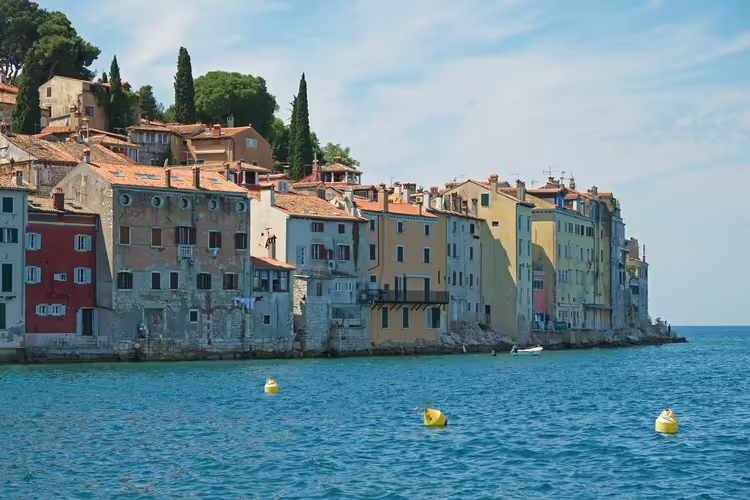
The peninsula is easy to explore by car: main roads run along the coast, and buses connect the towns. If you're planning an Istria itinerary, comparing prices on DiscoverCars is useful before your trip.
- The catch: in July and August, the coast is hot and crowded.
- Who it's for: those who want to combine beach time and hiking, because it's cooler here in the shoulder season.
- Not for: those who want to swim in May or October, because the water is warmer in the south during those months.
Best time for the Kvarner Gulf
The Kvarner Gulf is sheltered by the Učka mountains, so winters here are milder than in the rest of the country. Summers are warm and dry, with almost no rain, and the swimming season runs from May to October.
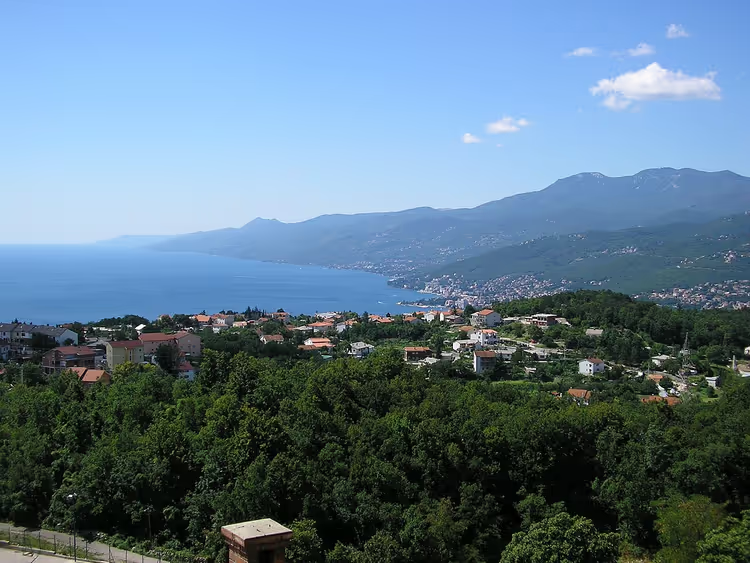 © dnik · CC BY-SAPhoto: dnik, CC BY-SA (https://creativecommons.org/licenses/by-sa/4.0), Wikimedia Commons
The gulf is known for its sunny weather. The island of Lošinj has an especially high number of clear days.
The best time to book here is from June to August, when the water is warmest. If you're coming for the sea, these are the months to choose. May and October also work for swimming, but the weather can be changeable and windy.
- The catch: in winter, the gulf gets a lot of precipitation, and rainy days are possible in the shoulder season.
- Who it's for: those looking for a sheltered bay and reliable summer sunshine.
Best time for Dalmatia
Dalmatia lies in the south and is protected by high mountains to the east, so its climate differs from the rest of the country. Summers are hot and dry, winters are rainy but mild. Rain falls most often in spring and autumn: moisture is brought by a warm wind from the south and southeast.
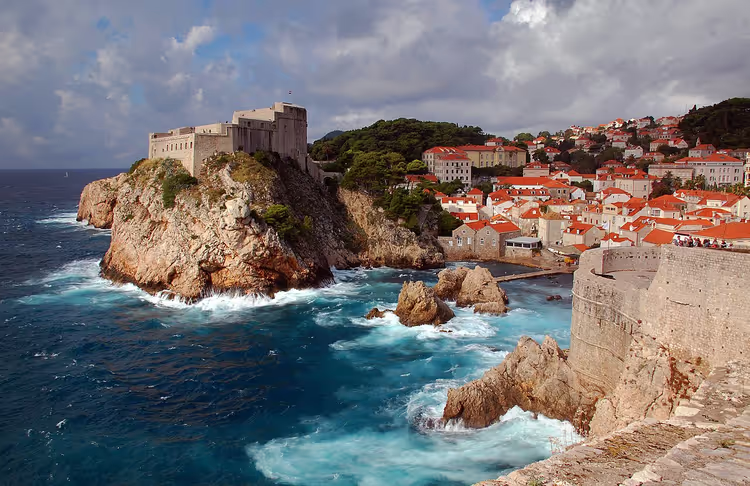 © Edwardwexler at English Wikipedia · CC BY-SAPhoto: Edwardwexler at English Wikipedia, CC BY-SA (https://creativecommons.org/licenses/by-sa/3.0), Wikimedia Commons
The Dinaric Alps block moist air masses from the west, so in winter the Dalmatian coast becomes one of the rainiest areas in Europe. Beach vacations here are best planned for July and August, while sightseeing in Dubrovnik is better in spring and autumn: in the heat, walking around the old town will quickly wear you out.
For exploring the region, check tours and tickets in Dubrovnik on GetYourGuide in advance. Ferries to the islands depart from Split and Dubrovnik, and buses are a convenient way to travel between cities.
In Dalmatia, water temperatures reach 23-24 °C in summer and stay around 22 °C in September (DHMZ averages).
- The catch: from November to March it rains often here, and in summer Dubrovnik is full of tourists.
- Who it's for: those who want a long swimming season and are willing to put up with crowds, because in October the water here is warmer than in the north.
⁉️🤔 Frequently asked questions
When is the best time to visit Croatia?
If you want a beach, choose July and August: that's when the sea warms up to 23-24 °C (monthly DHMZ averages). If you like hiking and old towns, May, June, and September are a good fit. There are fewer tourists then, and the weather stays mild.
When is the sea warmest in Croatia?
The warmest months are July and August. In Rovinj the water reaches 23-24 °C, in Split 23-24 °C, and in Dubrovnik 23 °C (DHMZ Adriatic data). In September the sea is still comfortable, but evenings get cooler.
Is it rainy in Croatia in autumn?
In Istria, autumn rain is noticeably less frequent than in the south. In Dalmatia, the humid jugo wind brings precipitation specifically in the spring and autumn months. Bring a rain jacket and don't plan island trips for every day.
Which region should you choose for a first trip?
Dalmatia is a good fit for a first visit: Split and Dubrovnik are connected by buses and ferries, and beaches stretch along the entire coast. The Kvarner Gulf is more compact, and it's easy to get around between its resorts. Istria is convenient for short trips from Central Europe.
When should you go if you want fewer tourists?
The shoulder season is May, June, and September. The sea is already or still warm at that time, and there are shorter lines at the main sights. In May the water can be cool, around 17 °C on average (DHMZ archive), so June is more often chosen for swimming.
Can you swim in Croatia in October?
Yes, the season lasts longer in the south. In Dubrovnik the average water temperature in October is around 19-20 °C, in Rovinj about 18-19 °C (DHMZ averages: Dubrovnik and Rovinj). Swimming is comfortable on sunny days, but bring warm clothes for the evening.
In short: what to book
Croatia works for a trip almost year-round, but each region has its own best season. For the beach, choose July and August; for hiking and cities, May, June, and September. If you want to combine swimming with sightseeing in Dubrovnik, plan your trip for September: the sea stays warm, and the heat eases off.
- If your vacation is in July or August: book hotels in advance and head to the beach in the morning.
- If warm sea in May or October matters to you: look at Dalmatia and the south of the country, where the water is warmer in those months.

A small editorial team writing guides for independent travel. We travel ourselves, but we haven’t been everywhere, so we check prices, opening hours and how to get there against official sources.